Image
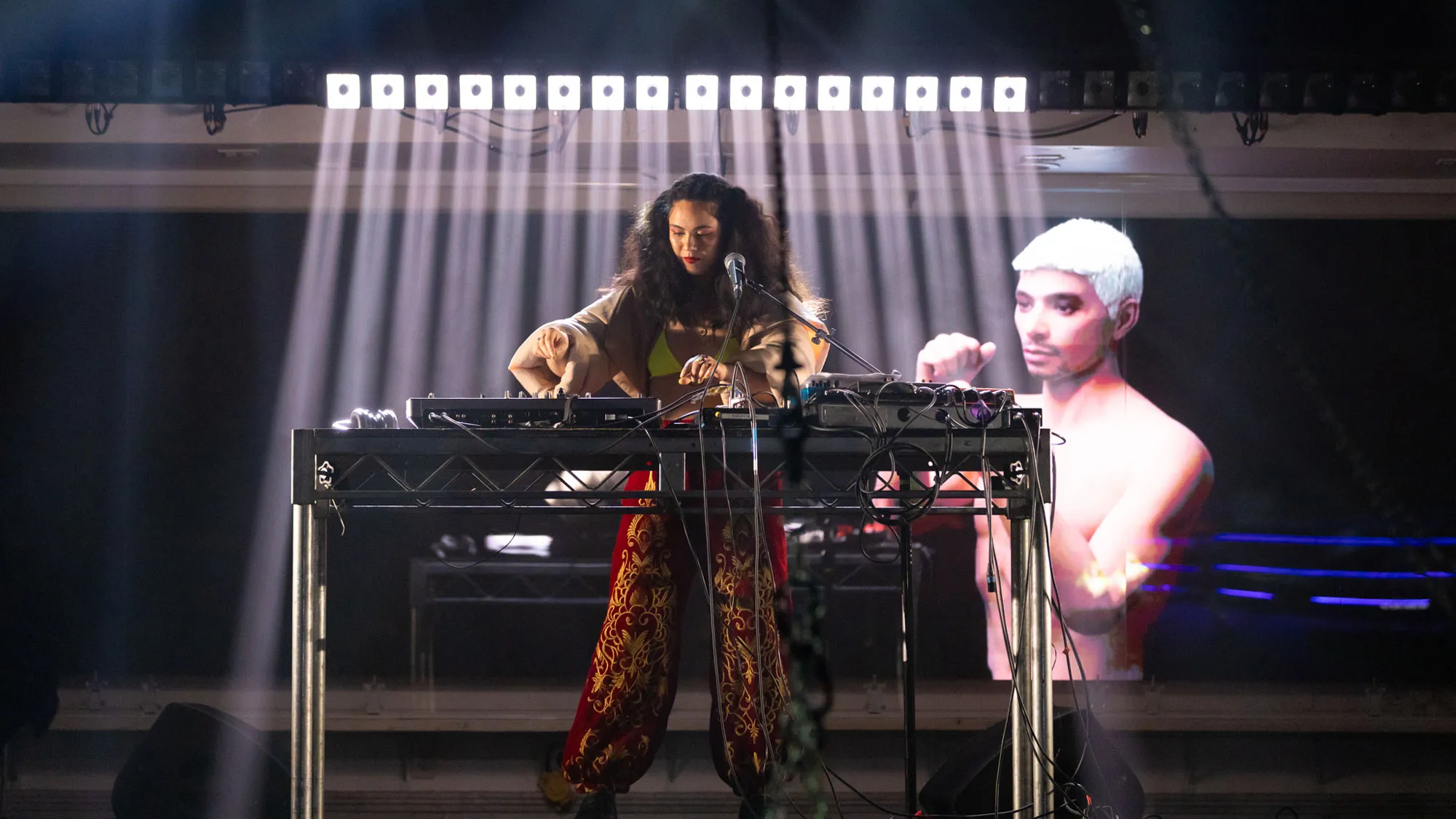
a woman at a keyboard with an image projection of a shirtless man in the background

Be The Media! Workshop: WAKE

Jay Carlon with Micaela Tobin

Composer Micaela Tobin, choreographer Jay Carlon, and their team facilitate a workshop on their process for choreographing grief. In this Be the Media! workshop, participants learn how the artists draw on personal experience and shared culture to generate interdisciplinary media in performance. 

Their collaborative project, WAKE, is a celebratory ritual for grief that centers queer Filipino life and processes both personal and communal loss through a combination of sound, dance, and video projection. Tobin uses electronics to dissect her vocals, creating dense sonic worlds that blur opera, drone, and noise. Carlon’s visual language stages bodily movement and video projection to mediate between performers, audience, and memory. During their Be the Media! workshop at The Sanctuary, the artists screen video material from WAKE and lead attendees through aspects of their process.

Just after the hour-long workshop, hang out with the artists over a bite to eat. The following day, visit EMPAC to experience a live excerpt of the work in progress.

Main Image: Jay Carlon, WAKE (featuring Micaela Tobin and láwû makuriye’nte), Don Quixote, Los Angeles, CA, performance documentation, 2024. Courtesy the artist. Photo: Argel Rojo @argelrojo. 

Image
Two performers in colorful costumes face each other in a ring surrounded by a large audience under dramatic lighting in an indoor arena.

WAKE

Jay Carlon

Choreographer Jay Carlon and composer Micaela Tobin reimagine WAKE, an immersive performance ritual for grief that brings together the dance floor and boxing ring with the Filipino concept of kapwa—shared identity and interconnectedness. While in residence at EMPAC, the team expands the work’s club-like stage and projection design, imagining a new future for WAKE after the sudden passing of beloved cast member and collaborator láwû makuriye’nte shortly after its 2024 premiere in Los Angeles.

Main Image: Jay Carlon, WAKE (featuring Micaela Tobin and láwû makuriye’nte), Don Quixote, Los Angeles, CA, performance documentation, 2024. Pictured (l-r): láwû makuriye’nte and Jay Carlon. Courtesy the artist. Photo: Argel Rojo @argelrojo.

Image
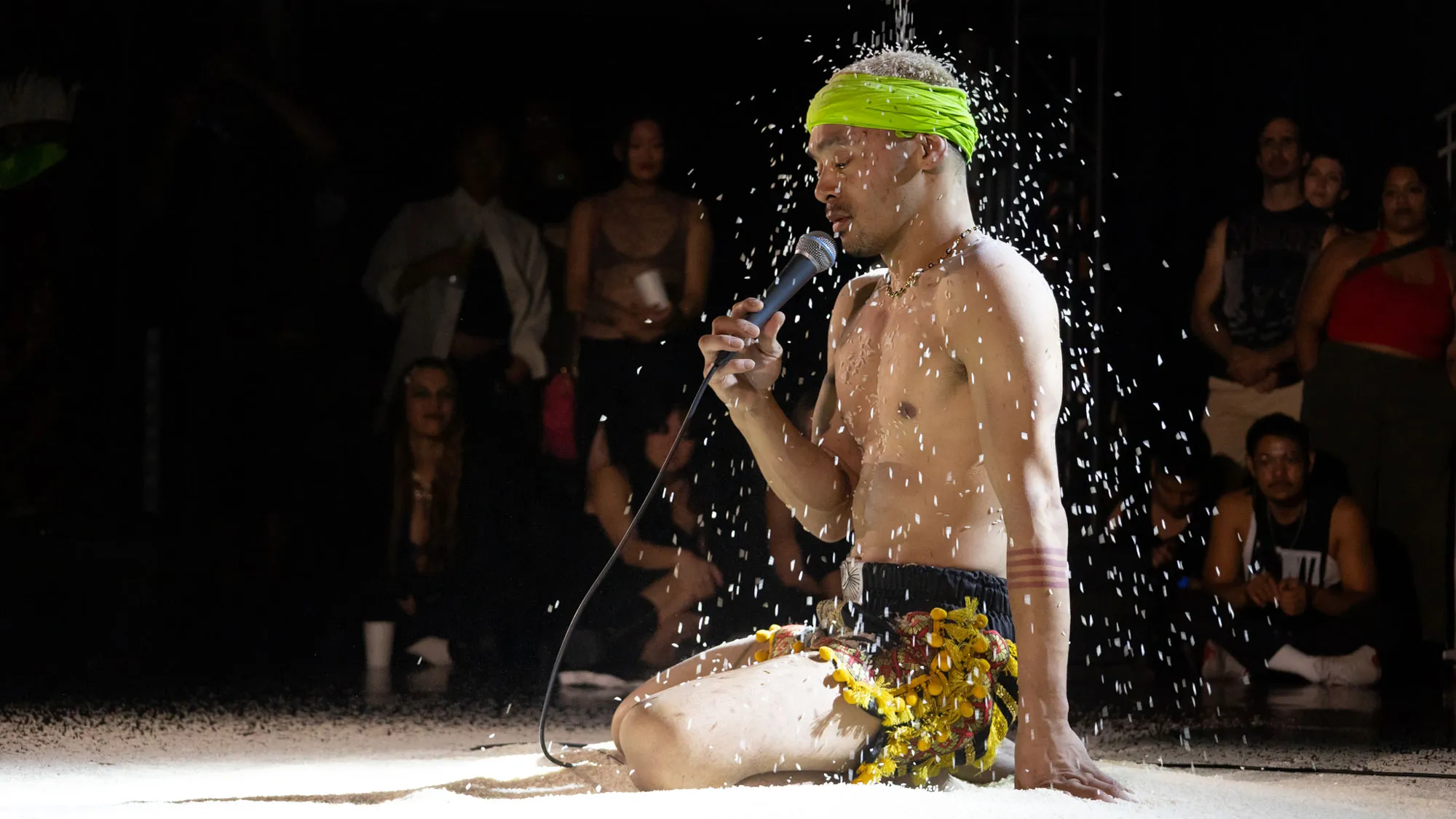
A shirtless performer kneels on a sandy stage, speaking into a microphone while a shower of sand or small particles falls around them. The audience, visible in the background, watches intently.

Work in Progress: WAKE

Jay Carlon with Micaela Tobin

Part requiem, part reckoning, WAKE is a performance ritual toward liberation. Combining the languages of queer nightlife, Catholicism, and combat, Jay Carlon’s choreography and Micaela Tobin’s live vocal performance demand space for release, remembrance, and reclamation. Grounded in kapwa—a Filipino concept of shared identity and interconnectedness—WAKE invites participants to confront one of life’s most difficult realities—death—and to gather in celebration of each other and our ancestors, past and future.   

Carlon steps into the boxing ring of memory to confront a grief that is at once personal and inherited. WAKE was created through a period of profound personal loss, including the deaths of loved ones whose memories and spirits move through the work, and through the disorientation of mourning across oceans and borders. But WAKE extends beyond autobiography. 

Through movement, sound, and collective experience, WAKE brings the larger conditions that shape diasporic life—colonialism, cultural displacement, inherited trauma—into an ongoing search for resistance, transformation, and belonging. What begins as a solo unfolds into a shared rite, dissolving the boundary between stage and public: a prayer, a provocation, a party.  
  
Join us for an excerpt from WAKE, followed by a conversation with the artistic team, and encounter the work as it evolves toward its revival as part of Corpus Festival 2027. For a deeper dive, attend a workshop and meal with the artists on Wednesday, September 23 at 5PM at the Sanctuary for Independent Media.

Main Image: Jay Carlon, WAKE (featuring Micaela Tobin and láwû makuriye’nte), Don Quixote, Los Angeles, CA, performance documentation, 2024. Courtesy the artist. Photo: Argel Rojo @argelrojo. 
Image
an image of a black hole

Black Holes Ain’t So Black

Thuto Durkac-Somo, Jonathan González, & Mario Gooden

Writer-filmmaker Thuto Durkac-Somo, choreographer-scholar Jonathan González, and cultural practice architect Mario Gooden are in residence to develop a performance and video work exploring the spatial practices of Black liberation on bodily, architectural, and cosmological scales. During their time at EMPAC, the artists will shoot new video material and bring their collaboration into three-dimensional form. Their developing project is shared publicly in April 2026.

Main Image: Polarized emission of the ring in M87, Photo: © EHT Collaboration. 

Image
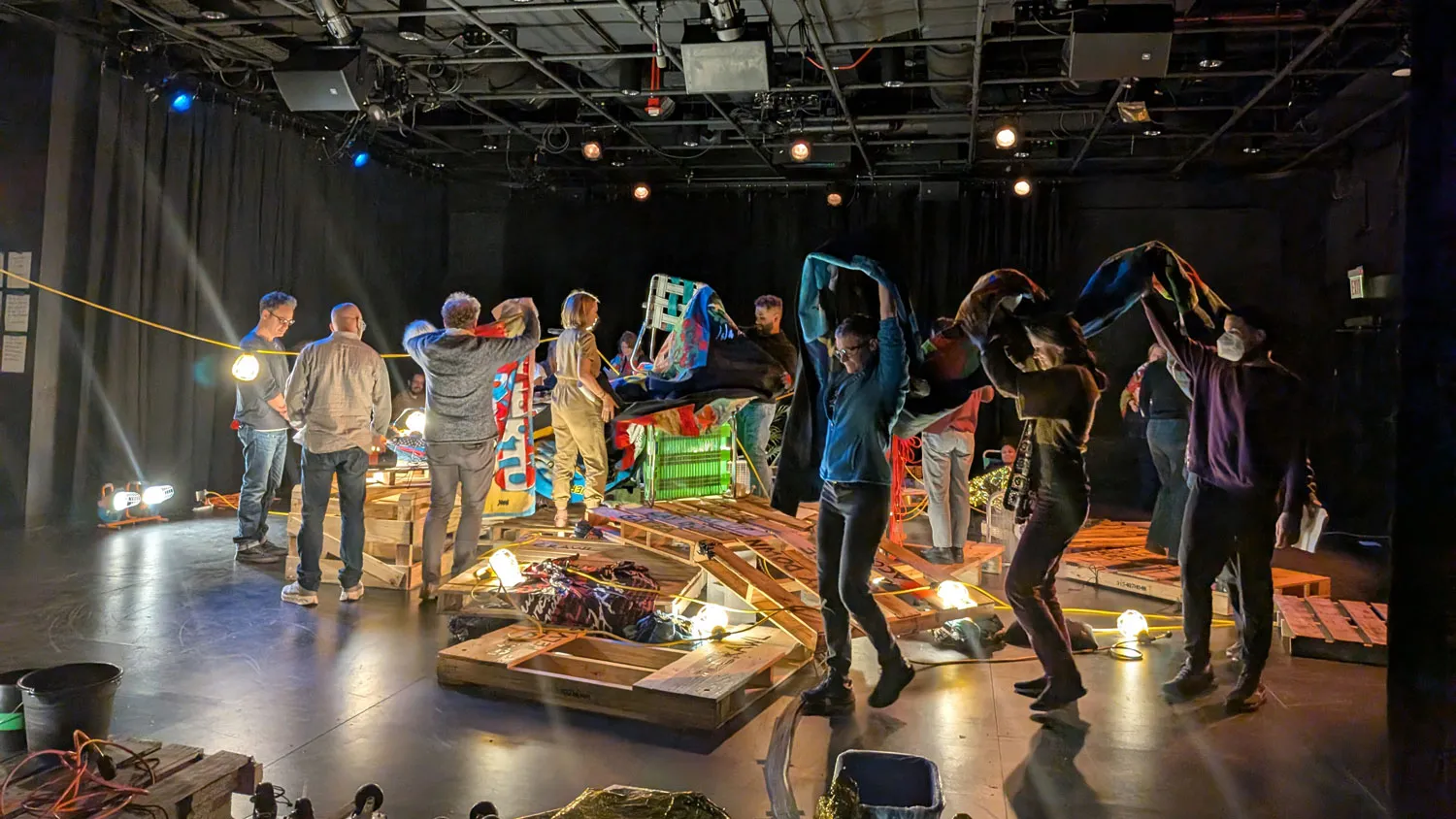
a group of people making a sculpture from pallets in a black box studio

Raft

Yanira Castro

Yanira Castro and a team of design collaborators, including Kathy Couch and RPI alum Stephan Moore, develop the environment for their audience-activated performance and audio installation, Raft, in advance of its April 2026 presentation at EMPAC.

Main Image: Yanira Castro, Raft, 2025. Courtesy the artist. 

Image
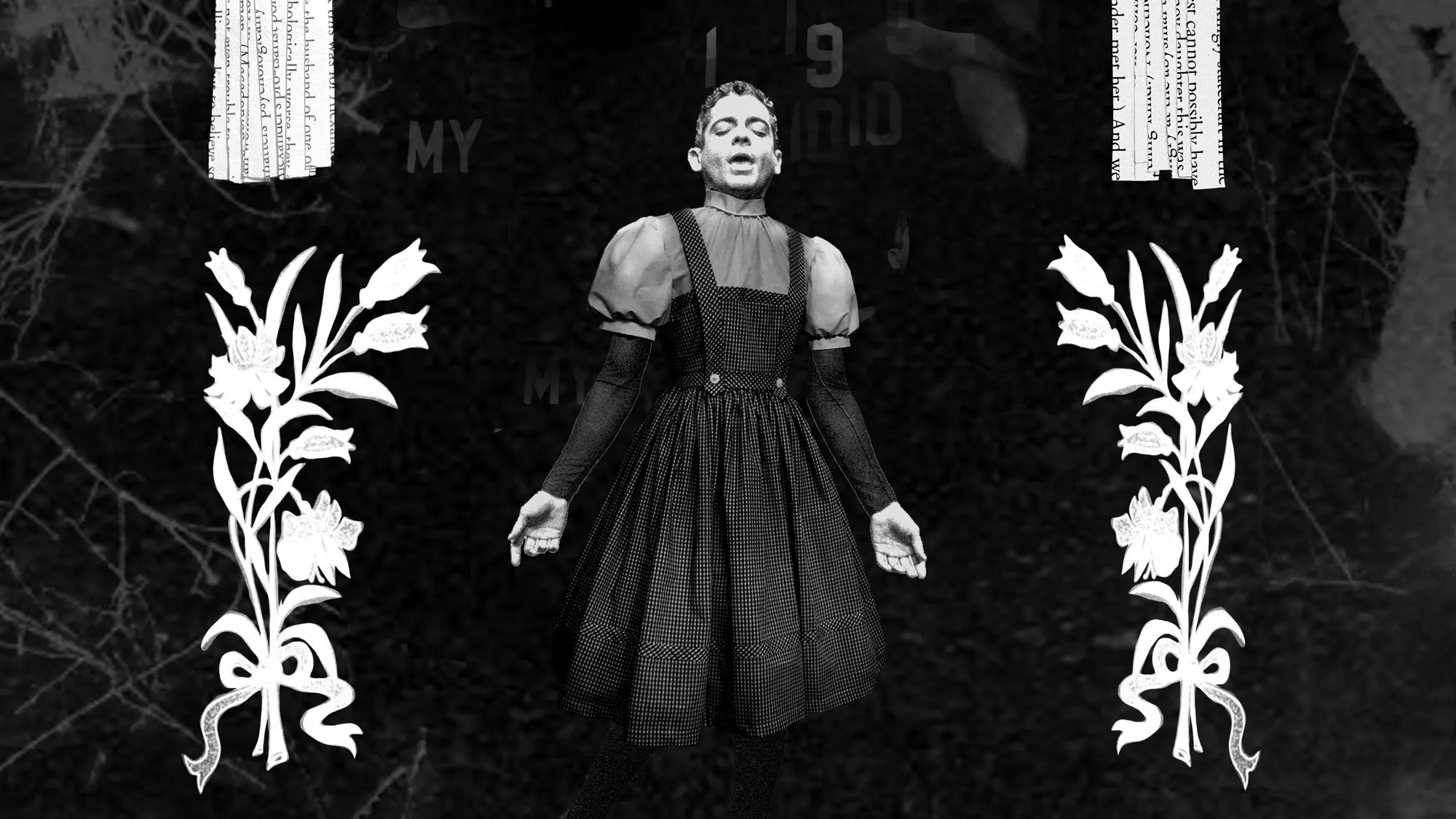
a black and white collage of a man in a gingham dress with cutout flowers on each side

My Town

Jack Ferver

In choreographer and theater director Jack Ferver’s My Town, the small town is a portal that provides special access into questions of self-expression and collective agency. Set loosely in an area of upstate New York, My Town considers the queer experience outside urban metropoles, and the ways physical geography marks the interior terrains of the mind.

Ferver has described the project as “exploring the disappearance of the femme,” taking a queer departure from the classic American play Our Town by Thornton Wilder in which the female protagonist Emily passes away. My Town is closely informed by the experience of building an art practice in the dense and intense environment of New York City, and the piece deals also with Ferver’s experience growing up in a small town in Wisconsin, and experiencing early familial tragedy.

Moving through tragicomic moments of violence, sexuality, and loss, Ferver balances the work with a playfulness and self-awareness that lifts the work into a surreal register. The fluidity of the work is echoed in the video by acclaimed filmmaker and artist Jeremy Jacob that frames the work and interacts with Ferver’s performance, enabling one scene to melt into another as if in a dream.

Ferver shifts through choreography and theatrical sketches throughout the work. As with many of Ferver’s past projects, My Town focuses heavily on constructing a persona, and also plays at the edge of the fictive and the real.

Main Image: Jeremy Jacob. Courtesy the artist.

Image
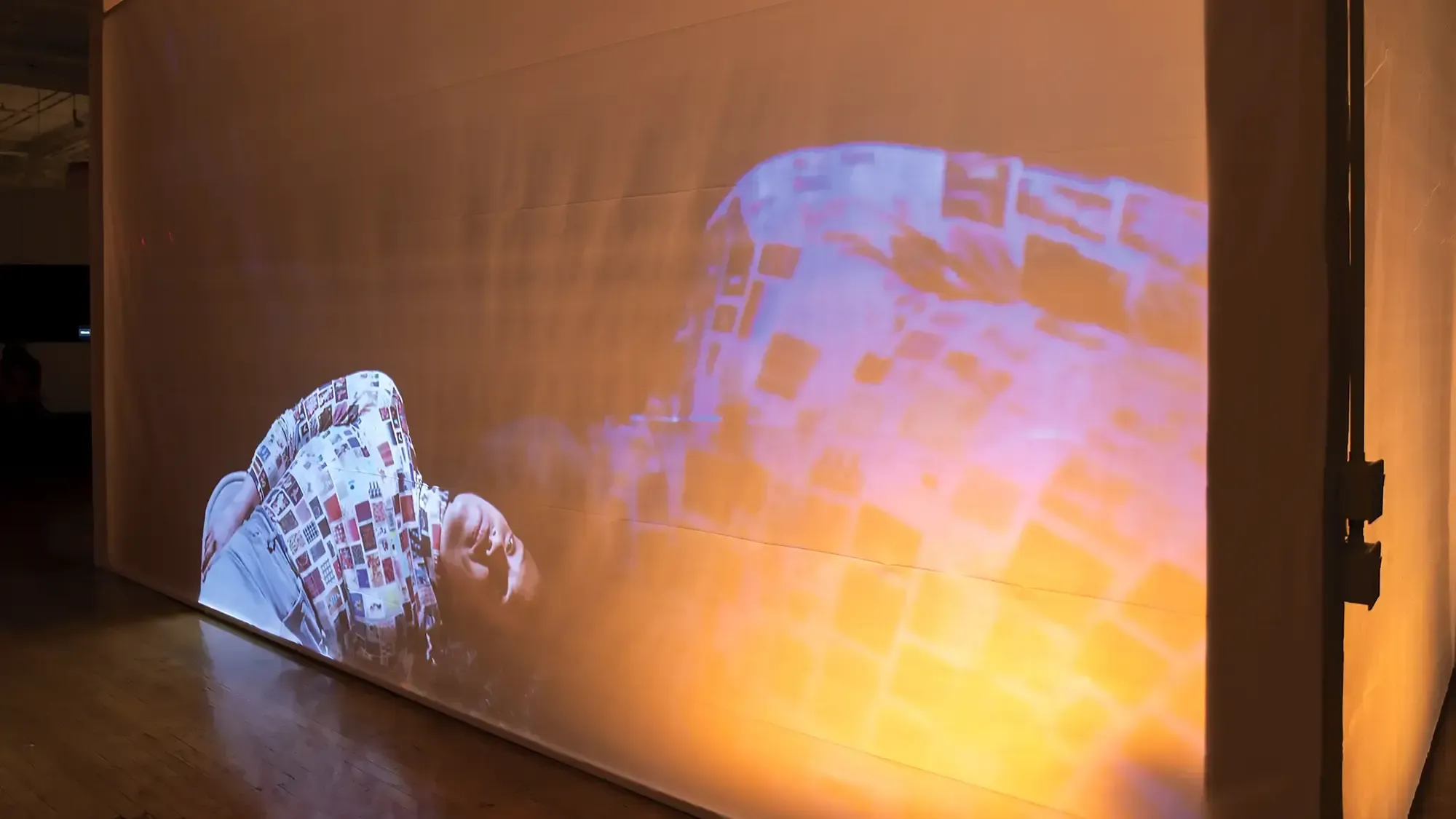
a sideways-bent body projected on a large screen

With Marion

Leslie Cuyjet

Choreographer Leslie Cuyjet is in residence in the EMPAC Theater venue to refine theatrical elements for her solo performance, With Marion, originally commissioned by The Kitchen (NYC) for an open-plan loft space.

Main Image: Leslie Cuyjet, With Marion, The Kitchen, 2023. Courtesy of artist. Photo: Walter Wlodarczyk.

Image
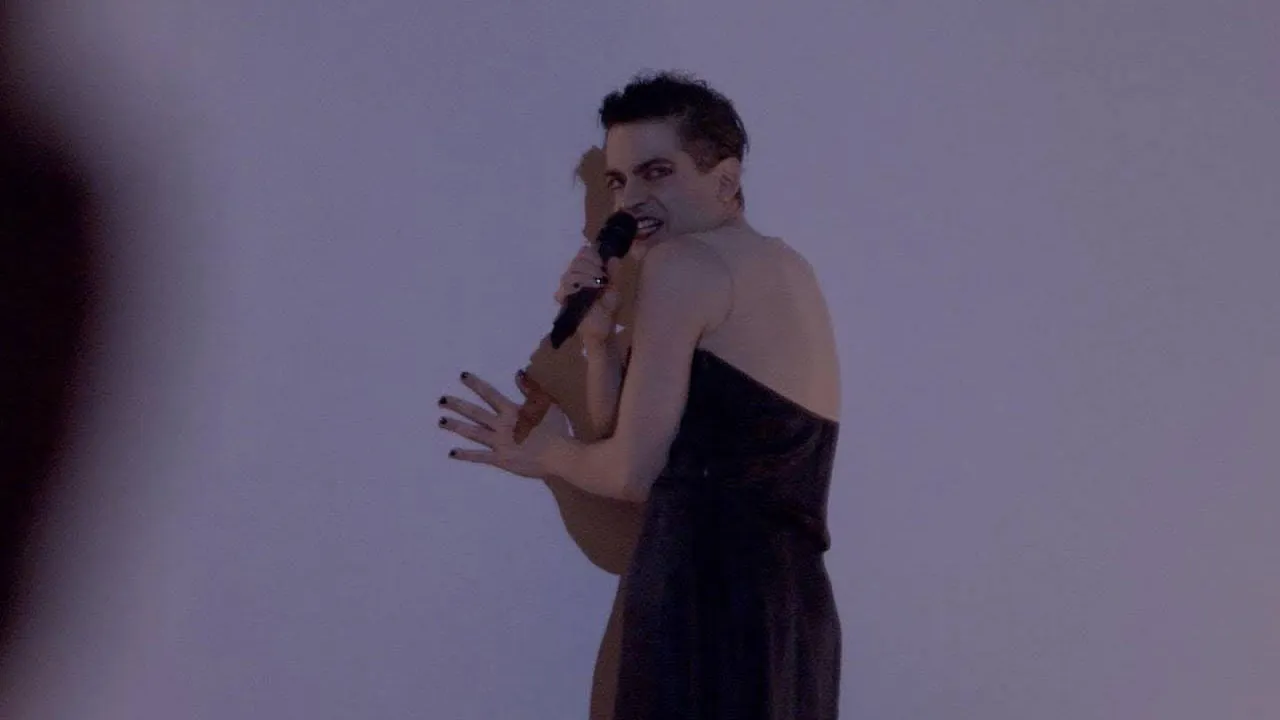
jack ferver

My Town

Jack Ferver

Jack Ferver and Jeremy Jacob are in residence in the EMPAC Theater to develop new material for the commissioned work My Town. Across two residencies, they develop scenography and lighting, and integrate Ferver’s choreography with projected video developed by Jacob. The residencies also support experimentation with the work’s dramaturgy.

Main Image: Performance photo of Jack Ferver in their work, IS GLOBAL WARMING CAMP, and other forms of theatrical distance for the end of the world. Mass MoCA, September 2022

Image
a sideways-bent body projected on a large screen

With Marion

Leslie Cuyjet

Choreographer Leslie Cuyjet performs inside a cocoon of mediated memory, text, and gesture in her solo performance, With Marion. Cuyjet combines her own embodied archive of movement with looping archival, pre-recorded, and live-captured video in a multi-sided enclosure that serves as both projection screen and stage, dynamically shifting the viewer’s perspective on her bodily form over time.

Originally commissioned by The Kitchen (NYC) for an open-plan loft space, this evening-length performance now floats in the dark void of the EMPAC Theater, further emphasizing how Cuyjet displays and obscures herself—and her internal thoughts—amidst objects, images, and the camera’s lens.

Cuyjet grapples with questions of classism, privilege, and race that arise in her family’s archives and the legacy of her great aunt, Marion Cuyjet (1920–1996), a pioneer of 1950s dance education. As a teen, Marion Cuyjet passed as white to train in Philadelphia ballet schools and later created the Judimar School of Dance where Black dancers studied before they could do so at white studios, including Alvin Ailey American Dance Theater’s Judith Jamison (1943–2024) and Philadanco’s Joan Myers Brown (b. 1931).

Layering her own memories of dance training many decades later alongside this complex family legacy, Leslie Cuyjet crafts a dense, fragmented, malleable, and intentionally oblique collage of memory within the sculptural structure and across her own body. With Marion at once fills in historical gaps and highlights where new fissures appear in the unstable relationship between self and the traces of the past that surround it.

Main Image: Leslie Cuyjet, With Marion, The Kitchen, 2023. Courtesy of artist. Photo: Walter Wlodarczyk.

Image
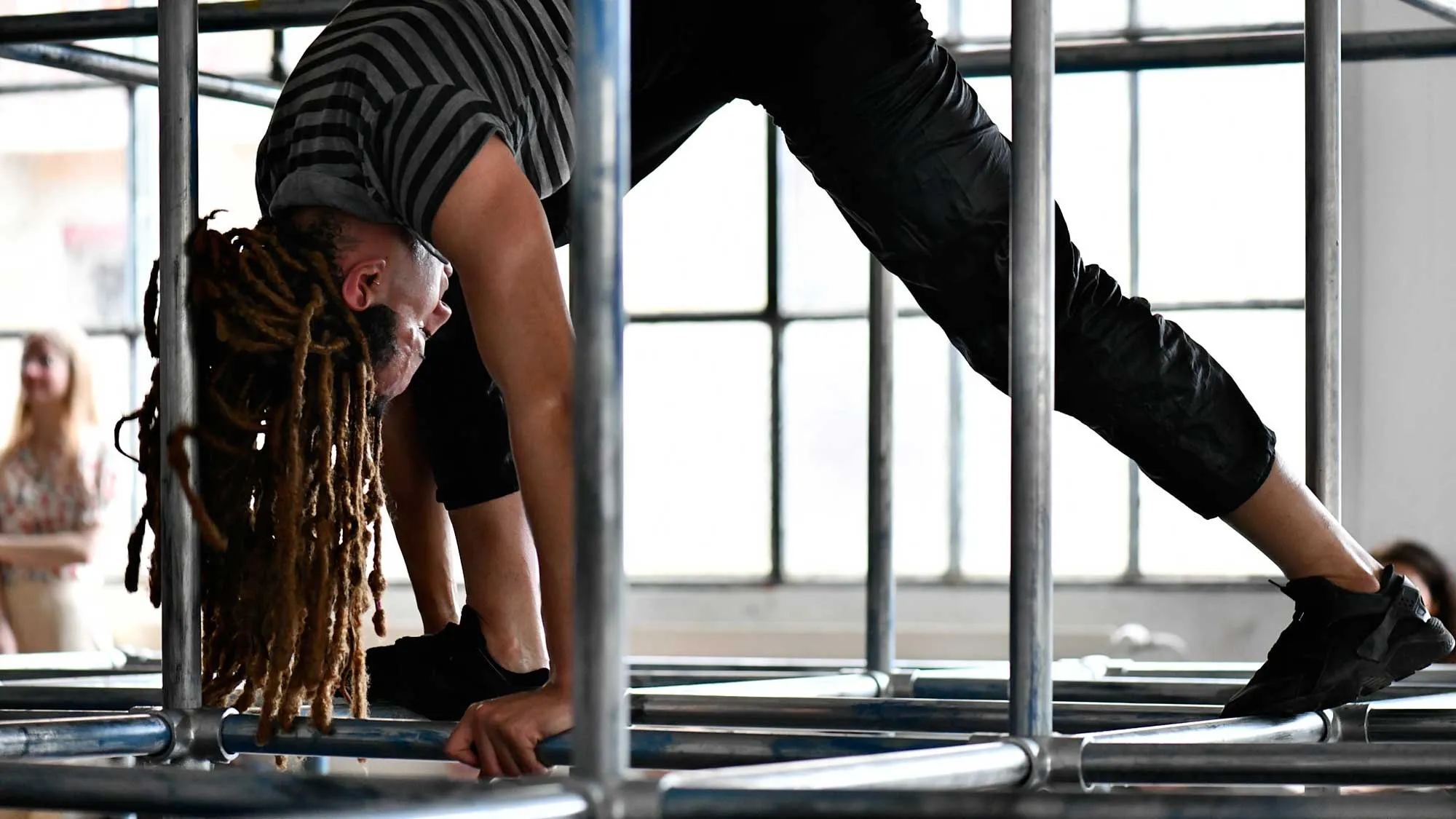
a Black performer in a galvanized steel playground-like structure bent over on the bars

Untitled

Steffani Jemison

In the context of the Ephemeral Organ series, Steffani Jemison revisits a recent performance work combining sculpture, movement, and narration to create a new iteration for video.

Main Image: Steffani Jemison, In Succession (Means), 2024. Performed by Nimia Gracious, Loren Tschannen, and Steffani Jemison at Centre d’Art Contemporain Genève, June 7–8, 2024. Courtesy the artist. Photo: Zoé Aubry.