Choreographer turns brain tumor recovery into study of dance and healing in 'Living in the Grey' film
A brain tumor changed choreographer Heidi Latsky’s life and deepened her work exploring disability, healing and resilience through dance.
Heidi Latsky had spent 18 years choreographing for dancers with physical disabilities when she discovered she had an invisible disability of her own: a massive, benign brain tumor. It was a condition she was familiar with — her mother had three separate surgeries for benign tumors, known as meningiomas, beginning when Heidi was 11 years old.
What Latsky couldn’t have predicted was that this inheritance would open up a whole new arena of dance for her, exploring the impact of what she calls “nonapparent” disabilities.
The choreographer’s 35-minute documentary film, “Living in the Grey,” follows five dancers with neurological challenges — including the choreographer herself — as they rediscover their resilience and capacity through dance. Latsky will screen the film as part of a free Interface program Thursday at 6 p.m. at EMPAC, alongside a conversation with RPI cognitive science professor Brett Fajen. A second screening and discussion is set for Tuesday at 6 p.m. at the Bush Memorial at Russell Sage College, with a reception starting at 5 p.m.
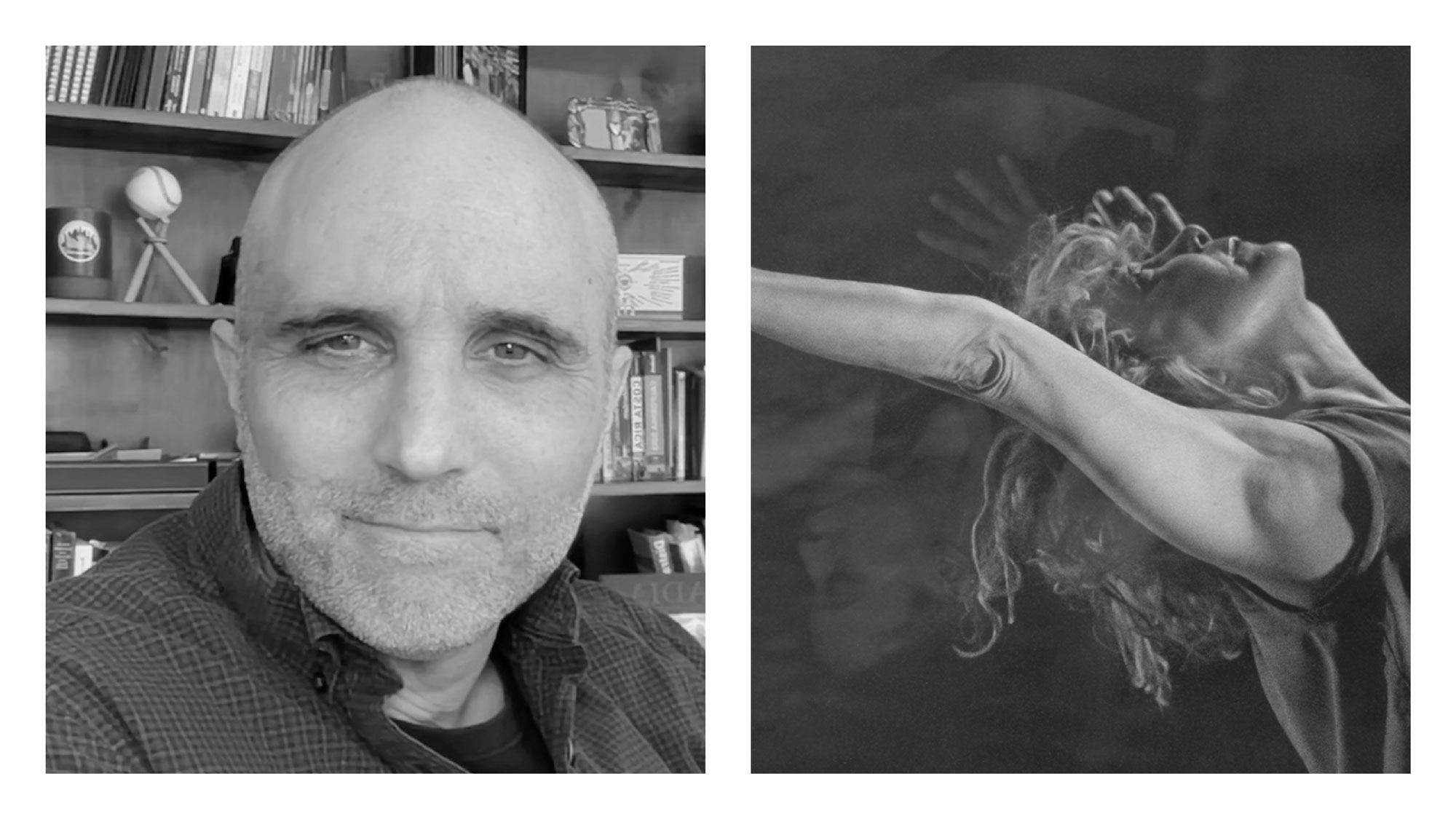
“Dancers have a different approach to healing — they’re much more proactive because the mind/body connection is so important for what they do,” said Latsky. She hopes the film will be enlightening for healthcare professionals, while letting people with brain injury and brain trauma know that they’re not alone, and that healing is possible. “I’m thriving, and all of us in the film are thriving,” she said.
“Living in the Grey” is a long way from the art form that first seduced the 68-year-old dancer nearly five decades ago. While studying for a psychology degree at Carleton University in Ottawa, Canada, she fell in love with disco dancing.
“I had this incredible partner — he would twirl me and dip me and I would go up on his shoulders,” the Montreal native recalled. “We started winning competitions, but I was not a performer. I was unbearably shy and I had to push myself to get on stage, and that was in and of itself a lesson, because the only way I could do that was to really be in my dancing, to embody the dancing so fully and be so consumed by what I was doing that I wouldn’t have to look at the audience.”
Advertisement
Article continues below this ad
That passion carried her to Toronto to study modern dance, and then to New York City, with dreams of being a ballerina or a Broadway dancer. Instead, she joined the Bill T. Jones/Arnie Zane Dance Company — known for the diversity of its dancers and its work investigating identity and human rights — and spent six years with the troupe, from 1987 to 1993.
“I had never understood that dance could be sociopolitical, and here was this company making really impactful work,” Latsky said. “We were all so different looking, with very different ways of moving, and I feel like I’ve carried on that lineage, maybe in a more extreme way.”
She paired up with another Jones/Zane dancer, Lawrence Goldhuber, to create a duet company exploring “all the different variations of what a relationship is,” and then founded her own troupe, Heidi Latsky Dance, in 2001. Her body of work from that time includes “Disjointed,” inspired by her mother’s 30-year battle with illness.
Latsky might have continued choreographing more traditional modern dance if a mutual friend hadn’t introduced her to visual and performance artist Lisa Bufano. Bufano’s fingers and lower legs were amputated when she was 20 due to a life-threatening bacterial infection, and her work incorporated various prosthetics and props. Latsky encouraged her to dance without prosthetics, putting the focus solely on Bufano’s strength and grace. The piece they made together in 2006, “Five Open Mouths,” turned out to be a pivotal moment for the choreographer.
“At that point I had no idea about the disability community,” Latsky said. “But Lisa was so remarkable, and I met other people in that community through her and started bringing disabled dancers into a work that we ended up calling ‘GIMP.’ Most of the dancers were activists and they wanted to call it that, but it was a very controversial title, and a lot of disability organizations were very against it.”
Despite (or because of) that debate, the piece featuring four “conventional” dancers and four performers with physical disabilities drew large audiences and offered opportunities for education and discussion. It catalyzed Latsky’s next work, “The GIMP Project,” a series that ran from 2006 to 2015, with the mission of defying dance norms and exposing audiences to the beauty found in unexpected ways of moving. Among the disabled performers in the group were an aerialist born without legs, dancers in wheelchairs and others with cerebral palsy.
The new formulation of Latsky’s company required her to find new ways of choreographing.
“I used to come in and show a phrase to the dancers, and they would learn it and then we would manipulate it and problem-solve it,” she explained. “I realized I couldn’t do that with these dancers. I had to go on my instinct and intuition. With [performer] Lawrence Carter-Long, who has cerebral palsy, I asked him, ‘What do you do really well?’ and he told me, ‘I fall.’ I can’t fall to the ground on my hands; that would destroy my body, but he can, so we utilized that virtuosity.”
In 2015, Latsky launched the site-specific installation “On Display,” in which dancers and community members — disabled and nondisabled, of all ages, races and sizes — become living sculptures, barely moving as audiences circle around them. It spawned “On Display Global,” in which ambassadors trained by Latsky stage the installation on Dec. 3, the United Nations’ International Day of Persons with Disabilities. It’s been performed annually since 2015 around the world, including a version presented on Zoom during the COVID pandemic.
And then, in 2024, Latsky received her diagnosis, followed by an 11-hour surgery to remove the tumor that doctors told her might have been in her brain for the past 20 years.
“My mother’s brain kept making meningiomas, but my brain just made one big one, on my frontal lobes,” she explained. “I had no emotion, because the frontal lobes are responsible for that. When I was in the hospital, I wasn’t afraid at all, but I did cry for my mother — for some reason that hit me. It was the first time I had gotten emotional in a long time.” The memories were particularly poignant because her daughter, then 24 and in medical school, was beside her throughout the ordeal.
As Latsky embarked on her recovery, she was determined to begin dancing again alongside others who knew what she’d been through. She brought together long-term members of her company and new dancers with nonapparent disabilities, including several who had experienced neurological issues like hers. “Living in the Gray” emerged from their experiences of weaving dance into their journeys of recovery.
“Tracking Parallel,” sparked by Latsky’s reflections on mother-daughter relationships, was one of the first dances she created after her surgery. That piece grew into “Days of Awe,” named for the 10 days in the Jewish calendar between Rosh Hashanah and Yom Kippur, traditionally dedicated to spiritual introspection and renewal.
“As it’s evolved over three years, it’s become so much more about the surreal nature of upheaval, whether it’s a personal medical upheaval, or a country, a government, or your values being tested to the limit,” Latsky reflected. “There are moments of anger and fear and then moments of connection. The joy for me is in the dancing we’re doing, in the internal life of each performer and their commitment to what they’re doing.”
Combining movement, personal stories, film and a score that includes MRI sounds, “Days of Awe” will be performed at Lincoln Center’s Alice Tully Hall in January. It’s a recognition that would have meant everything to Latsky earlier in her career, but nowadays, it’s the act of dancing itself that’s most important to her.
“I started dancing when I was 20, and it took me out of myself and into myself at the same time,” she said. “Not many people my age are still dancing, but I don’t ever want to stop. One of the best things that happened from [the tumor and surgery] is that I’m so much more grateful for every day that I can dance the way I love to dance.”

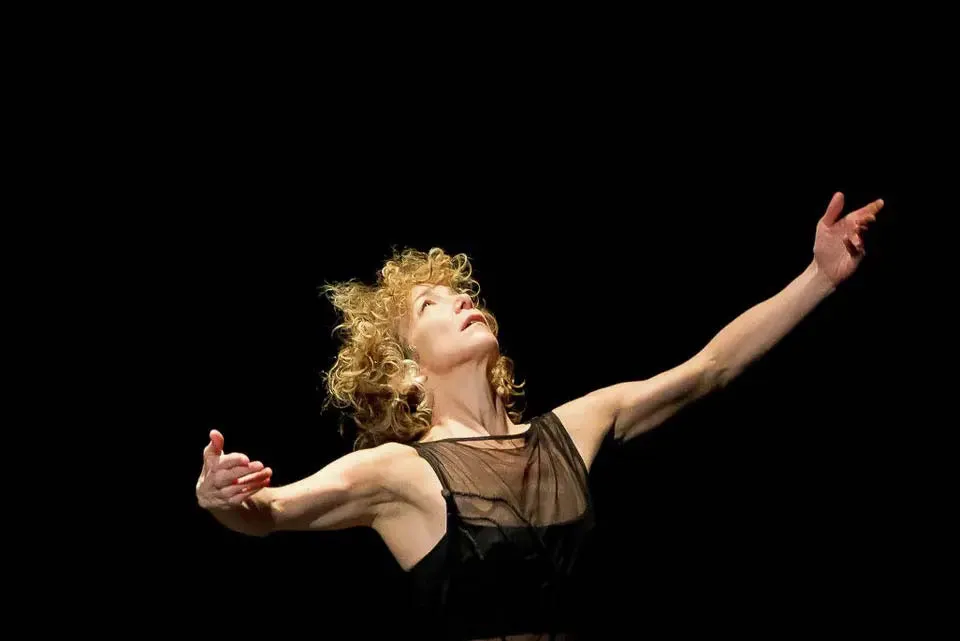
Main Image: Heidi Latsky. Courtesy the artist.