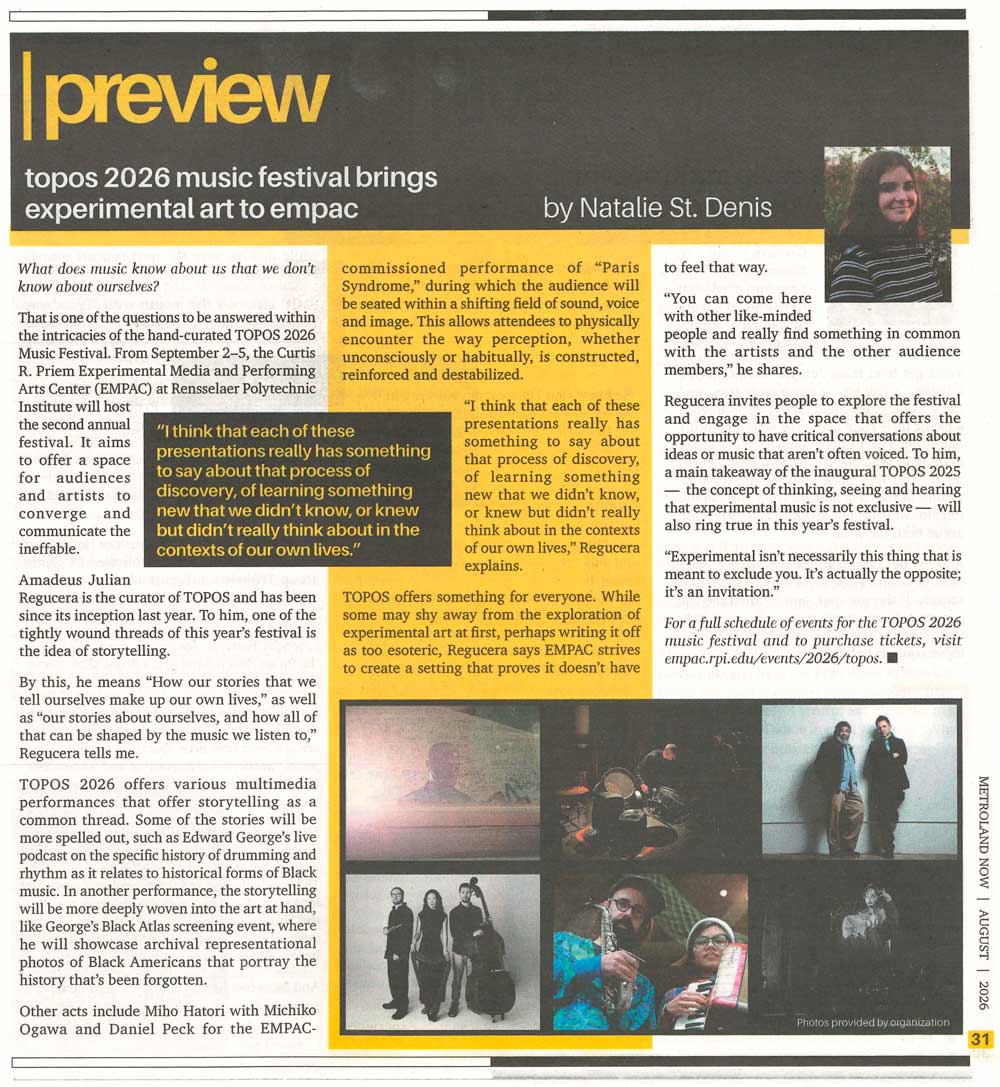
TOPOS 2026 Music Festival Brings Experimental Art to EMPAC
What does music know about us that we don't know about ourselves?
That is one of the questions to be answered within the intricacies of the hand-curated TOPOS 2026 Music Festival. From September 2–5, the Curtis R. Priem Experimental Media and Performing Arts Center (EMPAC) at Rensselaer Polytechnic Institute will host the second annual festival. It aims to offer a space for audiences and artists to convene and communicate the ineffable.
Amadeus Julian Regucera is the curator of TOPOS and has been since its inception last year. To him, one of the tightly wound threads of this year’s festival is the idea of storytelling.
By this, he means “How our stories that we tell ourselves make up our own lives,” as well as “our stories about ourselves, and how all of that can be shaped by the music we listen to,” Regucera tells me.
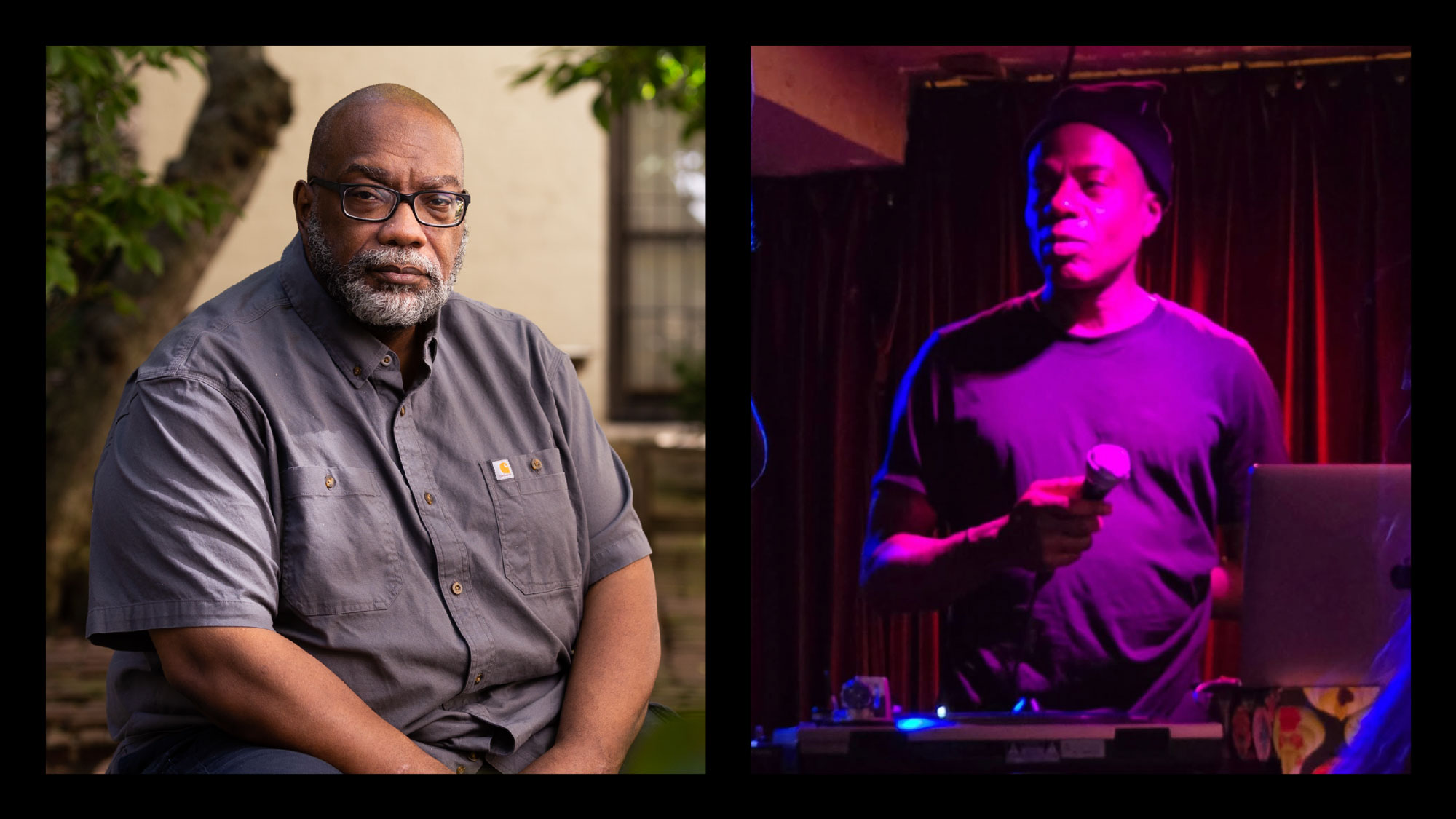
TOPOS 2026 offers various multimedia performances that offer storytelling as a common thread. Some of the stories will be more spelled out, such as Edward George’s live podcast on the specific history of drumming and rhythm as it relates to historical forms of Black music. In another performance, the storytelling will be more deeply woven into the art at hand, like George’s Black Atlas screening event, where he will showcase archival representational photos of Black Americans that portray the history that’s been forgotten.
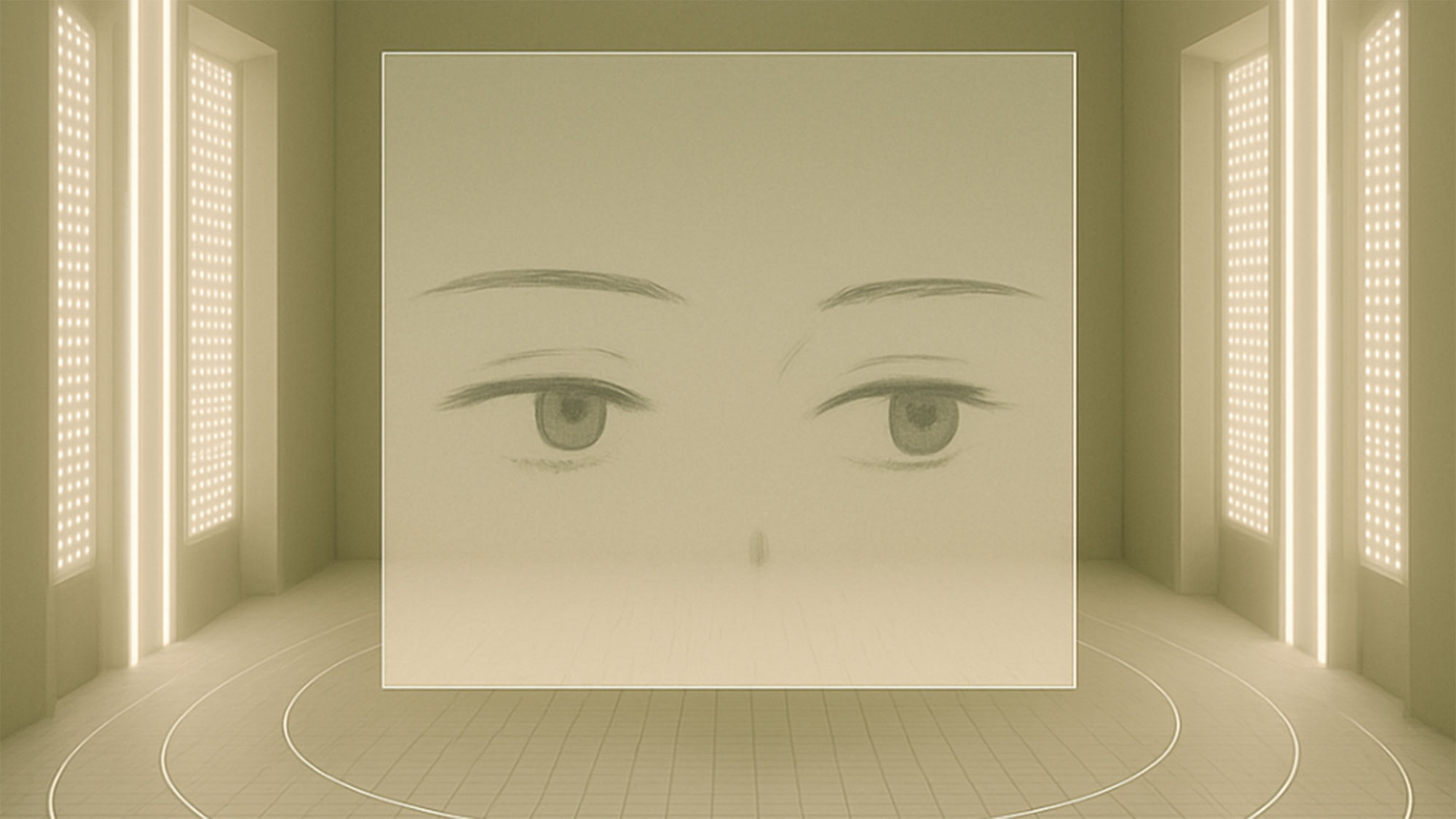
Other acts include Miho Hatori with Michiko Ogawa and Daniel Peck for the EMPAC-commissioned performance of “Paris Syndrome,” during which the audience will be seated within a shifting field of sound, voice and image. This allows attendees to physically encounter the way perception, whether unconsciously or habitually, is constructed, reinforced and destabilized.
“I think that each of these presentations really has something to say about that process of discovery, of learning something new that we didn’t know, or knew but didn’t really think about in the contexts of our own lives,” Regucera explains.
TOPOS offers something for everyone. While some may shy away from the exploration of experimental art at first, perhaps writing it off as too esoteric, Regucera says EMPAC strives to create a setting that proves it doesn’t have to feel that way.
“You can come here with other like-minded people and really find something in common with the artists and the other audience members,” he shares.
Regucera invites people to explore the festival and engage in the space that offers the opportunity to have critical conversations about ideas or music that aren’t often voiced. To him, a main takeaway of the inaugural TOPOS 2025—the concept of thinking, seeing and hearing that experimental music is not exclusive—will also ring true in this year’s festival.
“Experimental isn’t necessarily this thing that is meant to exclude you. It’s actually the opposite; it’s an invitation.”