Image
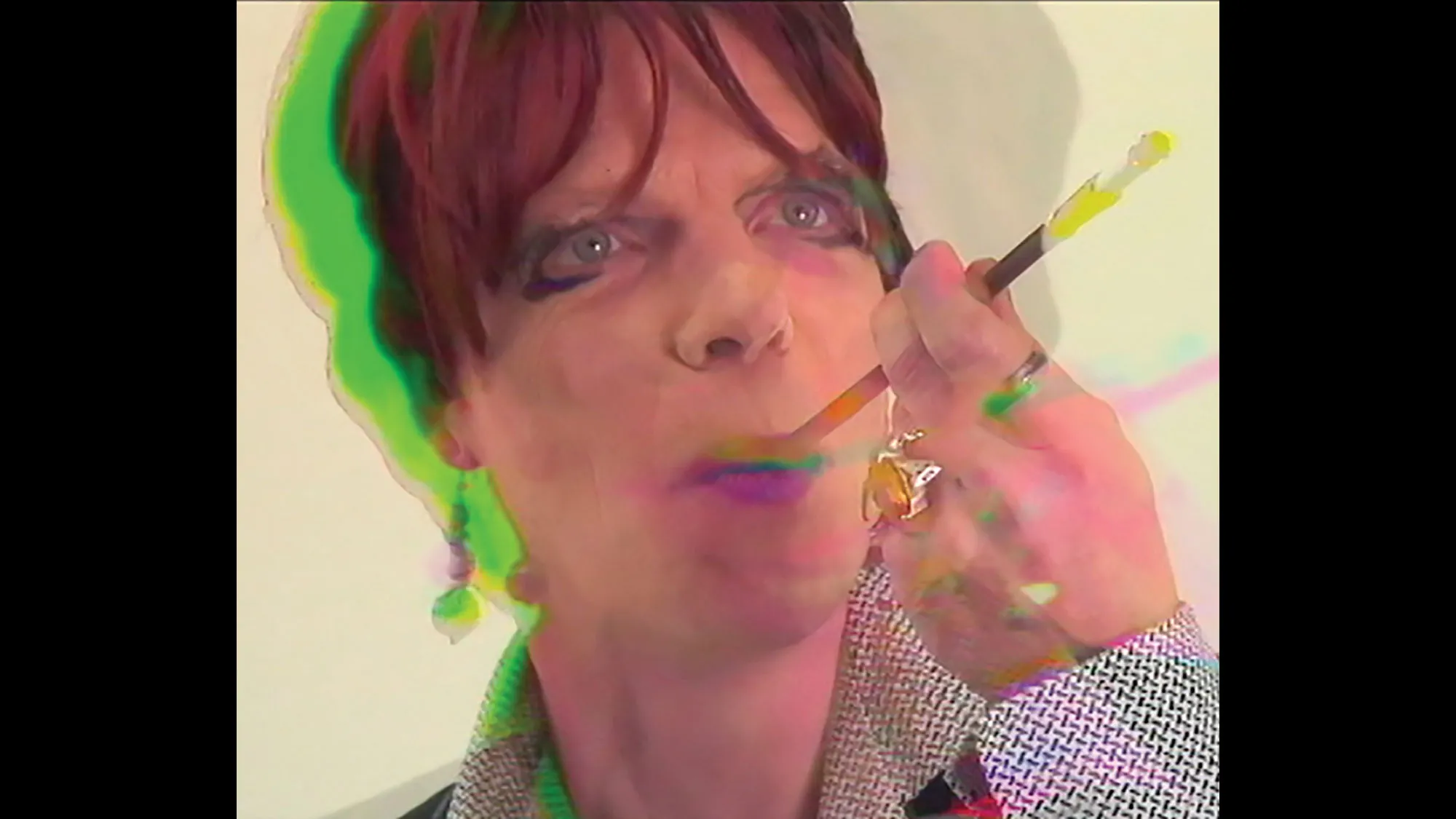
A female with red hair and heavy eye makeup smoking a cigarette.

Charles Atlas

Screening and Artist Talk

An evening of films and discussion with New York media-dance pioneer Charles Atlas. Atlas was in residence at EMPAC to produce a newly commissioned theatrical production (Tesseract) that premiered in EMPAC’s Theater in fall 2017. Intertwining dance, live and pre-recorded 3D video, the performance was choreographed in collaboration with Rashaun Mitchell and Silas Riener.

Atlas has created numerous works for stage, screen, museum, and television, consistently pioneering the synthesis of technology and performance. A key figure in the development of “media-dance,” in which performance is created directly for the camera, Atlas was videographer-in-residence with Merce Cunningham Dance Company for a decade, and continues to collaborate extensively with choreographers, dancers, and performers, including Michael Clark, Yvonne Rainer, Diamanda Galas, and Mika Tajima/New Humans, among many others.

Photo: A still from the library of Charles Atlas. Video still courtesy the artist.

Media

CANCELLED: Jeffrey Kipnis

Science? What Science?
CANCELLED

In this talk, architectural theorist and Ohio State University professor Jeffrey Kipnis will discuss the production of knowledge in the realms of science and the arts, asserting that artists, composers, magicians, healers, writers, politicians, generals, and everyday artisans have accumulated and mobilized far more actual scientific facts through culture than modern science has discovered or come close to explaining.

Image
A man sits behind a table with a black table cloth on stage in front of a large screen projecting an image of jungle foliage.

Dieter Roelstraete

Dust to Digital: Loose Remarks on the Economy of Craft

Curator Dieter Roelstraete will discuss wide-ranging practices invested in the notion of craft, and the relationship of these practices to issues such as time and materiality. Roelstraete’s recent exhibition for the Museum of Contemporary Art Chicago, entitled The Way of the Shovel: Art as Archaeology, traced the interest in history, archaeology, and archival research through the art production of the last decade. It also considered art and archaeology’s shared approaches to issues such as material, time, process, performance, and liveness.

Dieter Roelstraete is Manilow Senior Curator at the Museum of Contemporary Art Chicago, where he recently organized Goshka Macuga: Exhibit, A (2012), The Way of the Shovel: Art as Archaeology (2013), and Simon Starling: Metamorphology (2014).

Image
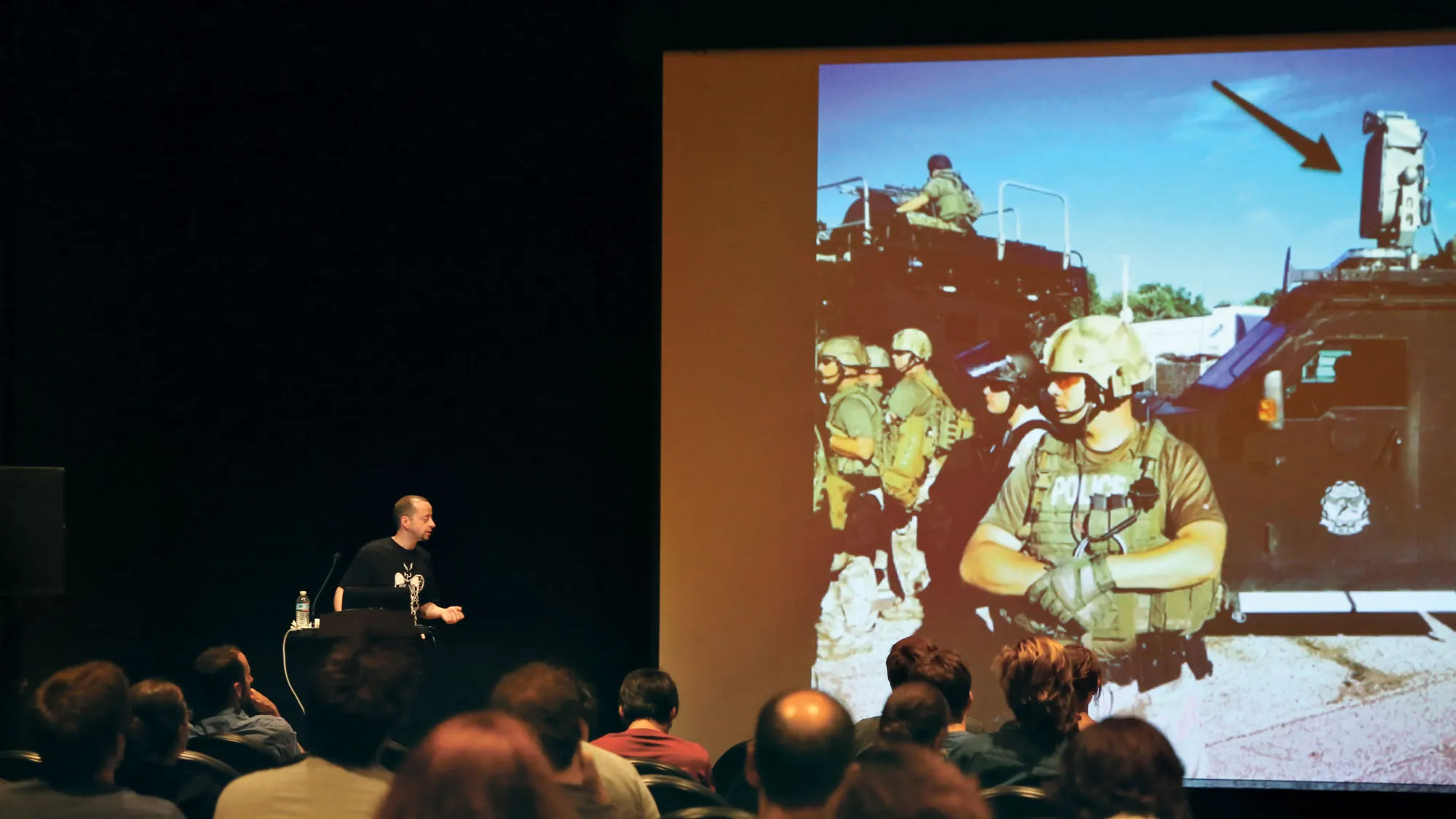
Steve goodman in discussion

Steve Goodman

Sonic Warfare

Steve Goodman, otherwise known as electronic musician Kode9, presented a rare talk on his investigations into the weaponization of sound. How can sound produce discomfort, become threatening, or create an ambiance of fear? Goodman mapped the many different ways vibrations in air can be transformed into force, combining philosophy, science, fiction, aesthetics, and popular culture. Taking examples from police and military research into acoustic crowd control, corporate uses of sonic branding, and intense works of sound art and music culture, Goodman revealed a startling new dimension of sound in society. 

Steve Goodman is a lecturer in music culture at the School of Sciences, Media, and Cultural Studies at the University of East London, a member of the CCRU (Cybernetic Culture Research Unit), and the founder of the record label Hyperdub.

Image
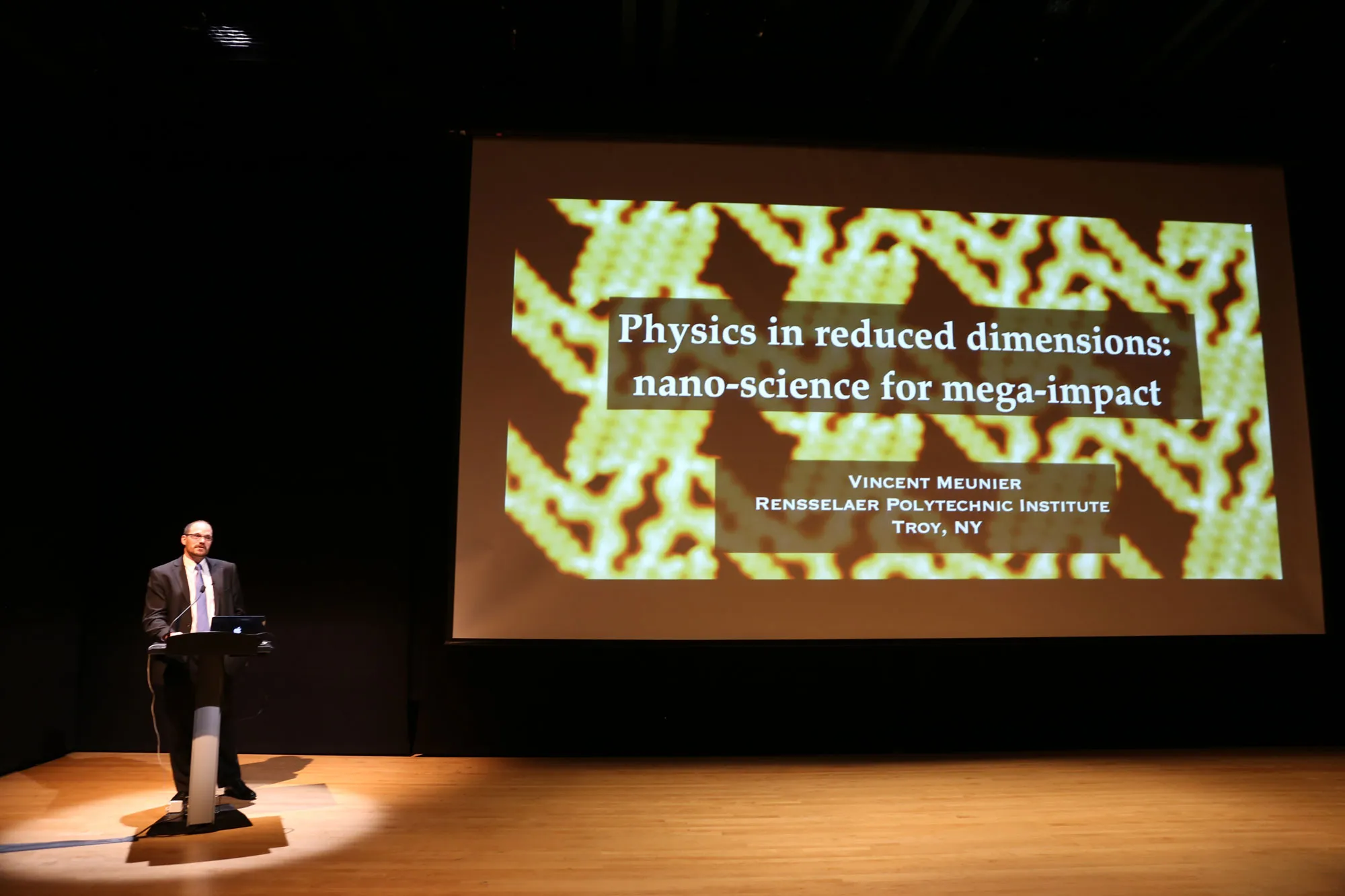
Vincent Meunier in discussion on a stage in front of a projection that reads 'Physics in Reduced Dimensions: Nano-Science for Mega-Impact'.

Vincent Meunier

Physics in reduced dimensions: nano-science for mega-impact

“There is plenty of room at the bottom,” Richard Feynman told a group of physicists in 1959, in a famous call for new investigations into subatomic science. The many new wonders of nanoscience demonstrate the prescience of Feynman’s claim. Over the last few decades, the effort to turn molecular and atomic building blocks into functional materials has energized scientists and engineers, and eventually led to the field of nanotechnology. With the emergence of nanotechnology, scientific scrutiny must now shift again, tracing these nano-level discoveries back up to a larger scale, where materials with predictive functionality can be assembled atom by atom. Manipulations at the sub-nanometer scale are extremely promising, making it possible to express the intricacies of quantum physics at the device level. These manipulations are also extremely challenging, requiring technical mastery at many different levels. In this talk, Rensselaer professor Vincent Meunier will present examples from the quest to optimize properties at the nanoscale for macroscopic applications in areas such as energy harvesting, storage, water purification, and nanomaterials design. The use of large-scale supercomputing will be highlighted, showing how current capabilities are quickly closing the gap between realistic length and time scales with those amenable to state-of-the-art modeling.

Main Image: Vincent Meunier. Photo: Emily Zimmerman