Image
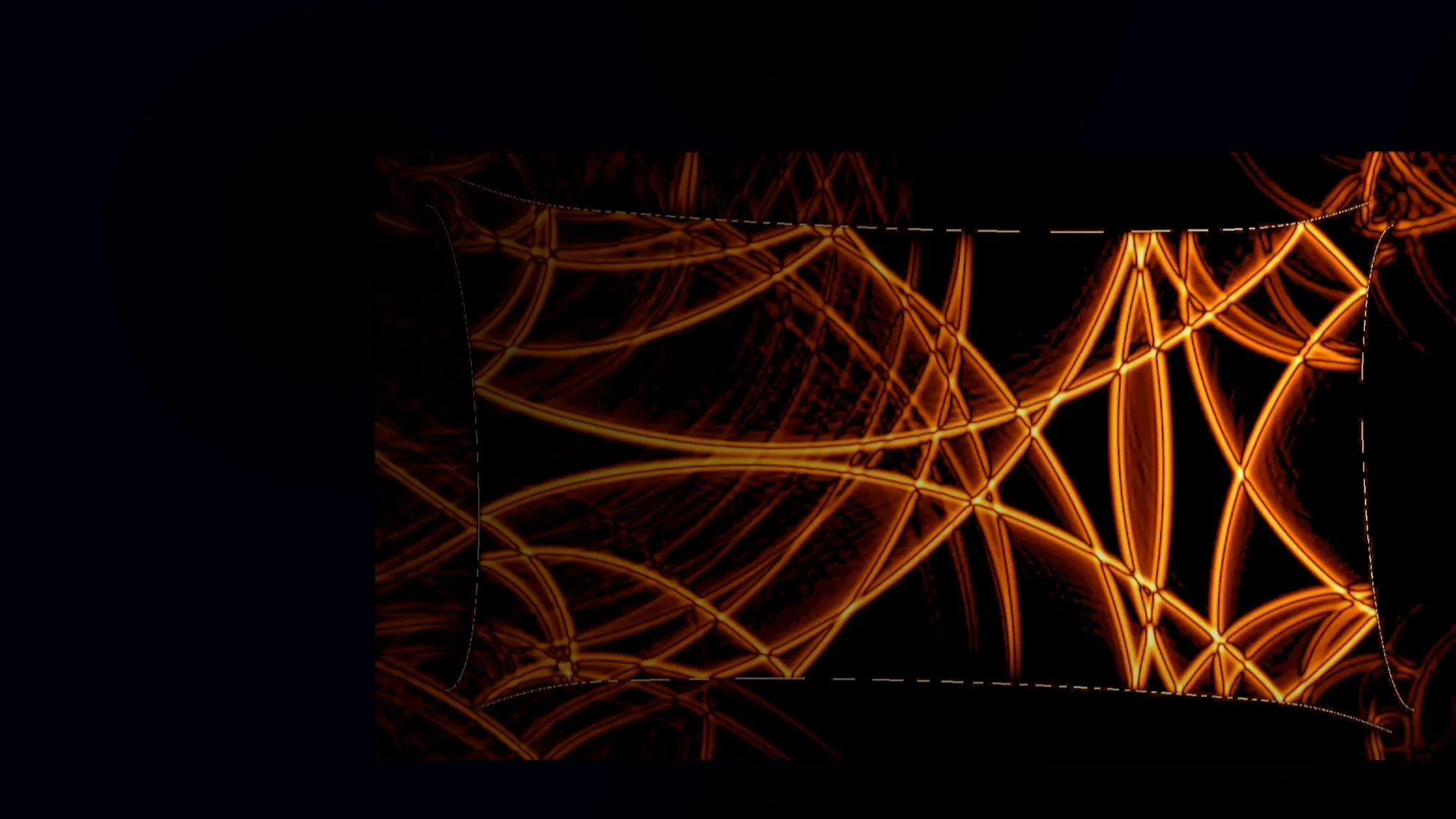
Abstract image of orange lines of light randomly placed among a black background.

Zackery Belanger

The Next Acoustic Architecture

From the connections between enclosure geometry and sound a potential future for acoustic architecture emerges. In this future, acoustic performance is an integral component of the design process, with surface geometries determined from the largest room scales down to the smallest sound absorbing pores. A continuous spectrum of geometric possibility encompasses traditional applied acoustic treatment, such as absorption and diffusion, and the debate surrounding the function of ornament is partially resolved.

Media

Ellen Esrock

Touching Words & Images

Ellen Esrock researches the effect that our sense of touch, temperature, body position, and pain has on our perceptions of visual art and literature. In this talk, she explored how spectators and readers use their own body to reshape the boundary between themselves and an imagined fictional world. This softening of boundaries permits readers and viewers to immerse themselves in worlds outside of their own and to locate these worlds within the self. Touch, as part of the somatosensory system, functions along with the viscerosensory and motor systems to deepen our emotions and cognitions of these blended realities.

Esrock is an associate professor in the Department of Communication and Media at Rensselaer; she integrates humanistic and cognitive/neuropsychological approaches to the bodily experiences of viewing art and reading literature. Select publications include “Embodying Art: The Spectator and the Inner Body,” Poetics Today (2010); “Embodying Literature,” Journal of Consciousness Studies (2004); and “Touching Art: Intimacy, Embodiment, and the Somatosensory System,” Consciousness and Emotion (2001). 

Detail View: Rensselaer professors and researchers shared in-depth perspectives on their fields of inquiry, inviting an exchange of ideas between experts and non-experts alike.

Seth Lloyd

Programming the Universe

In the traditional scientific account, the universe is composed of matter and energy. However, there is another key ingredient: information. Every atom and elementary particle carries with it bits of information, and when two atoms collide, those bits flip. The universe computes. The history of the universe is an intricate dance in which energy and information twirl and entwine. By understanding how and why the universe computes, we gain insight into the nature of reality itself. 

Dr. Lloyd is a professor of mechanical engineering and director of the W.M. Keck Center for Extreme Quantum Information Theory at MIT. He was the first person to develop a realizable model for quantum computation and is working with a variety of groups to construct and operate quantum computers and quantum communication systems. He is the author of over 100 scientific papers, and of Programming the Universe (Knopf, 2004). 

In Other Words brought together six artists who delivered lecture-performances, and six thinkers who gave traditional talks. Juxtaposed, these talks built connections across boundaries and made dialogue a continuous process of renewal.

This talk was presented in conjunction with Clément Layes’ performance, Allege.

Lev Manovich

Looking At One Million Images: Visualizing Patterns