Dr. Elie During
Cage/Gould: Several Silences
Glenn Gould's obsession with control, his crystalline, X-ray renderings of the contrapuntal texture of Bach's fugues, may seem miles away from John Cage's commitment to the principles of indeterminacy and interconnectedness in the composition and performance of experimental music. Gould wittily described Cage as a hero of American primitivism, a musical Thoreau, an anarchist fond of I-Ching and astrology. Yet there are more than accidental resonances between the "Idea of North" and the "Idea of Chance". Cage famously welcomed all kinds of sound in the musical process, but he had studied at one time with Schönberg. His embrace of chance operations was in part motivated by a distrust of improvisation: the expression "prepared piano" speaks for itself. As for the experimental side of Gould, it is apparent in his quirky affection for the "harpsi-piano" as much as in his creative use of recording technology. In order to explore the convergences and divergences between these two iconoclastic figures of 20th century music, the lecture will focus on the meaning and role of silence—of several silences—in their respective work.
Elie During studied philosophy at the Ecole Normale Superieure (Paris) and is now Associate Professor and Chair of the Philosophy Department at University of Paris-Ouest Nanterre. His current research focuses on the philosophical implications of the spacetime concept, at the crossroads of aesthetics (music, cinema, architecture), metaphysics and the philosophy of science. He contributed to the critical edition of Henri Bergson's complete works (Duree et Simultaneite [Duration and Simultaneity], PUF, 2009, and Memory of the Present [Le souvenir du present], PUF, 2012). His publications include Faux Raccords [Jump Cuts] (Actes Sud, 2010), Les Temps flottants [Floating Times] (forthcoming, Bayard, 2013), Bergson et Einstein: la querelle du temps (forthcoming, PUF, 2013). Elie During is a member of the editorial board of Critique and a series editor of "Metaphysiques" (Presses Universitaires de France).
Following the lecture, at 8:00 pm the Rensselaer Contemporary Music Ensemble performs a special concert "Gould/Cage", also in the EMPAC Theater.
Mars Rover Curiosity Program
Presented by Rensselaer Alumni Association
Learn about the science behind the Mars Rover "Curiosity" and the study of its findings with alumni members of the team: Dean Laurie Leshin, member of the Curiosity Rover Science Team; Kobie Boykins '96, Technical Group Supervisor Mechanisms and Mobility, MSL Actuator Cognizant Engineer; Frederick Serricchio '94, Attitude Control System Engineer for Cruise and Entry, Descent and Landing (EDL); Dr. Michael Meyer '74, Lead Scientist, NASA's Mars Exploration Program.
Image
Marco Iacoboni
Mirror Neurons and Our Capacity for Empathy
The discovery of mirror neurons is one of the most significant advances in neuroscience and helps demystify how we imitate and understand one another. Dr. Marco Iacoboni’s work in this area illuminates the remarkable human ability to accurately interpret the feelings and intentions of others. Taking imitation as a fundamental form of learning and non-verbal communication during development, he shares his findings on its profound implications for understanding empathy. Susan Sgorbati joins Iacoboni after his lecture to discuss how empathy is a core component in any emergent collaborative process of creation, whether in dance or in applied strategies for conflict resolution.
Image
Susan Sgorbati
Emergent Improvisation
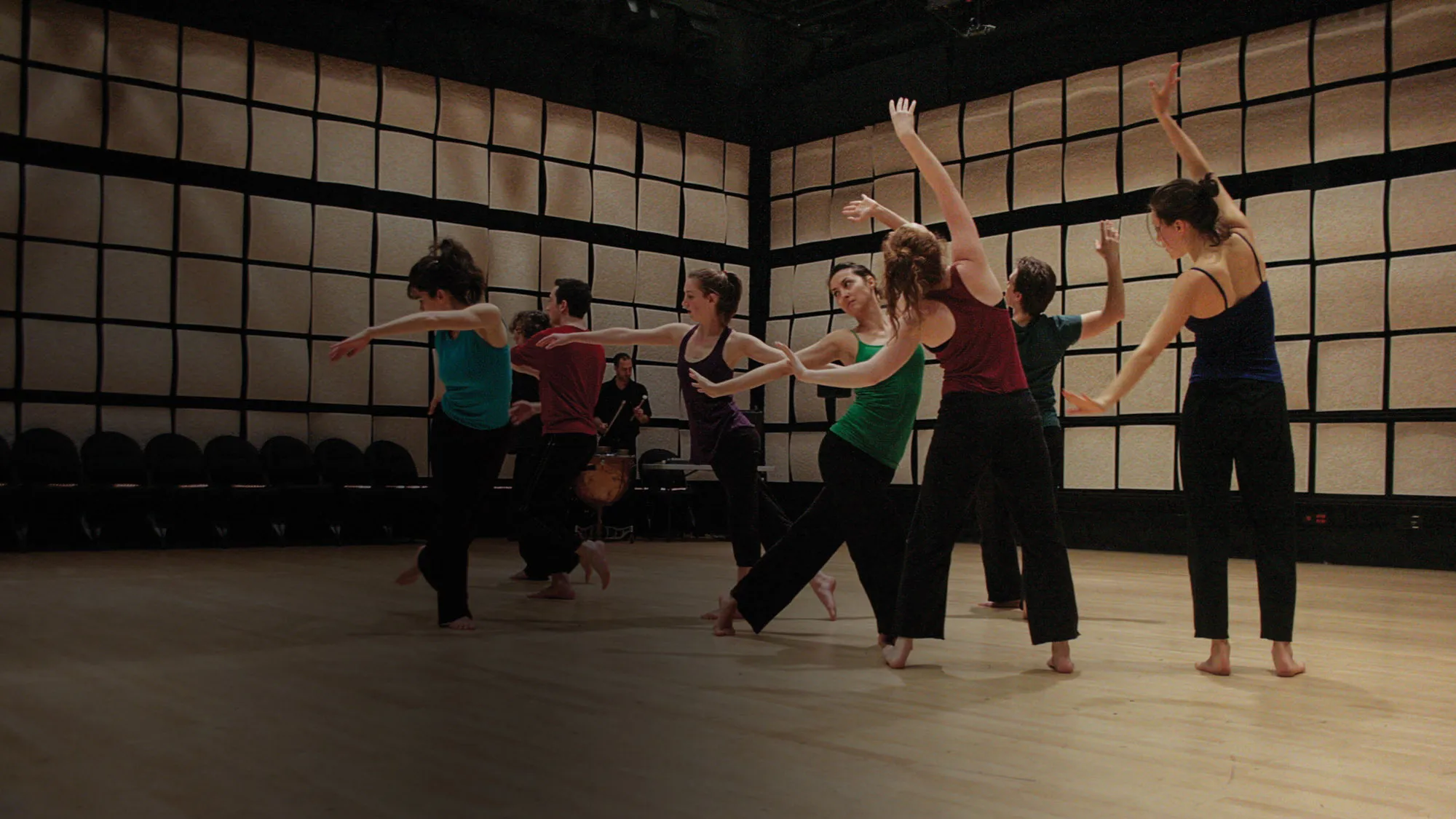
Susan Sgorbati invites visitors to observe her work with an ensemble of six dancers in Emergent Improvisation. She will introduce the concepts behind the work and show how they manifest in dance. The practice and performance of Emergent Improvisation addresses the nature of improvisation in dance and music. In this context, improvisation means the spontaneous creation of integrated sound and movement by performers who are adapting to internal and external stimuli, impulses, and interactions. The phenomenon of emergence is also found in a wide variety of natural settings. Emergent forms appear in complex, interconnected systems, where there is enough order and interaction to create recognizable pattern, but where the form is open-ended enough to continuously bring in new differentiations and integrations that influence and modify the form. Evolution and brain function are two examples. In linking the creative work of art making to the emergent process evident in nature, there is basis for a rich and textured inquiry into how systems come together, transform, and reassemble to create powerful instruments of communication, meaning, and exchange.
Main Image: Susan Sgorbati in studio 1, 2012. Photo: EMPAC/Rensselaer.
Image
Ryan + Trevor Oakes
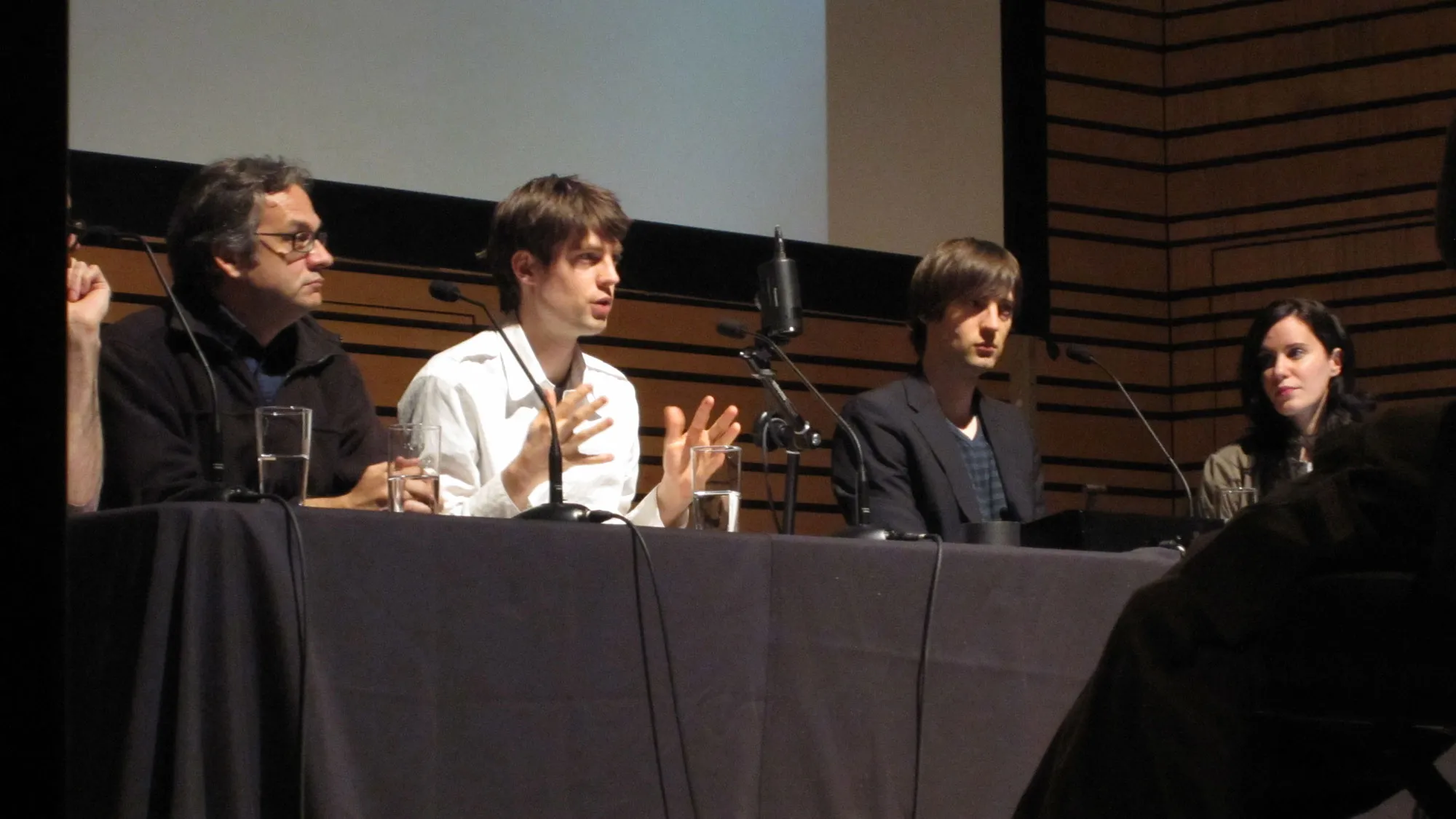
Ryan and Trevor Oakes have held a lifelong conversation about the nature of visual perception, resulting in a complex new method for drawing reality. In this panel discussion, writer Damien James and photographer Michael Benson join the Oakes brothers to discuss their drawing method, as well as their approach to thinking about light, optics, and vision.
Main Image: Ryan + Trevor Oakes during their talk in 2012. Photo: Rebecca Raha Radparvar.
Image
Main Image: © Peter Aaron/ESTO.
EMPAC: A Public Exchange
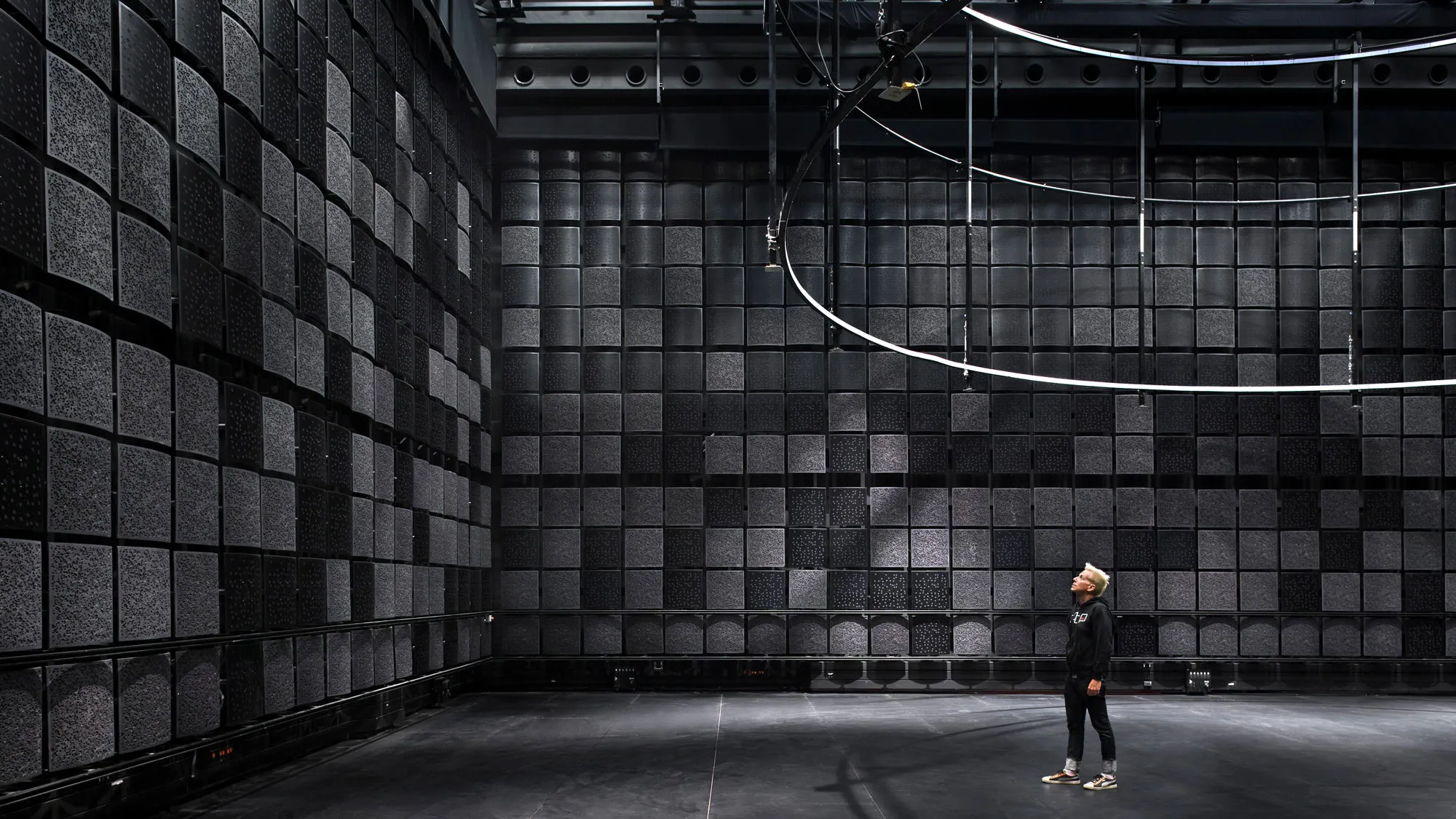
An evening of information and discussion. There are many ideas of what EMPAC should be—and the mission and program it pursues. EMPAC was conceived 12 years ago. Our team and program ramped up in parallel to the planning and construction of the actual building. Three and a half years ago the Curtis R. Priem Experimental Media and Performing Arts Center opened its doors and our full program was initialized. The evening will start with an overview from EMPAC’s Director, Johannes Goebel, establishing the link between our overall mission as part of Rensselaer, our place in the various communities we serve, current activities and future developments, and our team and operation. Most importantly, how do the many pieces of this puzzle merge to create a multi-faceted picture? The majority of the evening will be an exchange with the audience. We hope that everyone who is interested will join us. Of course, snacks will be available to fuel the discussion.
Image

Tim McGee
Biomimicry
How are the technologies we have created different from the technologies nature evolved over 3.8 billion years? The science of biology has grown by massive leaps and bounds in the past 200 years, and we are just beginning to put together fascinating stories of how nature works. Yet much of this wisdom is obscured, and relegated to scientific journals or dusty biology volumes. Dusting off these tomes, and offering up the insights of biology to other fields has proven to be an exciting and thrilling field that is helping us understand and connect to the world, as well as to ourselves. Through examples and stories, biologist Tim McGee will share where biological wisdom is changing the way we work, think, and create, and where increasingly our technologies have more in common with 3.8 billion years of evolution.
Main Image: Tim Mcgee presents Biomimicry in the theater in 2012. Photo: Rebecca Raha Radparvar.
Image
Lisa Cartwright + Christina Lammer
Empathography: The Art of Clinical Intimacy
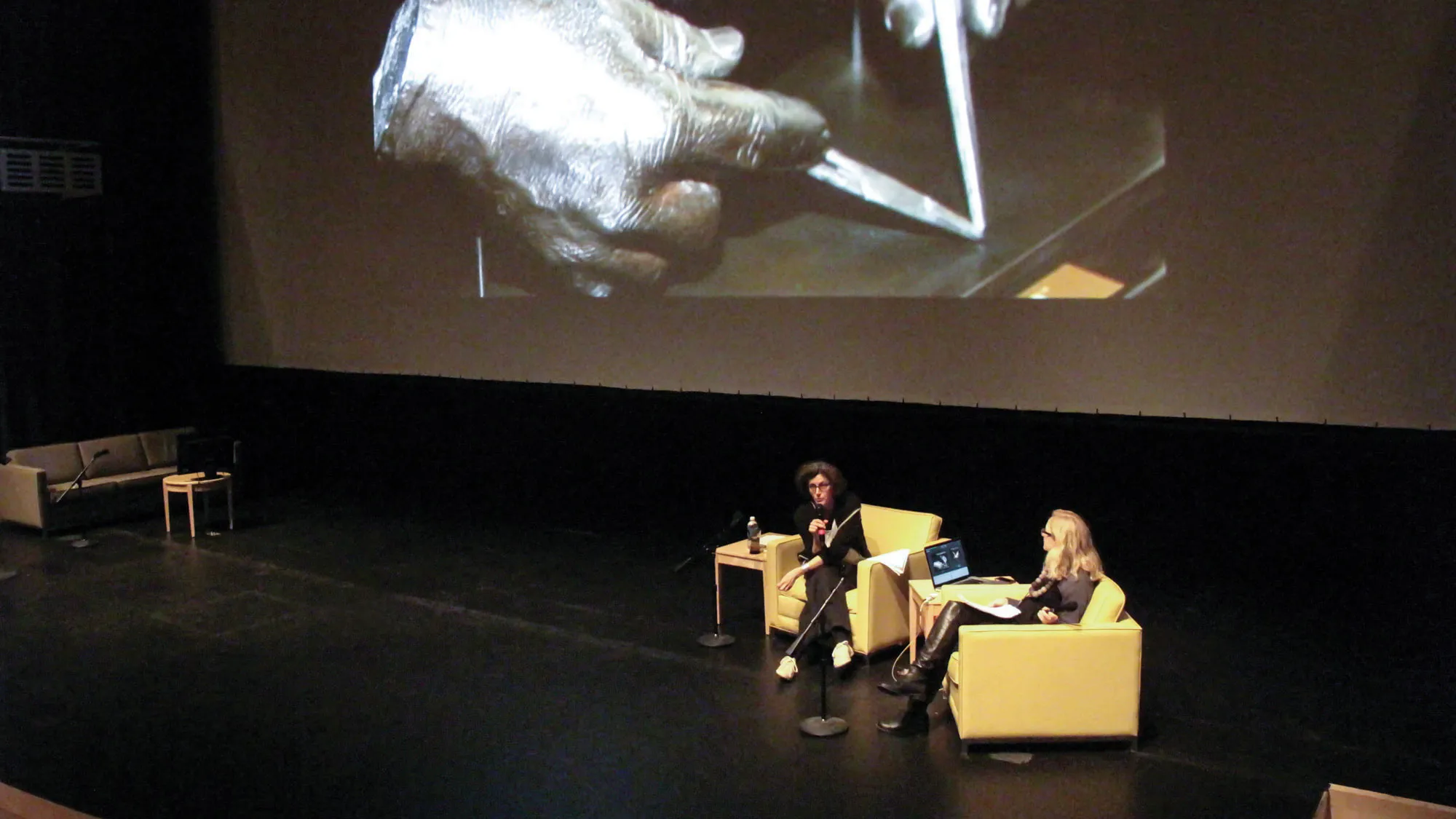
What do we sense during surgery? Touch, sounds, and smells in the surgical theater, as well as engagement with others and the intersubjective experience of the senses during medical procedures are the focus of this intimate conversation. This discussion on the senses in austere surgical settings will be accompanied by a screening of video and sounds works.