Congress to Campus

Community Town Hall

elizabeth esty and john faso

Rensselaer Polytechnic Institute (RPI) will host a bipartisan team of two former Members of Congress for a town hall as part of the Congress to Campus program.

The Honorable Elizabeth Esty, U.S. Representative for Connecticut’s 5th congressional district covering central and northwest Connecticut from 2013 to 2019, and The Honorable John J. Faso, who represented the 19th Congressional District in upstate New York from 2017 to 2019, will take part in a community town hall at EMPAC.

The town hall is free and open to the public. Registration is required.

Congress to Campus is aimed at fostering healthy partisanship and civility within disagreement. At RPI, Esty and Foster will meet with faculty, staff, and student groups as well as local high school government leaders to impart the value of open discussion and bipartisan dialog, and to provide insight on how Congress works and how Members accomplish things amidst disagreement.

Image
Raven Chacon

New and Recent Work

Raven Chacon

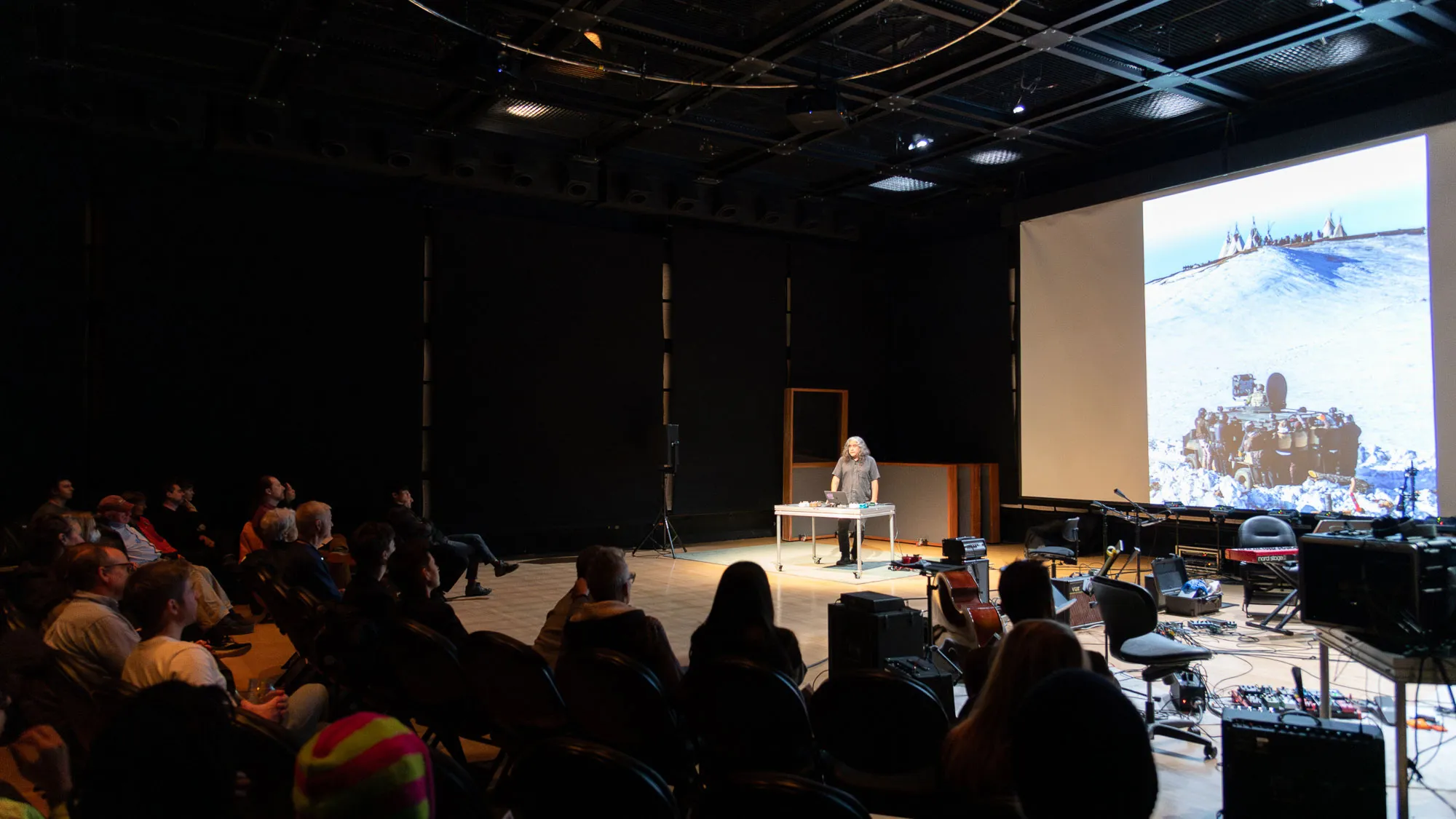
Award-winning composer and visual artist Raven Chacon gives a talk on his recent work, which explores the sonic, visual, and thematic elements of his experimental practice.

Chacon’s work threads its way through sound, video, scores, sculpture, and performance to engage with the land and its inhabitants, and to address topics of Indigenous sovereignty and environmental justice. His compositions include orchestral instruments and instrumentalize found objects, as in his American Ledger No. 1 (2018), a large graphic score displayed as a flag which traces the history of settler colonialism in the United States. His piece Voiceless Mass (2021), for which Chacon won a Pulitzer Prize, is a work for organ and ensemble which reflects upon the relationship between the Christian church and Indigenous populations. A mass without voices, the composition gives musical form to the silencing of Indigenous expression and language, and the impossibility of their recovery.

Chacon also introduces a new EMPAC-commissioned project with San Francisco-based experimental music duo The Living Earth Show, which is being developed over the next year and includes artists and musicians based in New York’s Hudson Valley and Capital Region.

This residency continues and expands Chacon’s musical collaboration with The Living Earth Show as a follow-up to Tremble Staves, an outdoor collaborative performance with professional and student performers, which premiered at the Sutro Baths in San Francisco in 2019. Exploring issues around water usage, access, and rights, Tremble Staves was developed in collaboration with the Golden Gate National Parks Conservancy and the Art in the Parks Program in San Francisco.

All are invited to stay for a reception, following the talk.

Main Image: Raven Chacon presented his work in EMPAC's Studio 2 in November, 2024. Courtesy the artist. Photo: Michael Valiquette/EMPAC.

Media

Raven Chacon's 2022 Pulitzer prize-winning composition Voiceless Mass premiered on November 21st, 2021 at The Cathedral of St. John the Evangelist in Milwaukee.


Image
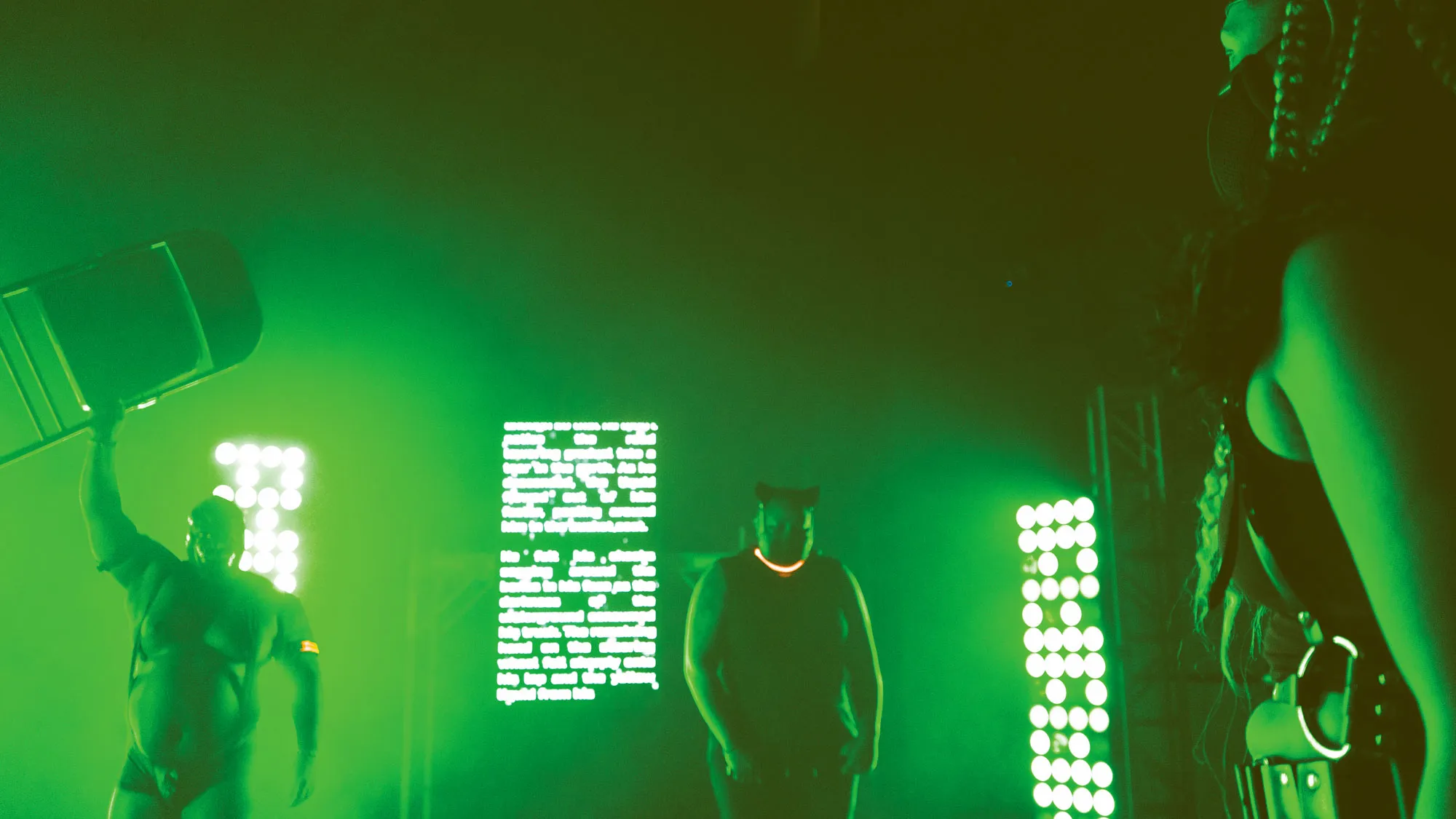
a group of black persons in bondage gear standing in a room lit with grass green light

Investigating Trigger Mechanisms, Machine Learning, and Bodily Gesture

Shawné Michaelain Holloway

As part of the Ephemeral Organ series, new media artist SHAWNÉ MICHAELAIN HOLLOWAY culminates her EMPAC residency with an artist talk exploring her overall practice and demonstrating interactive cuing technology she is developing for her latest multimedia performance projects. In this event, HOLLOWAY investigates the mutual possibilities of technology and the body to track, mediate, and generate elements of a theatrical experience.

Known for her experiments with noisy, electronic sculpture and her unique approach to expanded cinema, HOLLOWAY shapes the grammars of computer programming and sadomasochism into tools for exposing structures and narratives of power. Her two current projects in development reimagine familiar narratives through a Black queer lens, and an aesthetic approach driven by the digital age. [WALLED GARDENS ] _or_ return(ing) "a love in disguise as forever.” is based on the “Beauty and the Beast” fairy tale; and THEY LAID DOWN THEIR HAMMERS AND CRIED is based on the John Henry folk tale.

Both projects use technologies that allow the performers’ gestures to generate and interface with lights, sound synthesis, sculptural elements, and video. These responsive, interactive designs are inspired in part by Robert Rauschenberg’s piece, Open Score (1966), which stages a game of tennis that uses reactive engineering to choreograph light and sound through physical motion. HOLLOWAY presents a similar live interaction between technology, theatrical staging, and bodily action. Here, she applies machine learning algorithms as decision-making mechanisms to produce the landscape of each piece in the moment

Main Image: SHAWNÉ MICHAELAIN HOLLOWAY, DEWCLAW, Institute for Contemporary Arts at Virginia Commonwealth University, 2022. Courtesy the artist. Photo: Keshia Eugene.

Image
tara aisha willis on the stage of the EMPAC theater

Ephemeral Organs: Dance Curation, Research, and Performance

Tara Aisha Willis

As Curator-in-Residence, Theater and Dance, Tara Aisha Willis provides context for the Ephemeral Organ series and discusses her forthcoming book projects and past curatorial work. Ephemeral Organ culminates in April 2025 and brings together residencies, performances, and talks by several artists whose work explores choreography and the body in motion as a technology for transmitting memory, history, and Black lived experience.

Willis’s body of research explores the lineages and practices of Black experimentation and improvisation in dance through contemporary performances. To do so, she uses dance historical context, frameworks from Black studies and performance theory, and explorations embedded in her creative practices as curator and dancer. In part, her work grapples with the archival capacities of the dancing body and with how movement emerges within the process of generating archival research.

Her scholarly book in development, Indescribable Moves: Improvised Experiments in Dancing Blackness, points to the intricacy and changeability of both dance and race in performances by choreographers Bebe Miller, Ishmael Houston-Jones, and Ralph Lemon, as well as Will Rawls: one for which Willis served as curator and the other in which she performed. A more experimental book project in collaboration with writer Jaime Shearn Coan and artist taisha paggett challenges conventional modes of writing and archiving dance practices across paggett’s body of performance work (forthcoming from Soberscove Press).

Guided by her simultaneous practices as a writer, curator, and dancer, in this talk Willis discusses the structuring devices of her thinking across these various platforms: methods for attending to the specificities of live, movement-driven performance in programming and on the page.

The series begins with residencies and talks in November 2024 with artists SHAWNÉ MICHAELAIN HOLLOWAY, Steffani Jemison, collaborative duo Katherine Simóne Reynolds and A.J. McClenon, and series curator Tara Aisha Willis.

In April 2025, using EMPAC’s spaces simultaneously like a series of chambers, the program culminates in a weekend of events: a performance by Leslie Cuyjet, an installation and performance by Katherine Simóne Reynolds and A.J. McClenon, and artist talks by Steffani Jemison and Justine A. Chambers on their latest works which register archival and historical traces through gesture.
 

Main Image: Curator Tara Aisha Willis on stage in the theater during her talk Ephemeral Organs: Dance Curation, Research, and Performance, November, 2024. Photo: EMPAC/Michael Valiquette. 

Media
Image
an abstract pastup image

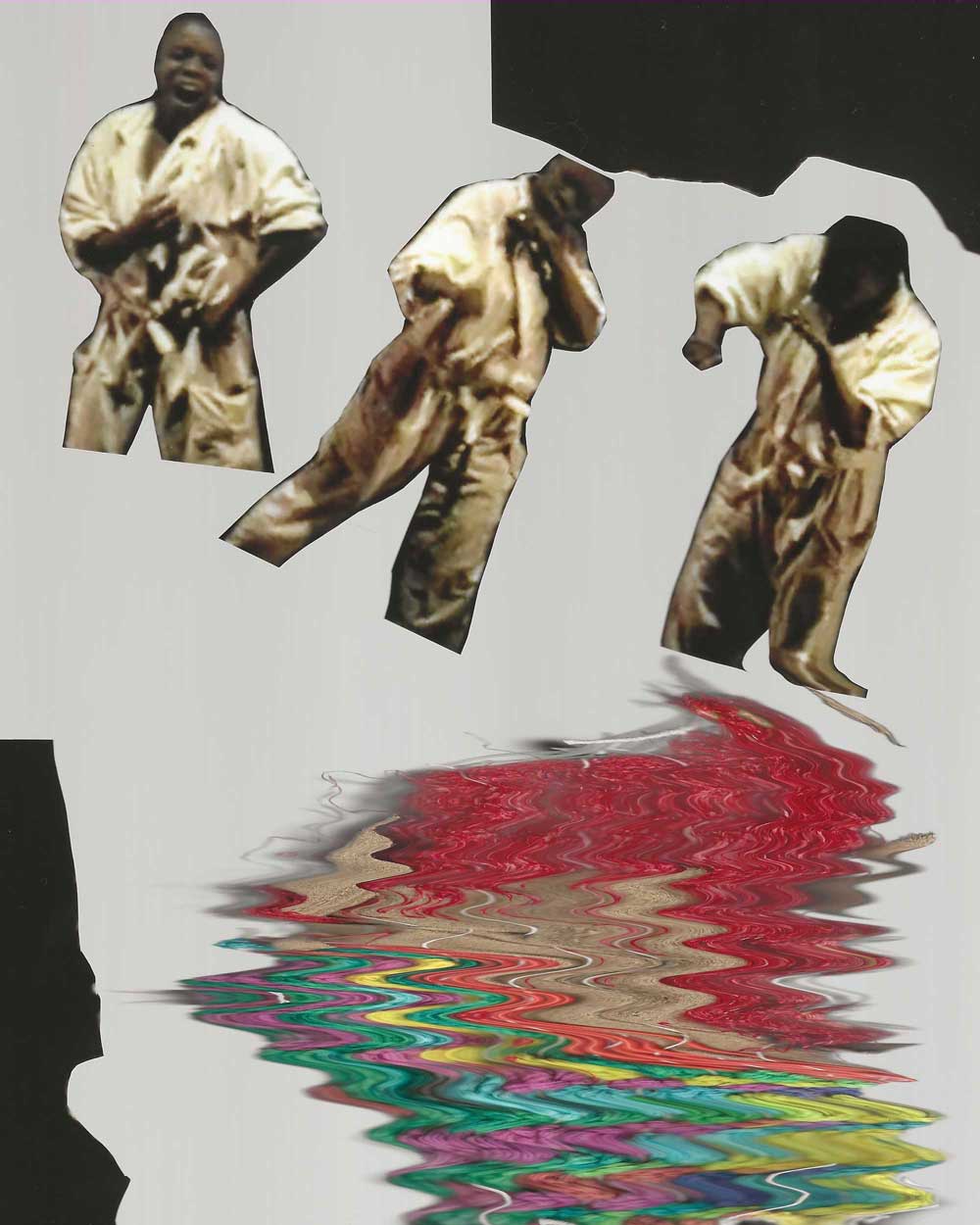
A.J. McClenon, Inspirited by For J.B. and 3B49, collages with video stills from recording of Blondell Cummings in For J.B. and 3B49 at The Kitchen, November 30–December 3, 1989, 2022. Courtesy the artist.

Image
an abstract image

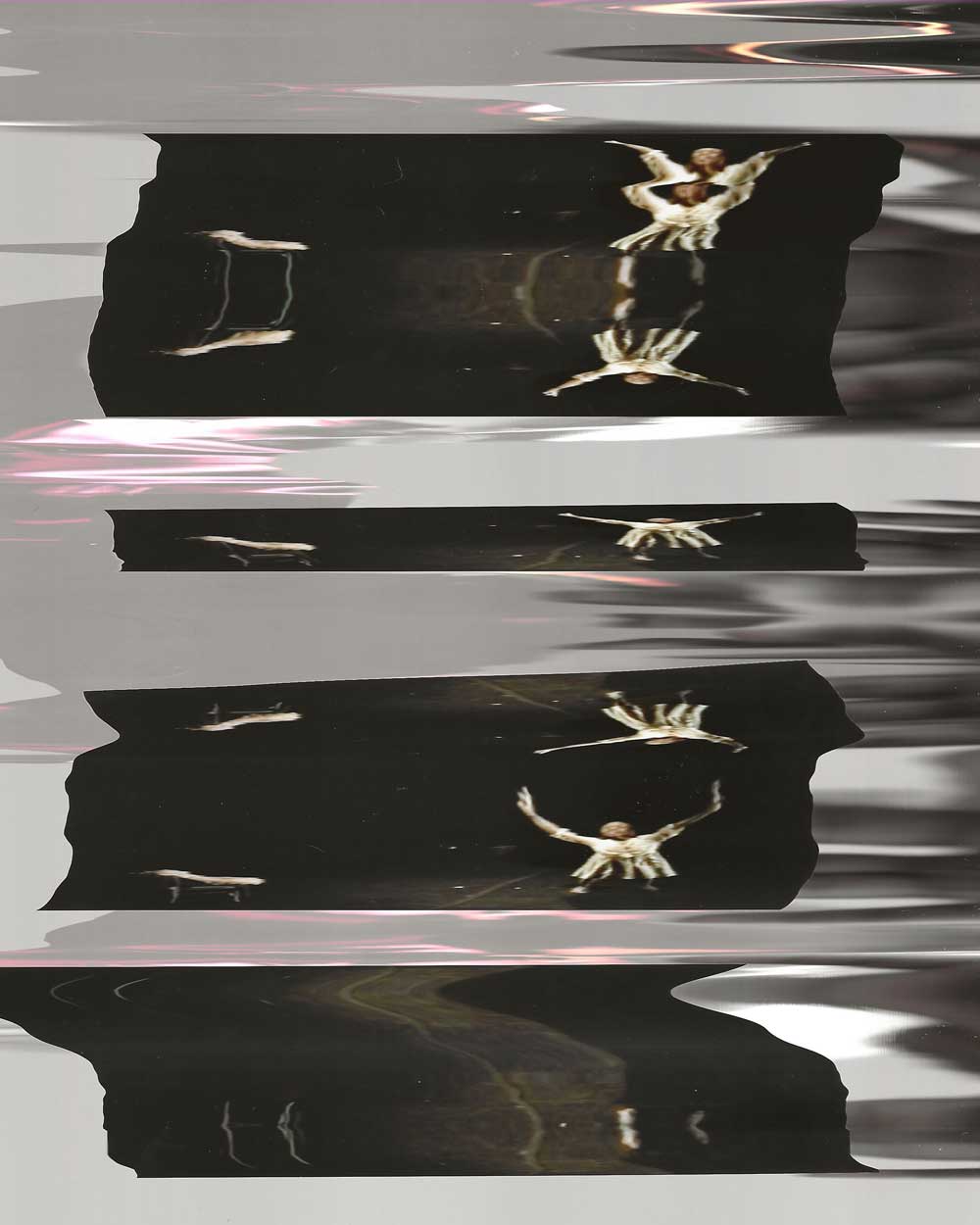
A.J. McClenon, Inspirited by For J.B. and 3B49, collages with video stills from recording of Blondell Cummings in For J.B. and 3B49 at The Kitchen, November 30–December 3, 1989, 2022. Courtesy the artist.

Image
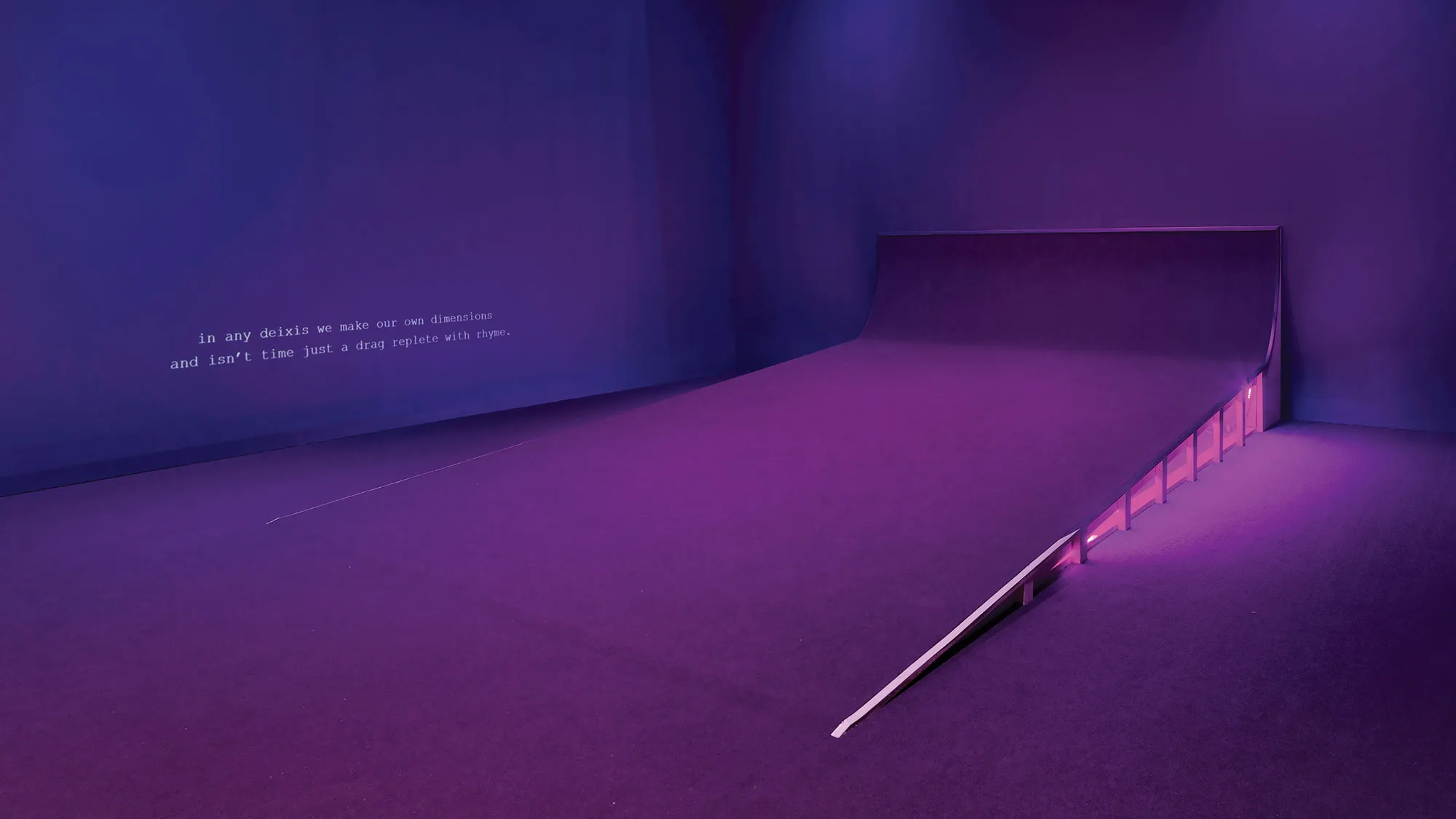
A large purple ramp with a slight incline in a room with purple walls and dim light. There is a caption low on the left wall and light shining from beneath the ramp.

Works in Sensing and Feeling

Constantina Zavitsanos

In this talk, artist Constantina Zavitsanos speaks about their artistic practice. Zavitsanos’s work ranges from sculpture to performance, and deals with debt and dependency, entropy, thresholds of perception, incapacity, and modes of sensing and feeling. Zavitsanos’s work is deeply sensitive to the infrastructural possibilities and limitations of any exhibition environment. In their pieces, accessibility strategies are often also sculptural strategies or filmic gestures. Tools like open captions can offer, in the artist’s words, a “backstage pass” to previously unseen aspects of a work.

All the same, for Zavitsanos, obscurity is not necessarily to be avoided. In the artist’s work, debility is often simply a material condition, and Zavitsanos regularly engages materials at the point where they frustrate or challenge our perception. Experimenting with artistic production in relation to insights from physics, some of Zavitsanos’s past works consider what cannot be sensed, or engage phenomena of interference. The artist’s Call to Post & All the Time, on view in the 2024 Whitney Biennial, features an “infrasonic ramp,” a large inclining surface that vibrates with frequencies beyond the range of human hearing.

Zavitsanos’s practice unfolds both independently and, occasionally, in collaboration with others. Peers they have written with, performed with, or developed work with include Park McArthur, Carolyn Lazard, and Amalle Dublon.

Main Image: Constantina Zavitsanos, Call To Post (Violet), 2019/24 (installation view, Whitney Museum, New York, 2024). Photo: Ron Amstutz. Courtesy the artist and the Whitney Museum of American Art.

Image
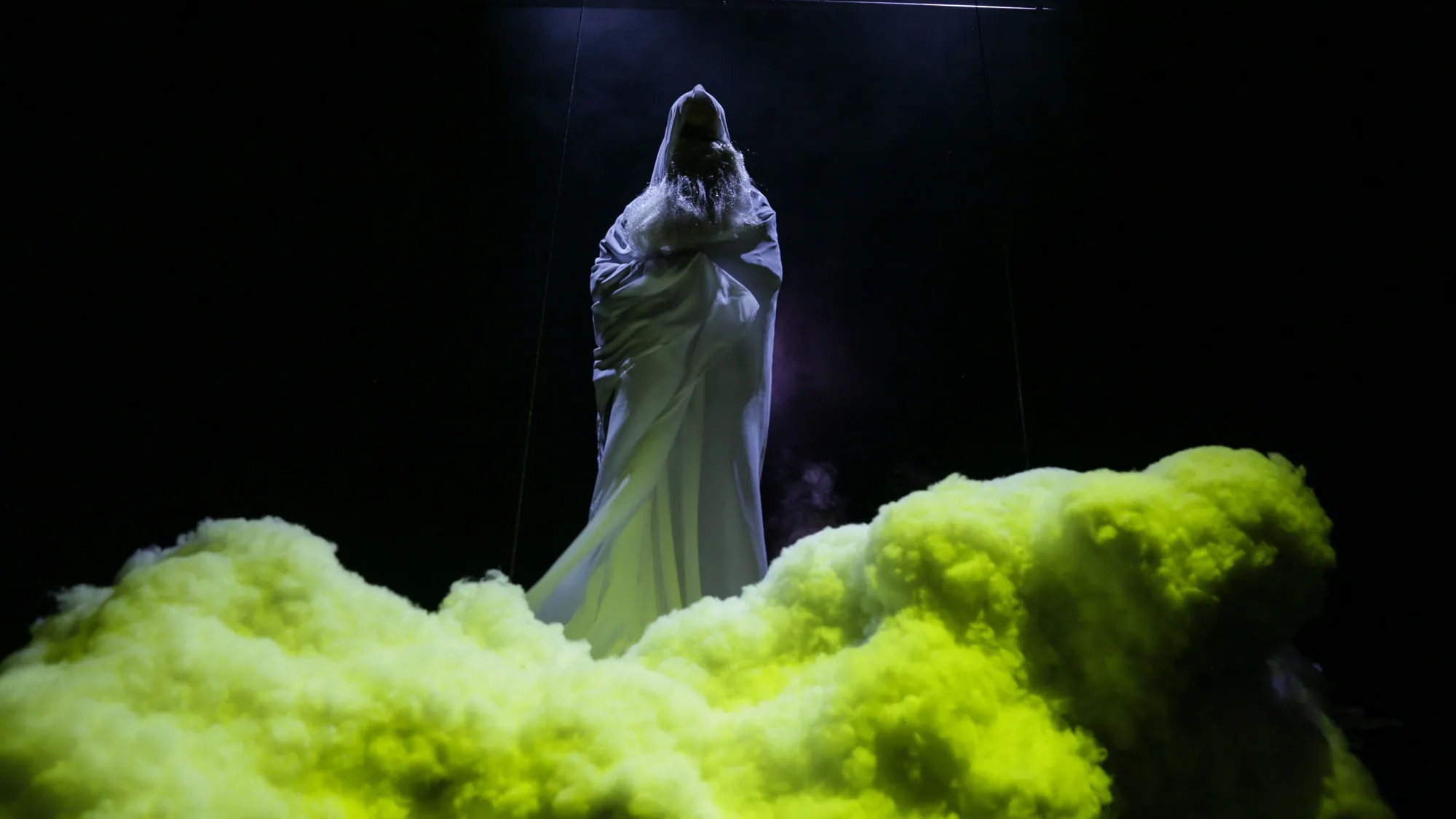
a ghostly figure standing in a green cloud

Building an Ark

Laurie Anderson

In this talk presentation, renowned artist and musician Laurie Anderson reveals the process behind her newest music-theater work, ARK, while at EMPAC for a final production residency in preparation for its world premiere in Manchester in November 2024.

An opera starring a host of mythical and contemporary figures, Anderson’s subjects—apocalyptic climate events, technology and information overload, American history—are warped into a story that plays with the flow of time and poses questions about the survival of the human spirit. How does humanity need to change in order to be saved?

Laurie Anderson was at EMPAC for her first residency in 2009. She was Distinguished Artist-in-Residence for three years from 2012 through 2014. In all, Anderson has developed 10 projects during residencies at EMPAC, including this season's ARK.

One of America’s most renowned performance artists, Laurie Anderson’s genre-crossing work encompasses performance, film, music, installation, writing, photography, and sculpture. She is widely known for her multimedia presentations and musical recordings and has numerous major works to her credit, including United States I-V (1983), Empty Places (1990), Stories from the Nerve Bible (1993), Songs and Stories for Moby Dick (1999), and Life on a String (2001), among others. She has taken part in countless collaborations with an array of artists, from Jonathan Demme and Brian Eno to Bill T. Jones and Peter Gabriel.

Main Image: Laurie Anderson, production still from ARK. Photo: Alvis Mosely/EMPAC.

Media
Image
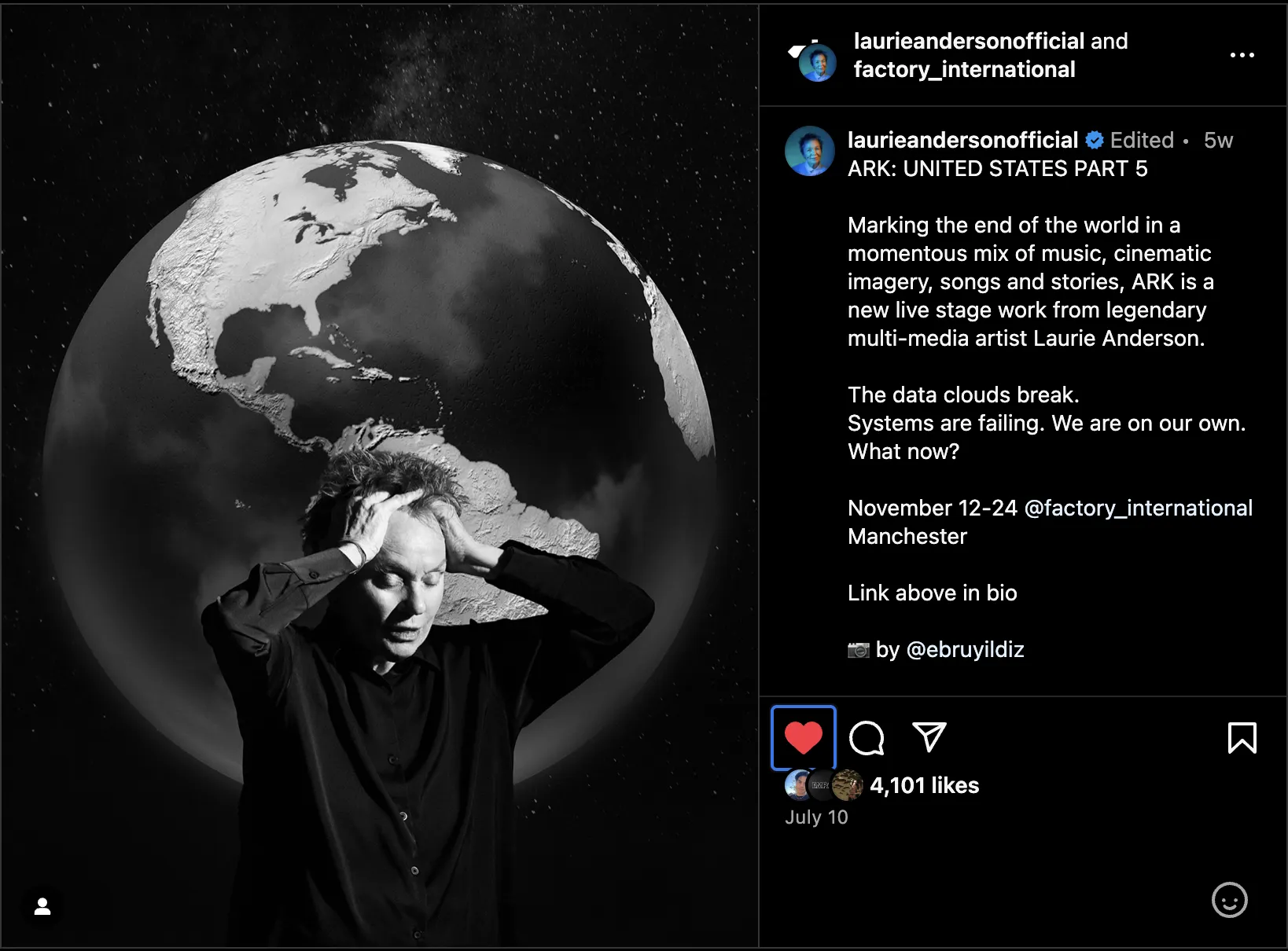
laurie anderson holding her head in front of planet earth, instagram post

Laurie Anderson's instagram post announcing ARK at Factory International, Manchester UK in November, 2024. 

Image
marina vishmidt

On the Recursivity of Care

Marina Vishmidt

In her writing and research, Marina Vishmidt assesses how art, labor, and value intertwine. In this talk at EMPAC, Vishmidt touches on works that use technology and tautology to indicate the unrepresentability of care & maintenance work–be it on the home, the body, or the self. 

Feminist art from the 1970s onwards, such as Margaret Raspé’s Frautomat films from the early 1970s or Fronza Woods’ 1981 Fannie’s Film (both screened as part of this program), exhibit the entropy of maintenance. These works suggest that the foundation of care work lies not only in concern for what is ongoing, but in a recognition of the tendency of maintenance to unravel over time.

Rather than becoming an object of representation, maintenance more often provides the conditions of representation. Its practices of social reproduction pursue a temporality of ever-sameness, a ‘re-’ of production without product. 

In this vein, Vishmidt’s EMPAC-commissioned talk explores a question of recursion, examining how replication of an initial form at different scales, and in different registers of interpretation, is modified by process. Repetitive processes of housework, as in the early films of Raspé, are changed by their documentation and exploded by the mode this documentation takes. Through recursion, repetition yields difference. 

Quote by Margaret Raspé, from an interview with Magazin Florida, published in Magazin FLORIDA #02, 2016.


Main Image: Marina Vishmidt speaking at the Vilnius Academy of Arts in Lithuania, 2016. Courtesy the speaker and rupert.it. Photo: Evgenia Levin. 

Image
dozens of piles of hundreds of logs drying in a log yard

Be the Media! Workshop

Theo Jean Cuthand

Theo Cuthand offers a Be The Media! participatory radio workshop workshop at The Sanctuary for Independent Media, to focus on Indigiqueer and ecological issues.

Using improvisational documentary techniques, the Be The Media! workshop participants will create a short radio play with Theo Jean Cuthand, loosely inspired by Orson Welles’ War of the Worlds broadcast but based on the colonization of what is now Troy by European Settlers. This workshop will begin with a brief presentation of Cuthand’s work.

Cuthand’s Sanctuary appearance is sponsored by iEAR Presents, the RPI School of Humanities, and the NEA Our Town creative placemaking project Sanctuary Eco-Art Trail, which connects Indigenous legacy with environmental justice (in partnership with the Stockbridge-Munsee Community Band of Mohican Indians).

Main Image: Film still: Extractions, 2019. Directed by Theo Jean Cuthand. Courtesy the artist.

Media
Image
a lesbian vampire cartoon illustration with a building reading "snack mart"

Video game still: Carmilla the Lonely, 20022. Directed by Theo Jean Cuthand. Courtesy the artist.

Image
a shirtless tattooed person in a gas mask

Indigiqueer

Theo Jean Cuthand

At EMPAC, Cuthand presents an artist talk and screening that explores his work and process through an Indigiqueer lens. Cuthand makes short experimental videos and films about sexuality, madness, Queer identity, love, and Indigeneity.

An intimate and playful storyteller and performer, the artist often foregrounds autobiographical experience and his home territory of Saskatchewan, where he is a member of Little Pine First Nation, to explore the resonating effects of the ongoing processes of colonization on land and climate, his communities, and the body.

His rangy and irreverent moving image works span experimental documentary and fiction, archival footage and hand-drawn animation, and DIY aesthetics.

Main Image: Theo Jean Cuthand, Less Lethal Fetishes, still, 2019. Courtesy the artist.

Image
Peli Grietzer

Worldmaking in Art and AI

Peli Grietzer

Scholar Peli Grietzer’s research asks what machine learning can tell us about the structures of ambient aesthetics–moods, vibes, and other qualities that give us the sense of an artwork’s (or art world’s) formal unity. In a noted 2017 essay A Theory of Vibe, Grietzer had addressed these artistic structures through the framework of autoencoders—neural networks trained to develop visual representation algorithms for digital media. He argued that the aesthetic organization of artworks is functionally parallel to how AI technologies construct a coherent body of information.

For this engagement at EMPAC, Grietzer considers what is unique about the structures of meaning within art and poetic thought, through articulating the worldmaking properties of AI’s mathematical systems. The talk draws on his recent research connecting poetic form, art and aesthetic philosophies of the Romantic movement, and the architectures of artificial intelligence. For Grietzer, machine learning’s computational structures illustrate art’s power to effect meaning through a unique material force.

Main Image: Courtesy the speaker.