Image
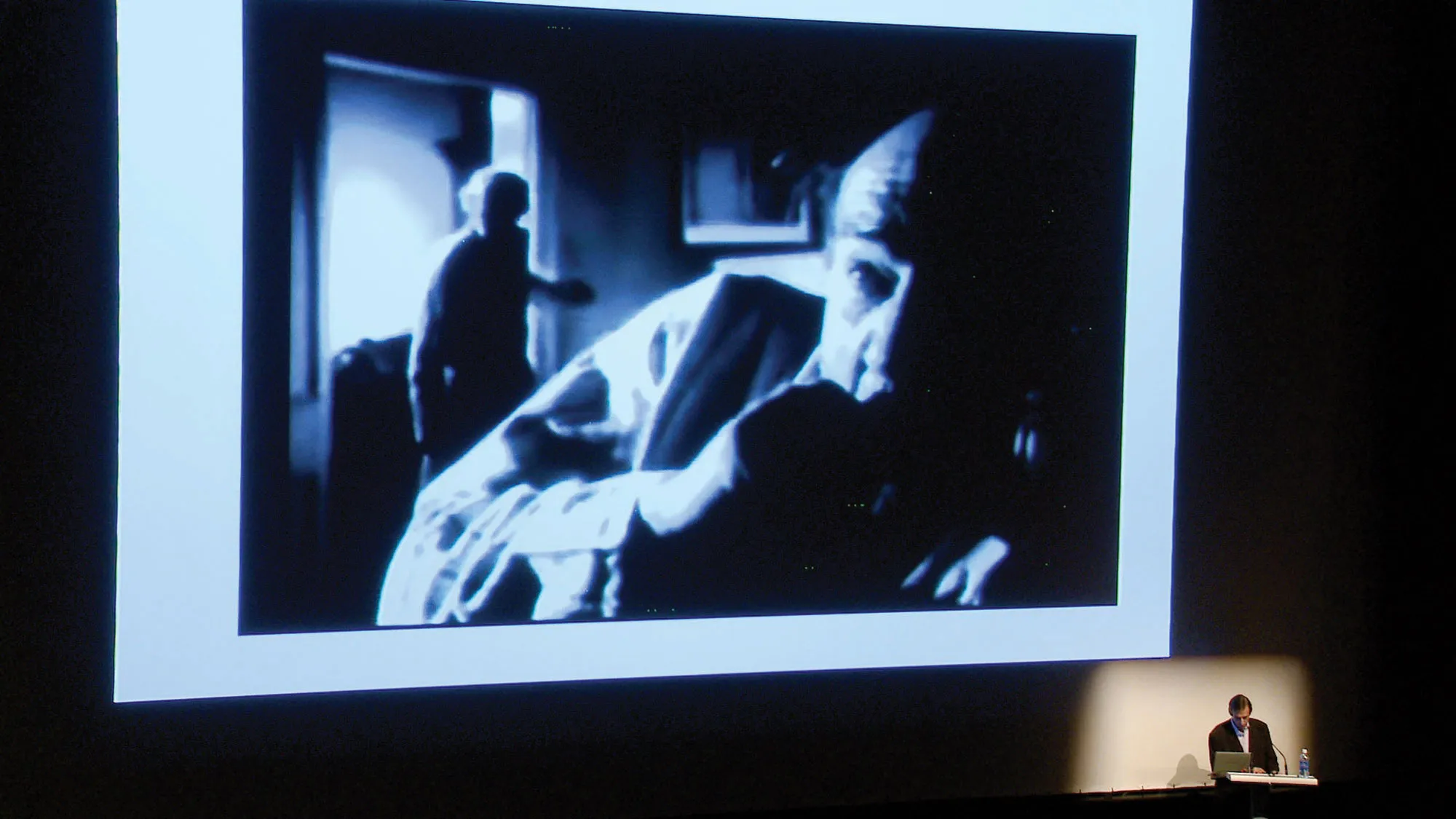
Marc Downie giving a lecture.

FIELD: The Secret World of Making Art by Writing Code

Marc Downie

With the creation of the open-source programming environment FIELD, artist and artificial intelligence researcher Marc Downie may have done more to change the landscape of real-time video and other digital art forms since the release of Max/MSP/Jitter. Actually, FIELD is at once more radical and more accessible, since it tries to bridge as many different programming languages and ways of doing things as possible and to permit users to customize virtually any of its features. Downie’s talk about the software and some of the art that he and other members of The OpenEnded Group have made with it will engage even non-gearheads. And gearheads—(or code-heads) will get a chance to start navigating in FIELD during Downie’s immersive two-day workshop. An indispensible experience for digital artists or anyone interested in the intersection of technology and aesthetics.

Marc Downie holds an M.A. in natural science and an M. Sci. in physics from Cambridge University, where he won the Mott Prize in the Natural Sciences. In 2005, he obtained a Ph.D. from MIT’s Media Lab. He has authored interactive installations, compositions, and projections in the fields of interactive music, machine learning, and computer graphics. In addition to collaborating with other members of The OpenEnded Group, Downie has worked with Merce Cunningham, Bill T. Jones, and Trisha Brown. His solo works include the series Musical Creatures(2000-3), and have been exhibited internationally.

Image
An abstract white jagged circle on a black background.

Portraying the Body in Sleep

A workshop on reading polysomnograms, the primary means used by sleep labs to depict the changes that take place in the body during sleep.

Image
Steven Conner in fort of a large projection of a man, startled as another person enters the room.

Steven Connor

The Chronopher

Steven Connor, Academic Director of the London Consortium Graduate Programme in Humanities and Cultural Studies, delivers his EMPAC-commissioned text about time and the voice, The Chronopher. As a writer and scholar, Connor’s range of interest is impressive: from Samuel Becket to the housefly, from postmodern culture to ventriloquism, Connor has embraced, elucidated and entwined high and popular cultures in a career of investigation as erudite as it is broad. As a speaker, he is similarly adventurous. In a series of radio essays for the BBC, Connor has discussed twilight, Tristram Shandy, Glenn Gould and London’s Great Smog of 1952 — not to mention everyday objects including bags, wire, strings and sweets. In work that has been praised as incisive, colorful, and scholarly but wry, Connor weds an anthropologist’s comprehensive curiosity with academic rigor and a dry wit, taking readers and auditors on surprising tours of the human condition. Connor’s explorations lead him through myth, witchcraft, literature, poetry, painting, film, glossalalia, and more. There is seemingly no object or activity too common, no work or practice too esoteric that Connor cannot find and convey the fascination within it. The Chronopher text

Image
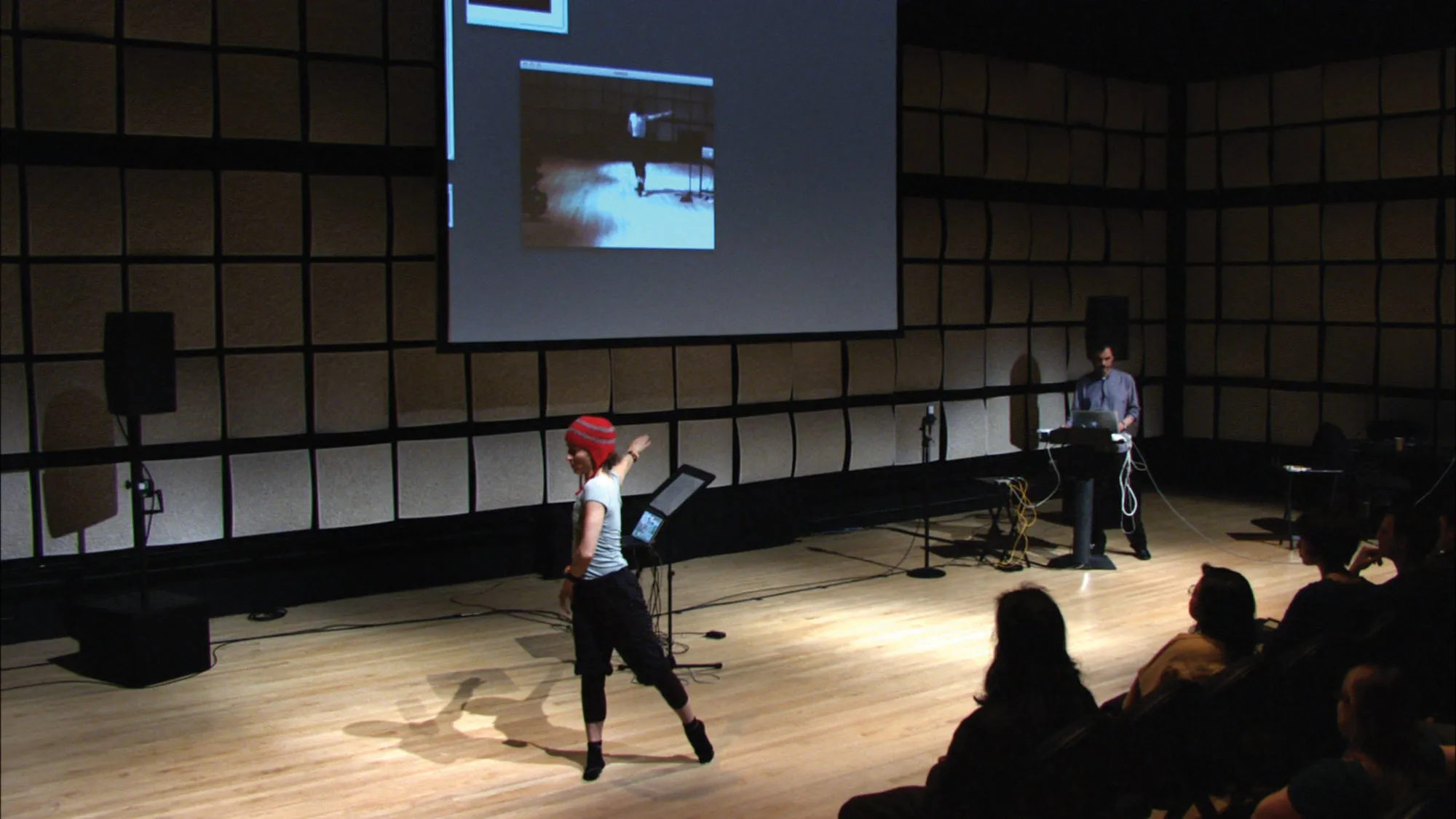
Frédéric Bevilacqua giving a lecture in front of a wall of gray acoustic tiles as a female dancer wearing a red winter hat moves across the stage.

Frédéric Bevilacqua

Frédéric Bevilacqua, leader of the Real Time Musical Interactions team at IRCAM — the Paris-based Institute for Music/Acoustic Research and Coordination — will share his current research in gesture analysis and software development, including real-time demonstrations of potential applications in music and dance.

Bevilacqua and his colleagues are working on new paradigms for music performance and the interaction between gesture and sound processes. His most recent research involves the development of new interfaces for music expression, gesture analysis for performing arts, and music pedagogy.

Bevilacqua works at the intersection of the scientific analysis of movement, the engineering of creative interfaces, and artistic collaboration. He is regularly invited to participate in the development of artistic projects that make use of real-time motion capture data to generate other elements of the piece, such as the movement of a dancer driving the sound.

His team created a software system called the “gesture follower,” that can learn and recall specific gestures performed live by a dancer, allowing for the system to be able to recognize and react to a learned sequence of movement. The “gesture follower” system will be demonstrated live with a dancer.

The workshop will also feature the violinist/composer Mari Kimura who will demonstrate different features of the “augmented violin.” Mari Kimura will wear a custom fitted “augmented violin glove,” for easier wearability and elasticity for performance. They will explain how the “gesture follower” can be used in this scenario and Kimura will play some musical excerpts of pieces she composed using the “augmented violin.”

Image
Johannes Goebel giving a lecture to a small audience while shining in front of a wall of tan acoustic tiles.

Future, Present, and Past as Threat to Sanity

Johannes Goebel

In a Glass Hour is a lecture series devoted to exploring the topic of time from the diverse perspectives of media theorists, scientists, artists, historians, journalists and others. Taking a broadly interdisciplinary approach to this singular subject, the series will point to the elasticity of this pervasive topic. In this talk, music will serve as projection screen to reflect thoughts on time. Music is, quite obviously, not language (even though there are many who say music is the universal language). Sound moves differently in time than pictures or touch. A printed book evolves differently in time when we read it than a piece of music when we listen to it. A film can be fast-forwarded differently than a piece of music. Music in Western culture has dealt with time and rhythm differently than music of other cultures. The western notation of music in conjunction with the development of clocks influenced how we think and feel time. Time became mechanized, and now computers are lost without their clock. The assumption that time, as we see it governing our lives, allows us to structure future, present and past (in that order) is a political tool, for better and worse. Music on the other hand allows moments to be experienced apart from the pressure of future, present and past – even though music plays explicitly with that triad and may be composed, improvised or performed as an intricate structure that integrates on a conscious level all scales of time: 0.1 milliseconds, 5 seconds, 3 minutes, 45 minutes or a few hours.

Media

Johannes Goebel, Future, Present, and Past as Threat to Sanity. February 2009, Studio 2.

Image
George Dreyfus

Georges Dreyfus

Self and Subjectivity: A Middle Way Approach

In a Glass Hour is a lecture series devoted to exploring the topic of time from the diverse perspectives of media theorists, scientists, artists, historians, journalists and others. Taking a broadly interdisciplinary approach to this singular subject, the series will point to the elasticity of this pervasive topic. We are not, Buddhist tradition holds, our forms, feelings, perceptions, experiences or consciousness. All these, over time, shift, fade, distort, realign, morph. They do not — cannot — comprise selfhood. In this talk, Dreyfus explores the Buddhist concept of no-self, and the ways this view — challenging as it is for many Westerners — is in sync with recent scientific ideas about subjectivity and identity evolving over time.

Wendy Hui Kyong Chun

This talk explores the potential of ephemerals through artworks that make things disappear. New media, like the computer technology on which it relies, races simultaneously towards the future and the past, towards the bleeding edge of obsolescence. The slipperiness of new media—the difficulty of engaging it in the present—is linked to the speed of its dissemination. Also key to the digital as the new is a rhetorical conflation of memory and storage. Memory, with its constant degeneration, does not equal storage; although artificial memory has historically combined the transitory with the permanent, the passing with the stable, digital media complicates this relationship by making the permanent into an enduring ephemeral.

In a Glass Hour is a series devoted to exploring the topic of time from the diverse perspectives of media theorists, scientists, artists, historians, journalists and others. Taking a broadly interdisciplinary approach to this singular subject, the series will point to the elasticity of this pervasive topic.

In sight/Out look

Rensselaer scientists, Selmer Bringsjord, Barbara Cutler, Shekhar Garde and Kenneth Jansen invite the audience for an hour-long presentation of their latest research combining light, images, and media as an integral aspect of their investigation.

Interactive Architectural Daylighting Design — Barbara Cutler, Assistant Professor, Department of Computer Science, Rensselaer Polytechnic Institute

Experiential Fluid Dynamics — Kenneth Jansen, Professor, Mechanical, Aerospace and Nuclear Engineering

Toward Engineering Doppelgängers (and other cognitively robust synthetic characters) — Selmer Bringsjord & Konstantine Arkoudas (faculty investigators) Andrew Shilliday, Joshua Taylor, Micah Clark (GRAs) Ed Charpetier and Alexander Bringsjord (URAs)

Molecularium: Where Molecular Modeling and Simulation meet Education, Animation, and Entertainment Shekhar Garde, Professor, Chemical and Biological Engineering Linda S. Schadler, Professor, Materials Science and Engineering Richard W. Siegel, Professor, Materials Science and Engineering
Interactive Architectural Daylighting Design

Barbara Cutler, Assistant Professor, Department of Computer Science, Rensselaer Polytechnic Institute

Designing with daylight shows great promise for reducing energy demands of buildings, increasing occupant comfort and well-being, and shaping delightful spaces. Complex fenestration systems, such as prismatic and laser cut panels, are emerging as attractive options in architectural design thanks to their ability redirect intense illumination from the sun. However, the non-intuitive interactions with the built environment make it necessary to develop tools that adequately represent these systems' behavior to the architect.

We are building a full-scale interactive design environment which willl debut at EMPAC to simulate and evaluate the illumination and functionality of an evolving architectural design. The user can explore the high-dimensional configuration space of the design to create and edit the geometry, select appropriate materials, and vary the external conditions such as the sun position, weather, neighboring buildings, traffic noise, etc. The simulation results of the current design are projected on movable partition screens and furniture to create a full-scale immersive design environment. The simulation is updated interactively as the user makes adjustments to the design by moving walls, resizing or opening windows, adjusting the virtual blinds and awnings, or specifying alternate materials, etc.
Experiential Fluid Dynamics

Kenneth Jansen, Professor, Mechanical, Aerospace and Nuclear Engineering, Rensselaer Polytechnic Institute

Mark S. Shephard, Samuel A. and Elisabeth C. Johnson Jr. Professor of Engineering, Rensselaer Polytechnic Institute

It is commonplace now for engineering experts to use simulation for functional design. Experimental fluid dynamics seeks to make simulations so fast and so easily reconfigurable that non-experts like surgeons and architects can interact/alter the simulation and visualization to iterate to designs that marry experience/form with function.
Toward Engineering Doppelgängers (and other cognitively robust synthetic characters)

Selmer Bringsjord & Konstantine Arkoudas (faculty investigators) Andrew Shilliday, Joshua Taylor, Micah Clark (GRAs) Ed Charpetier and Alexander Bringsjord (URAs)

Many have long held that the touchstone for success in AI is the creation of synthetic beings and other technology that enable you to be in two different places at the same time. Can you be having breakfast on the Taconic Ridge, overlooking Troy and Albany to the west, and the Berkshire Mountains to the east -- and at the very same time be (courtesy of your doppelganger) in Brooklyn Heights, enjoying a view toward Manhattan as you sip your early-morning orange juice? Our recent R&D, to be described and demonstrated October 5, suggests an affirmative answer to this question.
Molecularium: Where Molecular Modeling and Simulation meet Education, Animation, and Entertainment

Shekhar Garde, Professor, Chemical and Biological Engineering Linda S. Schadler, Professor, Materials Science and Engineering Richard W. Siegel, Professor, Materials Science and Engineering

Collaborators: Owen Bush (Director), Kurt Przybilla (Procucer), and Chris Harvey (Art Director), Nanotoon Entertainment

Molecularium is a world of atoms and molecules. It is one of the flagship projects of Rensselaer’s NSF-Funded Nanotechnology Center for Directed Assembly of Nanostructures. Driven by our own enthusiasm about atoms and molecules, and motivated by the need to excite the next generation about the science of atoms and molecules and the world they make, we embarked on a journey to tell the story of atoms in a unique way. The result is the Molecularm project with its digital dome and I-MAX movies in which animated atomic characters tell their story in a way that is musical and magical! The presentation will highlight ‘behind the scene’ science and large-scale modeling and simulations, which not only enrich the visual experience, but have the potential to develop into powerful scientific visualization tools for scientific discovery.

Image
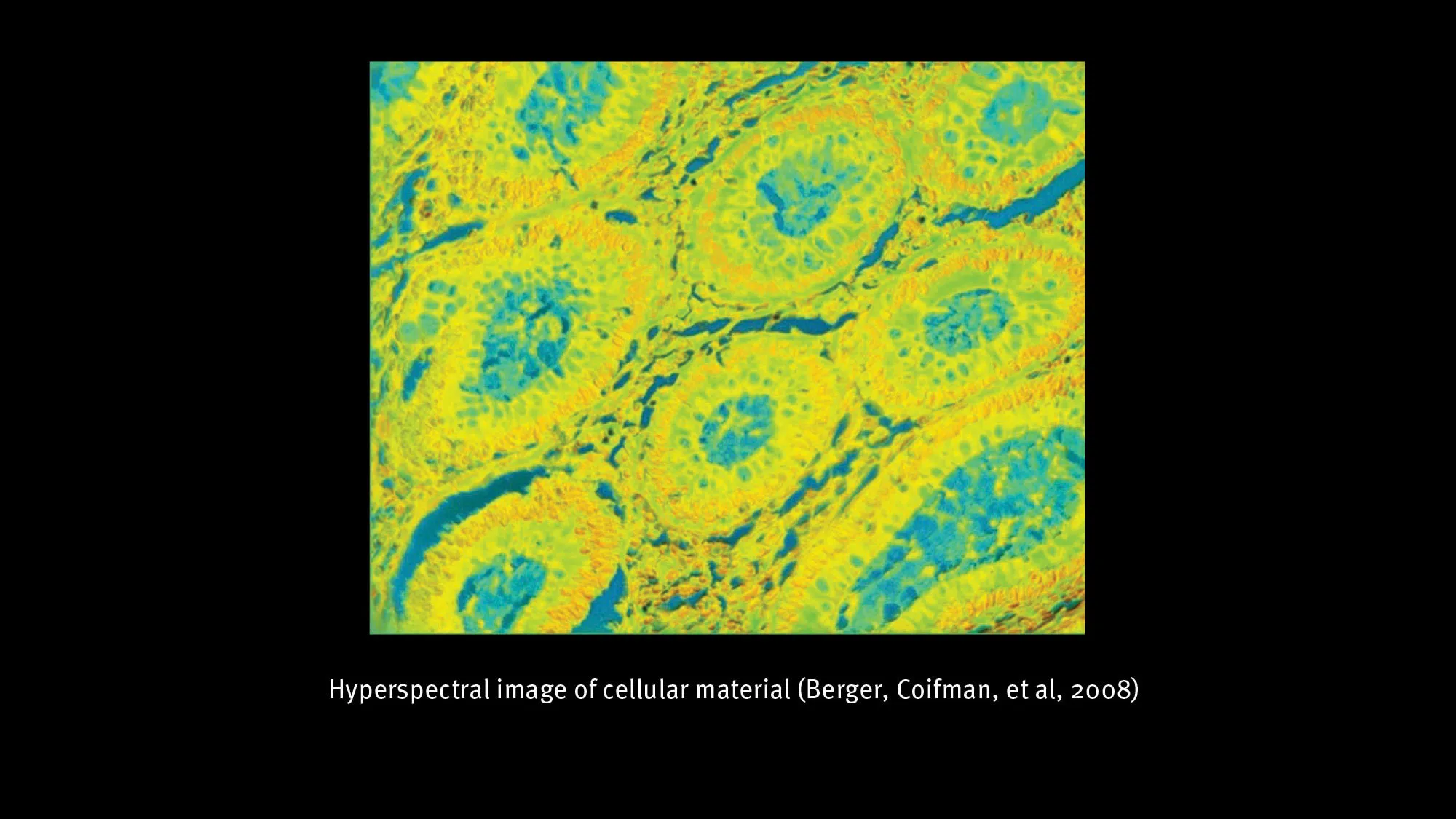
A slide of yellow and teal cellular material magnified, with text beneath it reading " Hyper spectral image of cellular material (Berger, Coifman, et al, 2008)"

Data Speaks. Are you listening?

Jonathan Berger

Data Speaks. Are you listening? is a lecture, that will share Berger’s latest research and discuss the creative potentials for experiencing and analyzing data with our ears rather than our eyes.

Memories, Futures, and Dreams of Computer Music

Max Mathews

** EMPAC is sorry to announce that the October 11 lecture and performance by musician and innovator Max Mathews, has been postponed. Notification will be sent when we reschedule. Updates and information also will be available here so check back! We regret any inconvenience and look forward to seeing you at other upcoming EMPAC events: ** From Bell Labs to radio batons to brain scanners, join us for this lecture in which Max Mathews will take us through the very recent history of computer music and beyond. Fifty years ago, in 1957, at Bell Telephone Laboratories, Max Mathews demonstrated that the digital computer can be used as a fantastic new music instrument. His audacious ideas and developments made five decades of art and research possible, laying the groundwork for countless electronic musicians to compose, synthesize, record, and play music, and for the many other commercial and industrial applications of digital audio. Max Mathews will talk, play recordings, and perform using the Radio Baton: A unique opportunity to hear the driving force that changed the production and performance of music in the most radical ways.