Image
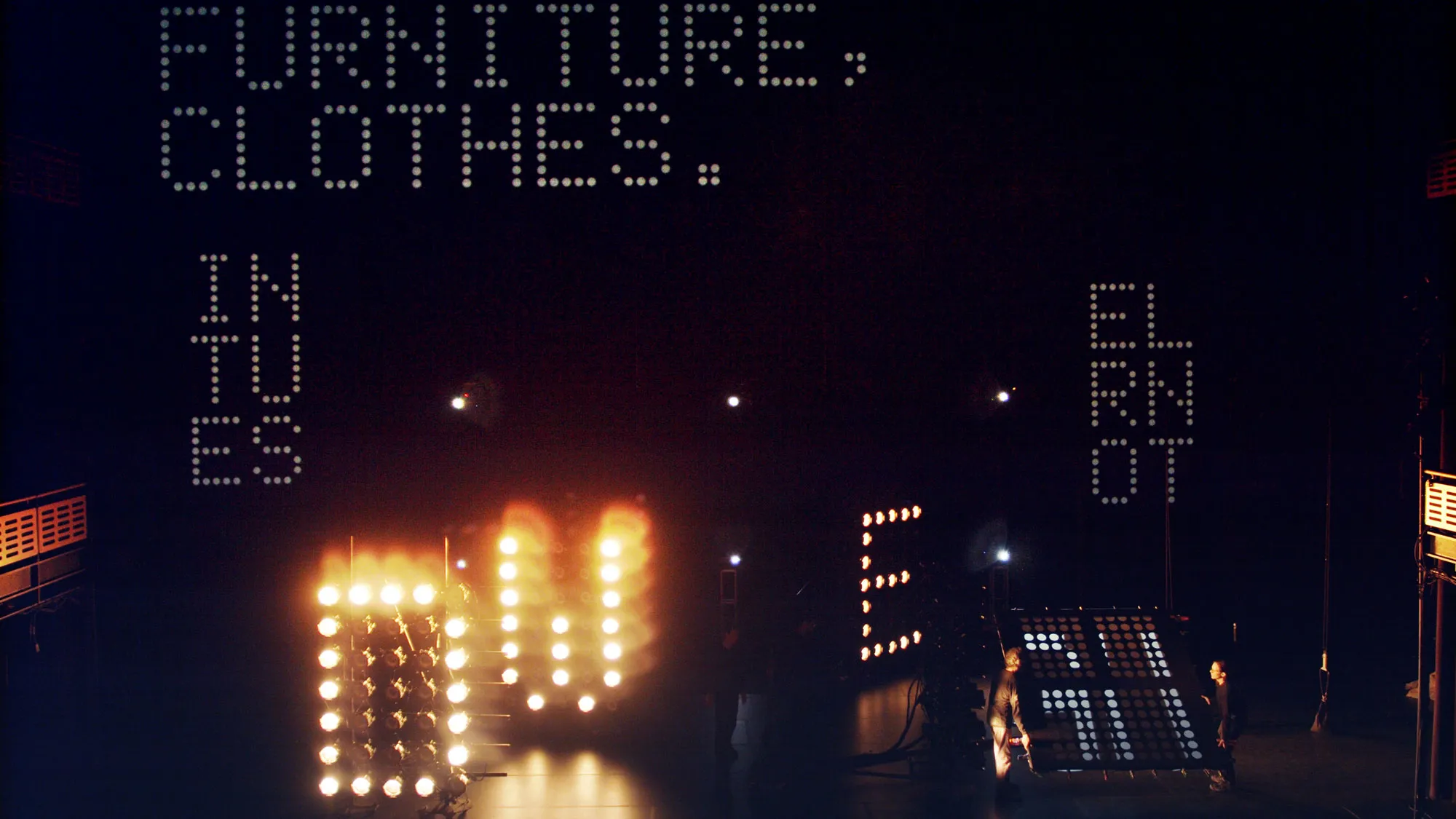
wave field synthesis system

Concert in Wave Fields

Miya Masaoka, Bora Yoon, Nina Young, and Pamela Z

In this concert the audience will walk through "wave fields." Wave Field Synthesis is a special way of creating sounds in space. The EMPAC Wave Field Synthesis system (EMPACwave) is a unique loudspeaker set-up with hundreds of speakers that was developed and built at Rensselaer over the past several years. While Wave Field Synthesis technology is not new, the design of EMPAC’s array is acknowledged by international experts to finally allow musicians to create music to the refined degree that has been promised by this theory of sound generation for over four decades.

Four works specifically composed for EMPACwave by Miya Masaoka, Bora Yoon, Nina Young, and Pamela Z premiered last August at Time:Spans festival but covid-protocol meant these new works could not presented at EMPAC concurrently. Concert in Wave Fields is now presented for our campus community to experience the potential of EMPACwave’s 200+ speakers through the music of four acclaimed American composers, none of which had previously had the opportunity to work with such an instrument.  

The composers Miya Masaoka, Bora YoonNina Young, and Pamela Z created four very different pieces and their works inaugurate an ongoing program of commissions for EMPACwave at Rensselaer.

--

This concert is being presented in person for campus audiences (faculty, staff, students of Rensselaer) only. In-person attendance is limited so please register early. 

Main Image: Wave Field Synthesis system (EMPACwave) in Studio 1. Photo: EMPAC/Rensselaer.

Image
a black man with a grey beard reaching out toward the camera.

Work-in-Progress: PROPHET

7NMS

This work-in-progress performance is a culmination of two development residencies of 7NMS's multi-year live performance project, PROPHET. The project's residencies at EMPAC explores spatial audio, mobile set elements, and moving-image content. 

Main Image: PROPHET, 2021. Photo: Marc Winston / @m62photography. 

Image
Jaamil Olawale Kosoko

Black Body Amnesia

Jaamil Olawale Kosoko

Black Body Amnesia is a performance project by author, performance artist, educator, and curator Jaamil Olawale Kosoko. The project accompanies Kosoko’s forthcoming Black Body Amnesia: Poems and Other Speech Acts (Wendy Subway, 2022), which blends poetry, memoir, conversation, and performance theory to enliven a personal archive of visual and verbal offerings. Inspired by Audre Lorde’s concept of biomythography, Kosoko’s archive refracts the shapeshifting, illegible, and fugitive realities of Black diasporan people within the American context to tell a complex narrative rooted within a queer, Black, self-defined, and feminist imagination.

Now, Kosoko brings their work to the stage for a live performance melding vocalization, music, spoken word, movement, moving-image, sculpture, and fabric. Black Body Amnesia is performed by Kosoko with an alternating cast of musicians, DJ’s, and vocalists including Raymond Pinto, DJ Maij, and sound designer/composer Everett Saunders. For the work, Kosoko uses complexity theory—which they define as the study of adaptive survivalist strategies inside complex networks or environments—as a choreographic device. From this artistic vantage point, the artist explores how minoritarianized communities record and affirm their existence through collaborative actions and protests, and how they then archive these personal freedom narratives to subvert culturally charged fields of systemic oppression, loss, and erasure. 

The performance of Black Body Amnesia follows Kosoko’s remote day long April 22, 2020 EMPAC presentation titled Chameleon (The Living Installments), which repurposed the online social platform Discord as an interactive venue where the artist hosted audio streaming of original sound, footage from a new moving-image work, a multi-media zine, remote conversations, a somatic workshop, and an archive of images, videos, and links. Many of the theories and documents from this event will find themselves in Black Body Amnesia, now staged in person for deeper theatrical exploration. 

Kosoko and their team will be in-residence at EMPAC to develop and rehearse Black Body Amnesia in advance of their performance. This residency will support lighting design and set design, and will include a film shoot. The performance of the work will be open to Rensselaer faculty, staff, and students, and will be staged for a dynamic film shoot that will be streamed at a later date.

Main Image: Jaamil Olawale Kosoko. Photo: Nile Harris.

Image
Jaamil Olawale Kosoko

Black Body Amnesia

Jaamil Olawale Kosoko

Black Body Amnesia is a performance project by Jaamil Olawale Kosoko that examines the shapeshifting, illegible, and fugitive realities of Black diasporan people within the American context.

Kosoko and their team will be in-residence February 7–18, 2022 to develop and rehearse Black Body Amnesia in advance of the premiere performance on February 18. This will be Kosoko’s fourth EMPAC residency. It will support lighting design and set design. The collaborators will also use the residency for a film shoot to create moving-image content for Kosoko’s live performance.

Black Body Amnesia will premiere for Rensselaer students, faculty, and staff in the Theater on Friday, February 18 at 3PM.

Main Image: Jaamil Olawale Kosoko. Photo: Nile Harris.

Image
a black man with a grey beard reaching out toward the camera.

PROPHET

7NMS

7NMS is at EMPAC for the first of two ten-day development residencies that will culminate in a performance of the company's multi-year live performance project, PROPHET, in fall 2022. For this first residency, the company will explore spatial audio, mobile set elements, and moving-image content for their project. 

Image
martine syms

The African Desperate

Martine Syms

Artist Martine Syms is in residence to complete the audio post-production for a new feature-length moving-image work, The African Desperate. The film follows its main protagonist, Palace, on one very long day in August 2017 that starts at an MFA program in upstate New York and ends at the Chicago Blue Line Station. The principal filming of The African Desperate took place in July 2021 on location throughout the Hudson Valley.

Martine Syms has earned wide recognition for a practice that combines conceptual grit, humor, and social commentary. She has shown extensively, including solo exhibitions at the Museum of Modern Art, the Art Institute of Chicago, and Tate Liverpool. She is a recipient of the Creative Capital Award, a United States Artists fellowship, the Tiffany Foundation award and the Future Fields Art Prize.

Main Image: Martine Syms, Courtesy the artist.

Image
a book cover with an illustration of a black person

An Afternoon with Anaïs Duplan

With films, discussion, and a book signing

This screening and discussion is for Rensselaer community members only at this time. Registration is required.

Please join artist and poet Anaïs Duplan for a screening, discussion, and book-signing. Following a program experimental documentary works selected by Duplan, there will be a collective discussion on the films and videos that inspire his work. 

Blackspace is an ongoing project that encompasses Duplan’s recent book and his EMPAC-commissioned radio series that follows the artist’s lyrical exploration of the political potential of aesthetic experiences, from everyday sensations to the transformative reckoning with an artwork. These experiences are viewed through the prism of how Black and Indigenous artists and artists of color are working with media technologies on their own terms to seek “liberatory possibility” through specifically aesthetic means. 

The screening features films and videos that Duplan is currently researching. Each in its own way subverts the documentary impulse and expresses the tension between a straightforward documentary form of “telling” and an aesthetic approach that experiments with opacity as a strategy of refusal.

The event will finish with a book-signing by the artist of Blackspace: On the Poetics of an Afrofuture (Black Ocean, 2020). A limited number of copies are available for our campus community for free on a first come first served basis.

Program

  • SPLASH (1991)
  • Directed By Thomas Allen Harris
  • 7 min, color, sound 
  • Graft and Ash for a Three Monitor Workstation (2016)
  • Directed By Sondra Perry
  • 9:05 min, color, sound, HD video
  • Nor Was This All By Any Means (1978)
  • Directed By Anthony Ramos
  • 24 min, color, sound
  • Off Limits (1988)
  • Directed By Rea Tajiri
  • 7:30 min, color, sound
  • Water Plastic Bag (1973)
  • Directed By Anthony Ramos
  • 8:45 min, b&w, sound
  • Hand Dryer (2012)
  • Directed By Maggie Lee
  • 00:27 sec, color, sound
  • Re Dis Appearing (1977)
  • Directed By Theresa Hak Kyung Cha
  • 2:30 min, b&w, sound
  • Landscapes and Subtitles (2013)
  • Directed By C. Spencer Yeh
  • 6:16 min, color, sound, HD video
  • ART THOUGHTZ with Hennessy Youngman: Relational Aesthetics (2011)
  • Directed By Jayson Scott Musson
  • 5:27 min, color, sound, HD video
Media
Image
a book cover with an illustration of a black person

Cover of Anaïs Duplan's Blackspace: On the Poetics of an Afrofuture (Black Ocean, 2020). Photo: Michael Valiquette/EMPAC.

Image
Rounded triangular geometric shapes in muted primary colors mounted on to a white ceiling with rounding lights in between.

Tuning Calder’s Clouds

Acoustics, Architecture, Art, and Music of Venezuela's iconic Aula Magna

Tuning Calder’s Clouds is a series of interdisciplinary conversations with experts from acoustics, art, architecture, and music that explores the historic and contemporary resonances of the Aula Magna—the iconic hall at the heart of the Central University of Venezuela in Caracas—in which Alexander Calder’s Acoustic Ceiling (1953) is suspended. 

The bilingual publication, Tuning Calder’s Clouds, edited by Vic Brooks, Dr. Jennifer Burris, and Mariana Fernández will be published in 2024 in a collaboration between EMPAC at Rensselaer, the Calder Foundation, and Athénée Press. It is the first book to explore the artistic, technological, and political intersections of Alexander Calder’s sculptural Acoustic Ceiling and includes contributions by Inés Arango Guingue, Dr. Lisa Blackmore,  Jonas Braasch, Mirtru Escalona-Mijares, María Fernanda Jaua, Johannes Goebel, Carlos Gómez de Llarena, Sylvia Hernández de Lasala, Dr. Anne Leilehua Lanzilotti,  Aimon Mata, Ana Navas, Rafael Pereira Escalona, Dr. Juan Pérez Hernández,  Alexander S.C. Rower, Gryphon Rue, and Rafael Santana.
 
Cuando los nubes eran las olas / When the clouds were waves by Ana Navas and Mirtru Escalona-Mijares engages these complex legacies in the production of a new work currently in development in EMPAC’s Concert Hall and created for the Acoustic Ceiling at Aula Magna.

Main Image: Alexander Calder’s Acoustic Ceiling (1953) in the Aula Magna, Universidad Central de Venezuela in Caracas. Photo: Vic Brooks/EMPAC.

Ideological Entanglements and Political Fictions: Art and Architecture in Venezuela

Lisa Blackmore & Jennifer Burris

Suspended above the audience seating of the Aula Magna auditorium in Caracas, Alexander Calder’s Acoustic Ceiling deploys sculpture as a way of shaping the sonic experience of theatrical space. This conversation will explore a different resonance of Calder’s work: namely, the political and ideological implications of cultural modernity within Venezuela during the twentieth century. Anchored in Lisa Blackmore’s groundbreaking study Spectacular Modernity: Dictatorship, Space and Visuality in Venezuela, 1948–1958 (U.P. Pittsburgh, 2017), curator Jennifer Burris and professor Lisa Blackmore will discuss the deployment of architecture and public spectacle as justification for censorship and authoritarianism as well as the tension between progressive aesthetics and repressive politics. Touching upon a broader rethinking of modernism in Latin America—in particular, the shifting nature of modernism as it migrates between places and across geographies—this far-reaching conversation will weave between political and cultural histories as it explores the manifold implications of a single, iconic artwork.

This talk is the third in a series of interdisciplinary conversations with experts from acoustics, art, architecture, and music that will explore the historic and contemporary resonances of the iconic Venezuelan hall.

Tuning Calder’s Clouds, edited by Vic Brooks and Jennifer Burris, will be published in fall 2022 in a collaboration between EMPAC at Rensselaer, the Calder Foundation, and Athénée Press. It is the first book to explore the artistic, technological, and political intersections of Alexander Calder’s sculptural Acoustic Ceiling and includes contributions by Dr. Lisa Blackmore, Sylvia Hernández de Lasala, María Fernanda Jaua, Dr. Anne Leilehua Lanzilotti, Rafael Pereira Escalona, Dr. Juan Pérez Hernández, Jonas Braasch, Johannes Goebel, Aimon Mata, Alexander S.C. Rower, Rafael Santana, Gryphon Rue, Ana Navas, and Mirtru Escalona-Mijares.

Cuando los nubes eran las olas (When the clouds were waves) by Ana Navas and Mirtru Escalona-Mijares engages these complex legacies in the production of a new work currently in development in EMPAC’s Concert Hall and created for the Acoustic Ceiling at Aula Magna.

Media

Lisa Blackmore & Jennifer Burris' talk, Ideological Entanglements and Political Fictions: Art and Architecture in Venezuela. December 8, 2021.

Ileana Ramírez Romero in conversation with Vic Brooks in Studio Beta. November 12, 2019.

When the Clouds Were Waves: Ana Navas in conversation with Vic Brooks. December 2020

Johannes Goebel and Jonas Braasch's talk Concert Hall Acoustics: From Flying Saucers to Fabric Sails. November 3, 2021.

Image
anais duplan

Blackspace Radio

Anaïs Duplan

Artist and poet Anaïs Duplan presents a series of five radio shows broadcast weekly on Rensselaer’s WRPI Troy 91.5FM and produced at EMPAC. Based on his recent book of essays, Blackspace: On the Poetics of an Afrofuture  (Black Ocean, 2020), the broadcasts entwine histories of liberation movements, labor struggles, criticism, and poetry with music, soundtracks, field recordings, and Foley sound. 

Duplan takes us on a journey that follows his lyrical exploration of the political potential of aesthetic experiences, spanning from the quotidian encounter of a bakery’s smell to the transformative reckoning with an artwork. These experiences are viewed through the prism of how other artists of color are working with media technologies on their own terms to seek “liberatory possibility” through specifically aesthetic means. 

Guided by Duplan’s voice, each broadcast employs “ekphrastic” methods—vivid verbal descriptions of the actions of artworks—as well as the sensory potential of Foley sound to produce a richly evocative auditory experience. The dialogue is interwoven with audio samples from films and videos by artists such as Ephraim Asili, Deanna Bowen, Tony Cokes, Leah Franklin Gilliam, Ulysses Jenkins, and Sondra Perry, TV and movie soundtracks, and an extensive range of music from Liz Mputu, Juliana Huxtable, Perfume Genius, Actress, Mal Devisa, and Hieroglyphic Being and more. 

Blackspace will be broadcast on New York's Montez Press Radio in 2022. 

Main Image: Anaïs Duplan. Courtesy the artist. Photo Ben Krusling.