Image
On a CRT monitor placed on a blonde gallery floor, a completely red frame from a video is visible on screen.

Autoasphyxiation

Na Mira

For staging grounds, Mira’s Autoasphyxiation is on view in EMPAC’s theater lobby. With shots tracking the Dragon Hill military garrison in Seoul, Autoasphyxiation fixates on the border surrounding this zone, which has been controlled by various state forces since its construction by the Japanese Imperial Army in 1906. Mira stages this landscape as a live transmission, where this boundary wavers between presence and disappearance, signal and silence.

  • FRIDAY, FEBRUARY 20
  • 6–10:15PM, Theater Lobby
  • INSTALLATION, FREE
  • Autoasphyxiation / Na Mira
  • SATURDAY, FEBRUARY 21
  • 11AM–5PM, Theater Lobby
  • INSTALLATION, FREE
  • Autoasphyxiation / Na Mira
  • TUESDAY, FEBRUARY 24–FRIDAY, FEBRUARY 27, 2026
  • 11AM–5PM, Theater Lobby
  • INSTALLATION, FREE
  • Autoasphyxiation / Na Mira
  • SATURDAY, FEBRUARY 28, 2026
  • 1–5PM, Theater Lobby
  • INSTALLATION, FREE
  • Autoasphyxiation / Na Mira

Main Image: Na Mira, Autoasphyxiation, 2025. Installation image, Paul Soto Gallery, 2025. Courtesy the artist and Paul Soto Gallery.


Image
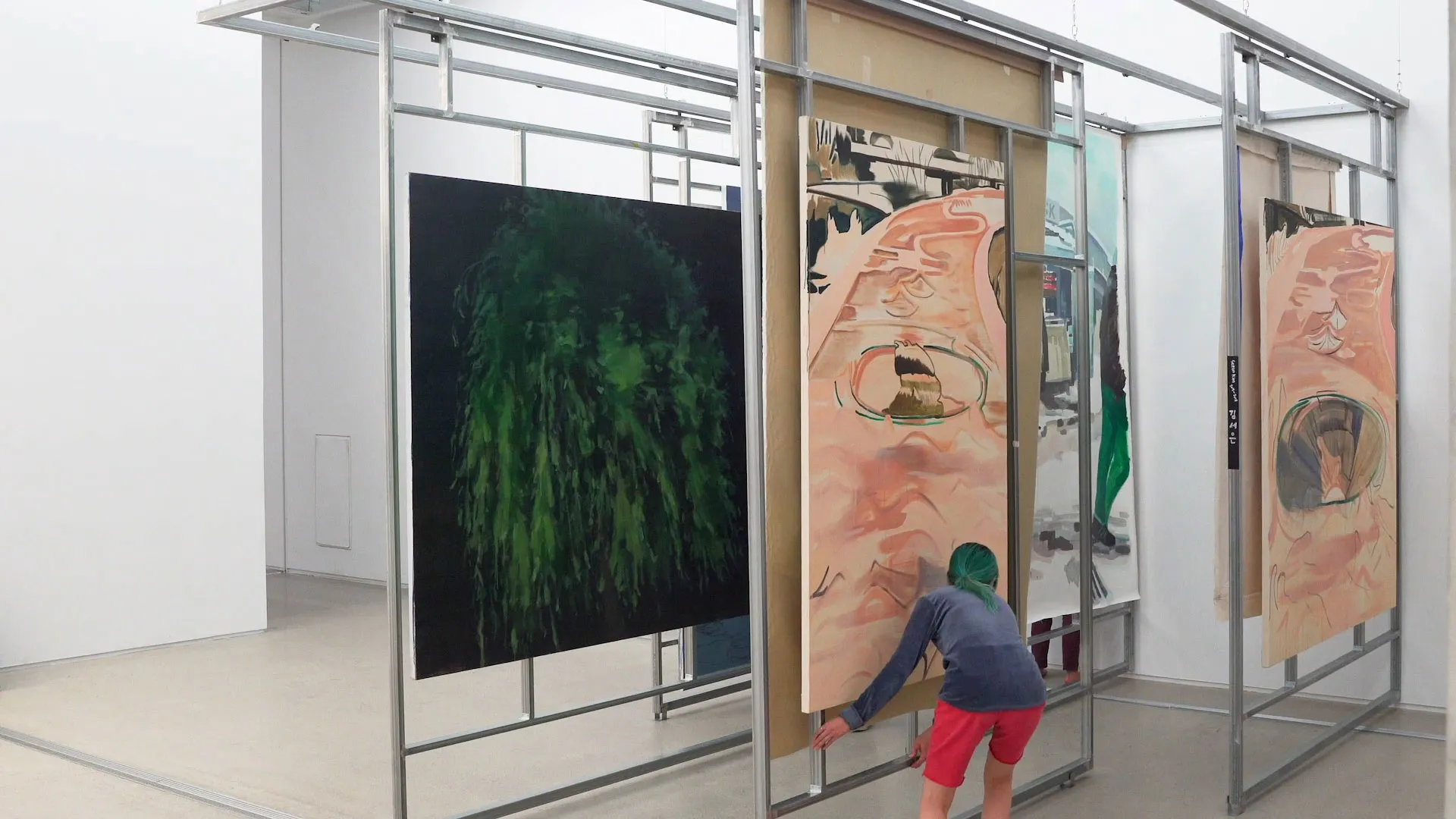
People weave in and out of large paintings mounted on parallel tracks within a metal art installation.

Desires of the City—A Workshop

Jewyo Rhii

On February 28, Jewyo Rhii leads a guided workshop on storytelling, beginning with a simple but radical question, What if we reimagined stories as cities—with public squares and hideaways, quiet back alleys and bustling main streets? “Cities are all about desires,” Rhii says. Through this workshop, she invites participants to explore how narrative absorbs the social, architectural, and emotional dimensions of urban life.

Using the architecture of Wing Theater as a jumping off point, workshop participants build a collective narrative. Starting from specific objects, participants share reflections, memories, and stories that reveal new ways of experiencing the city. 

Main Image: Jewyo Rhii, Love Your Depot, 2019, Installation view at the National Museum of Modern and Contemporary Art (MMCA), Seoul. Courtes the Artist, Photo: Team Depot.

Image
a mannequin head in the audience looking toward a green screen on a stage.

What is Your Favorite Primitive

Li Yi-Fan

Set within a crumbling cinema, Li Yi-Fan’s What is Your Favorite Primitive explores the awkward, playful spirit at the heart of virtual production: its aspirations of transcending time and space by replicating reality on-screen. As characters become tools of the software, and software itself takes on the role of a character, the film imagines the technology of animation as a stage that scripts its own dramas and epic conflicts.

Told through a semi-autobiographical lens and created using a video game engine, What is Your Favorite Primitive offers both parody and serious reflection—a meditation on the pleasures and perils of building a personal persona within screenspace.

Main Image: Film still, Li Yi-Fan, What is Your Favorite Primitive, 2023. Courtesy the artist.

Image
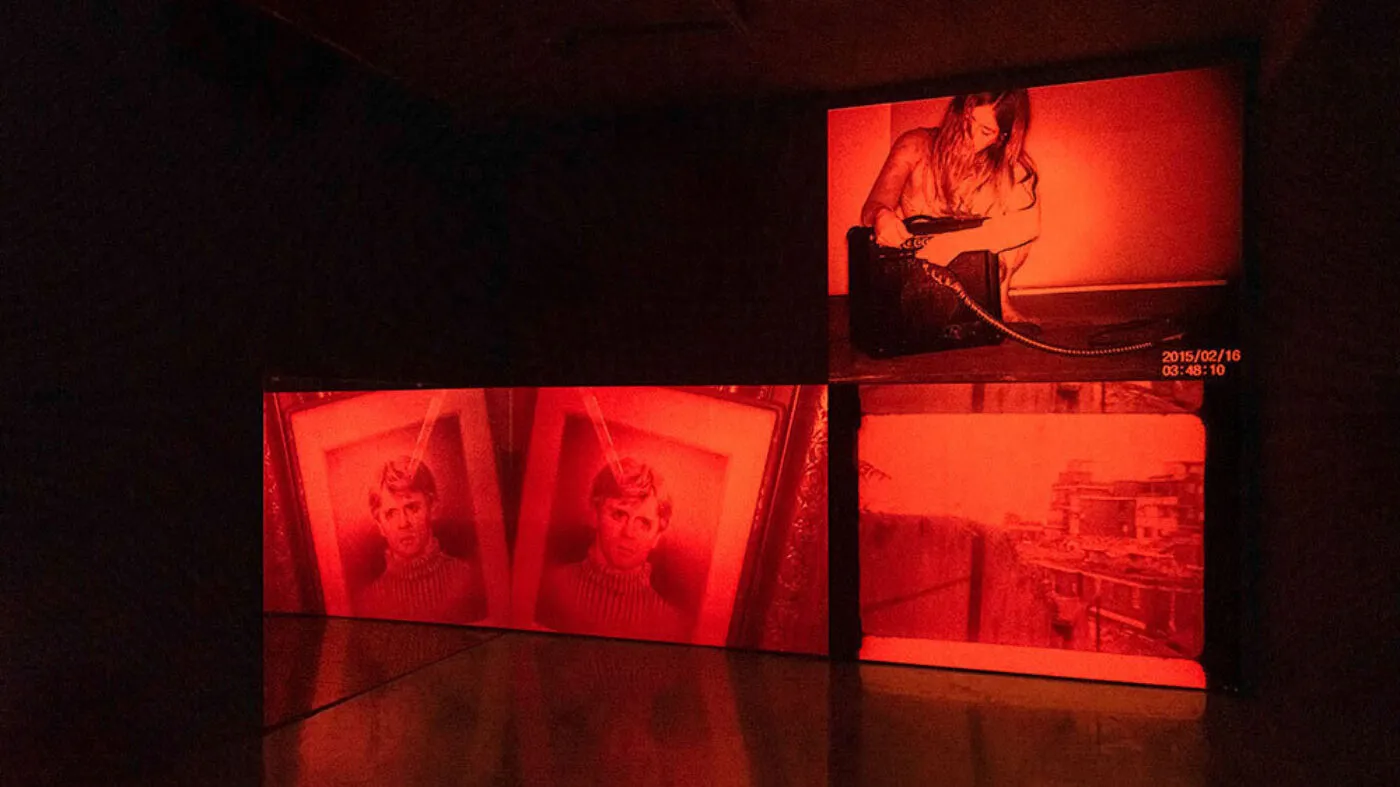
Three deep red images fill three screens, their light reflecting onto the floor.

Artist Talk

Na Mira

Often combining analog video and experimental film transfers with sculptural elements and ambient radio sound, Na Mira’s work is attuned to the signals that arrive from the past into the present, and from the spiritual into the technological. What if what seems to have departed hasn’t fully disappeared? What if it remains still latent, waiting to be picked up like a radio frequency?

In her talk, Mira reflects on her work and artistic research through the lens of the theater lobby—a space that traditionally marks the passage from the everyday into the fictive. She considers how an artistic medium becomes a site that either absorbs or negates the foreign material she introduces—as if summoning energies from afar.

For staging grounds, Mira’s Autoasphyxiation is on view in EMPAC’s theater lobby.

With shots tracking the Dragon Hill military garrison in Seoul, Autoasphyxiation fixates on the border surrounding this zone, which has been controlled by various state forces since its construction by the Japanese Imperial Army in 1906. Mira stages this landscape as a live transmission, where this boundary wavers between presence and disappearance, signal and silence.

Main Image: Na Mira: Subrosa, 2023. Museum of Contemporary Art Tucson. Photo by Maya Hawk. © MOCA Tucson, 2023. Courtesy the artist.

Image
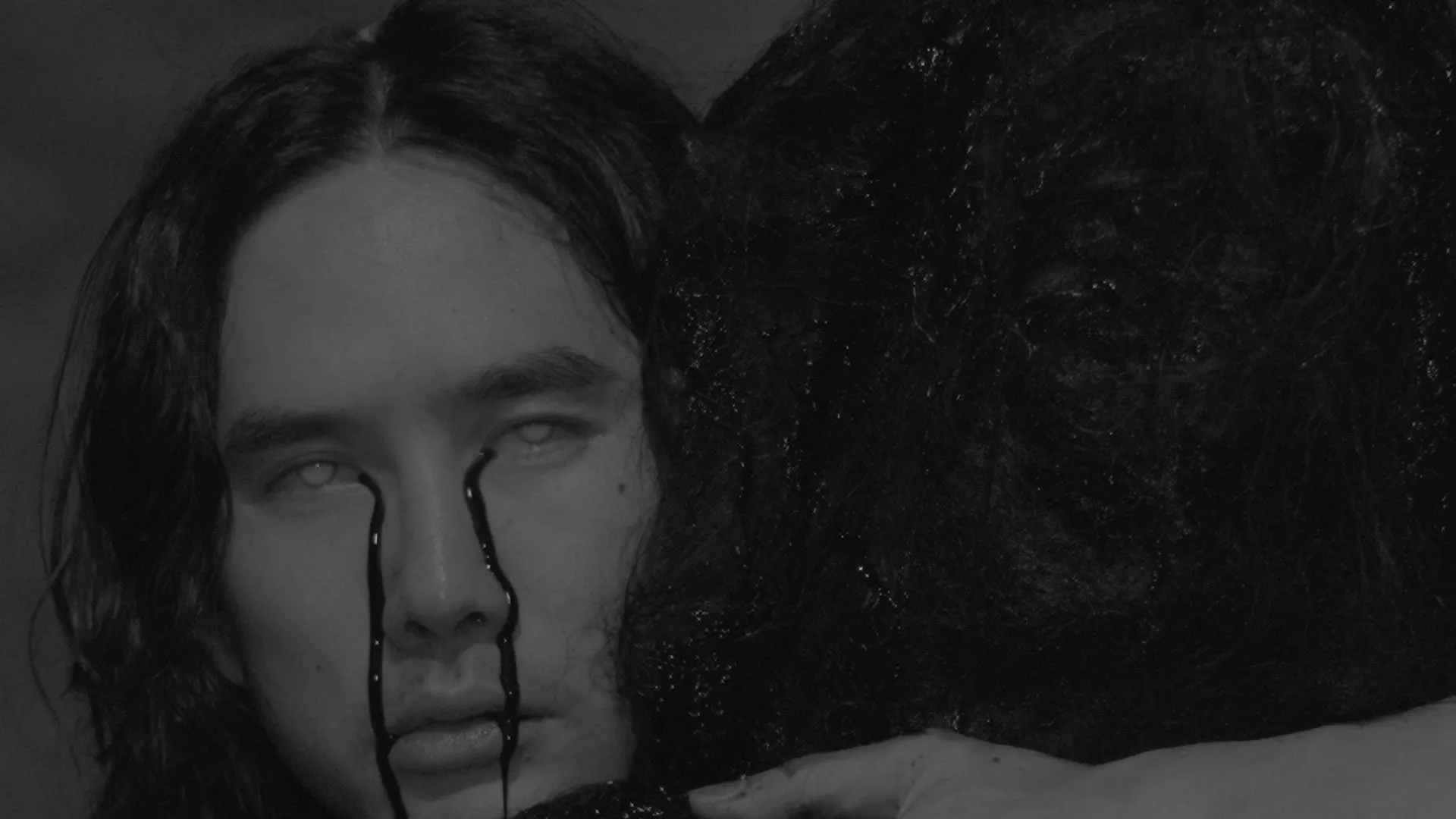
An asian person with long wavy hair crys black liquid while embracing another person with black liquid running throught their long black hair.

The Ghost takes us by the hand

Korakrit Arunanondchai and Tosh Basco

with Rueangrith Suntisuk, Pornpan Arayaveerasid, Aaron David Ross, Alex Gvojic, Michael Beharie

The Ghost takes us by the hand is a new EMPAC commission that blends performance, video, and sound. Built on an inversion of the theater and its usual mode of address, the work unfolds in, over, and around the traditional fixed seating of the auditorium, with the audience seated on the stage. Video appears on clouds of fog; the performance overtakes the playhouse as its architecture pulses with light and sound. When the empty house of the theater is gradually seized by an atmospheric presence and choral score, a single dancer emerges within and above the rows of seats, drawn from this charged zone—as if a glitch has transmuted image into flesh.

Arunanondchai integrates performance into his live and recorded works. His investigations into animistic afterlives and spiritual technologies in Southeast Asia span the sacred and profane. The Ghost takes us by the hand takes cues from Asian horror films, using atmosphere—sonic, choreographic, visual, spiritual—as a primary medium for performance. The work disorients spectatorship and tests the boundaries between film and live action. Arunanondchai asks, What happens when ghosts haunt a place we think we already know? Are we merely watching—or are we instead witnessing, absorbing deep pasts and projecting new possible futures? After the performance, the stage shifts to present an installation of the video Unity for Nostalgia—a work that extends the questions of the performance, drawing on strategies also used in the performance such as thermal imaging and atmosphere. The work reflects on the power of historical myths and ancestral stories to shape experience in the present.

Main Image: The Ghost takes us by the hand (detail shot). Courtesy the artist.

Image
People weave in and out of large paintings mounted on parallel tracks within a metal art installation.

Wing Theater

Jewyo Rhii

Jewyo Rhii’s Wing Theater, commissioned by EMPAC, is at once a self-contained theater, a sculptural archive, and a staging ground for storytelling. The installation uses walls that store objects, automated structures, and simple moving elements to give physical shape to personal and public stories, which are shown through precise gestures and motions. The project oscillates between installation and activated performance space, with Rhii offering two live activations daily throughout the festival.

At its base is a large-scale structure composed of six wings, each carrying an assembly of sculptures, images, and projections. These wings become engines for conversation—speaking with ghosts from Rhii’s past, with those who assert power by seizing and privatizing public space, and with the audience gathered in the studio. Throughout staging grounds, Wing Theater subtly spreads out across the studio, setting its stories in motion. In Studio 1, the piece evokes the atmosphere of an artist’s studio transformed into a dynamic stage—blurring the boundary between private process and collective encounter.

Wing Theater asks what it means to make, act, and think in the world as an artist. Two narrative trajectories extend across its physical structure. Viewed front to back, a series of vignettes charts Rhii’s path from her formation as an artist in Seoul, to her nomadic years working across Europe, and to her time in Queens, New York. Back to front, Wing Theater is a meditation on how the rapid pace of urban development transforms both people and place.

Widely recognized for her installations and her practice spanning sculpture, video, and performance, Jewyo Rhii approaches art-making as a mode of shared experience. Her work is marked by a sensitivity to the afterlives of artistic practice, and to the small, intimate acts that quietly shape collective histories.

Each performance is 60 minutes in duration.

  • FRIDAY, FEBRUARY 20
  • 6:30, Studio 1—Goodman
  • PERFORMANCE ACTIVATION, FREE, RSVP
  • Wing Theater / Jewyo Rhii / RSVP
  • SATURDAY, FEBRUARY 21
  • 1:30 + 4PM, Studio 1—Goodman
  • PERFORMANCE ACTIVATION, FREE, RSVP
  • Wing Theater / Jewyo Rhii / RSVP
  • TUESDAY, FEBRUARY 24–SATURDAY, FEBRUARY 28, 2026
  • 11AM–5PM, Studio 1—Goodman
  • INSTALLATION, FREE
  • Wing Theater / Jewyo Rhii / No reservation necessary
  • TUESDAY, FEBRUARY 24, 2026
  • 3PM, Studio 1—Goodman
  • PERFORMANCE ACTIVATION, FREE, RSVP
  • Wing Theater / Jewyo Rhii / RSVP
  • FRIDAY, FEBRUARY 27, 2026
  • 3PM, Studio 1—Goodman
  • PERFORMANCE ACTIVATION, FREE, RSVP
  • Wing Theater / Jewyo Rhii / RSVP
  • SATURDAY, FEBRUARY 28, 2026
  • 1PM, Studio 1—Goodman
  • PERFORMANCE ACTIVATION, FREE, RSVP
  • Wing Theater / Jewyo Rhii / RSVP

Main Image: Jewyo Rhii, Love Your Depot, 2019, installation view at the National Museum of Modern and Contemporary Art (MMCA), Seoul. Courtesy the Artist. Photo: Team Depot.

staging grounds

Korakrit Arunanondchai, Li Yi-Fan, Na Mira, Jewyo Rhii, and Samson Young

staging grounds is an open platform for performance, installation, and public programs.

By staging our shared experiences, how might we open up new forms of collective possibility? A staging ground is the architecture for an event—a place where people, objects, and ideas gather in anticipation of an unfolding scene. What follows may be a construction, a mission, a broadcast, a migration.

At EMPAC, staging grounds explores how art, cultural memory, and experience are shaped by structures that re-animate events across time. How do objects, gestures, or stories gain new meaning when they’re set in motion? How does each performance or installation transform what we inherit from the past, showing how culture survives by being continuously re-staged?

Anchoring staging grounds are two new commissions by artists Korakrit Arunanondchai and Jewyo Rhii, with additional artworks by Na Mira and Samson Young, and a film by Li Yi-Fan. The program also includes open installations, talks, workshops, and screenings in three distinct sites of gathering—the studio, the lobby, and the theater—each inviting you to witness, question, and take part in the unfolding scenes.

staging grounds Schedule

Image
august 2025 four venues in one image

Building Tour

with EMPAC Executive Director Dena Beard

Join Executive Director Dena Beard for a one hour tour of the EMPAC building with a reception to follow in Evelyn's café.

Image
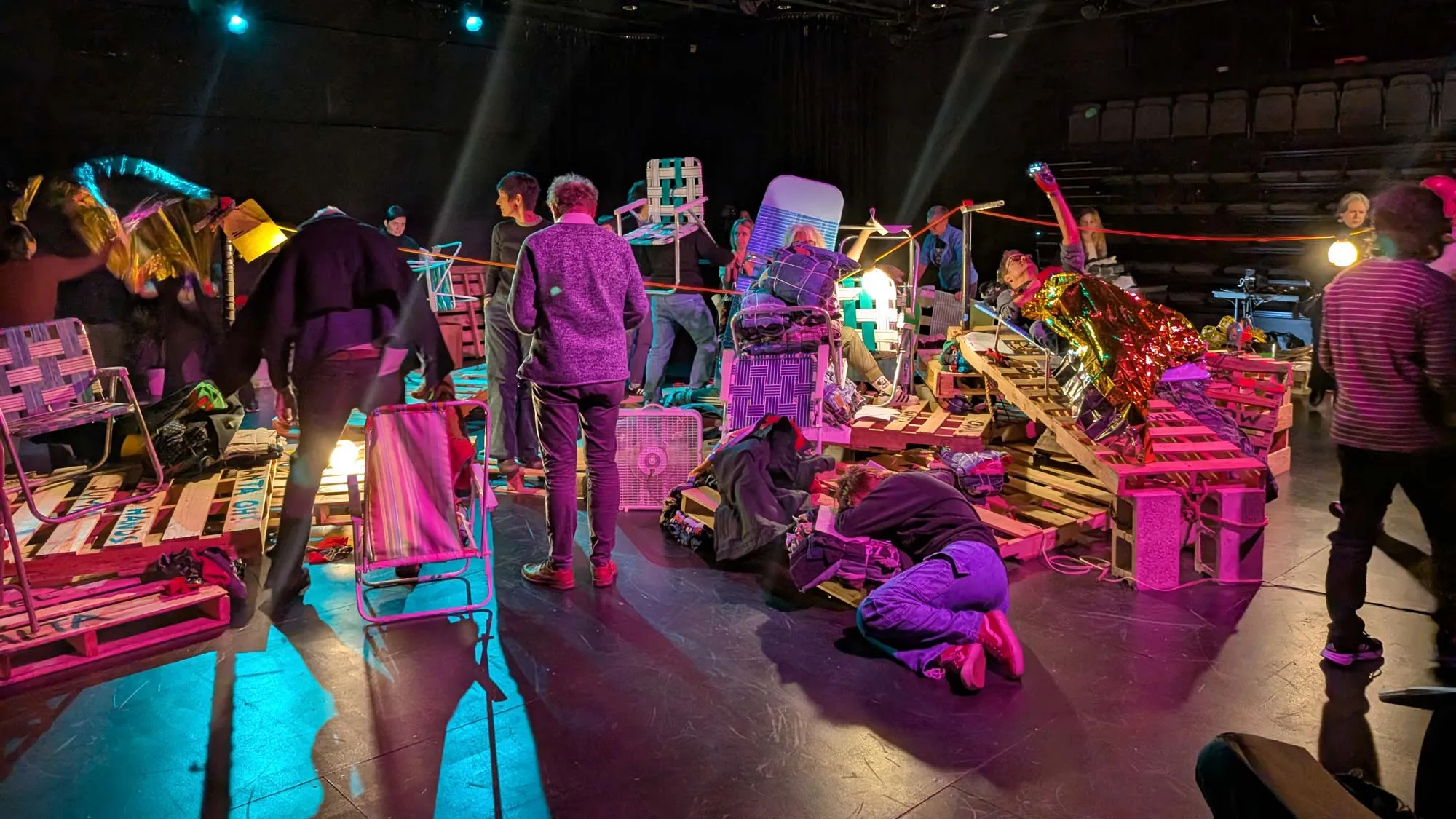
various people circling a pile of pallets and and other various objects in a black box studio

Work in Progress: Raft

Yanira Castro

How do we build a world from the detritus of a faltering society? How are we responsive to the environment, people, and objects around us? What are the ways that we can hold a more sacred relationship to one another? This in-progress installation from artist Yanira Castro and her design team—including Kathy Couch and RPI alum Stephan Moore—invites you to enter and effect a rumbling, buoyant, weather-like microcosm constructed of shipping pallets, clothing bundles, tarps, and emergency paraphernalia. Explore how your own actions, presence, and storytelling influence the space and atmosphere. Then stay to share your experience of the project at this early stage of development with the artistic team.

Main Image: Yanira Castro, Raft, 2025. Courtesy the artist. 

Image
The UNDO Fellowship 2025

Break ꩜ut Symposium 2025

UnionDocs / The Undo Fellowship

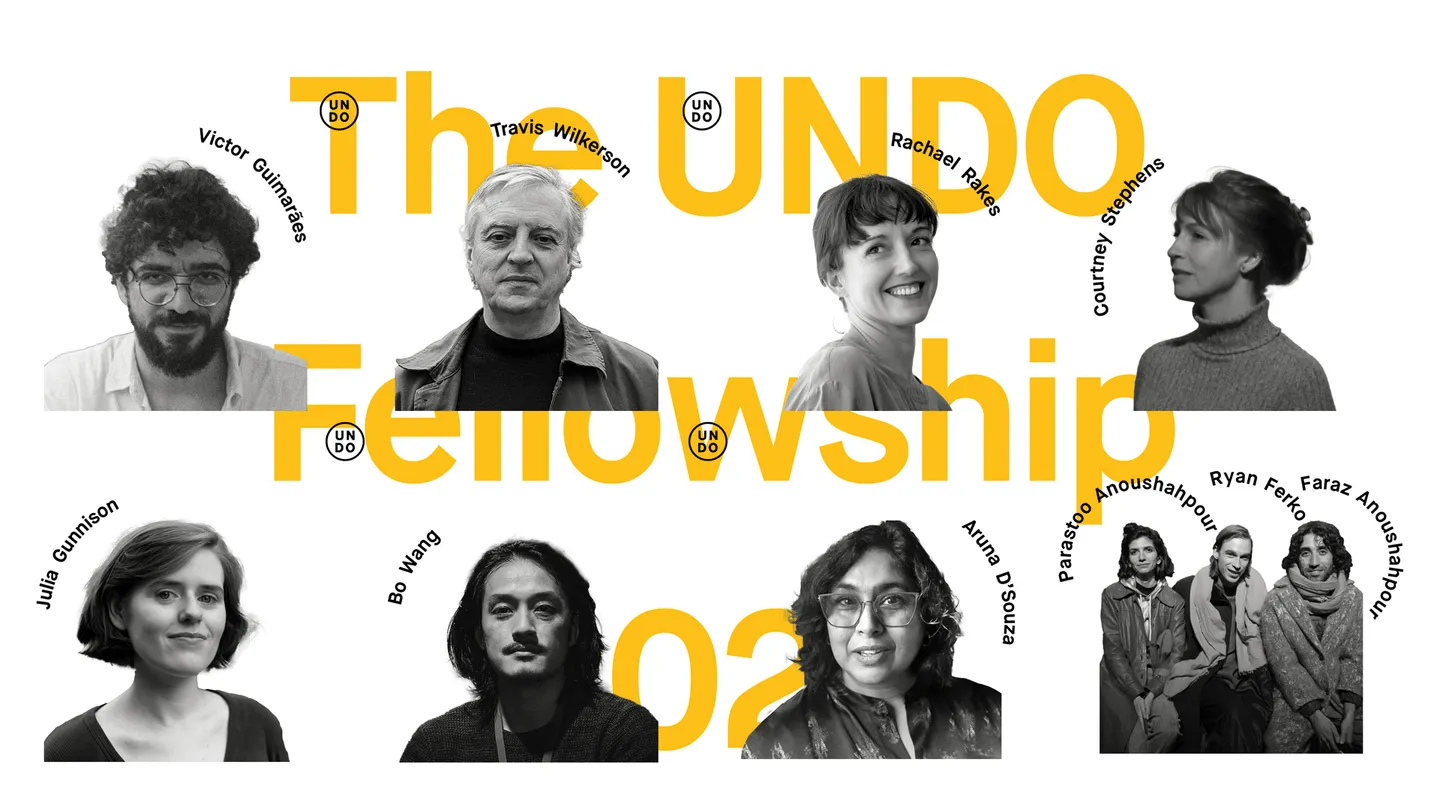
Break Out ‘25 is a two-day symposium (of sorts) that celebrates the research, writing and filmmaking initiated by the 2025 UnionDocs UNDO Fellows, hosted at the Experimental Media and Performing Arts Center (EMPAC). Set within the extraordinary architecture of EMPAC, this gathering brings together an exciting mix of filmmakers, writers, critics, and curious minds to think together about the evolving shape of documentary and how it operates in the world today. Come through and spend two days with us as we dive deep into the fellows’ evolving research with screenings, spirited dialogue, and shared inquiry!

This year’s cohort—artists Bo Wang, Parastoo Anoushahpour, Faraz Anoushahpour, Ryan Ferko, Travis Wilkerson, and Courtney Stephens—are joined by leading critics and writers Rachael Rakes, Aruna D’Souza, Victor Guimarães, and Julia Gunnison, whose conversations have helped shape the threads of inquiry that continue to unfold.

Connected through a match-making process, each pair’s research has expanded out from the practice of the documentary artist, to ask a question that seeks to understand how it operates in the world and can impact social movements.

Main Image: Courtesy UnionDocs.