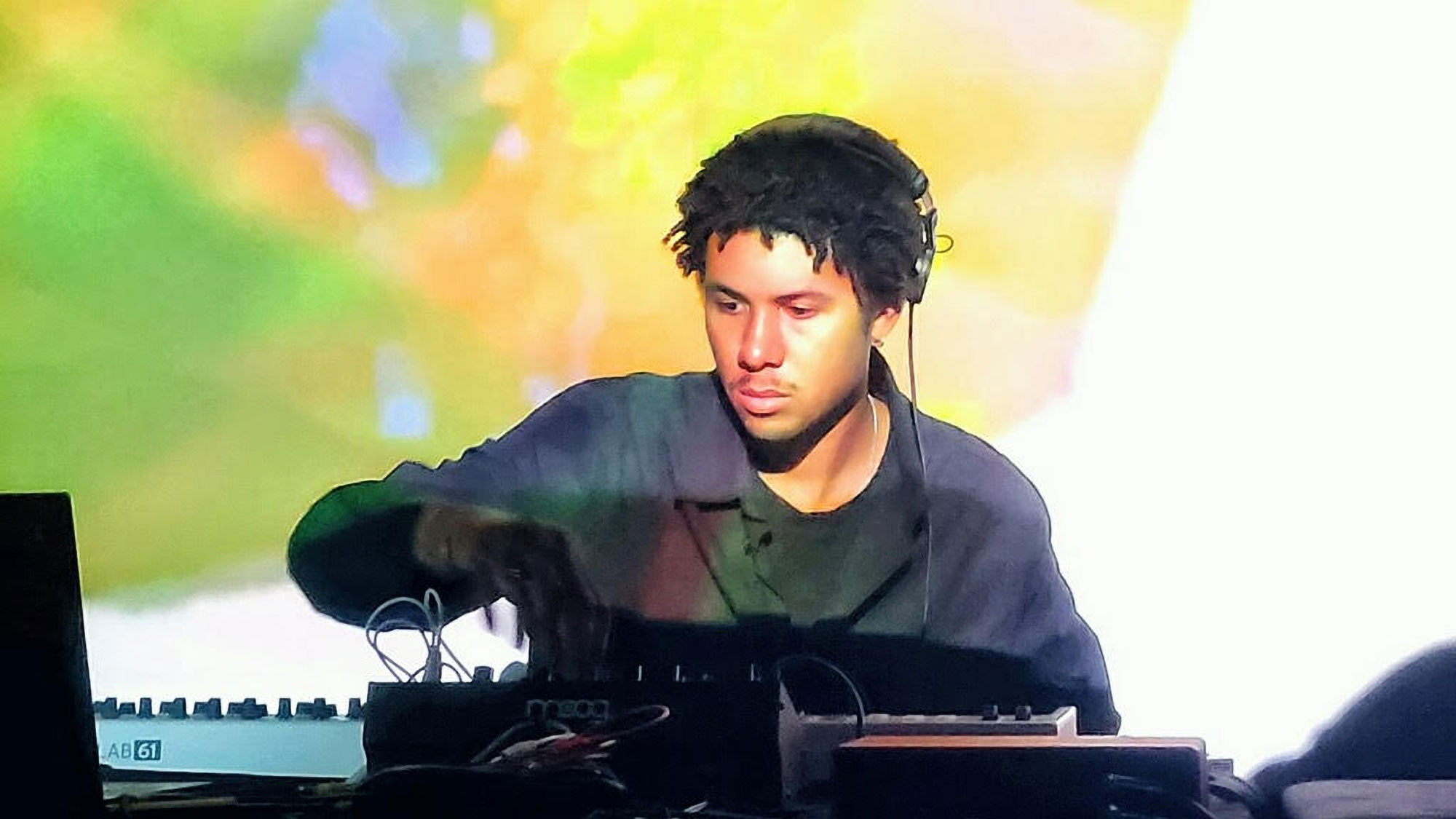
Persepolis

Xenakis x Micah Silver

Sound artist and composer Micah Silver is in residence in EMPAC Studio 1—Goodman to produce and create a new version of Greek composer Iannis Xenakis’s 1971 landmark electronic music work Persépolis. Working with EMPAC’s stage technologies and audio teams, Silver introduces new dramaturgical elements to the piece specifically designed for the venue and for TOPOS Music Festival 2025 audiences.

Main Image:

The Rose Dialogues and Interludes

Sarah Davachi

Composer Sarah Davachi takes advantage of the acoustical properties of the EMPAC Concert Hall and Studio 2 to record her work, The Rose Dialogues and Interludes, scored for two violas, cello, organ, and electronics. The composition is a featured world premiere at the TOPOS Music Festival 2025.

Main Image:

Liberation Meditations: A Call

King Britt, Suzi Analogue, and Myles Ortiz-Green

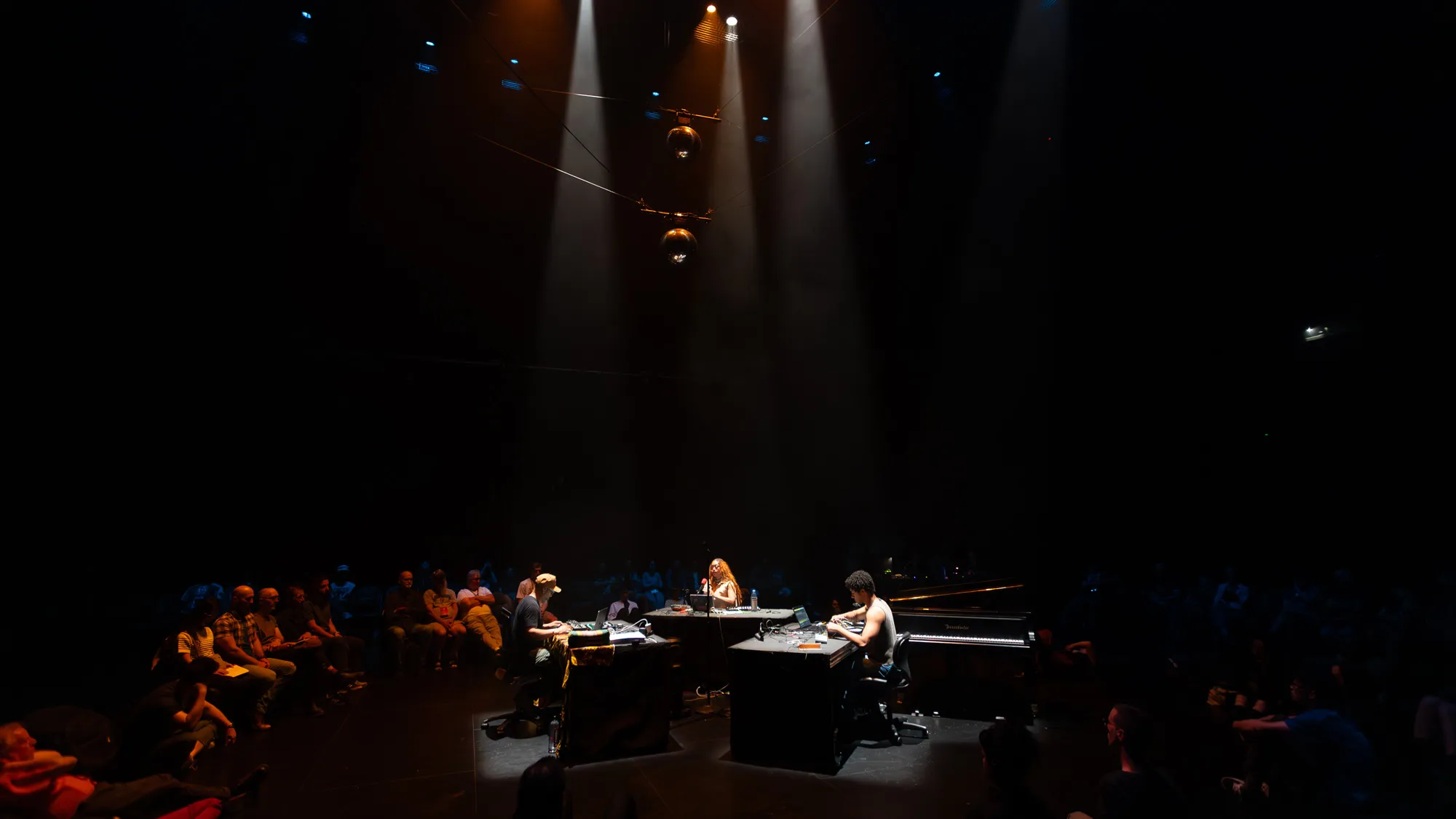
For Liberation Meditations: A Call, electronic musicians and composers King Britt, Suzi Analogue, and Myles Ortiz-Green collaborate for an evening of music that is at turns ambient and driving. They draw from deep archives–historic speeches, interviews, fragments of collective memory–reframing and recomposing in performance as mantras grounded in the ethos of freedom. The result is an improvised, immersive, and spatial offering created especially for EMPAC Studio 1—Goodman and the TOPOS Music Festival 2025.

Main Image:

Image
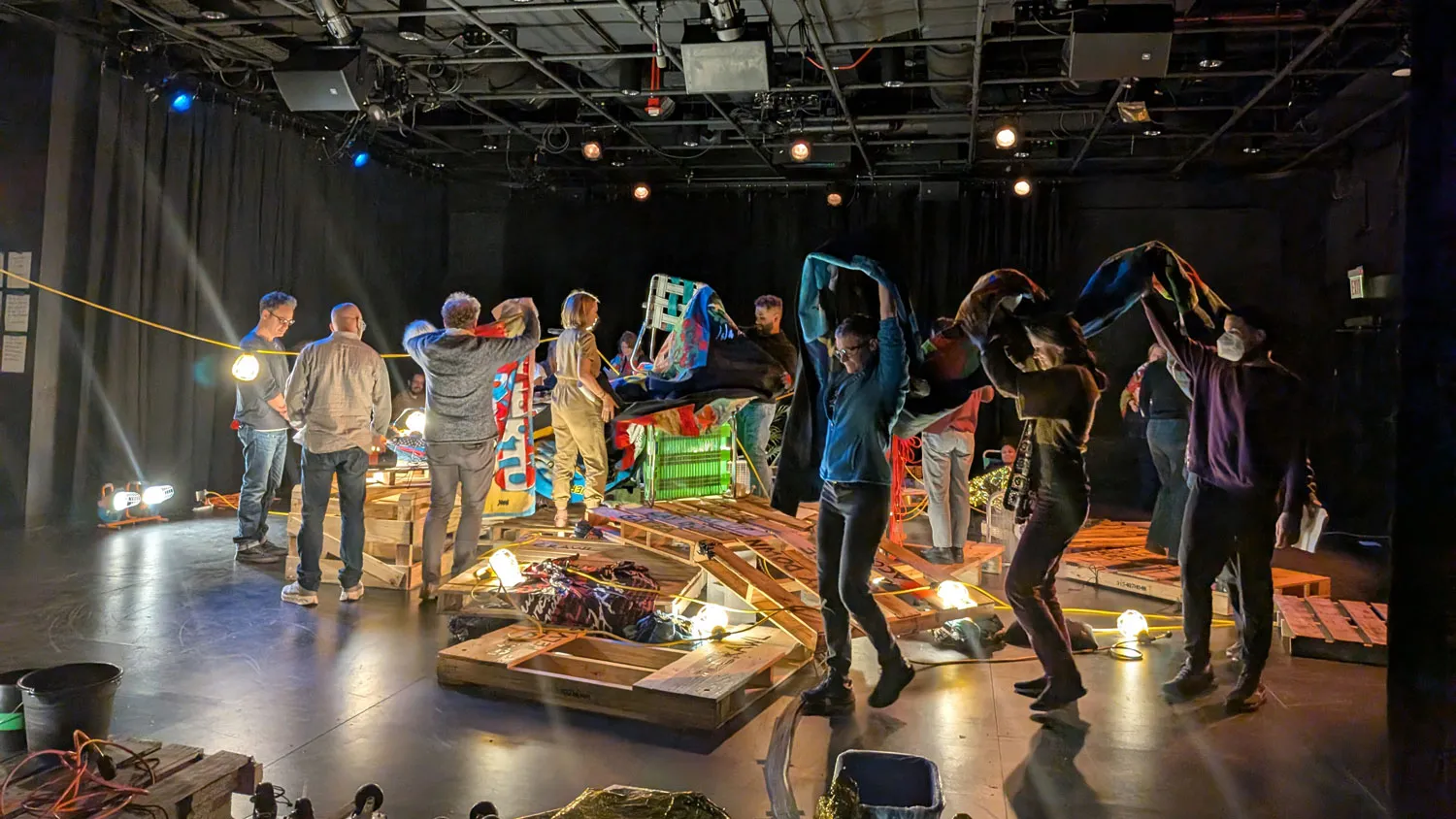
a group of people making a sculpture from pallets in a black box studio

Raft

Yanira Castro

Yanira Castro and a team of design collaborators, including Kathy Couch and RPI alum Stephan Moore, develop the environment for their audience-activated performance and audio installation, Raft, in advance of its April 2026 presentation at EMPAC.

Main Image: Yanira Castro, Raft, 2025. Courtesy the artist. 

Image
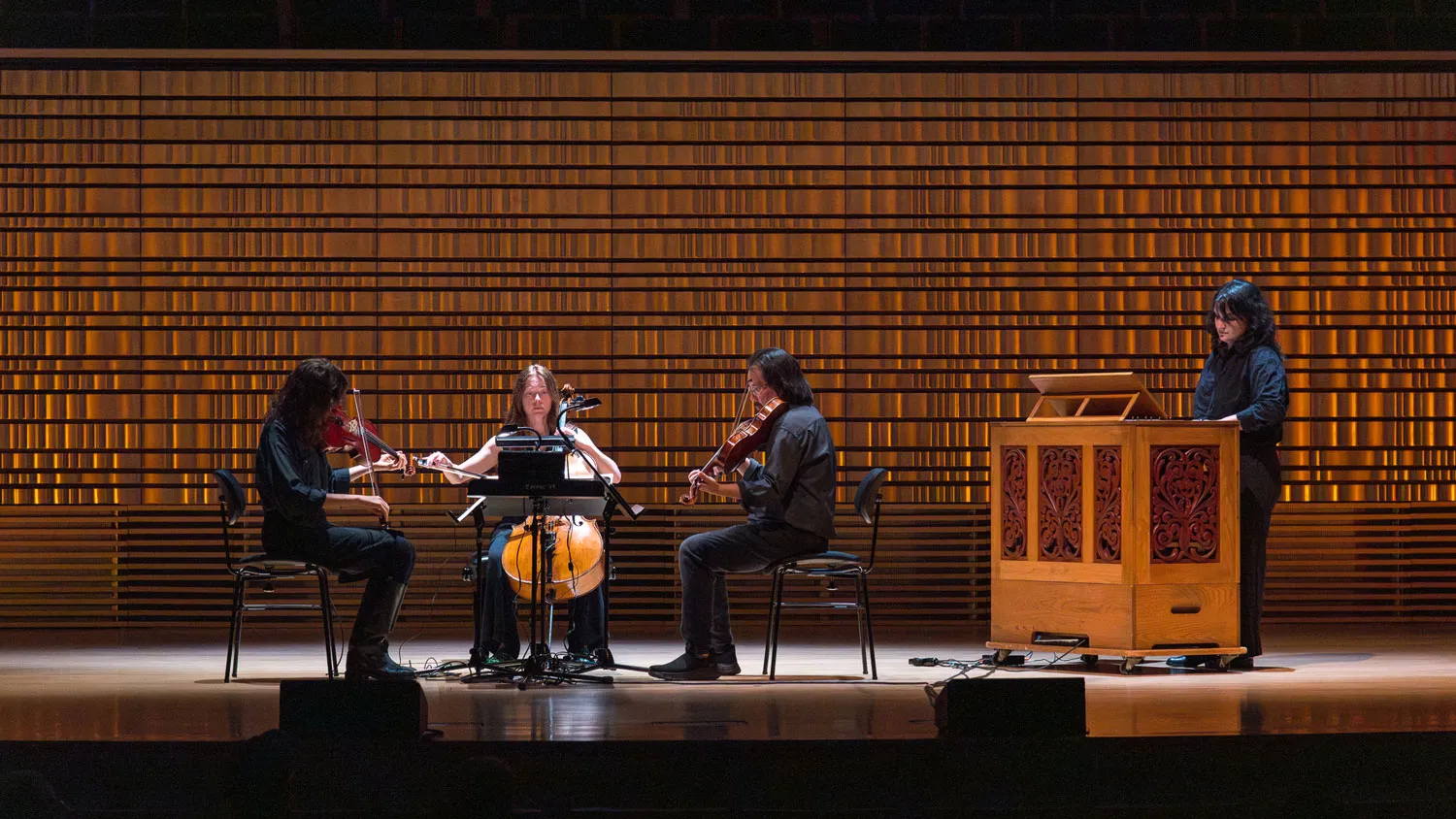
a quartet on a concert hall stage.

The Rose Dialogues & Interludes

Sarah Davachi

TOPOS presents the world premiere of a newly commissioned work by celebrated composer-performer Sarah Davachi. The Rose Dialogues, scored for two violas, cello, organ, and electronics, begins with the simplest of musical devices—the canon (or, which can colloquially be thought of as a round)—and spins an oceanic world of unexpected harmonies, haunting melodies, and formal surprises.

The topos of Davachi’s work is listening itself. Her music invites a deep attention, drawing us gently into the slow blossoming of her sonic landscapes. Within the veritable ocean of alternate tunings and temperaments, we are carried by waves of respite and repose, a darker pull that nudges us toward the unexpected.

Joined by musicians Eyvind Kang, Whitney Johnson (violas) and Lucy Railton (cello), Sarah Davachi’s piece moves slowly and with a precise ear for timbre and harmony. Its surprises feel hard-won, emerging from a rigor rooted in early Western compositional techniques: counterpoint, canon, heterophony, polyphony. And yet, her music is timeless, a dilated present that inches towards an uncertain yet harmonious future. A future that, in listening, seems to go on without end.

The premiere performance of Davachi’s The Rose Dialogues & Interludes at TOPOS is preceded by an onstage conversation with the composer.

Main Image: Rose Dialogues and Interludes in the concert hall at TOPOS 2025. Photo: Michael Valiquette/EMPAC

Image
a theater full of people watching a film.

Xenakis Portrait 1971–72

Directed by Pierre Andrégui

A spectacle of sound and light, Greek composer Iannis Xenakis’s epic work Persepolis was originally commissioned by the Shiraz Festival in Iran, taking place in the ruins of the Temple of Darius in the Iranian desert on August 26, 1971. The performance—lasting over an hour starting at sunset—included two lasers, military searchlights, huge bonfires, 150 torch-bearing children, and six listening stations outfitted with eight-channel speakers, one for each track of Xenakis’ electroacoustic score.

Persepolis was the second of Xenakis’s Polytopes, large-scale works—from the Greek language poly meaning many and topos meaning place—monumental works that sought to fuse sound, light, colors, and architecture into a single, immersive site of sensory experience. For Xenakis, the topos was not just spatial but sensorial: an encounter with the totality of an intermedial artwork.

Reimagined for EMPAC Studio 1 by sound artist and composer Micah Silver, Persepolis becomes a magmatic mass of noise, snaking its way across a multitude of discrete audio channels. In many ways, Xenakis’s work is less a concert and closer to an extreme weather event: light, color, raw sound, and stagecraft combine to create a dramaturgy of turbulence, compression, and blistering immediacy, then release. Over the course of an hour, the piece overwhelms—and ultimately expands—the senses, rewarding those who listen and watch with openness.

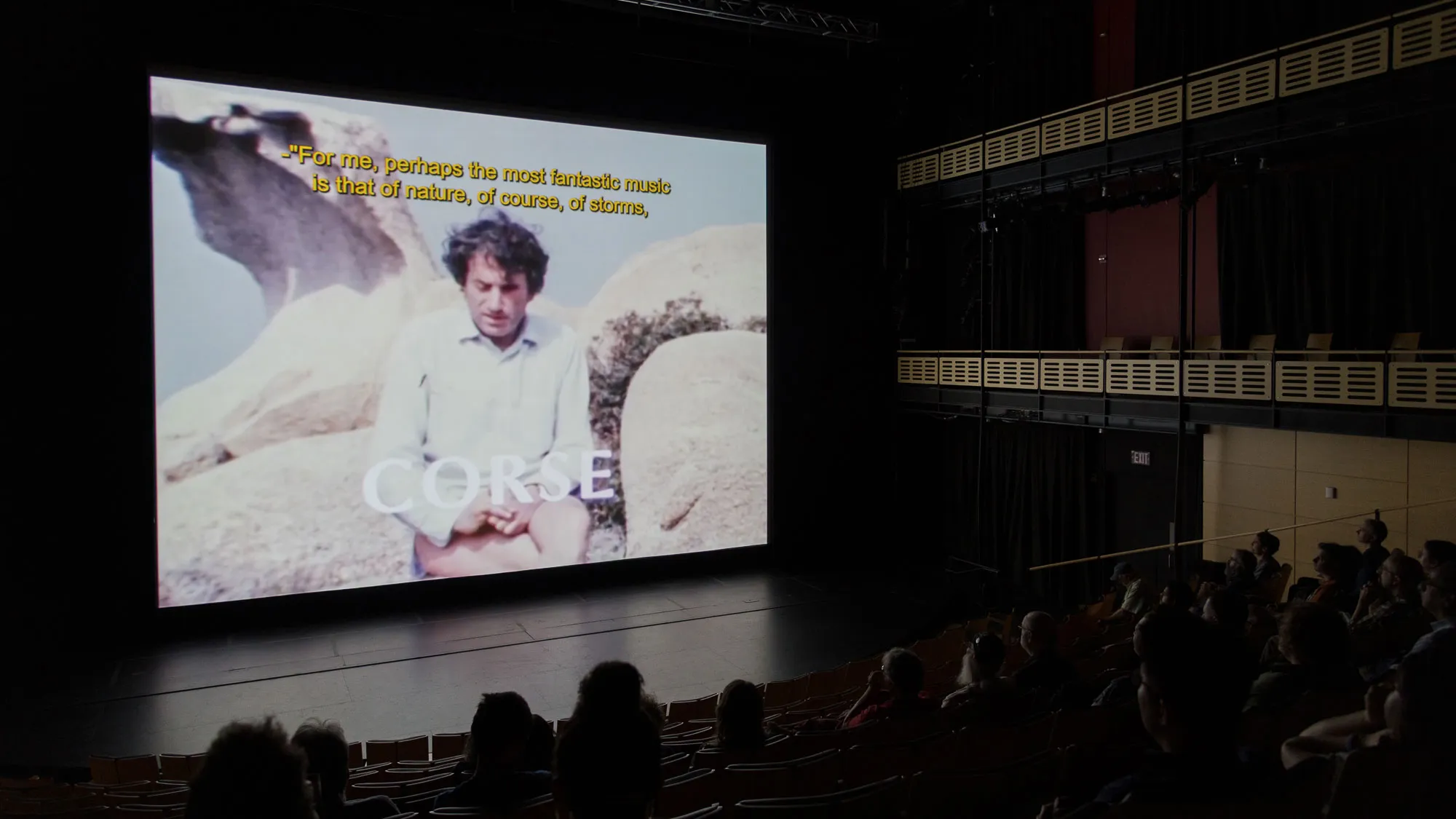
Preceding the presentation of Persepolis on Saturday, August 30, a rare screening of director Pierre Andrégui’s documentary Xenakis Portrait 1971–72 will shed light on the piece and the strange and fascinating context in which the Polytope Persepolis was born.

Main Image: Xenakis Portrait 1971–72 (1971) screening in the theater at TOPOS 2025.Directed by Pierre Andrégui. Photo: Michael Valiquette/EMPAC

Image
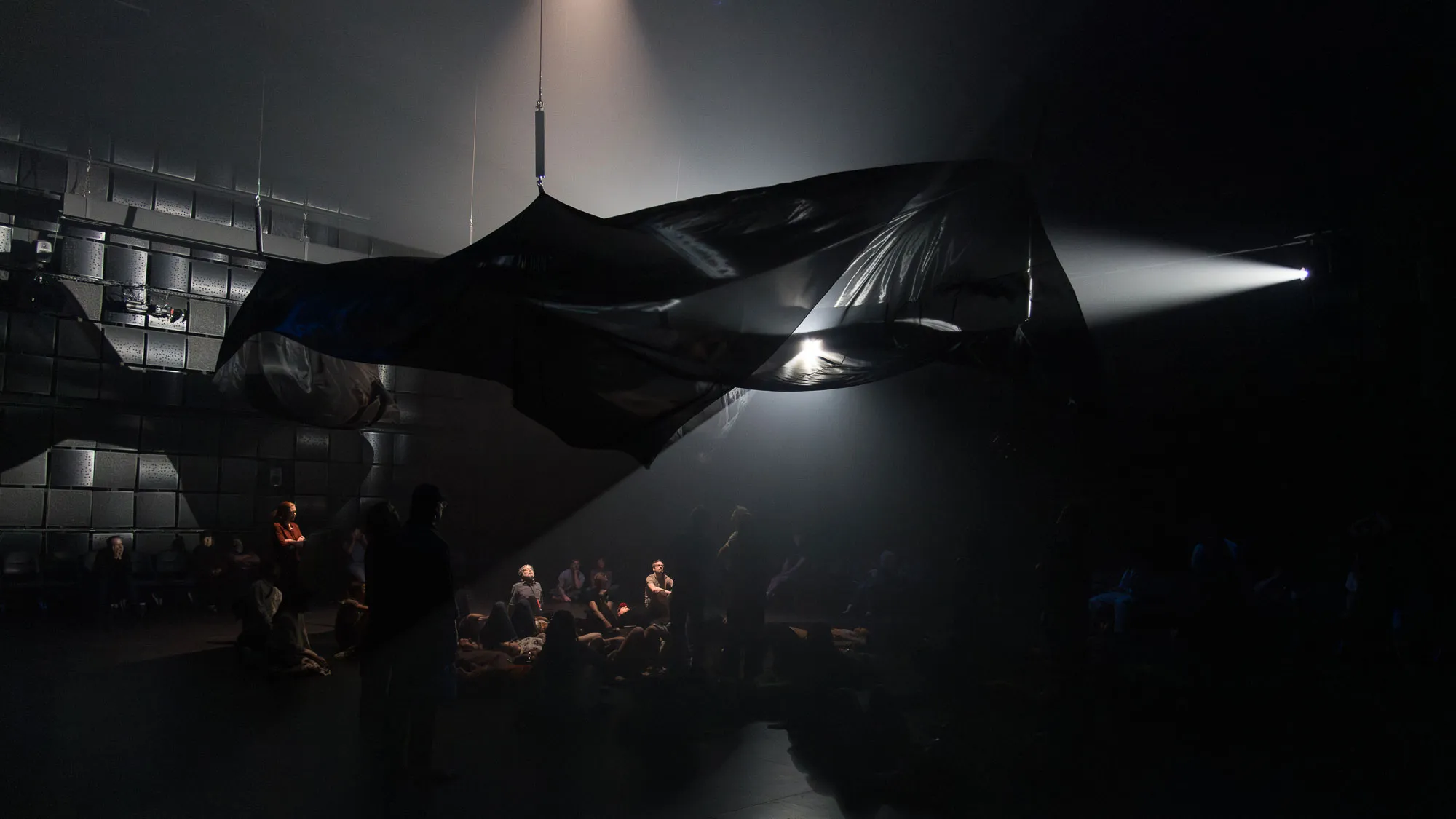
an ominous black canvas of fabric undulates above an audience in a black box studio

Persepolis, Troy 2025

Iannis Xenakis realized by Micah Silver

A spectacle of sound and light, Greek composer Iannis Xenakis’s epic work Persepolis was originally commissioned by the Shiraz Festival in Iran, taking place in the ruins of the Temple of Darius in the Iranian desert on August 26, 1971. The performance—lasting over an hour starting at sunset—included two lasers, military searchlights, huge bonfires, 150 torch-bearing children, and six listening stations outfitted with eight-channel speakers, one for each track of Xenakis’ electroacoustic score.

Persepolis was the second of Xenakis’s Polytopes, large-scale works—from the Greek language poly meaning many and topos meaning place—monumental works that sought to fuse sound, light, colors, and architecture into a single, immersive site of sensory experience. For Xenakis, the topos was not just spatial but sensorial: an encounter with the totality of an intermedial artwork.

Reimagined for EMPAC Studio 1 by sound artist and composer Micah Silver, Persepolis becomes a magmatic mass of noise, snaking its way across a multitude of discrete audio channels. In many ways, Xenakis’s work is less a concert and closer to an extreme weather event: light, color, raw sound, and stagecraft combine to create a dramaturgy of turbulence, compression, and blistering immediacy, then release. Over the course of an hour, the piece overwhelms—and ultimately expands—the senses, rewarding those who listen and watch with openness.

Preceding the presentation of Persepolis on Saturday, August 30, a rare screening of director Pierre Andrégui’s documentary Xenakis Portrait 1971–72 will shed light on the piece and the strange and fascinating context in which the Polytope Persepolis was born.

Main Image: Persepolis in Studio 1—Goodman during TOPOS 2025. Photo: Michael Valiquette/EMPAC

Media

Persepolis in Studio 1—Goodman at TOPOS 2025. Courtesy and complied by Micah Silver/EMPAC. 

This album is disc III "Les Polytopes II" of the 5 LP / 5 CD box set "Electroacoustic Works" that celebrates the 100th anniversary of IANNIS XENAKIS (on May 29th, 2022), one of the most influential 20th century avant gardé composers.

Image
king britt, suzi analogue, and myles ortiz

King Britt presents Liberation Meditations: A Call

with special guests Suzi Analogue and Myles Ortiz-Green

Pioneering producer, composer, and performer King Britt brings Liberation Meditations: A Call to TOPOS, joined by collaborators Suzi Analogue and Myles Ortiz-Green. Within the 39-speaker spatial soundscape of EMPAC Studio 1, turntables, analog synths, and digital textures are marshalled to move bodies–physically, emotionally, spiritually.

This is dance as ritual, rhythm as resistance. The topoi here are movement, celebration, and gathering—a communion forged through frequency and vibration:

“In times of chaos, the practice of centering oneself becomes not merely beneficial, but essential. Music (and movement) have long served as vital instruments of liberation and spiritual practice,” King Britt says, “functioning as forms of sonic centering. Mantras, in particular, have held a profound role in facilitating ritual connections to source energy, often yielding tangible physical and mental healing. These practices have been especially crucial to the endurance and resilience of communities of color.”

Liberation Meditations: A Call draws from deep archives—historic speeches, interviews, fragments of collective memory—reframed and recomposed as mantras grounded in the ethos of freedom. The result is an improvised, immersive, and spatial offering: healing in intent, ancestral in knowledge, futuristic in sound.

Together, King Britt, Suzi Analogue, and Myles Ortiz-Green, seek to elevate the mind, body, and spirit, to create a space for collective resonance and transformation.

Main Image: King Britt, Suzi Analogue, and Myles Ortiz-Green in Studio 1—Goodman during TOPOS 2025. Photo: Patrick Dodson/EMPAC.

Media

immerse(d) digital 004: Performance by King Britt

Image
a crowd of concert-goers sits in chairs on hamster bedding in Troy's historic gasholder house while watching a five piece band.

Lazyhorse

Presented by The Living Earth Show, with Travis Andrews, Raven Chacon, Miriam Elhajli, Steve Hammond, Andy Meyerson, and Mali Obomsawin

For TOPOS, Pulitzer Prize–winning composer and visual artist Raven Chacon sheds the gravitas of the art world and returns to one of music’s most raw and immediate forms: the band. Drawing on his roots in noise, thrash, and metal (Tenderizor, KILT, White People Killed Them), Chacon channels that energy into an exploratory, almost meditative excavation of American musical traditions: country, folk, and their haunted echoes.

Lazyhorse marks the latest chapter in Chacon’s nearly decade-long collaboration with The Living Earth Show (percussionist Andy Meyerson and guitarist Travis Andrews). Known for transforming the chamber ensemble model into a platform for genre-defying invention, The Living Earth Show builds immersive sonic worlds with their collaborators. After their lauded piece Tremble Staves, Chacon and the duo return with a new vision, this time centering songcraft, improvisation, and the unruly edges of music.

At its core, Lazyhorse is haunted by the spaghetti western—a film genre that injected moral ambiguity into the clean-cut heroics of the American frontier myth. In Chacon’s hands, these disillusioned antiheroes become sonic archetypes, spectral guides complicit in westward violence, leading us through a landscape where distortion, silence, and satire collide.

Commissioned by EMPAC, Lazyhorse assembles a powerhouse lineup: Mali Obomsawin (bass), Miriam Elhajli (vocals, guitar), Steve Hammond (lap steel), Chacon (keys/guitars), and The Living Earth Show. Together, they form a genre-exploding band that dissects and reconstructs the mythology of Americana, stitching together songs that are as biting as they are hauntingly beautiful.

This is no nostalgia trip: Chacon’s topos is resistance. Lazyhorse confronts the violence of empire through sound, turning the stage into a site of reckoning, reclamation, and radical reimagination.

The Gasholder House is located at 113 Jefferson St. in Troy, NY.

Main Image: Lazyhorse plays in Troy's historic Gasholder House as part of TOPOS Music Festival on August 28, 2025. Photo: Patrick Dodson/EMPAC.
Image
a band playing together in a white studio with equipment strewn everywhere.

Lazyhorse

Raven Chacon & The Living Earth Show

Lazyhorse band members Miriam Elhajli (vocals, guitar), Raven Chacon (keyboards/guitars), Mali Obomsawin (bass), Steve Hammond (lap-steel guitar), and The Living Earth Show (Travis Andrews, guitar and Andy Meyerson, percussion) record and rehearse material for a commissioned project and performance created especially for TOPOS Music Festival 2025.

Main Image: Raven Chacon and The Living Earth Show in residence in November, 2024 in Studio 2. Courtesy the artists. Photo: Michael Valiquette/EMPAC.