108 Troubles
Rob Hamilton
In Spring 2016, EMPAC completed construction on a 496-channel wave field audio system, one of the most extensive in the world. Consisting of very small speaker heads oriented very close together, the system produces a 3D audio environment by localizing the source of individual sounds with an extreme level of precision.
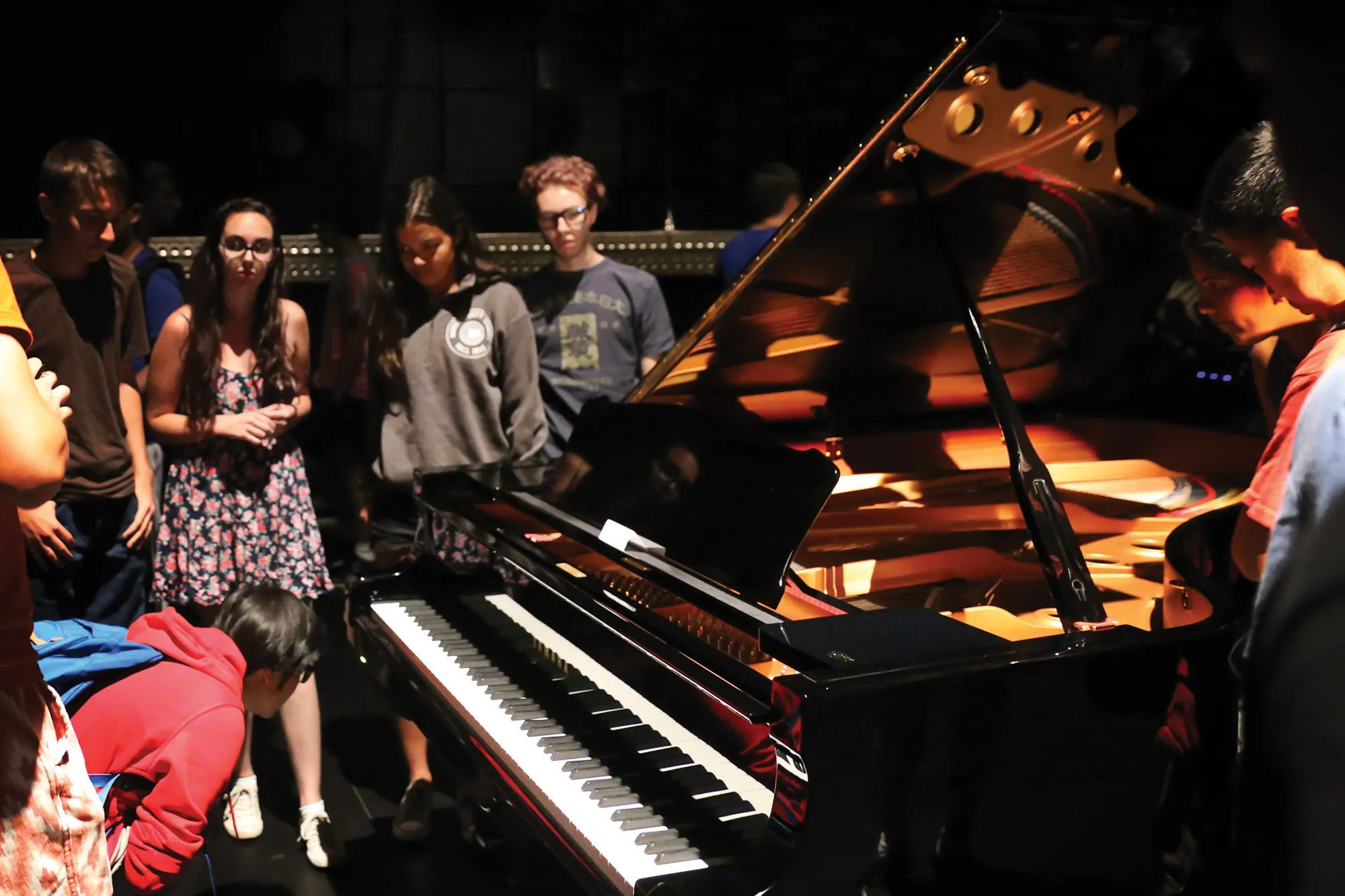
For the wave field array’s inaugural performance, Rensselaer Professor Rob Hamilton created a running installation and performance (on Sept. 2) to explore and demonstrate advanced concepts of spatialized sound. Using a Disklavier piano, Hamilton transformed digitally recorded notes and distributed them across each of the independently controlled speakers in the system. Audiences were encouraged to physically explore the resulting environment much like a giant sonic hologram. The live performance was realized by pianist Chryssie Nanou.
Image
108 Troubles
Rob Hamilton
In Spring 2016, EMPAC completed construction on a 496-channel wave field audio system, one of the most extensive in the world. Consisting of very small speaker heads oriented very close together, the system produces a 3D audio environment by localizing the source of individual sounds with an extreme level of precision.
For the wave field array’s inaugural performance, Rensselaer Professor Rob Hamilton created a running installation and performance (on Sept. 2) to explore and demonstrate advanced concepts of spatialized sound. Using a Disklavier piano, Hamilton transformed digitally recorded notes and distributed them across each of the independently controlled speakers in the system. Audiences were encouraged to physically explore the resulting environment much like a giant sonic hologram. The live performance was realized by pianist Chryssie Nanou.
Dr. Rob Hamilton, a composer, performer, researcher and software designer, explores the cognitive implications of the spaces between interactive game environments, network topographies, and procedurally-generated sound and music. Dr. Hamilton joined the Department of Arts at Rensselaer as an Assistant Professor of Music and Media in 2015.
Main Image: Students in Studio 1 for a demo of 108 Troubles in 2016. Photo: EMPAC.
Image
The Vision Machine
Melvin Moti
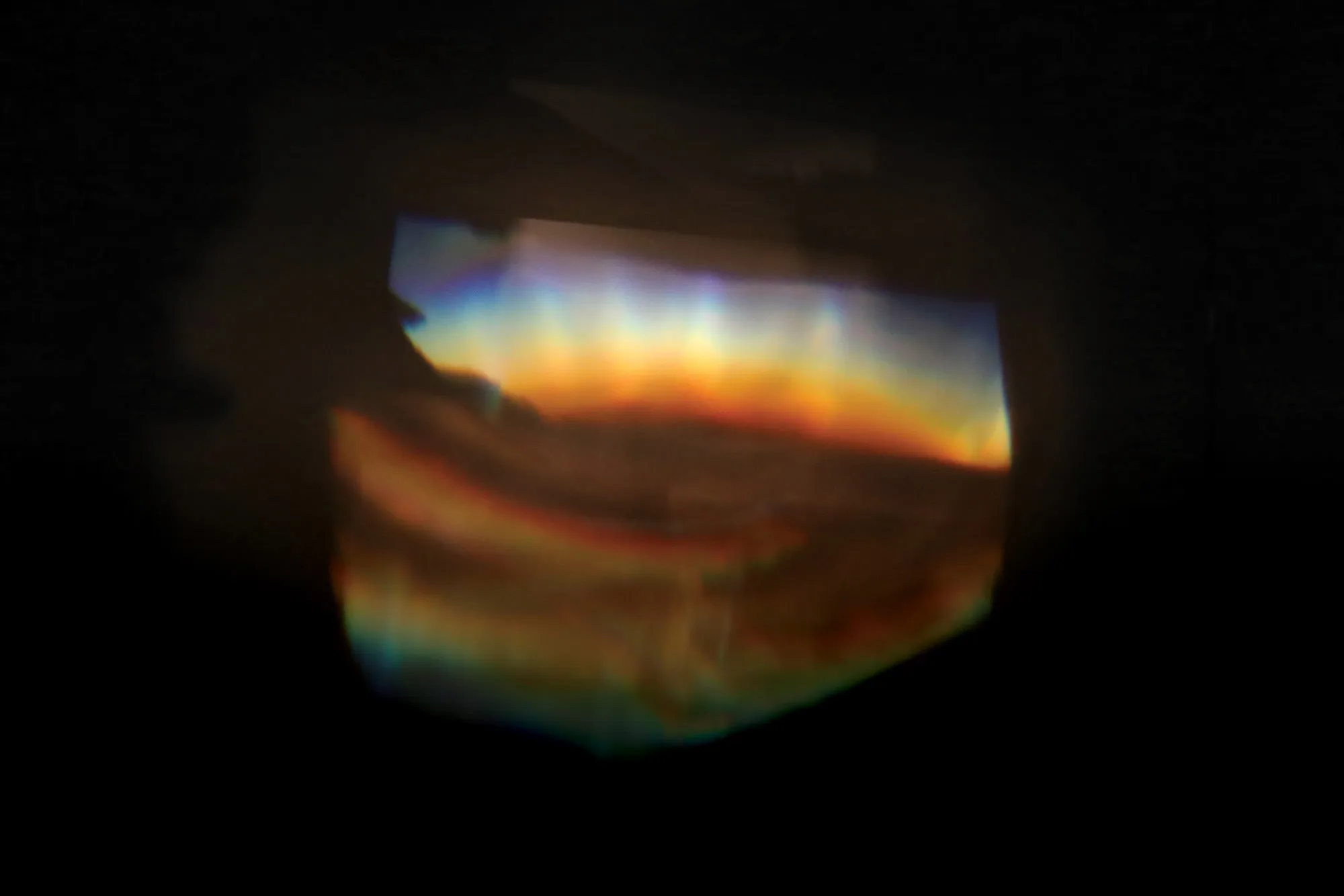
The Vision Machine is a kinetic light sculpture that produces a 20-minute film based on the behavior of light in prisms. Drawing on optics and material science, this optical box harnesses the same physical principles that give rise to everyday atmospheric effects such as rainbows and sundogs by shining light through a series of rotating prisms and focusing it back onto a wall with a lens. The Vision Machine is conceptually based on Riccardo Manzotti’s idea of the “Spread Mind,” which proposes that consciousness is spread between physical phenomena and the individual. The viewer doesn’t see the world; he is part of a world process. In the installation, diffracted light serves as a metaphor for our consciousness as an interrelated process of worldly phenomena, partly external and partly internal, but never static. Melvin Moti worked collaboratively with a team of Rensselaer undergraduate physics and engineering students to create The Vision Machine.
ON VIEW:
Dec 4, 12–9PM Dec 5, 12–9PM Dec 6, 12–10PM
VIDEO
Main Image: Prismatic light created by Melvin Moti's The Vision Machine. Film still: EMPAC/Rensselaer.
Media
Image
Image
25: An Initiate: kneel path dweller beams
Sabisha Friedberg
SOUND/MUSIC
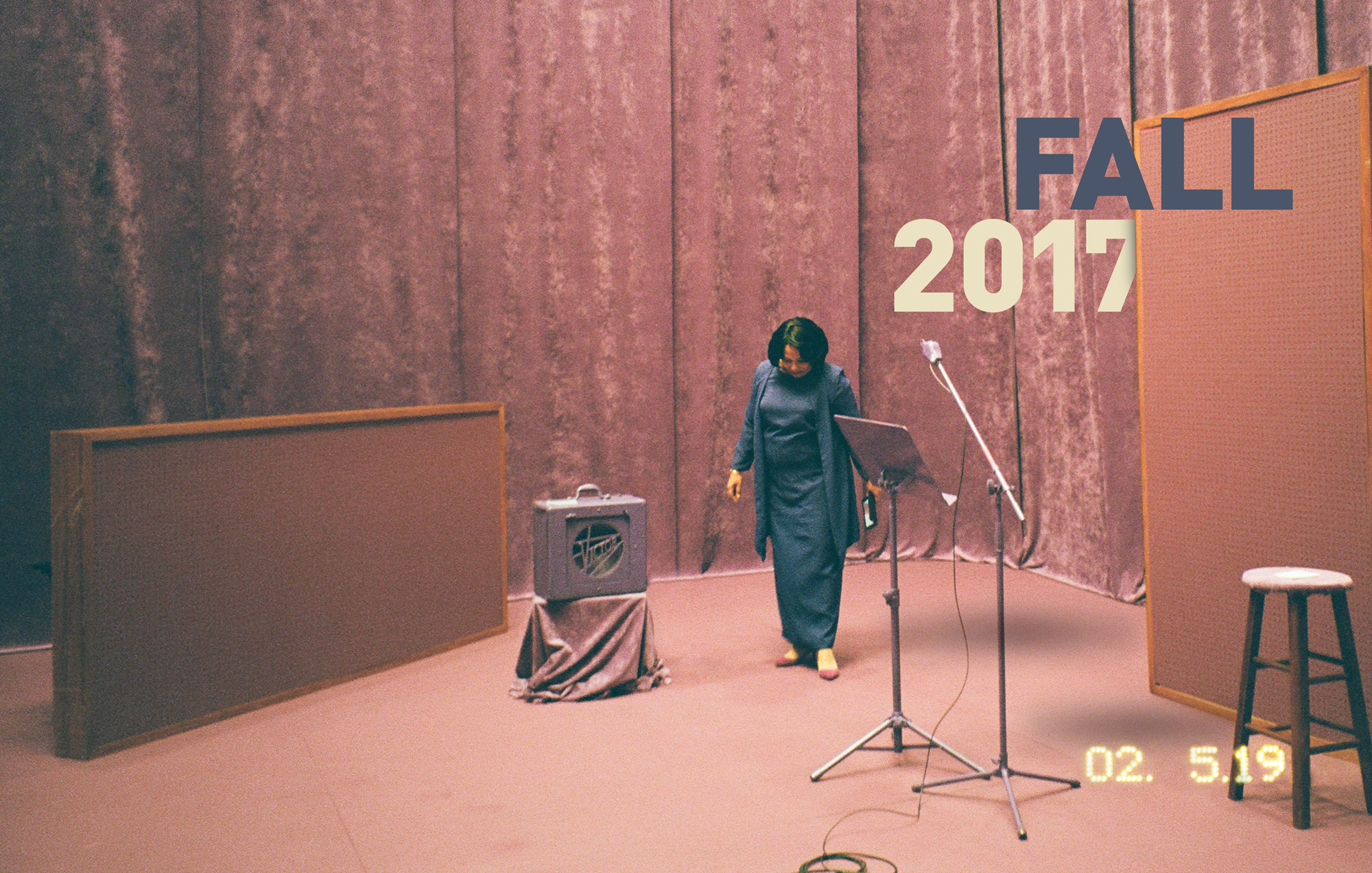
This performance has been canceled. We apologize for the inconvenience. Please join us for Sabisha Friedberg's talk on May 8! With the seven-circuit labyrinth serving as a conceptual and structural base, artist Sabisha Friedberg creates a sonic sculpture using focused sound projection that demonstrates via allusion the parameters of such an environment. This work in progress will be presented as a live composition as well as an immersive environment. Friedberg will present a series of events this spring including:
- performance, work in progress
March 21
Strange Cloak–Sub-Flight Infinity - installation, work in progress
CANCELED
25: An Initiate: kneel path dweller beams - talk
May 8
Sabisha Friedberg
Study no. 30
Ryan Ross Smith
Study no. 30 explores the concept of the musical score as installation. Inspired conceptually, compositionally, and sonically by tubular wind chimes, a ring of tuned bells appear to float in space, providing, simply the potential for performance, and an invitation for audience interaction.
Study no. 30 features a unique animated notational approach designed to encourage this audience interaction, and to provide a performative experience for persons of any musical ability; a clear, visual representation of what to do, and when to do it.
Study no. 30 will be installed in Studio 1 at EMPAC, open to the public 12.5.2013 9am-10pm and 12.6.2013 9am-10pm. The piece will run consistently both days. There are no start or end times, no opening or grand event. I invite you to stop by at any point, to perform, to listen, to leave, and, possibly, return.
Ryan Ross Smith has been composing music for film and television, radio, modern dance and the concert stage since moving East in the early 2000’s. In 2010 he continued his formal education at Mills College in Oakland, CA, where he immediately discovered the unique compositional possibilities made available by animating notation. Since this time, Ryan has composed a body of work utilizing a wide variety of unique animated notational approaches, and their compositional applications, primarily focusing on rhythm, form, and spontaneity. For more information, please visit: ryanrosssmith.com