Image
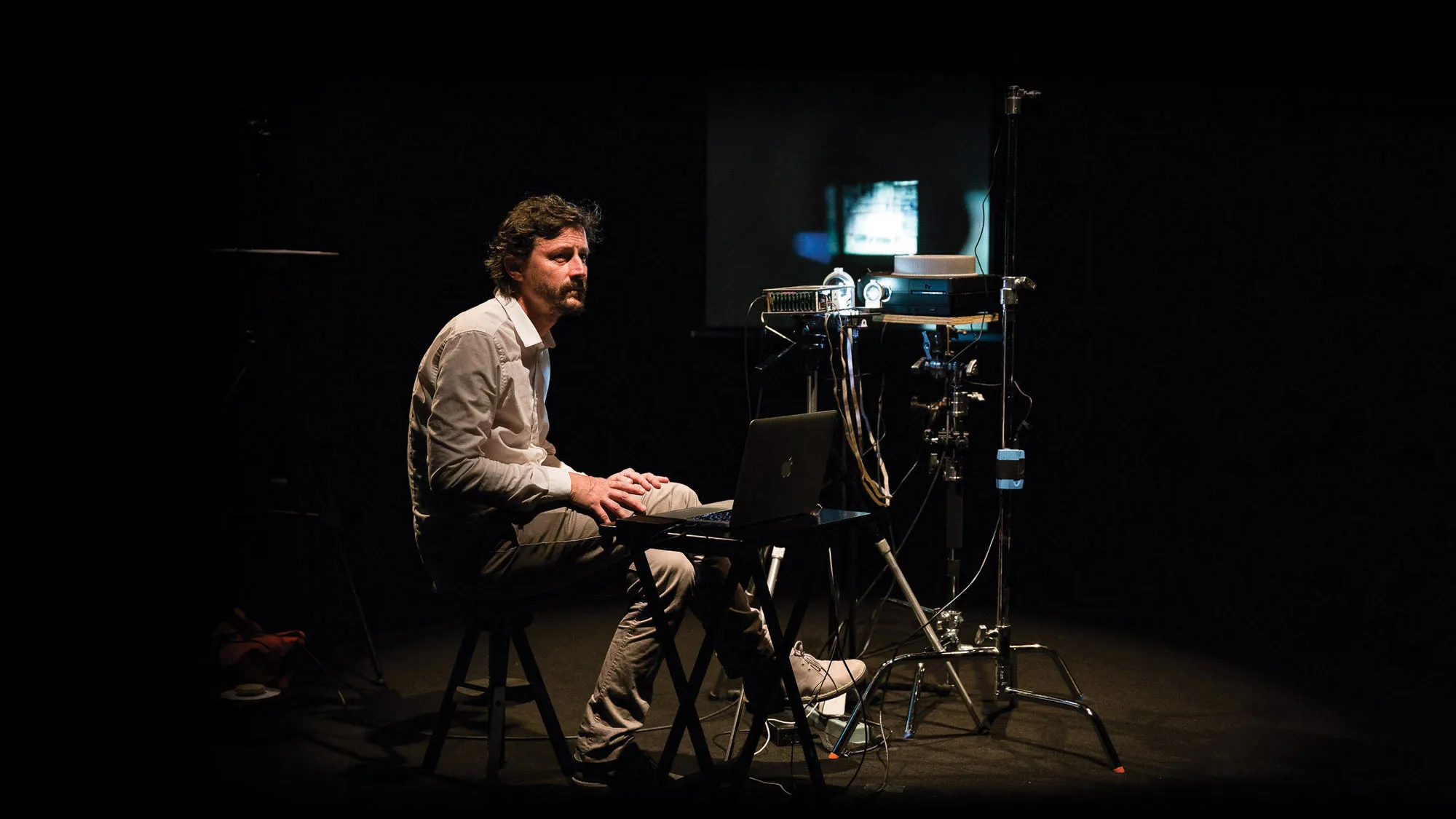
A woman on a dark stage amongst three large, white geometric sculptures.

Trieste

Marie Brassard

Trieste is a contemporary fable inspired by the Italian city of the same name located on the Adriatic Sea. The performance unfolds in five segments, each relating to one feature of Trieste: The Abyss, The Caves, The Sea, The Castles, and The Bora. As in the board game Snakes and Ladders, where destiny is randomly decided, protagonists climb or fall from one level to another through breaches in the storyline. 

Marie Brassard and Infrarouge, her Montréal-based theater company, completed the work in residence and then premiered it at EMPAC. The company developed reactive video, light, and sound environments that would respond to performers in a mix of accidental and planned ways. After years of collaboration with director Robert Lepage, actress, director, and author Marie Brassard formed her own company, Infrarouge, to create multidisciplinary works throughout Europe, the Americas, and in Australia.

Media
Image
Multipel screens hung in a black box theater depicting red and teal asian inspired flowers. The screens are hung in such a way to create a compartmentalized space.

The Angola Project

Jeremy Xido

An expedition through the history of colonial Portugal, the travelogues of Burton Holmes, the films of Bruce Lee and Jim Kelly, the Detroit race riots/rebellion, Berlin documentary film crews in Africa, and the blood-thirsty mechanisms of international film finance.

The Angola Project is three-part solo performance, with the third part co-commissioned and produced during residencies at EMPAC.

The performance is a fusion of film and narrative, tales and fragments, joining together and crumbling away. Having its roots in the tradition of travel lectures that emerged in the 19th century, CABULA6 invites the audience on a journey into Jeremy Xido’s real-life attempts to finance a film and confront the truths of mortality in the 21st century.

PART I – “LISBON” AT 4PM — Follows Xido's captivation by the city of Lisbon’s sunset-timed gas lamps and growing idea for a feature film. He finds himself collecting historical tidbits and horticultural facts, twisting random encounters into fanciful story lines as he conducts a slew of interviews with the people he meets there. The stories begin to derail and travel from Europe to Africa, then on to a mulberry tree in Detroit.

PART II – “ANGOLA” AT 5:30PM — Delves deeper into Xido's quest to build a script for his feature film as he travels to Angola along the Benguela railway, currently being rebuilt by Chinese construction companies. Xido, the sole onstage performer in the entire series, must carefully navigate the minefield of international film financing, constantly reconfiguring his script and feature film pitch accordingly.

PART III – “XIN” AT 8PM —The improbable yet inevitable third part of The Angola Project, where personal effort to make sense of the world is reaching its limit—a moment of death that brings us to the heart of the matter; a place where imagery crumbles and flies out of control; where a narrative plot of past/future becomes an excuse for the difficult practice of being here and now.

Media
Image
A white man with dark hair sitting cross legged next to a slide projector and lap top.

To Sublimate

Julien Maire

To Sublimate, a lecture-presentation by French artist Julien Maire, stages experiments in search of a “blurry matter”—closely related to speed and optics, philosophy, and mathematics. In his performances and installations, Maire moves between the habits of visual perception and new ways of looking through the camera lens, viewing the confusion between reality and illusion. Through experiments enacted in front of an audience—mechanical, electronic, graphical, sculptural, chemical—Maire presents “an emptiness that is not transparent.”

Image
A white man with dark hair sitting cross legged next to a slide projector and lap top.

Open Core

Julien Maire

In his performances and installations, Julien Maire moves between the habits of visual perception and new ways of looking, and the confusion between reality and illusion. Through experiments enacted in front of an audience—mechanical, electronic, graphical, sculptural, chemical—Maire presents “an emptiness that is not transparent.”

In Open Core, Maire revisited public demonstrations of anatomic dissection from the 16th century with a presentation in which he deconstructed cameras; the machines’ organs are then transplanted to gradually build new instrument prototypes.

To Sublimate was a lecture-presentation where Maire staged experiments in search of a “blurry matter”—closely related to speed and optics, philosophy, and mathematics.

A visual and performing artist, Maire’s work deconstructs and re-invents the technology of audiovisual media. He renews obsolete cinematic techniques and develops alternative interfaces to produce moving images. His research confronts immobility and movement, reality and fiction, and interrogates the notion of time and memory in the film image. Maire’s performance Digit and the installation Exploding Camera both received an honorary mention at Ars Electronica 2007. His work has been exhibited at venues such as the French Pavilion, 25th Alexandria Biennale, Egypt; Behind the Image, Artefact Festival, Belgium; 5th Seoul International Media Art Biennale, Seoul, Korea; and Elandscapes, Eart Festival, MoMA Zendai, Shanghai, China.

Robin Fox

We are sorry to announce that this performance has been canceled. We regret any inconvenience and look forward to seeing you at other upcoming events. An extension of his previous work with Cathode-Ray Oscilloscopes, Robin Fox’s laser show presents, in three-dimensional visual space, the geometry of sound. Enveloping the audience with synchronised sound and light, his performance resembles a synesthetic experience where what you hear is also what you see. The same electricity generated to produce sound is sent simultaneously to high-speed motors that deflect the laser light, converting sonic vibration into light movement.

Image
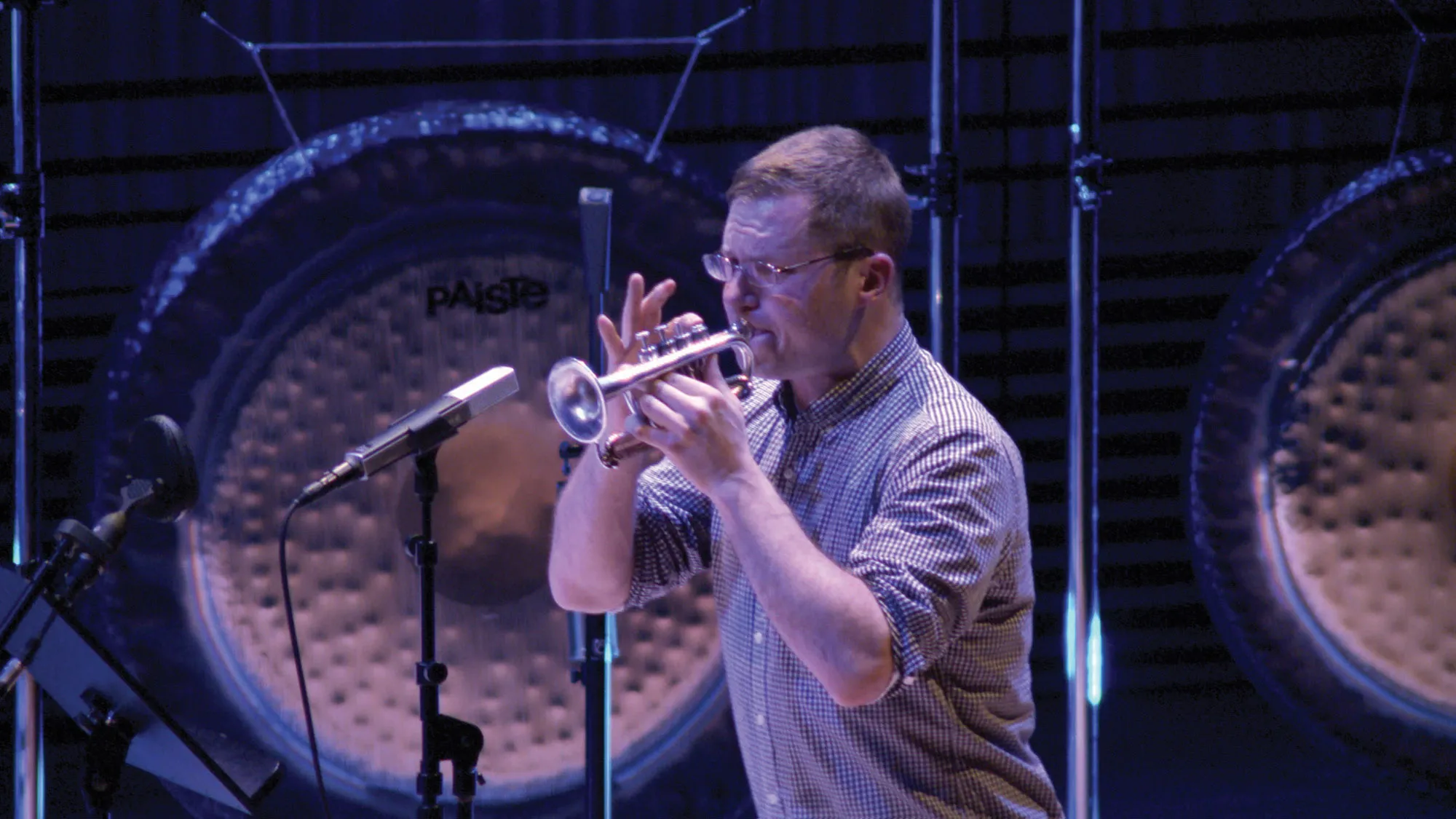
A white male playing a soprano trumpet into a microphone in front of a gong.

Peter Evans Quintet

Taking jazz ensembles into the 21st century, the Peter Evans Quintet incorporates real-time sound processing with traditional instruments. These live electronics allow the group to change their sound fluidly from mellow tones to jagged rattling to cacophonous reverberation. The quintet draws on traditional jazz idioms as source material and contorts them into something resembling classical European avant-garde—complete with complex rhythms played with pinpoint accuracy and confounding extended techniques. Peter Evans Quintet:

Peter Evans (trumpets/compositions)
Ron Stabinsky (piano)
Tom Blancarte (bass)
Jim Black (drums)
Sam Pluta (live electronics)

Main Image: Peter Evans Quintet in 2013. Photo: EMPAC/Rensselaer.

Media
Image
A woman draped in white slime standing in front of a spindle of plastic sheeting speaking theatrically to a white bobble head dog.

Inflatable Frankenstein

Radiohole

Inspired by meditations on horror films, the work of Antonin Artaud, and Ardunio open-source electronics, Radiohole’s Inflatable Frankenstein is a visually and sonically driven performance based on Mary Shelley’s early life and her novel Frankenstein. Arising from a world of gods and monsters (and thousands of Walmart and Price Chopper grocery bags) is a desecration too terrible to behold and too beautiful to turn away from, leading to an improbable question: what is it like to be a metaphor for everything? 

Radiohole is a Brooklyn-based performance collective founded in 1998 by Erin Douglass, Eric Dyer, Maggie Hoffman, and Scott Halvorsen Gillette. At the heart of the company’s ethic is collaboration and play. Their cut-up techniques, rich object-oriented visual sense, amplified, sampled sound, and raw, energetic performance style owe as much to the punk and new wave movements of the 1970s and ’80s as they do to any formal theatrical tradition.

Main Image: Production still from Inflatable Frankenstein in Studio 1, 2013. Photo: EMPAC/Rensselaer.

Media

Circadian Rhythms

Susie Ibarra

Description

World premiere of a newly commissioned work, Circadian Rhythms, composed and conducted by Susie Ibarra featuring soloists Devesh Chandra, Alan and Jake George, Matthew Gold, Roberto Juan Rodriguez, Jim Weber, Mamadabou Camera, Eddie Ade Knowles, and Jennifer Milioto Matsue and scored for an 80 piece percussion orchestra. The work also features a surround soundscape of animal and bird recordings from the Macaulay Library of Cornell.

Circadian Rhythms is inspired by the built-in biological rhythms in plants, animals, birds, insects, and bacteria that oscillate, repeat, and change with patterns of movement, migration, birth, and sleep. The composition is a tribute to Earth Day and to the cyclical rhythms that each one of us has while we move and live on this planet.

Ensembles

Ensemble Congeros, Union College Taiko Drum Ensemble, Williams College Percussion Ensemble, Troy High School Drum Core, Troy Samba Group, Bennington College World Percussion Ensemble, Woodstock Day School Guinean Drummers, Rensselaer Percussion Ensemble and the Empire State Youth Orchestra Percussion Ensemble.

Bios

Susie Ibarra is known for her innovative style and cultural dialogue as a composer, improviser, percussionist and humanitarian. Her music is profoundly influenced by the interconnection of nature and cities and the intersection of Indigenous and urban ecologies. Within these relationships, Ibarra is interested in tradition and avant-garde and how this informs and inspires interdisciplinary art, education and public service. In most recent years Ibarra has been developing composition and improvisation that blends traditions and crosses rhythms and tunings of Asia Pacific, Middle East, Americas, Europe and Africa.

Devesh Chandra, of Latham, N.Y., began the Tabla at the age of 3. He has learned Northern Indian Classical Music from his mother, Smt. Veena Chandra.

Alan George, Cayuga Nation, has over 30 years drumming and dance experience, and has appeared with the American Indian Dance Theater in Oklahoma City. He is also active in cultural teaching at the Iroquois Indian Museum.

Matthew Gold directs the Williams College Percussion Ensemble and is a New York based percussionist with a deep commitment to new music. He is a member of Talea and Talujon percussion groups.

Roberto Juan Rodriguez, Cuban-American composer and percussionist, was born in Havana and since resides in New York. He is deeply committed to acoustic and electronic music and actively involved in creating music that crosses cultures such as Cuban, African, American, Sephardic and Arabic, Indian, Philippine, Korean.

Jim Weber is co-director of the Berkshire Bateria and Bossa Triba. He has studied extensively with Samba masters in Salvador da Bahia, Brazil, and performs programs in a variety of venues, including schools and major festivals.

Mamadouba “Mimo” Camara was a lead performer with Les Ballets Africains, the national company of Guinea, West Africa for 18 years before he moved to the Hudson Valley in 1995. Since then, he has continued to spread the richness and joy of his country’s cultural heritage through teaching youth and adults in a variety of venues.

Jennifer Milioto Matsue is an ethnomusicologist specializing in modern Japanese music and culture. She is Director of Asian Studies and the World Musics and Cultures Program, and serves as Associate Professor in Music, Asian Studies, and Anthropology at Union College.

Eddie Ade Knowles is an accomplished musician and Professor of Practice in the Arts with over 45 years of performance, residency, workshop, and recording credits as a percussionist. Ade’s artistic focus is on African, Afro-Cuban, and New World percussion.
Annual RMA Pops Concert:

Sweet Soul Music with Guest Artist Janice Pendarvis

The RMA is putting on our annual Pops Concert! We will be featuring the Symphony Orchestra, Repertory Jazz Orchestra, and Contemporary Jazz Ensemble, featuring guest singer Janice Pendarvis . Come support your friends and listen to some awesome music!

Untitled Apocalypse

Allison Berkoy

Audiences navigate an immersive, interactive multimedia environment of sculptural installations. A steel angel continuously plunges into a ball pit as stories of disaster, from the most cataclysmic to infinitesimal, unfold. Intermittently, the installation environment becomes disrupted by sounds of an alarm from the ball pit's lifeguard, calling audiences to gather at the pit for a show within a show. The lifeguard introduces a series of film previews for Untitled Apocalypse, a feature presentation, and a grand finale. See below for glimpses of the installations and more. Untitled Apocalypse continues in development.