Image
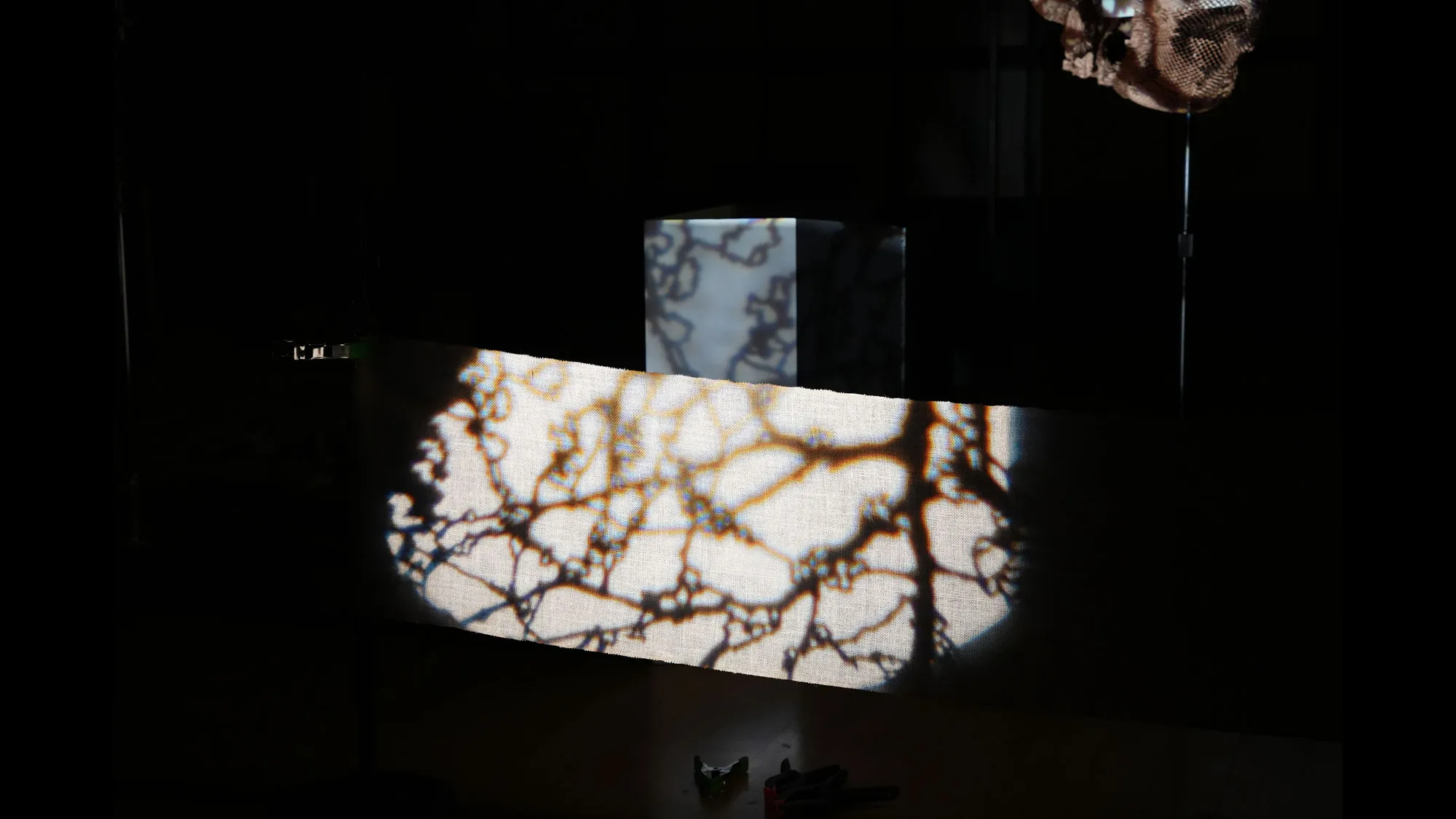
a pattern projected on a piece of textile

In Conversation: Antonia Barnett-McIntosh & Jessie Marino

Susceptible Chambers

In this talk and open studio, composer-performers Antonia Barnett-McIntosh and Jessie Marino present an intimate look into their individual practices and discuss their recent work as Artists-in-Residence on their new collaboration Susceptible Chambers. Taking place amidst their workspace in Studio 1, attendees will have the opportunity to learn about an EMPAC commission in development directly from the artists.

Antonia and Jessie use elements of the mundane and quotidian as generative ways to disrupt traditional musical forms and performance practices. In Susceptible Chambers, Antonia and Jessie bring this sense of play to one of the foundational instruments of electronic music: the microphone.

Susceptible Chambers is an extension of Antonia and Jessie’s Extended Microphones Project (EMP), a sound-based research, development, and performance project in which the typical structure of a simple microphone is prepared using alternative materials. What would it sound like to embed a microphone capsule inside a terracotta pot with a grid made from dried-out pine cones? Or to cast a microphone enclosure completely out of agar-agar (a vegan alternative to gelatin)?

EMP will fabricate sonic relationships between home-built microphones, the objects they will amplify, and the speakers that disseminate this aural symbiosis into a network of analog sculptural filters which draw aural focus to unexpected features of the physical space.

Antonia and Jessie began work on Susceptible Chambers at EMPAC in August 2023 and will return for a final residency in March 2024, culminating in a premiere performance and installation in April 2024.

Work-in-progress events offer a window into the research, development, and production of new works by artists in residence at EMPAC. These free events open up a dialogue between our audiences, artists, and EMPAC staff.

Main Image: Production process image: Susceptible Chambers, 2023. Created during the artists residency in August, 2023 in Studio 2. Courtesy the artists.
Understanding Media in Complex Times

An Interview with Rosemary Armao

WAMC’s The Roundtable and Rensselaer Polytechnic Institute present a thought-provoking conversation with RPI adjunct professors Rosemary Armao and Joe Donahue (also the host and producer of WAMC’s The Roundtable).

Image
armando guadalupe cortes

Armando Guadalupe Cortés & M. Elijah Sueuga

In Conversation

A conversation between artist Armando Guadalupe Cortés and curator and artist M. Elijah Sueuga that explores Cortés’ multidisciplinary practice as a lens through which to think about how concepts of dryness might be communicated through performance, sound, and architecture.

Cortés is a Brooklyn-based multidisciplinary artist originally from Urequío, a small community in Michoacán, México. His work explores themes of endurance and repetitive labor through object making, storytelling, and performance, which employs forms and methods from his native hometown in México and contrasts them with elements of his life in the United States. M. Elijah Sueuga is a curatorial fellow at EMPAC and graduate student in the History of Art at Williams College, where his research focuses on modern and contemporary sound and music. Sueuga is also an artist and composer and is collaborating with Cortés in La Seca, a performance that converges on their approaches to sound as well as a shared geography, which will be held at MASS MoCA in February, 2023.

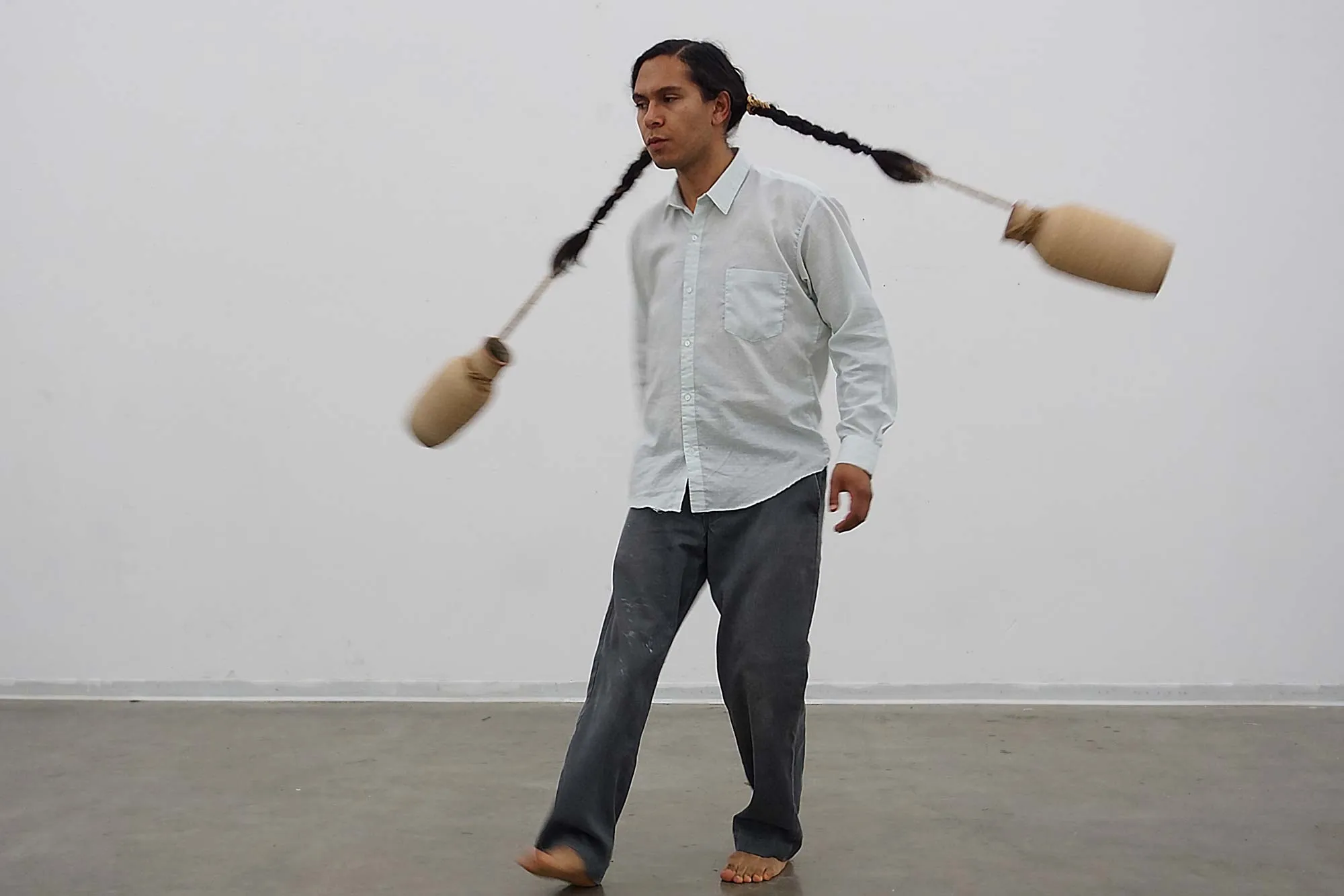
Main Image: Courtesy the artist. 

Media

In Conversation: Armando Guadalupe Cortés & M. Elijah Sueuga in EMPAC's Studio 2, March 15, 2023. 

Aún Los Gallos Lloran

El Peso De La Tierra

Image
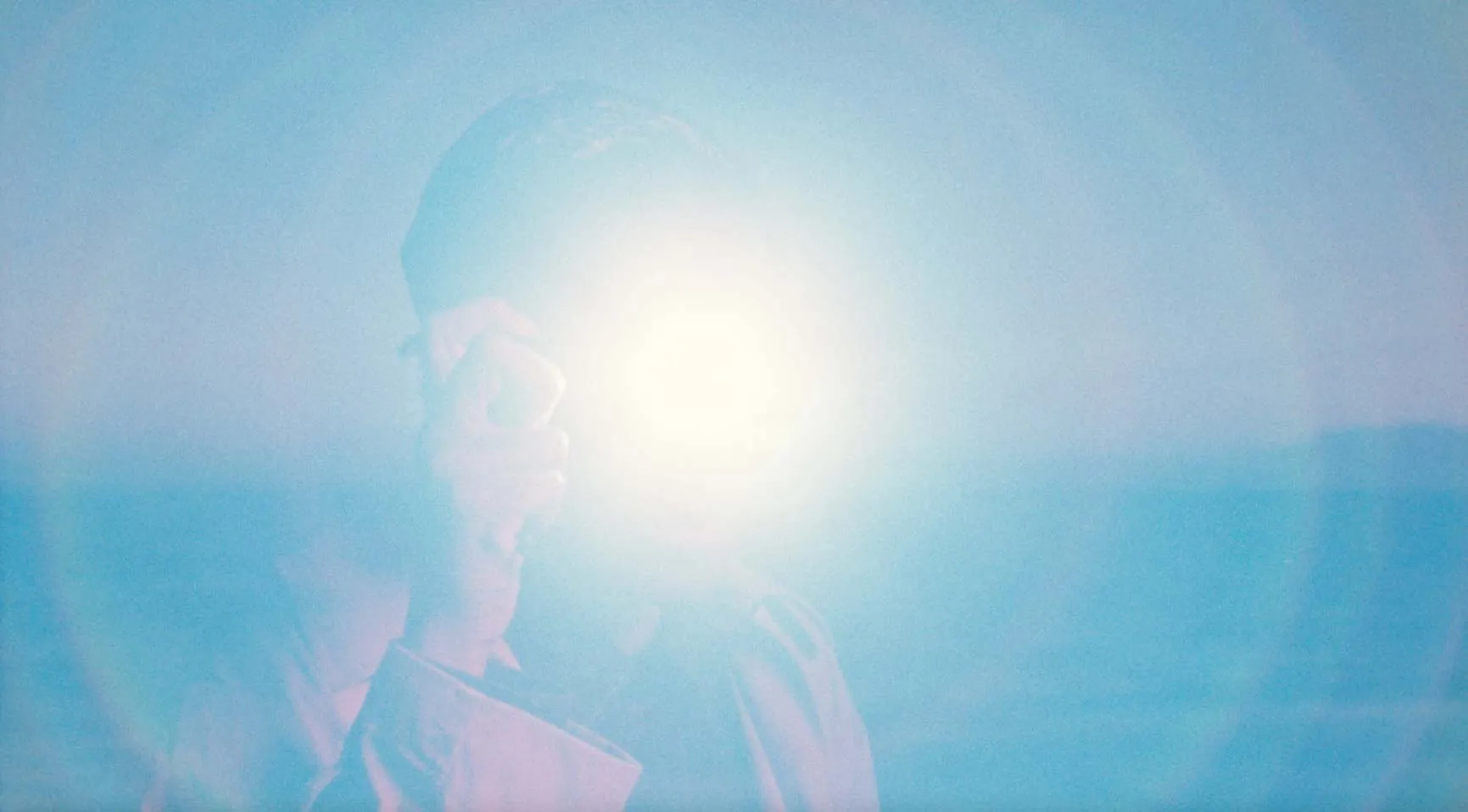
a person with a flash of blue

An Evening with Ayo Akingbade

Please join us for an evening of films and conversation with artist Ayo Akingbade.

Akingbade’s enigmatic and vividly-rendered films deconstruct systems of power with a singularly candid and genre-defying approach. Including a selection of Akingbade’s short films from the last seven years produced in the UK, Nigeria, and the US, this event foregrounds works that are exemplary of her autobiographical style. Shown together, they eloquently weave personal memory with communal history, longing with familiarity, the quotidian with the magical in an intimate program grounded in the specific rhythms of place.

Based in London, Akingbade’s award-winning films are presented world-wide, including at Cannes Film Festival, Berwick Film & Media Arts Festival, MoMA Doc Fortnight, International Short Film Festival Oberhausen, Film Society of Lincoln Center, New York, and the Chisenhale Gallery, London.

Main Image: Ayo Akingbade, Red Soleil (still) 2021. © Ayo Akingbade. Courtesy the artist.

Image
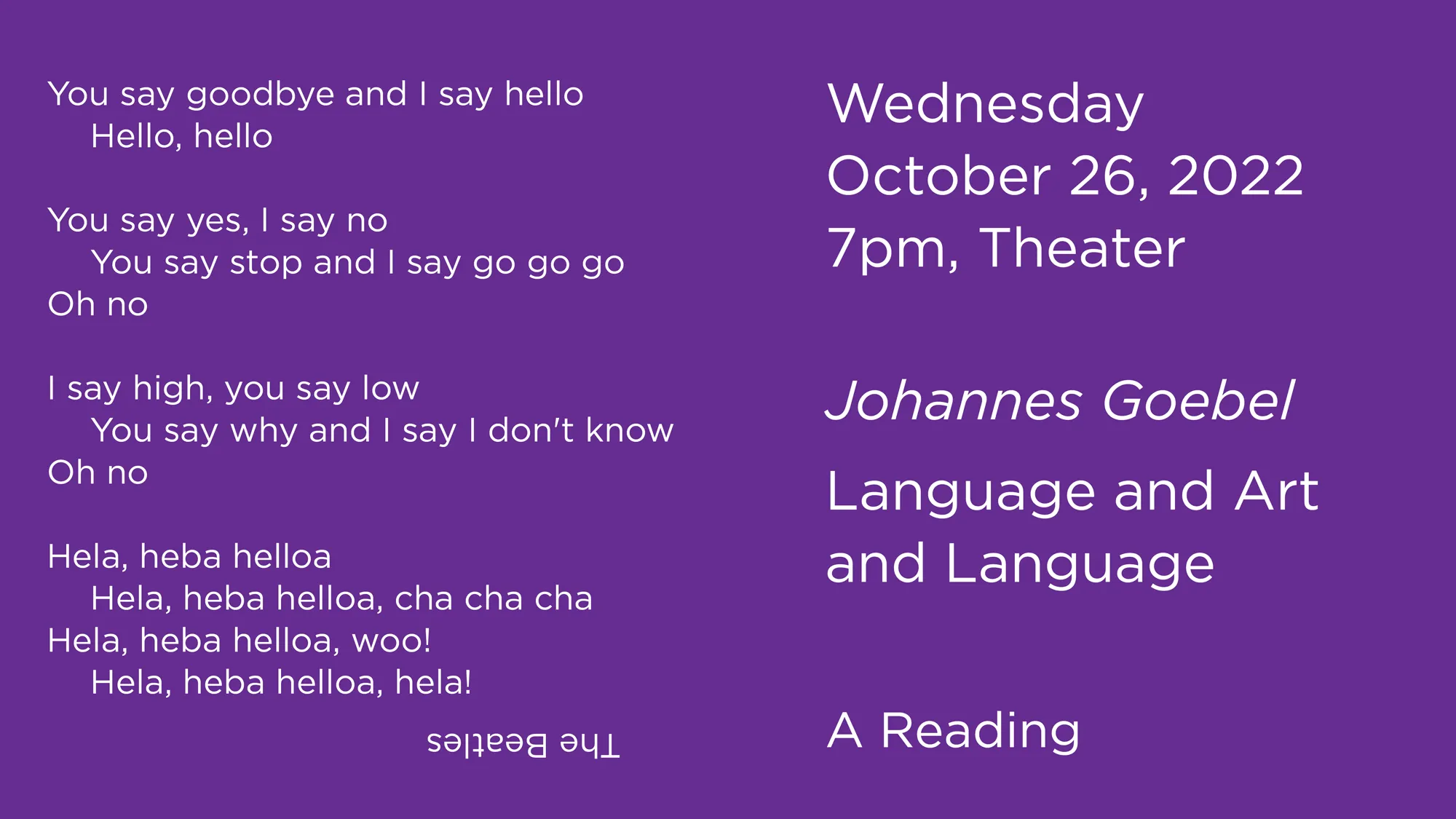
beatles lyrics from goodbye, hello

Language and Art and Language

Johannes Goebel

After 20 years as Founding Director of EMPAC, an invitation to a final Goodbye Hello from Johannes Goebel. This 60-minute reading can be experienced as a shower of words. The stream of sentences and the droplets of words will make the underpinnings of EMPAC’s building and program shimmer.

Johannes joined Rensselaer at the beginning of EMPAC's design process to ensure the architects and consultants would meet the vision of the building as an optimal bridge between the physical world of human experience and interaction and the potential of the digital domain. Parallel to the design and construction of the new building, he developed the program of EMPAC by establishing the technical, curatorial, and operational teams, and initializing the artistic and research productions, residencies, and events. Between 1990 and 2002, Goebel served as founding director of the Institute for Music and Acoustics at the Zentrum für Kunst und Medientechnologie (ZKM) in Karlsruhe, Germany. 

Please join us for a reception after the reading to say Hello and Goodbye to our director Johannes Goebel. Refreshments will be served.

Image
miya masaoka

Multi-Dimensional Spatiality in the 15th Century and Now

Miya Masaoka

Composer and artist Miya Masaoka will premiere a new piece written specifically for EMPAC’s Wave Field Synthesis array and present a talk on recent research and work in spatial audio composition.

Inspired by the three-dimensional and perspectival painting techniques developed by artists during the 15th-century Italian Renaissance, in her new project, Masaoka seeks to draw parallels between those revolutionary conceptions of space with the current possibilities for sonic spatiality in the 21st-century.

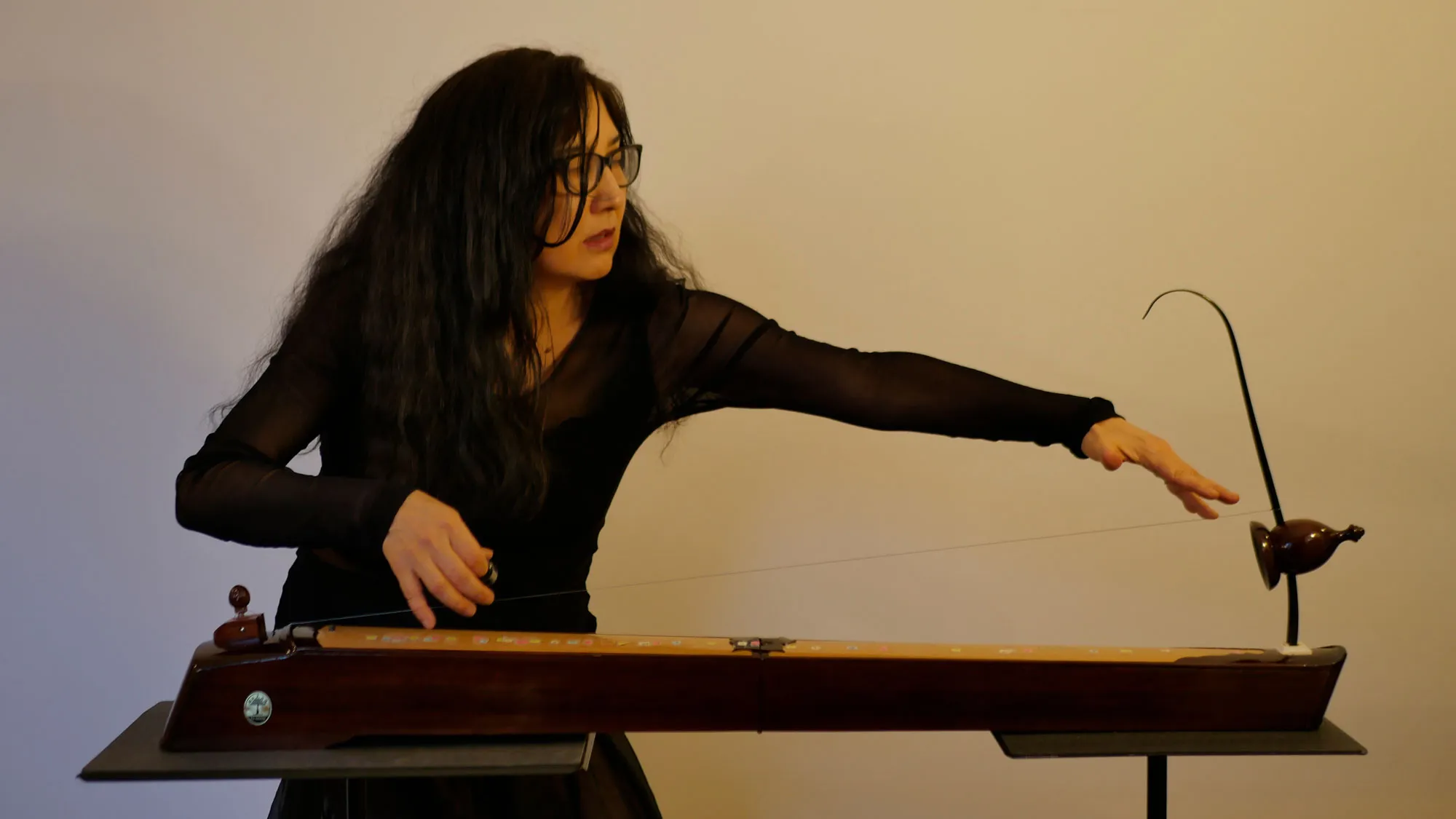
Masaoka has been working with early systems of hardware and software of spatialization including ADAT, C Software, and acoustic strategies including choirs, ensembles, and the BBC Scottish Orchestra in a spatial context. An award-winning composer, she has received the John Simon Guggenheim Fellowship, the Luciano Berio Rome Prize in Musical Composition, the Fulbright among many others. She is a Professor at Columbia University and directs the MFA program in Sound, a hybrid program with the Computer Music Center and Visual Arts. In the photograph above, Masaoka is shown with a Dan Bau, and she sometimes references the monochord as a clear and physical representation of the spectral harmonic relationships of intervals and natural tuning systems.

Wave Field Synthesis is a special way of creating sounds in space. The EMPAC Wave Field Synthesis system (EMPACwave) is a unique loudspeaker set-up with hundreds of speakers that was developed and built at Rensselaer over the past several years. While Wave Field Synthesis technology is not new, the design of EMPAC’s array is acknowledged by international experts to finally allow musicians to create music to the refined degree that has been promised by this theory of sound generation for over four decades.

Main Image: Miya Masaoka. Courtesy the artist.

Image
a drone flying with a walkie talkie

Title 42, or, The Flight of the Pallindrone

Ricardo Domingeuz & Amy Sara Carroll

The talk tonight at EMPAC is canceled due to weather delays from tropical storm Nicole. Please join Ricardo and Amy for their workshop at the Sanctuary for Independent Media Thursday at 7PM. Check the Sanctuary website for the most up-to-date information on Thursday.

--

In this talk, Ricardo Dominguez and Amy Sara Carroll of the collective Electronic Disturbance Theater 2.0 discuss a brief history of the collective’s previous work in relation to borders; the relationship between NAFTA, US Prevention through Deterrence philosophy, the binational War on Drugs, and the emergence of border art as genre. 

Each decade of the twentieth century triggered draconian refinements of the “border horror” of U.S. immigration policy. Resulting borderization in the twenty-first century continues as such, now with blurred divides between the flow of goods and the blockage of human beings. Supply chain disruptions and queued shipping containers and the US invocation of Title 42 and “Stay in Mexico” policies, while never comparable, are in equal measure “products” of COVID-19.

Among others, the artists will reflect on the influences, production and distribution challenges, and discordant reception of the collective’s Transborder Immigrant Tool, a project that debuted fifteen years ago. This project consists of an app designed to provide sustenance in grueling desert conditions like those that abut the US-Mexico Border. The app consists of poetry and a navigational system that points users toward water sources provided by humanitarian aid organizations like Water Station Inc.

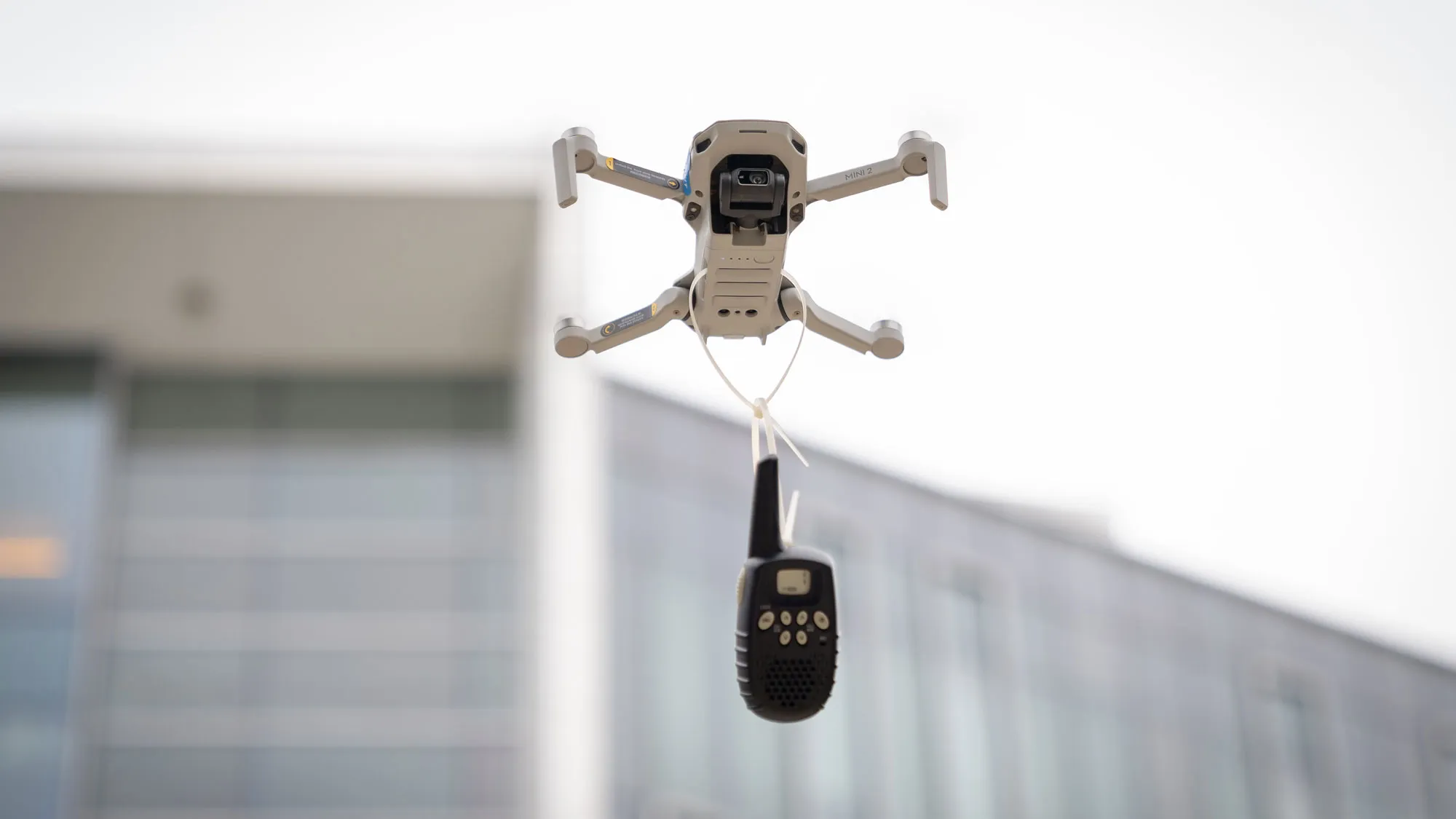
The talk concludes with a discussion of Carroll and Dominguez’s new work-in-progress theater production, “The Flight of the Palindrone.” This project instrumentalizes drone activity to provide a sonic theatrical intervention that plays on surveillance technologies in the Mexican-U.S. borderlands, the participation of the University of California, San Diego (the artists’ own institution) in the research and development of unmanned aerial vehicles, and regional eco-catastrophe—all within the context of Carroll and Dominguez’s continued commitment to translanguaging and the artivist gesture. 

In addition to this talk, Amy Sara Carroll and Ricardo Dominguez will host a workshop from 7-9PM on Thursday November 10, 2022 at The Sanctuary for Independent Media in North Troy, NY. 

The Flight of the Palindrone by Electronic Disturbance Theater 2.0. Courtesy the artists. Photo: Gallery@QI (2022).

Radical Ecology

Ashish Ghadiali & Lucia Pietroiusti

How does art need to conceive of itself to be an agent of environmental justice? In this online talk, filmmaker and activist Ashish Ghadiali and curator Lucia Pietroiusti discuss projects including Scorching Suns, Rising Seas and Equilibrium (2019). By focusing on artworks, methodologies and conceptual frameworks, the talk will outline the principles behind Radical Ecology, an organization dedicated to supporting climate justice through creative practice.

Ashish Ghadiali is a filmmaker and activist who works for racial justice and environmental justice in diverse contexts. He is Strategic Advisor on Climate Justice at the University of Exeter’s Global Systems Institute and co-chair of the Black Atlantic Innovation Network at UCL’s Sarah Parker Remond Centre for the Study of Racism and Racialisation.

Lucia Pietroiusti is a curator working at the intersection of art, ecology and systems, usually outside of the gallery format. Pietroiusti is the founder of the General Ecology project at Serpentine Galleries, London, where she is currently Strategic Advisor for Ecology.

Main Image: Ashish Ghadiali; Lucia Pietrouiusti.
Lucia Pietrouiusti photo: Thaddäus Salcher.

Image
Heather Bruegl

Surveying the Land Back: How a Problematic History can Help Indigenous Nations

Heather Bruegl

Land surveying, often utilized to establish maps and boundaries of ownership, has a long and problematic legacy as a tool used in the ongoing theft of land from Indigenous Nations across the Americas. Rensselaer Polytechnic Institute was established in 1824 as a center for science and engineering in which the teaching of surveying—a technique that contributed to the forced displacement of the Indigenous peoples in the region—was a central part of the curriculum.

In this talk, Heather Bruegl, historian of American history, legacies of colonization, and Indigeneity, charts the history of how land surveying was used to cause great harm to Indigenous Nations and how that same profession can be practiced today to support the “Land Back” movement.

Main Image: Heather Bruegl. Photo: Frances Cathryn.

Image
two people laying inside concrete water pipes against a graffiti wall

Work in Progress: Future Ancestral Technologies

Cannupa Hanska Luger

Artist Cannupa Hanska Luger presents a work-in-progress screening of his new multi-channel moving image work, followed by a discussion with curators Paulina Ascencio Fuentes and Gee Wesley on the production and themes of the work.  

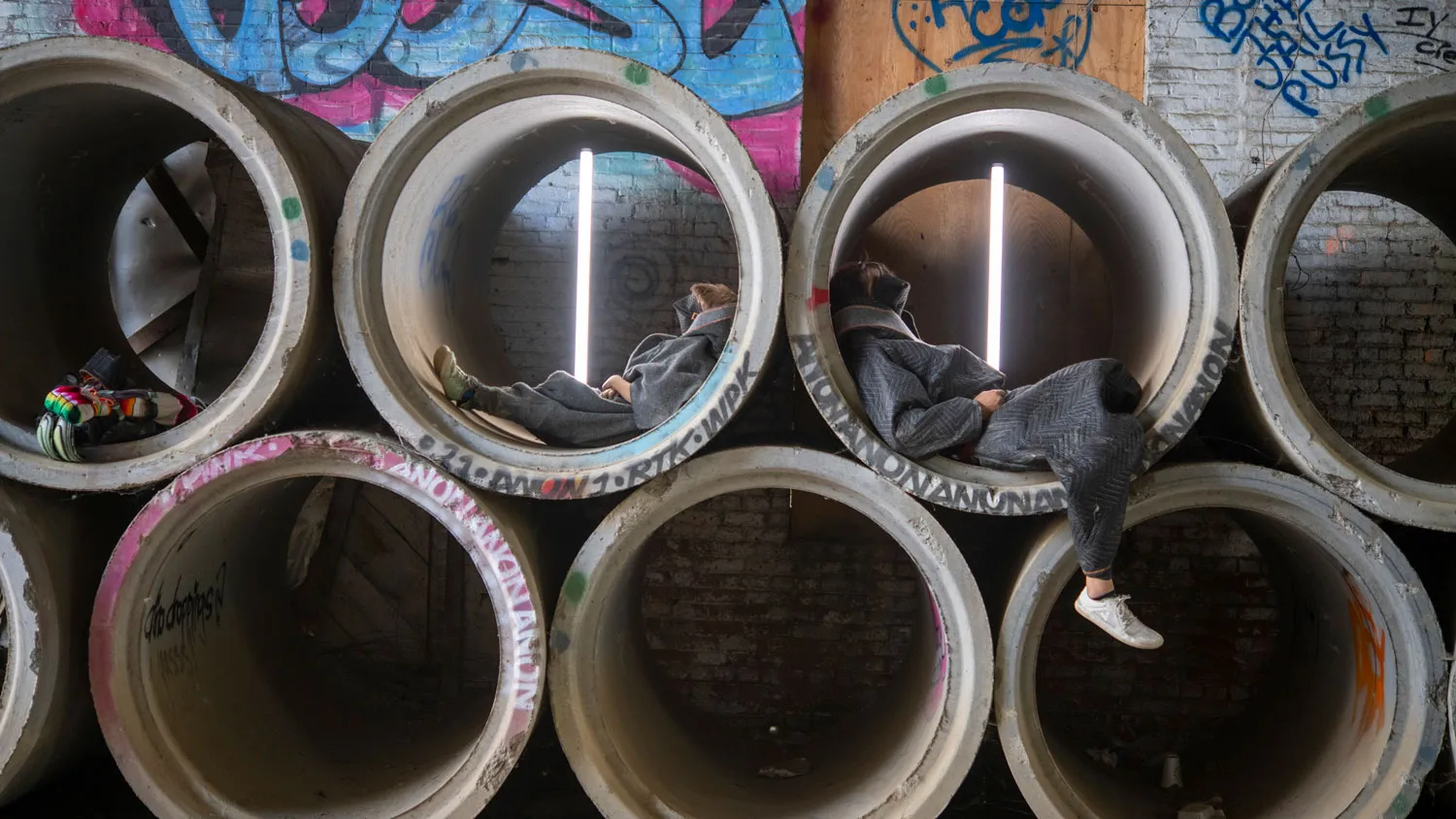
This work is part of Cannupa Hanska Luger’s ongoing series Future Ancestral Technologies, a project that incorporates artist-made regalia, props, videos, and performance, and explores alternative possible futures for sites of post-industrial extraction, reimaging them anew through speculative oral histories for the future. 

All aspects of Cannupa Hanska Luger’s installation have been produced in residence at EMPAC with Ginger Dunnill, their two children 'Io Kahoku and Tsesa, and project curators Paulina Ascencio Fuentes, Yihsuan Chiu, Christine Nyce, and Gee Wesley.

--

This talk is being presented simultaneously in person for campus audiences (faculty, staff, students of Rensselaer) and streaming online for the general public. In-person attendance is limited so please register early. Registration is required for both physical and virtual attendance.

Main Image: Cannupa Hanska Luger, production still, Troy, NY, 2021. Photo credit: Michael Valiquette / EMPAC

Media