Image
sarah davachi

Constants

Sarah Davachi

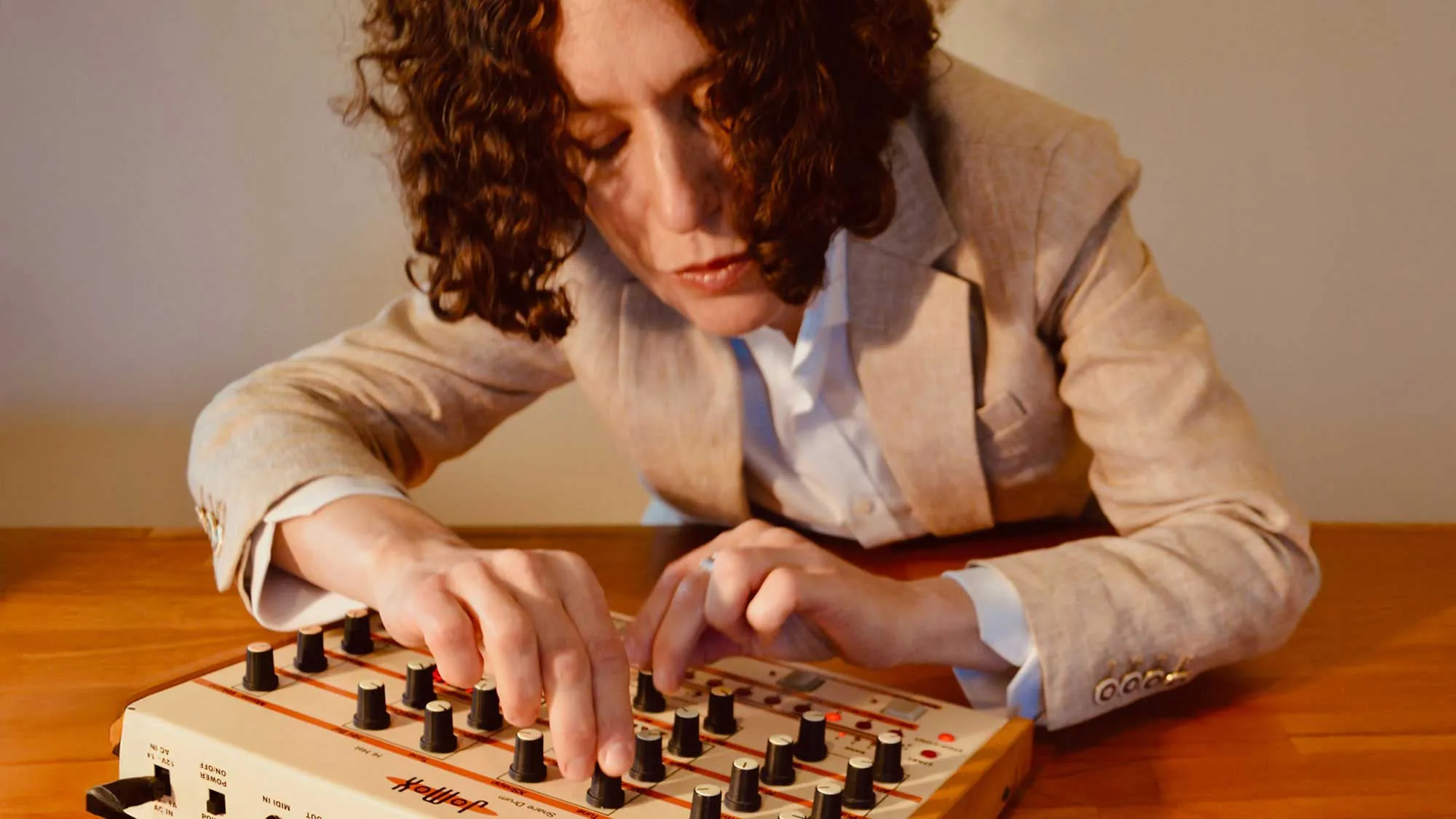
Constants is a concert performance by musician and composer Sarah Davachi. Performing a single work of electronic analog synthesizer-based music in the EMPAC Concert Hall, Davachi fills the resonant space with gradually transforming musical strata. She invites the listener to an inner world of sonic detail informed by minimalist tenets, formal concepts from early music, and the experimental recording practices of the studio environment.

Beneath the unassuming and placid surface of Constants, intricacies of musical space weave a tapestry of complex relationships between tuning, intonation, timbre, and psychoacoustic phenomena. The slowness of Davachi’s music allows its subtle beauty to blossom and reveal itself over the course of the hour-long performance. Microtonal variations, resonant harmonics, and temporal distortions are just a few of the characteristics of her world. As Davachi suggests, “it’s like showing a painting in bits as opposed to showing the entire thing all at once.”

All ticket holders are invited to stay for a reception following the performance.

Main Image: Sarah Davachi, 2017. Courtesy the Artist. Photo: Joe Ruckli.

Image
conrad tao and charmaine lee

Feedback

Charmaine Lee & Conrad Tao

Feedback is a concert performance of charged electro-acoustic music by the duo of composer-performers Charmaine Lee and Conrad Tao. Lee and Tao combine spontaneity and playfulness with virtuosic and rigorous musicianship to create an energetic and hyper-sensorial world of electronic sounds and voice spanning genres from pop to ambient to feedback-based noise music. Surrounded by a battery of electronic, acoustic, and found instruments, the artists premiere new material designed especially for the EMPAC Studio 1—Goodman venue that expands upon sonic themes explored throughout their eight-year collaboration.

Charmaine Lee is a Cantonese Australian vocalist based in New York City, whose risk-taking practice combines extended voice techniques, feedback, and live vocal processing. Comfortable both in the concert hall and DIY basement shows, Lee’s sound is both brutal and refined. Drawing from aspects of free jazz, European improvised music, noise, ASMR, and non-music art forms, Lee channels these inspirations through the emotional and timbral immediacy of the human voice.

Pianist, electronic musician, and composer Conrad Tao has performed and curated concerts across the globe as a solo musician, as a member of the Junction Trio, and in collaborations with artists such as Charmaine Lee, the brass ensemble Westerlies, and members of the JACK string quartet. As a curator, Tao’s programming deftly and thoughtfully combines repertoire from the canon with contemporary works to create a dynamic relationship between the past and present.

Main Image: Conrad Tao, Charmaine Lee. Courtesy of artist. Photo: Walter Wlodarczyk

Media
Image
a city on a coastline

in a plenum space

Tatiana Mazú González and Thuy-Han Nguyen-Chi

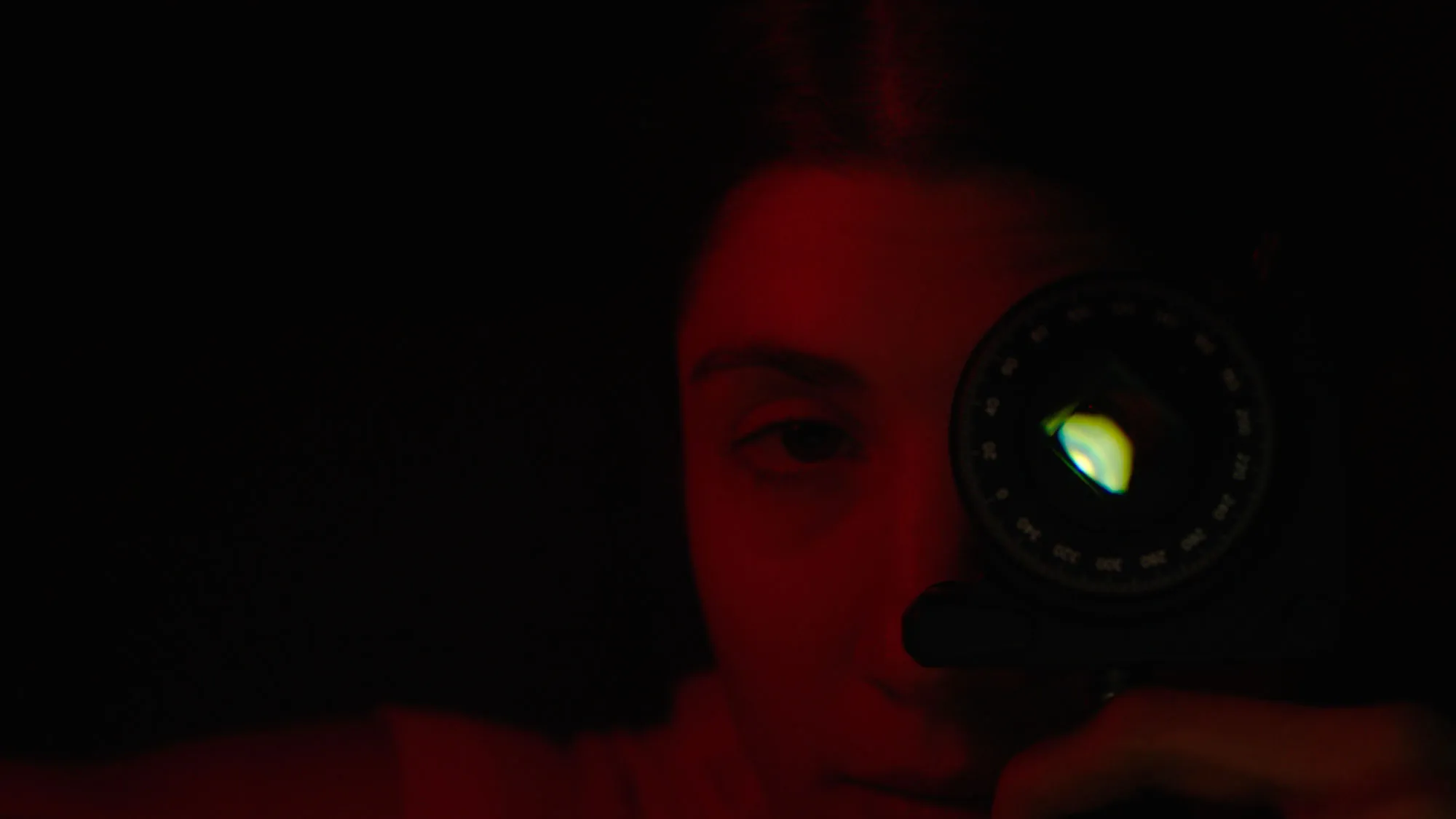
in a plenum space is a film program featuring two short works by Thuy-Han Nguyen-Chi and a feature-length experimental documentary by Tatiana Mazú González.

A plenum space is an area of a building that supports air circulation, and plenum also denotes a social assembly, particularly a legislative body. This program's featured films reflect on social and material conditions through cinematically navigating visual latency (delays in the emergence of images and their recognition by viewers) and through the use of acousmatic sound (audio that invokes sources remaining withheld from view). Each dramatizes images as they move into circulation, as they become filmic.

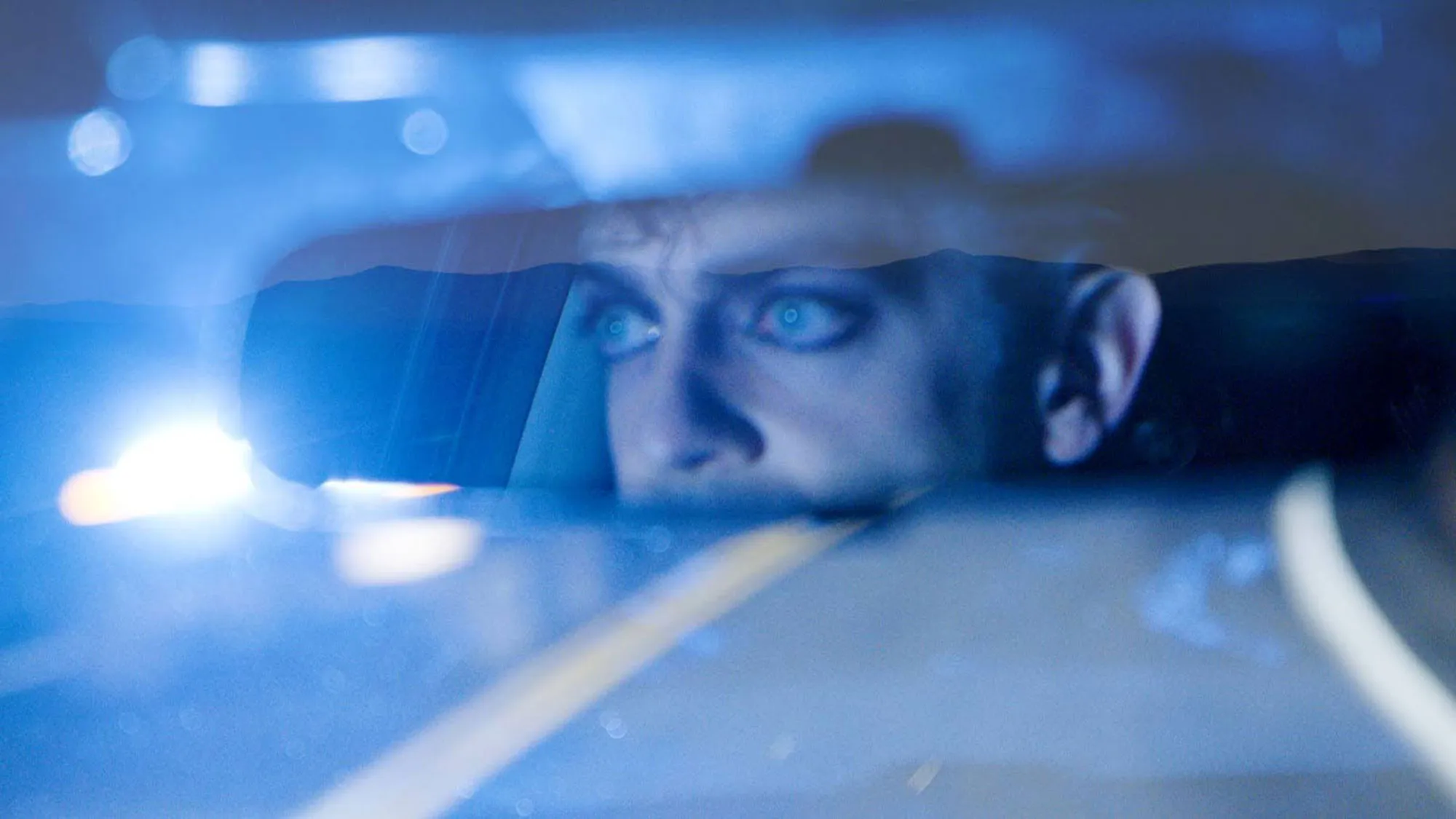
The film processes in Nguyen-Chi’s Syncrisis (2018), which the artist considers a “cinematic libretto in six movements,” enact forms of submersion–the camera’s gaze is suspended in water, darkness, or the quiet expanse of a theater. Linger On Your Pale Blue Eyes (2016) imagines the inner life of a scientist as she flees East Germany by using astronavigation to swim west through the Black Sea.

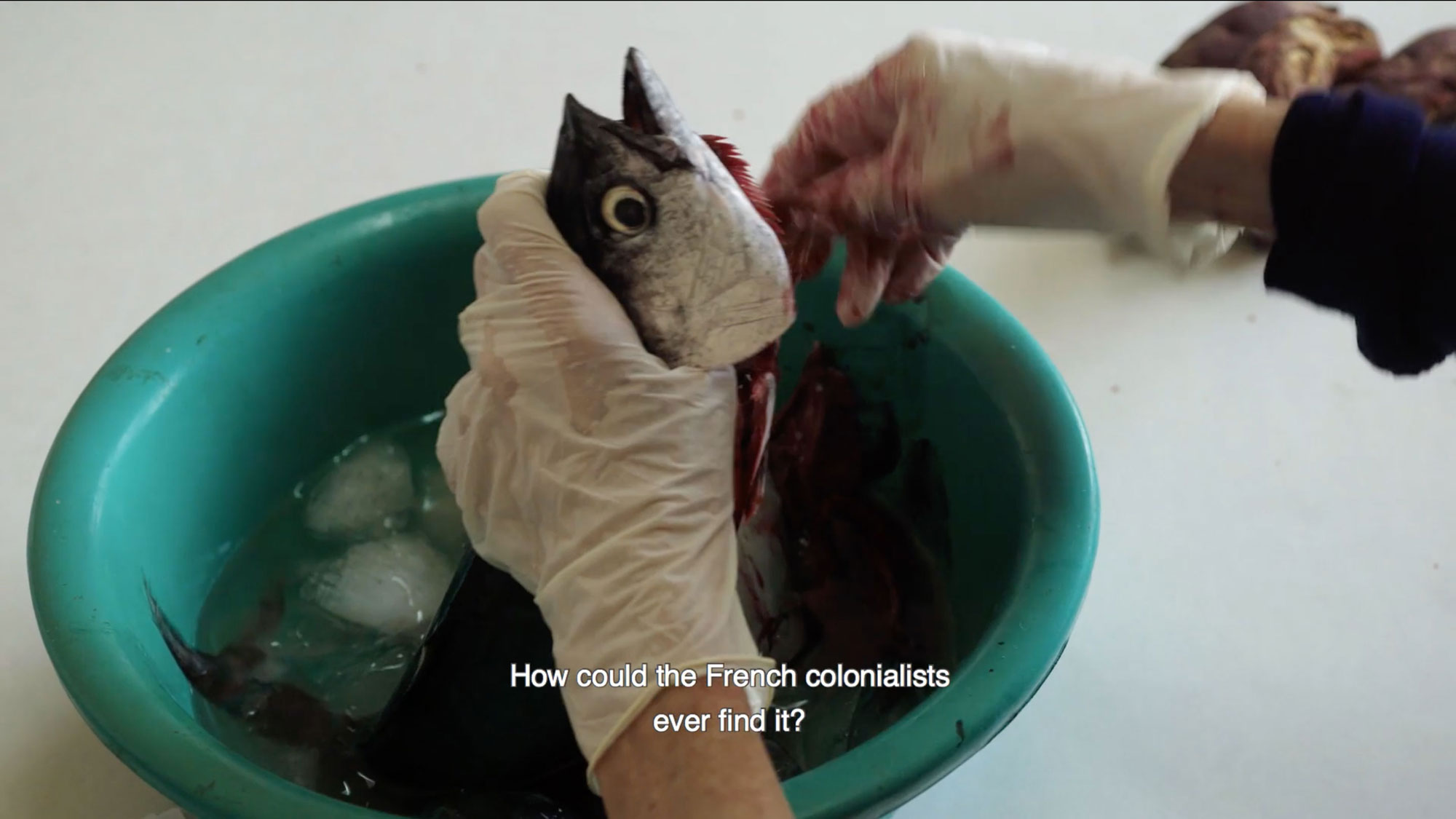
In González’s Shady River (2020), the moving image has been iced over; images must thaw. The film is a slow revelation of a silenced labor history in a small mining town in Argentina. It details the physical, social, and emotional burdens carried by its workers—particularly its few female laborers. Shaped by the filmmaker’s inability to gain entrance to the mines due to her gender, the film’s scenes often hover on-screen like permafrost. González uses subtlety and controlled pacing to coax a story out of landscapes that appear numbed by suppressed emotions and histories. Gradually, voices of female miners and a vivid sound score animate Shady River’s fog-ridden expanses, cracking open its scene of extraction.

Tatiana Mazú González was born in 1989 in Buenos Aires. A feminist activist who once wanted to be a biologist or geographer, her work in documentary, experimental, and visual art explores the links between people and spaces, the microscopic and the immense, the personal and the political, the childish and the dark.

Thuy-Han Nguyen-Chi is an artist whose practice mutates in and out of film, sculpture, installation, performance, and interdisciplinary research. In collaboration with characters in search of consciousness, language, and freedom, her recent work explores epistemological, aesthetic, and political possibilities of the moving image.

Program

  • Program Syncrisis (2012)
  • Thuy-Han Nguyen-Chi
  • Linger On Your Pale Blue Eyes (2016)
  • Thuy-Han Nguyen-Chi
  • Shady River (Río Turbio) (2020)
  • Tatiana Mazú González

Main Image: Tatiana Mazú González, Shady River (Río Turbio), film still, 2020. Courtesy the artist

Image
two pianos on stage at time spans NYC

TIME:SPANS 2024

Ning Yu, Cory Smythe: Brigitta Muntendorf

Composer Brigitta Muntendorf, with pianists Ning Yu and Corey Smythe and technologist Levy Lorenzo, make the US Premiere of Muntendorf’s Trilogy for Two Pianos as part of TIME:SPANS 2024 in New York City. Produced during a residency at EMPAC with the center’s audio engineers, Muntendorf’s piece combines kinetically charged electronic sounds with theatrical elements and virtuosic instrumental performances to meditate on and address the topics of presence and its disappearance.

The concert presentation is preceded by a conversation between Muntendorf and EMPAC Music Curator Amadeus Julian Regucera.

The following compositions premiere at TIME:SPANS 2024:

Brigitta Muntendorf
Trilogy for two pianos, tape, and live electronics, 2014–18
Performed by Cory Smythe, Levy Lorenzo, and Ning Yu

Duration: 70 min

Main Image: Trilogie, at Time:Spans, 2024. Photo: Jeff Svatek/EMPAC.

Media
Image
amadeus recugera
Image
a black circle on a light green background

Surge Conditions

Sharlene Bamboat, Tatiana Mazu Gonzalez, Thuy-Han Nguyen-Chi, and Marina Rosenfeld

Surge Conditions features three programs that challenge the containment of the moving image by the screen. The series approaches the presentation of film and video as a spatial practice with the potential to create composite sites—in which the visual, material, and sonic conditions of a screened film ‘surge’ and feed back into the surrounding environment.

From the cinematic works of in a plenum space that hinge on acousmatic sound and off-screen presence, to the installation-based projects Both, Instrument & Sound and μ (mu) that deploy film and video across expanded material environments, this series considers the moving image beyond its traditional frame. It delves into how the gradual integration of theatricality into modern and contemporary visual art has affected artists’ engagement with the moving image. It also considers the cinematic potential of live encounters with film outside traditional theatrical settings.

In a 1971 essay “A Cinematic Atopia,” visual artist Robert Smithson reflected on the tendency of cinema to dislocate and disorder its materials. Styling the locations in film as fabrications, he wryly speculated on his idea of the ultimate site-specific cinema: “What I would like to do is build a cinema in a cave or an abandoned mine, and film the process of its construction. That film would be the only film shown [there]....” Surge Conditions is a counter-inquiry into Smithson’s provocation. Here, the screen is neither a neutral projection space nor cinematic artifact, but a particular site—an architecture and platform that is attuned simultaneously to a film’s inherent setting and to the contingent space where it is encountered by the viewer.

–Katherine C.M. Adams

Main Image: Thuy-Han Nguyen-Chi, Syncrisis, film still, 2018. Courtesy of artist.

Image
a ghostly figure standing in a green cloud

Building an Ark

Laurie Anderson

In this talk presentation, renowned artist and musician Laurie Anderson reveals the process behind her newest music-theater work, ARK, while at EMPAC for a final production residency in preparation for its world premiere in Manchester in November 2024.

An opera starring a host of mythical and contemporary figures, Anderson’s subjects—apocalyptic climate events, technology and information overload, American history—are warped into a story that plays with the flow of time and poses questions about the survival of the human spirit. How does humanity need to change in order to be saved?

Laurie Anderson was at EMPAC for her first residency in 2009. She was Distinguished Artist-in-Residence for three years from 2012 through 2014. In all, Anderson has developed 10 projects during residencies at EMPAC, including this season's ARK.

One of America’s most renowned performance artists, Laurie Anderson’s genre-crossing work encompasses performance, film, music, installation, writing, photography, and sculpture. She is widely known for her multimedia presentations and musical recordings and has numerous major works to her credit, including United States I-V (1983), Empty Places (1990), Stories from the Nerve Bible (1993), Songs and Stories for Moby Dick (1999), and Life on a String (2001), among others. She has taken part in countless collaborations with an array of artists, from Jonathan Demme and Brian Eno to Bill T. Jones and Peter Gabriel.

Main Image: Laurie Anderson, production still from ARK. Photo: Alvis Mosely/EMPAC.

Media
Image
laurie anderson holding her head in front of planet earth, instagram post

Laurie Anderson's instagram post announcing ARK at Factory International, Manchester UK in November, 2024. 

Image
a group of blurry eastern indian children with a red cast

An Impossible Address

Suneil Sanzgiri

October, 2025

Suneil Sanzgiri is in residence in Studio 1—Goodman to devise the final installation of his new film An Impossible Address, which engages installation, lighting, and archival photography.

February, 2025

Sanzgiri is back in residence in EMPAC’s Audio Production Suite to record a voiceover for his forthcoming film, An Impossible Address (formerly Two Refusals).

June, 2024

Filmmaker Suneil Sanzgiri is in residence in Studio 1 to film scenes that will become part of his feature-length An Impossible Address (formerly Two Refusals).

Sanzgiri will shoot archival images mapped onto fabric—configured at times like dense landscapes—using various rigging configurations and multiple projectors. The shoot considers ways of imaging historical memory.

Main Image: Courtesy the artist.

Image
marina vishmidt

On the Recursivity of Care

Marina Vishmidt

In her writing and research, Marina Vishmidt assesses how art, labor, and value intertwine. In this talk at EMPAC, Vishmidt touches on works that use technology and tautology to indicate the unrepresentability of care & maintenance work–be it on the home, the body, or the self. 

Feminist art from the 1970s onwards, such as Margaret Raspé’s Frautomat films from the early 1970s or Fronza Woods’ 1981 Fannie’s Film (both screened as part of this program), exhibit the entropy of maintenance. These works suggest that the foundation of care work lies not only in concern for what is ongoing, but in a recognition of the tendency of maintenance to unravel over time.

Rather than becoming an object of representation, maintenance more often provides the conditions of representation. Its practices of social reproduction pursue a temporality of ever-sameness, a ‘re-’ of production without product. 

In this vein, Vishmidt’s EMPAC-commissioned talk explores a question of recursion, examining how replication of an initial form at different scales, and in different registers of interpretation, is modified by process. Repetitive processes of housework, as in the early films of Raspé, are changed by their documentation and exploded by the mode this documentation takes. Through recursion, repetition yields difference. 

Quote by Margaret Raspé, from an interview with Magazin Florida, published in Magazin FLORIDA #02, 2016.


Main Image: Marina Vishmidt speaking at the Vilnius Academy of Arts in Lithuania, 2016. Courtesy the speaker and rupert.it. Photo: Evgenia Levin. 

Image
an abstract swirl of orange and purple light against a black background with the profile of a woman in the bottom right corner

Susceptible Chambers

Antonia Barnett-McIntosh & Jessie Marino

Composer-performers Antonia Barnett-McIntosh and Jessie Marino’s Susceptible Chambers is an EMPAC-commissioned performance, which draws lines between the worlds of sound art, handcrafts, and experimental theater. It begins with the re-construction of a simple microphone.

Musicians have historically augmented familiar musical instruments with alternative materials to change their, and the audience’s, relationship to that object from a sonic and cultural standpoint. By designing and building specially-crafted objects, and experimenting with instrumental expansion, we can hear these materials interacting with one another—and experience the possibilities of a completely new sonic landscape, which can be discovered by playing with (a) particular combination/s of materials.

Developed during a series of residencies, Antonia and Jessie have laid the groundwork for an audio-visual performance that is both whimsical and rigorously executed. Composed from manifold permutations of “extended” microphones, the composer-performers experiment with different microphone filters and casings as well as speakers, light, and color arrangements.

Susceptible Chambers collects technologies from bygone eras—pulley systems, pianolas, needlepoint, sodium vapor lamps—and places them in conversation with bespoke, handmade and electronic objects. Antonia and Jessie's newest production draws the audience into an unusual, idiosyncratic, and playful sonic and visual world, experimenting with and challenging generally accepted practices of today’s electronic music, and contemporary music more broadly.

Main Image: Production process image: Susceptible Chambers, 2023. Created during the artists residency in August, 2023 in Studio 2. Courtesy the artists.

Image
a woman runs toward the back of a stage her arms spread like an eagle, bright fire-like floor lights and fog in the background

A Plot / A Scandal

Ligia Lewis

Dancer and choreographer Ligia Lewis’s performance A Plot / A Scandal takes up plot in its multiple meanings. Rebellious fantasies become schemes against the limits of narration. Mythical, historical, and political vignettes scandalize landed property’s legacy. Where plot is a scandal, the stage gives itself over to the pleasures of transgression. Here, Lewis explores what it might mean to be caught in the act.

In the artist’s own words, “A plot exposed, a foul deed enacted, invites scandal. In the spirit of revolution or romantic musings, scandals provoke an imagining of the impossible. Utopian or mundane, how might scandal reveal what lies unwittingly close to our fantasies? And how does it expose where society places its limits? If life is a scandal waiting to be plotted, how do we position ourselves within its matrix? Immoral and lacking propriety, scandals are incidents where fantasy and pleasure take center stage.”

Drawing together personae that range from Enlightenment thinker John Locke, 16th-century Santo Domingo slave rebellion leader Maria Olofa (Wolofa), Cuban artist and revolutionary José Aponte, and Lewis’s great-grandmother, Lewis choreographs a “poetics of refusal at the edges of representation.” Scheming against theater’s strict economy of seeing and being seen, the artist outlines a scene “where the excitement for that which does not fit might find its place.”

Main Image: Production still: A Plot a Scandal. Courtesy the artist. Photo: Moritz Freudenberg.