Image
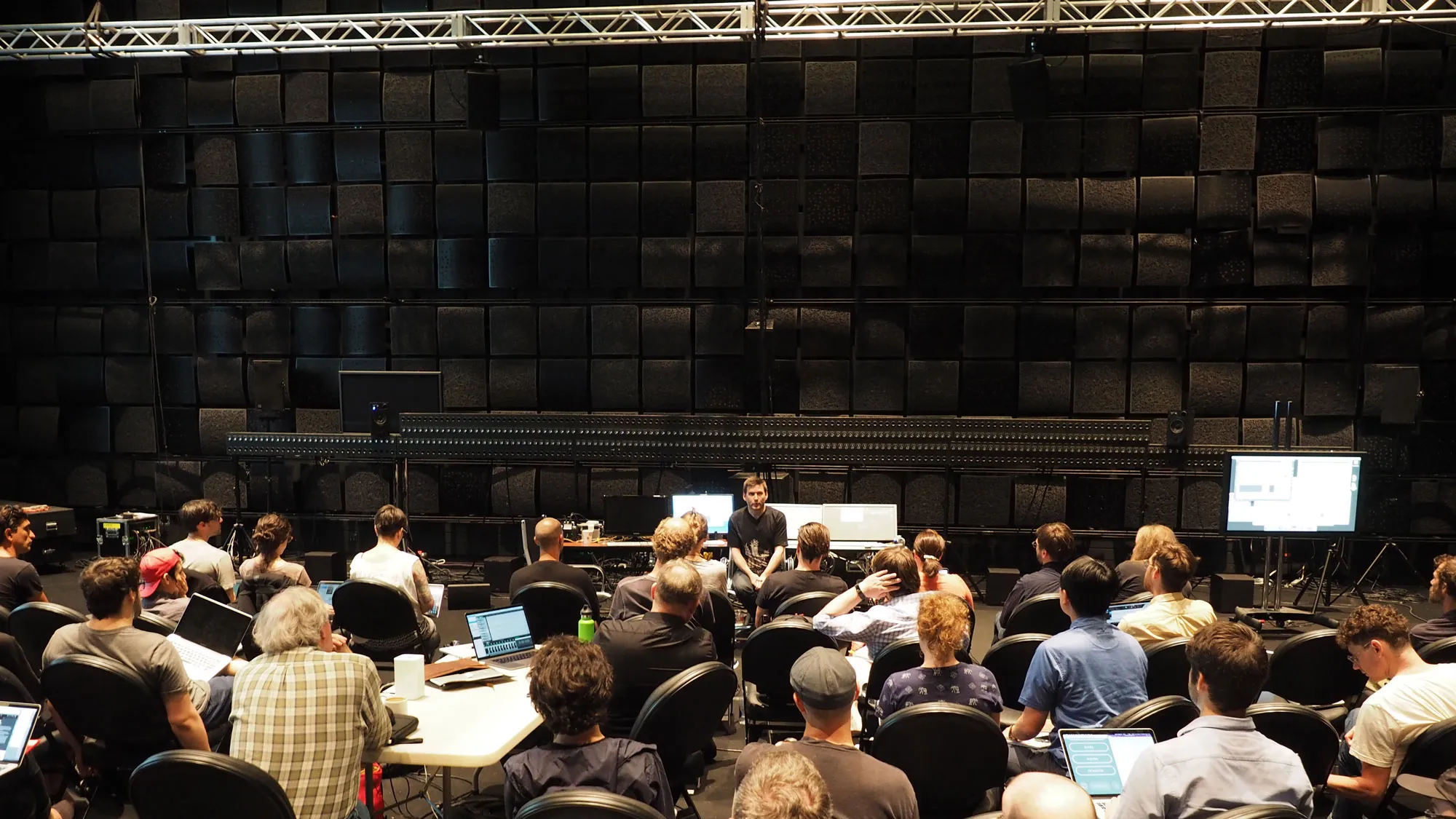
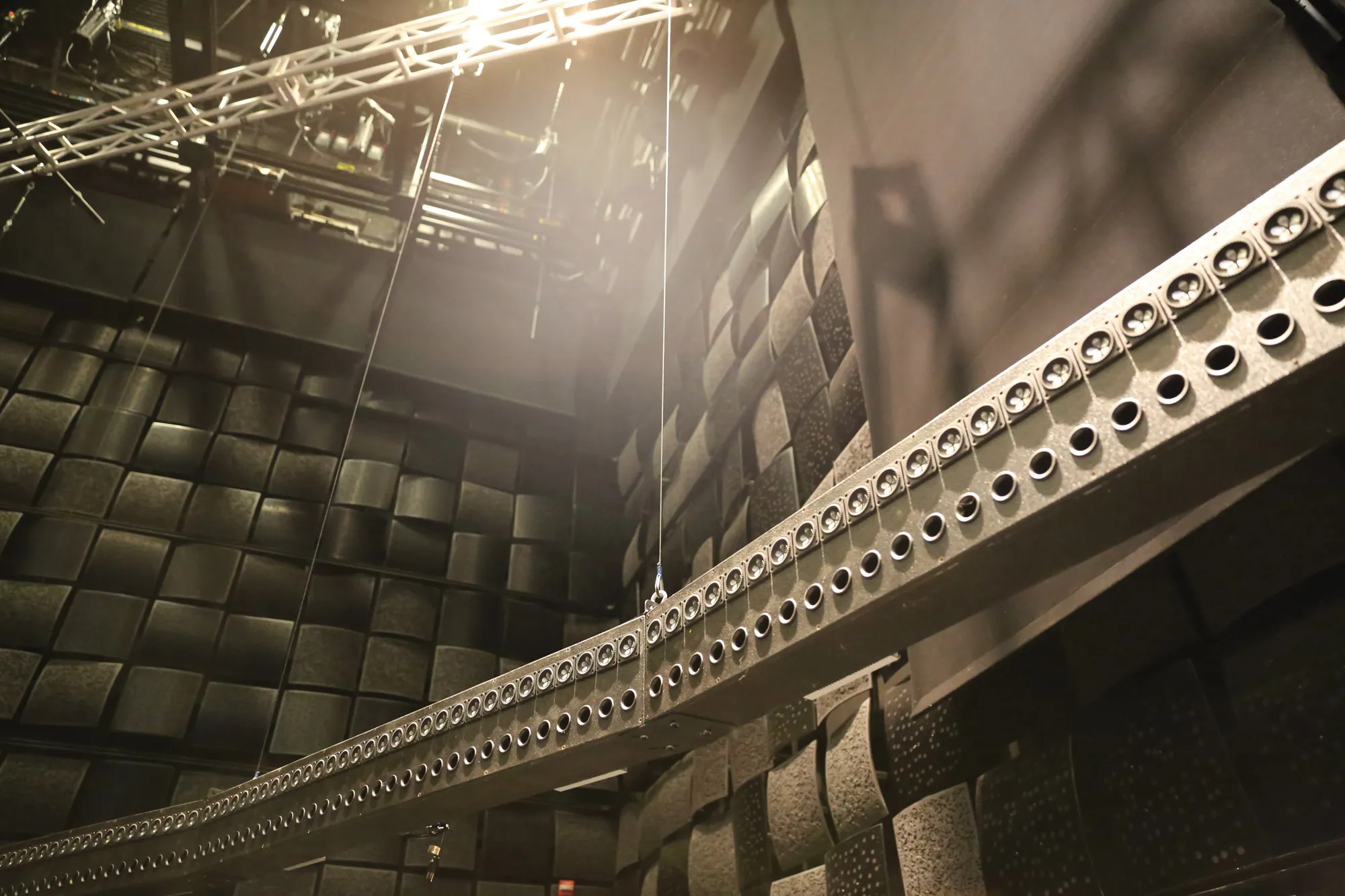
The wave field synthesis rig suspended from the ceiling of a black box studio.

Wave Field Synthesis Workshop

Summer 2018

The second week of the Spatial Audio Seminar is a workshop format, giving participants focused time and hands-on access to EMPAC's Wave Field Synthesis system in order to develop new creative work. This portion of the seminar will be reserved for only a handful of participants who submit project proposals in advance. Submissions will be reviewed by seminar leaders and accepted based on the degree to which they utilize the capabilities of these spatial audio systems and the potential to realize the proposed project within the given time frame.

WAVE FIELD SYNTHESIS

EMPAC’s Wave Field Synthesis array was constructed in 2016 and consists of 558 independently controllable speakers spread across 18 portable and reconfigurable modules.

VENUES

The workshop will take place throughout the EMPAC building, granting participants access to a range of sophisticated audio systems in a variety of acoustic settings. Three venues will be outfitted with high-channel-count audio arrays, including:

  • Large absorptive studio
    (66’x51’x33’; 315m2, 12m high) with with two 186-channel Wave Field Synthesis arrays (one frontal linear array and one overhead linear array).
  • Large diffusive studio
    (44’x55’x18’; 230m2, 9m high) with 186-channel Wave Field Synthesis Array.

PREREQUISITES

Applicants should be musicians, composers, audio engineers, or programmers with experience in multi-channel composition. We recommend workshop participants attend the first week of the seminar.

PERFORMANCES

There will be one open-to-the-public performance during the second week. More information will be available later this spring on the specifics.

WHAT TO BRING

  • Participants should bring a computer and applications they are comfortable using for creating their projects.
  • Adapters to connect laptop to Ethernet cable.

Where + When

Studio access will be available 24 hours a day across multiple venues.

Lodging

Lodging accommodations are available on campus for those traveling to attend. Checkin will be open on the 15th and checkout available on the 23rd for those who want to arrive the day before / leave morning after workshops.

HOW TO APPLY

Applications for Workshop Week will open on March 1 and close on May 1.

APPLY

Main Image: EMPAC's Wave Field Synthesis array in Studio 1.
Image
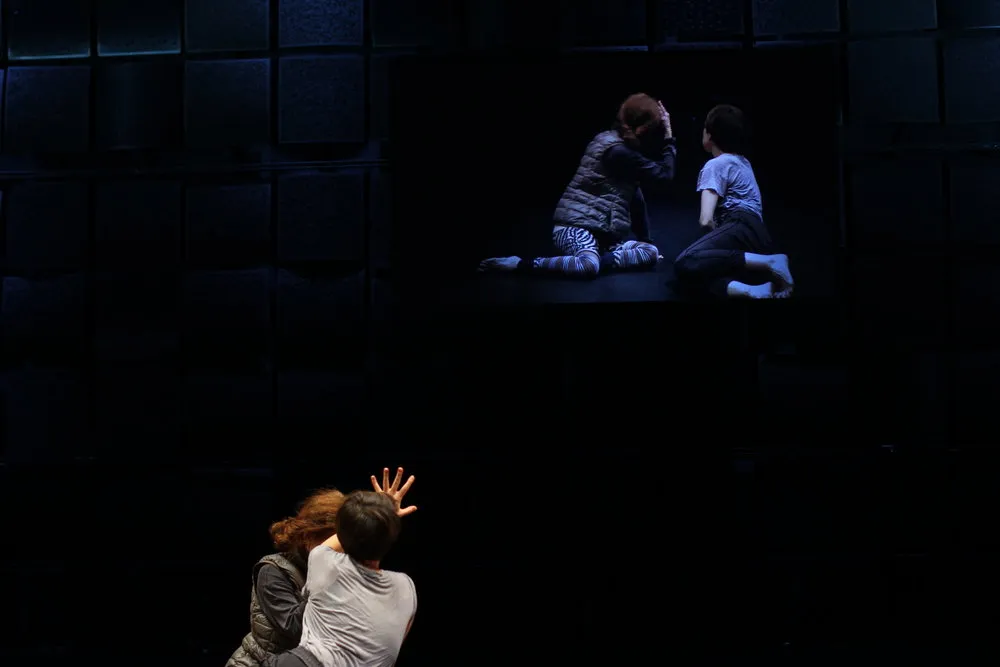
Two people in a black box studio reaching up towards a projection of themselves.

echo/archive

Elena Demyanenko & Erika Mijlin

The world premiere of EMPAC commissioned echo/archive, choreographer/performer Elena Demyanenko and filmmaker Erika Mijlin’s EMPAC-commissioned collaboration. Developed over a year in residence in Studio 1, echo/archive brought dance, film, and light together in a three-part live performance featuring performers Dana Reitz, Eva Karczag, and Jodi Melnick.

echo/archive integrated live dance with live and pre-recorded video to represent the layers of memory and heritage that exist in each human body. Demyanenko, Karczag, and Melnick all worked with the late American choreographer Trisha Brown and carry that well-established movement style as an influence on their work. Reitz is known for her light and movement scores. Together, the four women bookend a generation and genealogy of dance history. With echo/archive, Demyanenko and Mijlin explored how dance legacies influence body and movement practice. With video designer Ray Sun and sound designer Jon Kinzel, the artists’ video mediation shaped the work into a statement about legacy, relationship, and female artmaking across generations. 

Elena Demyanenko is a Russian-born dancer and choreographer who has been performing, teaching, and choreographing in New York City since 2001. She was a member of Trisha Brown and Stephen Petronio Dance Companies, and has danced for choreographers such as Bill T. Jones. She is the recipient of New York Live Arts and EMPAC Dance Movies commissions, as well as a Jerome Robbins Fellowship. Demyanenko is currently on faculty at Bennington College.

Erika Mijlin is a producer, editor, writer, and founding partner of the media production company Artifact Pictures. In addition to producing her own films and videos, Mijlin wrote and directed Feldman and the Infinite, an original play that was staged for the Philadelphia Fringe Festival. She was the recipient of the Art and Social Change grant from the Leeway Foundation and has served on faculty at Bennington College.

echo/archive. Photo: Mick Bello

Image
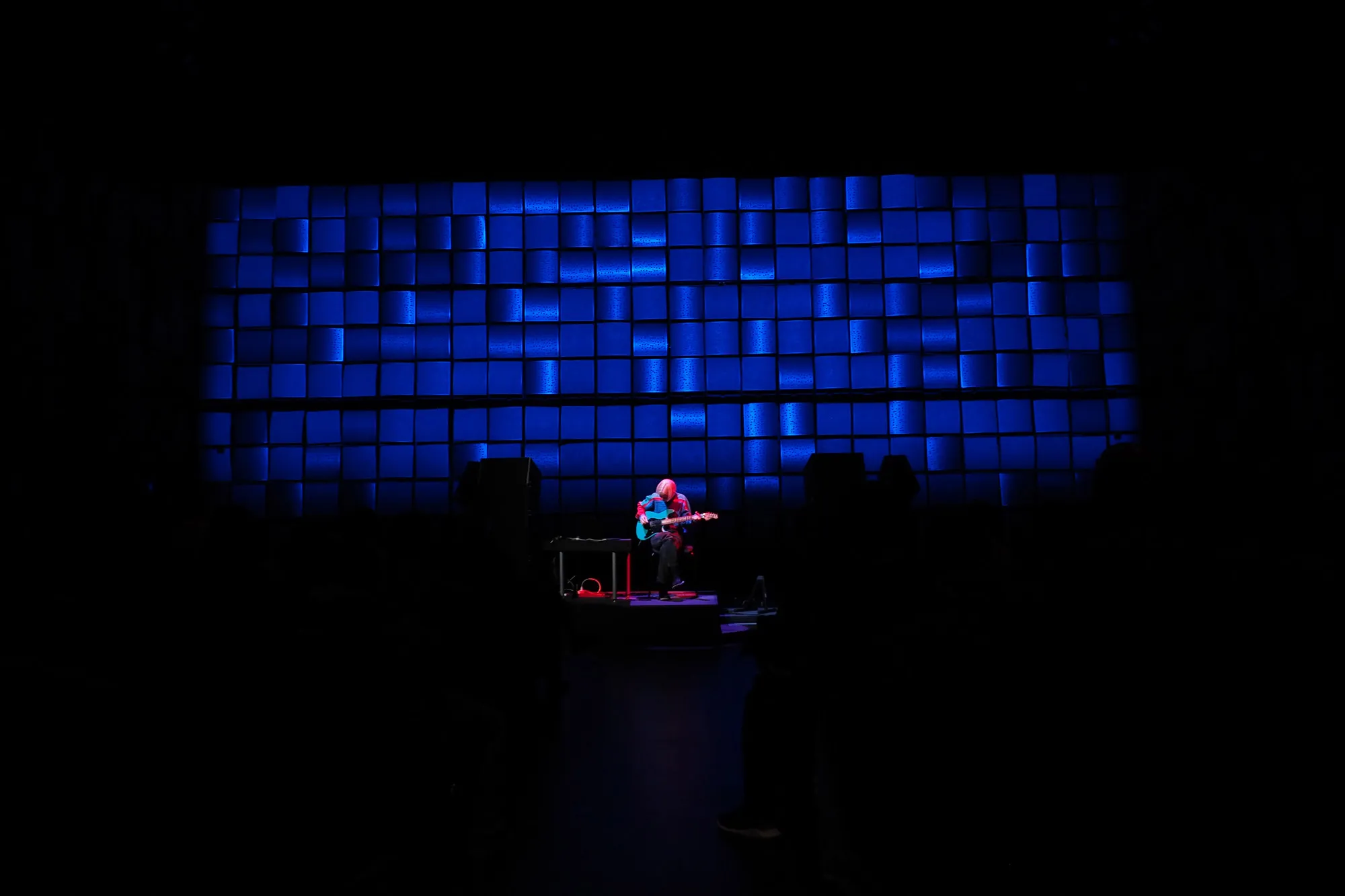
Ellen Arkbro playing an electric guitar on stage while washed in pink light in front of a grid of blue squares.

For Guitar and Electronics

Ellen Arkbro

Stockholm-based composer Ellen Arkbro was in residence to develop material to use with EMPAC's Wave Field Synthesis Array. While Arkbro was at EMPAC, she also performed a new solo work For Guitar and Electronics.

Arkbro is a musical alchemist whose work oscillates between the pop music of the ’90s and the American minimalism of the ’60s, while exploring microtonal realms that blur the standard tunings and harmonies of Western music. Her practice takes the form of compositions for early-music ensembles as well as long-duration performances of synthesized dream music, including one piece composed to last 26 days. Her sound work is heavily informed by her studies in pure intonation tuning with La Monte Young and Marian Zazeela in New York and with Marc Sabat in Berlin. She describes her 2017 album For Organ and Brass as “a very slow and reduced blues music” written for the 17th-century Scherer-organ in Tangermünde, Germany, paired with microtonal arrangements for horn, tuba, and trombone.

Main Image: Arkbro in residence in Studio 1, 2018. Photo: Mick Bello/EMPAC.

Image
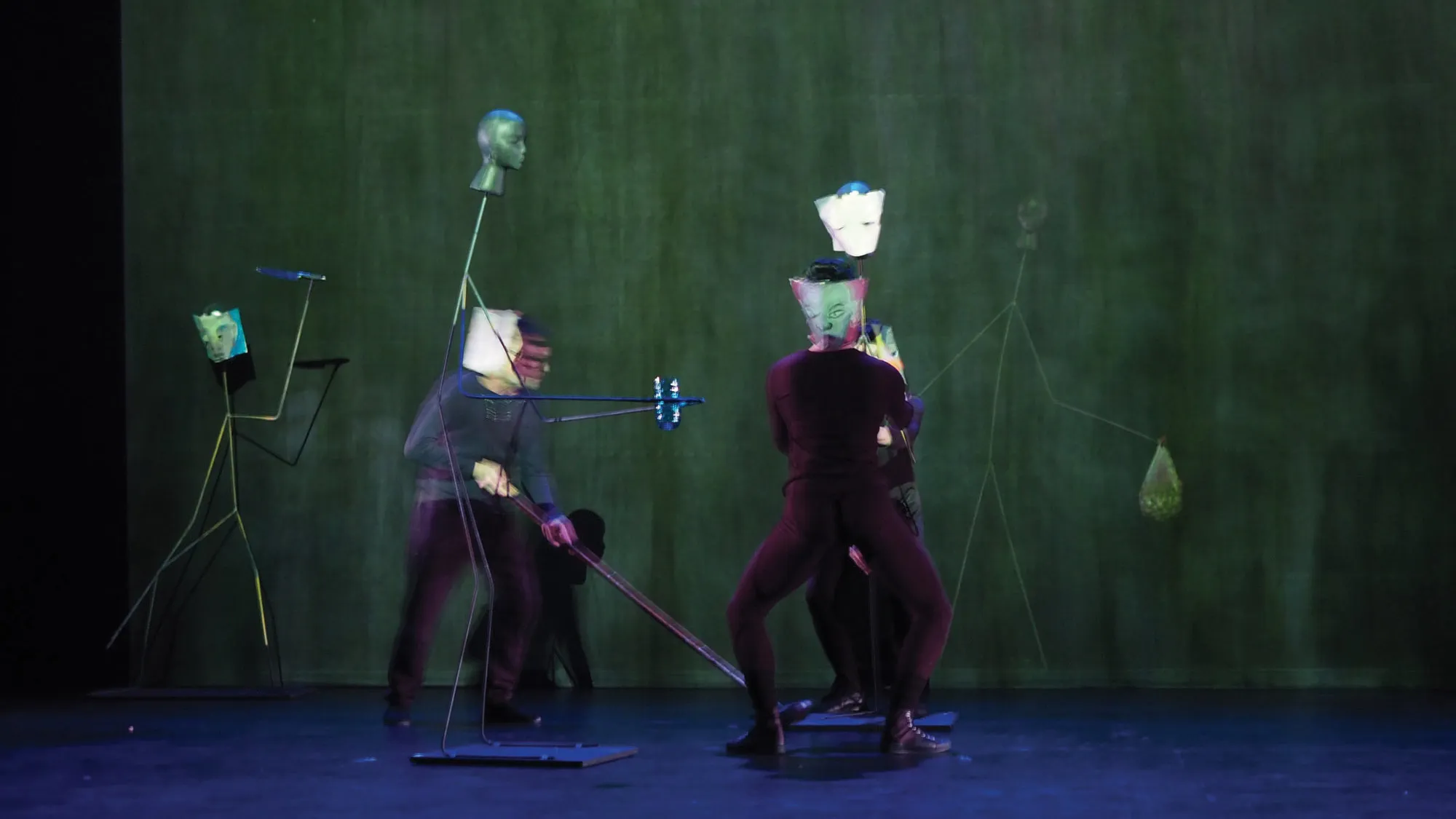
Two people preforming with various humanoid sculptures on a blue and green stage.

They Are Waiting for You

Laure Prouvost with Sam Belinfante and Pierre Droulers

They Are Waiting for You was Turner Prize-winning visual artist Laure Prouvost’s first major stage performance, in collaboration with Sam Belinfante and Pierre Droulers.

Theatrical and cinematic technologies—projection, light, and haze—interacted with performers, musicians, objects, and the audience in a surreal and perceptually disorientating theatrical production. Everyday items were used to investigate language itself, its origins and its distance from the world. Words, bodies, and images gained and lost meaning throughout the performance as language broke down. And in the piece’s stunning conclusion, that loss of language revealed a new space for the beautiful.

Co-commissioned by EMPAC and the Walker Art Center, They Are Waiting For You marked French artist Laure Prouvost’s first major commission for the stage and was conceived in collaboration with London-based artist, filmmaker, and curator Sam Belinfante, as well as renowned French/Belgian choreographer Pierre Droulers.

Main Image: They Are Waiting For You, Laure Prouvost, Sam Belinfante, and Pierre Droulers. Production still, 2017. Photo: Mick Bello/EMPAC

Image
A white male wearing a black t-shirt and jeans sitting on a stool in a room with various computer set ups addressing a packed crowd, attentively looking on in a black box studio.

Spatial Audio Summer Seminar

Summer 2018

This intensive seminar offers musicians, composers, audio engineers, and programmers the rare opportunity to study the fundamentals of multi-channel spatial audio in pristine acoustic environments. Participants will experience multiple large spatial audio systems, including Wave Field Synthesis, High-Order Ambisonics, and Binaural audio.

Researcher Markus Noisternig (IRCAM), professor Chris Chafe (Stanford), Rama Gottfried, and other guests will join EMPAC’s audio staff in dissecting technical and artistic concerns in the creation and presentation of high-count multi-channel sound projection. Using the full capabilities of EMPAC’s sonic infrastructure, including over 700 channels of audio and EMPAC’s Wave Field Synthesis array, the seminar will consist of lectures, roundtables, listening sessions, workshops, and performances.

The first week of the seminar is an open forum for participants of all backgrounds and experience levels to dive into general concepts, workflows, and control mechanisms related to spatial audio. Topics will include introductory, intermediate, and advanced patching for IRCAM’s SPAT software, in-depth discussions of Wave Field Synthesis, Ambisonics, Binaural and Transaural audio, 3D audio recording and mixing, and more. The second week of the seminar is a wave field synthesis workshop giving a limited number of participants focused time and hands-on access to the system in order to develop new creative work.

WAVE FIELD SYNTHESIS

EMPAC’s Wave Field Synthesis array was constructed in 2016 and consists of 558 independently controllable speakers spread across 18 portable and reconfigurable modules.

VENUES

The workshop will take place throughout the EMPAC building, granting participants access to a range of sophisticated audio systems in a variety of acoustic settings. Three venues will be outfitted with high-channel-count audio arrays, including:

  • 1,200-seat Concert Hall
    with 64-channel Ambisonic array.
  • Large absorptive studio
    (66’x51’x33’; 315m2, 12m high) with two 186-channel Wave Field Synthesis arrays (one frontal linear array and one overhead linear array) and 25-channel Ambisonic array.
  • Large diffusive studio
    (44’x55’x18’; 230m2, 9m high) with 186-channel Wave Field Synthesis Array. 

SCHEDULE OF EVENTS:

MONDAY, JULY 9

Introduction with Markus Noisternig
EMPAC WFS array demo
Object Based Audio with Markus Noisternig and Rama Gottfried.

TUESDAY, JULY 10

Talk with Chris Chafe
Panoramix with Markus Noisternig
Intro to Spat with Rama Gottfried
Listening Session and Q&A time
Okkyung Lee will perform a piece presented by Markus Noisternig using the WFS array

WEDNESDAY, JULY 11

Overhead Wave Field Synthesis with Bobby McElver
Intermediate SPAT Patching with Rama Gottfried
Tour with EMPAC’s Audio team

THURSDAY, JULY 12

Demos in Spatial Audio Recording/Room Impulse Responses
Jens Meyer will give a talk/demo of the EigenMike
Listening Session
Advanced Spat Patching with Rama Gottfried
Tour with EMPAC’s Audio team

FRIDAY, JULY 13

Binaural to Ambisonic workflows
Listening Session
Edgar Choueiri TransAural talk/demo
Roundtable discussion

VIDEO ARCHIVE

Media

click the top right menu icon to open playlist of 12 videos.

Photo: Mick Bello/EMPAC.

Image
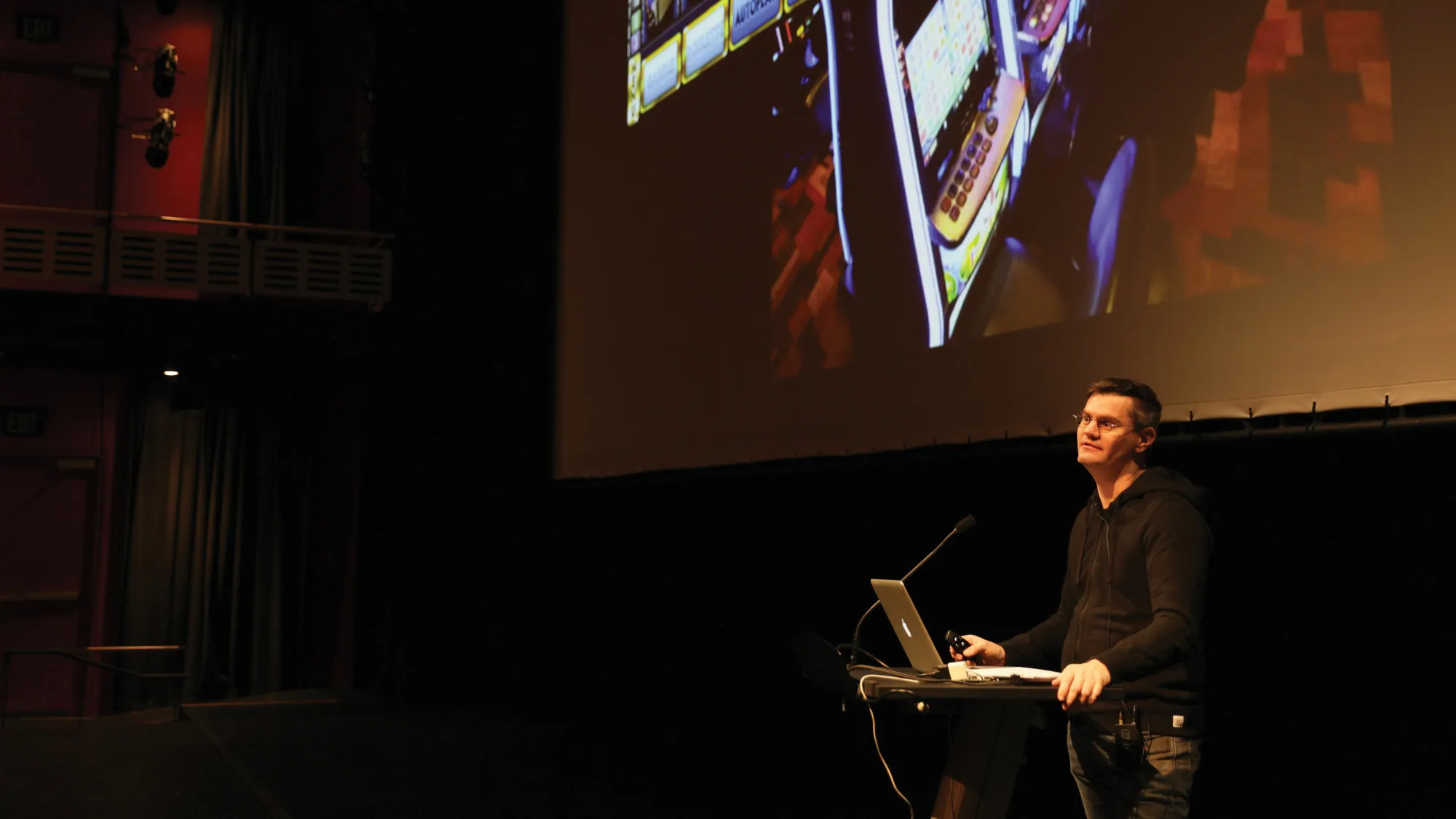
Patrick Keilty in the theater giving a lecture.

Pornography's Graphical Interface

Patrick Keilty

Online pornography is a $97 billion industry with more than 100 million people around the globe visiting pornographic video streaming sites every day. Within that industry, sophisticated technology companies employ hundreds of technical staff to design and develop interfaces, algorithms, data-mining and analytics software, video-streaming software, and database management systems. These designers are responsible for making strategic choices about information management and the graphical organization of content, which translates into large profits and the curation, distribution, and regulation of our sexual desire.

Information scholar Patrick Keilty studies the impact that design and information systems in the pornography industry have on desire and sexuality. His talk focused on one aspect of this strategy—the design of immersive viewing experiences that are aimed at increasing the retention of attention and “time on site”—while addressing questions such as: How does the pornography industry design for desire? How does this differ from similar practices in other industries? What can our understanding of desire add to our understanding of how these systems operate? 

Patrick Keilty is Assistant Professor in the Faculty of Information at the University of Toronto, with affiliate faculty positions in the Technoscience Research Unity, Cinema Studies Institute, Bonham Centre for Sexual Diversity Studies, and the Women and Gender Studies Institute. Keilty is the co-editor of the Feminist and Queer Information Studies Reader.

Main Image: Patrick Keilty during his talk in 2018. Photo: EMPAC.

Media

Patrick Keilty: Pornography's Graphical Interface. February, 2018.

Image
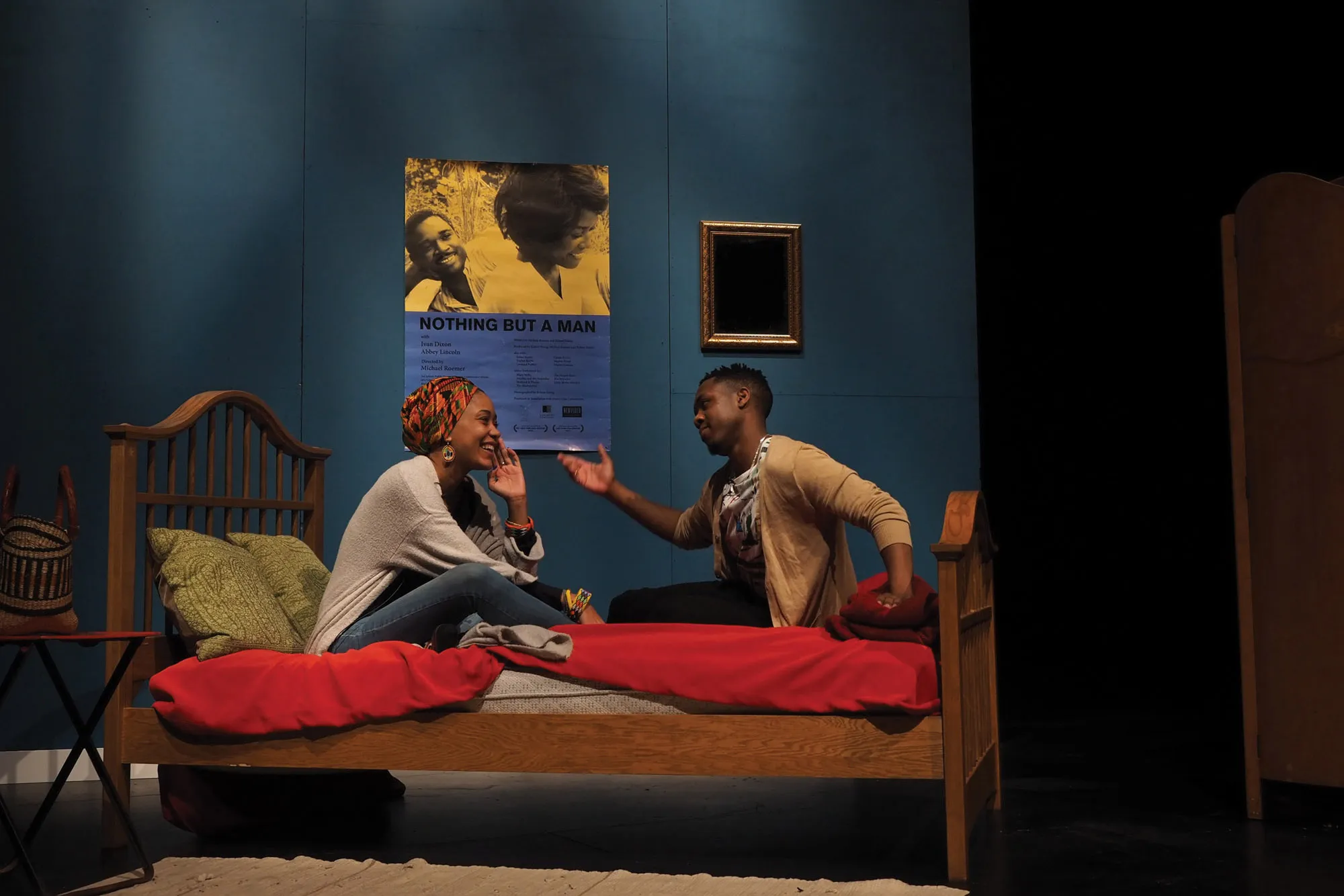
A Black woman and a Black man in a blue room sitting on a bed with red sheets in animated joyous conversation.

Ephraim Asili

The Inheritance

Ephraim Asili was in residence with a group of performers to develop the script for his feature-length film The Inheritance. The artist-filmmaker’s first foray into working with an ensemble cast, this event featured a live three-act performance, including scenes from the film and a reading by Philadelphia poet, activist, and scholar of the Black Arts Movement Sonia Sanchez.

Based on real events, the film’s protagonist inherits a house in West Philadelphia that becomes home to an urban collective for activists of color. The tension builds as day-to-day domestic issues compete with the collective’s political agenda. Filmed predominantly inside the house, the increasingly claustrophobic drama unfolds as the group attempts to live together and find consensus through Black political discourse and social philosophy—a commitment that will climax in explosive action.

Ephraim Asili, Inheritance. Photo: EMPAC

Image
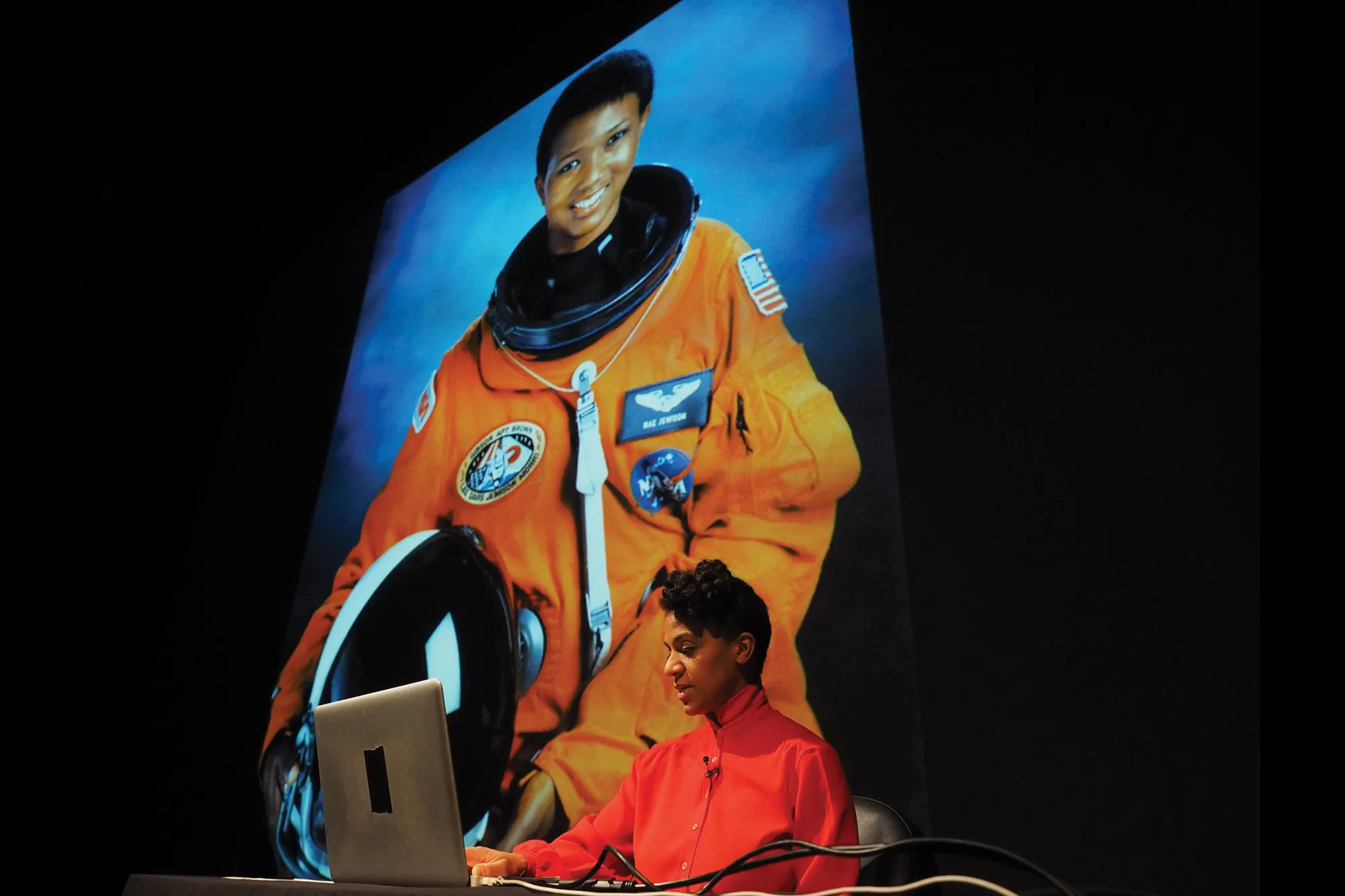
A projection of Mae Jemison in her nasa orange space suit.

Afrogalactica

Kapwani Kiwanga

Afrogalactica was a film-performance by Canadian artist Kapwani Kiwanga. Featuring live reading and video projection, the performance cast Kiwanga as a fictional anthropologist who synthesized fragments of poetry, mythology, pop culture, science, and scholarly discourse to challenge historical narratives regarding colonial struggle and the African diaspora. Reframing the tradition of Afrofuturism as a means to examine African subjectivity and undermine hegemonic discourse, Afrogalactica mixed fact and fiction to generate new stories out of the personal, the canonical, and the supernatural while speculating on possible futures. 

Kapwani Kiwanga was born in Hamilton, Canada and lives in Paris. She studied Anthropology and Comparative Religions at McGill University. Kiwanga was the 2016 Commissioned Artist at the Armory Show, New York and recently presented her work in solo exhibitions at Reva and David Logan Center for the Arts, The University of Chicago; The Power Plant, Toronto; La Ferme de Buisson, Noisiel; South London Gallery, London; and the Jeu de Paume, Paris.

KAPWANI KIWANGA, AFROGALACTICA: A BRIEF HISTORY OF THE FUTURE, 2011–ONGOING. Photo: EMPAC


Image
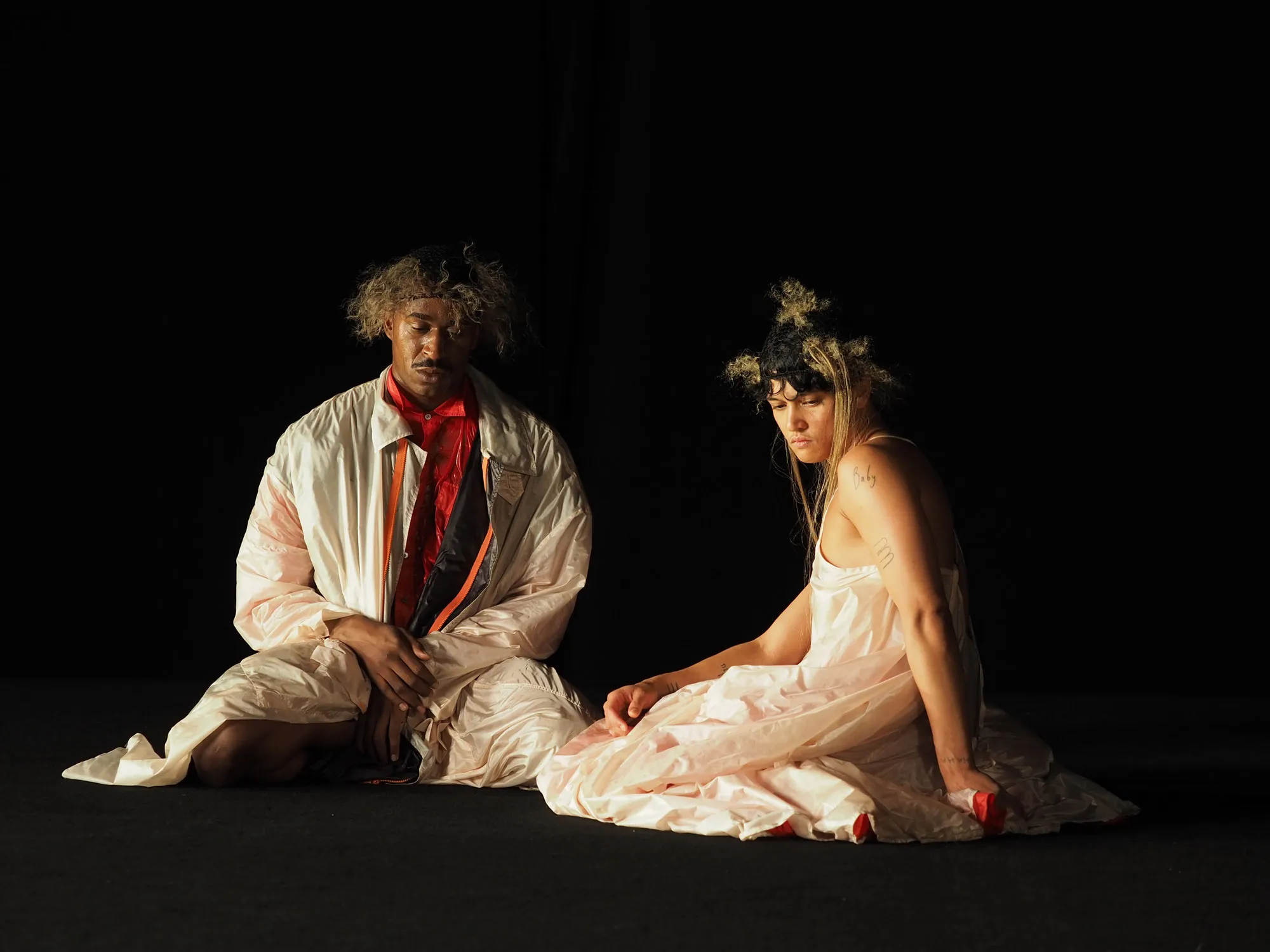
A Black man wearing short blonde hair extension pieces and a white transparent trench coat seated next to a white person also wearing extensions and a long white transparent dress. Both look down pensively while seated on a dark stage.

Sudden Rise

Moved by the Motion (Wu Tsang and boychild with Patrick Belaga, Josh Johnson, and Asma Maroof)

Fall 2018

Wu Tsang and boychild are in residence with their collaborators Josh Johnson, Patrick Belaga, Jeff Simmons, and Asma Maroof to continue work on a new performance for EMPAC's Theater to be premiered at the 10 YEARS celebration. Footage shot by cinematographer Antonio Cisneros during the August residency will be incorporated into the final performance.

Spring 2018

Wu Tsang and boychild are in residence in EMPAC’s Theater to experiment with light, scrims, and projection surfaces for the development of a new work in their Moved by the Motion series. The performance is conceived in collaboration with Fred Moten, Patrick Belaga, and Klein.

Spring 2016

Artist Wu Tsang was be in residence in the theater with her collaborators boychild and Patrick Belaga to work on the staging of a new iteration of their performance Moved by the Motion.

Main Image: Moved by the Motion in residence in 2018. Courtesy the artists. Photo: EMPAC.

Laura Luna

Mexican multimedia artist and composer Laura Luna created a new multimedia concert perfor- mance inside EMPAC’s 360-degree panoramic screen.

A photographer turned video and film artist, Laura Luna began to experiment with music in 2013. Perceiving sound as a powerful art form for enhancing memories and narratives, she recorded sounds around her that triggered emotions and memory fragments, building them into a rich tonal music. Using field recordings, voice, a modded Atari computer, a Gameboy and various synths, she constructs sounds to describe fantastical scenes and narratives, creating soundtracks for sublimely fogged-in worlds inspired by the sort of science fiction that deals in the eerily heart- rending. In 2014, she released the experimental album Isolarios inspired by stories about lost cosmonauts, expeditions without return, magical realism, and the works of Italo Calvino.

With a passion for machines, generative narra- tives, and the complexities of memory, Luna has developed audiovisual performances, installa- tions, and interactive works where different materials and technologies coexist. Luna per- formed at EMPAC following a production residency in Studio 2 aimed at creating a new multimedia concert performance inside EMPAC’s 360-degree panoramic screen.