Image
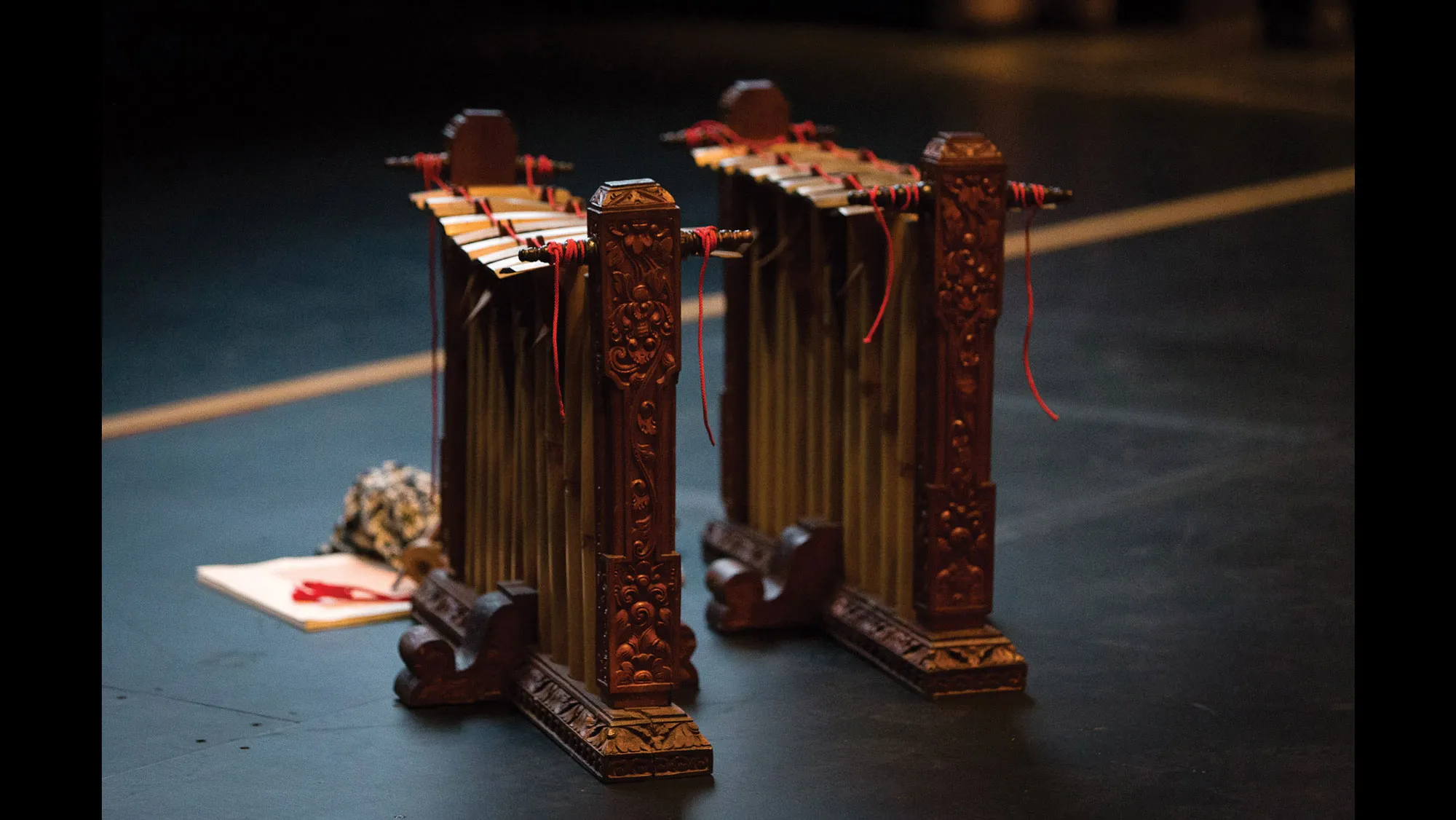
Two balinese instruments made of ornately carved wood held together by red string standing on a black floor. A small bouquet of flowers sits in front of them

About Differences: Art, Science, Engineering

Johannes Goebel

Engineering, science, and art are often seen as having common ground. This is fed by a romantic view of Leonardo da Vinci, the genius who brought these disciplines together in his mind, life, and practice, and by an enthusiastic view of computer technology that continuously provides new scenarios and tools, which are used in all three fields. Rather than putting everything into one bag and shaking it before deep-frying the mixture, Goebel instead looked at the differences of the three fields in their motivations, methodologies, and goals. From a clear and respectful view of these differences, a potential for collaboration and cross-pollination might evolve. 

Johannes Goebel joined Rensselaer as director of the Experimental Media and Performing Arts Center (EMPAC) in 2002.
Image
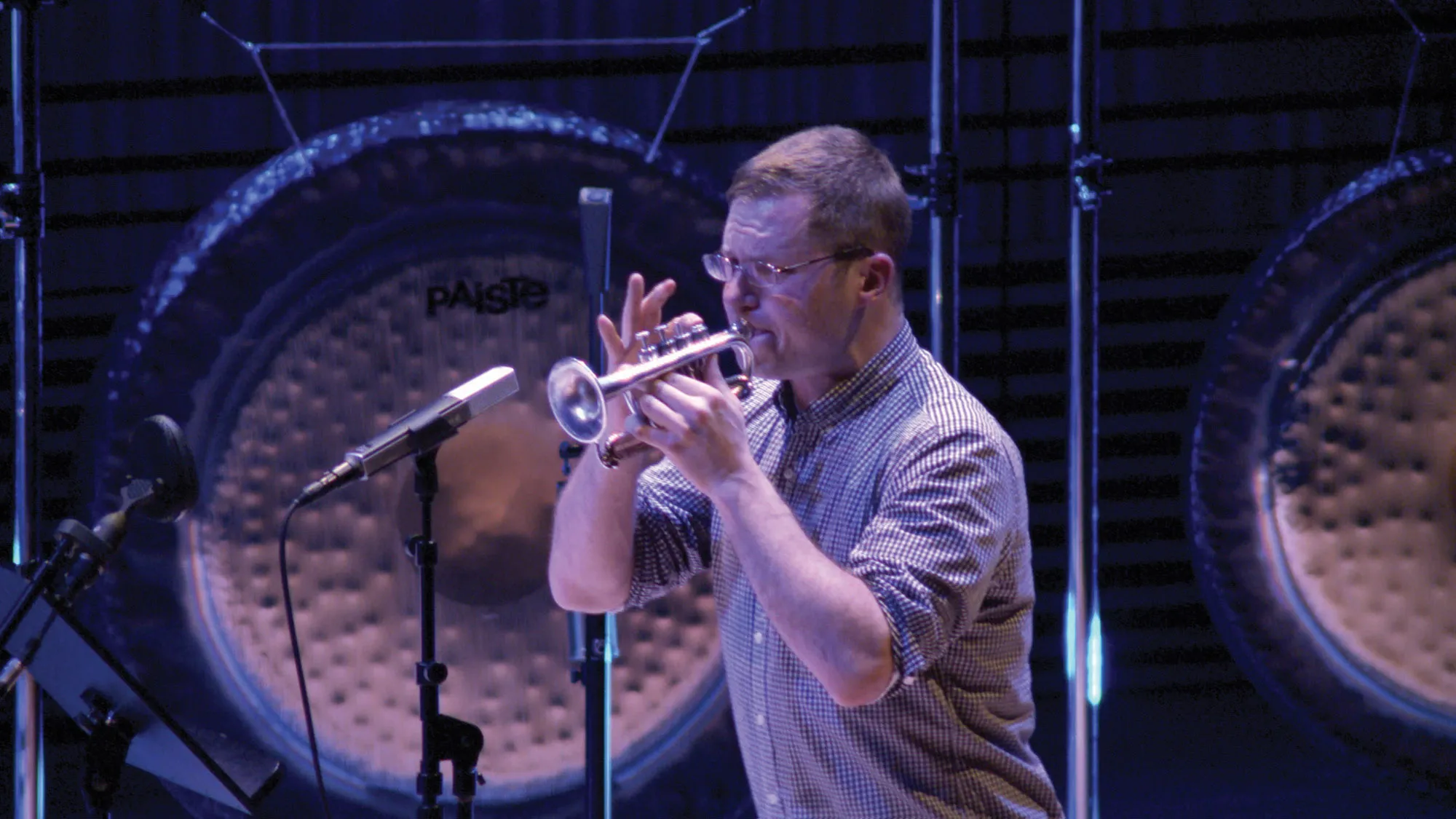
A white male playing a soprano trumpet into a microphone in front of a gong.

Peter Evans Quintet

Taking jazz ensembles into the 21st century, the Peter Evans Quintet incorporates real-time sound processing with traditional instruments. These live electronics allow the group to change their sound fluidly from mellow tones to jagged rattling to cacophonous reverberation. The quintet draws on traditional jazz idioms as source material and contorts them into something resembling classical European avant-garde—complete with complex rhythms played with pinpoint accuracy and confounding extended techniques. Peter Evans Quintet:

Peter Evans (trumpets/compositions)
Ron Stabinsky (piano)
Tom Blancarte (bass)
Jim Black (drums)
Sam Pluta (live electronics)

Main Image: Peter Evans Quintet in 2013. Photo: EMPAC/Rensselaer.

Media
Image
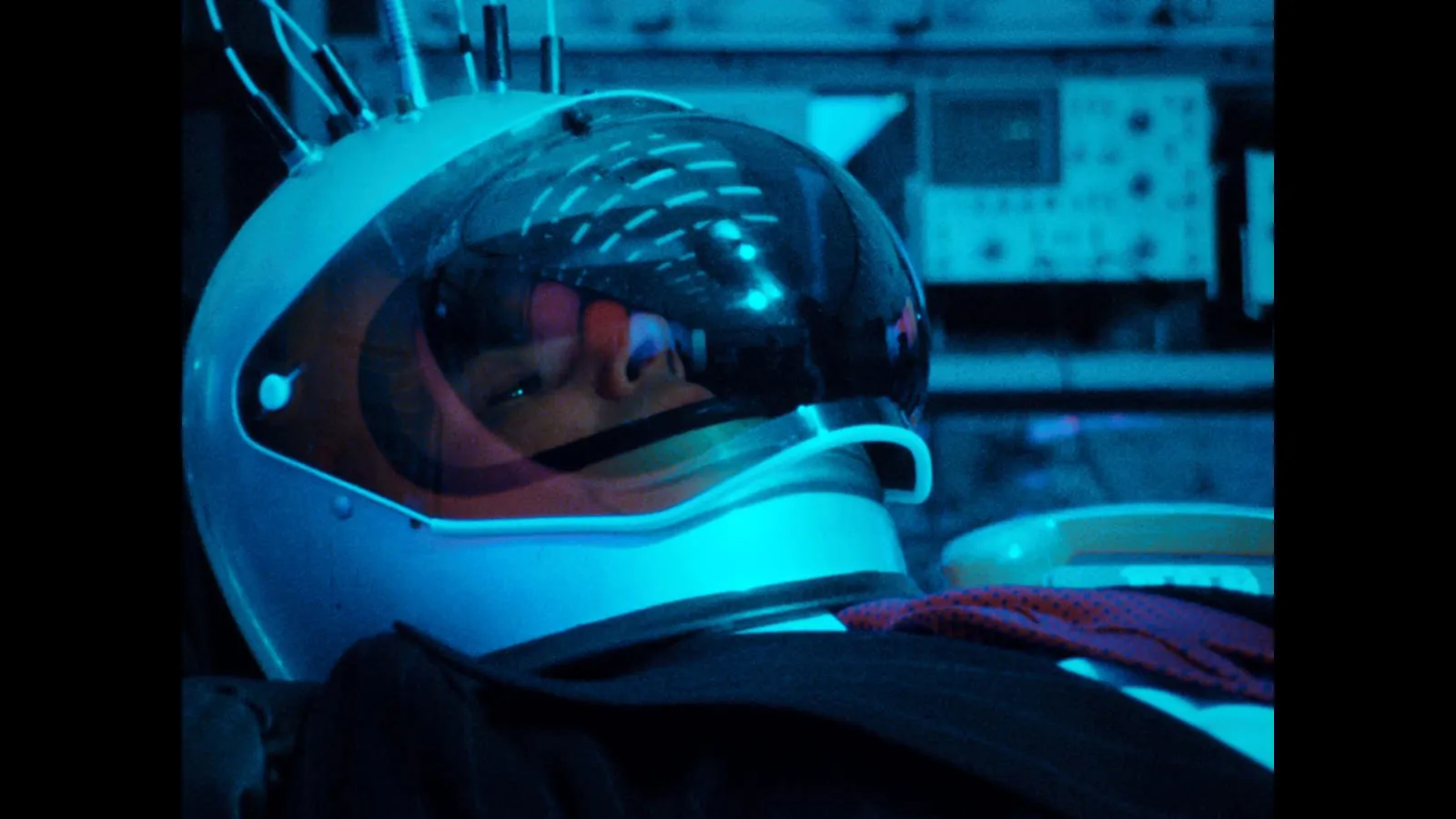
A man in a suit wearing an astronaut helmet reclined in room with various nobs and buttons washed in teal light.

World on a Wire (Welt am Draht)

Directed by Rainer Werner Fassbinder

Rainer Werner Fassbinder’s rarely screened science fiction thriller World on a Wire (Welt am Draht) is an adaptation of Daniel F. Galouye’s novel Simulacron-3. A film in which the boundary between reality and simulation is ceaselessly questioned, World on a Wire follows Fred Stiller (Klaus Löwitsch), a cybernetics engineer who uncovers a conspiracy at the Institute for Cybernetics and Future Science. The narrative centers on a simulation project in development at the institute called Simulacron 1, which will be able to predict future social, economic, and political occurrences as precisely as though they were reality. After the initiator and the head of the research project, Professor Vollmer (Adrian Hoven), dies under mysterious circumstances, Stiller is asked to assume his responsibilities and begins exhibiting symptoms uncannily similar to his predecessor.

Shadow Play is a series of films that tread nimbly between reality and illusion, acknowledging the artificial nature of cinema. Referencing the tradition of shadow puppetry, the origins of cinema in phantasmagoria, and Plato’s Allegory of the Cave, each film draws on the metaphors of light as reality and shadow as artifice. In Plato’s The Republic, the allegory of the cave illustrates the difference between truth and illusion. Many writers have noted that Allegory of the Cave (written c. 360 BCE), bears great resemblance to the contemporary movie theater.

Main Image: Film still from World on a Wire (1973). Germany.

Image
Alva Noe

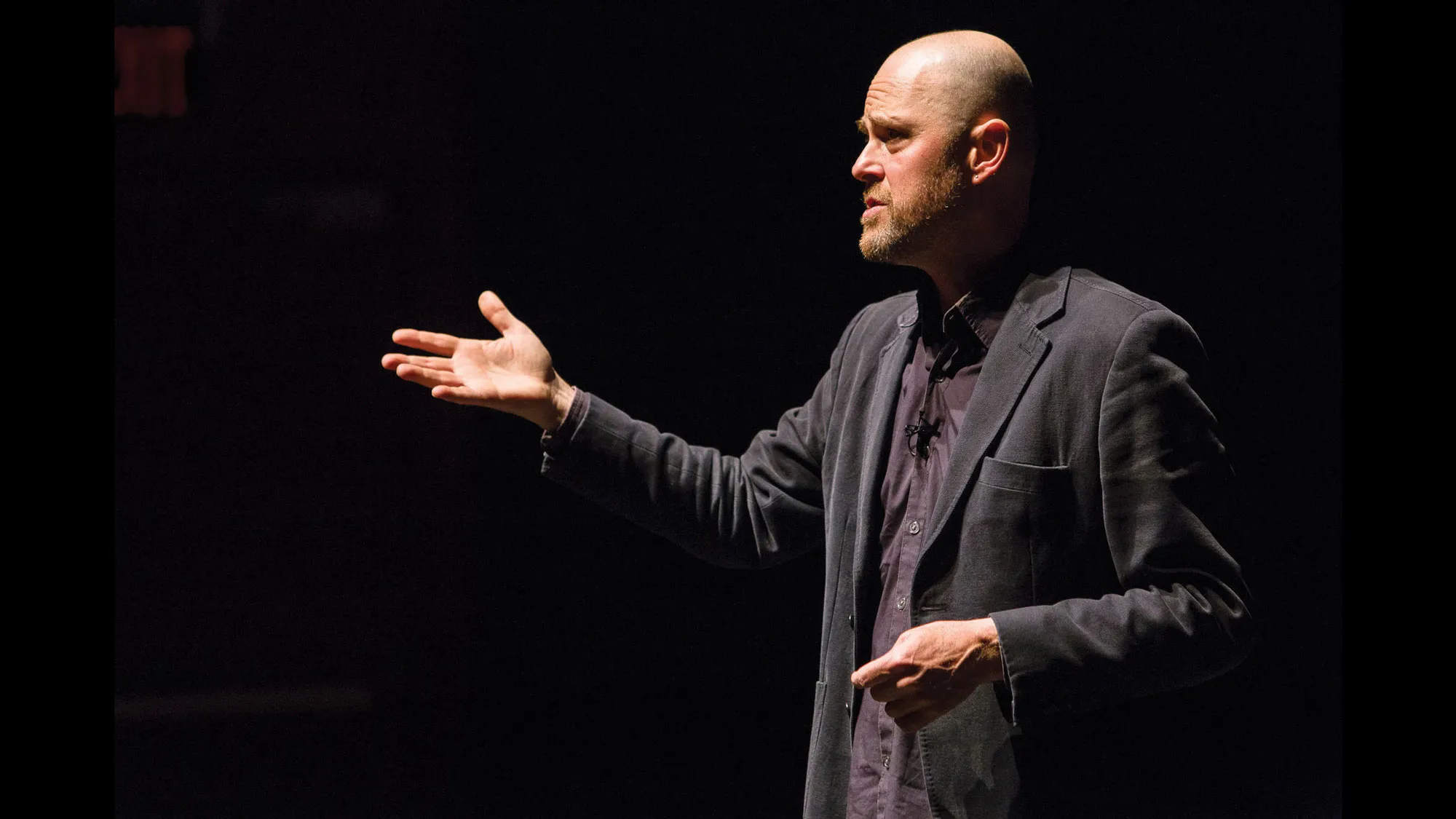
Alva Noë

See Me if You Can! Art and the Limits of Neuroscience

New ways of thinking about the nature of visual consciousness allow us to reconsider art and its place in our lives. In this talk, Alva Noë, a leading figure in cognitive science, argued that art is philosophical and philosophy is aesthetic. Against this background, there are new possibilities for understanding what it is to be a person, asking if our experience of the world stems from the firing of neurons in our brains or from our interactions with our surroundings. 

Noë is a writer and a philosopher who works on the nature of mind and human experience. He is the author of Action in Perception (MIT Press, 2004) and Varieties of Presence (Harvard University Press, 2012). Noë is a professor of philosophy at the University of California, Berkeley, where he is also a member of the Institute for Cognitive and Brain Sciences and the Center for New Media. Noë is a 2012 recipient of a Guggenheim fellowship, and is a weekly contributor to National Public Radio’s science blog 13.7: Cosmos and Culture.

Observer Effects offered a dialogue between the fields of art and science. The title was derived from the principle in physics that the act of observation transforms the observed, an idea that has been influential in philosophy, aesthetics, psychology, and politics.

Main Image: Alva Noë in the theater in 2013. Photo: EMPAC/Rensselaer.

Media

Peter Evans Quintet

One of the most beguiling experimental jazz groups working, the Peter Evans Quintet contorts traditional jazz idioms with European avant-garde structures. Their music comes alive with complex rhythms, pinpoint virtuosity, and surprising techniques of prolongation. Evans and his ensemble performed at EMPAC while they were in residence recording material for their next album. Evans is a trumpet player and composer based in New York City who works across a wide spectrum of contemporary music practices. In addition to touring internationally with the quintet since 2009, he has formed collaborative groups with other composers and improvisers (Pulverize the Sound, Rocket Science) and performed music by both new and established composers. As a trumpet player, Evans has been steadily working to broaden the expressive vocabulary of the instrument for both solo and group contexts. In 2011 he established his More is More label and has released several recordings of his music.

Next to Focus

Maria Kefirova, Martin Messier, and Miguel Melgares

Next to Focus was an interactive performance/installation where a performer actively produces or relocates the sound, and at the same time, is driven and mobilized by it. It seeks to create a physical experience in which the Cartesian dichotomy between significance and signifier is challenged. The collaborators—choreographer Maria Kefirova, visual artist Miguel A. Melgares, and composer and sound designer Martin Messier—worked at EMPAC on choreographing movement of sound in relation to the performers’ body and static objects. A large-scale ceiling truss allowed rigging of multiple hanging speakers and objects—rocks—that could be swung and choreographed. The artists worked on the design and programming of surround lighting to cast shadows from the swinging motion of the rocks.

Miguel Angel Melgares is a visual-performance artist based in Amsterdam, whose work incorporates performance, installation, films, photography and site-specific interventions. Bulgarian born, Maria Kefirova settled in Montréal in 1992. Working as a performer, she has developed a distinct choreographic practice that merges dance, theater, performance, and video. Martin Messier is a composer, performance artist, and videographer who explores the relationship between electroacoustic music and other art forms.

Image
A woman draped in white slime standing in front of a spindle of plastic sheeting speaking theatrically to a white bobble head dog.

Inflatable Frankenstein

Radiohole

Inspired by meditations on horror films, the work of Antonin Artaud, and Ardunio open-source electronics, Radiohole’s Inflatable Frankenstein is a visually and sonically driven performance based on Mary Shelley’s early life and her novel Frankenstein. Arising from a world of gods and monsters (and thousands of Walmart and Price Chopper grocery bags) is a desecration too terrible to behold and too beautiful to turn away from, leading to an improbable question: what is it like to be a metaphor for everything? 

Radiohole is a Brooklyn-based performance collective founded in 1998 by Erin Douglass, Eric Dyer, Maggie Hoffman, and Scott Halvorsen Gillette. At the heart of the company’s ethic is collaboration and play. Their cut-up techniques, rich object-oriented visual sense, amplified, sampled sound, and raw, energetic performance style owe as much to the punk and new wave movements of the 1970s and ’80s as they do to any formal theatrical tradition.

Main Image: Production still from Inflatable Frankenstein in Studio 1, 2013. Photo: EMPAC/Rensselaer.

Media
Image
Greg Moynahan

Greg Moynahan

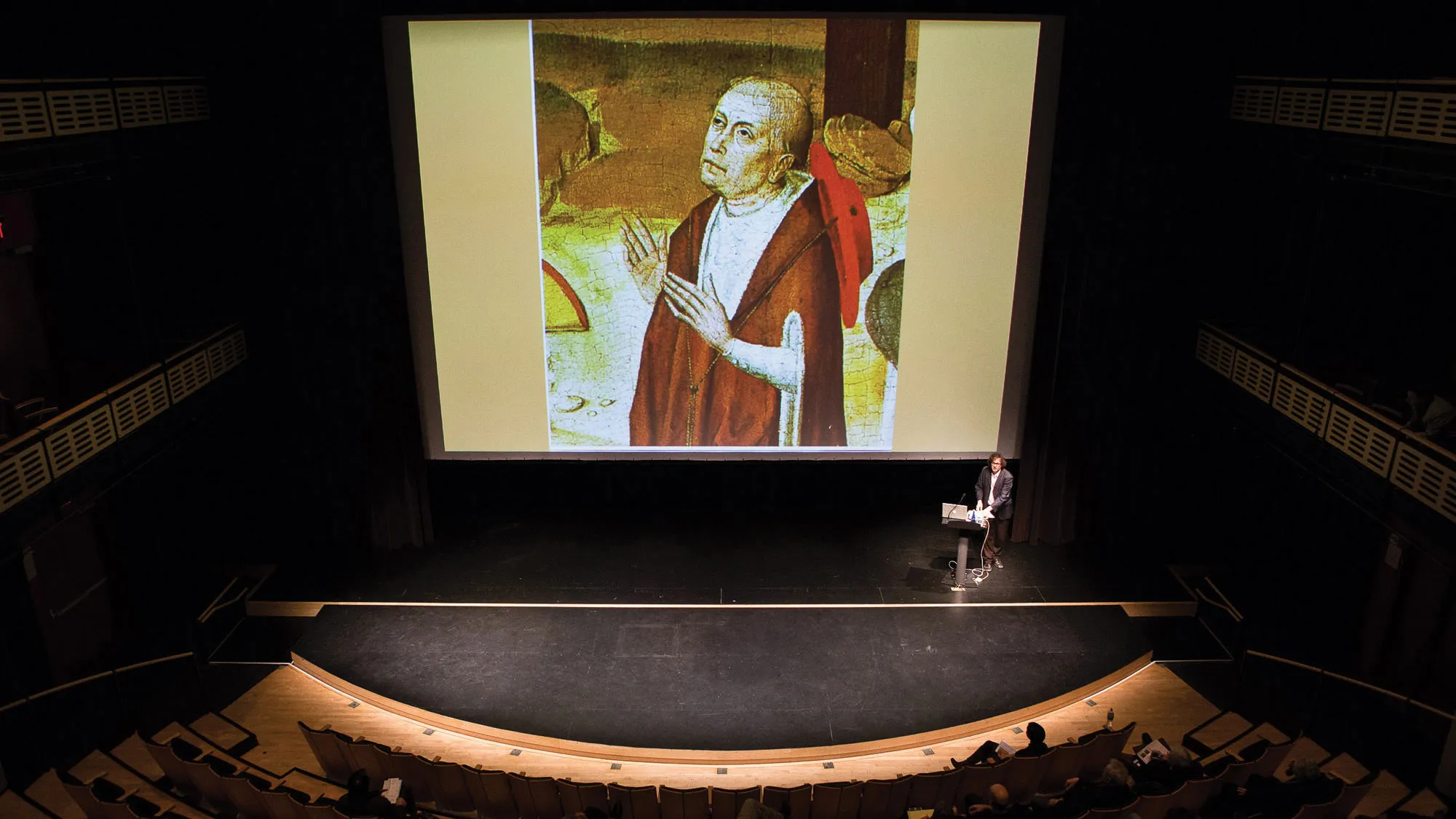
Experience and Experiment in Early Modern Europe

Greg Moynahan addressed the rise of scientific experimentation and its relation to experimentation in the arts. He considered the early history of both through their common location in collections and museums, suggesting that the appearance of the problem of infinity in natural philosophy was important for the modern relationship between scientific and artistic experimentation. The talk focused on thinkers such as Nicholas of Cusa and Gottfried Leibniz. 

Moynahan has taught in the history and science, technology, and society (STS) programs at Bard College since 2001. He specializes in modern European intellectual and cultural history and the history of technology, and his research interests include the history of theoretical biology, systems theory, and “scientific” racism and political history of computing and cybernetics in the two Germanys. His book, Force and Form: Ernst Cassirer and the Critical Science of Germany, 1902-1919, was published by Anthem Press (London) in 2013.

Observer Effects offered a dialogue between the fields of art and science. The title was derived from the principle in physics that the act of observation transforms the observed, an idea   psychology, and politics.

Main Image: Greg Moynahan on the theater stage in 2013. Photo: EMPAC/Rensselaer.

Image
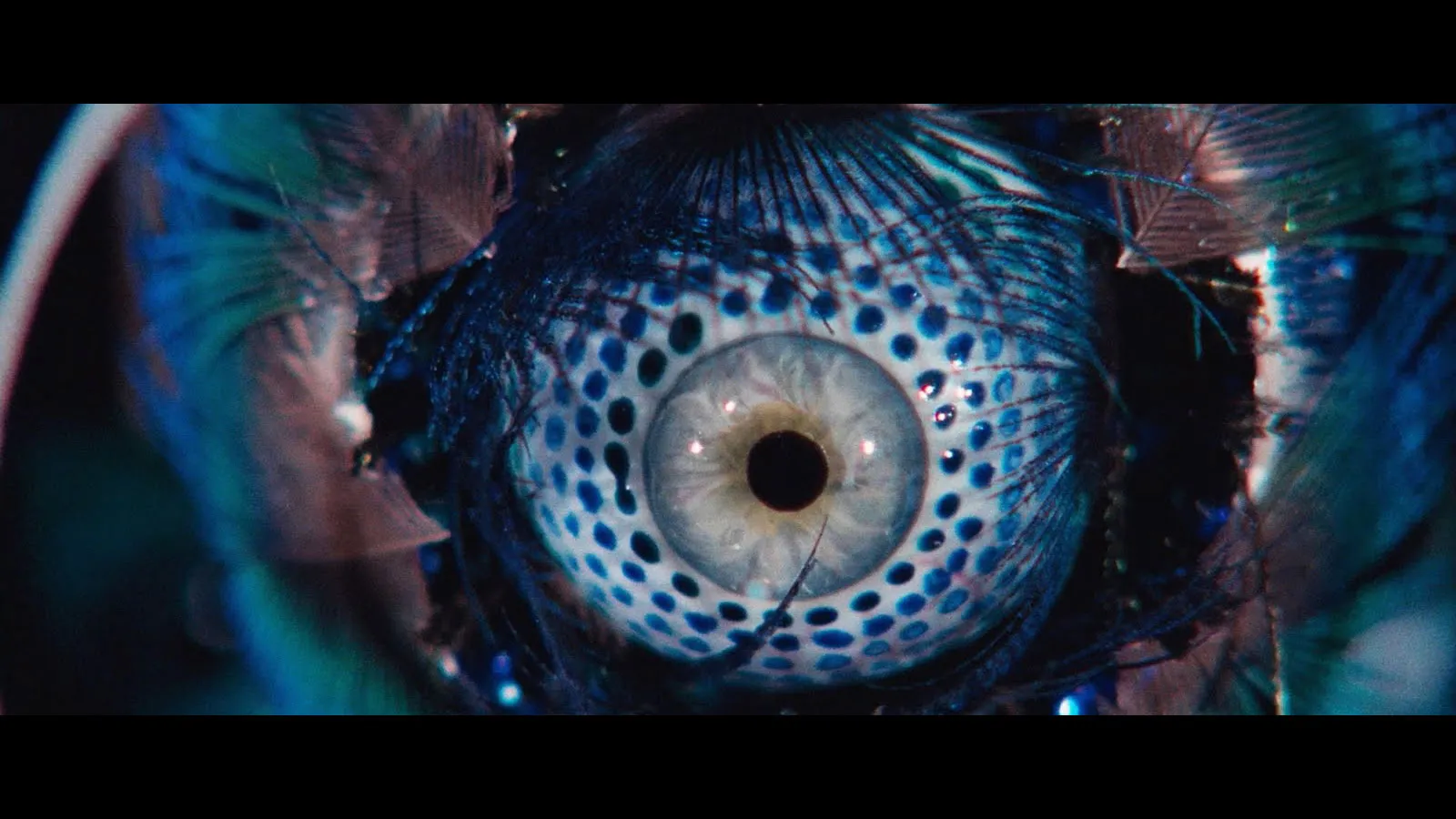
An unclose image of a blue eyeball with royal blue dots in what would be the white of the eye, surrounded by blue and brown feathers.

Holy Mountain

Directed by Alejandro Jodorowsky

Jodorowsky’s Holy Mountain sparked a riot at its premiere at the Cannes Film Festival in 1973 and has been the source of controversy ever since. The film creates an uncompromising vision of the rituals and power of religion and Western desires for Eastern spirituality through beautiful, fantastic, and visceral images. Inspired by St. John of the Cross’ Ascent of Mount Carmel and René Daumal’s Mount Analogue, it depicts a group of individuals on a quest for enlightenment and immortality through a journey to a holy mountain that is said to unite heaven and earth.

Shadow Play is a series of films that tread nimbly between reality and illusion, acknowledging the artificial nature of cinema. Referencing the tradition of shadow puppetry, the origins of cinema in phantasmagoria, and Plato’s Allegory of the Cave, each film draws on the metaphors of light as reality and shadow as artifice. In Plato’s The Republic, the allegory of the cave illustrates the difference between truth and illusion. Many writers have noted that Allegory of the Cave (written c. 360 BCE), bears great resemblance to the contemporary movie theater.

Main Image: Film still from Holy Mountain (1973).

Hot Box

Brian Rogers / The Chocolate Factory

Hot Box draws inspiration from a cinematic vocabulary—pans, zooms, cuts, etc.—while attempting to find a sustained stillness in an uncomfortable environment. Inspired by films like Apocalypse Now and Fitzcarraldo, it is a live performance that is violent and chaotic; and from that chaos arises a sequence of video images that are quiet, sustained, focused, and organized. Conceived, directed, and performed by Brian Rogers, Hot Box is a companion piece to his Bessie-nominated 2010 performance Selective Memory. Where Selective Memory was extremely clean and minimalist in its approach, Hot Box is noisy and messy. 

Rogers is a director, video artist, co-founder, and artistic director of the Chocolate Factory Theater in Queens, which supports the creation of theater, dance, music, and multimedia performances. Since 1997, Rogers has conceived and/or directed numerous large-scale performances at the Chocolate Factory and elsewhere.