Image
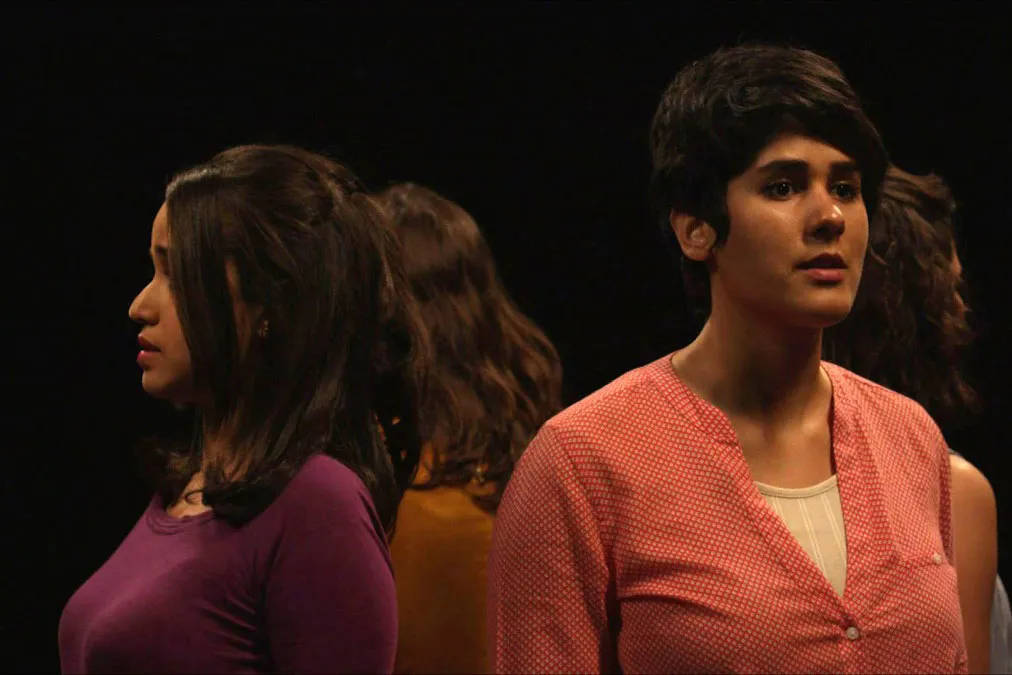
Four woman standing back to back in a circle with two woman facing forward, one with short brown hair and wearing a pink button up shirt and the other with long brown hair, wearing a long sleeved purple shirt.

Other Uses 03

Doa Aly, Yto Barrada, Joan Jonas, Shelly Silver, Ana Vaz, and Joyce Wieland
FILM/VIDEO

The third program in the Other Uses series turns the lens on unseen processes, people, and objects. The motion we see in the works—whether produced through montage, camera movement, or distortion of the recorded image—directly connects the action on screen to the hand of the artist.

PROGRAM
  • Solidarity (1973) Joyce Wieland
  • Beau Geste (2010) Yto Barrada
  • Ha Terra! (2016) Ana Vaz
  • April 2nd (1994) Shelly Silver
  • Vertical Roll (1972) Joan Jonas
  • Hysterical Choir of the Frightened (2014) Doa Aly

Main Image: Doa Aly. Hysterical Choir of the Frightened, 2014. Courtesy of the artist and Gymsum Gallery, Cairo


Image
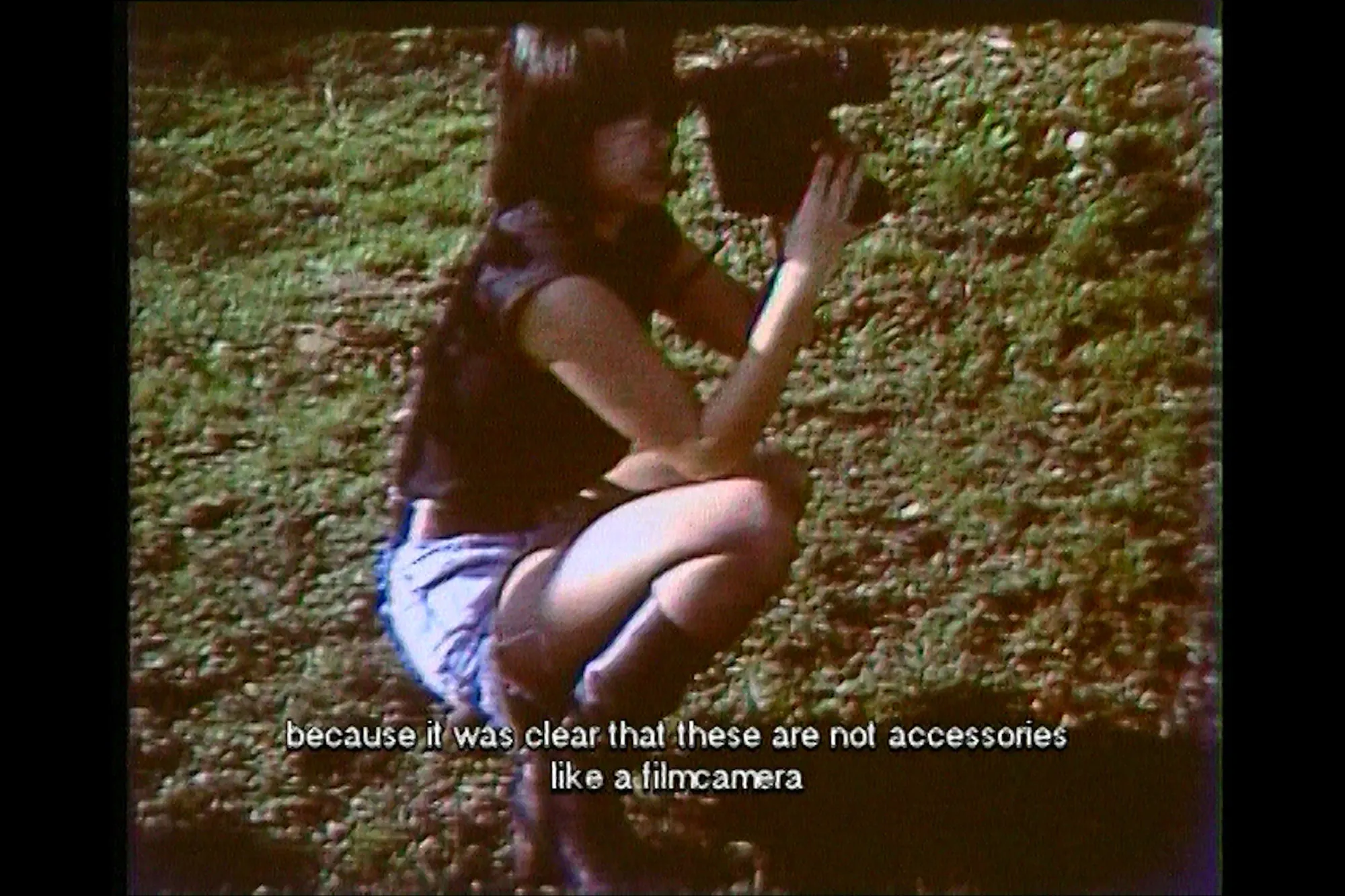
An asian woman wearing a black top and jean shorts squatting in the grass shooting with a VHS camera, Because it was clear that these are not accessories like a film camera.

Other Uses 02

Marwa Arsanios, Morgan Fisher, Mohammad Fauzi, Deimantas Narkevičius, and Hito Steyerl

The films and videos presented in the second program of the Other Uses series complicate the relationship between still and moving images. They foreground how images are produced in order to reveal obscured narratives and the way that photographic representations are captured and circulated.

PROGRAM

  • Production Stills (1970) Morgan Fisher
  • Have You Ever Killed a Bear? or Becoming Jamila (2013–14) Marwa Arsanios
  • November (2004) Hito Steyerl
  • 20 July 2015 (2016) Deimantas Narkevičius
  • The Rain After (2014) Mohammad Fauzi

Main Image: Hito Steyerl. November, 2004. DV, single channel, sound, 25 min. Image CC 4.0 Hito Steyerl. Courtesy the artist and Andrew Kreps, New York.

Image
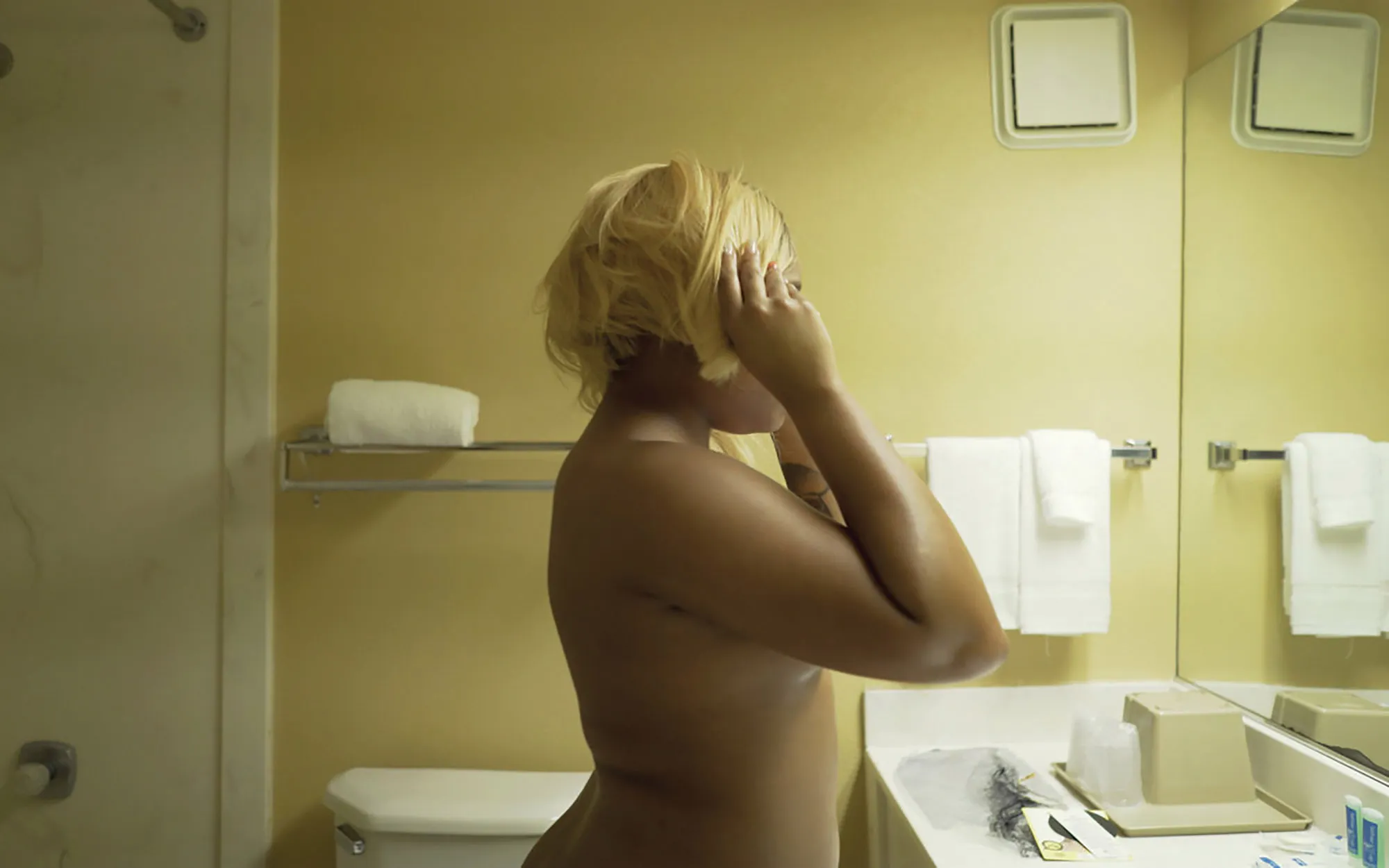
A nude Black woman adjusts a blonde bob wig in the mirror of a bathroom with yellow walls.

Other Uses 01: Incense, Sweaters, and Ice

Martine Syms

On the final night of her installation, Los Angeles-based artist Martine Syms will screen her new feature-length video, Incense, Sweaters, and Ice.

Incense, Sweaters, and Ice follows three protagonists, Mrs. Queen Esther Bernetta White, Girl, and WB (“whiteboy”). Through Hollywood film tropes as well as the visual language of social media video platforms like Vine and Instagram, Syms follows in a long cinematic history of using camera motion to create the illusion of subjectivity. Intertwining technique and narrative, the video drives at the tension between surveillance and self-promotion that pervades our many avenues of self-documentation and broadcast.

Shot in locations that reflect the route of the Great Migration (Los Angeles, Chicago, and Clarksdale, Miss.), the video employs distinct camera techniques to foreground the camera itself as a central character. Each scene marks a shift of viewpoint in relationship to the action, illustrating the impossibility for the camera’s gaze to be neutral. We watch as Girl gets ready, waits, kills time, and flirts. In each instance, the camera switches personas and performs a different role: as the boyfriend, the audience, the surveillance camera, the documentary maker, the director.

The camera is recast again as Girl relaxes reading in the apartment. A wide, fixed frame transports us to the family dinner and surveils her hotel room as she gets ready. Text messages periodically disrupt the onscreen action to reveal her digital interactions with another screen, her smartphone.

Although shot primarily on-location, Incense, Sweaters, and Ice includes interludes by Queen White, which were filmed at EMPAC and woven into the episodic structure of the film. This screening will mark the closing of Syms’ related installation An Evening with Queen White, presented at EMPAC Aug. 21—Sept. 6, 2017.

Main Image: Martine Syms Incense Sweaters and Ice (2017). Video still courtesy the artist.
Incomplt

Etienne Chambaud

French artist Etienne Chambaud was in residence in the theater to use an automated, motion- controlled camera rig to film a complex series of sets and scenarios for his moving image work, INCOMPLT.

The footage was incorporated into a feature- length film shot on-location in New York and Mexico.

Image
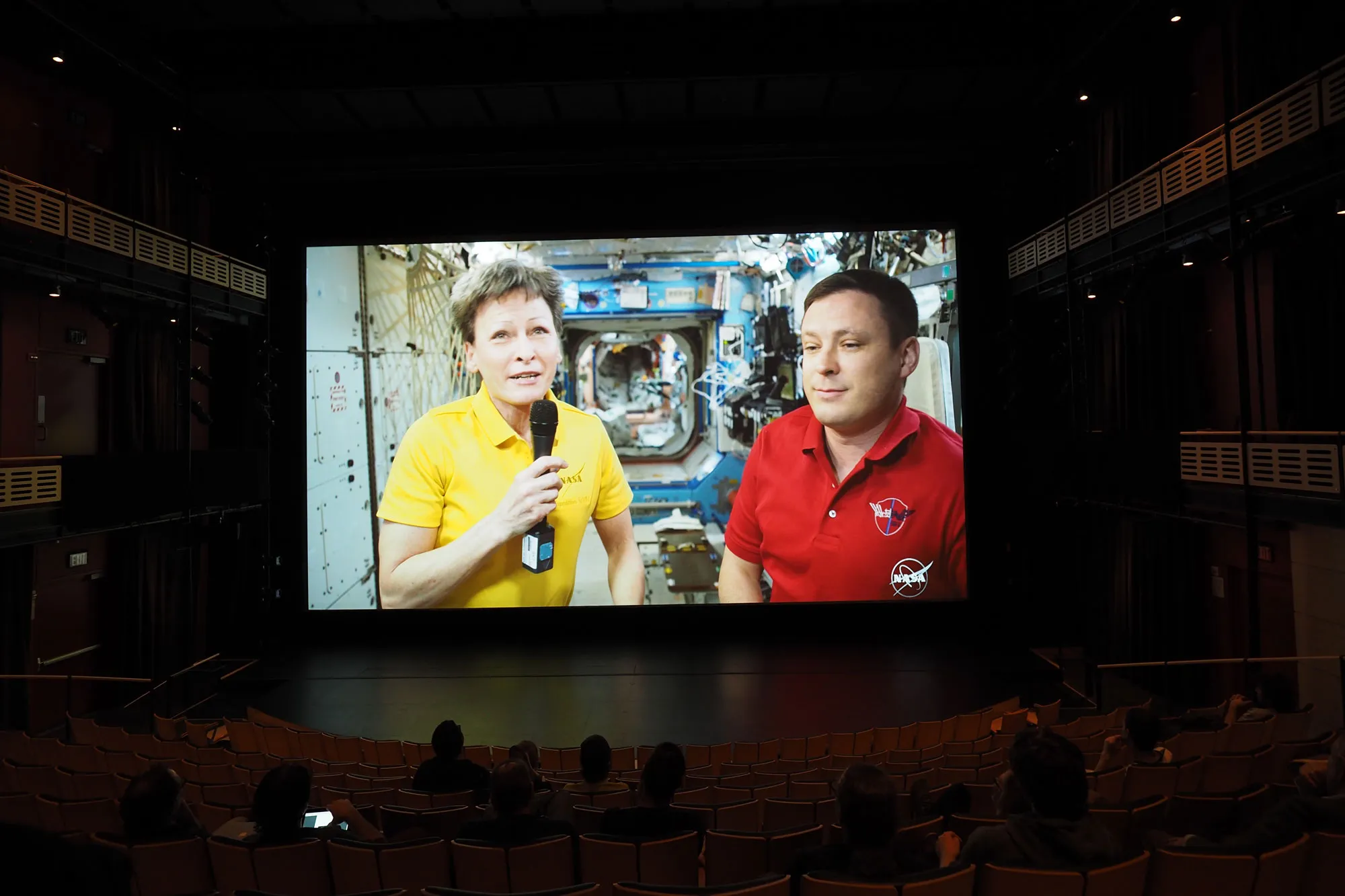
A female astronaut in a yellow polo holding a microphone and a male astronaut in a red polo talking via livestream to a silhouetted crowd.

NASA @ EMPAC

The First Live 4K Video Stream from the International Space Station

You are invited to witness NASA’s first 4K video stream from the International Space Station live in EMPAC’s Theater. The EMPAC Theater and Concert Hall recently got upgraded with two of the highest-quality video projectors currently available, the Christie Mirage 304K. Capable of projecting 3D and 4K (four times the resolution of HD) with a 30,000-lumen output, these projectors are some of the few capable of properly presenting the NASA stream.

During the live broadcast, NASA astronaut and Expedition 51 commander Peggy Whitson will speak with a panel of experts on the subject of “how advanced imaging and cloud technologies are taking scientific research and filmmaking to the next level.” Panelists include NASA astronaut Tracy Caldwell Tyson, NASA Imagery Expert program manager Rodney Grubbs, virtual and augmented reality expert Bernadette McDaid, AWS Elemental engineer Khawaja Shams, and Dave McQueeney of the IBM Watson Group.

Main Image: NASA astronauts livestreamed into the theater in 2017. Photo: Mick Bello/EMPAC.  

Everybody talks about the weather, we don't

Boudry / Lorenz

Berlin-based artists Pauline Boudry and Renate Lorenz were in residence at EMPAC to produce a moving-image work with a structure that combined three choreographic approaches: an instructional score by Pauline Oliveros, a 1968 text by revolutionary Ulrike Meinhof that calls for a transition from protest to resistance, and remote-control “carts” developed by Bell Labs with choreographer Deborah Hay for the 9 Evenings: Theater and Engineering performances in New York in 1966.

Everybody talks about the weather, we don’t (a working title borrowed from a Meinhof essay) was performed by five “carts” (produced at EMPAC), theatrical light, haze, a mobile camera operated by Bernadette Paassen, and artists MPA, Ginger Brooks Takahashi, Werner Hirsch, and Marwa Arsanios.

By taking cues from historically subversive actions and artworks, the artists’ films and installations disrupt historical narratives in order to renew the power of radical artworks. By subverting the original context, Boudry/Lorenz reactivate these works through the interaction of the technical (the theatrical and filmic apparatus of media production) and the performative (the current generation of artists, choreographers, and musicians) to underscore how the refusal of a fixed or normative identity is still an urgent political act.

Boudry / Lorenz have been working together since 2007. Their staged films and film installa- tions often start with a song, a picture, a film, or a script from the past. They produce perfor- mances for the camera, staging the actions of individuals and groups living—indeed thriving— in defiance of normality, law, and economics. Their films upset normative historical narratives, as figures from across time are staged, projected, and layered. These performers are themselves choreographers, artists, and musicians, with whom Boudry and Lorenz engage in a long-term conversation about performance, the meaning of visibility since early modernity, the patholo- gization of bodies, and also about glamour and resistance.

Modern Living

Gerard & Kelly

Modern Living is a multi-chapter project by choreographers Gerard & Kelly made in collaboration with L.A. Dance Project to explore themes of queer intimacy and domestic space within legacies of modernist architecture. The project began as two site-specific dance performances, which the duo then took to EMPAC to translate into a gallery installation integrating architectural forms and video projection. This work-in-progress presentation took audiences behind the scenes of Modern Living.

In 2016, Gerard & Kelly choreographed nine dancers in performances at the landmark Schindler House in West Hollywood, CA, the site of an early experiment in communal living, and Philip Johnson’s Glass House in New Canaan, CT, where the architect and his partner David Whitney lived for over 40 years. The performances investigated the livability of queer space—its pleasures, tensions, and impossibilities—and were filmed for the next iteration of the project. Gerard & Kelly were in residence with their technical and artistic collaborators to build the installation to scale, experimenting with architecture, projection mapping, and sound.

Brennan Gerard and Ryan Kelly have collabo- rated since 2003 to create installations and performances interrogating the formation of the couple and exploring the critical potential of intimacy. Driven by an inquiry of their own partnership, the duo uses choreography, lan- guage, video, and sculpture to address questions of sexuality, memory, and the formation of queer consciousness.

Image
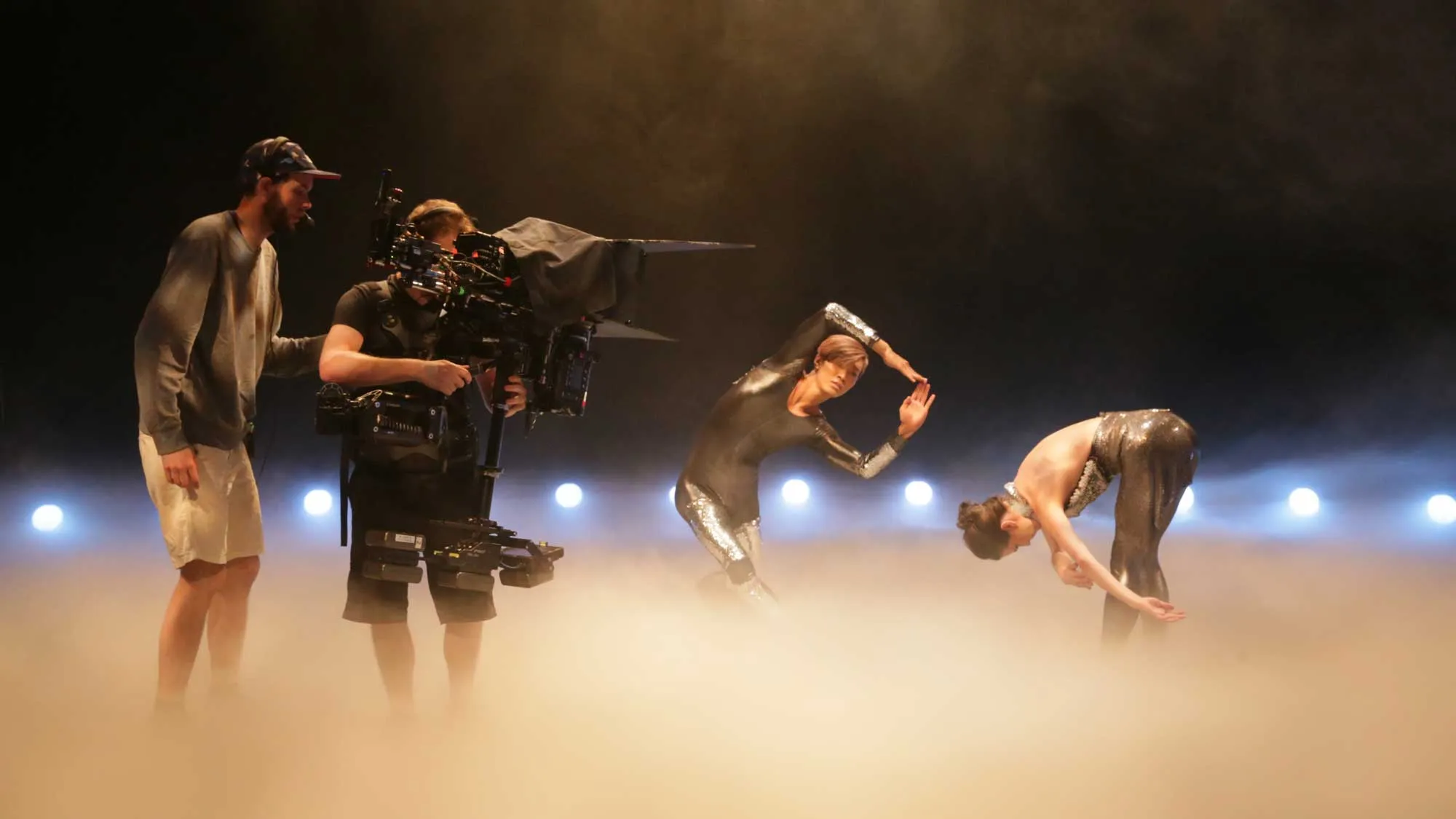
Two camera operators shooting two dancers wearing silver unitards standing in a sea of theatrical fog.

Tesseract

Charles Atlas, Rashaun Mitchell, and Silas Riener

Tesseract, by artist Charles Atlas and choreographers Rashaun Mitchell and Silas Riener, was presented for the first time over two nights following several years of development at EMPAC.

The show commenced with the world premiere of the stereoscopic 3D video Tesseract ▢. A six-chapter work of science fiction, it was Atlas’ first “dance video” in over a decade. Filmed with a mobile camera rig that moves with the choreography, Tesseract ▢ traverses a series of hybrid and imagined worlds staged and filmed over a series of EMPAC production residencies. Each chapter combines a specific set, choreography, and camera motion to encompass pas de deux and ensemble pieces, choreographed and performed by former Merce Cunningham dancers Mitchell and Riener. Manipulating the 3D footage to combine live dance with animation, Atlas’ distinctive video effects reach into otherworldly dimensions beyond the stage.

For the second part of the show, Tesseract ◯ expands the view from film frame to proscenium stage. A performance for six dancers and multiple mobile cameras—the footage of which Atlas manipulated in real-time and projected back onto the stage—Tesseract ◯ superimposes the space of dance with live cinematic production, rendering a choreographic analogue to the four-dimensional cube from which the piece takes its title.

Image
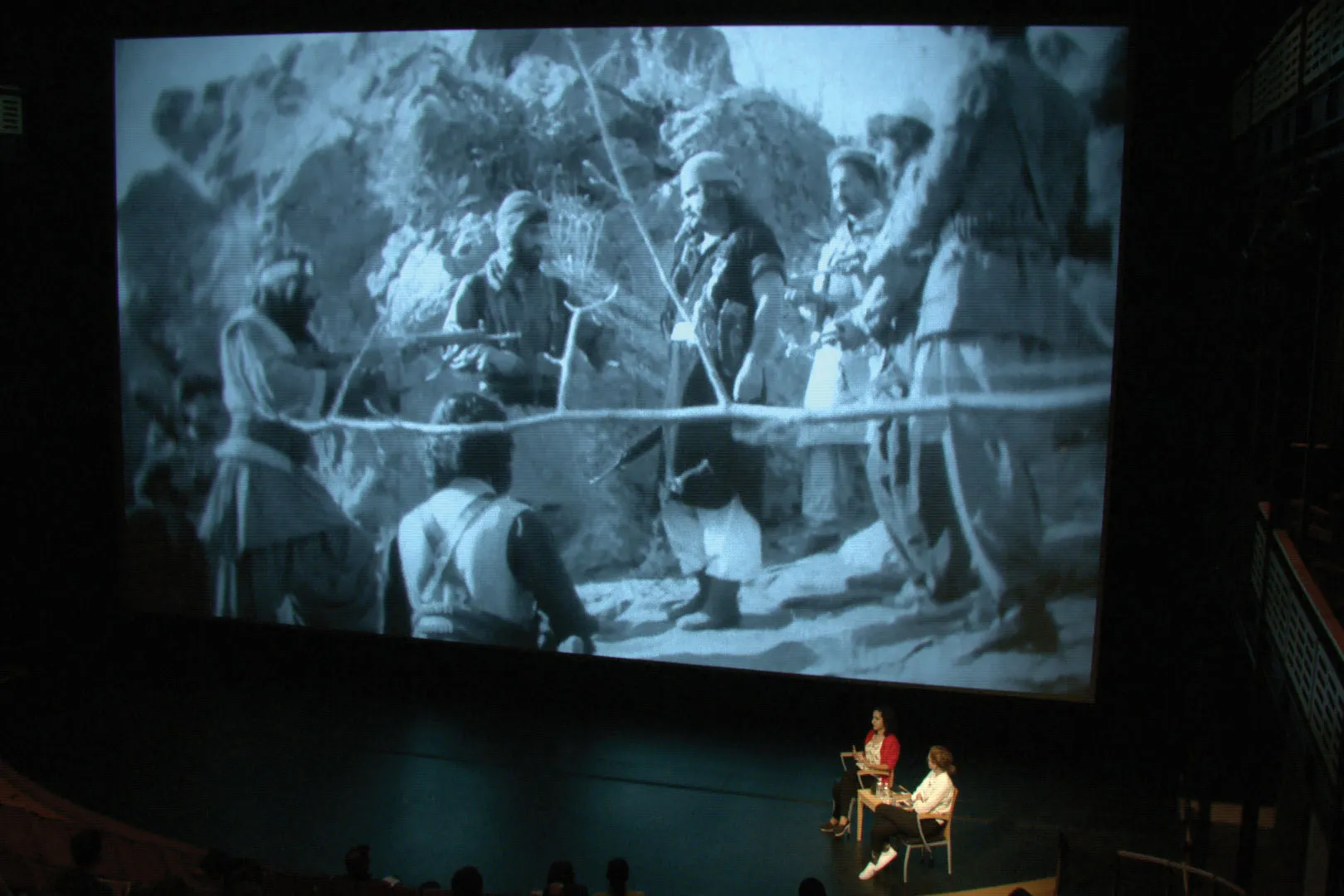
miriam ghani and Vic Brooks on stage in front of a large projection of an Afghan film.

What we Left Unfinished

Mariam Ghani

Mariam Ghani introduced several films from the Afghan Film Archive—the state film institute based in Kabul, Afghanistan—as part of her ongoing research project What we Left Unfinished. The New York-based artist also screened her own in-progress film, which explores five unfinished feature films that were made between 1978-1991, during the years of Afghan Communism. These films and her archival research gesture towards the possibility of reconstructing hidden and parallel narratives that draw on both what the images of state propaganda tell us about the political and social upheaval during a specific moment in time, and the day-to-day lived experience of the Afghan Film Archive’s management, film directors, and governmental players during this period. 

“In the research project What we Left Unfinished, I will be looking for some of these unfinished films and the people who made them, trying to decipher, from the gaps between what was finished and unfinished, some clue to the gaps between how the Afghan Left imagined its re-invention of the state and how that project went so terribly wrong—the gaps between revolution, reconciliation, and dissolution […] What, then, is the task of an artist in an archive, as she balances between the roles of archivist, historian, translator, and narrator? Perhaps it is to understand which of the archive's preserved pasts relate to the present moment of danger, and find a way to translate and narrate that past into the present, not casually, not haphazardly, and not nostalgically, but just when and where it is most needed.” —Mariam Ghani, “Field Notes for What we Left Unfinished,” IBRAAZ (June-September 2013)

Mariam Ghani’s work spans video, installation, performance, photography, and writing, and frequently turns on memory, history, language, loss and reconstruction. Ghani’s projects often engage with places, ideas, or institutions over long periods of time, and she maintains several long-standing collaborations: the experimental archive Index of the Disappeared (with Chitra Ganesh, since 2004), the video series Performed Places (with choreographer Erin Kelly and composer Qasim Naqvi, since 2006), and the Afghan Films online archive (with Pad.ma, since 2012). 

Watering the Flowers was a year-long screening program. Each evening focused on a recent film or video by an EMPAC-affiliated artist, and was succeeded by a program of other shorts or features that were influential in the making of their work, whether fiction or documentary, experimental or commercial.

Main Image: Miriam Ghani and curator Vic Brooks on the Theater stage in 2017 during her screening and talk. Photo: EMPAC.