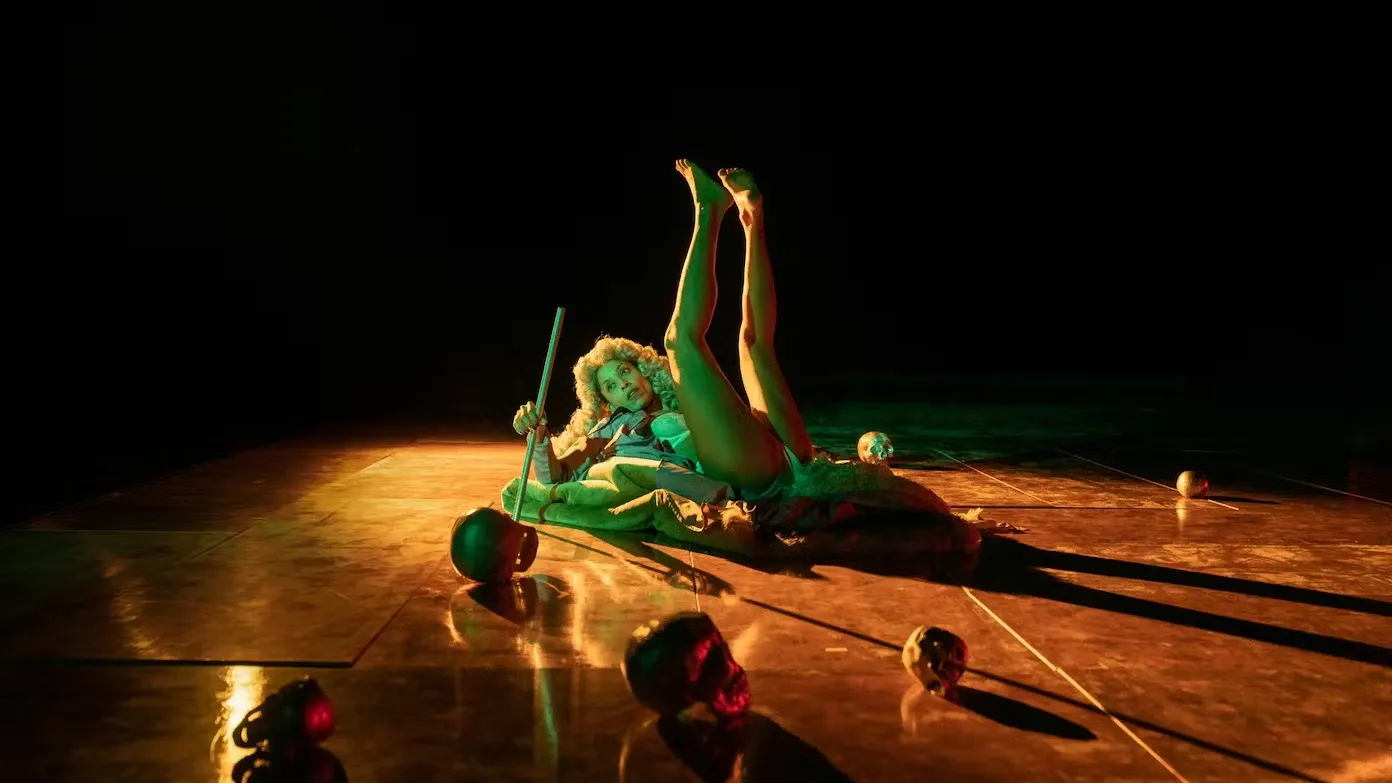
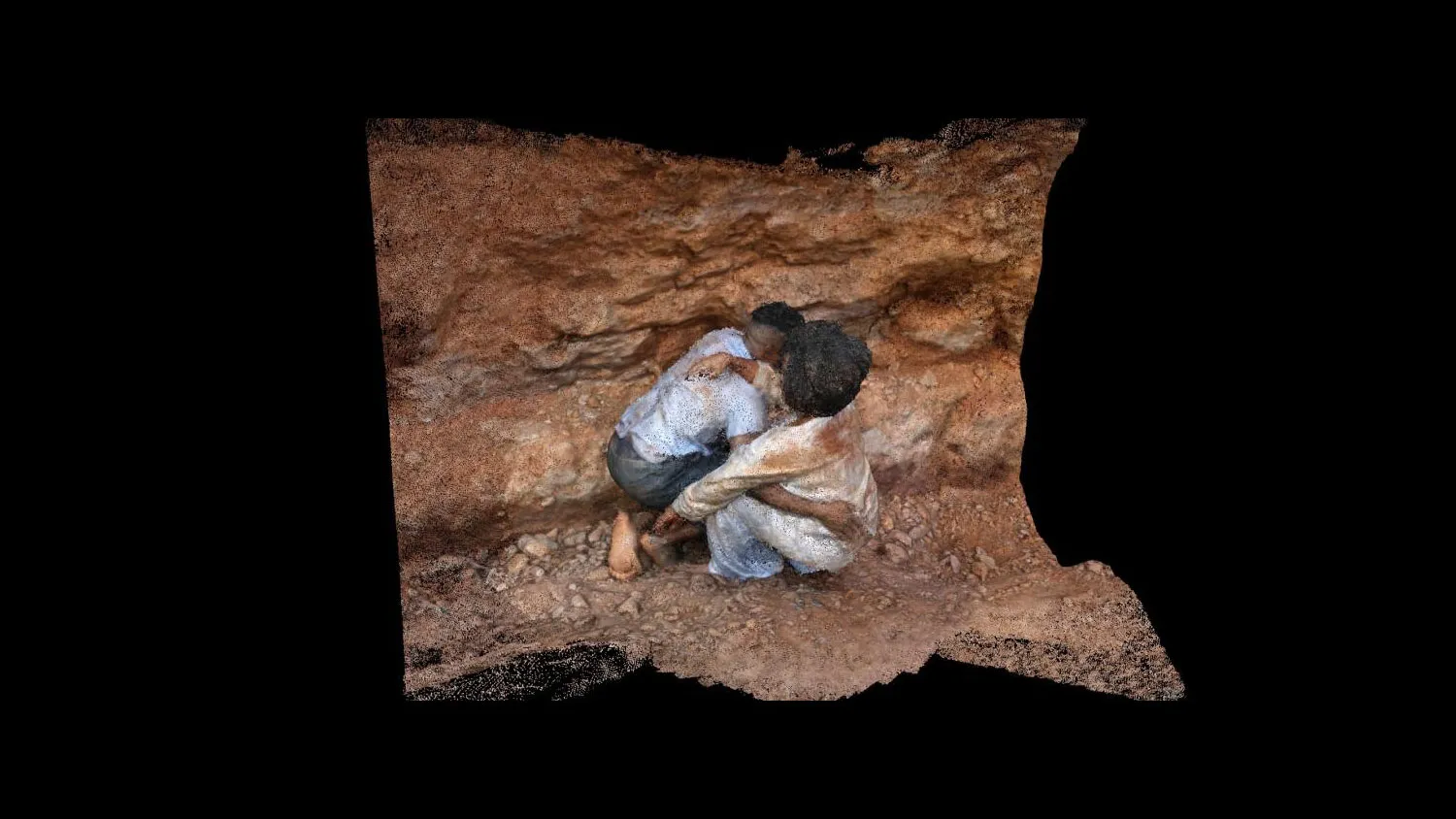
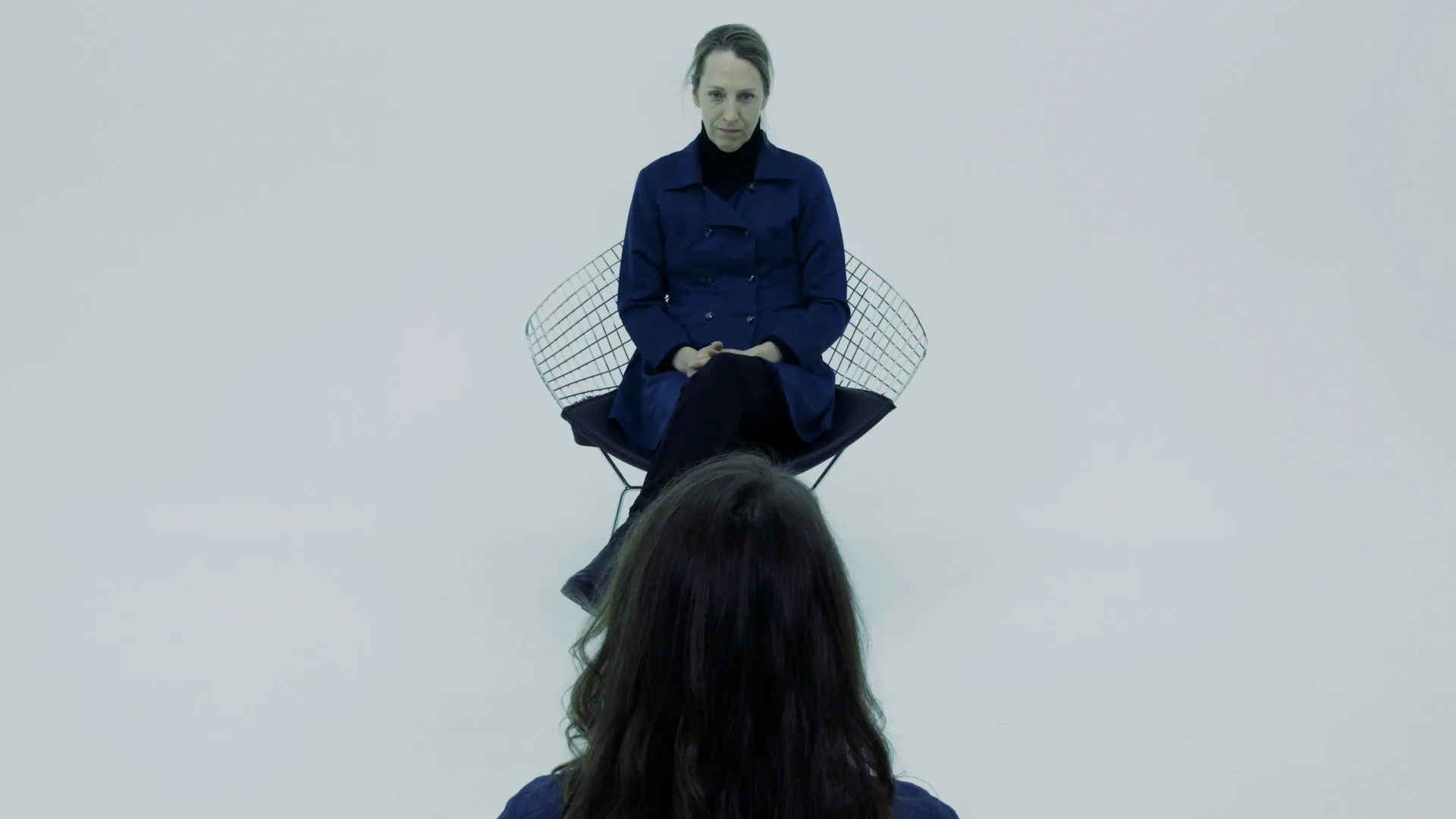
Space Carcasses is a new work-in-progress dance performance by Onye Ozuzu that explores how architectures haunt the body and impart their histories to us as physical effects. Throughout their EMPAC residency, Ozuzu and her collaborators will develop a virtual space that blends digital residues of different sites along the historical transatlantic slave trade (from Savannah, Georgia; Reunion Island in France; and Northern Nigeria). Drawing from movement scores and data Ozuzu developed on location, the residency will explore how the work’s “space carcasses” enable the body to extend itself into these complex and emotionally intense environments. Space Carcasses combines its virtual set with audiovisual traces, which were recorded from performers’ dancing bodies as they interfaced with present-day buildings in the research sites. As skin, container, exoskeleton, or mask, Space Carcasses’s layered scenes forge a composite site that can both record and re-contextualize Afrodiasporic relationships to place.
Ozuzu’s Space Carcasses is inspired by Africanist, circular conceptions of time and expands on these traditions to enable connections to a communal self and to ancestors. Ozuzu situates the body as a technology with the power to access different moments across collective experience. Space Carcasses is performed in an architectural corner created within EMPAC’s Studio 1, which also functions as a projection surface. Large-scale video projections will trail and replay live dancer’s movements in real-time, and a sound dancer will be created from EMPAC’s spatialization sound technology.
Work-in-progress events offer a window into the research, development, and production of new works by artists in residence at EMPAC. These free events open up a dialogue between our audiences, artists, and EMPAC staff.
Main Image: Production still: Onye Ozuzu, Space Carcasses, 2023. Courtesy the artist.
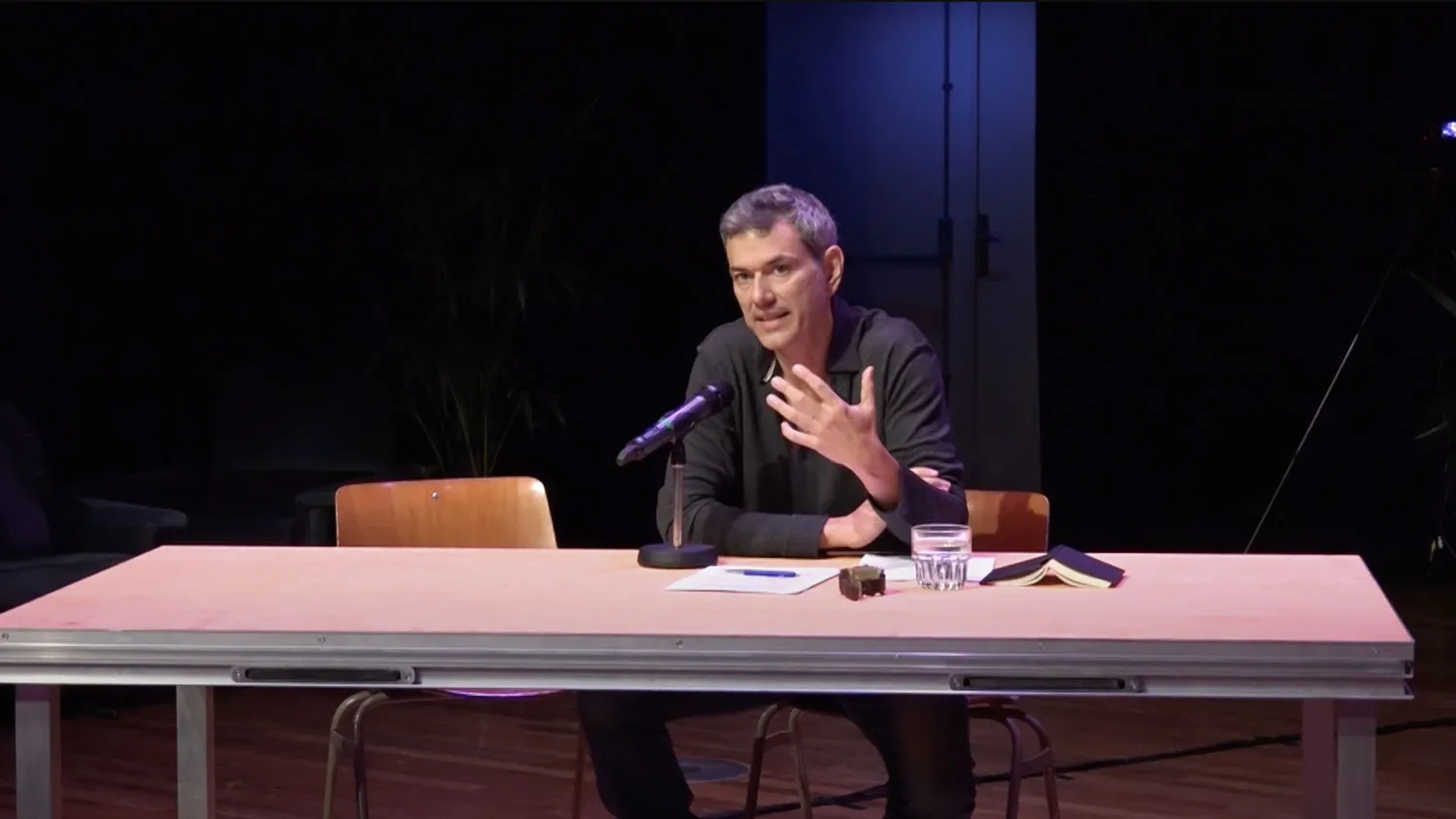
Scholar André Lepecki’s work focuses on what he terms choreopolitics. This term signifies dance and choreographic practices that enable freedom in the social realm. Choreopolitics resists the policing of movement. Its politics is much more than policy in a formal sense. It resists enforced forms of physical circulation, and it extends dancers’ capacity to move against choreography’s disciplinary rules. Lepecki considers how time may be a technology for policing movement, and looks at performances and works that challenge it.
As the speaker writes: “In this talk, movement and time will be addressed as fundamental political substances through which a whole system of dominance over bodies, their actions, and their non-actions has been erected under different names—such as ‘liberal modernity,’ or ‘progress,’ or ‘global capitalism.’ With the help of some recent choreographies and performances—particularly by the Brazilian duo Davi Pontes & Wallace Ferreira, and by the Berlin-based duo Pauline Brody & Renate Lorenz—we will see how current disputes over who owns movement, who has the right to movement, and when should movement take place, may help us rethink (together with the critical theory of Denise Ferreira da Silva, Michelle Wright, and Sylvia Wynter) the very foundations of what we still insist on calling ‘time.’ In short, another title for this talk could simply be: The continuous struggle: towards a choreopolitics without time.” –André Lepecki
All are invited to stay for the public reception following the talk.
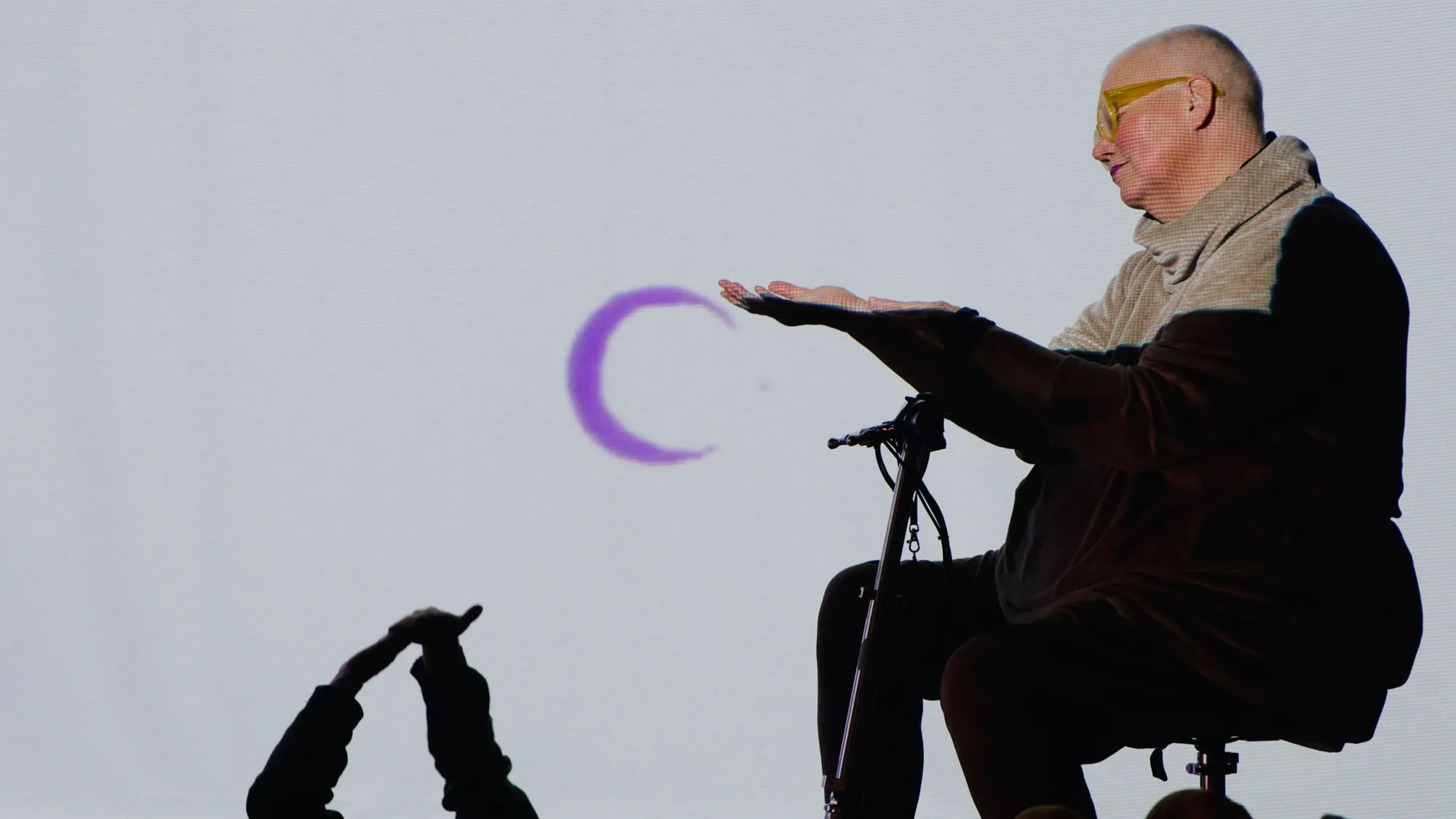
Main Image: Video still from speakers 2015 talkIn the dark.
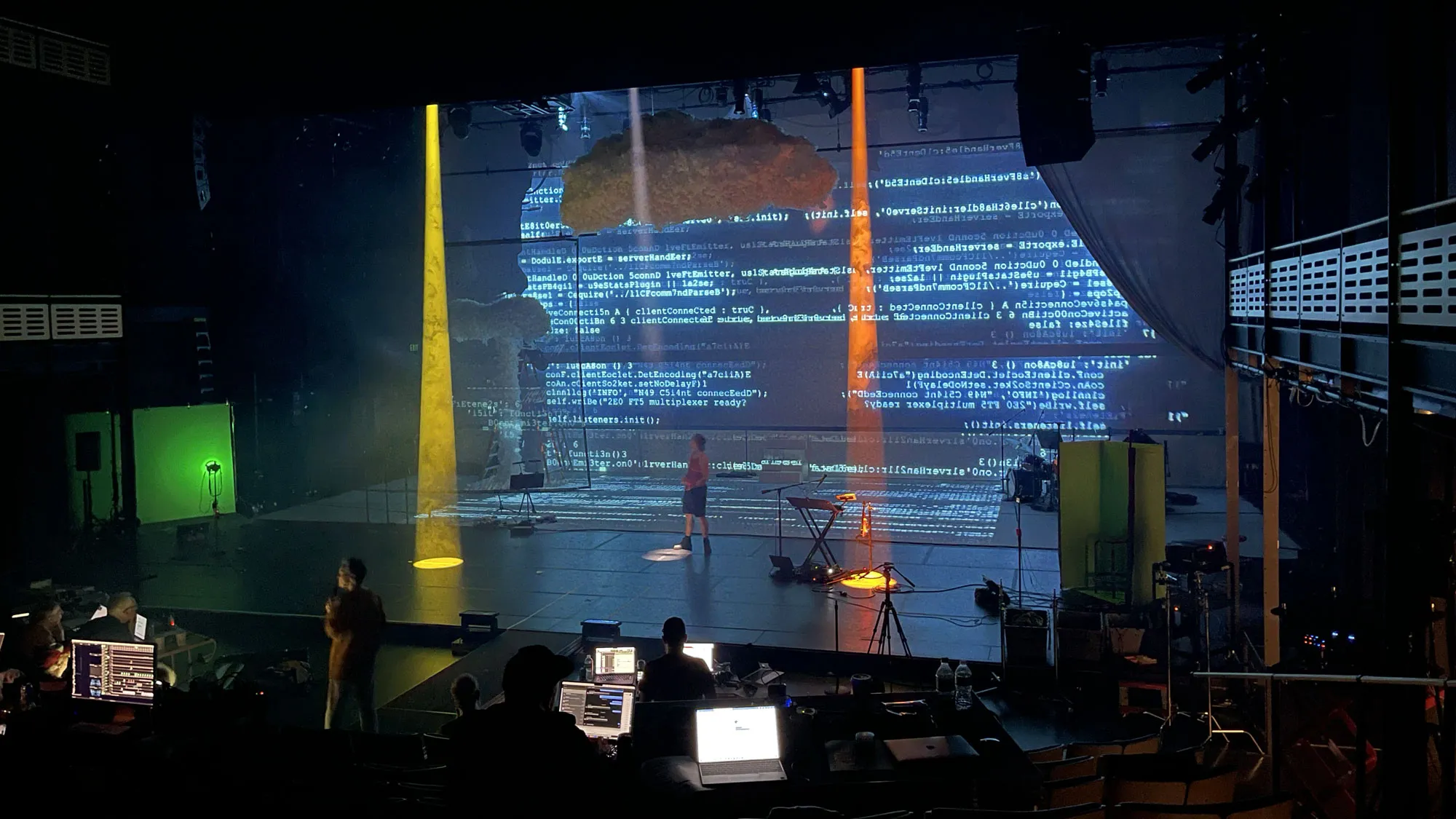
Set to premiere in Manchester in 2024, ARK is an opera starring a host of mythical and contemporary figures. Anderson’s subjects—time, technology, and American history—are warped into a story that sometimes moves backwards. Apocalyptic climate events and information overload set the scenes for these stories, visual poems, and songs.
Laurie Anderson and her team are in the Theater in August for a final production residency for her opera ARK before it premieres in Manchester in November 2024.
Main Image: Production still from ARK in the theater, August 2024. Courtesy the artist. Photo: Shannon K. Johnson/EMPAC.
How can media technologies and live presence help us to think about embodied disabled and mad gestures in and out of the archive? What is an eco soma approach to engaging site, the elements, and time?
The Crip/Mad Archive Dances is a lecture by scholar and artist Petra Kuppers that draws on her prolific research integrating performance and disability studies to address disabled and mad presences in dance archives. The talk at EMPAC is rooted in Kuppers’s book Eco Soma: Pain and Joy in Speculative Performance Encounters (University of Minnesota Press, 2022, open access), parsing what she calls eco soma methods and finding dis/comfort within participatory performances grounded in disability culture. Kuppers discusses the strategies and insights of the performance and archive project Crip/Mad Archive Dances, including a poetic documentary-in-progress.
Content note: some film clips focus on medical incarceration but offer survivor testimonies of artful and agency-full reclamation.
This presentation will include in-person live ASL interpretation. This event will be livestreamed, with live ASL interpretation visible on-screen.
For visitors with mobility concerns, please email John Cook or call 518-276-2822 (voice only) to see how we can best accommodate you in your EMPAC experience.
This is the first of three events with Petra Kuppers, and is followed by two workshops, including a wheelchair procession, to take place on October 12 at The Sanctuary for Independent Media.
Petra Kuppers is a disability culture activist and a community performance artist. Kuppers grounds herself in disability culture methods, and uses somatics, performance, and speculative writing to engage audiences toward more socially just and enjoyable futures. In addition to Kuppers’s scholarly and performance work, she has published three poetry collections including her latest, Gut Botany (Wayne State University Press, 2020).
Kuppers is a 2023 Guggenheim Fellow and a 2022 Dance/USA Fellow. She is artistic director of The Olimpias, an international disability culture collective, and co-creates Turtle Disco, a somatic writing studio, with Stephanie Heit. Kuppers is the Anita Gonzalez Collegiate Professor of Performance Studies and Disability Culture at the University of Michigan, Ann Arbor.
Main Image: Petra Kuppers, Starship Somatics, video still, 2022-2023. Pictured: Petra Kuppers. Courtesy the artist. Image by The Olimpias.
Evidence of Labor uses choreography to complicate the labor ethics of AI, such as ChatGPT, to better recognize how services like these may on the one hand appear to simplify word-ordering and meaning-making, but could have significant social implications for humans and machines. The new EMPAC commissioned performance takes choreographer Michelle Ellsworth and programmer Satchel Spencer’s long standing collaboration into the realm of machine learning, maintenance art, and ontological speculation.
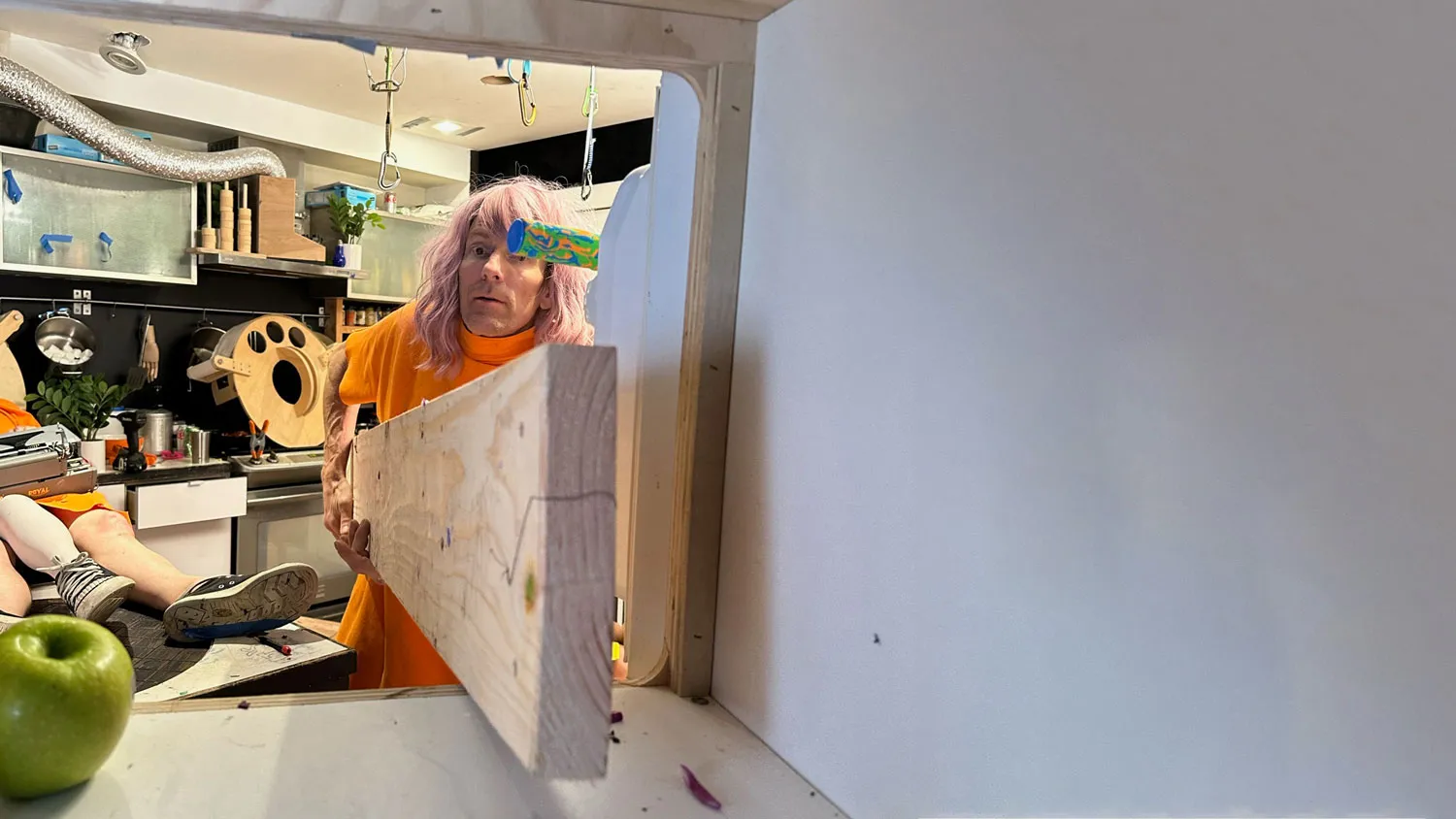
Two dancers act as a neural network and another two build what the artists call a “cellular automata,” referring to a computational model that inspires their choreographic structure, in a kitchen. The work functions simultaneously as a reverse Turing test, a prototype for life After-AI (AA), and a birth canal. Working with dance’s inescapable failure to be documented meaningfully as a stable object, Ellsworth and Spencer use dance’s ephemeral methodologies within the black box theater setting. The performance replaces the labor of AI with choreographed acts of glitch-heavy kitchen hygiene that puts “dancers in latent space and words in a wood oven.”
Evidence of Labor is the sequel to Ellsworth’s Post-Verbal Social Network, and continues to propose that the efforts involved in generating language should match its impact. Following this preview performance at EMPAC, Evidence of Labor premieres at The Chocolate Factory Theater (Long Island City) in November. Initiated at EMPAC in 2020, the commissioned work was developed over the course of three residencies where the artists, their collaborators, and EMPAC production teams experimented with materials, construction, choreographic methods, and programmatic approaches.
Main Image: Michelle Ellsworth and Satchel Spencer, Evidence of Labor: State of the Kitchen, 2023. Pictured (l-r) Michelle Ellsworth, Bruce Miller. Courtesy the artists. Photo: Laura Conway.
This talk and conversation will delve into Alexis Blake’s approach to choreography. Experimentation with olfactory, sonic, and tactile materials figures prominently within Blake’s recent works. Working across the visual arts, performance, and dance, the artist’s choreographic practice plays with movement languages that have been sedimented by social structures and cultural precedents. Her works combine research into historically codified styles and gestures with responsive choreography that attends to dancers’ embodied physicality, building on individual movement languages to develop new pieces.
rock to jolt [ ] stagger to ash, awarded the Netherlands’ 2021 Prix de Rome prize, involves the gradual release of a smell of decay, realized in collaboration with the smell artist and researcher Sissel Tolaas. Blake’s recent project Crack Nerve Boogie Swerve develops from work with the bodily impact of resonance and low-frequency sound. In this new work, resonance stimulates forms of physical breaking: of both a glass scenography in the work, and of dance styles that draw from “breaking” in hip-hop. Like other works by Blake, Crack Nerve Boogie Swerve also takes a feminist approach to dance, using choreography to explore ways to fracture rigid models of gender.
Learn more about Blake and her projects on her website.
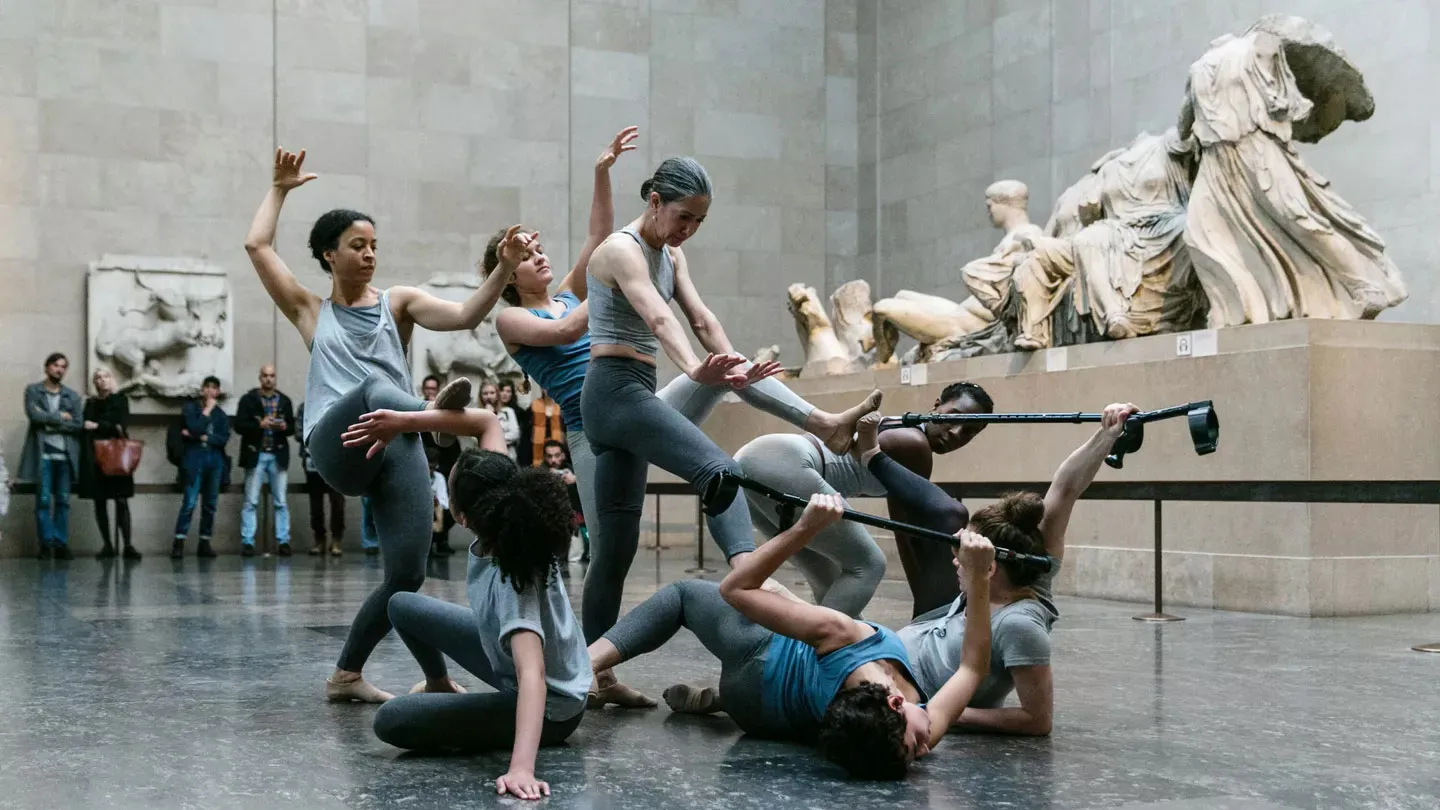
Main Image: Alexis Blake, Conditions of an Ideal, 2015. British Museum, London, UK. Block Universe Festival. Courtesy the artist. Photo by Arron Leppard.
In a project sponsored by the Flemish Government’s Department of Culture, Youth, and Media, composer-performer Winnie Huang brings new works by composers Kelly Sheehan and Timothy McCormack which explore the applications of machine learning, the nuance of timbre, and the possibilities for spatiality in employing EMPAC’s Wave Field Synthesis Array.
Satchel Spencer and Michelle Ellsworth conduct the third EMPAC residency toward the creation and premiere of Evidence of Labor. This production residency focuses on the final staging of the EMPAC commission and includes a preview performance before the work premieres at The Chocolate Factory Theater (Long Island City) in November 2023.
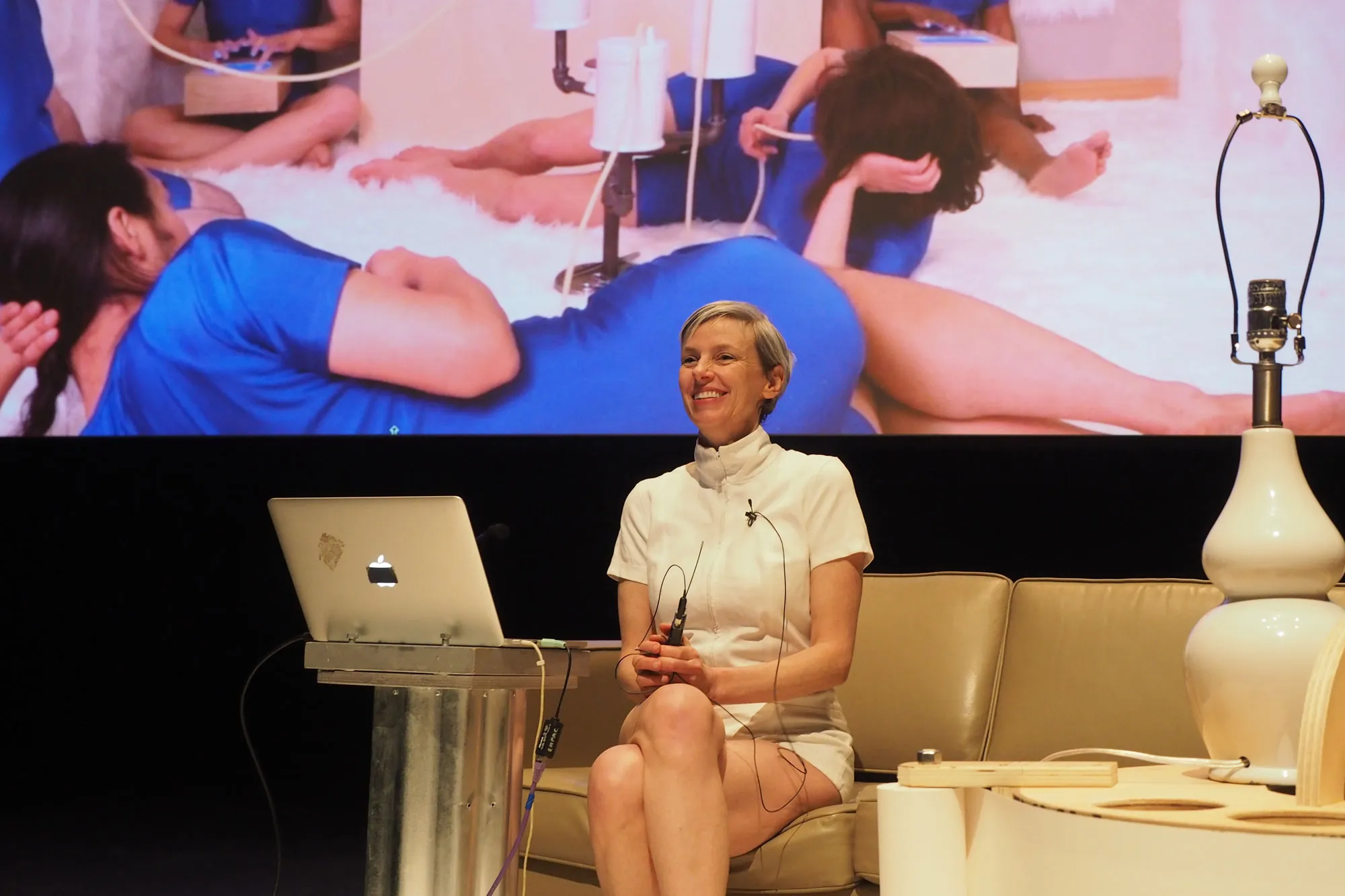
Main Image: Ellsworth in the theater before a talk in spring, 2020. Photo: Sara Griffith.
Winner of the EMPAC/CINARS Open Call, Theatre Junction is in residency to develop final staging for their new work Outside / In, including the creation of a large four-room built environment in Studio 1 as well as a livestream video element.