Image
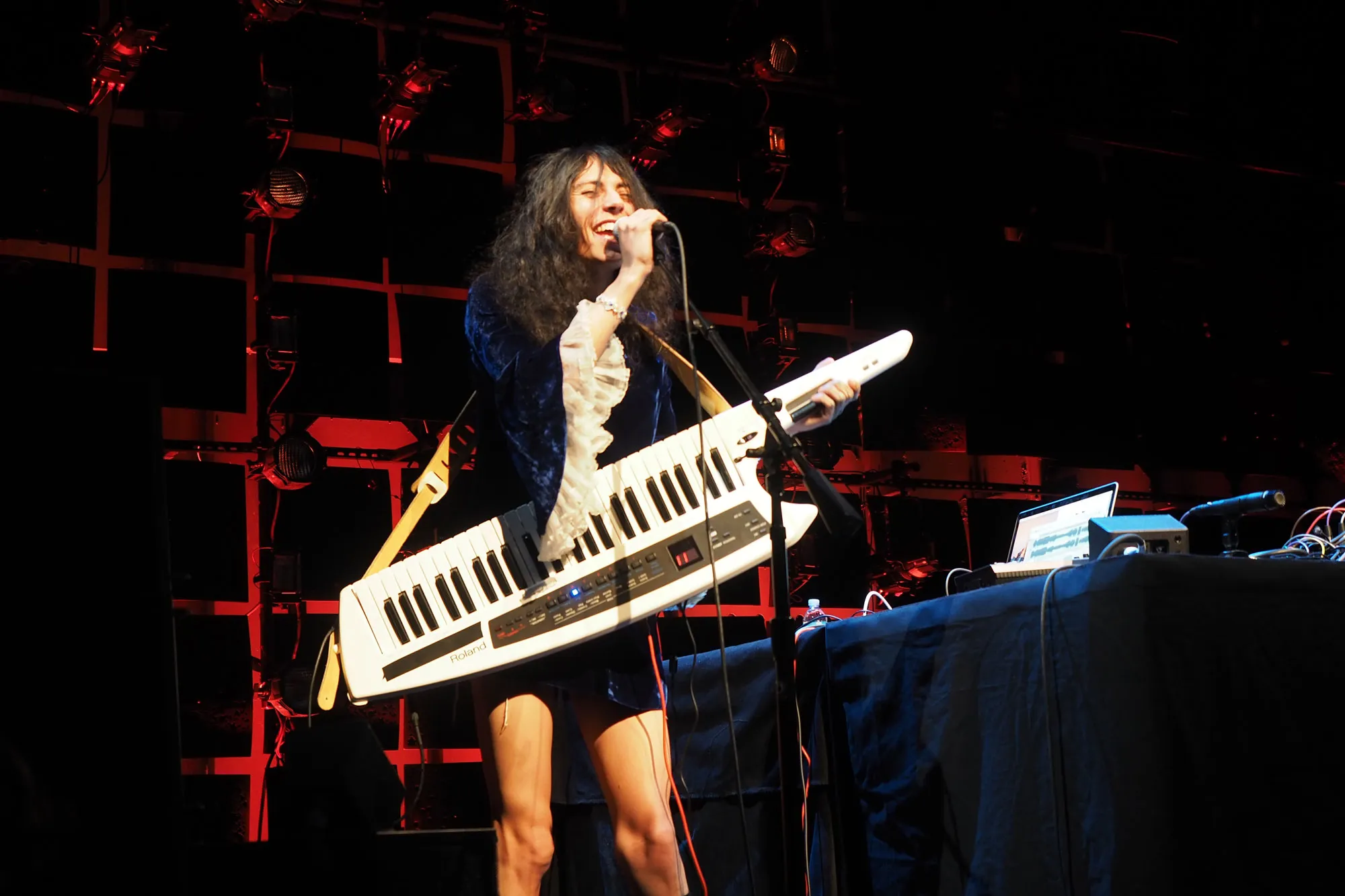
Elysia Crampton + Russell E.L. Butler
A force within Latinx culture and the rising genderqueer electronic aesthetic (alongside Arca, Lotic, Rabit, etc.), Elysia Crampton has described her style as “severo,” a word suggestive of the raw textures and violent juxtapositions she creates with source material ranging from American pop to cumbia, hip-hop, ratchet, and South American metal. A descendent of the Aymara people indigenous to Bolivia, Crampton made waves with last year’s. A sister piece to the theatrical production Dissolution of the Sovereign: A Timeslide into the Future, the album was written in the style of an epic poem, taking inspiration from the story of the Aymara revolutionary Bartolina Sisa, whose severed limbs were paraded through the Andes after her execution at the hands of Spanish colonists.
Conjuring history, myth, and dream while deftly collaging the sonic trappings of a world in flux, Crampton’s electronic compositions are ranging emotional narratives that seek reconstitution and sovereignty.
Opening the show was Oakland-based synth artist and techno producer Russell E.L. Butler. Exploring themes of transplantation, evolution, and healing, Butler dedicated their recent EP I’m Dropping Out of Life to the “black, brown, trans, queer, and gay folks of Oakland,” especially those who tragically died in the December 2016 Ghost Ship art collective fire.
Image
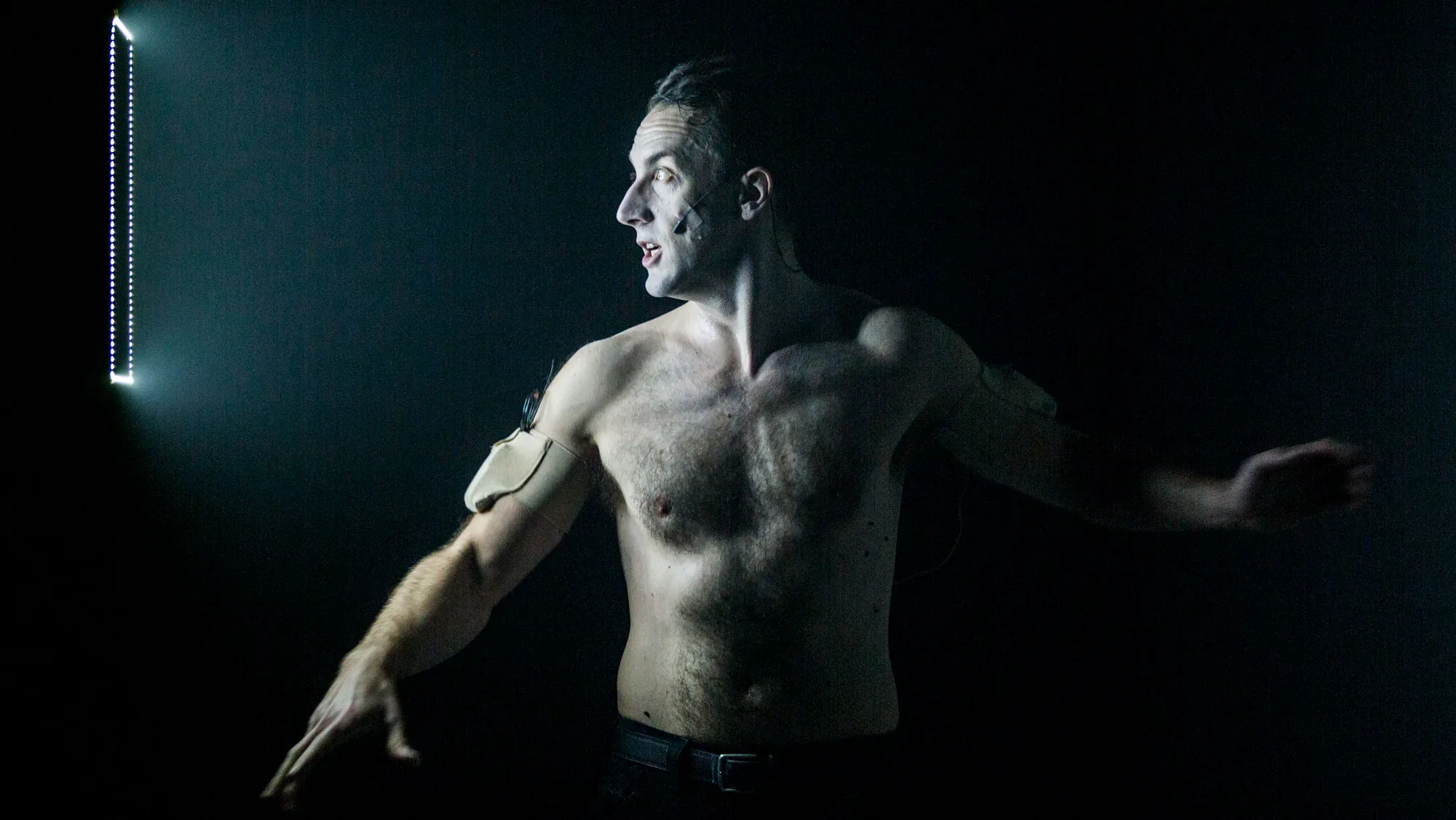
YOUARENOWHERE
Andrew Schneider
Performer, writer, and interactive-electronics artist Andrew Schneider presents his Obie Award-winning show YOUARENOWHERE. This rapid-fire and witty theater performance cycles through expressions of laughter, surprise, and angst. Its dialogue traverses quantum mechanics and parallel universes, missed connections and YouTube videos in an existential meditation on time and presence. The New York Times lauds the show as “A chaotic mix of personal revelation and relativity theory, enhanced by some alarming and splendid visual effects...”
Andrew Schneider has been working in residence at EMPAC to create the follow-up to YOUARENOWHERE, which will receive its World Premiere at EMPAC this September. NOTE: YOUARENOWHERE uses haze, strobe lighting, and loud sounds.
VIDEO
Main Image: Andrew Schneider in YOUARENOWHERE. Photo: Maria Baranova.
Image
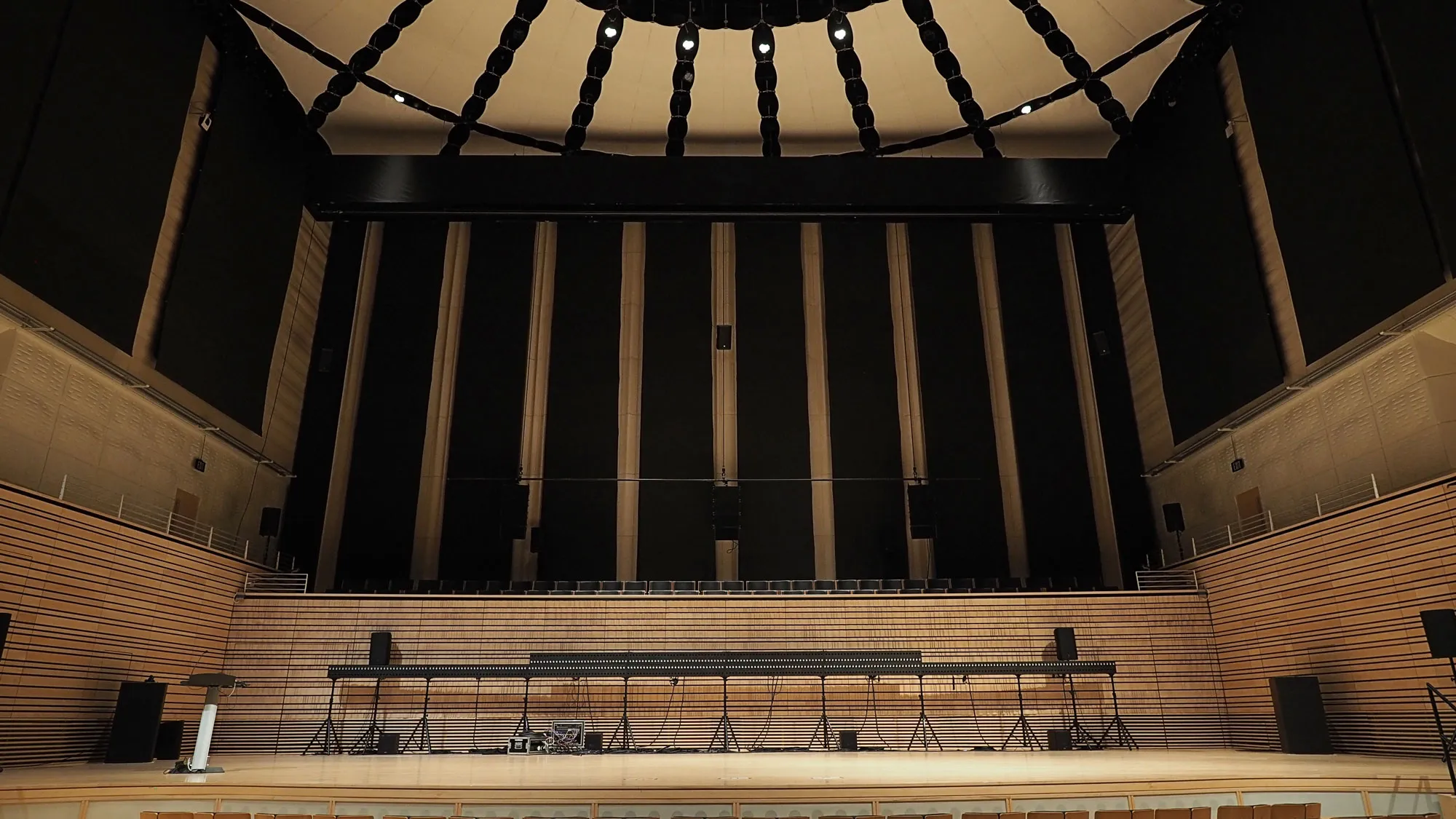
Hans Tutschku
Spatial Audio Performance
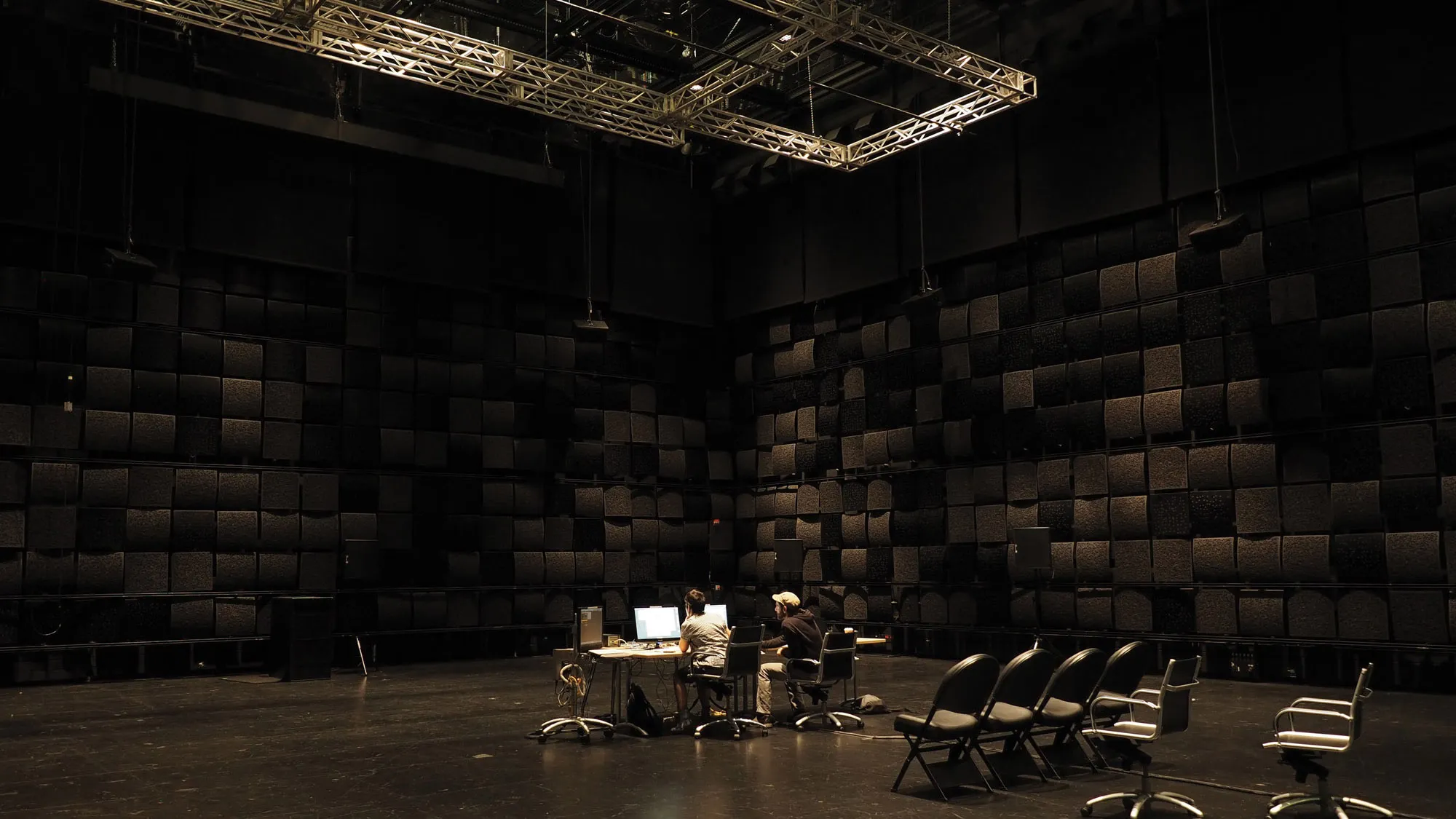
During the second night of public concerts highlighting EMPAC’s Spatial Audio Summer Workshop, Hans Tutschku will present four multi-channel electronic compositions arranged for a large array of loudspeakers. Tutschku is a master in the creation and performance of music that includes sonic movement, space, and scale as important features of the listening experience. For this performance, Tutschku will adapt his work for a 248-channel Wave Field Synthesis array and 60-channel Ambisonic dome surrounding the audience in EMPAC’s Concert Hall.
PROGRAM:
- Rituale (2004)
- agitated slowness (2010)
- –intermission–
- remembering Japan - part 1 (2016)
- Issho-ni (2014)
Media
Image
Image
Markus Noisternig
Spatial Audio Performance
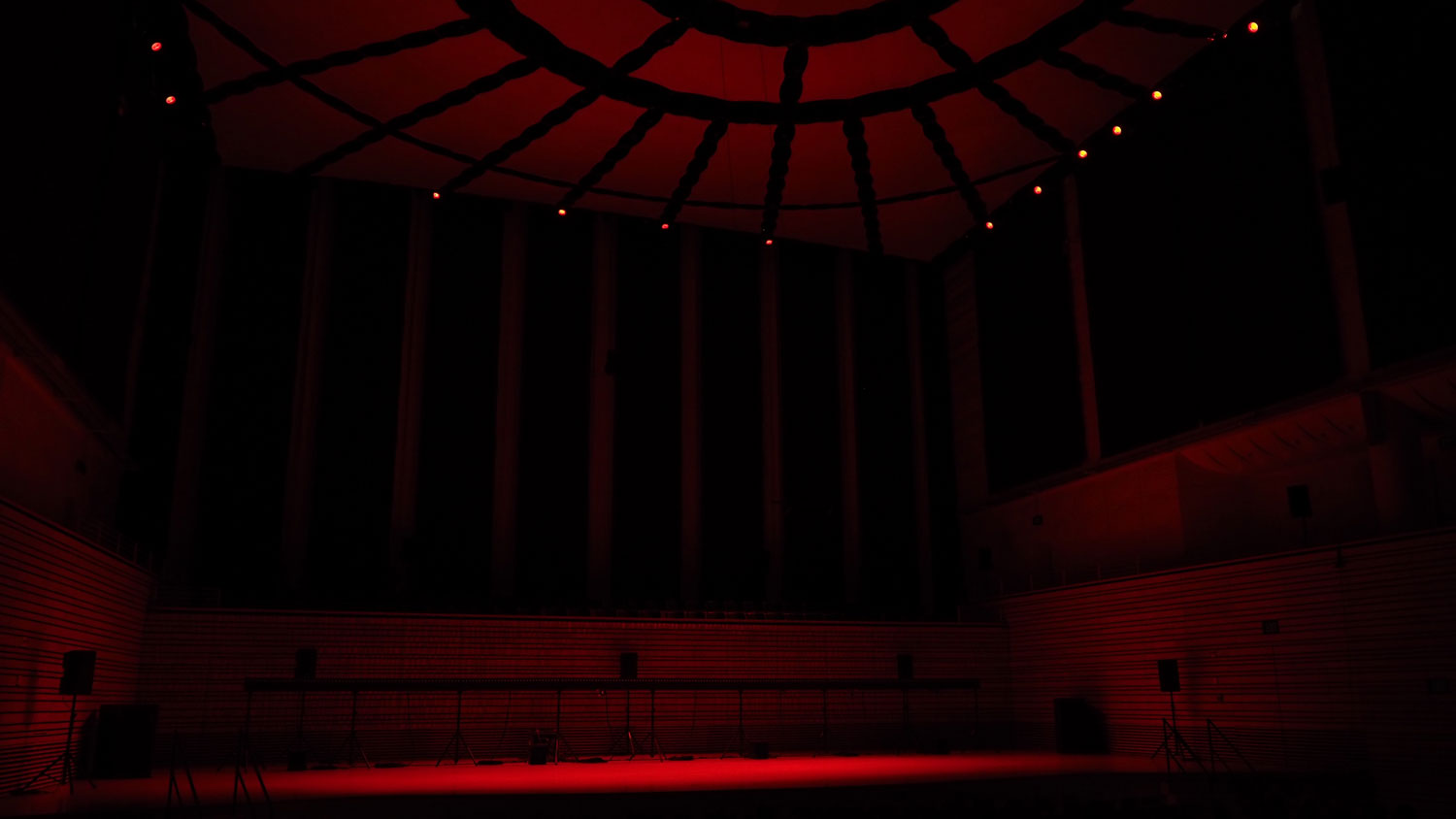
As part of EMPAC’s Spatial Audio Summer Workshop, audio researcher Markus Noisternig will present an evening of multi-channel audio works. Using a 248-channel Wave Field Synthesis (WFS) array and a 60-channel Ambisonic dome, Noisternig will showcase the capabilities of this immersive system in a pristine acoustic space. WFS and Ambisonics represent the cutting edge of 3D, “holophonic” sound systems, which allow the composer to place and move sounds around the audience with an incredible degree of precision. While part of the workshop, this performance is open to the general public.
Media
Our Town
RPI Players
THIS EVEN IS 3/9 + 3/10 2017 @ 8PM. Our Town: a New Media Theatrical Experience presents a new media re-imagining of Thornton Wilder's American theater classic. Wilder’s play endures because it touches a core of the human condition: our inability to fully appreciate moments of our lives before they pass us by. This powerful message is sometimes lost when the play is misunderstood as Americana kitsch.
Using new technologies, this production will reinvigorate this play for contemporary audiences by incorporating a responsive gesture-based interactive system for actors to control commissioned artworks projected on a large-scale 360-degree immersive screen environment, and a new directional audio score.
In a radical departure from common approaches to media in performance, which often risk potentially alienating audiences unfamiliar with avant-garde traditions, this project utilizes a mainstream play in a way that invites audience members in to experience a new connection with an American classic.
Media
Our Town
Tesseract
Charles Atlas, Rashaun Mitchell, and Silas Riener
The new two-part work, Tesseract, by artist Charles Atlas and choreographers Rashaun Mitchell and Silas Riener, will be presented for the first time following several years of development at EMPAC on Friday, January 27th and Saturday, January 28th both at 8PM.
The evening will commence with the world premiere of the stereoscopic 3D video Tesseract ▢. A six-chapter work of science fiction, it is Atlas’ first “dance video” in over a decade. Filmed with a mobile camera rig that moves with the choreography, Tesseract ▢ traverses a series of hybrid and imagined worlds staged and filmed over a series of EMPAC production residencies. Each chapter combines a specific set, choreography, and camera motion to encompass pas de deux and ensemble pieces, choreographed and performed by former Merce Cunningham dancers Mitchell and Riener. Manipulating the 3D footage to combine live dance with animation, Atlas’ distinctive video effects reach into otherworldly dimensions beyond the stage.
For the second part of the evening, Tesseract ◯ expands the view from film frame to proscenium stage. A performance for six dancers and multiple mobile cameras—the footage of which Atlas will manipulate in real-time and project back onto the stage—Tesseract ◯ superimposes the space of dance with live cinematic production, rendering a choreographic analogue to the four-dimensional cube from which the piece takes its title.
Image
The Return of La Argentina
Trajal Harrell
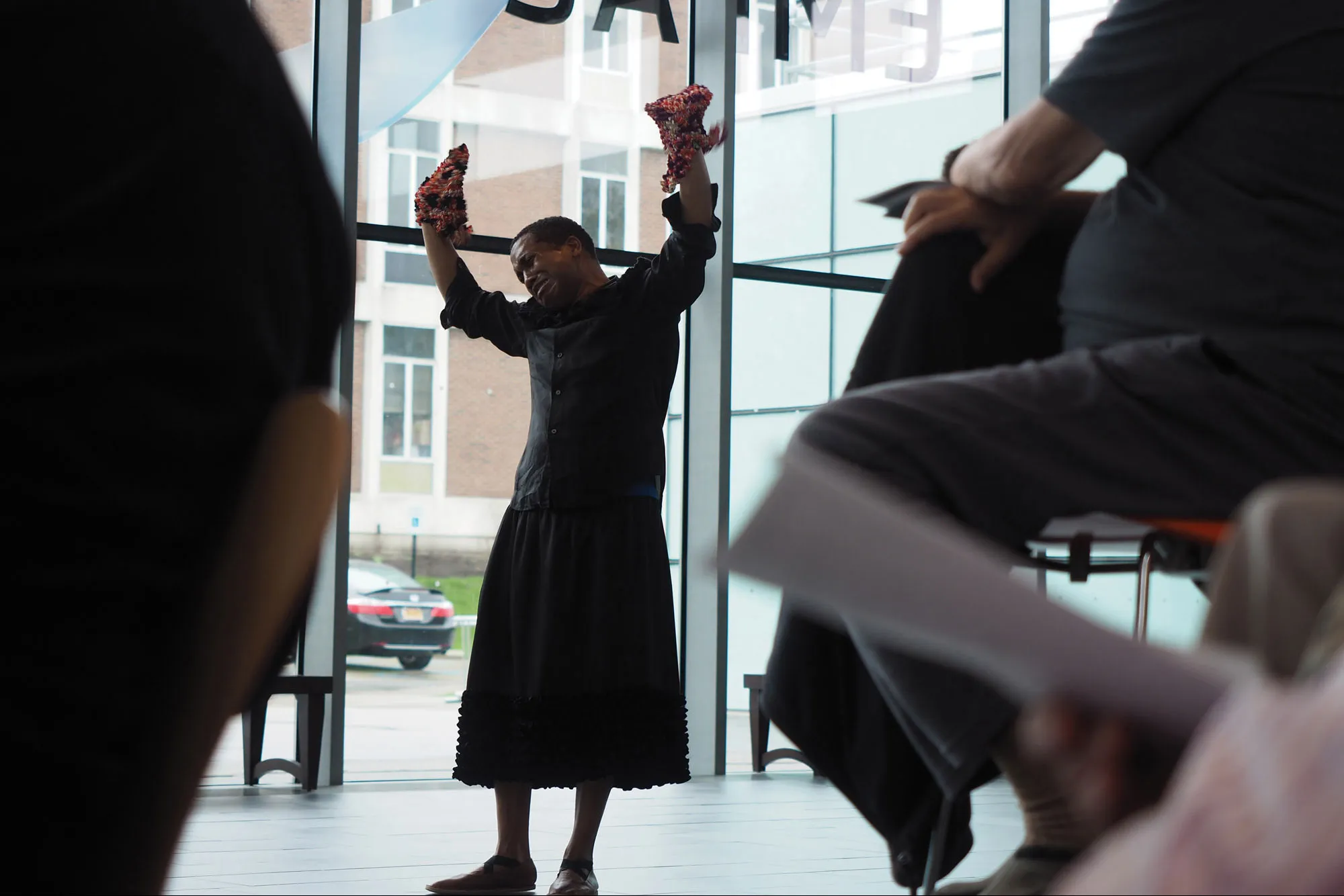
In The Return of La Argentina, Trajal Harrell mixes postmodern/voguing styles with the Japanese dance/theater form “butoh,” co-founded by Kazuo Ohno and Tatsumi Hijikata. Harrell identifies the key sensibilities of voguing in Ohno and Hijikata’s signature work, Admiring La Argentina (1977). Where Harlem voguing is inspired by the movements of models, Admiring La Argentina was inspired by La Argentina, the stage name of the famous Spanish dancer Antonia Merce. In his interpretation, Harrell identifies Ohno as voguing La Argentina and director Hijikata as voguing Antonia Merce. Producing his own take on the classic, Harrell adds another layer of complexity: Harrell vogues Ohno and Hijikata voguing La Argentina and Merce. This web of danced relationships brings Harrell’s audience on a journey of remembering, forgetting, memorializing, and ritualizing Admiring La Argentina.
Originally designed to inhabit museum spaces, Harrell brought The Return of La Argentina to EMPAC in a mezzanine performance.
Trajal Harrell is a choreographer who shows his work in a range of settings including performance venues such as The Kitchen, New York Live Arts, and Festival d’Avignon, and museums including MoMA, ICA Boston, and Centre Pompidou—Paris and Metz. Harrell is the recipient of the Guggenheim Fellowship, The Doris Duke Impact Award, and a Bessie Award. He developed The Return of La Argentina in a two-year Annenberg Residency at MoMA.
Choreographer Trajal Harrell was in residence to develop the stage environment for Calm House Terrace, an evening-length contemporary dance solo. The work ritualistically resurrects Japanese butoh artist Tatsumi Hijikata’s Quiet House (1973).
Main Image: Trajal Harrell performs in the EMPAC lobby as part of The Return of La Argentinia in 2017. Photo: Mick Bello/EMPAC.
Image
FIELD
Andrew Schneider
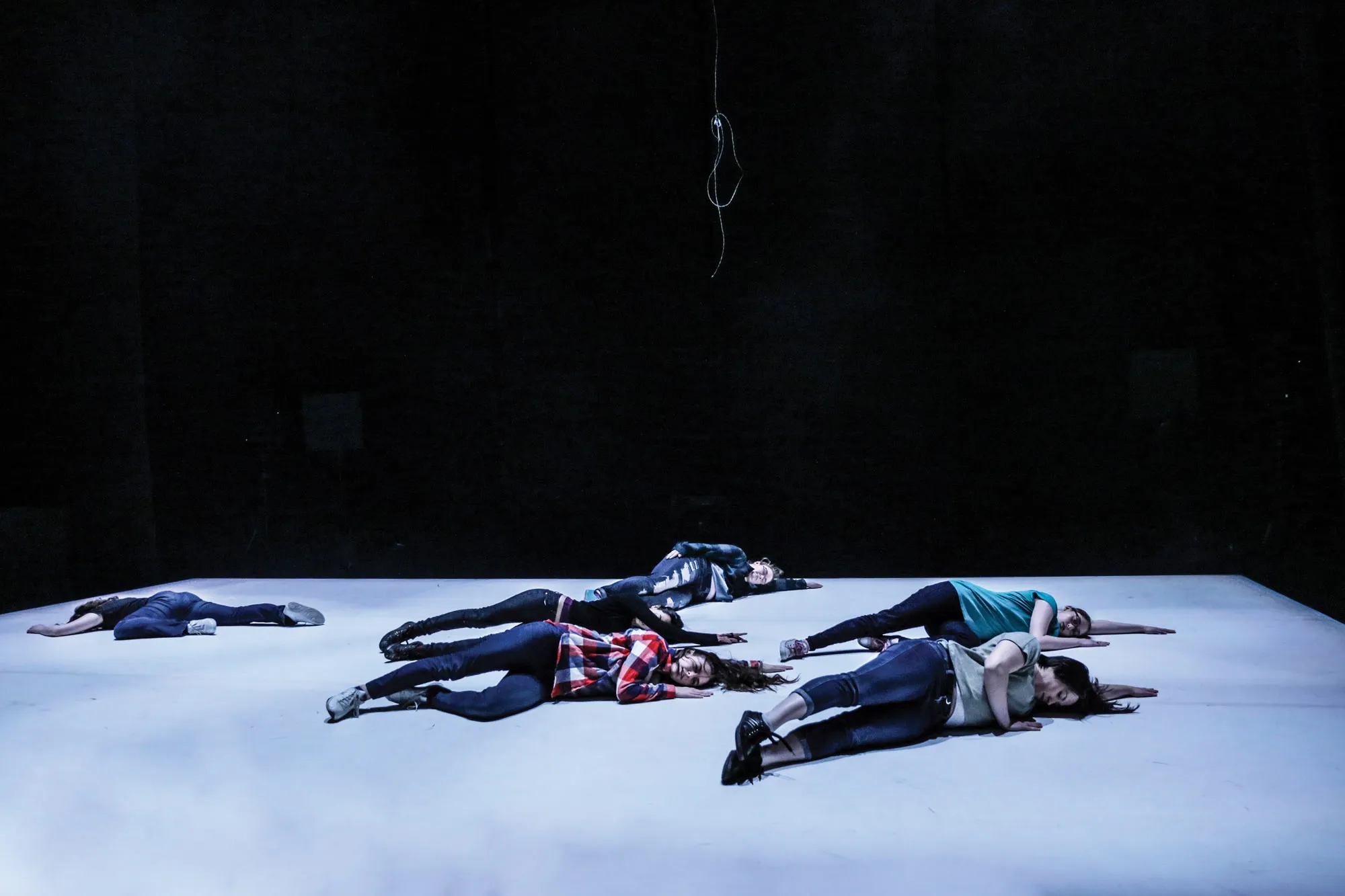
Performer, writer, and interactive-electronics artist Andrew Schneider completed a series of three development residencies at EMPAC with this work-in-progress showing of his new performance, FIELD (later titled AFTER). Picking up where his Obie Award-winning project YOUARENOWHERE left off, Schneider’s follow-up explores the physics and temporality of parallel universes and perception. Schneider and his collaborators Alicia ayo Ohs, Alessandra Calabi and Bobby McElver used lighting, projection mapping, and 3D sound spatialization to create an immersive environment inside of a non-linear narrative that prioritizes audience experience and leads viewers to consider where they are and how they got there. Choreographer Vanessa Walters worked with the Rensselaer Dance Club to develop original choreography for the showing that would inspire scenes in the final production of AFTER.
Andrew Schneider is a Brooklyn-based artist who creates and performs in original performance works and videos and builds interactive electronic artworks and installations. Schneider was a Wooster Group company member (video/performer) from 2007-2014 and has shown his work at 3LD in New York, the Melbourne Arts Festival, LIFT Festival, and in theaters across France, including Maillon, Théâtre de Strausbourg, and Théâtre de Gennevilliers.