Image
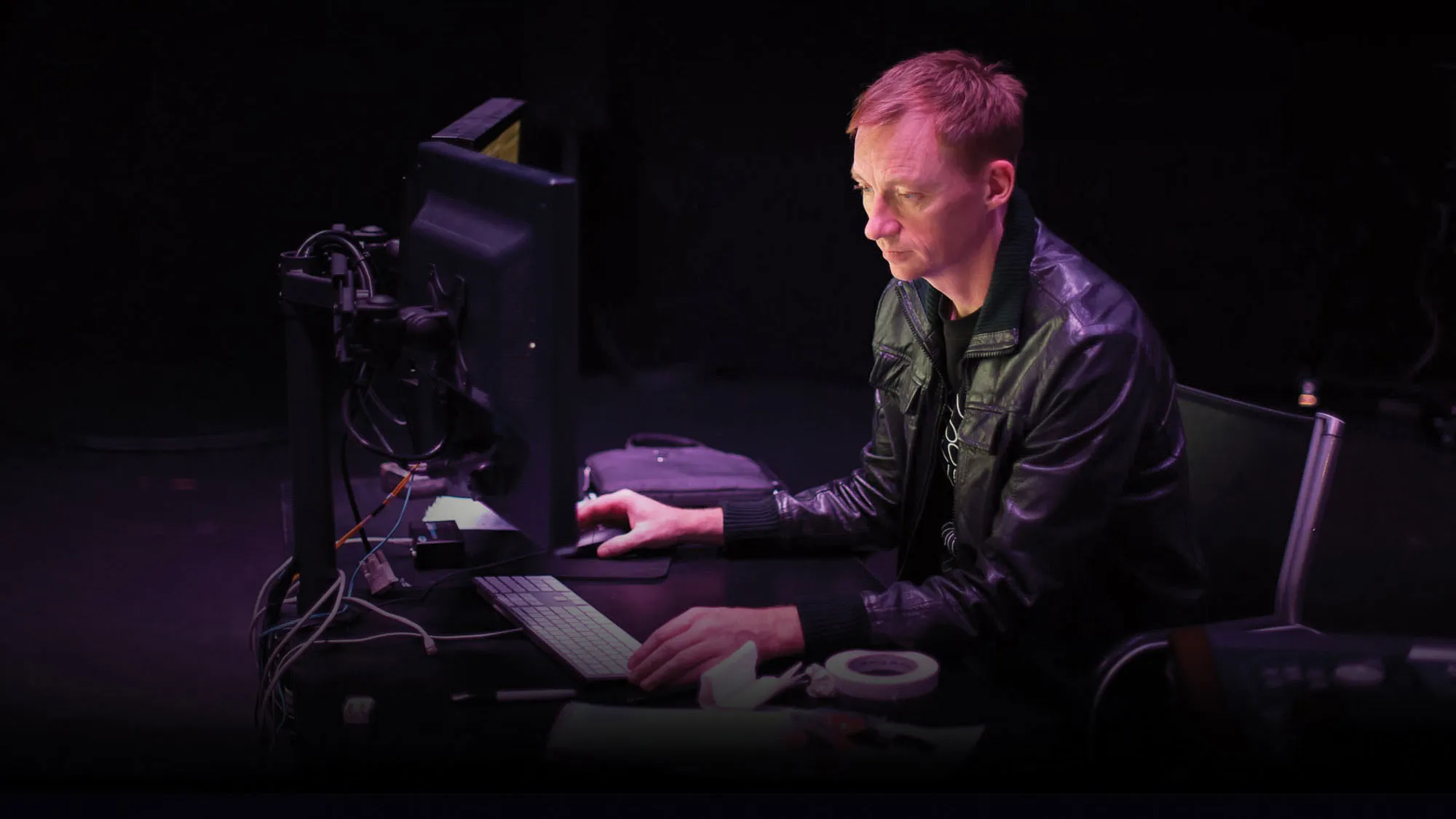
AKOUSMA @ EMPAC
This selection of performer/composers from the ninth annual AKOUSMA—the annual Montréal-based festival dedicated to electroacoustic music—included Nicolas Bernier, Richard Chartier, Jean Francois Laporte, Martin Tétreault, and Louis Dufort. The performers used dozens of loudspeakers hung in a ring surrounding the listeners, manipulating the pieces in real-time.
Nicolas Bernier’s music ranges from musique concrète to live electronics, to post-rock to noise improv, and features electronic music made from objects of the past, such as typewriters and tuning forks. Richard Chartier’s work has been called both “microsound” and neo-modernist, with a minimalist approach to sound, silence, focus, and perception. Jean-François Laporte works closely with the raw materials of sound, from the everyday environment to traditional and invented instruments that produce unconventional sounds. Martin Tétreault is an internationally known Montréal DJ and improviser who explores the intrinsic sounds of the turntable and needles, as well as prepared surfaces (with thanks to John Cage), and small electronic instruments. Montréal composer Louis Dufort developed his style through electroacoustic music, and then turned his attention to mixed music and multimedia art, and has worked with a wide range of organizations.
PROGRAM
Louis Dufort - Étude no.1 for the EMPAC Lobby Gilles Gobeil - Des temps oubliés Seth Nehil - Collide Adam Basanta - instant gris Adam Basanta - is not a / a / is not Olivia Block - Dissolution Louis Dufort - Étude no.2 for the EMPAC Lobby Please note: Evelyn’s Cafe will not be open for service prior to this performance.
Media
Image
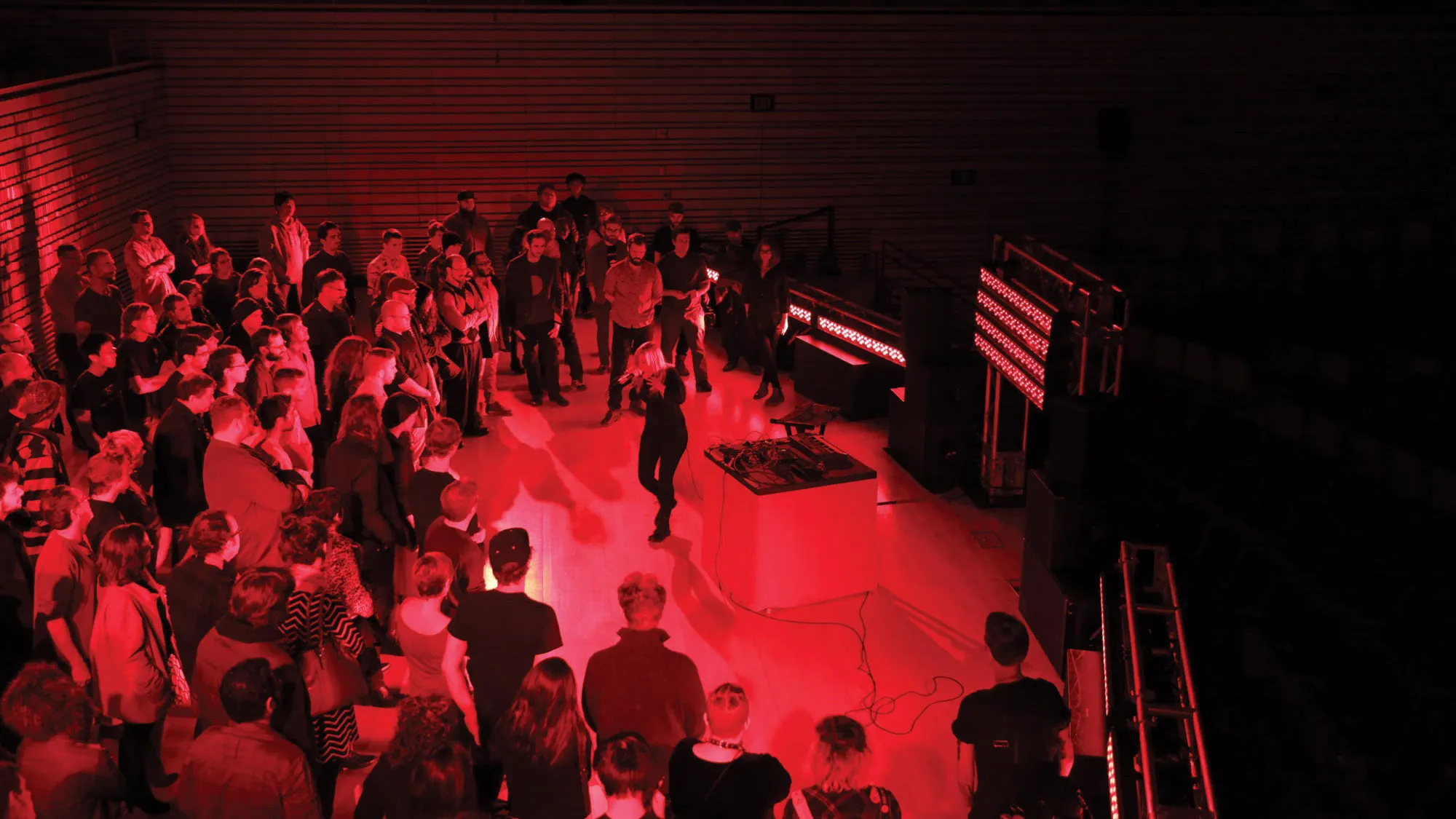
Pharmakon
An intensely intimate and confrontational performance by Pharmakon, a death industrial music project from Margaret Chardiet. Chardiet describes her drive to make noise music as a kind of exorcism, making it possible to express her “deep-seated need/drive/urge/possession to reach other people and make them FEEL something [specifically] in uncomfortable/confrontational ways.” In addition to being one of the few females working in a male dominated noise scene, Chardiet stands out for her meticulous rigor and attention to form, with every performed element methodically planned out in advance for maximum emotional impact.
Main Image: Pharmakon in the Concert Hall. Photo: EMPAC
Image
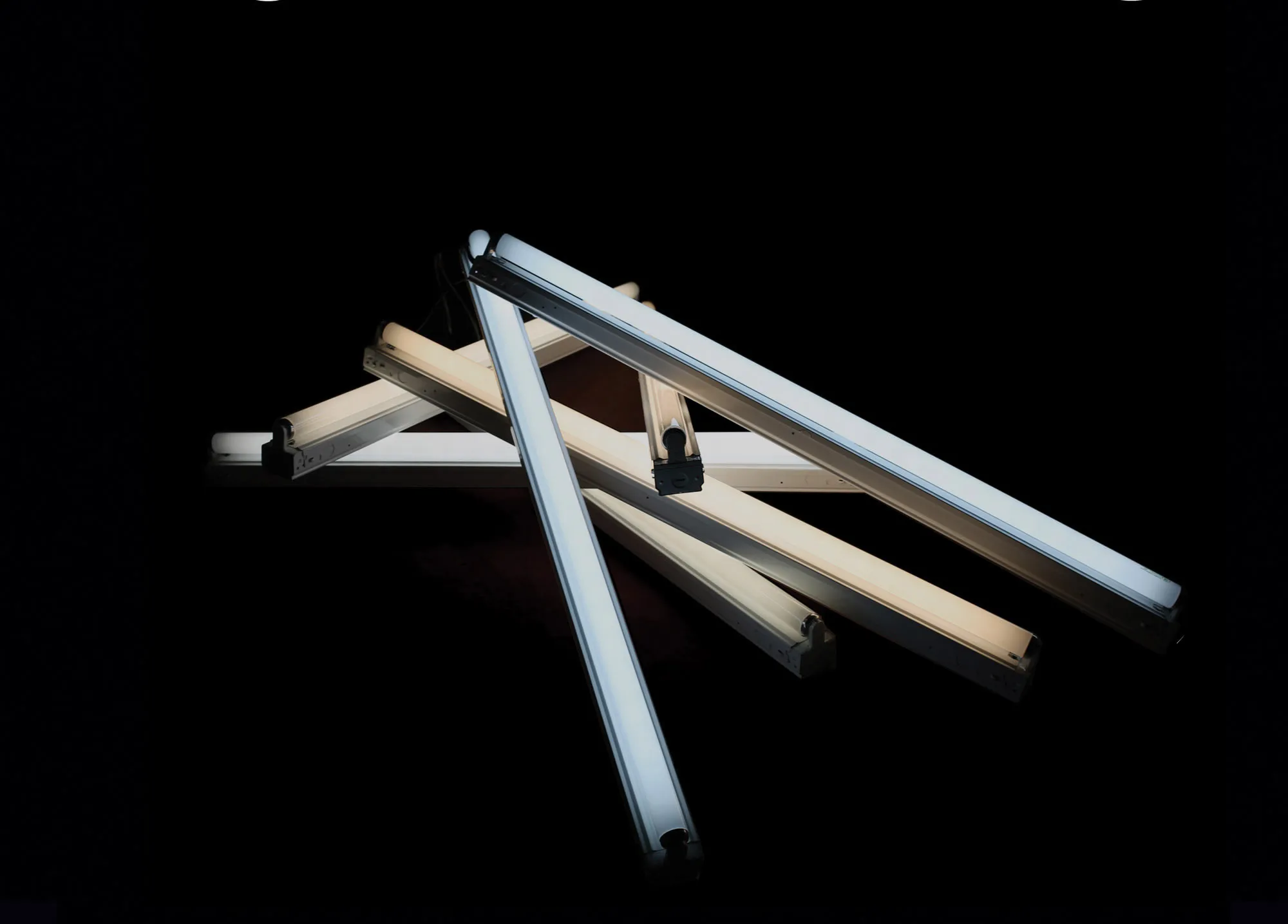
Obsolescere: The Thing is Falling
Anthony Marcellini
Obsolescere: The Thing is Falling is a performance that captures objects at the moment their usefulness becomes uncertain. Drawn from the Latin obsolescere—“falling into disuse,” the idea that an object falls out of use over the course of time reveals that obsolescence is not a fixed point, but an active and fluctuating state.
Over the course of 25 minutes, a house cat, a Ford Taurus, seven fluorescent light bulbs, a goldfish, several cornstalks, the Encyclopedia Britannica, and a rusted portrait bust will speak about their conditions, narrating perspectives on utility, breakdown, and contradiction. This series of conversations addresses the condition of all objects, humans included, when they outlive their usefulness.
Anthony Marcellini is an artist and writer whose practice examines the social relationships of seemingly disparate objects, artworks, individuals, historical events, and natural phenomena. He is particularly interested in the moment of collapse or breakdown, specifically how our understanding of objects or events changes when they crash or lose their intended purpose. His work has been exhibited internationally at museums, galleries, and art institutions, including Galerie Michael Janssen, Singapore (2014); Witte De With, Rotterdam (2013, 2014); Yerba Buena Center for the Arts, San Francisco (2013); The Gothenburg Konsthall (2013); and Wilkinson Gallery, London (2012-13), among others.
From 2000-2004 Marcellini co-founded and directed the collaborative art group It Can Change with John Hoppin, a collective that produced art, interventions, and performances in public spaces and art institutions.
He has participated in several biennials and festivals and has held residencies at the Valand Centre for Artistic Research, Gothenburg (2012) and the Sparwasser HQ residency program, Berlin (2010). His writing has been published in Paletten Art Journal, the web-based publication Nowiswere, and the online journal Art Practical.
Main Image: Production still from Obsolescere: The Thing is Falling (2014). Image: EMPAC/Rensselaer.
Image
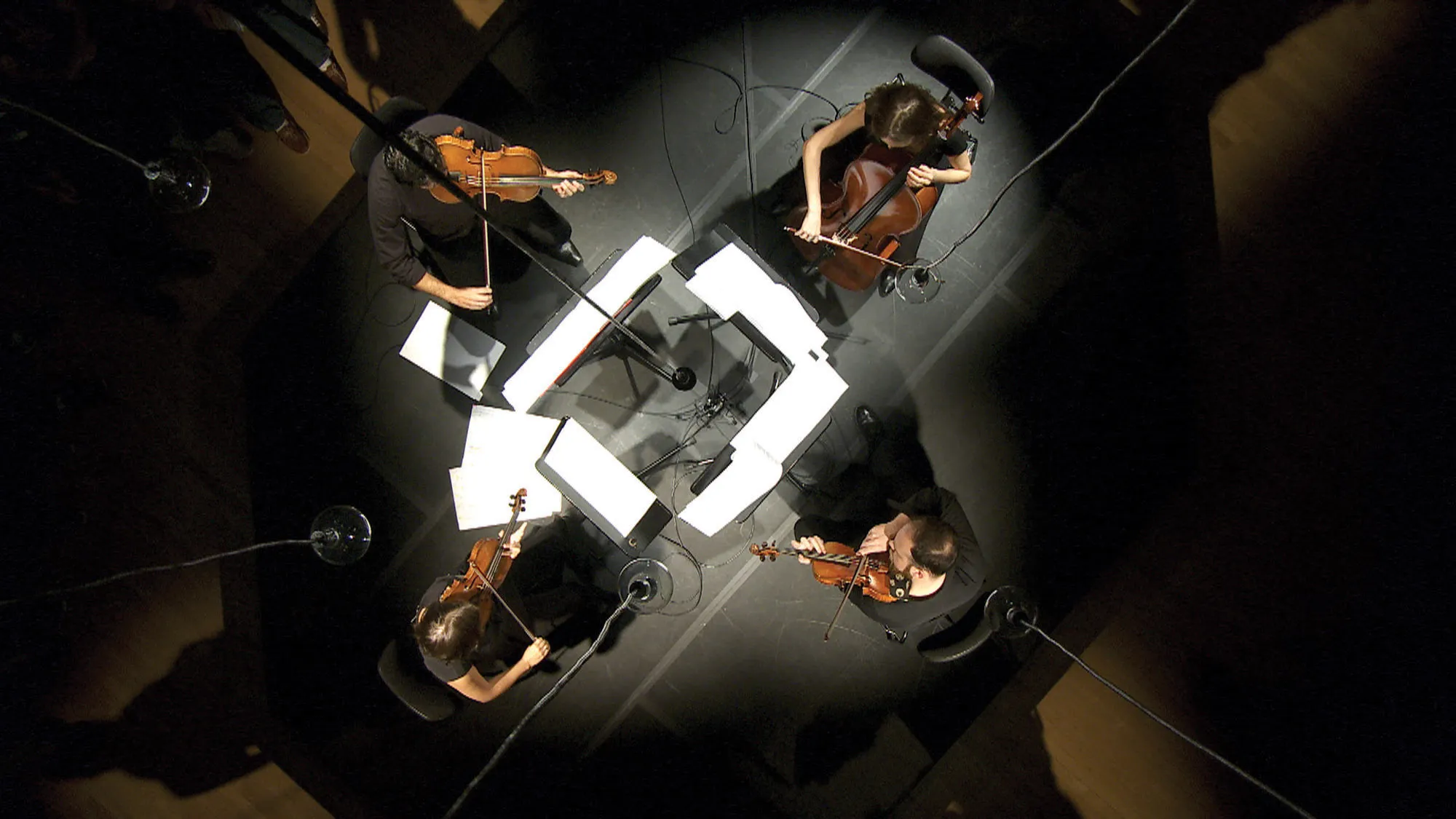
Mivos Quartet
Eric Wubbels — being time
The Mivos Quartet, one of the most sought-after string quartets in the international new music scene, will be in residence at EMPAC to develop and perform a new work by American composer Eric Wubbels. Titled being time, the piece is an audio variation on the psychological experience of time. Extending nearly an hour, it moves from sections of extreme slowness and static sustains to high-energy plateaus of dense, saturated sound textures. In the final sequence, quadraphonic electronic sound pushes the performance into an altogether new dimension, creating vivid psychoacoustic illusions by using extremely high sine waves. Mivos Quartet: Olivia De Prato, violin Joshua Modney, violin Victor Lowrie, viola Mariel Roberts, cello
VIDEO
Image
Bloopers #1
Michael Bell-Smith, Sara Magenheimer, + Ben Vida
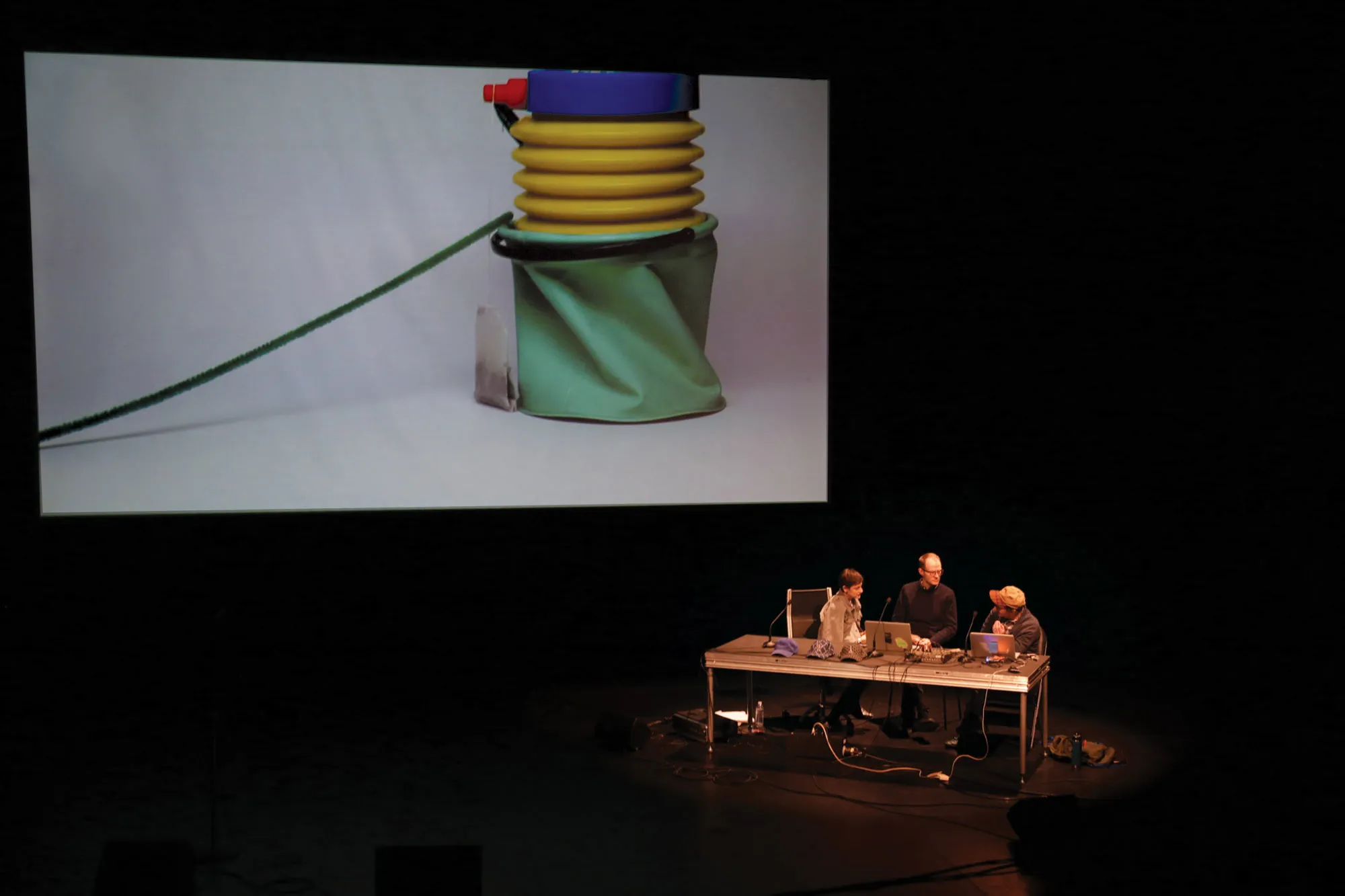
Bloopers #1 is the newest iteration of the performance-driven collaboration by artists Michael Bell-Smith, Sara Magenheimer, and Ben Vida. Using the language of “breakdowns,” or comedic outtakes, the artists blend props, video, and electronic music to play with the social power of different kinds of media.
Presenting a joyously subversive take on popular culture and the social connections produced through sound and music, Bloopers #1 takes the question “Why do we hate some objects and love others?” as its starting point, and uses set pieces, dance-pop, cinematic cliché, and live performance to playfully tease the boundaries of language, crowds, and the nature of things that draw them.
Michael Bell-Smith in an artist and musician based in Brooklyn. His work has been exhibited and screened in museums and galleries internationally, including MoMA PS1, NY; Museum of The Moving Image, NY; SFMOMA, San Francisco; the 2008 Liverpool Biennial, UK; the 5th Seoul International Media Biennale; Museo Nacional Centro de Arte Reina Sofía, ES; The New Museum, NY; Hirshhorn Museum, DC; Musée d'Art Moderne de la Ville de Paris; MoMA, NY; and Tate Liverpool, UK. His work has been featured in Art Forum, Art in America, and the New York Times. As a member of the punk band Professor Murder, he has performed music across the US and Europe.
Sara Magenheimer lives and works in Brooklyn. Language, music/sound, and objects comprise a large part of her video-based practice. From 2004-2010 Magenheimer formed two bands, Flying, and WOOM, touring extensively and releasing five records. She received her BA from Tufts University, her BFA from the School of the Museum of Fine Arts, Boston, and her MFA from Bard College. Magenheimer has screened video work and performed at CANADA Gallery, the Berkeley Art Museum, MoMA PS1, the Brooklyn Academy of Music, and ISSUE Project Room, among others.
Ben Vida is a Brooklyn-based artist and composer. He has been an active member of the international experimental music community for the past 17 years with a long list of collaborations, bands, and releases to his credit. In the mid 1990s he co-founded the group Town and Country and has worked as a solo artist under his own name and as Bird Show, with releases on such labels as PAN, Alku, Thrill Jockey, Drag City, Amish, Bottrop-Boy, Hapna, and Kranky. He has presented his work in the United States, Canada, the United Kingdom, Europe, Australia, South Korea, and Japan. Recent activities include performances at The Kitchen, NYC with David Behrman, and the debut of the Tyondai Braxton/Ben Vida Duo at the Sacrum Profamun festival in Krakow, as well as solo performances at Electrónica en Abril festival in Madrid and Akousma Festival in Montreal. His exhibition, Slipping Control, was presented at Audio Visual Arts in Manhattan, NY in spring 2013. He was a 2013 artist-in-residence at ISSUE Project Room in Brooklyn and at the Clocktower in Manhattan.
Image
A Possibility of an Abstraction
Germaine Kruip
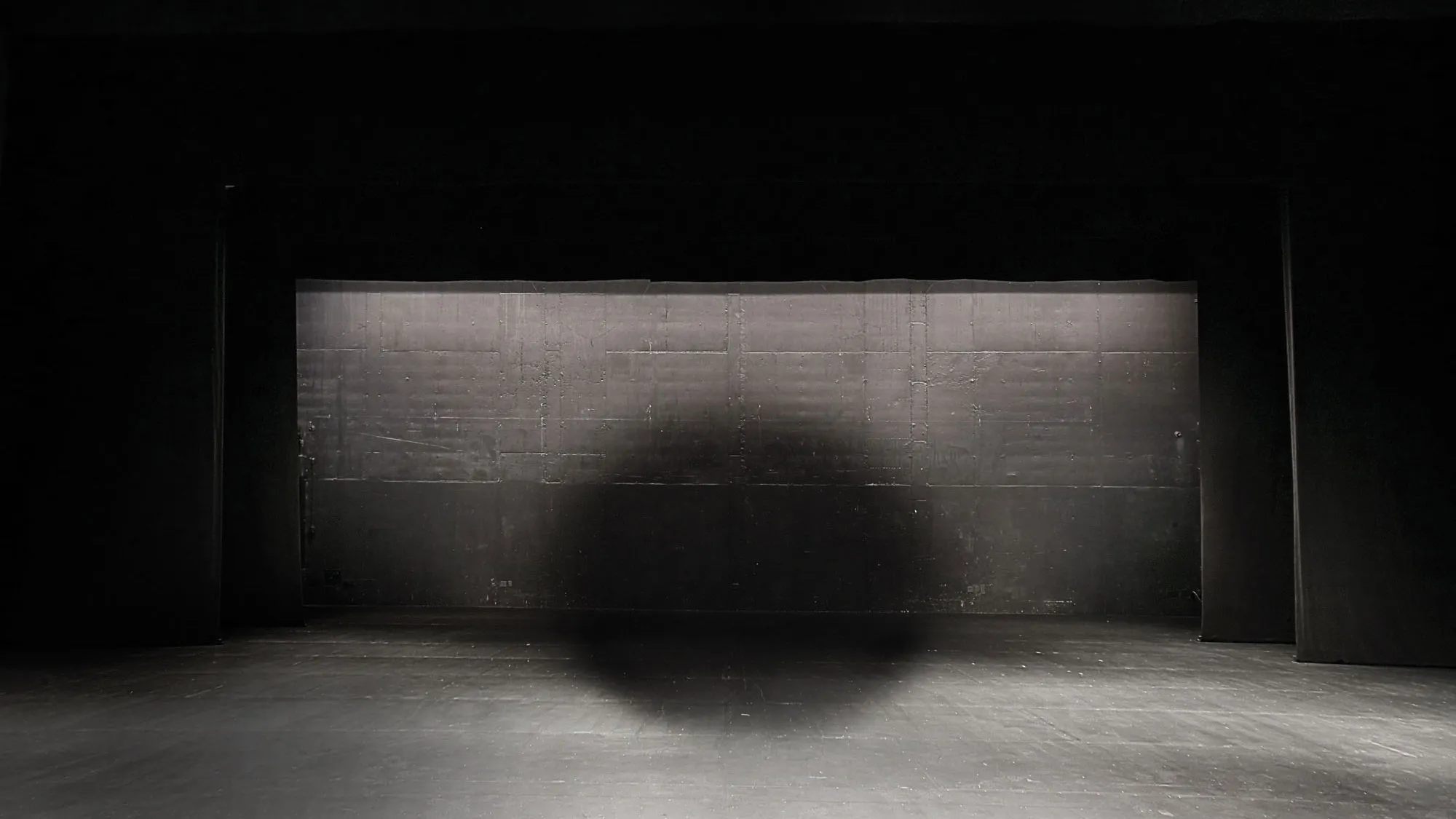
A Possibility of an Abstraction is an EMPAC-commissioned production that transforms the theatrical space into a field of cinematic experience. It is a play of perception, where shadow, reflection, architecture, and stage become the characters in a filmic experience created in the moment itself. Recalling pre-cinematic traditions of shadow play, and what Ken Jacobs termed paracinema (denoting experimental film practice from the 1960s in which films lacked material or mechanical elements), Kruip creates an atmospheric film-like effect without actually using film, accomplished by manipulating light across the proscenium stage that serves as a stand-in for the screen.
Shifting between the cinematic, the theatrical, and the sculptural, A Possibility of an Abstraction creates a meditative space at the edges of our perception with optical illusions and the passage of time. A Possibility of an Abstraction marks the artist’s renewed engagement with theatrical technology and dramaturgy. Following winning the Prix de Rome in 2000, Kruip turned away from scenography to concentrate on visual arts, producing works that brought the theatrical elements of light, temporality, and the stage into a new architectural scale at galleries and museums. Often manipulating daylight with moving geometric sculptures and simple framing devices, her artworks transform the architecture they inhabit, turning each location into a sensual but abstract stage.
Main Image: A Possibility of an Abstraction in the theater in 2014.
Media
Image
This Piece Is Still To Come
Begüm Erciyas
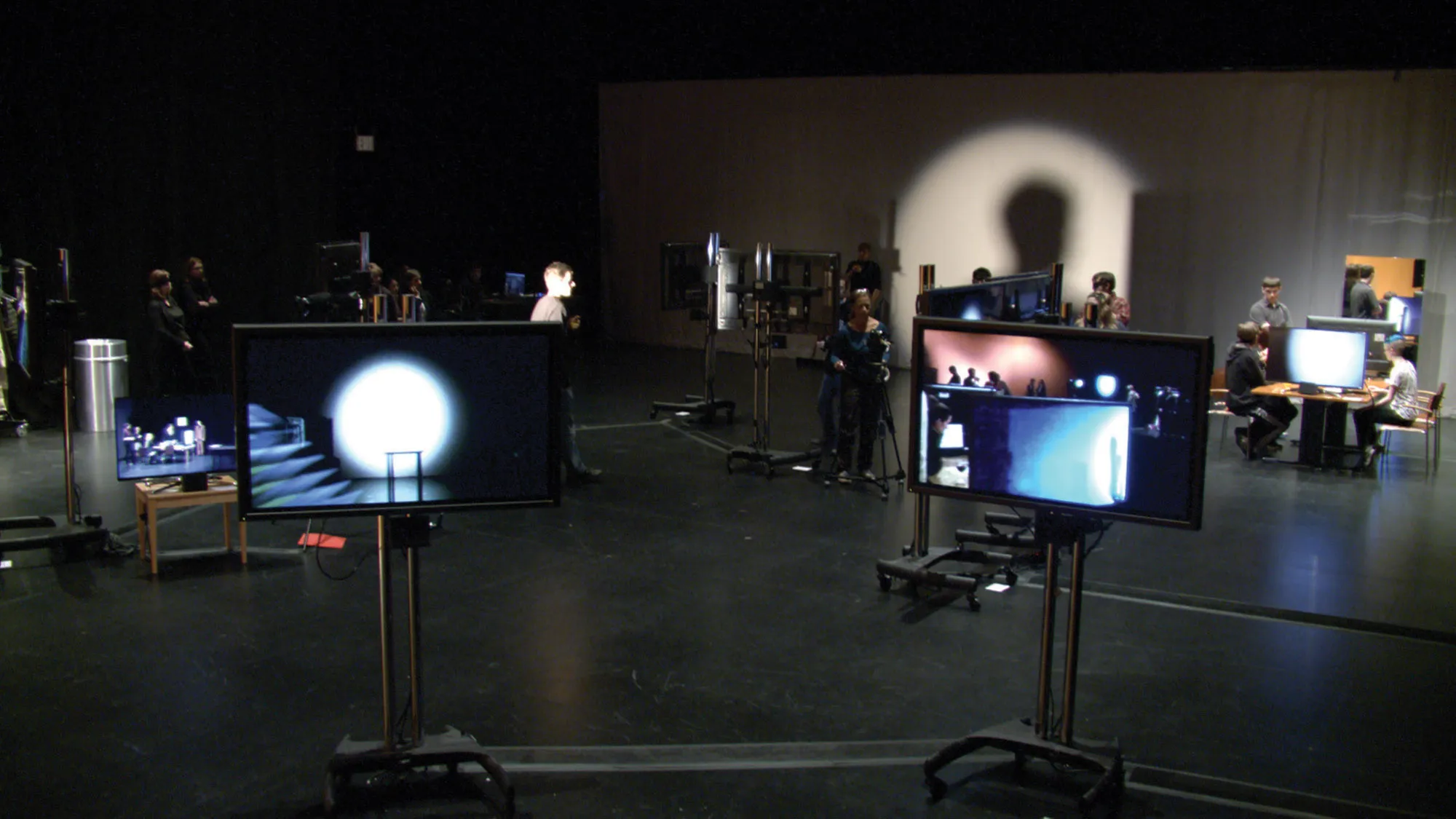
Can an artist oppose completion? What if a work is never finished or if every presentation is a premiere of a new version? In This Piece Is Still To Come, Begüm Erciyas rejects conclusions in favor of repetition. The image and sound recordings of each version of the performance form the basis of a new performance. The artist invites the audience to become part of this long-term project with no conclusions. Each new audience is suspended at some middle point, knowing there is at least one more performance to come, for which the record of current acts will serve as foundation.
Begüm Erciyas was born in Ankara, Turkey, and has lived and worked in Berlin since 2010. While studying molecular biology and genetics in Ankara, Erciyas worked on several different dance projects and subsequently joined [laboratuar], a performing arts research and project group. She has been an active member of Sweet and Tender Collaborations, and has been an artist-in-residence at Akademie Schloss Solitude, K3-Zentrum für Choreographie | Tanzplan Hamburg, the Tanz Werkstatt Berlin; and at Villa Kamogawa / Goethe Institute Kyoto.
Image
Expanded Piano
Stavros Gasparatos
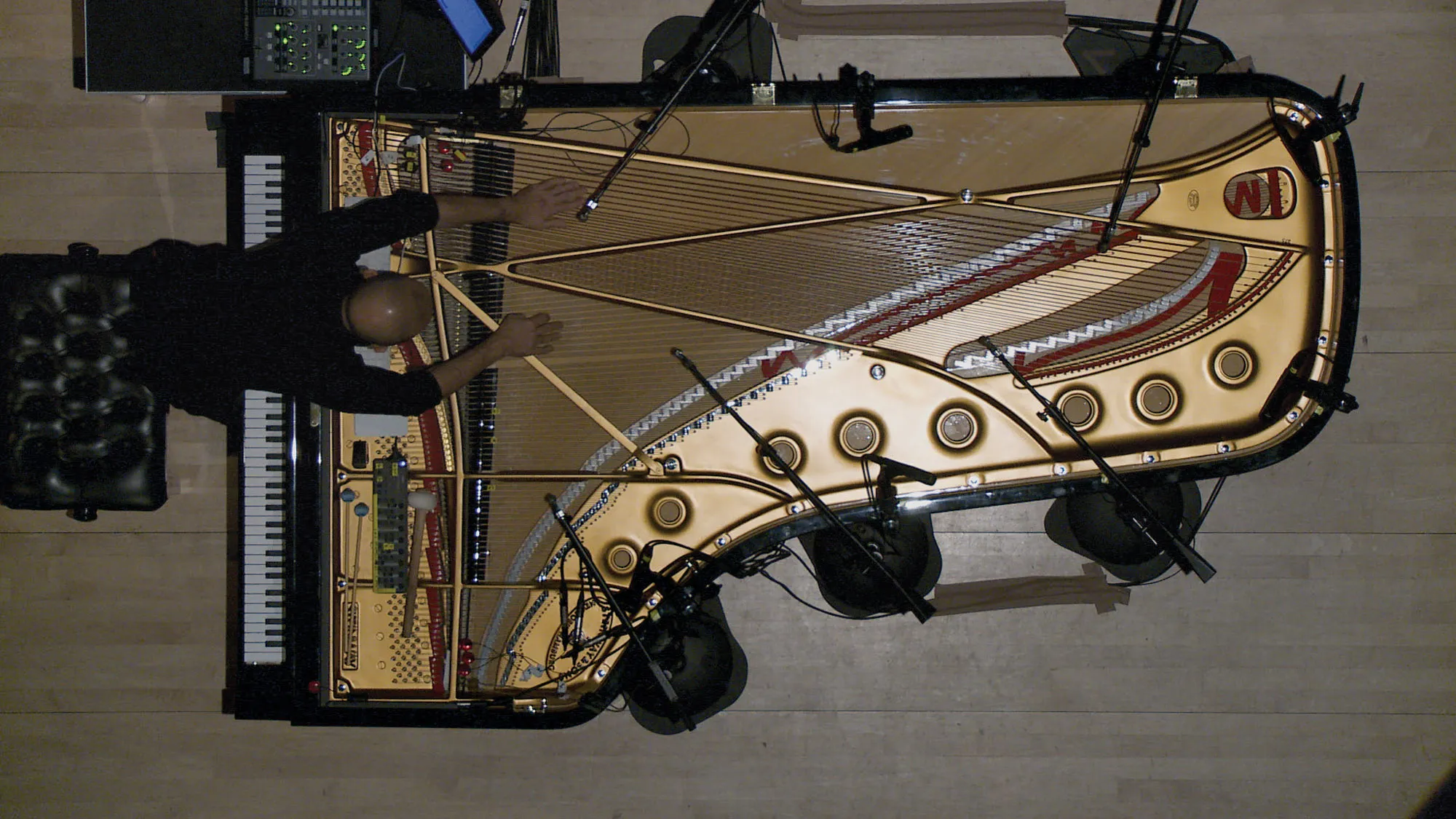
Imagine being inside a piano. Imagine the piano expanded to the size of a concert hall. This EMPAC-commissioned concert and installation is grounded in the idea of “prepared piano,” a tradition where screws, rubbers, bolts, etc., are attached to the strings inside a piano, altering the sound. Building on the many famous mechanically prepared piano compositions from John Cage to Aphex Twin, Expanded Piano transforms the idea into a uniquely electronic form.
An acoustic piano is wired with both regular microphones and contact microphones attached to the body of the piano, its strings, and mechanisms. Each microphone’s signal is manipulated in real time through a computer and then routed to its own loudspeaker, creating a multichannel space around the audience that puts the listeners “inside” the piano.
Main Image: Video Still: Expanded Piano in the Concert Hall in 2014. Photo: EMPAC/Rensselaer
Media