Creative Entrepreneurship

The Music-Tech-Business Connection

Ge Wang has recently published Artful Design: Technology in Search of the Sublime (Stanford UP).

Wang holds a joint appointment at Stanford in Music and Computer Science. Co-founder of SMULE, a Silicon Valley startup, and designer of best-selling music apps including Ocarina and Magic Piano.

Paul Rapp, Esq., is a lawyer specializing in intellectual property law (including copyright, internet, art and entertainment), as well as a musician, lecturer, and author. 

Each keynote speaker offers personal perspectives, followed by a panel including faculty from the arts department and the Lally School of management.

Image
two screens with projections of colleges of various items, including an alarm clock and the face of a young boy in a subterranean room.

James Richards

In Conversation

Artist James Richards presents a sound installation and video works as part of a free event initializing his new EMPAC commission scheduled to premiere here in Spring 2020. Curator Vic Brooks will lead a conversation with Richards exploring his past works and approach to working in different curatorial contexts. The evening will include Migratory Motor Complex, a multichannel sound work exhibited at the 2017 Venice Biennale.

Richards’ new commission takes as its starting point an essay that accompanied his exhibition Music for the Gift for the Welsh Pavilion at the 2017 Venice Biennale. Produced in collaboration with Chris McCormack, the text moves back and forth between the first and third person and the experiential and the scientific, shifting registers to evoke the experience of the voice breaking during adolescence. Richards’ approaches the development of his artworks with a period of research and experimentation in order to grapple with material languages of image and sound production. At EMPAC, he will start by working with theatrical lighting in order to explore its affective, environmental, and performative potential in practice. 

James Richards’ artworks reveal connections between people, practices, and private, hidden, or suppressed histories through archival and online research. Working with a vast array of media materials, often generated during long-term exchanges with other artists, such as American media artist Steve Reinke and filmmaker Leslie Thornton, Richards produces sound and video installations that invite the audience into an intimate encounter with private worlds and queer communities. 

Program

  • I am (for the birds) text by Ian white.
  • Live reading
  • Migratory Motor Complex (2017)
  • Six-channel audio
  • Rosebud (2013)
  • Digital video
  • Not blacking out, Just turning the lights off (2011)
  • Digital video
  • Radio at night (2015)
  • Digital video
  • All works courtesy the artist

Main Image: James Richards, Installation view of Phrasing (2018). Courtesy the artist.

Poetry and the Power of Collaboration

Mary Kathryn Jablonski + Laura Frare

Poet Mary Kathryn Jablonski & filmmaker Laura Frare will show some of their recent collaborations in video poetry. Learn about their non-linear approach in creating these works. Frare’s artwork and filmmaking are lyrical, and Jablonski writes poems that are based in the visual/imaginary world. The process becomes quite magical when the video/poem whole is greater than its parts, illustrating neurologist Oliver Sacks’ research on the cognitive connections between music, memory, and emotion.

Main Image:

Frontiers in Musical Interactive System Design & Aesthetics

Dr. Marcelo M. Wanderley

Though it has been claimed that “Musical interface construction proceeds as more art than science, and possibly this is the only way that it can be done” (Cook 2001), the role of engineering in interface design and construction is equally major, albeit sometimes neglected (Medeiros & Wanderley 2014). Given the unique physical and cognitive requirements of musical performances, it is essential that performers have access to responsive and reliable interfaces, many times including innovative engineering solutions (Hollinger & Wanderley, 2015).

In this talk I will discuss ways to address these complementary claims, building upon several examples of musical interfaces developed at the IDMIL, McGill University, including tools to help prototype musical interfaces (Malloch et al. 2014; Calegario et al. 2017).  

Dr. Marcelo M. Wanderley runs the Input Devices and Musical Interaction Laboratory (IDMIL) at the Centre for Interdisciplinary Research in Music Media and Technology (CIRMMT) at McGill University. He is also a researcher at INRIA Lille, which is the Institut National de Recherche en informative automatique, a European center specializing in human computer interaction.

Image
Irene Lusztig

Irene Lusztig's YOURS IN SISTERHOOD

iEAR Presents!

iEAR Presents! Director Irene Lusztig will present her feature documentary YOURS IN SISTERHOOD at EMPAC Studio Beta on Wednesday March 27th at 7pm.

While conducting research at the Library on the History of Women in America, documentary filmmaker Irene Lusztig took a deep dive into the archives of America’s first mass-circulated feminist magazine, MS., which includes a collection of letters to the editor from 1972-1980. Using these letters as her guide, Lusztig went to the locations from which they were sent and worked with local participants, having performers reread the letters. What results is YOURS IN SISTERHOOD, a film about feminisms of yesterday and tomorrow, and about the human voice and our desire to be heard

Main Image: Irene Lusztig. Photo: Courtesy the artist.

Image
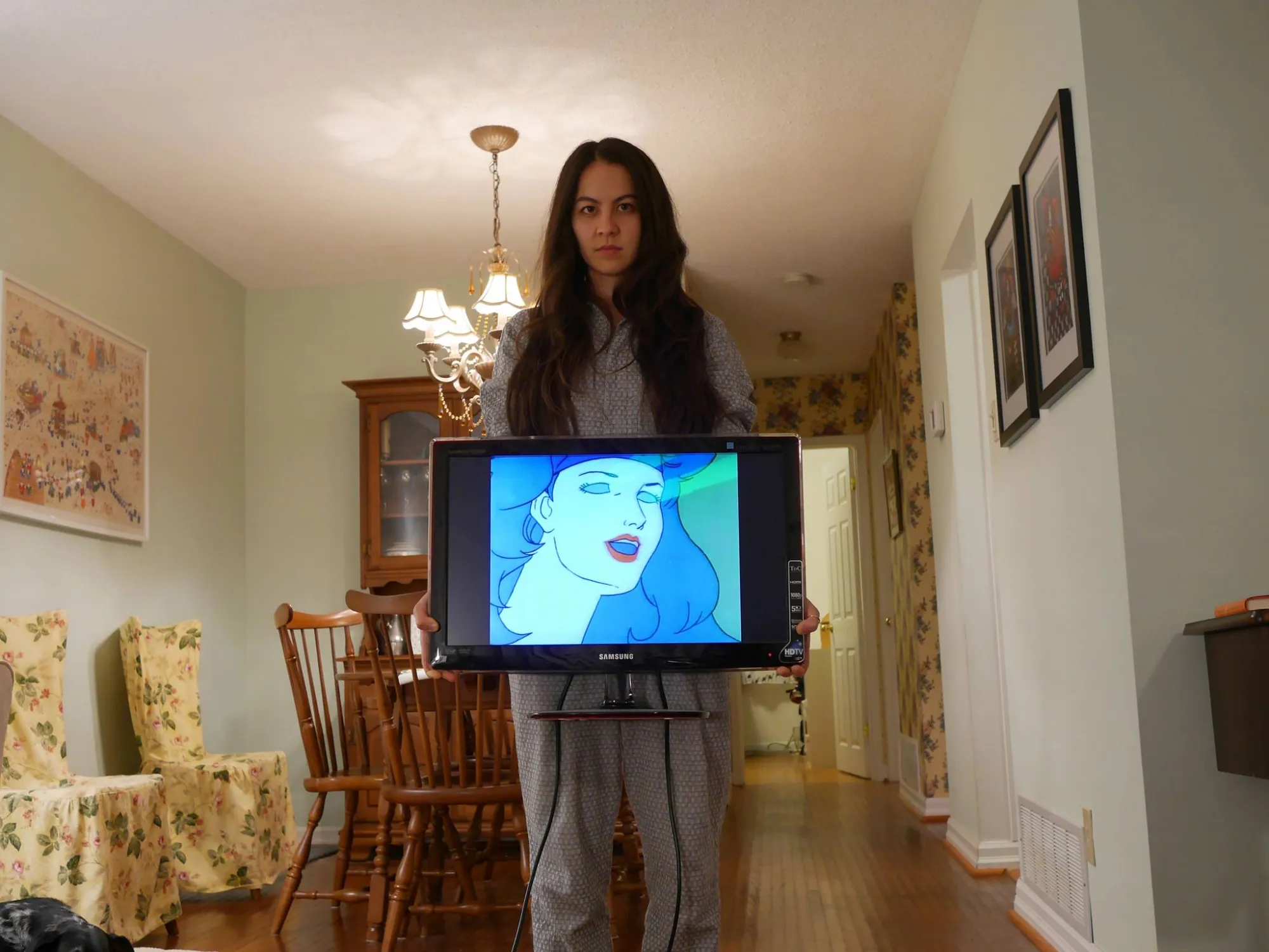
Alison Kobayashi standing in a traditionally styled dining room behind a screen showing a cartoon woman.

Alison Kobayashi

iEAR Presents!

Showing early video works and documentation from Kobayashi's highly acclaimed and award-nominated performance SAY SOMETHING BUNNY.

Main Image: Alison Kobayashi. Photo: Courtesy the artist.

Image
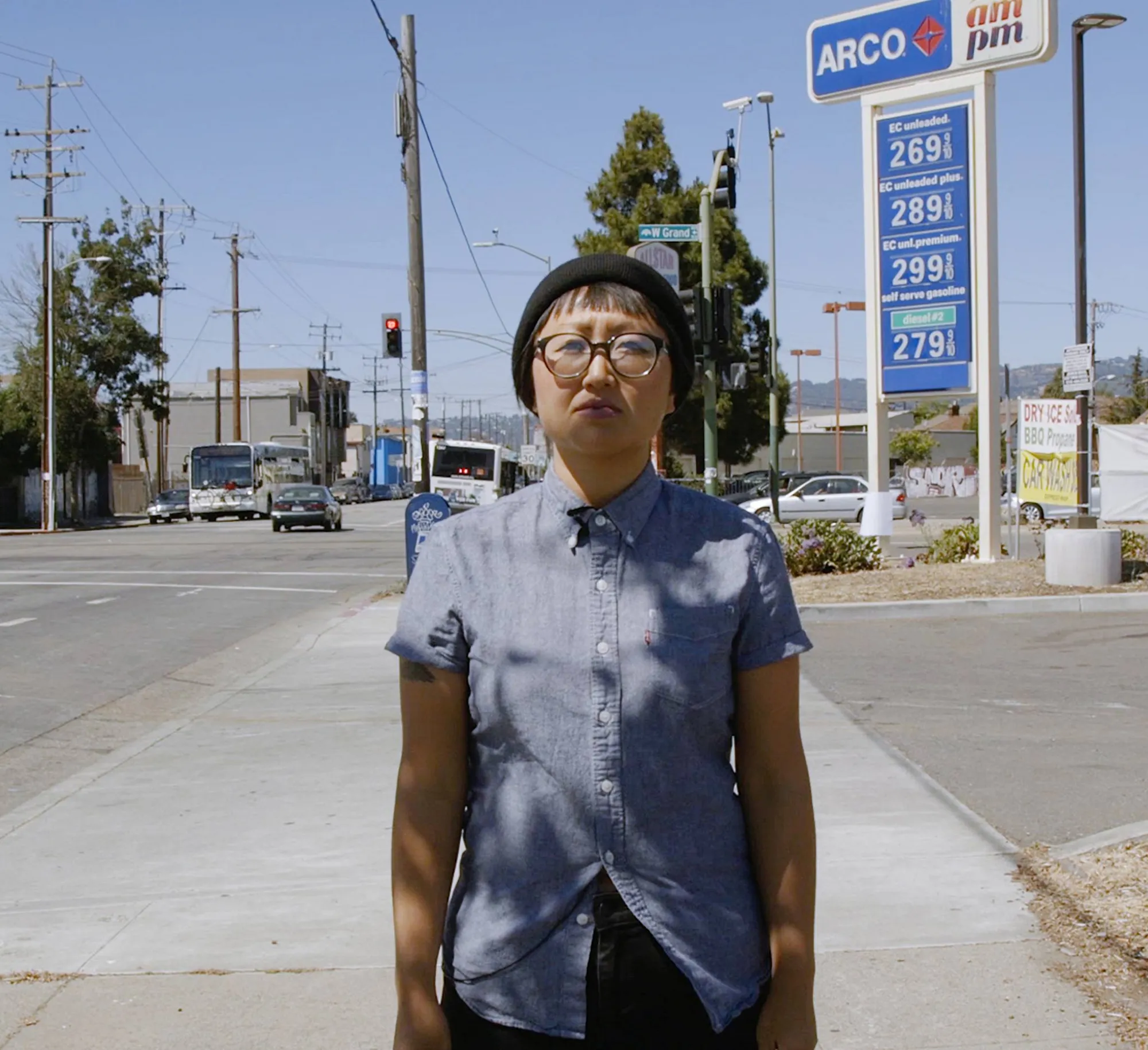
Mel Chen

Slowness and Agitation as Embodied Politics

Mel Y. Chen

While conversations about posthumanism in the ‘90s and early aughts circled images of cyborgs and artificial intelligence, more recent thinking around the term has brought the conversation into the field of animal studies, examining the political, social, and ecological implications of the relationships between human and non-human animals. Mel Y. Chen‘s book Animacies: Biopolitics, Racial Mattering, and Queer Affect explores animate and inanimate, human and inhuman life in relation to disability, race, gender, and sexuality. Chen is at EMPAC to give a talk on their current research, which follows on the concerns of Animacies. This work explores the concepts of slowness and agitation in relation to what Chen calls “intoxication,” a term that invokes various forms of toxicity in our contemporary world. 

Chen comes to EMPAC while visiting Williams College as the Robert Sterling Clark Professor during the 2018-2019 academic year, and is Associate Professor of Gender & Women’s Studies at University of California, Berkeley where they are affiliate of the Center for Race and Gender and the Institute for Cognitive and Behavioral Sciences. Animacies won the Alan Bray Award from Modern Language Association’s GL/Q Caucus.

Main Image: Mel Y. Chen.

Image
An illustration of a human body playing a mandolin with a gauge or clock as a head.

An EMPAC Salon

Johannes Goebel

Johannes Goebel will present some of his work from the time before he came to Rensselaer to become EMPAC’s founding director. The perspectives and positions shining through his personal music, texts, and projects may shed some light on foundational aspects of EMPAC’s building and program.

When he became responsible for setting up and programming large environments for artistic production, Johannes Goebel stopped his own artistic practice. The power over facilities and production means granted to him as director appeared as a conflict of interest with his own artistic work. Between 1990 and 2002, he was the founding director of the Institute for Music and Acoustics at the Center for Art and Media ZKM Karlsruhe; the Institute became the largest studio and production environment in Germany for contemporary music and technology, including intermedia and interactive works, as well as scientific and engineering research. Coming to Rensselaer, he was involved in the design, specification, and construction of the EMPAC building, as well as establishing the curatorial and production teams, the artist-in-residence program, event programming, and research. This event may serve to consider his work and experience before he became “institutionalized” and the role it has played in his approach to creating opportunities for others to create new works.

The program of the evening will be a collage of widely varying projects ranging from computer-generated music and music for custom-built instruments to the recitation of non-scientific reflections on computers, artificial intelligence, and human-computer interaction. It will include examples from his years in the field of “free improvisation with non-traditional instruments” to projects realized with dancers, architects, and visual artists.

Drinks and snacks will be served.


Media

An EMPAC Salon: Johannes Goebel. February, 2019.