Image
An arm with an illegible tattoo on the wrist reaches across a purple background.

The Unreliable Narrator

Martine Syms

Los Angeles-based artist Martine Syms is in residence at EMPAC to shoot An Evening with Queen White, part of a new feature-length film project to be shot using a 360-degree camera rig. For this event, Syms will introduce a program of videos by herself and others, alongside a discussion of moving images that have been influential to her work.

An artist, performer, and designer, Syms also founded the imprint Dominica Publishing, which publishes artist books exploring blackness as a topic, reference, marker, and audience in visual culture. Her book Implication and Distinctions: Format, Content and Context in Contemporary Race Film considers performances of blackness in mainstream cinema from 1990 to the present. Other work includes The Mundane Afrofuturist Manifesto, which calls for the culture of the African diaspora to focus its energy on Earth rather than toward transcendence in the cosmos.

PROGRAM
  • My Vine Comp (2016) Martine Syms
  • Century (2012) Kevin Jerome Everson
  • footage from a studio test of NO NO NO (2013) Sondra Perry
  • Untitled (Saturday, October 16, 1993) (2015) Rami George
  • Monkey (2016) Marco Braunschweiler
  • Nine Hour Delay: Printemps-Été-Automne-Hiver 2058 Irena Haiduk
  • The Fall of Communism (2014) Hannah Black
  • The Borrowers (Ndinda) (2015) Nicole Miller
  • The Bucket (2015) Asha Schechter
  • Doomed Poet 1-4 (2016) Theo Darst
  • Contemporary Artist (1999) Ximena Cuevas
  • Double (2001) Kerry Tribe

Watering the Flowers is a new year-long screening program. Each evening focuses on a recent film or video by an EMPAC-affiliated artist, and will be succeeded by a program of other shorts or features that were influential in the making of their work, whether fiction or documentary, experimental or commercial. 

Main Image: Martine Syms Notes on Gesture. Courtesy the artist.

Image
abstract orange, teal, purple, and brown splotches.

Return of the Electric Love (Take II)

Ephraim Asili

Hudson-based artist Ephraim Asili will screen and discuss his recent film Return of the Electric Love (Take II) and other films that are influential to his work. Return of the Electric Love (Take II) is an optically printed 35mm film made from found footage of Kung Fu movies. The sequel to a film Asili had recently completed, which was immediately lost in transit from the film lab, Return of the Electric Love (Take II) reuses this same archive of footage as its source material. His technique of re-photographing short gestural sequences from the original films adds washes of color to the action.

A riot of fast-paced images and their fractured, synchronized soundtracks, the film moves from repetitive Kung Fu gestures—flying kicks and spins—to abstract blocks of color, each frame saturated red, pink, green, and blue in quick succession. In the making of this film, the projector light picked out the time-worn scratches, dust, and water damage etched upon the surface of the celluloid. Asili then photographed these marks using the optical printer and exposed new frames. At times these imperfections dance across the screen, as much a part of the image as the bodies of the martial artists. 

Ephraim Asili is an African-American artist, filmmaker, DJ, radio host, and traveler. Inspired by his day-to-day wanderings, Asili creates art that situates itself as a series of meditations on everyday experience and media culture. Through audio-visual examinations of societal iconography, identity, geography, and architecture, Asili strives to present a personal vision. The results are perhaps best described as an amalgam of pop, Afri­can-American, and “moving image” culture, filtered through an acute sense of rhythmic improvisation and compositional awareness. Asili teaches at the Film and Electronic Arts Department at Bard College and hosts a radio show on WGXC 90.7 FM Hudson, New York. 

PROGRAM

  • Return of the Electric Love (Take II) (2016) Ephraim Asili
  • Bridges Go Round (1958) Shirley Clarke
  • Very Nice, Very Nice (1961) Arthur Lipsett
  • New York Eye & Ear Control (1964) Michael Snow
  • Made For Television (1981) William Farley
  • Kindah (2016) Ephraim Asili
  • Halimuhfack (2016) Chris Harris
  • Blacktop: The Story of the Washing of a School Play Yard (1952) Charles & Ray Eames
  • Lodz Symphony (1993) Peter Hutton

Watering the Flowers is a new year-long screening program. Each evening focuses on a recent film or video by an EMPAC-affiliated artist, and will be succeeded by a program of other shorts or features that were influential in the making of their work, whether fiction or documentary, experimental or commercial. 

Main Image: Return of the Electric (Take II), Ephraim Asili.

Image
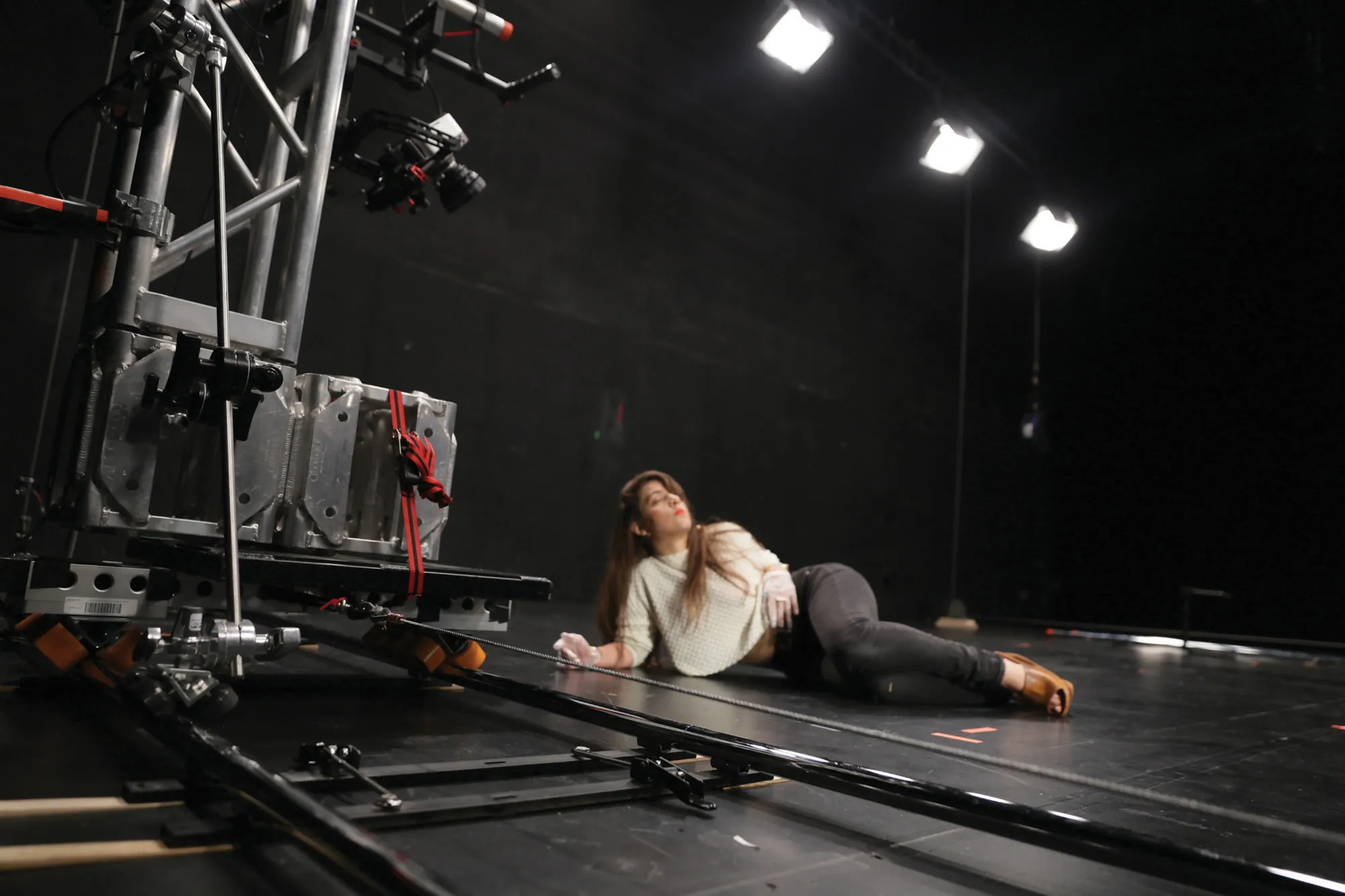
a woman with brown hair wearing a cream sweater and black pants laying on her side on a black stage.

Patricia L Boyd

Artist-in-residence Patricia L Boyd invited audiences behind-the-scenes to experience the mechanical configuration of her video in mid-production. This work-in-progress event was presented as a “live filming” with performer Nour Mobarak, a Los Angeles-based poet and voice-over artist.

For the shoot, a networked group of cameras were rigged in EMPAC’s Theater to run continuously, recording horizontal and vertical tracking shots in constant motion. This apparatus, which Boyd described as an “overactive metabolism,” is programmed to run automatically, and a human subject, often seen in bed, is captured (in both senses) and made visible through the infrastructure of these multiple perspectives. The footage produced became a new moving-image work, called Negative Reps, which premiered in early fall 2016. The project came out of Boyd’s research into exhaustion and its management as internal to and constitutive of biopower. 

Relocated from the UK to the Bay Area, Patricia L Boyd has presented solo exhibitions at Jan Kaps, Cologne; Kiria Koula, San Francisco; TG, Nottingham; YEARS, Copenhagen (with Rachal Bradley); Modern Art Oxford; and OHI0, Glasgow. Boyd has exhibited internationally in group shows including Steirischer Herbst, Graz; Gasworks, London; and the 12th Lyon Biennale.

Main Image: Patricia L. Boyd. Photo: EMPAC

Image
CGI abstract image in red and gray.

Bernd Lintermann

Art and Science: Pushing the Limits of the Creative Process in Media Art

On April 21–22 internationally renowned researchers Bernd Lintermann and Markus Noisternig will give insight into the most sophisticated computer-based applications in real-time generated immersion for sight and sound. Both have been collaborating with EMPAC's research, production and development of new technology and new works.

Bernd Lintermann works as an artist and scientist in the field of real-time computer graphics with a strong focus on interactive and generative systems. The results of his research are applied in the scientific, creative, and commercial context. While at EMPAC, Lintermann will present a pair of talks to introduce work being done at the intersection of art and science and outline specific computational strategies. Lintermann and his software were the foundation for the first big multi-year EMPAC production, the panoramic, interactive film by the Wooster Group, made for the opening of EMPAC. He has worked with internationally renowned artists, like Bill Viola, Jeffrey Shaw, and Peter Weibel, and has created a vast range of interactive, immersive, and 3D environments. One significant example is the software Xfrog, a procedural modeling and animation system with a focus on complex organic structures used by various entertainment companies, including Electronic Arts, Lucas Digital, and Digital Domain. The software has been used in movies such as Avatar and Alice in Wonderland. In 2015, Xfrog was nominated for a Scientific Achievement Award by the Academy of Motion Pictures.

Part One (2 PM):

Art and Science: Pushing the Limits of the Creative Process in Media Art I In his first presentation, Bernd Lintermann will give a technical introduction to computational strategies he developed for algorithmic modeling, interactive scenarios, and immersive environments, including the software Xfrog. This talk is especially geared towards programmers, artists, and practitioners of digital media.

Part Two (7 PM):

Art and Science: Pushing the Limits of the Creative Process in Media Art II In the second presentation, Bernd Lintermann will present examples from the oeuvre of works he has developed in various interactive media formats, also in 3D stereoscopic projection. These will include virtual reality installations for museums, stage performances, panoramic and dome projections, and stereoscopic projections for music concerts. This presentation will provide an experiential encounter with Lintermann’s work and a point of reference for where the frontiers of art and science are today.

Main Image: SonoMorphis (2016) Bernd Lintermann. 

Commencement Colloquy

The Unity Underlying Diversity: Multi-cultural, Intellectual, and Geographic
Image
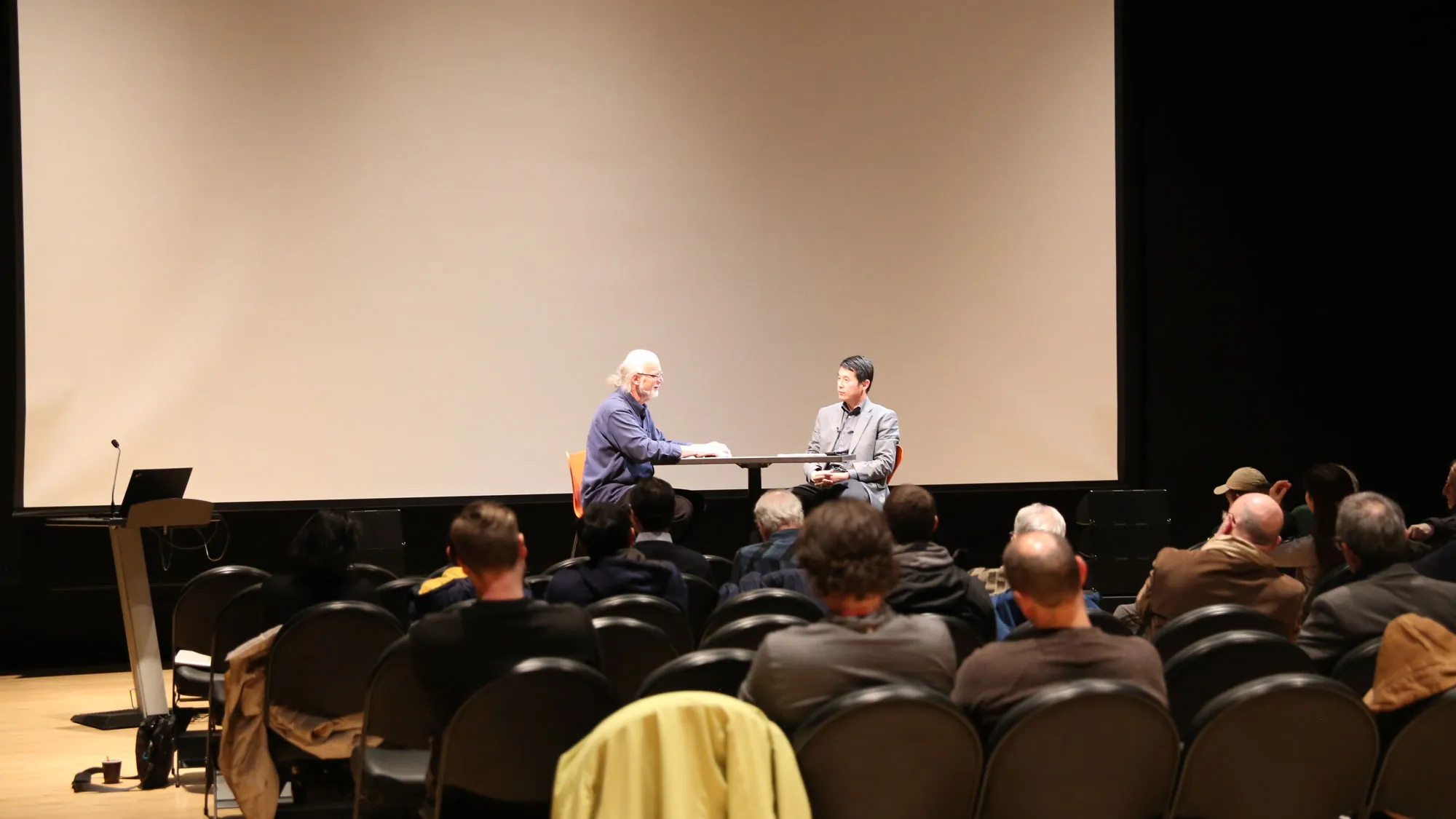
Johannes Goebel and Hui Su in discussion in front of a seated crowd.

Vectors and Circles: CISL and EMPAC

A Conversation with Johannes Goebel and Hui Su

EMPAC has been designed from the beginning as a center where art, science, and technology “meet under one roof and breathe the same air” through research, development, production, and performance. CISL @ EMPAC is a new, substantial research initiative between Rensselaer and IBM, which uses the infrastructure of EMPAC to further expand the intellectual and artistic discourse at the intersection of digital technology and the human condition.

IBM and Rensselaer launched the Cognitive and Immersive Systems Laboratory (CISL) as part of the IBM Cognitive_ColloquiumNY, which was held at EMPAC on November 18, 2015. The name of the laboratory indicates the convergence of a major research enterprise in cognitive computing with what is unique about EMPAC.

Hui Su, the director of CISL, and EMPAC director Johannes Goebel come from two ends of a wide-ranging spectrum. Su is the former director of the IBM Research Lab in Cambridge, MA, and holds expertise in multiple areas ranging from Human Computer Interaction, Cloud Computing, Visual Analytics, and Neural Network Algorithms for Image Recognition. Goebel, during his long career in the arts (with and without the “high-tech”), has been responsible for the programmatic, technical, and functional design of EMPAC. In this initial phase of CISL, the two had lively ongoing discussions as to where and how computing and the human condition meet.

This conversation was meant to open the public discussion around these topics and create a fruitful atmosphere for exchange on science and art from many different perspectives.

Main Image: Johannes Goebel and Hui Su in studio 2 during their discussion.

Media
Image
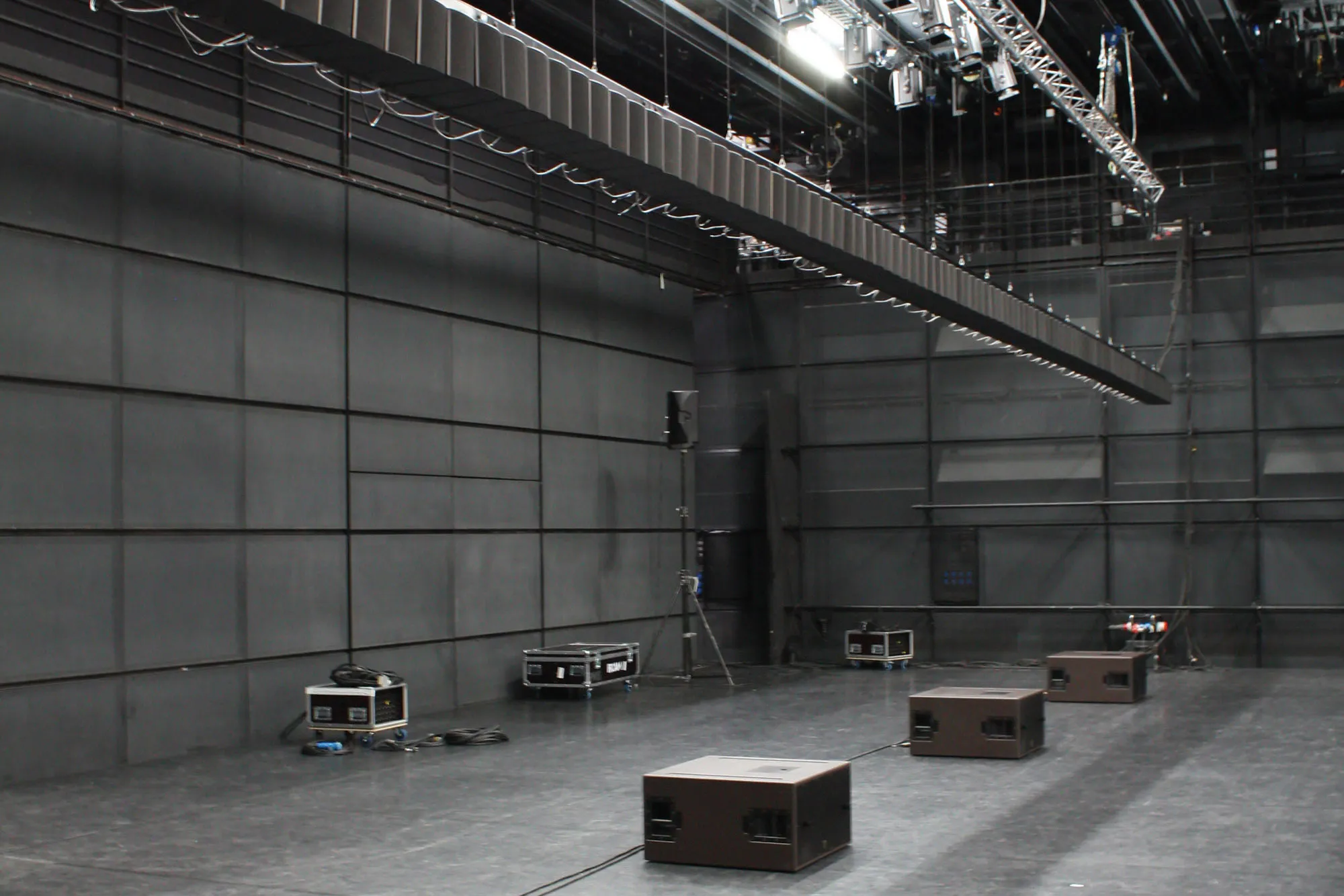
Empty grey black box studio.

Markus Noisternig

Modern 3D Audio Technologies and the Relationship Between Sound and Space

Recent advances in 3D audio technologies have given rise to new ways of creating spatial experiences with sound and in music. Sound is not only composed as moving along in time but also through the space surrounding the listeners. In playing with spatial relationships in musical performance, artists may access a further dimension of expressivity, and this play can redefine our understanding of sound in space. Along with rhythm, melody, harmony, and the "color" of sound, space has become an essential expressive element in music composition and performance.

This talk gives a brief introduction to modern 3D audio technologies, such as Wave Field Synthesis (WFS) and Higher-Order Ambisonics (HOA), and discusses their respective advantages and limits. It offers some insights into how the use of new sound projection and recording technologies helps create novel musical effects.

The visit of Markus Noisternig comes in collaboration with EMPAC's development of an innovative Wave Field System composed of 500 quite small loudspeakers, which uses the software developed at IRCAM.

Photo: EMPAC/Rensselaer

Jennifer West

Film Memory

Los Angeles-based artist Jennifer West was in residence to develop Film Memory, an installation in which she integrated 100 channels of film to explore cinema as a material repository of memory.

A night of unabashed film love that delved into the darkened make-out corners of cult and mid- night movie theaters, celebrated the circulation of VHS bootlegs, and tracked through the video rental houses, multi-screen drive-ins, discount multiplexes, art house theaters, lecture halls, and museums of film culture, ending up in today’s tangled web of digital file sharing and online- streaming platforms. An elegy to our ever- changing cinematic contexts and their continued transition to the virtual world, the event reached beyond the frame to reveal how our experience of celluloid and its circuits of distribution function both as a catalyst for personal memory and as a tool to trace unconsidered histories.

Jennifer West was in residence to develop Film Memory—a feature-length film and multi- channel installation exploring the moving image as material memory. Constructed as a “personal historical survey” of cinema, it captures and reconnects the places, spaces, languages, and memories that are born from the cinematic experience.