Image
Katherine Hayles

N. Katherine Hayles

Performing Technogenesis: The Affective Power of Digital Media

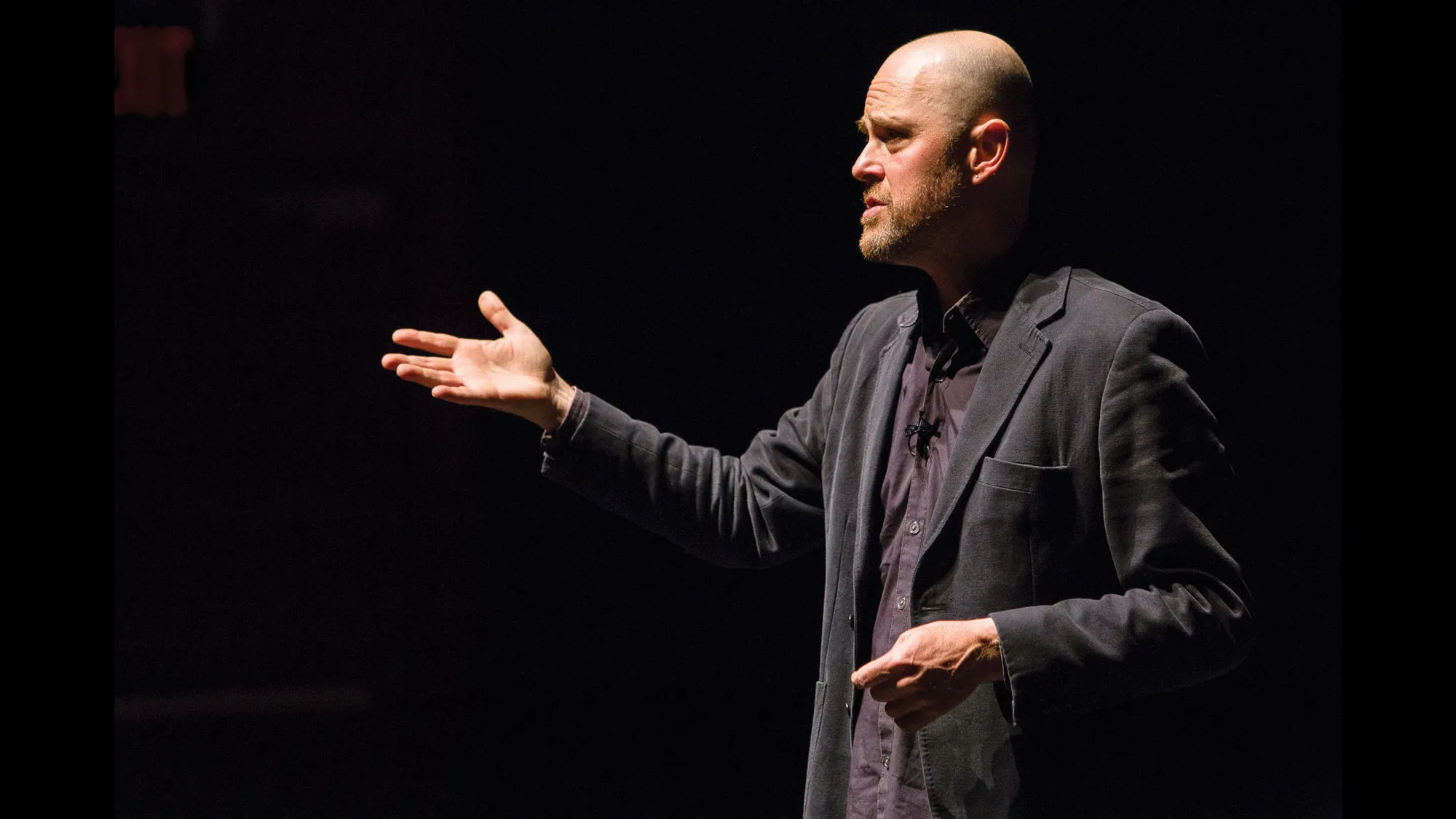
In this talk, N. Katherine Hayles explored how digital media is changing us, and on what levels and in what ways. She examined the co-evolution of technical objects and contemporary humans, arguing that our intense engagements with digital media affect us not only through conscious channels but also through unconscious and nonconscious modes, as well, illustrated with examples drawn from gaming and electronic literature. 

Hayles, professor of literature and director of graduate studies at Duke University, writes and teaches on the relationships of literature, science, and technology in the 20th and 21st centuries. Her most recent book is How We Think: Digital Media and Contemporary Technogenesis. Hayles has received numerous awards and fellowships, including a Guggenheim, two National Endowment for the Humanities fellowships, and a Rockefeller Residential Fellowship at Bellagio.

Observer Effects offered a dialogue between the fields of art and science. The title was derived from the principle in physics that the act of observation transforms the observed, an idea that has been influential in philosophy, aesthetics, psychology, and politics.

Main Image: N. Katherine Hayles during her talk in the theater, 2013.

Image
Two balinese instruments made of ornately carved wood held together by red string standing on a black floor. A small bouquet of flowers sits in front of them

About Differences: Art, Science, Engineering

Johannes Goebel

Engineering, science, and art are often seen as having common ground. This is fed by a romantic view of Leonardo da Vinci, the genius who brought these disciplines together in his mind, life, and practice, and by an enthusiastic view of computer technology that continuously provides new scenarios and tools, which are used in all three fields. Rather than putting everything into one bag and shaking it before deep-frying the mixture, Goebel instead looked at the differences of the three fields in their motivations, methodologies, and goals. From a clear and respectful view of these differences, a potential for collaboration and cross-pollination might evolve. 

Johannes Goebel joined Rensselaer as director of the Experimental Media and Performing Arts Center (EMPAC) in 2002.

Image
Alva Noe

Alva Noë

See Me if You Can! Art and the Limits of Neuroscience

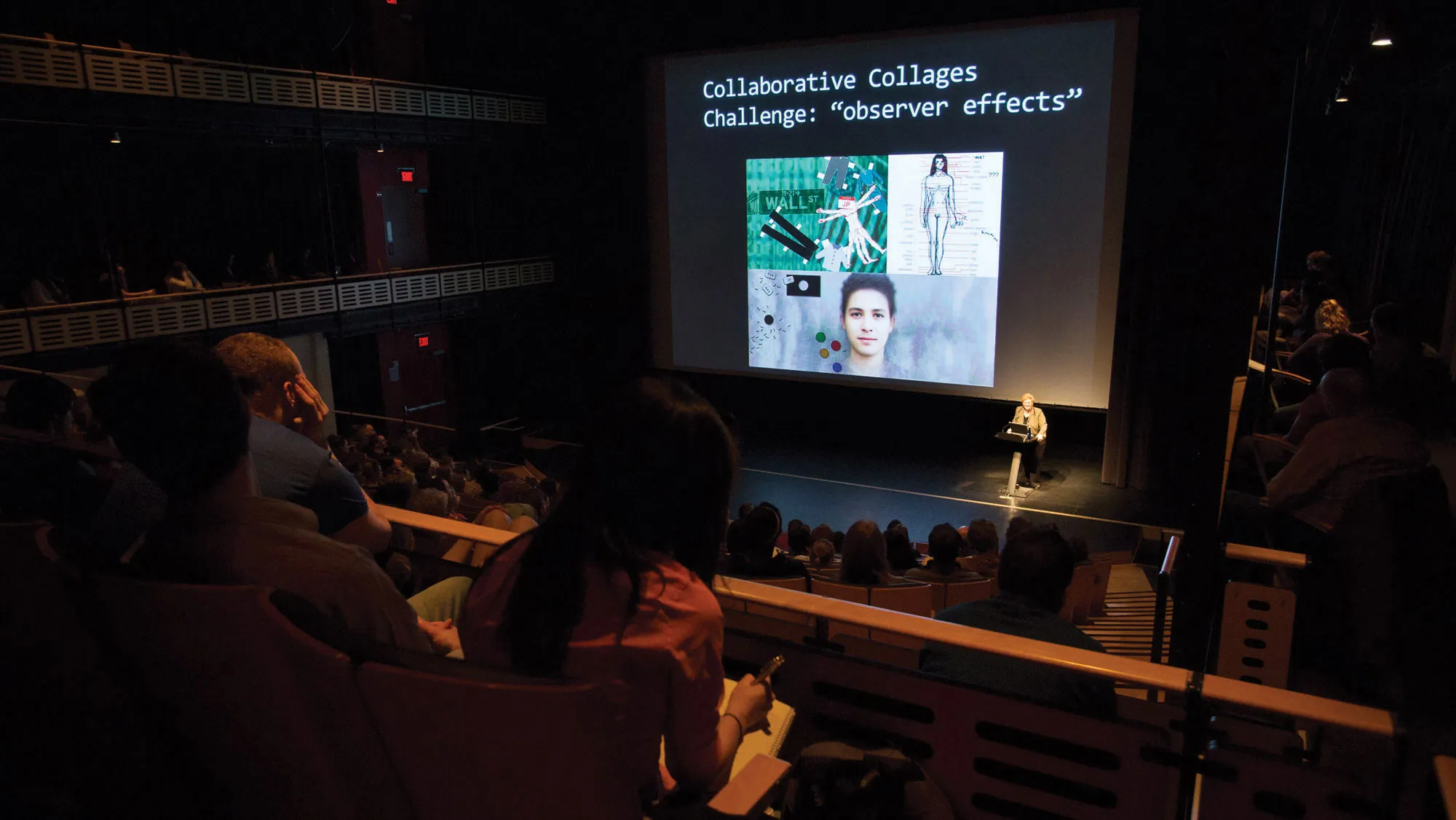
New ways of thinking about the nature of visual consciousness allow us to reconsider art and its place in our lives. In this talk, Alva Noë, a leading figure in cognitive science, argued that art is philosophical and philosophy is aesthetic. Against this background, there are new possibilities for understanding what it is to be a person, asking if our experience of the world stems from the firing of neurons in our brains or from our interactions with our surroundings. 

Noë is a writer and a philosopher who works on the nature of mind and human experience. He is the author of Action in Perception (MIT Press, 2004) and Varieties of Presence (Harvard University Press, 2012). Noë is a professor of philosophy at the University of California, Berkeley, where he is also a member of the Institute for Cognitive and Brain Sciences and the Center for New Media. Noë is a 2012 recipient of a Guggenheim fellowship, and is a weekly contributor to National Public Radio’s science blog 13.7: Cosmos and Culture.

Observer Effects offered a dialogue between the fields of art and science. The title was derived from the principle in physics that the act of observation transforms the observed, an idea that has been influential in philosophy, aesthetics, psychology, and politics.

Main Image: Alva Noë in the theater in 2013. Photo: EMPAC/Rensselaer.

Media

Updates on Shale Gas Research

A Systems Approach

The Panel

Escalating investment in natural gas extraction over the last few years has provoked sharp debate, and also extensive research into associated risks. Studies have examined the technologies and processes used in shale gas extraction, the extensive infrastructure required, economic implications at local, national and international levels, and impacts on soil, air, water, human health and social life. This panel discussion will explore the implications of these research findings, and what further research needs to be carried out.

The panel will be co-chaired by RPI Professors Philippe Baveye (School of Engineering) and Kim Fortun (School of Humanities, Arts and Social Sciences).

The panel will start with the New York premier of the short film Fracking our Future, made by RPI Professors Yuri Gorby (Environmental Engineering) and Branda Miller (Arts), and RPI alum Elizabeth Press. Panelists will describe recent developments in their own work, and how recent research findings have shaped their perspectives and the grounds for collective deliberation about our energy future. An open discussion period will follow.

Panelists include:

Professor David Carpenter, MD Director, Institute for Health and the Environment, SUNY Albany

Professor Yuri Gorby, microbiologists, Department of Environmental Engineering, RPI

Professor Branda Miller, video artist, Department of Arts, RPI

Katherine Nadeau, Water and Natural Resources Program Director, Environmental Advocates of New York

Collin Thomas, Co-founder Capital District Against Fracking

Wei Zhou, Lecturer, Mechanical Aerospace and Nuclear Engineering, Rensselaer Polytechnic Institute

The Film

Fracking the Future tells the stories of people in West Virginia, Pennsylvania, and Ohio impacted by rapid expansion of the shale gas industry, highlighted effects on human health and everyday life.  The film is narrated by Rensselaer Professor of Environmental Engineering Yuri Gorby,  centering on his hometown in Bethany, West Virginia, and looks at the impact on health for residents living within a one mile radius of drilling sites. Director, Elizabeth Press. Executive Producer, Professor of Arts Branda Miller.

Be sure to check out our resources on fracking research.

Secondary School Frack Out!

In the fun tradition of RPI Freakout! for hockey, we will run a Jeopardy game that quizzes players about natural gas as an energy resource. To get ready for the game, players will be given a quick tour of the media war that increasing investment in natural gas has provoked. No prior knowledge of natural gas is expected. Game is designed for students in grades 6-9.

Green Building for Elementary School Students

Elementary students will be given a tour through the environmental problems caused by buildings, and then learn how green buildings can be designed. Each student will build their own green building, then find a place to locate it in a green city.

David Dunn

Sonic Interventions into Hidden Sound Worlds: A Composer at the Edge of Science

Abstract

For over three decades there has been an ongoing discourse addressing the role that the sonic arts can play in increasing our collective awareness to environmental issues through sensitizing us to the soundscape. A variety of approaches and strategies have used experimental music practices and audio recording technologies to document, compose, preserve, study, manipulate, intensify, and otherwise attempt to bring issues of the natural environment into foreground awareness through sound. This presentation will focus upon composer David Dunn’s participation in projects that have attempted to bring artists and scientists together towards applied environmental problem solving. These projects illustrate how the sonic arts might move beyond documentary and sensory heightening strategies alone towards participation in both scientific research and subsequent interventions to growing environmental dilemmas.

Bio

David Dunn, composer and environmentalist, collaborates with scientists to make sonic art that moves from documentation and aesthetics to applied environmental problem solving. He is Director of the Art & Science Laboratory in Santa Fe.