Image
a group of people making a sculpture from pallets in a black box studio

Raft

Yanira Castro

Yanira Castro and a team of design collaborators, including Kathy Couch and RPI alum Stephan Moore, develop the environment for their audience-activated performance and audio installation, Raft, in advance of its April 2026 presentation at EMPAC.

Main Image: Yanira Castro, Raft, 2025. Courtesy the artist. 

Image
Sarah Davachi at a manual

The Rose Dialogues & Interludes

Sarah Davachi

TOPOS presents the world premiere of a newly commissioned work by celebrated composer-performer Sarah Davachi. The Rose Dialogues, scored for two violas, cello, organ, and electronics, begins with the simplest of musical devices—the canon (or, which can colloquially be thought of as a round)—and spins an oceanic world of unexpected harmonies, haunting melodies, and formal surprises.

The topos of Davachi’s work is listening itself. Her music invites a deep attention, drawing us gently into the slow blossoming of her sonic landscapes. Within the veritable ocean of alternate tunings and temperaments, we are carried by waves of respite and repose, a darker pull that nudges us toward the unexpected.

Joined by musicians Eyvind Kang, Whitney Johnson (violas) and Lucy Railton (cello), Sarah Davachi’s piece moves slowly and with a precise ear for timbre and harmony. Its surprises feel hard-won, emerging from a rigor rooted in early Western compositional techniques: counterpoint, canon, heterophony, polyphony. And yet, her music is timeless, a dilated present that inches towards an uncertain yet harmonious future. A future that, in listening, seems to go on without end.

The premiere performance of Davachi’s The Rose Dialogues & Interludes at TOPOS is preceded by an onstage conversation with the composer.

Main Image: Sarah Davachi. Courtesy the artist.

Image
xenakis sitting on a rock in 1971 while being interviewed for the film.

Xenakis Portrait 1971–72

Directed by Pierre Andrégui

A spectacle of sound and light, Greek composer Iannis Xenakis’s epic work Persepolis was originally commissioned by the Shiraz Festival in Iran, taking place in the ruins of the Temple of Darius in the Iranian desert on August 26, 1971. The performance—lasting over an hour starting at sunset—included two lasers, military searchlights, huge bonfires, 150 torch-bearing children, and six listening stations outfitted with eight-channel speakers, one for each track of Xenakis’ electroacoustic score.

Persepolis was the second of Xenakis’s Polytopes, large-scale works—from the Greek language poly meaning many and topos meaning place—monumental works that sought to fuse sound, light, colors, and architecture into a single, immersive site of sensory experience. For Xenakis, the topos was not just spatial but sensorial: an encounter with the totality of an intermedial artwork.

Reimagined for EMPAC Studio 1 by sound artist and composer Micah Silver, Persepolis becomes a magmatic mass of noise, snaking its way across a multitude of discrete audio channels. In many ways, Xenakis’s work is less a concert and closer to an extreme weather event: light, color, raw sound, and stagecraft combine to create a dramaturgy of turbulence, compression, and blistering immediacy, then release. Over the course of an hour, the piece overwhelms—and ultimately expands—the senses, rewarding those who listen and watch with openness.

Preceding the presentation of Persepolis on Saturday, August 30, a rare screening of director Pierre Andrégui’s documentary Xenakis Portrait 1971–72 will shed light on the piece and the strange and fascinating context in which the Polytope Persepolis was born.

Main Image: Film still: Xenakis Portrait 1971–72 (1971), Directed by Pierre Andrégui.

Image
Micah Silver, Iannis Xenakis

Persepolis, Troy 2025

Iannis Xenakis realized by Micah Silver

A spectacle of sound and light, Greek composer Iannis Xenakis’s epic work Persepolis was originally commissioned by the Shiraz Festival in Iran, taking place in the ruins of the Temple of Darius in the Iranian desert on August 26, 1971. The performance—lasting over an hour starting at sunset—included two lasers, military searchlights, huge bonfires, 150 torch-bearing children, and six listening stations outfitted with eight-channel speakers, one for each track of Xenakis’ electroacoustic score.

Persepolis was the second of Xenakis’s Polytopes, large-scale works—from the Greek language poly meaning many and topos meaning place—monumental works that sought to fuse sound, light, colors, and architecture into a single, immersive site of sensory experience. For Xenakis, the topos was not just spatial but sensorial: an encounter with the totality of an intermedial artwork.

Reimagined for EMPAC Studio 1 by sound artist and composer Micah Silver, Persepolis becomes a magmatic mass of noise, snaking its way across a multitude of discrete audio channels. In many ways, Xenakis’s work is less a concert and closer to an extreme weather event: light, color, raw sound, and stagecraft combine to create a dramaturgy of turbulence, compression, and blistering immediacy, then release. Over the course of an hour, the piece overwhelms—and ultimately expands—the senses, rewarding those who listen and watch with openness.

Preceding the presentation of Persepolis on Saturday, August 30, a rare screening of director Pierre Andrégui’s documentary Xenakis Portrait 1971–72 will shed light on the piece and the strange and fascinating context in which the Polytope Persepolis was born.

Main Image: Micah Silver and Iannis Xenakis. 

Media

This album is disc III "Les Polytopes II" of the 5 LP / 5 CD box set "Electroacoustic Works" that celebrates the 100th anniversary of IANNIS XENAKIS (on May 29th, 2022), one of the most influential 20th century avant gardé composers.

Image
King Britt

King Britt presents Liberation Meditations: A Call

with special guests Suzi Analogue and Myles Ortiz-Green

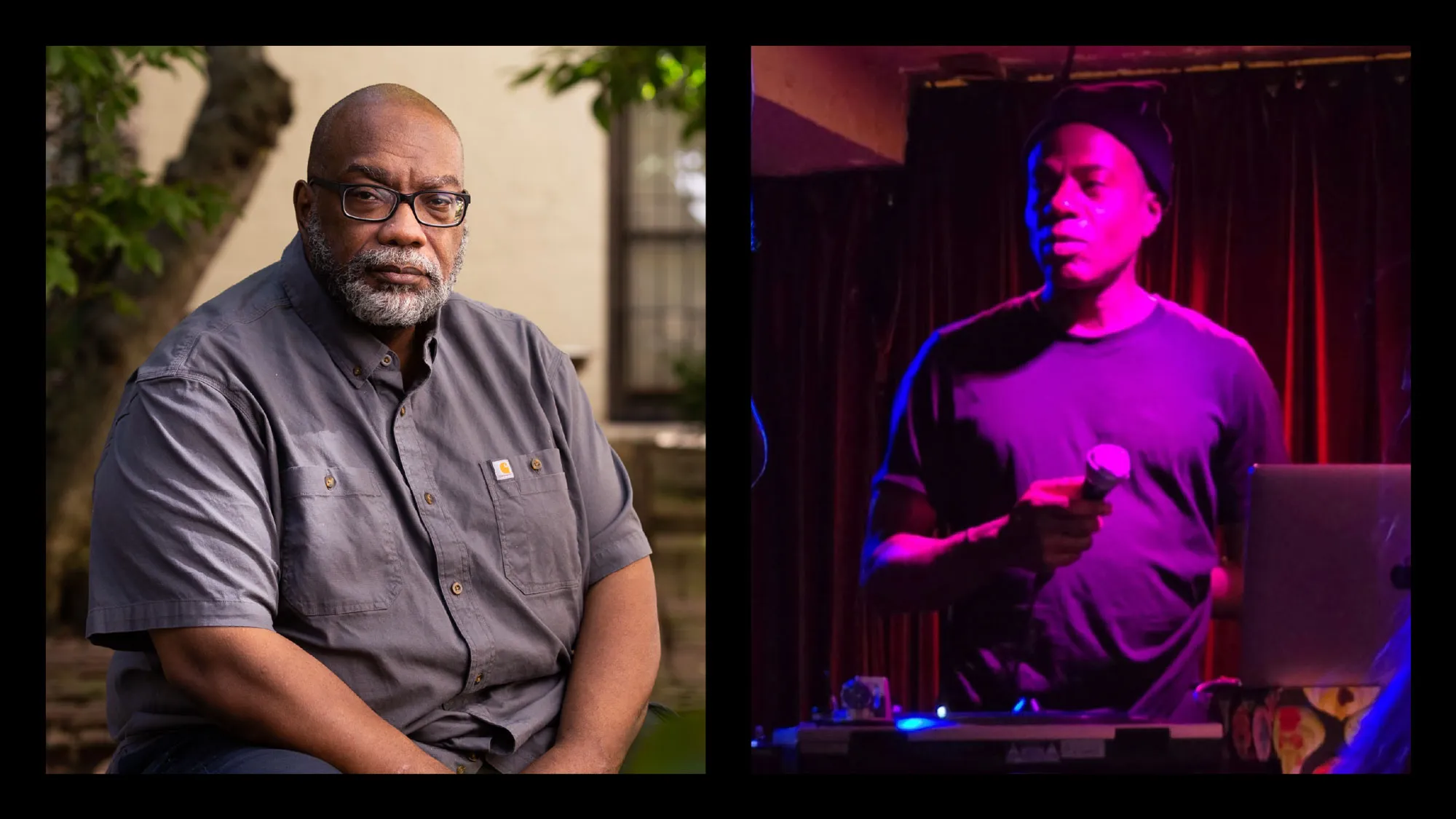
Pioneering producer, composer, and performer King Britt brings Liberation Meditations: A Call to TOPOS, joined by collaborators Suzi Analogue and Myles Ortiz-Green. Within the 39-speaker spatial soundscape of EMPAC Studio 1, turntables, analog synths, and digital textures are marshalled to move bodies–physically, emotionally, spiritually.

This is dance as ritual, rhythm as resistance. The topoi here are movement, celebration, and gathering—a communion forged through frequency and vibration:

“In times of chaos, the practice of centering oneself becomes not merely beneficial, but essential. Music (and movement) have long served as vital instruments of liberation and spiritual practice,” King Britt says, “functioning as forms of sonic centering. Mantras, in particular, have held a profound role in facilitating ritual connections to source energy, often yielding tangible physical and mental healing. These practices have been especially crucial to the endurance and resilience of communities of color.”

Liberation Meditations: A Call draws from deep archives—historic speeches, interviews, fragments of collective memory—reframed and recomposed as mantras grounded in the ethos of freedom. The result is an improvised, immersive, and spatial offering: healing in intent, ancestral in knowledge, futuristic in sound.

Together, King Britt, Suzi Analogue, and Myles Ortiz-Green, seek to elevate the mind, body, and spirit, to create a space for collective resonance and transformation.

Main Image: King Britt, Courtesy the artist.

Media

immerse(d) digital 004: Performance by King Britt

Image
Lazyhorse: Raven Chacon, Miriam Elhajli, Steve Hammond, Mali Obomsawin, and The Living Earth Show

Lazyhorse

Presented by The Living Earth Show, with Travis Andrews, Raven Chacon, Miriam Elhajli, Steve Hammond, Andy Meyerson, and Mali Obomsawin

For TOPOS, Pulitzer Prize–winning composer and visual artist Raven Chacon sheds the gravitas of the art world and returns to one of music’s most raw and immediate forms: the band. Drawing on his roots in noise, thrash, and metal (Tenderizor, KILT, White People Killed Them), Chacon channels that energy into an exploratory, almost meditative excavation of American musical traditions: country, folk, and their haunted echoes.

Lazyhorse marks the latest chapter in Chacon’s nearly decade-long collaboration with The Living Earth Show (percussionist Andy Meyerson and guitarist Travis Andrews). Known for transforming the chamber ensemble model into a platform for genre-defying invention, The Living Earth Show builds immersive sonic worlds with their collaborators. After their lauded piece Tremble Staves, Chacon and the duo return with a new vision, this time centering songcraft, improvisation, and the unruly edges of music.

At its core, Lazyhorse is haunted by the spaghetti western—a film genre that injected moral ambiguity into the clean-cut heroics of the American frontier myth. In Chacon’s hands, these disillusioned antiheroes become sonic archetypes, spectral guides complicit in westward violence, leading us through a landscape where distortion, silence, and satire collide.

Commissioned by EMPAC, Lazyhorse assembles a powerhouse lineup: Mali Obomsawin (bass), Miriam Elhajli (vocals, guitar), Steve Hammond (lap steel), Chacon (keys/guitars), and The Living Earth Show. Together, they form a genre-exploding band that dissects and reconstructs the mythology of Americana, stitching together songs that are as biting as they are hauntingly beautiful.

This is no nostalgia trip: Chacon’s topos is resistance. Lazyhorse confronts the violence of empire through sound, turning the stage into a site of reckoning, reclamation, and radical reimagination.

The Gasholder House is located at 113 Jefferson St. in Troy, NY.

Main Image: Lazyhorse. Courtesy the artists.

Image
a band playing together in a white studio with equipment strewn everywhere.

Lazyhorse

Raven Chacon & The Living Earth Show

Lazyhorse band members Miriam Elhajli (vocals, guitar), Raven Chacon (keyboards/guitars), Mali Obomsawin (bass), Steve Hammond (lap-steel guitar), and The Living Earth Show (Travis Andrews, guitar and Andy Meyerson, percussion) record and rehearse material for a commissioned project and performance created especially for TOPOS Music Festival 2025.

Main Image: Raven Chacon and The Living Earth Show in residence in November, 2024 in Studio 2. Courtesy the artists. Photo: Michael Valiquette/EMPAC.

TOPOS

Music Festival

TOPOS is a gathering for listening, exploration, and discovery—a place where musical experimentalism becomes an experience open to all. Join us for five extraordinary productions that invite inquiry and pleasure, provocation and dance.

From country to house, chamber music to noise, TOPOS features the world premieres of commissioned projects by composer-performers Raven Chacon and Sarah Davachi, alongside performances by King Britt, Suzi Analogue, and Myles Ortiz-Green in Liberation Meditations: A Call.

Two rare presentations of Iannis Xenakis’s landmark electronic piece Persepolis, realized by sound artist Micah Silver, and a screening of the documentary Xenakis: Portrait 1971-72 round out the program. A community barbeque open to all celebrates the festival’s final day.

Each festival event becomes its own topos: a charged site of experience and wonder for every listener.


Schedule

Image
abstract shapes on a scrim in the foreground bathe two musicians sitting at a table working on their computers in the background in a black studio.

Ontopoiesis

Rama Gottfried & Yarn/Wire

Constantly evolving scenography, kaleidoscopic lighting, jittery electronic sounds, and evocative video projections underscore Ontopoiesis, an EMPAC-commissioned work of experimental music theater. Composer Rama Gottfried, with production designer Anna Paniccia and the experimental music piano and percussion quartet Yarn/Wire, explore new and diverse forms within the intersections of music, experimental theater, and sculpture.

What connects us to our world and shapes our experience of it? How does the world we sense and feel change and grow with us? And how do we in turn shape the world?

The sounds of Ontopoiesis’s whimsical world are multifarious: bowed piano strings form clouds of fuzzy distortion; hyper-detailed, granularly-synthesized caterpillar feet; digital lightning storms and open-air ambisonic field recordings. Through a sonically and visually rich palette of musical characters and landscapes, Ontopoiesis seeks to express life as a self-organizing, self-creating phenomenon–one that ties us deeply to our surroundings, forming unique, subjective experiences. Digital and analog synthesizers mix with Yarn/Wire’s virtuosic acoustic and amplified sounds to create blooming percussion textures and complex, interweaving rhythmic patterns. Micro and macro sounds combine to form a vibrant, emergent theatrical ecosystem of sound.

Main Image: Rama Gottfried, Scenes from the Plastisphere, 2020. Courtesy the Artist. Photo: Kobe Wens.

Image
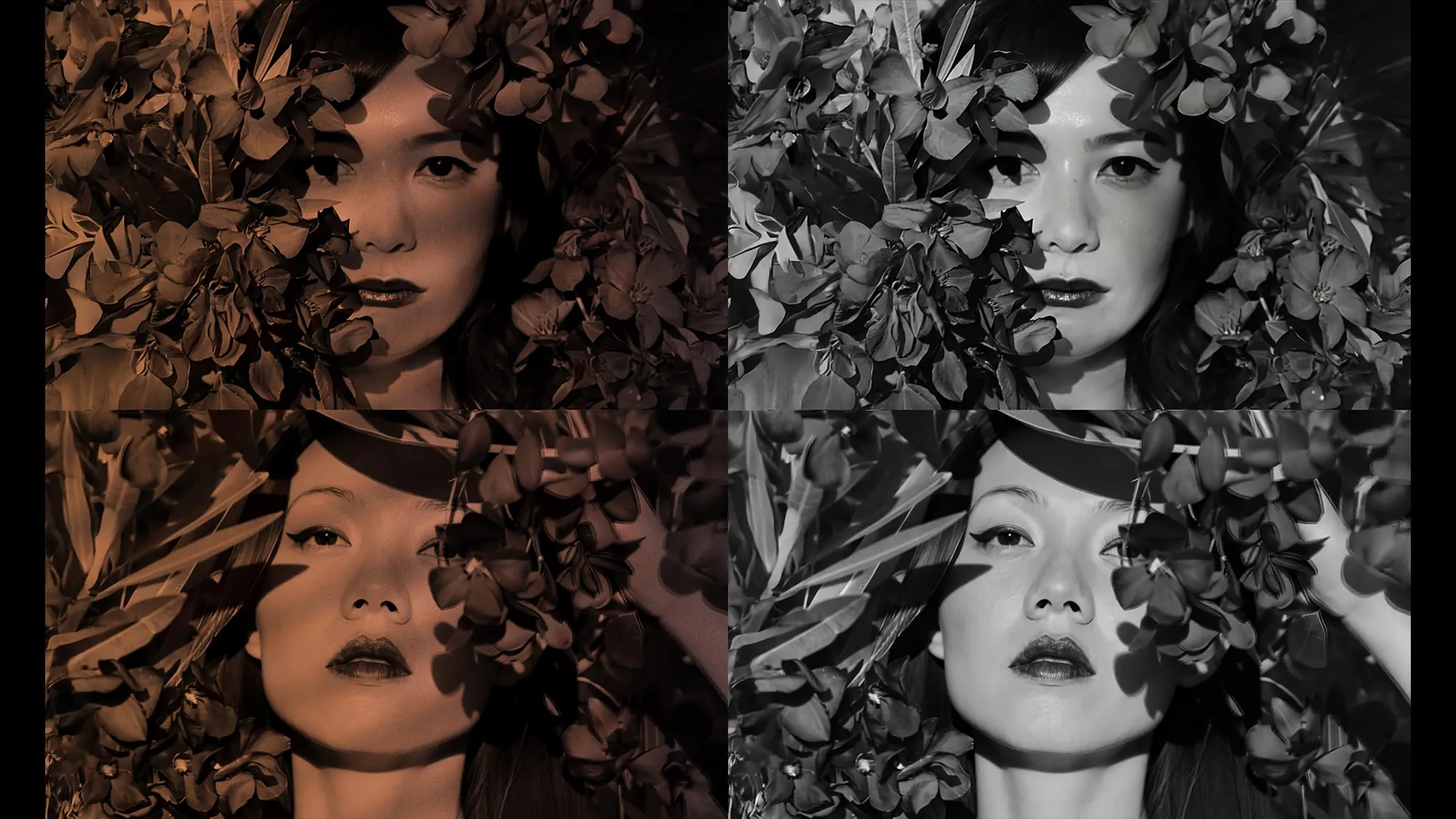
a black and white collage of a man in a gingham dress with cutout flowers on each side

My Town

Jack Ferver

In choreographer and theater director Jack Ferver’s My Town, the small town is a portal that provides special access into questions of self-expression and collective agency. Set loosely in an area of upstate New York, My Town considers the queer experience outside urban metropoles, and the ways physical geography marks the interior terrains of the mind.

Ferver has described the project as “exploring the disappearance of the femme,” taking a queer departure from the classic American play Our Town by Thornton Wilder in which the female protagonist Emily passes away. My Town is closely informed by the experience of building an art practice in the dense and intense environment of New York City, and the piece deals also with Ferver’s experience growing up in a small town in Wisconsin, and experiencing early familial tragedy.

Moving through tragicomic moments of violence, sexuality, and loss, Ferver balances the work with a playfulness and self-awareness that lifts the work into a surreal register. The fluidity of the work is echoed in the video by acclaimed filmmaker and artist Jeremy Jacob that frames the work and interacts with Ferver’s performance, enabling one scene to melt into another as if in a dream.

Ferver shifts through choreography and theatrical sketches throughout the work. As with many of Ferver’s past projects, My Town focuses heavily on constructing a persona, and also plays at the edge of the fictive and the real.

Main Image: Jeremy Jacob. Courtesy the artist.