Image
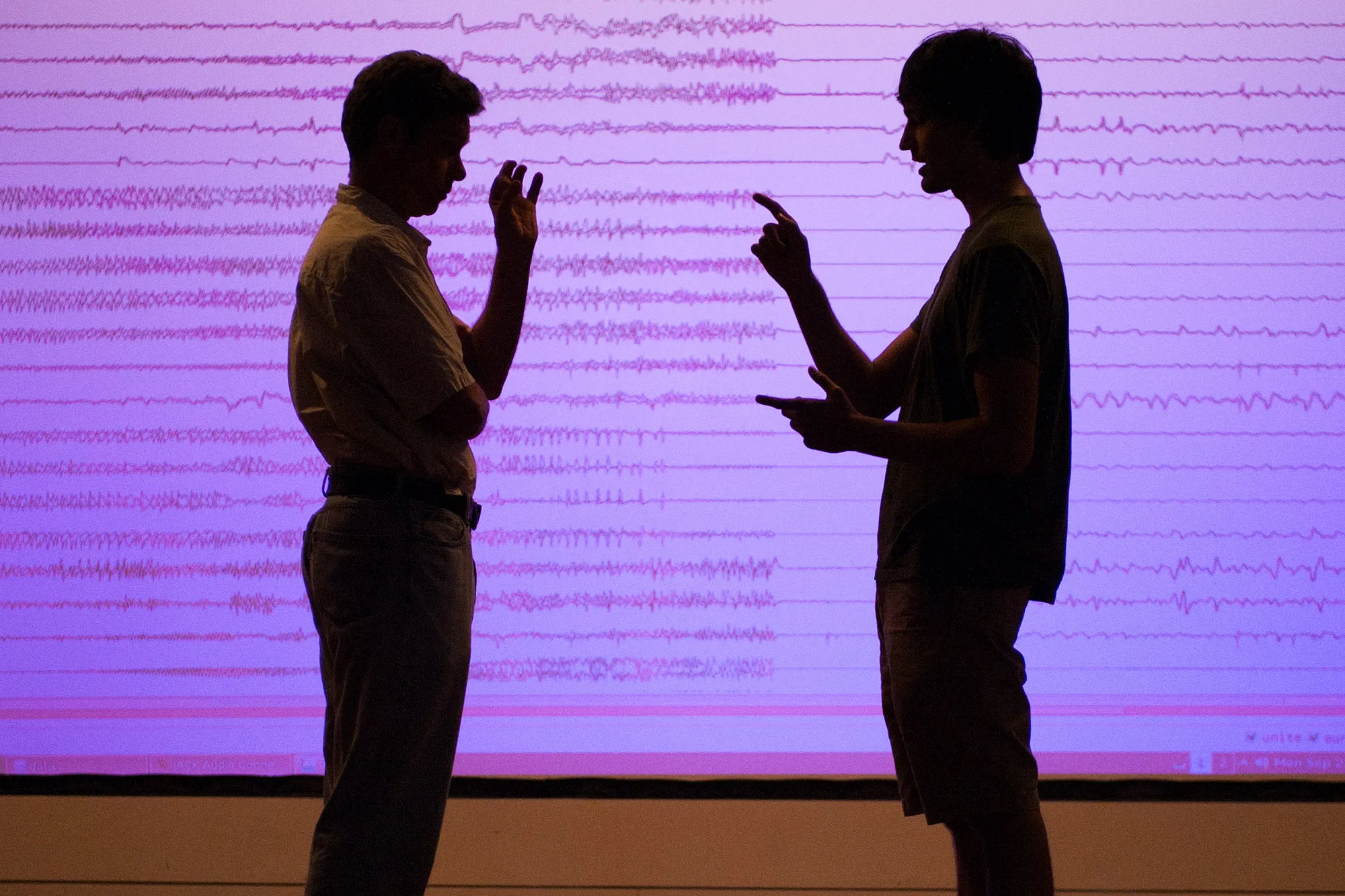
Two men standing in front of a pink projection of sound waveforms.

Sonification: Making Data Sound

Chris Chafe

Computers and music have been mingling their intimate secrets for over 50 years. These two worlds evolve in tandem and where they intersect they spawn practices that are entirely novel. One of these is “sonification,” turning raw data into sounds and sonic streams to discover new relationships within the data set by using a musical ear. This is similar to data visualization, a strategy that reveals new insights from data when it is made for the eye to perceive as graphs or animations. A key advantage with sonification is sound’s ability to present trends and details simultaneously at multiple time scales, allowing us to absorb and integrate this info the same way we listen to music.

This evening will include two events, a talk and a hands-on workshop. The talk will present an in-depth look into the potential and application of sonification. The workshop will offer participants an opportunity to work with their own data sets and explore sonification as a new approach to their data.

Chris Chafe is the director of Stanford University’s Center for Computer Research in Music and Acoustics (CCRMA) and approaches the practice of sonification from a background in computer-generated musical composition, using algorithms in the sculpting of musical detail. In much the same way, sonification uses datasets to generate sounds that can lead to a different or deeper understanding of patterns and processes in the sonified data. From global economic trends, atmospheric CO2 changes, or seemingly mundane events such as the ripening of fruit, sonification provides a means of gaining new perspectives on data through listening.

Main Image: Chris Chafe. Photo: Linda A. Cicero / Stanford University News Service.
Image
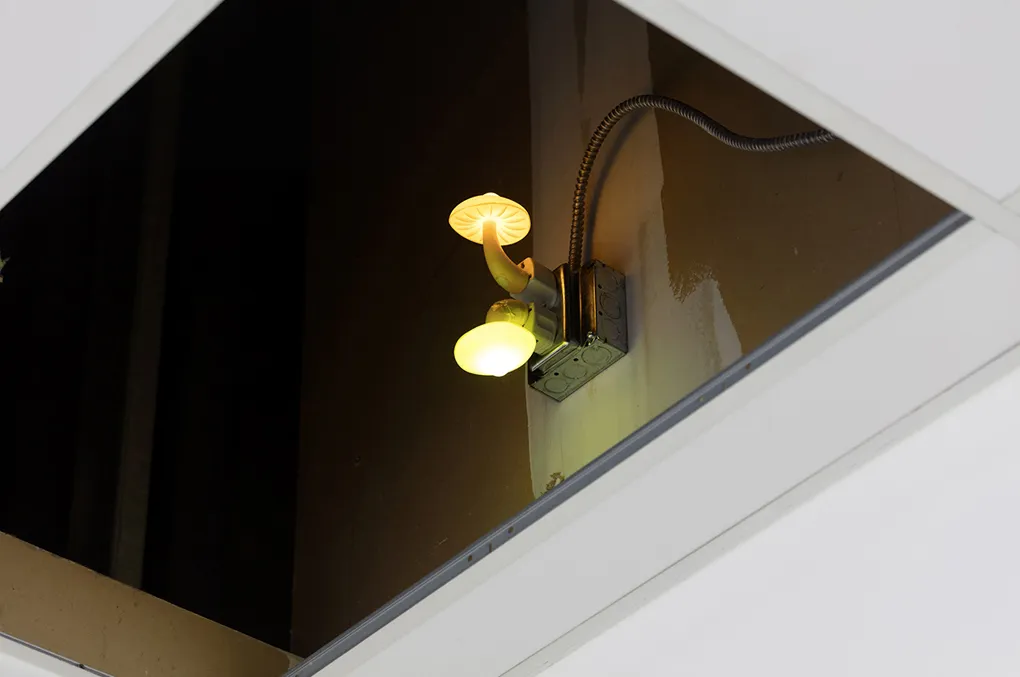
a mushroom shaped light plugged into a wall through a ceiling tile

Cancellations

Ghislaine Leung in conversation with Todd Vos

During her EMPAC production residency, artist Ghislaine Leung is experimenting with spatial audio for her upcoming exhibition at London’s Chisenhale Gallery. For this talk, Leung is joined by EMPAC’s lead audio engineer Todd Vos to discuss the technical and aesthetic considerations of “sound cancelation.” The method of “active sound cancellation” is common in the design of noise-cancelling headphones in order to eliminate unwanted environmental sounds. Leung is translating this technology into an architectural installation to experiment with its potential to produce an as yet unknown reality of sound.

At EMPAC Leung will be editing a new audio work KISS MAGIC HEART for this sound cancelling loudspeaker environment. Comprised of 18 hours of material from three UK commercial radio stations edited into a single compressed block, the recording will be distributed spatially in and through Studio 2 to cancel and clash sound polarities.

Main Image: Ghislaine Leung, Shrooms, 2016, Chinese night lights, plug adapters.
Photo: Courtesy the Artist and Essex Street, New York.

Media
Image
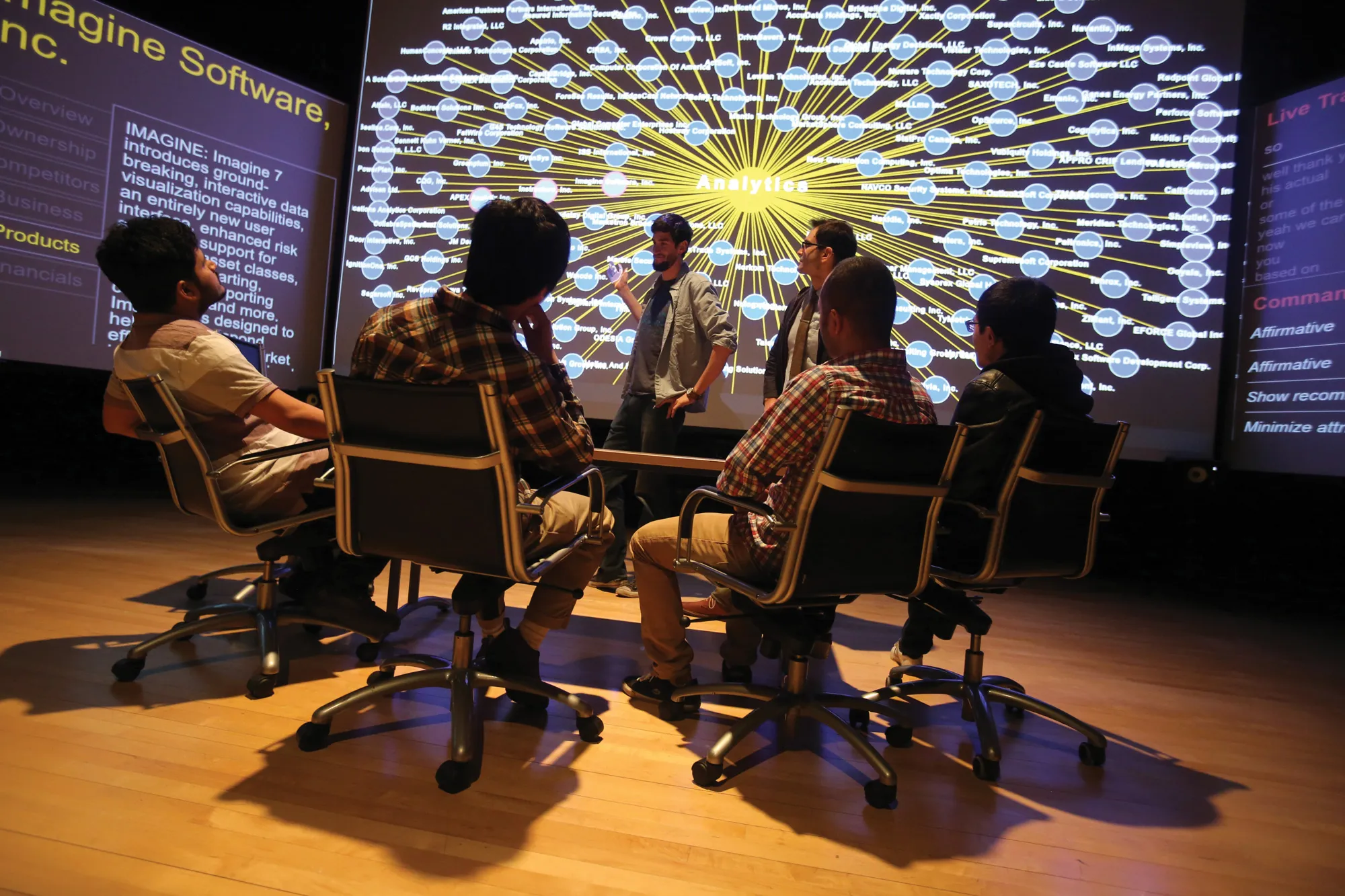
a group of four students facing two students giving a presentation in front of large screens with projections on them

The Cognitive and Immersive Systems Lab

Hui Su

The Cognitive and Immersive Systems Lab (CISL) is a collaboration between Rensselaer and IBM Research for the research and development of immersive cognitive systems. The core platform of CISL is the Cognitive Immersive Room (also called “Situations Room”), an immersive, interactive, reconfigurable physical environment. The future Situations Room will be able to augment group intelligence and performance by perceiving and understanding human intention in group activities, participating in learning and decision-making tasks, and communicating insight and discovery to humans. The domains investigated for the Situations Room include cognitive and immersive learning, corporate decision-making, cyber-enabled exploration and discovery, and intelligence analysis.

In this presentation, Director Hui Su will introduce the vision of CISL, the progress made by the CISL team in a few technical areas, and several technical demonstrations such as an occupant-aware cognitive environment enabled with multimodal interactions, cognitive and immersive environments for language teaching and decision making, and immersive narrative generation.

Main Image: CISL.

Image
Formosa Quartet actively playing in concert under a spotlight on a dark stage.

Double Quartet: Strings and Spaces

Formosa Quartet and the Four Venues at EMPAC

Kicking off the 10YEARS celebration, Formosa Quartet leads guests on a unique musical journey throughout the EMPAC building. Performing in all four EMPAC venues— the Concert Hall, Theater, Studio 1, and Studio 2—the ensemble will showcase classical repertoire particularly suited to the distinct acoustic profile of each space. Throughout the show, the audience will be led from venue to venue to hear how, in performance, the room is as important as the musicians and music.

Regarded as one of the very best quartets of their generation, Formosa Quartet formed in 2002 when the four founding members came together for a concert tour of Taiwan. Committed to championing Taiwanese music and promoting the arts in the land of their heritage, as well as exploring diverse and adventurous mediums for string quartet, Formosa have performed in major venues throughout the United States, Asia, and Europe.

With degrees from the Juilliard School, Curtis Institute of Music, and New England Conservatory, the members of Formosa Quartet—Jasmine Lin, Wayne Lee, Che-Yen Chen, and Deborah Pae—have established themselves as leading solo, chamber, and orchestral musicians and have been top prizewinners in numerous prestigious competitions, including both the First Prize and Amadeus Prize at the London International String Quartet Competition. Formosa Quartet performs on Joseph Curtin (2001) and Andrea Guarneri (1662) violins, an Enrico Catenari viola (1680), and a Vincenzo Postiglione cello (1885), on generous loan from the Arts and Letters Foundation.

Program

  • CONCERT HALL
  • JOSEPH HAYDN / String Quartet in E-flat Major, Op. 76, No. 6, 2nd Movement
  • STUDIO 1 - GOODMAN
  • BÉLA BARTÓK / String Quartet No.4, 5th Movement
  • STUDIO 2
  • JOHANN SEBASTIAN BACH / Die Kunst Der Fuge, Contrapunctus XIV
  • THEATER
  • SHIH-HUI CHEN / Returning Souls
  • CONCERT HALL
  • LEI LIANG / Song Recollections

Main Image: Formosa Quartet. Photo: Paula Court.

Media

Formosa Quartet - Double Quartet: Strings and Spaces. October 11, 2018

Image
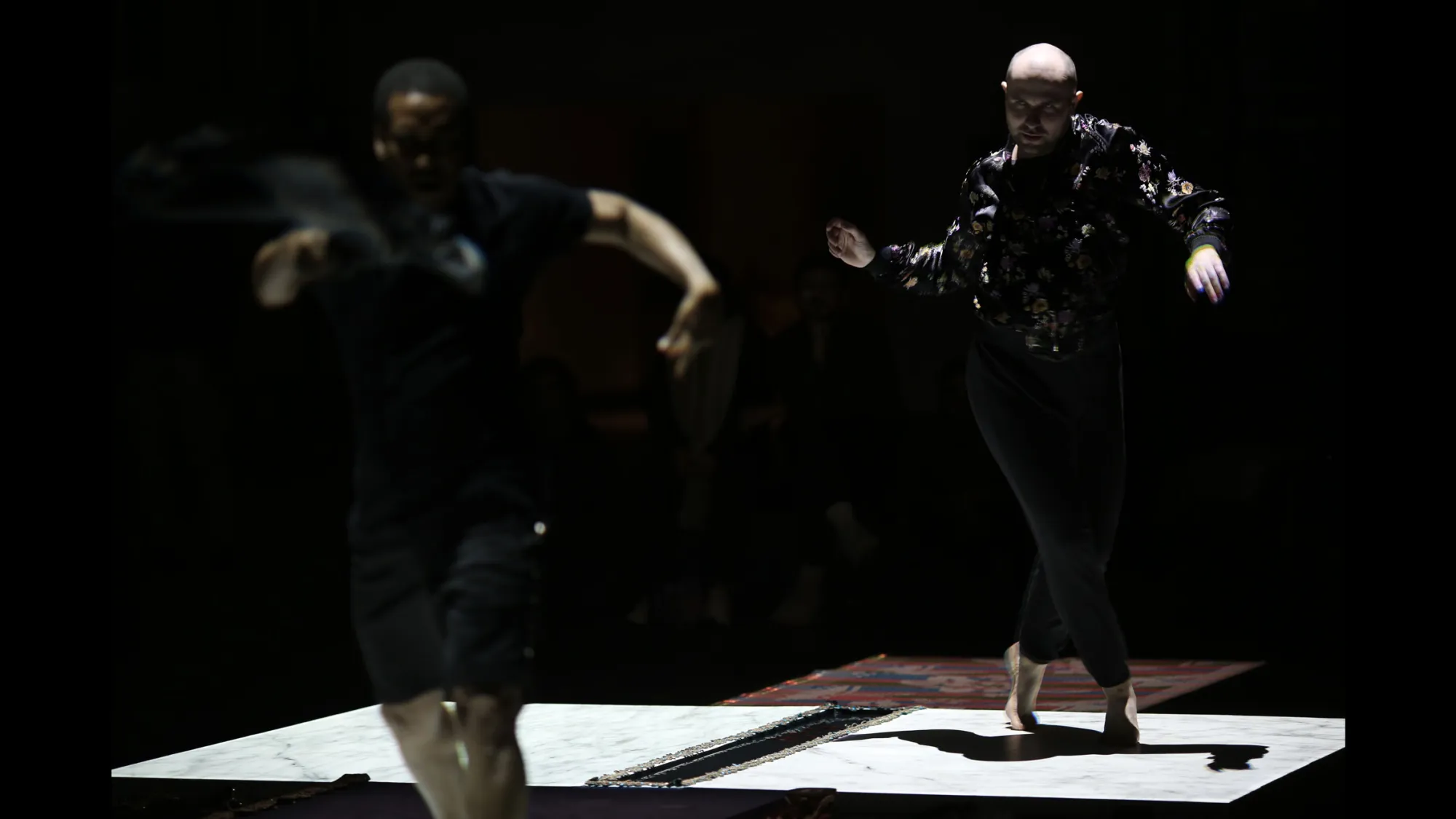
Two male dancers voguing across a stage light by squares of white light on the ground.

In the Mood for Frankie

Trajal Harrell

Choreographer Trajal Harrell’s In the Mood for Frankie is a dance trio performed along a runway-style stage in EMPAC’s lobby. Featuring fluid, sultry movements atop three square platforms—two of which are connected by a stream of swimming goldfish—the performance revolves around the figure of the muse. In the Mood for Frankie is inspired by the co-founder of the Japanese dance/theater form “butoh,” Tatsumi Hijikata and his muses.

Along with Hijikata, Harrell’s other muses include butoh artists Kazuo Ohno and Yoko Ashikawa, modern dance choreographer Katherine Dunham, filmmaker Wong Kar Wai, fashion designer Rei Kawakubo, singer Sade, and Harrell's long-term relationship with dancers Thibault Lac and Ondrej Vidlar, who perform the work live with Harrell.

Trajal Harrell has been working in residence at EMPAC on a new project focused on lighting and video to evoke memorial and ritualistic practices within theatrical environments. While this new project will not be completed until 2019, In the Mood for Frankie is itself performed as a muse for this next work, and in celebration of 10YEARS at EMPAC.

Main Image: In the Mood for Frankie in EMPAC's lobby during 10YEARS. Photo: Paula Court.

Image
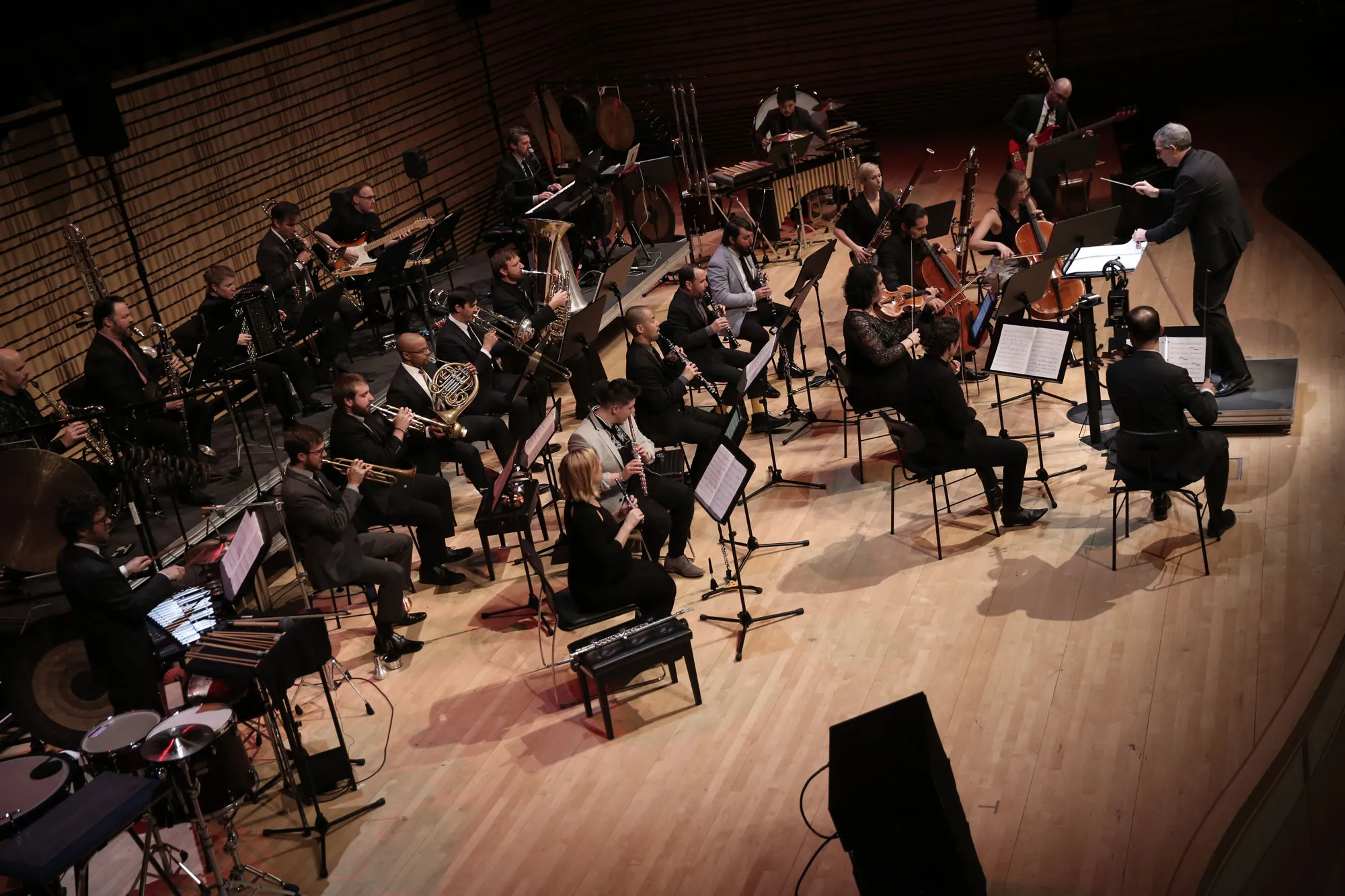
a male conductor in a black suit directs an orchestra on the concert hall stage.

Lost Highway Suite by Olga Neuwirth

International Contemporary Ensemble

Lost Highway Suite by Olga Neuwirth is a composition for a large ensemble of musicians, six soloists, and live electronics, with many loudspeakers surrounding the audience. The suite is drawn from the orchestral parts of Neuwirth’s 2003 opera Lost Highway, the libretto of which was co-written by Austrian Nobel Laureate Elfriede Jelinek and inspired by the film of the same name by David Lynch and Barry Gifford.

The suite consists of instrumental sections from the opera that the composer has tied together into one piece. The opera and its libretto set the tone and atmosphere for this composition, but there is no direct link between the film and the suite. However, the film, opera, and suite share a common structural approach. Rather than pursuing narrative continuity and evolution, different musical tableaus and sonic spaces are established, which then mutate, and change into one another, almost like cuts between different scenes in a film.

Six soloists (saxophone, clarinet, trombone, guitar, accordion, and keyboards) are positioned behind the ensemble and channeled to the live electronic system, the output of which is then fed to the loudspeakers. Originally, the suite was performed with a ring of loudspeakers surrounding the audience. The performance here at EMPAC will utilize a 64-loudspeaker dome installed in the concert hall, for which the electronic part of the composition needed to be reprogrammed. This technology, High-Order Ambisonics, is a refined system for the spatial projection of sound environments that goes beyond traditional stereo or surround sound that we may know from movie theaters. Underlying the music is a series of existential questions: How do we know what is real and what is imagined? How do we differentiate between what is inside of us and what is outside? How do we get out of a situation that seems like an infinite loop with no beginning, middle, or end, when we do not see a way out?

Austrian composer Olga Neuwirth (born 1968) gained international recognition at the age of 22 for two mini-operas based on works of Nobel Prize-winner Elfriede Jelinek. Since then, she’s written several music theater pieces including her first dramatic work, Bählamms Fest (also based on one of Jelinek’s works), The OutcastAmerican Lulu, and Hommage á Klaus Nomi.

International Contemporary Ensemble (ICE) is a 35-member artist collective that explores how new music intersects with communities across the world. Works by emerging composers have anchored ICE’s programming since its founding in 2001, and the group’s recordings and digital platforms highlight the many voices that weave music’s present.

Main Image: ICE performing Lost Highway Suite in the concert hall for 10YEARS in October, 2018.

Media

The Computer as Time Machine

Johannes Goebel

Over thousands of years, humans have carved into stone, painted on canvas, printed words in books, and captured images on film in order to pass information down the chain of generations. With digital data storage, we have reached the point where what is precious to individuals, families, and institutions only holds up for a fraction of a generation without constant care and expensive maintenance. For the ease of digital storage comes the cost of rapid obsolescence and “bit rot,” an ironic turn for a media format that seemed to promise longevity, if not permanence.

Digital archives depend on complex technological environments, electricity, chips, air conditioning, maintenance at quite short intervals, and are doomed by changing hardware, operating systems, applications, and data formats. Even if we have electricity and computers 100 years from now, what we have stored and hoped to pass along will be lost and forgotten without continuous, meticulous investment of time and money.

At EMPAC, we have created hundreds of events, commissions, and new works that are part of the larger cultural record. We have over 400 videos documenting these “time-based” productions accessible via two printed books that catalog this history. But if EMPAC were closed tomorrow, this knowledge would fade along with the funds and the interest needed to preserve it. As a result, EMPAC has researched a digital “time capsule” an individual or institution can create to make images, texts, sounds, and documents accessible for the next 100 years. This object would need attention every 10 years or so, would not need air conditioning, and would survive under the same conditions humans live in, at the cost of around $2,000.

This talk will describe our research as well as the philosophy and politics of digital memory behind the system we have developed. For more information please see 2021 essay The Computer as Universal Time Machine.

Image
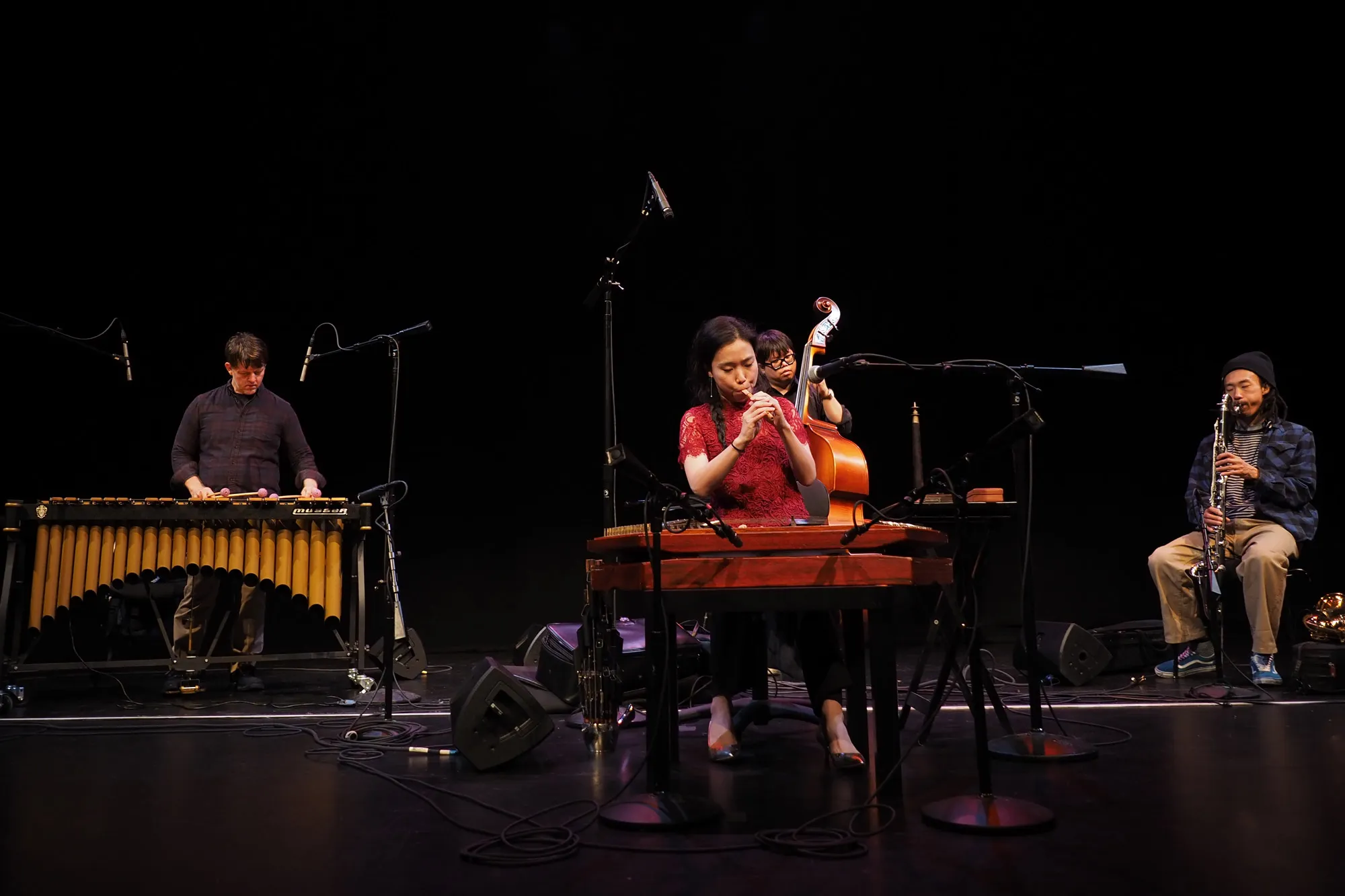
Park Jiha playing with there other musicians on a black stage.

Park Jiha

Communion

The music of composer/performer Park Jiha blends classical minimalism and improvised music with traditional Korean instruments like the piri (double-reed bamboo flute), saenghwang (bamboo mouth organ), and yanggeum (hammered dulcimer). Deftly combining the instrumentation and complex expression of traditional Korean music with an array of contemporary forms and sounds, Park Jiha has staked her place in the international music scene over the last few years as a fellow for Red Bull Music Academy, Seoul, and as the official showcase for The World Music Expo, Berlin.

Trained in Korean traditional music, Park Jiha started her career by founding the duo Sum, which had a major impact upon the “new Korean music” scene. Her first solo album, Communion, pursued more distant sound traditions and an eclectic instrumental palette. Collaborating with musicians from different genres, the project pursues a form of experimental minimalism that rejects ornamentation in favor of a stark clarity and meticulous balance. Pitchfork said of the album, “Jiha’s gift is in her ability to skirt dull prettiness in favor of exploiting the edges of her instruments, yet not at the expense of tangible, straightforward melodies.”

At EMPAC, Park Jiha will perform material from the Communion project.

Park Jiha Quartet:

  • Park Jiha — piri, saenghwang, and yanggeum
  • Chris Varga — vibraphone
  • Jeon Jekon — double bass
  • Kim Oki — bass clarinet, saxophone

Main Image: Park Jiha in Studio 1. Photo: Mick Bello/EMPAC.

Fall Building Tours

Fall 2018

This fall, a series of EMPAC building tours will offer guests a range of perspectives on EMPAC’s unique infrastructure and growing impact within the international performing arts world.

Each tour will be led by a different member of the EMPAC team with particular focus on their area of expertise. Tours will run the first Saturday of each month at 11AM. Visitors should meet at the EMPAC box office on the 7th floor.

SEPT 1: Building Tour with Director Johannes Goebel

Join EMPAC’s founding director Johannes Goebel for a tour of the building (and overview of the program) that he helped realize and has led through EMPAC’s first 10 years. Goebel will take visitors through the EMPAC building with an eye and an ear to the “human-scale” functions he strove to achieve in taking the project from a lofty vision to one of the world’s most advanced media centers.

OCT 6: Building Tour with Senior Network Administrator Dave Bebb

This tour offers a look at the center from an information technology perspective. With miles of fiber optic cable linking all four venues as well as the audio and video recording facilities, EMPAC is an environment where physical and digital worlds seamlessly intersect.

NOV 3: Building Tour with Director for Stage Technologies Geoff Abbas

Each of EMPAC’s performance spaces were designed as a blank canvas, endlessly customizable according to the needs of EMPAC’s diverse productions. Join director of stage technologies Geoff Abbas for a behind-the-scenes tour of all the nuts and bolts that make the space work, including the robotic rigging system and 80-foot Theater fly tower.

DEC 1: Building Tour with Curator of Theater and Dance Ashley Ferro-Murray

Working across the disciplines of theater and dance, Ferro-Murray’s curatorial work highlights the intersections between body movement and technological media — including popular culture media, moving-image, and interactive sensors. This tour will focus on the flexibility of EMPAC’s performance venues and public spaces as they serve new approaches to dance and theater.

Main Image: The EMPAC North façade. Photo: Paúl Rivera

Image
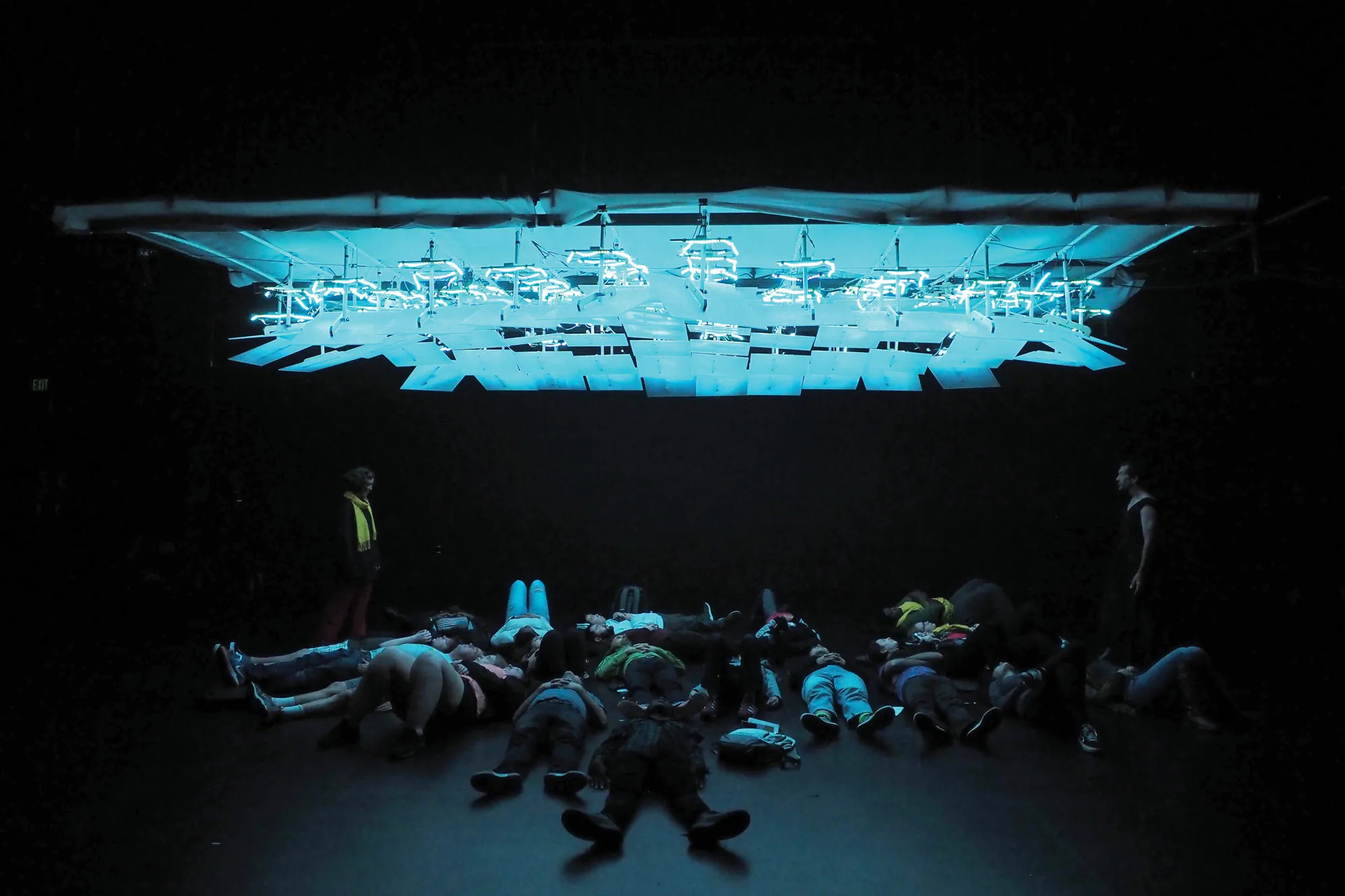
a group of about 15 people laying under a grid of lighted squares on the theatre stage

Listening Creates an Opening

Mary Armentrout Dance Theater

Over the course of four evenings and across a range of sites, Mary Armentrout Dance Theater will perform the roving work Listening Creates an Opening. Members of the group—choreographer Mary Armentrout, video artist Ian Winters, and composer Evelyn Ficarra—have been working in residence over the last two-and-a-half years to conceive and produce the EMPAC commission.

Listening Creates an Opening focuses on how various types of technology impact our physical experience of moving through the world. By inviting the audience to move with the performers through a variety of environments, the performance explores what types of histories and contexts reveal themselves from a consciously embodied perspective. Local artist Jack Magai serves as the guide, leading the audience from a small living room in the turn-of-the-century Off Campus Commons building at Rensselaer, to the highly technical theatrical setting at EMPAC, and down into urban sites in Troy, ranging from a parking lot to a hair salon, to experience the hills at sunset and the Hudson River at dusk. Singers Allison Easter, Darcy Dunn and cellist Patrick Belaga help round out the subtle, quirky, and aesthetically adventurous performance, which also features projected scenery from a year-long time-lapse video taken inside the EMPAC building, and live performance vignettes that repeat and build over the course of the show.

Mary Armentrout is a San Francisco-based choreographer and performance artist, and director of Mary Armentrout Dance Theater. She is the winner of an Isadora Duncan Dance Award, one of the most prestigious honors for Bay Area choreographers. She has long collaborated on her site-specific and staged works with Ian Winters and Evelyn Ficarra. Winters develops visual and acoustic media environments for stage. Together, Armentrout and Winters run their studio The Milkbar in Richmond, CA. Ficarra is lecturer in the music department at the University of Sussex, where she is also the Assistant Director of the Centre for Research in Opera and Music Theater.

Accessibility + Performance Information

EMPAC is an accessible venue. The lobby is accessible via the double doors facing Rensselaer’s campus with an entrance off of College Avenue. All-gender wheelchair-accessible restrooms are available on all public-access levels of the building. The main audience entrance to the theater is wheelchair accessible and located on EMPAC’s 5th floor, which can be accessed from the lobby by elevator.

If you have any questions about access, please contact EMPAC Box Office Manager John Cook or call 518-276-2822 (voice only).

This is a promenading performance with the audience standing and moving, sometimes long distances, between venues. Please wear comfortable footwear, dress for the outdoors, and let our box office know if you need assistance or wheelchair accommodation. We will have accessibility accommodations for those unable to walk long distances or stand for extended periods. Please share any specific access requests in the comments form of your ticket, in order to help our Front of House team prepare to welcome you. The performance is approximately three hours long.

Performance will run rain-or-shine. Please dress accordingly.

Main Image: Production still: Listening Creates an Opening. Photo: Mick Bello/EMPAC.