Image
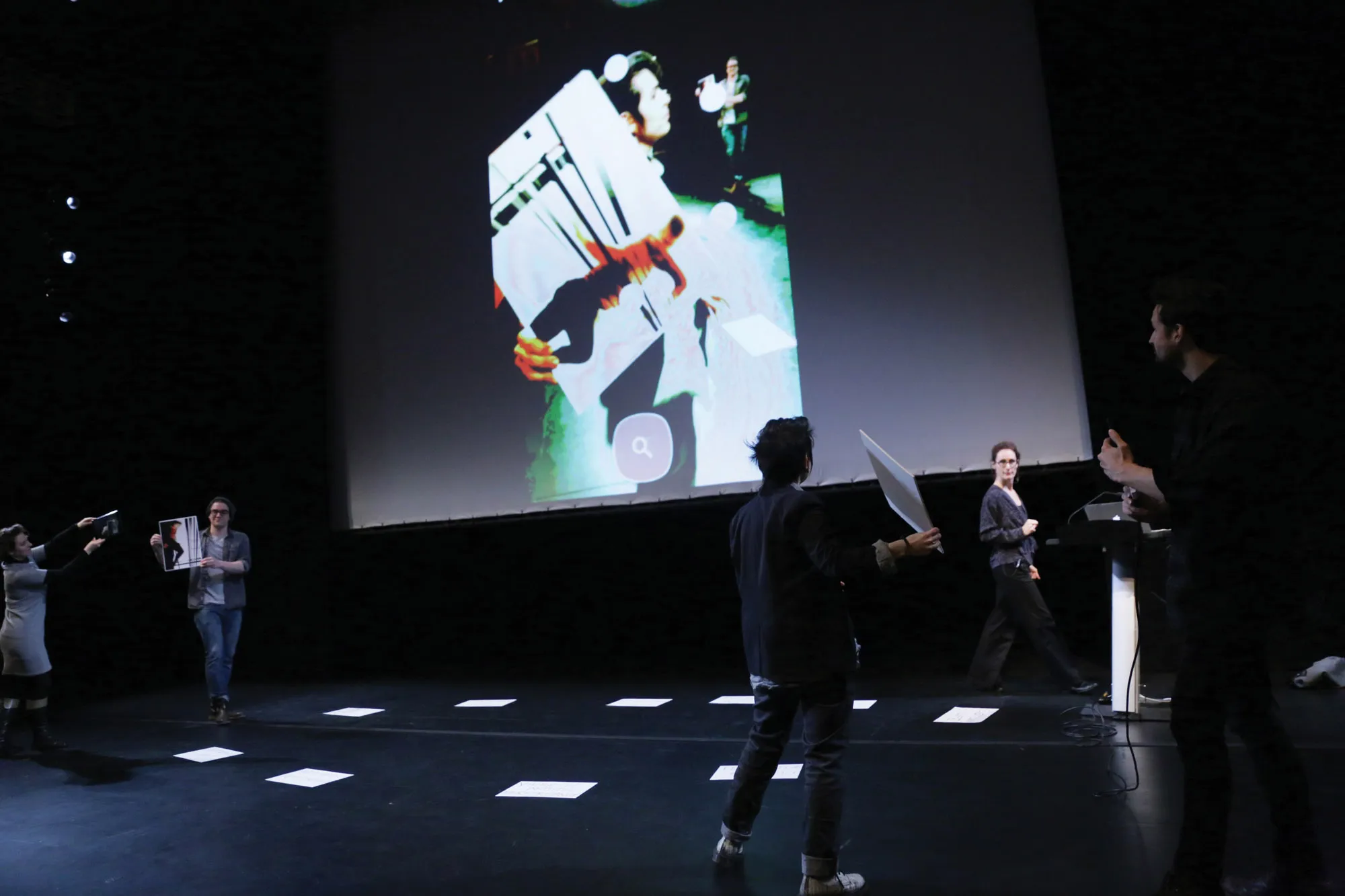
Susan Kozel in discussion in the theater.

When Performance and Philosophy Become Design Materials

Dialogues Between Dance and Interaction Design / Susan Kozel

Can we re-enact the experiences and histories of others? Are there ethical implications when affect becomes a design material? Can the performative methods currently used in human-computer interaction (HCI) design be refined and expanded using dance improvisation?

These divergent questions were starting points for media scholar Susan Kozel’s talk about body-based approaches to design and HCI. Kozel’s method is informed by the Scandinavian design context and draws from a range of somatic and improvisatory practices that feed into movement and dance improvisation. This talk emphasized the applied qualities of performativity and phenomenology, exploring the potential for practical and material performances of bodies, memories, and data. Kozel’s personal research opens out various strands from the Living Archives research project at Malmö University in Sweden. 

Susan Kozel is a Professor with the School of Arts and Culture at Malmö University whose work explores the convergence of philosophy, dance, and media technologies. Kozel’s research is foundational to understanding the body and phenomenology in digital culture. She teaches for the Interaction Design program and is Project Leader of the major research project Living Archives funded by the Swedish National Research Council. Kozel has an active artistic practice and has published widely on topics from affect to archiving, ubiquitous technologies to electronic music. Publications include the monograph Closer: Performance, Technologies, Phenomenology; and the articles “Devices of Existence: Contact Improvisation, Mobile Performances, and Dancing through Twitter” in Improvisation and Social Aesthetics, and “AffeXity: Performing Affect using Augmented Reality” in Fibreculture Journal. Kozel’s current research considers politics, philosophies, and embodied practices of what Kozel calls Affective Choreographies.
Some Kind of Joy: The Inside Story of Grimshaw in Twelve Buildings

Directed by Sam Hobkinson, Intro by project architect William Horgan

In 2001, Sir Nicholas Grimshaw and his practice won the architectural competition for the design of EMPAC. Throughout the building’s construction, the collaboration between Grimshaw Architects, now just Grimshaw, and Rensselaer was very close in all details of this extraordinary project.

Some Kind of Joy: The Inside Story of Grimshaw in Twelve Buildings, directed by Sam Hobkinson, revisits key projects from the history of this renowned architectural practice. From Sir Nicholas Grimshaw’s first scheme in 1967, through to the likes of Bath Spa, Southern Cross Station, the Eden Project, and Fulton Center, we hear first-hand from the people who bring these buildings to life, and show the inspiration, design, and occasional trials and tribulations of delivering out-of-the-ordinary buildings. EMPAC is featured in this documentary film as one of the 12 buildings. Please also reference the publicationThe Architecture of EMPAC: The Tangible and the Tantalizing by Mark Mistur with Johannes Goebel, distributed by ORO Editions, available online and at the box office of EMPAC.

William Horgan, partner at Grimshaw, introduced this screening and answered questions afterwards. He was the lead project architect of EMPAC, together with Andrew Whalley, Vincent Chang and Mark Husser, all partners in the New York office of Grimshaw.

Image
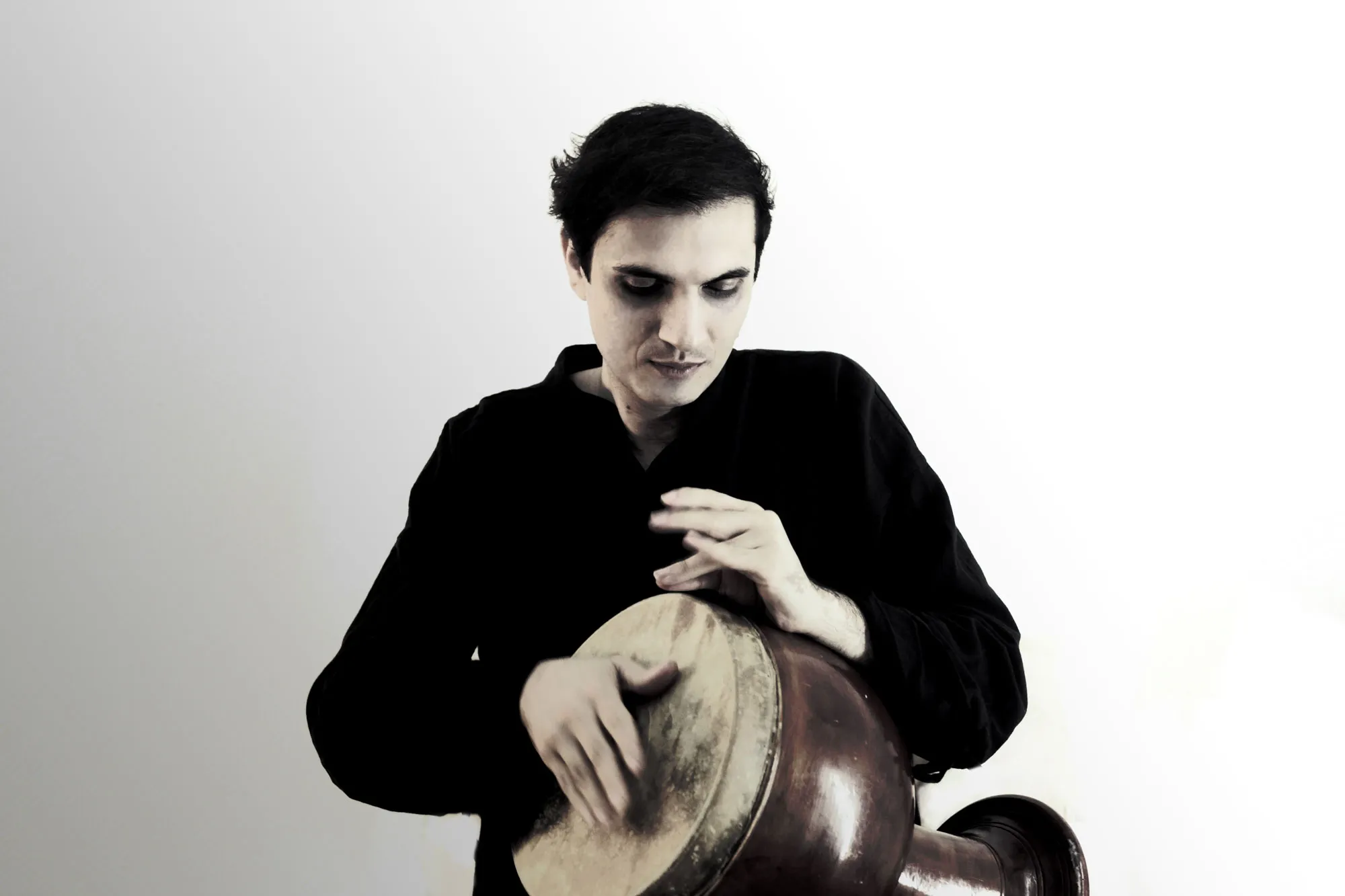
a iranian man dressed in black playing the tombak.

Mohammad Reza Mortazavi

We regret to announce that Iranian musician Mohammad Reza Mortazavi will not be able to travel to EMPAC for this performance due to visa-processing delays stemming from current federal immigration policy.

Respected from Tehran to Berlin to Shanghai, Mohammad Reza Mortazavi has dominated elite international competitions since the age of 9. Considered one of the most innovative and virtuosic hand drummers in the world, Mortazavi is most well-known for re-envisioning the traditional ways of playing the Tombak—an ancient Iranian goblet-shaped drum—and developing over 30 new striking and finger techniques, not always to the delight of old masters. Arte Magazine has commented that “watching the unbelievably virtuosic soloist, one could get the impression he does not have two but at least six hands."

Main Image: Mortazavi playing the Tombak. Photo: Courtesy the artist.

Media
Image
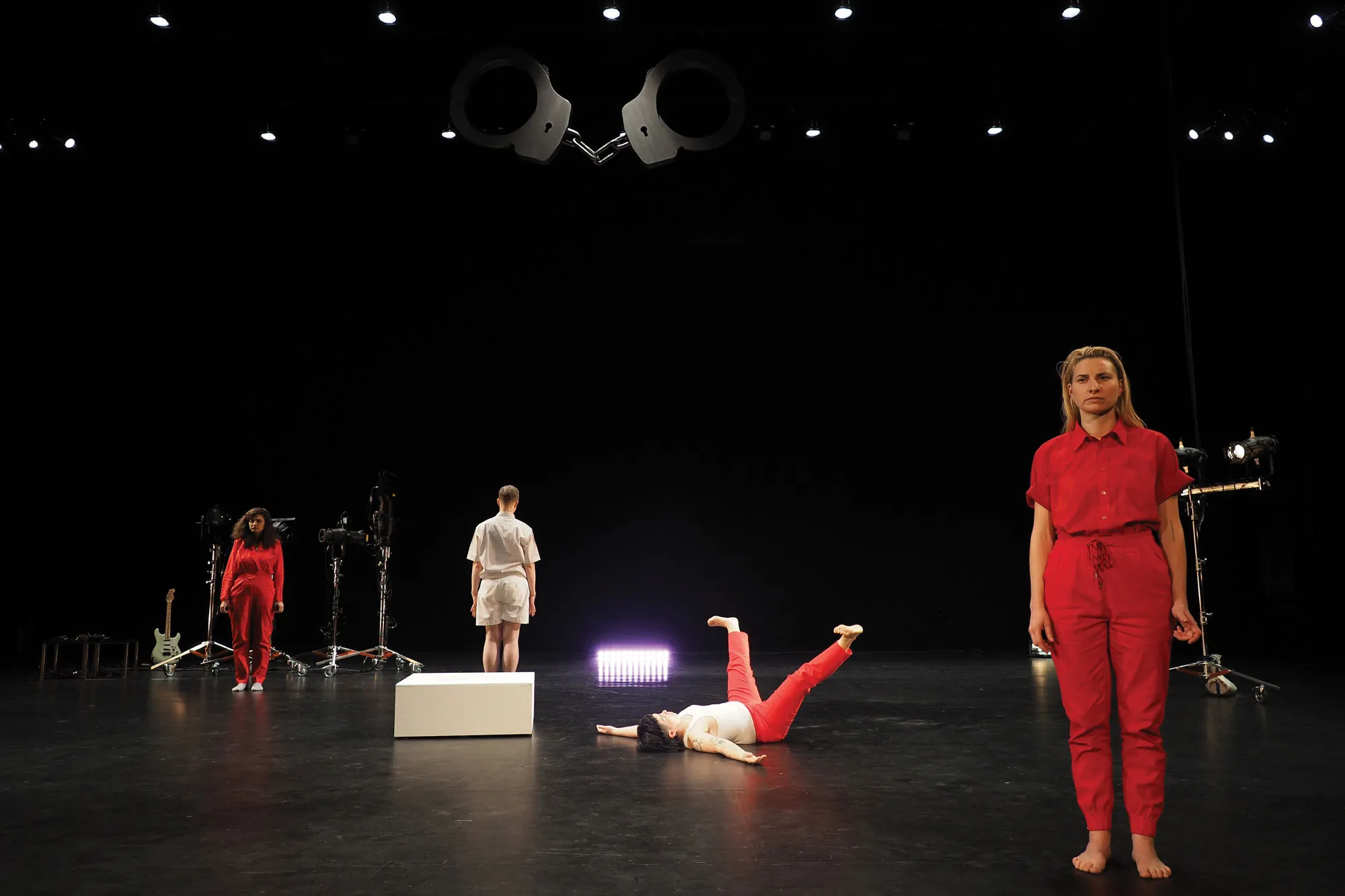
A woman wearing a red jumpsuit standing in front of three dancers wearing red and white in various poses in a black box studio.

Everybody Talks About the Weather, We Don’t

Pauline Boudry / Renate Lorenz

Berlin-based artists Pauline Boudry and Renate Lorenz were in residence at EMPAC to produce a moving-image work with a structure that combined three choreographic approaches: an instructional score by Pauline Oliveros, a 1968 text by revolutionary Ulrike Meinhof that calls for a transition from protest to resistance, and remote-control “carts” developed by Bell Labs with choreographer Deborah Hay for the 9 Evenings: Theater and Engineering performances in New York in 1966.

Everybody talks about the weather, we don’t (a working title borrowed from a Meinhof essay) was performed by five “carts” (produced at EMPAC), theatrical light, haze, a mobile camera operated by Bernadette Paassen, and artists MPA, Ginger Brooks Takahashi, Werner Hirsch, and Marwa Arsanios. 

By taking cues from historically subversive actions and artworks, the artists’ films and installations disrupt historical narratives in order to renew the power of radical artworks. By subverting the original context, Boudry/Lorenz reactivate these works through the interaction of the technical (the theatrical and filmic apparatus of media production) and the performative (the current generation of artists, choreographers, and musicians) to underscore how the refusal of a fixed or normative identity is still an urgent political act. 

Boudry / Lorenz have been working together since 2007. Their staged films and film installations often start with a song, a picture, a film, or a script from the past. They produce performances for the camera, staging the actions of individuals and groups living—indeed thriving—in defiance of normality, law, and economics. Their films upset normative historical narratives, as figures from across time are staged, projected, and layered. These performers are themselves choreographers, artists, and musicians, with whom Boudry and Lorenz engage in a long-term conversation about performance, the meaning of visibility since early modernity, the pathologization of bodies, and also about glamour and resistance.

Program

  • Silent(2016)
  • Pauline Boudry / Renate Lorenz
  • To Valerie Solanas and Marilyn Monroe in Recognition of their Desperation (2013)
  • Pauline Boudry / Renate Lorenz
  • I want (2015)
  • Pauline Boudry / Renate Lorenz
Image
a silhouetted man sitting on a bench viewing two large video screens with projections of a brick wall concrete arches.

Modern Living

Gerard & Kelly

Modern Living is a multi-chapter project by choreographers Gerard & Kelly made in collaboration with L.A. Dance Project to explore themes of queer intimacy and domestic space within legacies of modernist architecture. The project began as two site-specific dance performances, which the duo then took to EMPAC to translate into a gallery installation integrating architectural forms and video projection. This work-in-progress presentation took audiences behind the scenes of Modern Living.

In 2016, Gerard & Kelly choreographed nine dancers in performances at the landmark Schindler House in West Hollywood, CA, the site of an early experiment in communal living, and Philip Johnson’s Glass House in New Canaan, CT, where the architect and his partner David Whitney lived for over 40 years. The performances investigated the livability of queer space—
its pleasures, tensions, and impossibilities—and were filmed for the next iteration of the project. Gerard & Kelly were in residence with their technical and artistic collaborators to build the installation to scale, experimenting with architecture, projection mapping, and sound. 

Brennan Gerard and Ryan Kelly have collaborated since 2003 to create installations and performances interrogating the formation of the couple and exploring the critical potential of intimacy. Driven by an inquiry of their own partnership, the duo uses choreography, language, video, and sculpture to address questions of sexuality, memory, and the formation of queer consciousness.

Main Image: Photo: Courtesy the artist.

Image
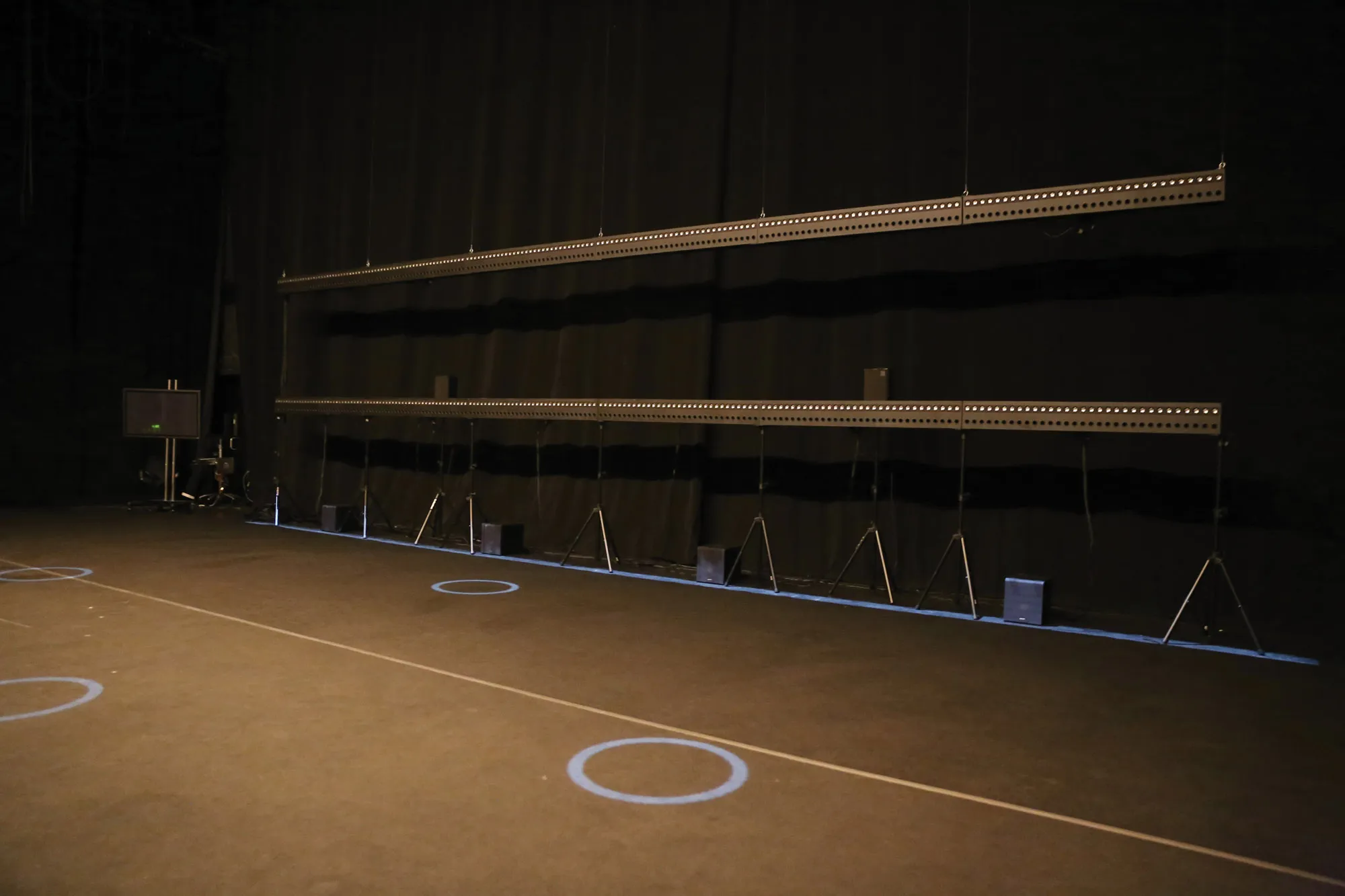
wave field synthesis in a black box studio with project blue rings of light on a black floor.

Introduction to Wave Field Synthesis

Argeo Ascani, Todd Vos, and Jeff Svatek

EMPAC’s music curator Argeo Ascani and audio engineers Todd Vos and Jeff Svatek presented a series of in-depth demonstrations and discussions of EMPAC’s 496-speaker Wave Field Synthesis audio system.

One of the most extensive systems of its kind in the world, EMPAC’s wave field array was constructed by the EMPAC audio engineering department in 2016 and the curatorial program has begun developing new work for the system in conjunction with leading electronic composers. Consisting of a large field of small speakers oriented very closely together, the system produces a virtual audio environment by localizing the source of individual sounds in space with an extreme level of precision.

In preparation for these demonstrations, the audio team undertook a series of recordings with a string quartet consisting of Leah Zelnick (violin), Brooke Quiggins (violin), Stefanie Taylor (viola), and Caleigh Drane (cello). The recordings were spatialized using the Wave Field array and integrated with overhead lighting that gave listeners a visual cue for where to find each instrument virtually positioned in the room.

Main Image: The wave field synthesis array in studio 1, 2017.

Image
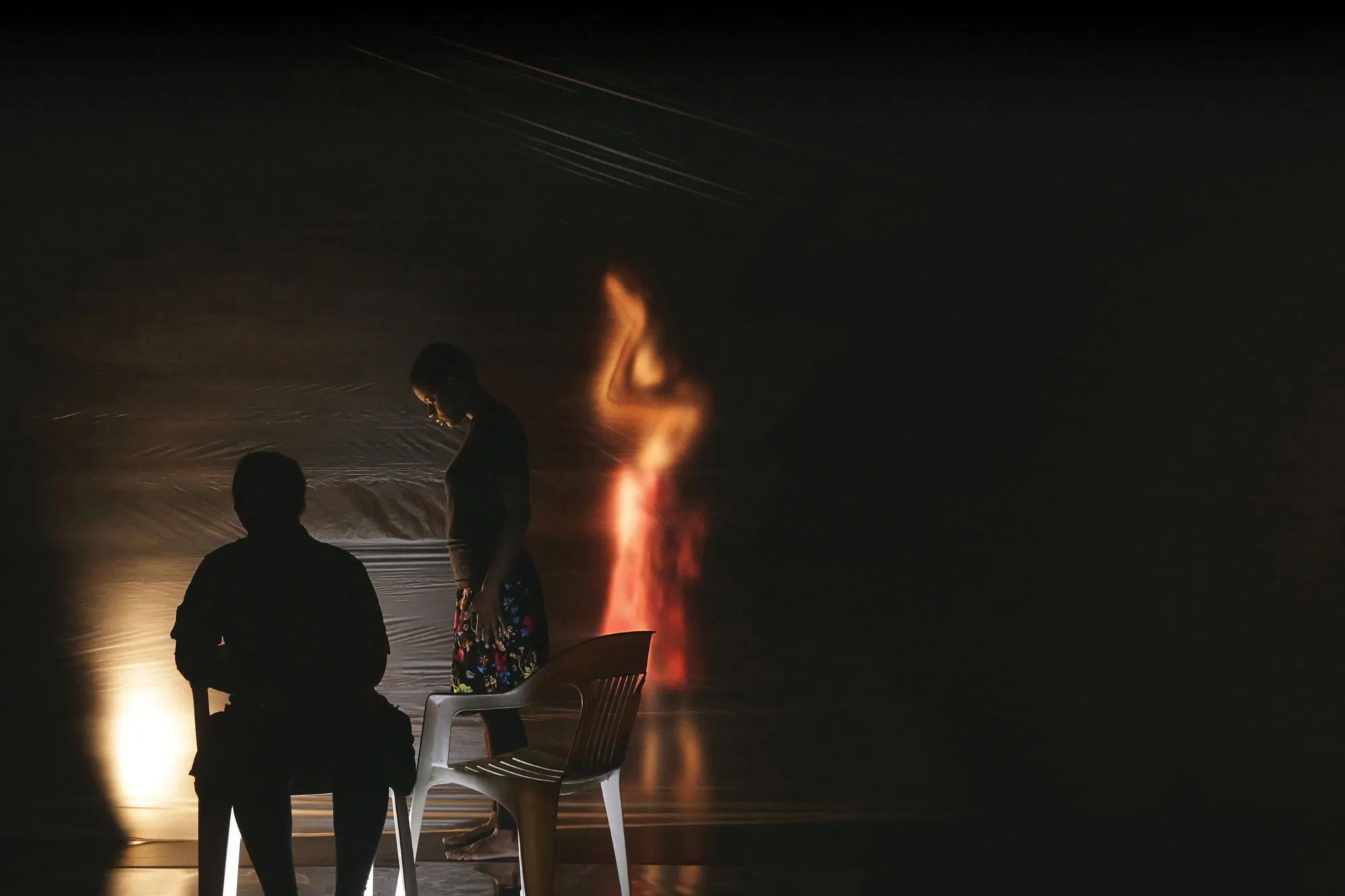
A Black woman and seated figure silhouetted against a sheer wall of plastic sheeting. Another figure is lit on the other side in a pose with a bent arm up.

Poor People's TV Room

Okwui Okpokwasili

Choreographer, writer, and performer Okwui Okpokwasili and director Peter Born presented their work, Poor People’s TV Room. Okpokwasili had been to EMPAC previously to perform for choreographers Nora Chipaumire and Ralph Lemon. As choreographer, Okpokwasili’s style transcends genre categories like experimental theater and conceptual choreography. The artist performed with three other women in a multifaceted work using live song, dance, and text amid other media including television, audio recording, light, plastic, cloth, and wood.

Poor People’s TV Room took inspiration from the Bring Back Our Girls campaign, started by a group of Nigerian women in 2014 to raise awareness about the Boko Haram kidnappings of 300 young Chibok girls. The campaign turned into a global movement after gaining widespread attention through social networking platforms such as Twitter. Since the speed of this online phenomenon ultimately overpowered the voices of the indigenous Nigerian women who started the movement, Okpokwasili used live performance to refocus our attention. Acknowledging a history of Nigerian women’s collective action, Okpokwasili wove the Bring Back Our Girls narrative with The Women’s War of 1929, an early anti-colonial revolt organized by women of six Nigerian ethnic groups.

Okpokwasili spent a week installing and finalizing Poor People’s TV Room for the New York City premiere of the work. 

Okwui Okpokwasili is a Brooklyn-based choreographer, writer, and performer who has shown her work at New York’s Lincoln Center, PS122, Danspace Project, New York Live Arts, and the Walker. She has toured her work internationally at Théâtre de Gennevillers and Theatre Garrone in France, The Zagreb Youth Theater in Croatia, and Arts House in Australia. Peter Born is a Brooklyn-based director, designer, and filmmaker who, in addition to working with Okpokwasili, has worked with clients including Vogue, Bloomingdales, and the Wall Street Journal, and with collaborators ranging from Kanye West to NoStringsUS Puppet Productions.

Image
sarah Juliet lauro.

Kill the Overseer! Playing the Rebel Slave in Videogames

Sarah Juliet Lauro

In a video game demo and talk, Sarah Juliet Lauro will discuss how resistance to slavery is represented in video and computer games. Lauro will profile many games that feature this narrative and will demo an art game being developed by students at the University of Southern California called Thralled, which focuses on a runaway slave in Brazil. During the day leading up to her evening talk, Lauro will demo chapter one of Thralled in Evelyn’s Café on EMPAC’s 5th floor. This chapter features the playable character Isaura, who attempts to flee slavery through the rainforest with her infant in her arms. On her journey, Isaura encounters many obstacles as she is pursued by a ghostly specter. Lauro will then expand on this storyline in her talk Kill the Overseer! Playing the Rebel Slave in Videogames, which will consider race, empathy, and power dynamics between players and characters in game-based digital commemorations of slave revolt.

Main Image: Sarah Juliet Lauro speaking in the theater in 2017.

Media

Sarah Juliet Lauro presenting her talk in the Theater in February, 2017.

Image
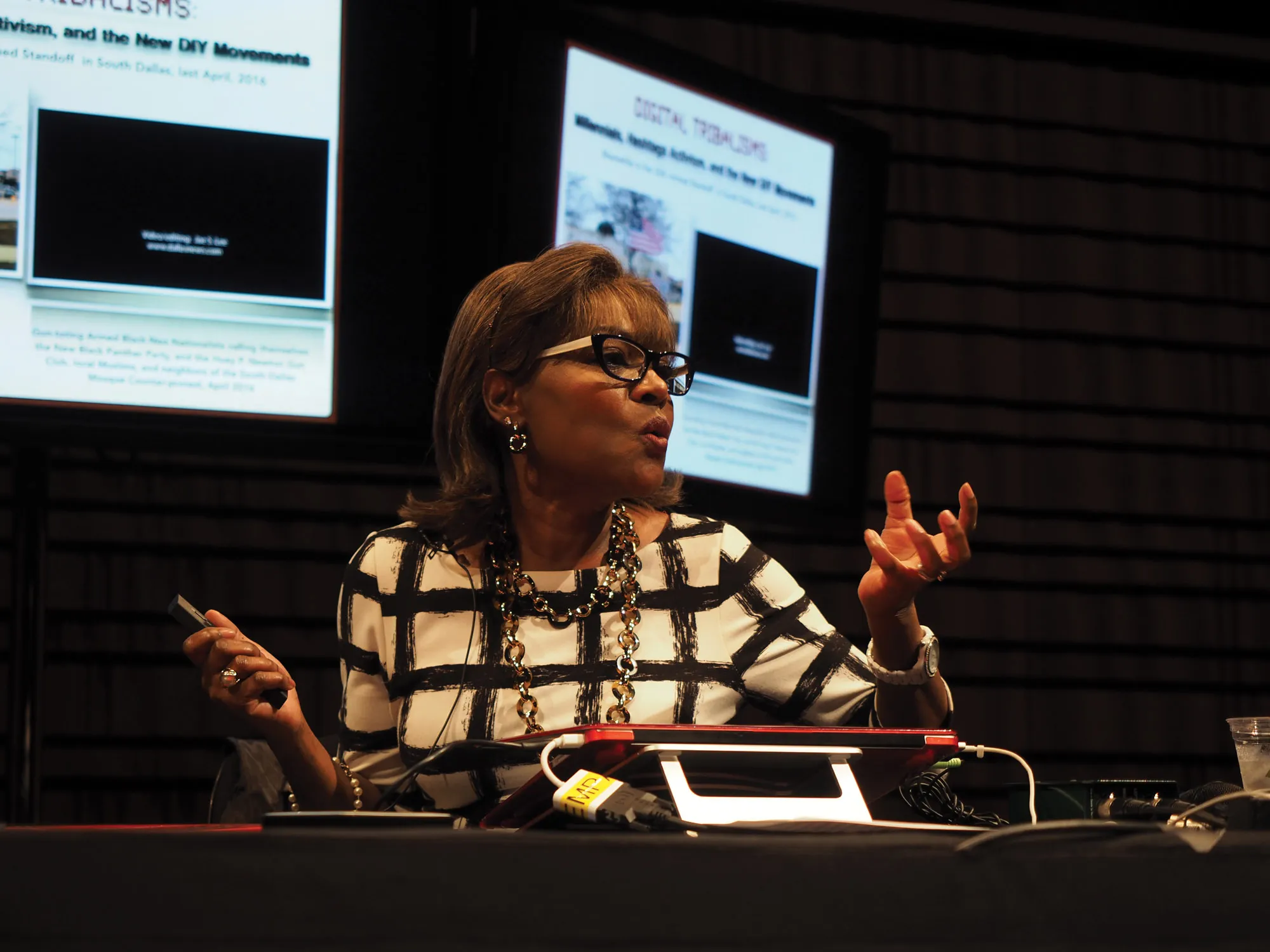
anna everett.

Digital Tribalisms

Millennials, Hashtag Activism, and the New DIY Movements / Anna Everett

What do Pokemon GO and Black Lives Matter have in common? Anna Everett will look at how Millennials simultaneously negate and nurture contemporary moral panics about the dangers of excessive computer use. From fears of violent video game addiction, distracted driving, sexting by minors, online terrorist radicalization, to charges of arrested basic social skills and more, stereotypes of selfie-obsessed youths abound. And yet, there is an important sociocultural recalibration occurring among youth of the 21st century who have harnessed the power of ubiquitous computing to transform interactive media culture and reinvent participatory democracy.

At its core, Everett’s talk considers today’s do-it-yourself tech-toting cultural practitioners who have ushered in a dizzying array of new social formations and relations, including social media proliferation and innovation, hashtag activism, and other transnational activist movements. Everett will unpack how DIY creative ethos has enabled tech-savvy Millennials to reshape society and culture in their own image of inclusive digital tribalism, exemplified by the Black Lives Matter, Occupy, Bring Back Our Girls, and even the Pokemon GO movements.

In so doing, she will suggest that Millennials’ practices of digital nativism represent a new promise and a new hope for sociocultural cohesion and multicultural unity, especially at this urgent time of political upheaval and social uncertainty.

Main Image: Anna Everett speaking in the concert hall in 2017. Photo: EMPAC

I Have Loved The Stars Too Fondly To Be Fearful Of The Night

Rachel Arianne Ogle

With support from the Australia Council for the Arts, choreographer Rachel Arianne Ogle was in residence with lighting designer Benjamin Cisterne and sound designer Luke Smiles to develop their installation-based dance performance i have loved the stars too fondly to be fearful of the night. The collaborators developed sound and video content for an original screen that Cisterne designed and constructed. The residency concluded with a showing for EMPAC staff in which Ogle performed for the first time with the content that Cisterne and Smiles developed while in residence at EMPAC.

Rachel Arianna Ogle is an Australian dancer and choreographer who has danced with such companies as BalletLab in Australia, and com- panies across the globe in Hong Kong, Nigeria and Europe. She has choreographed for compa- nies including Sydney Dance Company, Maya Dance Theater in Sigapore, with original work such as her solo Where You End & I Begin, which was featured in Perth’s Proximity Festival.