Mabel Kwan
Pianist Mabel Kwan was in residence in the Concert Hall to record, edit, mix, and master Georg Friedrich Haas’ Trois Hommages, a composition for two pianos played by one performer. She performed the piece on Sept. 22.
Pianist Mabel Kwan was in residence in the Concert Hall to record, edit, mix, and master Georg Friedrich Haas’ Trois Hommages, a composition for two pianos played by one performer. She performed the piece on Sept. 22.
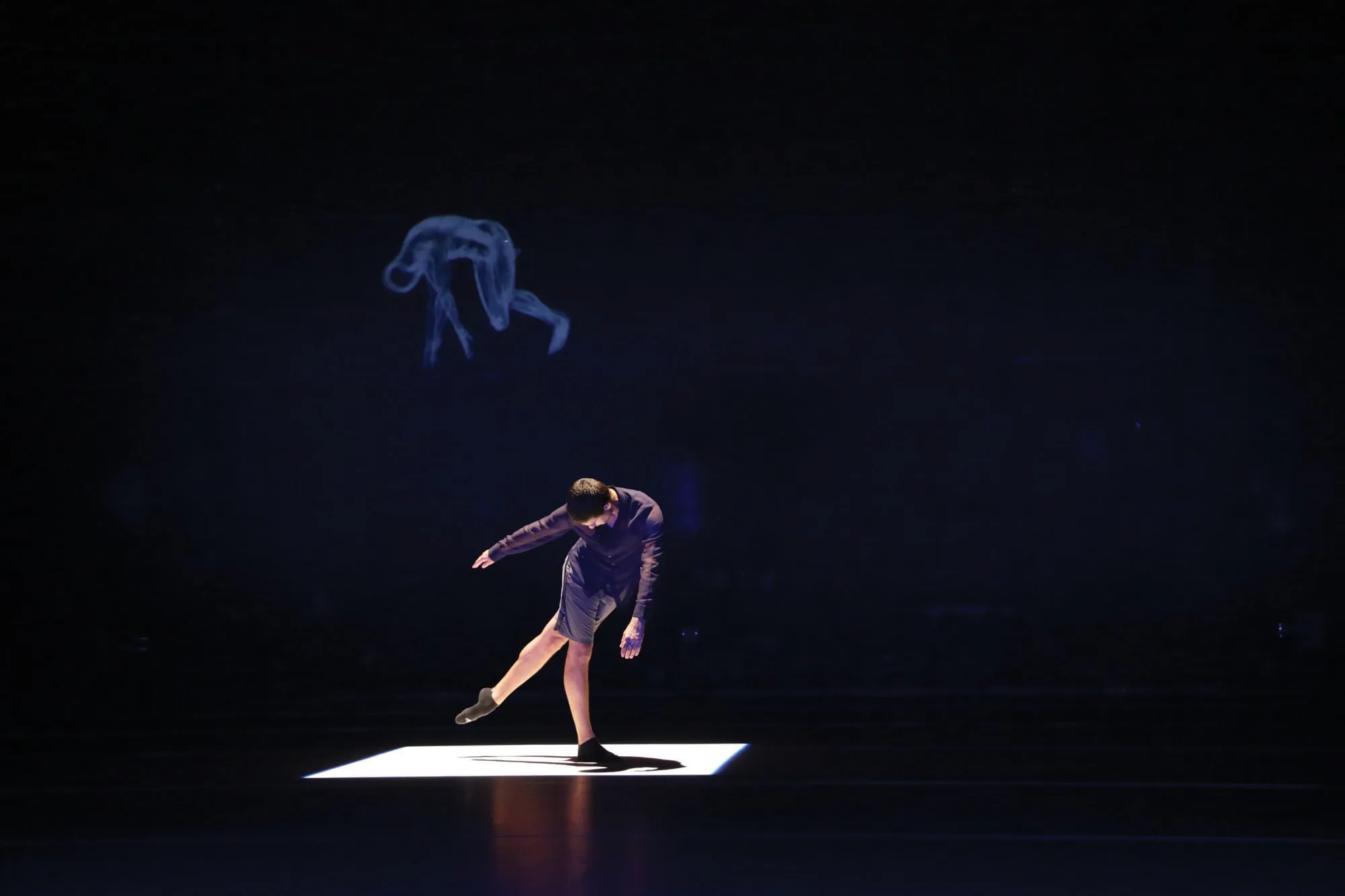
Dancer, choreographer, and media artist Jonah Bokaer combined three of his iconic solos—False Start, Charade, and Nudedescendance—in a 60-minute performance titled Three Cases Of Amnesia. Rarely performed in the United States, the program showcased Bokaer’s pioneering work with choreography, and computer-generated animations.
Where does a movement begin? Where does it end? What, and who, does it leave behind? In these performances, Bokaer used a digital avatar to compose body movements that he might not have discovered working with a physical person, and then transposed that choreography onto his own body for live performance. Over the course of the three works, Bokaer and his animated double dance together, the uncanny precision of each one’s movements building upon the other’s. The result was an intimate portrait of a man and the various media he comes into contact with—not just a computer, its software and projections, but also a chair, a ladder, an apple, and clothing. Bokaer navigated these objects with a personal movement style that goes beyond any specific technique and dialogued with themes of play, memory, ephemerality, and disappearance.
Jonah Bokaer is an American choreographer and media artist known for addressing the human body in relation to contemporary technologies. Recruited to the Merce Cunningham company at the unprecedented age of 18, Bokaer is a John Simon Guggenheim Memorial Fellow in Choreography, a United States Artists Fellow in Dance (Ford Foundation), and a Bessie award-winner. In addition to his own work, he has also choreographed for Robert Wilson and danced for such choreographers as John Jasperse, Deborah Hay, and Tino Seghal.
Main Image: Jonah Bokaer on stage in 2016. Photo: EMPAC.
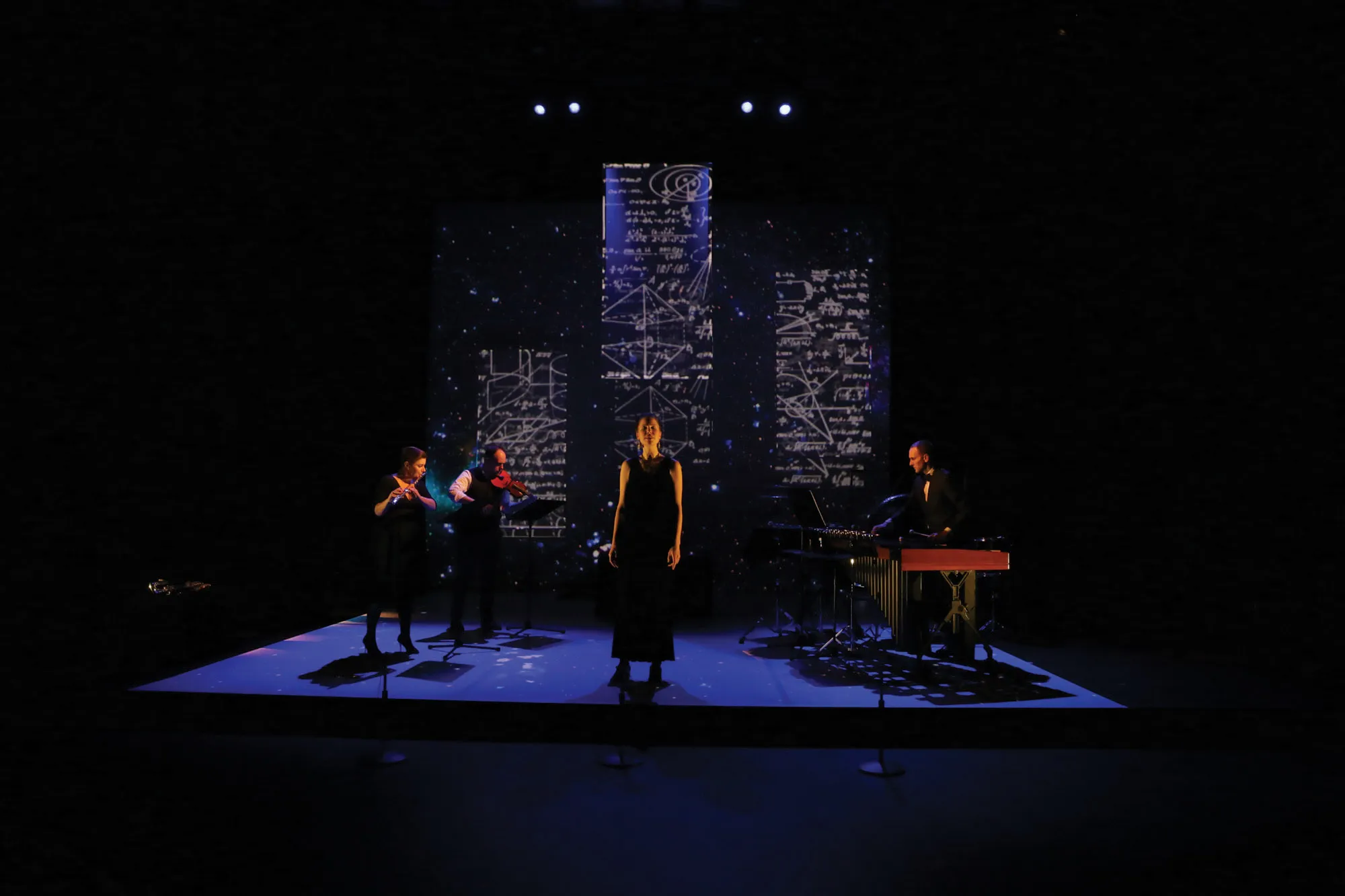
Ipsa Dixit is an evening-length work of theatrical chamber music by American composer Kate Soper. Exploring the intersection of music, language, and meaning, the piece blends elements of monodrama, Greek theater, and screwball comedy to skewer the treachery of language and the questionable authenticity of artistic expression. Each of the piece’s six movements draw on texts by thinkers such as Aristotle, Plato, Freud, Wittgenstein, Jenny Holtzer, and Lydia Davis, delivering ideas from the linguistic disciplines of poetics, rhetoric, and metaphysics through extended vocal techniques and blistering ensemble virtuosity. Developed in pieces since 2010, Soper’s EMPAC residency culminated in the first performance of the work’s entire cycle.
After premiering at EMPAC, Ipsa Dixit was nominated for the Pulitzer Prize in music.
Main Image: Kate Soper on stage in the concert hall performing Ipsa Dixit in 2016. Photo: EMPAC.
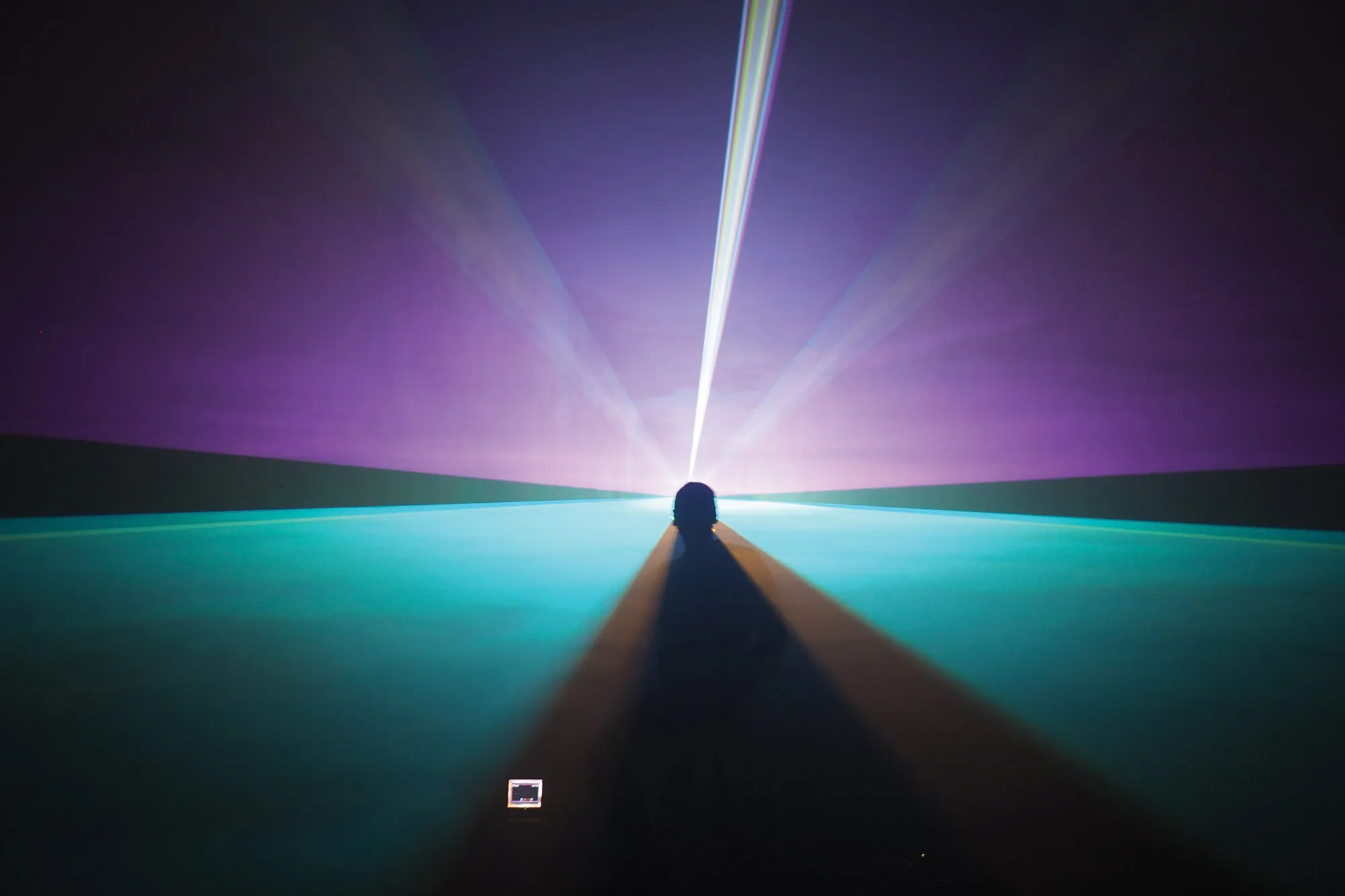
Magic Electronics is a 2014 work by French artist Laure Prouvost, in which she installed moving lights and synched audio into a gallery in order to animate and narrate her exhibition of objects. In doing so, she transformed the static exhibition into a stage. Magic Electronics is exemplary of an approach that slips between formats (video, sculpture, installation) and registers (speech, image, object, light), deliberately mistranslating and misunderstanding as it goes.
Magic Electronics figured as the center of an evening-long conversation between Prouvost and EMPAC curator Vic Brooks during which the pair screened and discussed a selection of Prouvost’s work, taking the audience on a journey from the pre-recorded and situated to the live and one-off. Prouvost was in residence at EMPAC to develop a new performance, which will be premiered alongside her solo exhibition at Walker Art Center in 2017–18.
Main Image: Magic Electronics 2016. Photo: Courtesy the artist.

Los Angeles-based artist Martine Syms is in residence at EMPAC to shoot An Evening with Queen White, part of a new feature-length film project to be shot using a 360-degree camera rig. For this event, Syms will introduce a program of videos by herself and others, alongside a discussion of moving images that have been influential to her work.
An artist, performer, and designer, Syms also founded the imprint Dominica Publishing, which publishes artist books exploring blackness as a topic, reference, marker, and audience in visual culture. Her book Implication and Distinctions: Format, Content and Context in Contemporary Race Film considers performances of blackness in mainstream cinema from 1990 to the present. Other work includes The Mundane Afrofuturist Manifesto, which calls for the culture of the African diaspora to focus its energy on Earth rather than toward transcendence in the cosmos.
Watering the Flowers is a new year-long screening program. Each evening focuses on a recent film or video by an EMPAC-affiliated artist, and will be succeeded by a program of other shorts or features that were influential in the making of their work, whether fiction or documentary, experimental or commercial.
Main Image: Martine Syms Notes on Gesture. Courtesy the artist.
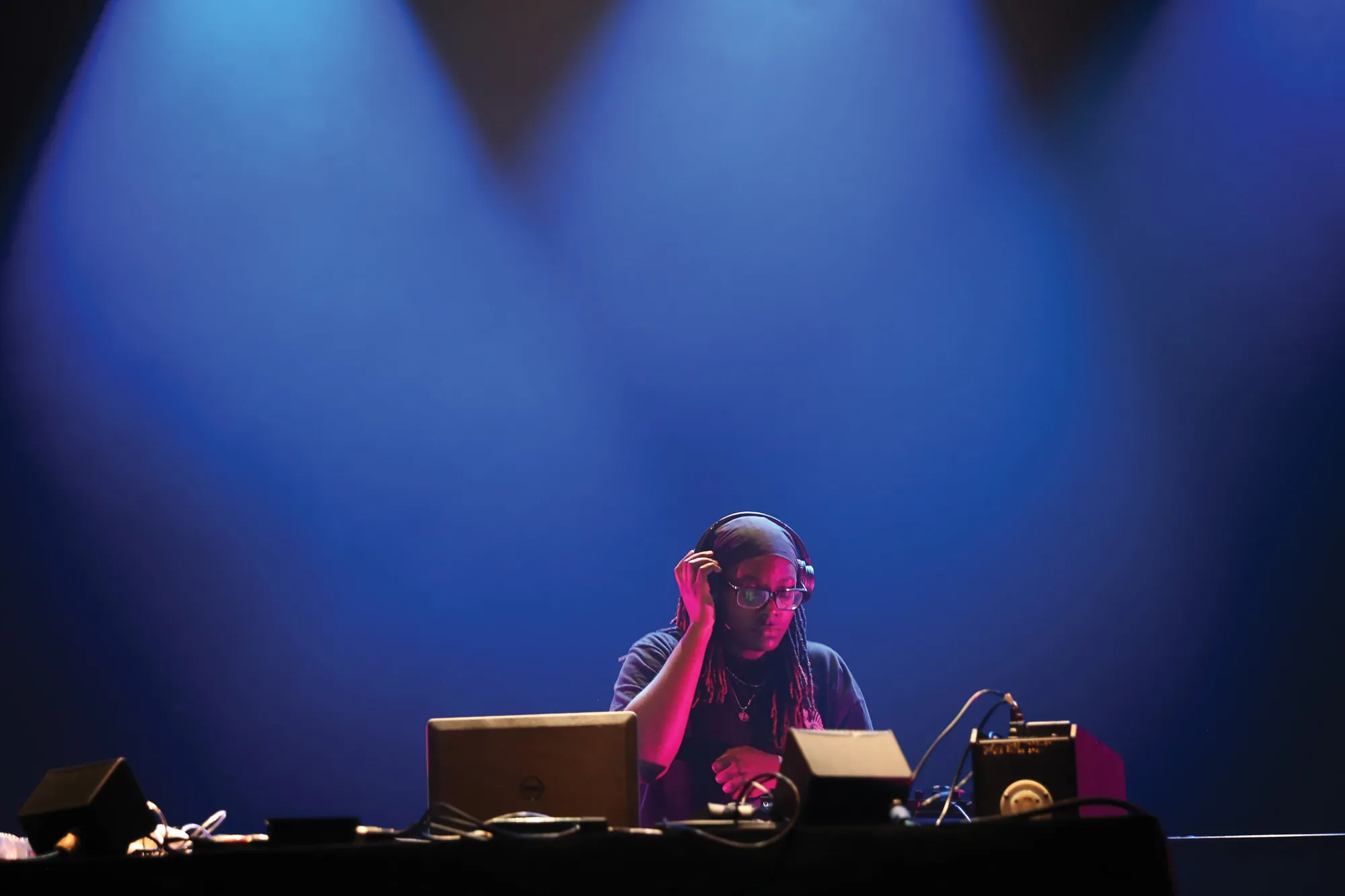
Origin can mean everything and nothing in today’s electronic music, where sounds are sourced, combined, and distributed on digital terrain. While their personal geographies and artistic methods place them worlds apart, Jlin and Qrion each create dance music perfectly suited to the contemporary moment, when regional flavors and the tension between sampled material and self-composed sounds are finding common other-worldly ground.
Jlin is one of the most prominent female electronic producers of the current generation. She grew up in Gary, Indiana, and made her first tracks while working at a steel mill. Drawing on the legacy of RP Boo and DJ Rashad, she has advanced the Chicago-oriented style of footwork into dark and creative new dimensions. Though her earlier work relied on sampling—often from horror movies—she now refuses to, opting instead to compose her dense, frenetic tracks from all original source material. Her 2015 debut record Dark Energy was named the year’s best by a number of publications, including The Wire.
Hailing from Sapporo, the snowy capital of Japan’s northernmost island, Qrion released her first two EPs via SenSe while still attending high school. Internet acclaim and the anticipation of her softly-lit, melancholic melodies eventually led to SenSe’s servers being overloaded during the free release of 2014’s sink, a download-only mini album. Later that year, a high-profile collaboration with electronic producer Ryan Hemsworth exposed Qrion’s music to a global audience.
Main Image: Jlin on stage in studio 1 in 2016. Photo: EMPAC.
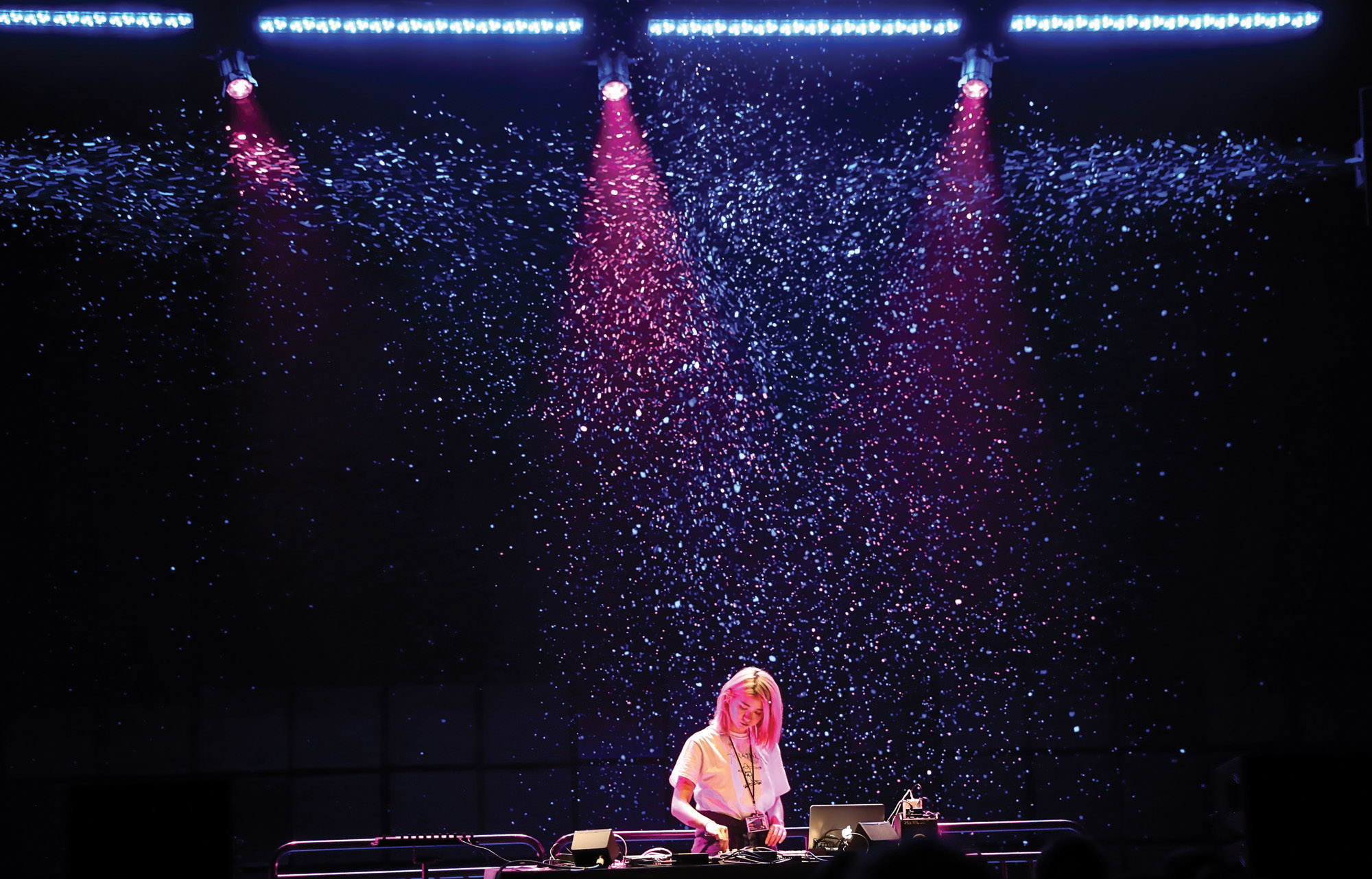
Qrion on stage in studio 1 in 2016.
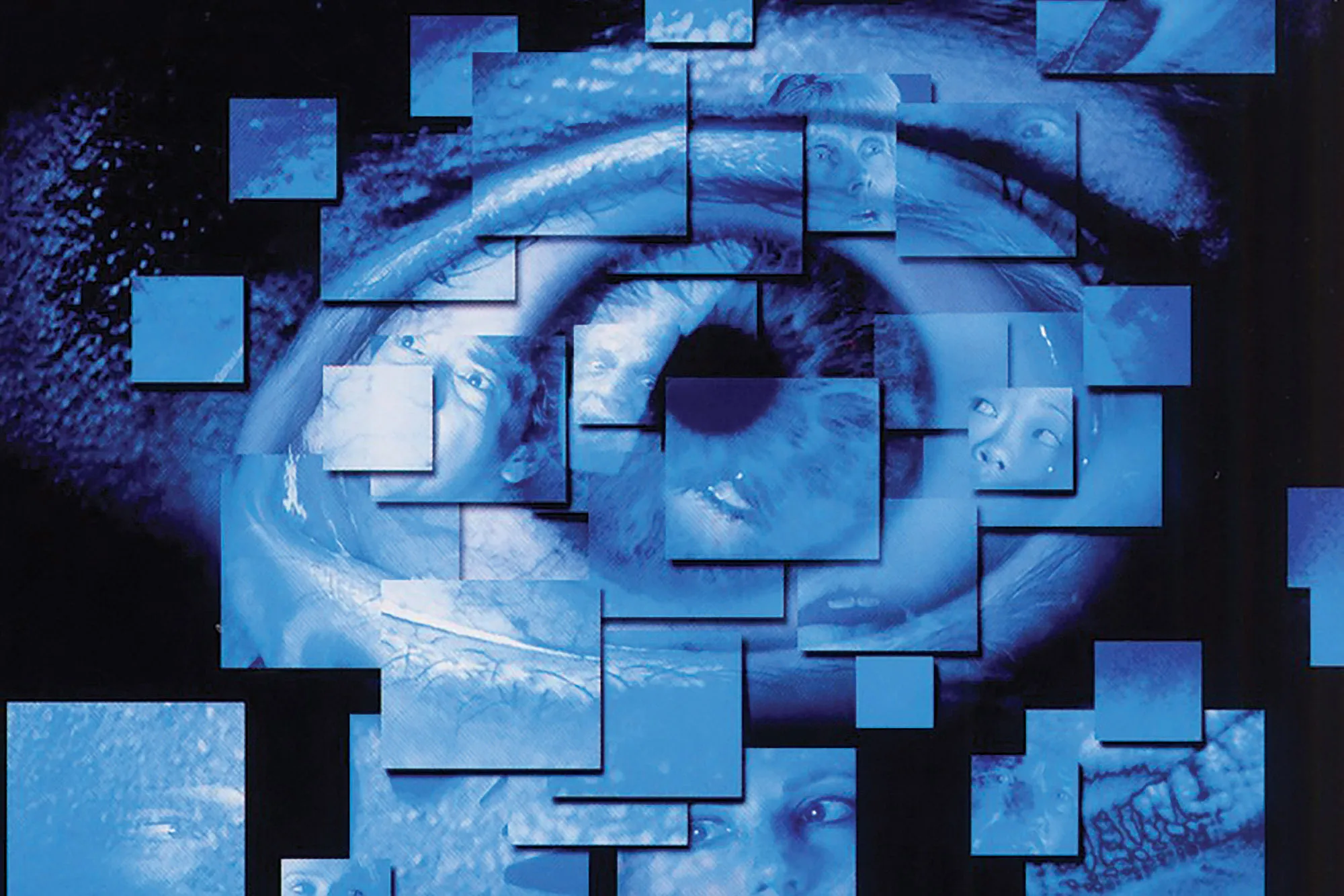
Artist Charles Atlas introduced a program of films that were influential in the development of his 3D video and dance performance work, Tesseract, which premiered at EMPAC in January 2017 in collaboration with choreographers Rashaun Mitchell and Silas Riener.
Cube2: Hypercube, is a 2002 science fiction feature by Andrzej Sekuła that was filmed almost exclusively within the constrained space of a metal-
framed “cube” of diffused light. Reliant on active camera work that renders identical rooms with variable timescales, gravity shifts, folding spaces, and deadly CG effects, the film portrays a group of increasingly disoriented protagonists as they attempt to puzzle their way out of a quantum maze.
Watering the Flowers was a year-long screening program. Each evening focused on a recent film or video by an EMPAC-affiliated artist, and was succeeded by a program of other shorts or features that were influential in the making of their work, whether fiction or documentary, experimental or commercial.
Main Image: Movie poster of Hypercube. Courtesy the artist.
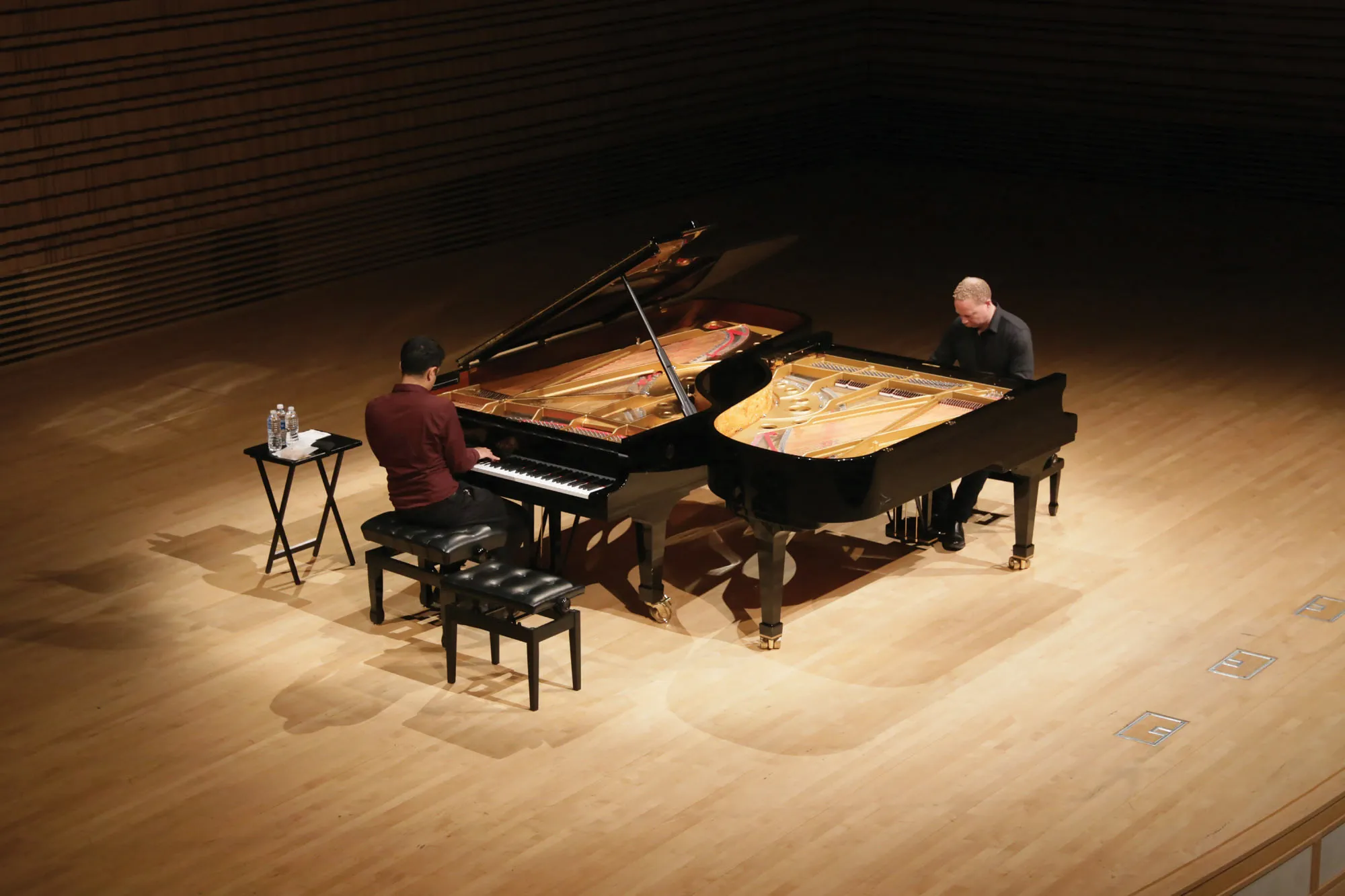
Two of the most progressive voices in American jazz piano joined forces for a performance that blurred the line between composition and improvisation. Vijay Iyer and Craig Taborn have each risen to prominence within the jazz scene by expanding the boundaries of the genre and establishing a highly personalized approach to improvisation. Together, the two drew on an evolving sketchbook of compositional ideas, developed through earlier iterations of the project, to continue a musical conversation that defies the notion of completion.
Vijay Iyer was born in Albany, NY and has become “one of the most interesting and vital young pianists in jazz today,” according to Pitchfork. A Grammy-nominated recording artist on the ECM label, Iyer has a PhD in Technology and the Arts and undertook pioneering scholarship on the “embodied cognition” of musical performance. Interested in what happens to a listener “from the shoulders down,” Iyer approaches jazz from this level of direct vibrational experience. As a leader and sideman, he’s collaborated with artists as diverse as Roscoe Mitchell, Dave Douglas, Amiri Baraka, Das Racist, and most recently Wadada Leo Smith.
Detroit native Craig Taborn is one of the most sought-after sidemen and sessioners working today, having recorded more than 100 albums with artists such as Evan Parker, Tim Berne, and Steve Coleman, and touring with the likes of Dave Holland, Bill Frisell, Ches Smith, and Paul Motian. Known for his work on electric piano and organ as well as acoustic piano, he has topped critics’ and readers’ polls in jazz publications such as Downbeat and JazzTimes. In addition to recording with his own ensembles for ECM and Tzadik, Taborn regularly performs solo.
Main Image: Vijay Iyer and Craig Taborn on the concert hall stage for their performance in 2016. Photo: EMPAC.

Hudson-based artist Ephraim Asili will screen and discuss his recent film Return of the Electric Love (Take II) and other films that are influential to his work. Return of the Electric Love (Take II) is an optically printed 35mm film made from found footage of Kung Fu movies. The sequel to a film Asili had recently completed, which was immediately lost in transit from the film lab, Return of the Electric Love (Take II) reuses this same archive of footage as its source material. His technique of re-photographing short gestural sequences from the original films adds washes of color to the action.
A riot of fast-paced images and their fractured, synchronized soundtracks, the film moves from repetitive Kung Fu gestures—flying kicks and spins—to abstract blocks of color, each frame saturated red, pink, green, and blue in quick succession. In the making of this film, the projector light picked out the time-worn scratches, dust, and water damage etched upon the surface of the celluloid. Asili then photographed these marks using the optical printer and exposed new frames. At times these imperfections dance across the screen, as much a part of the image as the bodies of the martial artists.
Ephraim Asili is an African-American artist, filmmaker, DJ, radio host, and traveler. Inspired by his day-to-day wanderings, Asili creates art that situates itself as a series of meditations on everyday experience and media culture. Through audio-visual examinations of societal iconography, identity, geography, and architecture, Asili strives to present a personal vision. The results are perhaps best described as an amalgam of pop, African-American, and “moving image” culture, filtered through an acute sense of rhythmic improvisation and compositional awareness. Asili teaches at the Film and Electronic Arts Department at Bard College and hosts a radio show on WGXC 90.7 FM Hudson, New York.
PROGRAM
Watering the Flowers is a new year-long screening program. Each evening focuses on a recent film or video by an EMPAC-affiliated artist, and will be succeeded by a program of other shorts or features that were influential in the making of their work, whether fiction or documentary, experimental or commercial.
Main Image: Return of the Electric (Take II), Ephraim Asili.
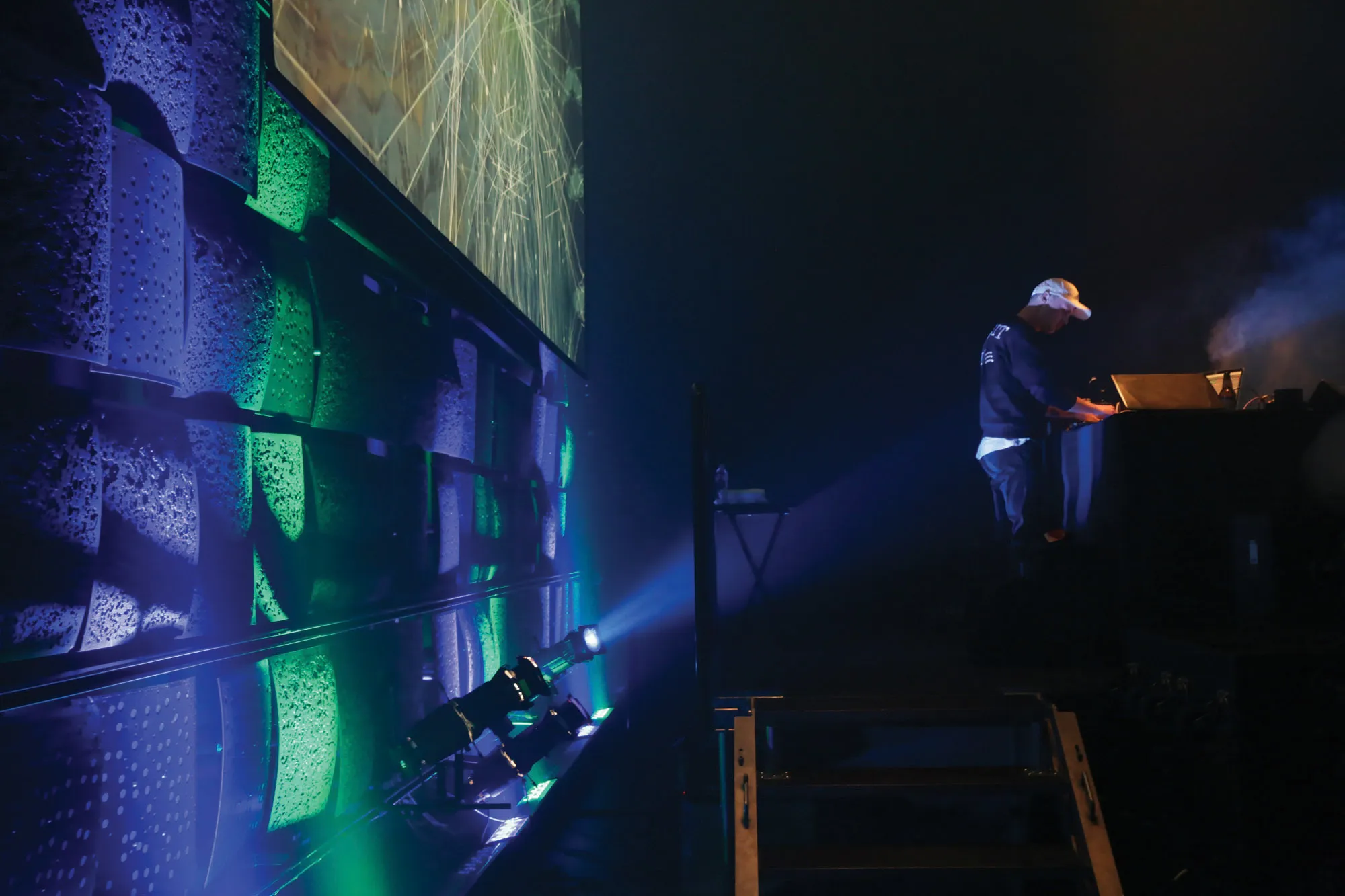
Considered “one of the finest producers of the moment,” London-based artist Lapalux (AKA Stuart Howard) is a rising star of electronic music. Mixing R&B, IDM, and a penchant for sci-fi with woozy, glitched-out beats, his early work caught the ear of LA mastermind Flying Lotus, whose forward-listening hip-hop label, Brainfeeder, has subsequently released Lapalux’s first two records. Lustmore (2015) was inspired by the experience of hypnagogia, the transitional state of consciousness between wakefulness and sleep, with each track aspiring to create a liminal world populated by enigmatic characters and cinematic plotlines.
Taking movie soundtracks and visual ideas as inspiration, Lapalux creates dance music for both the body and the imagination. For this performance, he explored a new audio-visual experience.
Main Image: Lapalux performs in studio 1 in 2016. Photo: Eileen Baumgartner.