Jennifer West

Film Memory

Los Angeles-based artist Jennifer West was in residence to develop Film Memory, an installation in which she integrated 100 channels of film to explore cinema as a material repository of memory.

A night of unabashed film love that delved into the darkened make-out corners of cult and mid- night movie theaters, celebrated the circulation of VHS bootlegs, and tracked through the video rental houses, multi-screen drive-ins, discount multiplexes, art house theaters, lecture halls, and museums of film culture, ending up in today’s tangled web of digital file sharing and online- streaming platforms. An elegy to our ever- changing cinematic contexts and their continued transition to the virtual world, the event reached beyond the frame to reveal how our experience of celluloid and its circuits of distribution function both as a catalyst for personal memory and as a tool to trace unconsidered histories.

Jennifer West was in residence to develop Film Memory—a feature-length film and multi- channel installation exploring the moving image as material memory. Constructed as a “personal historical survey” of cinema, it captures and reconnects the places, spaces, languages, and memories that are born from the cinematic experience.
Image
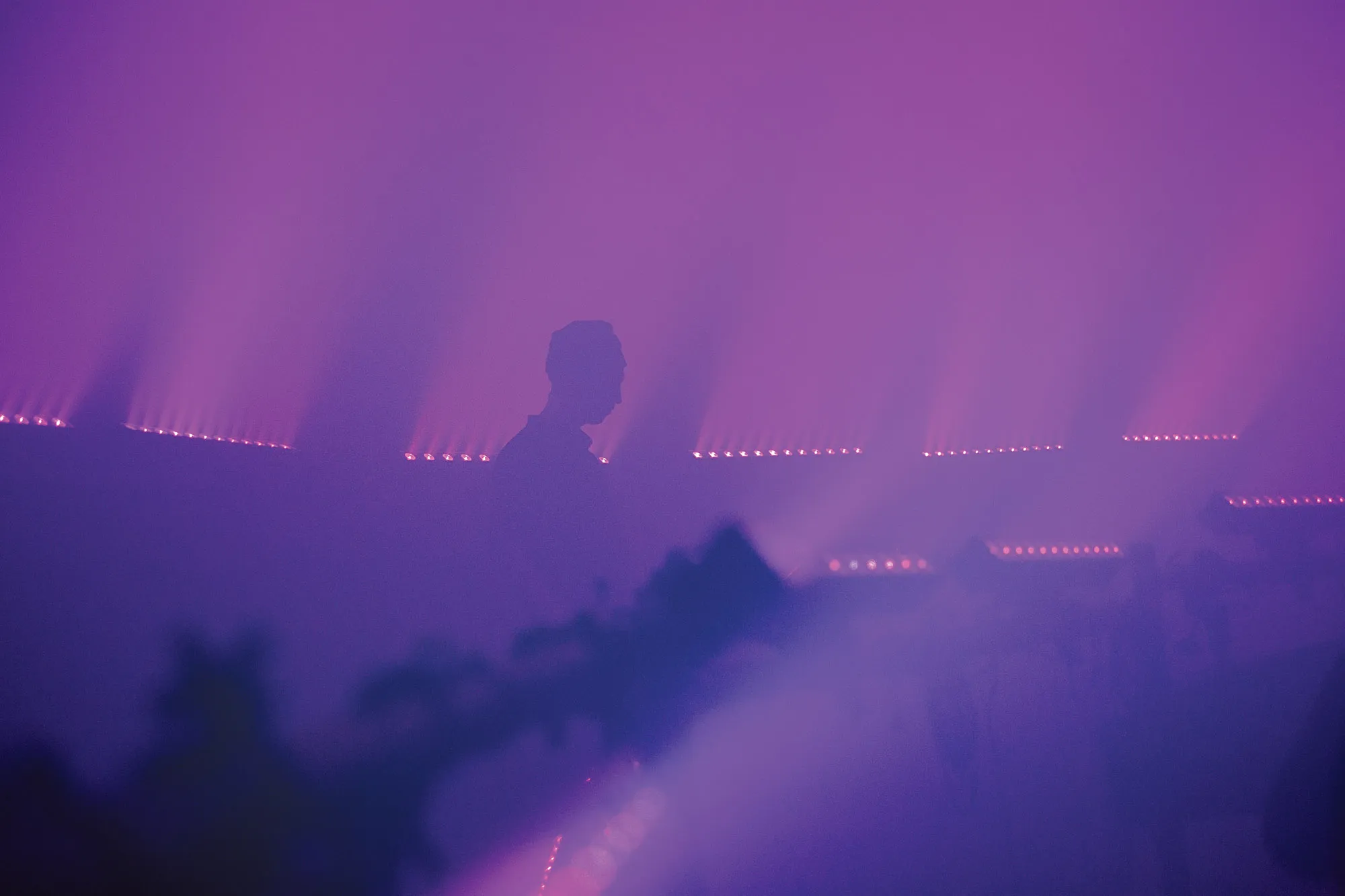
tim hecker's silhouette in dense purple theatrical fog

Love Streams

Tim Hecker and MFO

Canadian electronic musician Tim Hecker returns to forge a new performance of sound and light. Hecker was last in residence at EMPAC in 2012, during which time he recorded a portion of his critically acclaimed album Virgins.

Credited for helping lead and popularize the genre of experimental electronics, his works have been described as "structured ambient," "tectonic color plates," and "cathedral electronic music." More to the point, he has focused on exploring the intersection of noise, dissonance, and melody, fostering an approach to musicmaking that is both physical and emotive. Drawing on traditions of metal, techno, classical, and musique concrete, his sound has found itself at home in the liminal space between traditional genres, audiences, and performing contexts.

For this multidisciplinary project, Hecker worked with lighting designer MFO, a Berlin-based visual artist who works with imagery, light, and space. He has created and directed audiovisual performances with artists such as Ben Frost, Kode9, and Clark. Performers also included Eliza Bagg, Suzanne Kantorski, Charlotte Mundy, and Amelia Watkins.

MFO (AKA Marcel Weber) is a Berlin-based visual artist who works with imagery, light, and space. He has created and directed audiovisual performances with artists such as Ben Frost, Kode9, and Clark.

Featuring:

  • Eliza Bagg, voice
  • Suzanne Kantorski, voice
  • Charlotte Mundy, voice
  • Amelia Watkins, voice

Main Image: Tim Hecker in Studio 1 in 2015.

Media

Recursive Frame Analysis

Mark Fell

Returning to EMPAC after his 2013 multi-venue installation and performance, British artist Mark Fell presented Recursive Frame Analysis, a new work for light, sound, and human movement. As with many of Fell’s previous works, Recursive Frame Analysis emphasized highly formalized aesthetic strategies: arrangements of intensely saturated light, raw synthetic sound, disrupted rhythmic structures, and kinetic systems that urge the audience to their perceptual and cognitive boundaries.

Taking its title from a therapeutic technique (RFA) developed in the 1980s, Recursive Frame Analysis refers to the cognitive patterns around which behavioral relationships and interactions develop; typically these are thought of as “stuck” and therefore also somehow problematic. The frame in the case of this performance could refer to the semiotic or the phenomenological.

The work engages with and responds to vocabularies of shapes developed by New York-based choreographer and dancer Brittany Bailey and was performed by Bailey and Burr Johnson.

Mark Fell is a multidisciplinary artist based in Sheffield, UK. He is widely known for combining popular music styles such as electronica and techno with more academic approaches to computer-based composition, with a particular emphasis on algorithmic and mathematical systems. As well as recorded works, he produces installation pieces, often using multiple speaker systems. He started his career in the ’90s house and techno scene as one half of electronic duo SND and released The Neurobiology of Moral Decision Making earlier this year on label The Death of Rave.

Brittany Bailey has worked as a dancer/choreographer in NYC since 2008. She graduated from the University of North Carolina School of the Arts in 2008 and went on to train with Merce Cunningham. Bailey has performed with Marina Abramovic, Michael Clark Company, and Robert Wilson. Along with creating performance works for her dance company, Bailey is currently the choreographer on performances with Christopher Knowles, Mark Fell, and a solo dance with visuals by Louise Bourgeois and text by Gary Indiana.

WITHIN2

Tarek Atoui

For WITHIN 2, Tarek Atoui presented his approach to performing sound in relation to anticipation, tactility, visual noise, gestures, and the multimodal nature of hearing. The workshop was a platform for performance, research, improvisation, and spatial composition that explored not only auditory perception among our diversity of listening abilities, but the social relations of public space, techniques of visual communication, and architectural tactility.

Atoui presented the project's first incarnation, WITHIN, as a series of performances and workshops during the Sharjah Biennial in 2011 and has continued to research principals of sonic architecture (in particular, the system of DeafSpace, developed by Hansel Bauman at Gallaudet, Washington) in the development of instrument-building techniques. During his time at EMPAC, Atoui worked with Distinguished Research Professor of Music Pauline Oliveros to engage students in designing and building new instruments and interfaces for performance.

The Extra People

Ant Hampton

The Extra People is an immersive theater perfor- mance where 15 audience members sit and watch another 15 onstage. After half an hour, they find themselves replacing those onstage, only to dis- cover that another 15 have appeared in the seats they’ve left behind. And so it continues, through the hours... The theater building—dormant, empty, and unlit save for your flashlight—seems unable to be deactivated. And within this strange process, wearing headphones and a “hi-viz” vest, you’re cast along with everyone else as some kind of extra. But an extra for what?

Starting with Rotozaza’s Etiquette (2007), Ant Hampton has created nine “autoteatro” works, including his Bessie-award-winning collaboration with Tim Etchells for library reading rooms (The Quiet Volume). The “protocol” behind autoteatro—automated processes (often audio) where instructions are given to audience mem- bers who find themselves experiencing the work from the inside—is now taken back to the theater building to operate on a larger scale.

The Extra People was commissioned by EMPAC and premiered in the space where it was devel- oped via the artist-in-residence program.

On Screen/Sound

This year-long film series takes a close look at—and listen to—the way filmmakers have employed the sonic dimension of their form to complement, challenge, and reconsider our experience of the moving image.

Presenting cinematic performance, artists’ moving image, and Hollywood feature films, each On Screen/Sound program delves into the relationship between movie sound and image tracks, highlighting some radical examples of the aesthetic power and technical potential of sound in cinema. From musical theater to the music video, experimental shorts to industrially produced features, the series explores the affective and technical relationship between sound and image through the art of Foley, experimental music, found footage, soundtrack imaging, synched, multi-channel, and non-diegetic sound.

2015 Fall

2015 Fall season reel. Courtesy the artists/EMPAC.

Media

Fall 2015 Video Reel

Image
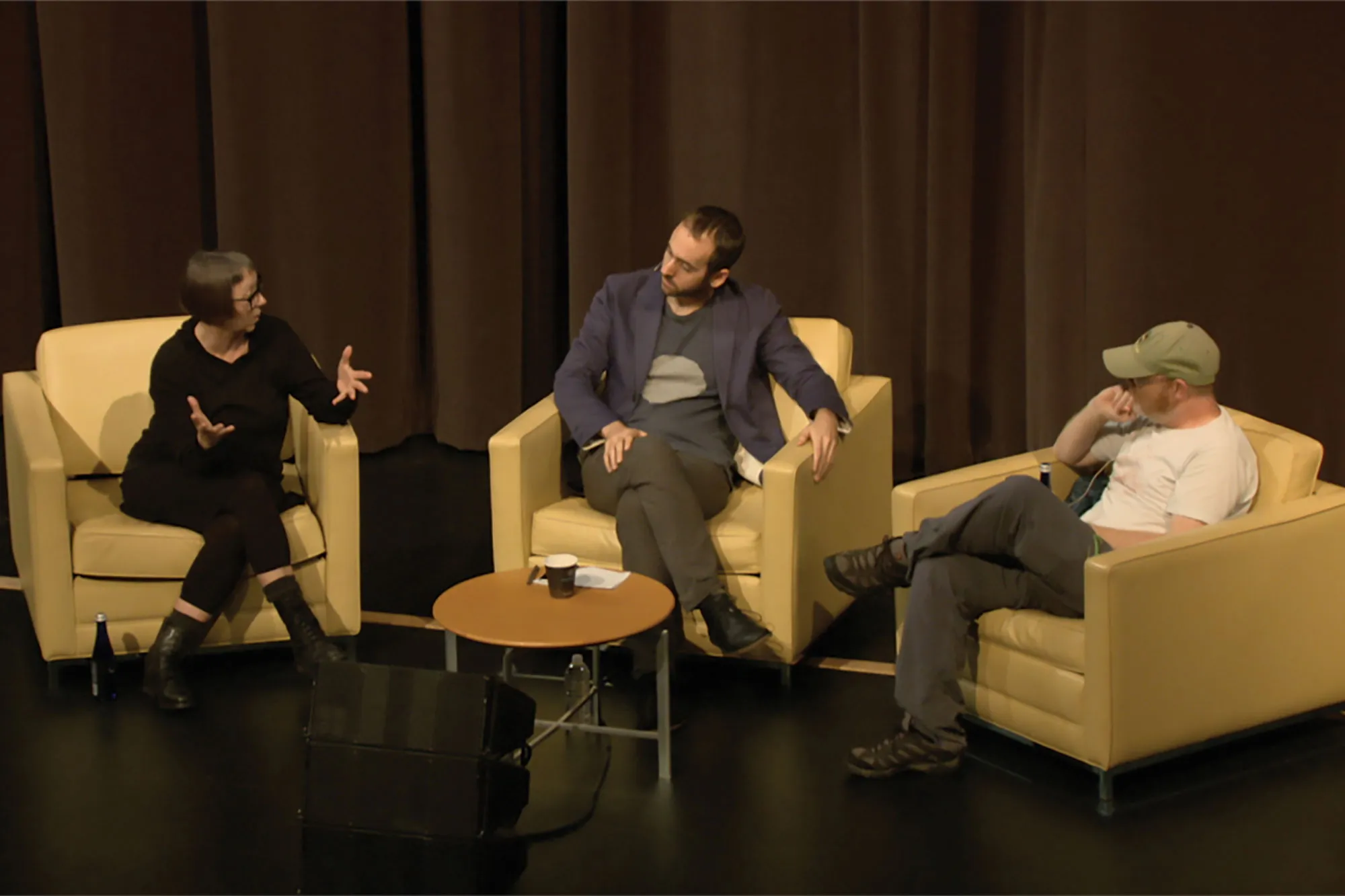
A woman and two men seated in yellow arm chairs in active discussion on a stage in front of a brown curtain.

In Conversation

Mark Fell and France Jobin

Often, the mark of excellence in electronic music and sound art is the ability of the composer to hide their identity and virtuosity behind an inscrutable bank of machinery or within the ambient acoustics of the space in which the piece is performed. Whether or not this obfuscation is willful, it results in a genre of music that is vastly diverse in both its effects and technical configurations. In this conversation between Mark Fell and France Jobin, two masters of their understated craft will step forward to engage in dialogue and answer questions about the aesthetics, techniques, and politics of their work.

Fell has been in residence at EMPAC to develop Recursive Frame Analysis, a new work for sound, light, and dance; meanwhile, Jobin has been working on the premiere of a multi-channel sound piece for the Concert Hall.

Mark Fell is a multidisciplinary artist based in Sheffield, UK. He is widely known for combining popular music styles such as electronica and techno with more academic approaches to computer-based composition, with a particular emphasis on algorithmic and mathematical systems. As well as recorded works, he produces installation pieces, often using multiple speaker systems. He started his career in the ’90s house and techno scene as one half of electronic duo SND and released The Neurobiology of Moral Decision Making earlier this year on label The Death of Rave.

France Jobin is a sound/installation artist, composer, and curator residing in Montreal, Canada. Her installations express a parallel path, incorporating both musical and visual elements inspired by the architecture of physical spaces. Her works can be “experienced” in various music venues and new-technology festivals across Canada, the United States, South America, South Africa, Europe and Japan.

Image
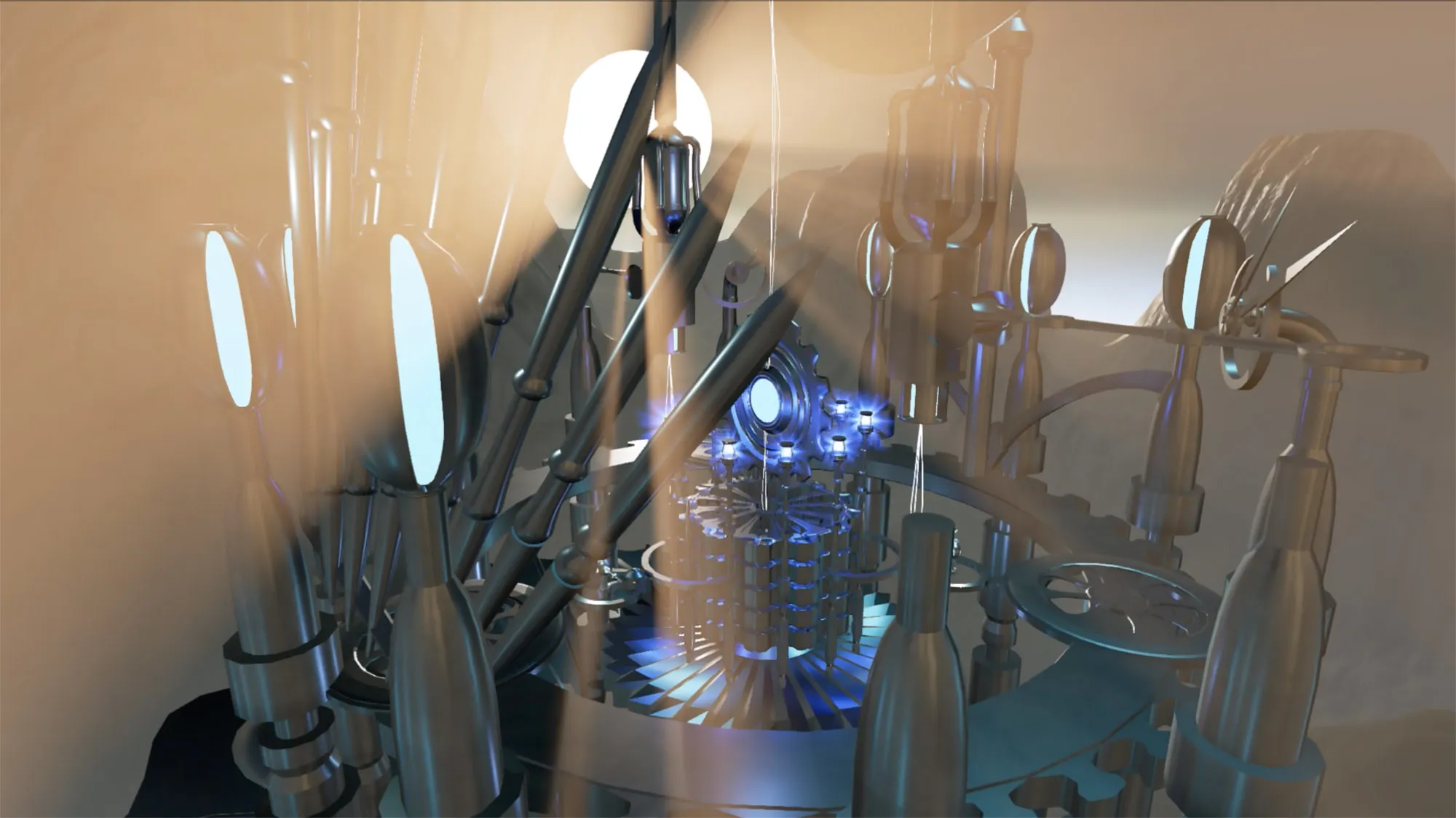
A computer generated image of various metallic cylinders and gears lit by a beam of light.

Rob Hamilton

The Machine is the Message: How Technology Will Fundamentally Change Music

Computers are amazing tools for the generation and manipulation of massive amounts of data in real-time—tools that allow artists, musicians, and researchers to procedurally explore new paradigms of audio and visual interaction, co-opting bits and bytes “on-the-fly” into stunning digital canvases for our enjoyment and contemplation.

Modern computing technology has empowered a generation of creatives to engage their audiences directly as interactive partners rather than passive consumers. The creative and commercial successes of immersive game experiences predict an adventurous future, and have already acclimated audiences to nonlinear forms of storytelling while feeding our growing need to take an active role in our own entertainment. The room is prepped, so to speak, for a new age of procedurally generated, media-rich art and music, which eschews linearity and embraces the dynamism inherent in our tools.

Researcher and composer Rob Hamilton explores the converging spaces between sound, music, and interaction. His creative practice includes mixed-reality performance works built within fully rendered, networked game environments, procedural music engines and mobile musical ecosystems. His research focuses on the cognitive implications of sonified musical gesture and motion and the role of perceived space in the creation and enjoyment of sound and music. Dr. Hamilton received his PhD from Stanford University’s Center for Computer Research in Music and Acoustics (CCRMA) and has joined the Rensselaer community this semester, serving as Assistant Professor of Music and Media in Rensselaer’s Department of Arts.

Image
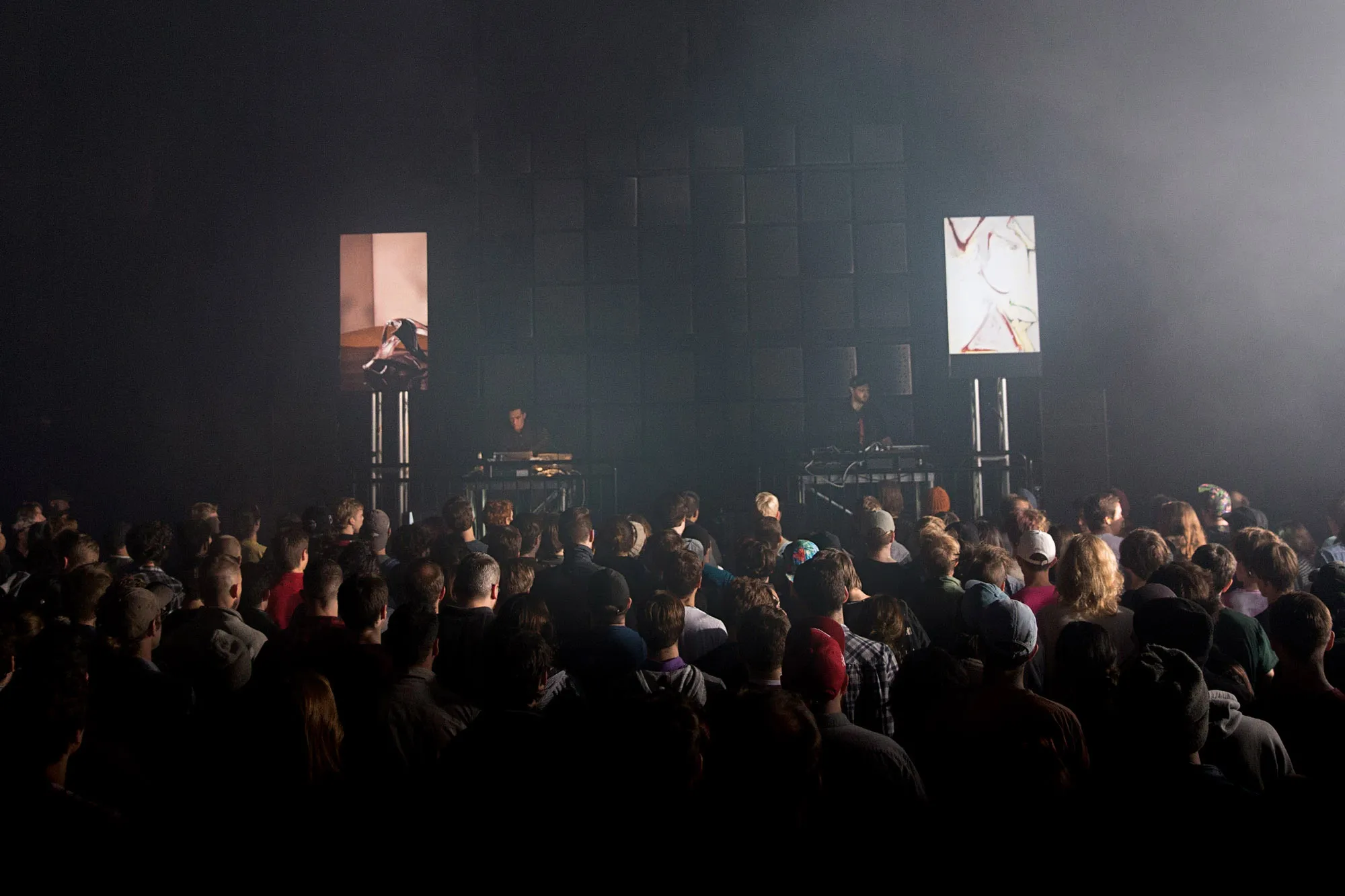
Oneohtrix DJiing to a packed crowd in a haze black box studio.

Garden of Delete

Oneohtrix Point Never

When Oneohtrix Point Never (aka electronic musician Daniel Lopatin) was last at EMPAC, he and visual artist Nate Boyce developed and debuted a multimedia stage show for the world tour supporting his 2013 album R Plus Seven, released by Warp Records. Upon returning in 2015, he was in residence to develop and premiere the live stage show for his upcoming Garden of Delete world tour.

Daniel Lopatin is known for creating intricate electronic music that is characterized by its emphasis on melody and hypnotic pacing, conceptually stylized structures, and extreme use of audio-processing techniques. Early incarnations of Oneohtrix Point Never date back to the mid 2000s and drew heavily on the stylistic forms of cutout-bin ambient and new age records, combined with the structure and abrasiveness of noise music.

Newer work has focused on sample-based constructions, while  R Plus Seven drew on procedural poetry and ersatz instrumentation to produce a cryptic meditation on the materiality of sound itself. In addition to his own studio work in 2014/2015, Lopatin toured with Nine Inch Nails, produced Antony's album, and exhibited an installation in collaboration with Boyce at MoMA PS1.

Main Image: Oneohtrix Point Never in Studio 1—Goodman in 2015. Photo: EMPAC/Rensselaer.

Media