Image
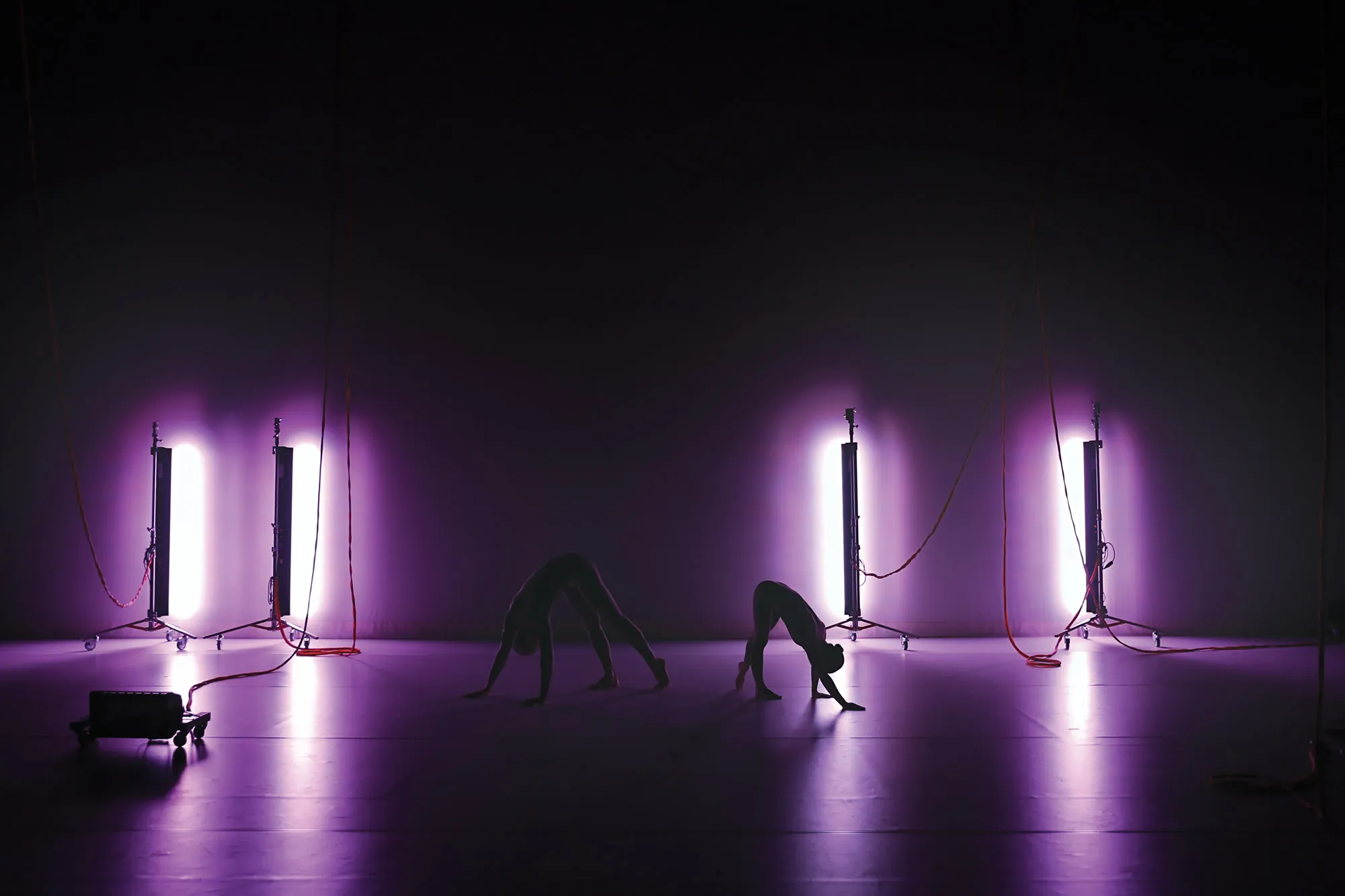
Two dancers in bent positions washed in purple light

Recursive Frame Analysis

Mark Fell

Returning to EMPAC after his 2013 multi-venue installation and performance, British artist Mark Fell presents Recursive Frame Analysis, a new work for light, sound, and human movement. As with many of Fell’s previous works, Recursive Frame Analysis emphasizes highly formalized aesthetic strategies: arrangements of intensely saturated light, raw synthetic sound, disrupted rhythmic structures, and kinetic systems that urge the audience to their perceptual and cognitive boundaries.   

Taking its title from a therapeutic technique (RFA) developed in the 1980s, Recursive Frame Analysis refers to the cognitive patterns around which behavioral relationships and interactions develop; typically these are thought of as “stuck” and therefore also somehow problematic. The frame in the case of this performance could refer to the semiotic or the phenomenological.

The work engages with and responds to vocabularies of shapes developed by New York-based choreographer and dancer Brittany Bailey and performed by Bailey and Burr Johnson.

Mark Fell is a multidisciplinary artist based in Sheffield, UK. He is widely known for combining popular music styles such as electronica and techno with more academic approaches to computer-based composition, with a particular emphasis on algorithmic and mathematical systems. As well as recorded works, he produces installation pieces, often using multiple speaker systems. He started his career in the ’90s house and techno scene as one half of electronic duo SND and released The Neurobiology of Moral Decision Making earlier this year on label The Death of Rave.

Brittany Bailey has worked as a dancer/choreographer in NYC since 2008. She graduated from the University of North Carolina School of the Arts in 2008 and went on to train with Merce Cunningham. Bailey has performed with Marina Abramovic, Michael Clark Company, and Robert Wilson. Along with creating performance works for her dance company, Bailey is currently the choreographer on performances with Christopher Knowles, Mark Fell, and a solo dance with visuals by Louise Bourgeois and text by Gary Indiana.

Main Image: Recursive Frame Analysis in the theater in 2015. Photo: EMPAC/Rensselaer.
vhvl + Daedelus + Ikonika

From three stylistically distinct corners of the global beat scene, a trifecta of dance-music heavyweights descended on Troy for a late-night concoction of hip-hop, house, and techno.

Harlem-based sample queen vhvl builds dark, knotty collages from source material that can be both elemental and intimate at turns. Hers is a brand of hip-hop steeped as much in the rivers and forest of the Hudson Valley as in the concrete hustle of the city. Her 2013 debut myrrh drew comparisons to early Flying Lotus, and in 2014 she released a split cassette with Ras G on Stones Throw Records.

LA beat-scene veteran Daedelus is one of the most inventive and prolific figures to have emerged from the legendary weekly showcase Low End Theory at LA club the Airliner. Taking a decidedly baroque approach to his craft, the tech-savvy maestro conducts bottomless banks of sound from his preferred device—the gestural Monome. He’s released 15 records with taste-making labels such as Brainfeeder and Ninja Tune, as well as collaborations with Prefuse 73, Busdriver, and the Gaslamp Killer.

London-based producer and DJ Ikonika has fast become a star of Hyperdub Records, one of the most esteemed purveyors of UK bass music. Her 2014 EP Position built on a career that has synthesized house, dubstep, grime, garage, electro and R&B. When she isn’t touring globally, she runs the label Hum + Buzz.

Image
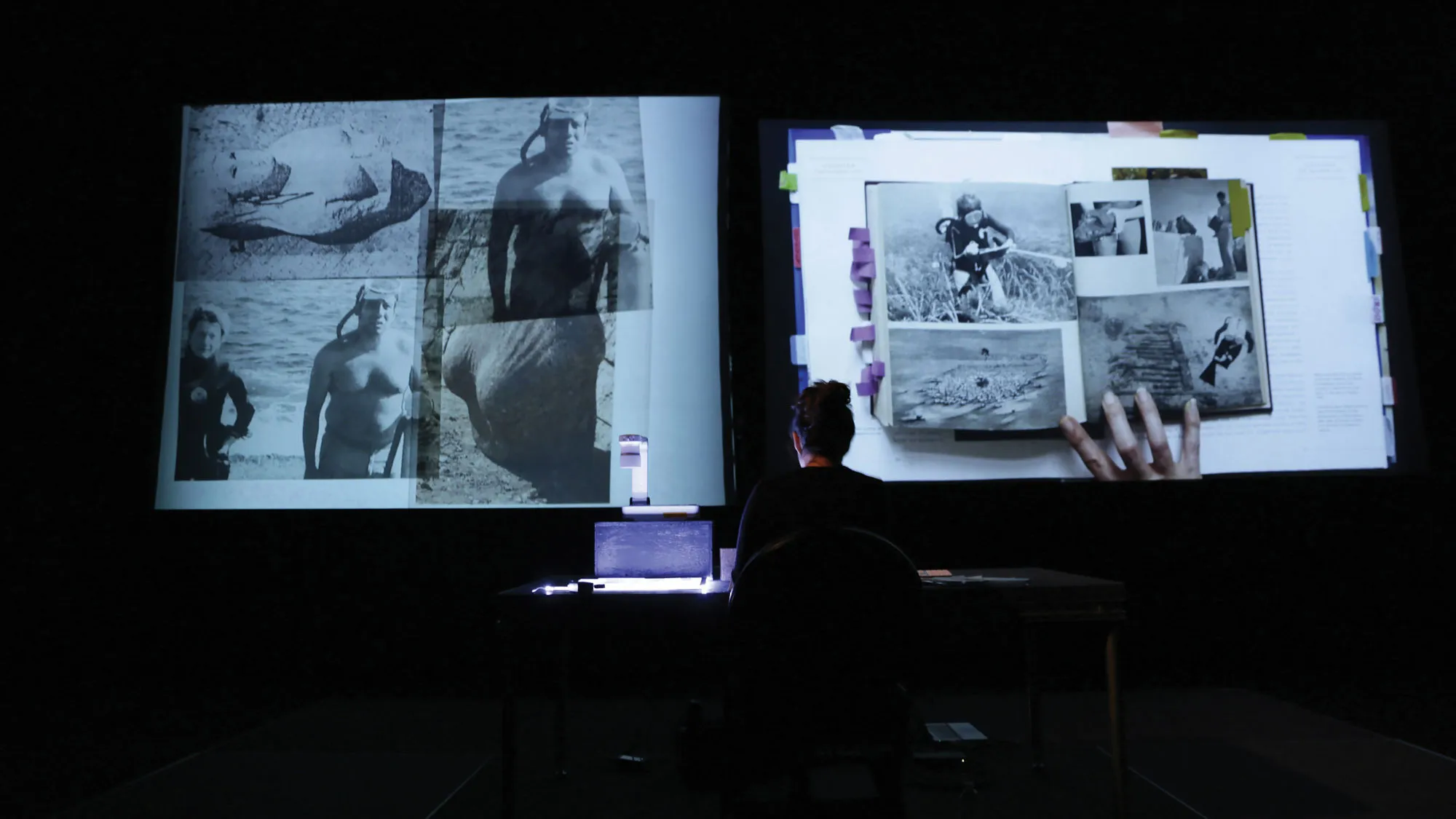
Ellie Ga sitting in front of two screens displaying vintage pictures of people at the beach.

Eureka, a lighthouse play

Ellie Ga

Eureka, a lighthouse play, is a narrative performance that centers on the Great Lighthouse of Alexandria. Since its destruction in a series of earthquakes during the Middle Ages, many people have tried to reconstruct the lighthouse, Eureka recounts Ellie Ga’s journey, beginning in 2012 when she joined a marine archaeology program at Alexandria University in pursuit of the lighthouse alongside a quixotic cast of characters. The narrative describes the journey of an artist lost in the process of research, drawing upon an archive of photographs, video footage, documents, artifacts, and interviews. Like the growing cast of unlikely characters, it becomes harder and harder to piece together the lighthouse’s history from the thousands of stones that are barely
visible on the seabed. 

Ellie Ga’s multimedia essays are part field dispatch, part artist’s notebook, part home-movie, part poem. Her projects often develop in collaboration with scientific and historical institutions such as the Explorers Club (New York), Tara Arctic Expeditions (France/Arctic Ocean) and The Center of Maritime Archaeology, Alexandria (Egypt). 

Main Image: Ellie Ga on stage in studio 2 for A Lighthouse Play in 2015. Photo: EMPAC/Rensselaer.

Media
Image
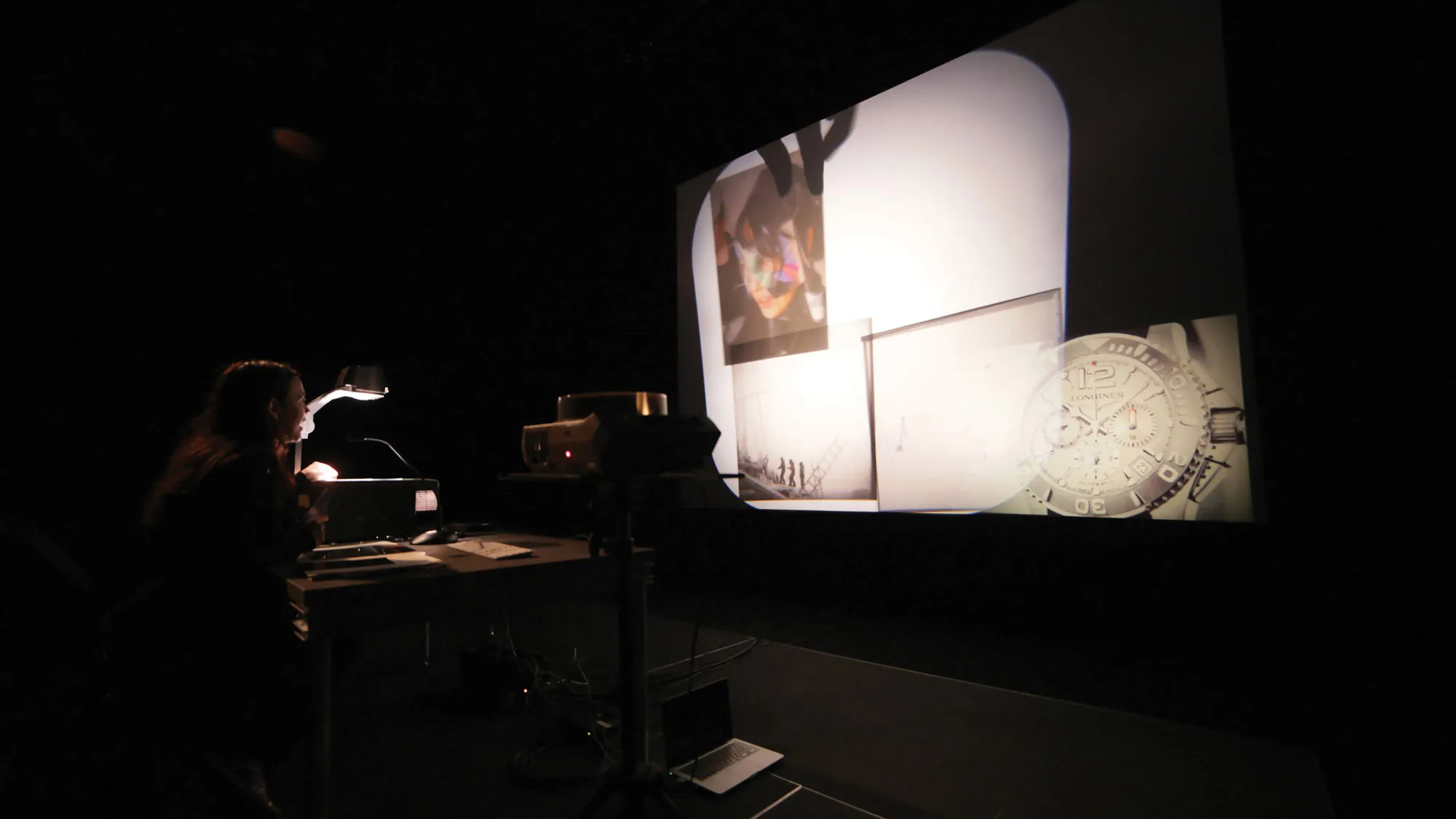
a woman in the theater controlling a manual projector.

The Fortunetellers

Ellie Ga

The Fortunetellers is a narrative performance inspired by American artist Ellie Ga’s six-month residency on the Tara, a research boat frozen in the Arctic ice, drifting near the North Pole to gather scientific data. The work mixes live storytelling, recorded sound, still images, and film to bring new insight and intimacy to Ga’s Polar adventure. Combining her memories with a curious mix of photographs, videos, annotated sketches, maps, and travel logs she archived along the way, Ga conjures up the rituals of daily life in the Arctic night.

The Fortunetellers tells an eclectic mix of stories, from the history of the yoyo to the evolution of oceanic currents and their impact on planktonic life, all framed against a study of ancient and modern forms of fortune telling, which Ga uses as a metaphor for the past and future of the Arctic landscape. 

Main Image: Ellie Ga's The Fortunetellers in Studio 2 in 2015. Photo: EMPAC/Rensselaer.

Ellie Ga

Eureka: a lighthouse play

Eureka, a lighthouse play, is a narrative performance that centers on the Great Lighthouse of Alexandria. Since its destruction in a series of earthquakes during the Middle Ages, many people have tried to reconstruct the lighthouse, searching for its remains in an effort to reconstruct the histories of one of the lost wonders of the ancient world.

Eureka recounts Ellie Ga’s journey, beginning in 2012 when she joined a marine archaeology program at Alexandria University in pursuit of the lighthouse alongside a quixotic cast of characters. The narrative describes the journey of an artist lost in the process of research, drawing upon an archive of photographs, video footage, documents, artifacts, and interviews. Like the growing cast of unlikely characters, it becomes harder and harder to piece together the lighthouse’s history from the thousands of stones that are barely visible on the seabed.

David Brynjar Franzson

Icelandic composer Davíð Brynjar Franzson was in residence to develop technical concepts for his work The Cartography of Time, for bass clarinet, cello, trombone, piano, and live electronics. A generative installation for four performers or standalone electronics, the piece is constructed from a handful of sound fragments and composed responses to them. Each sound reflects how each performer involved in the project approaches their instruments as well as how they interact with their immediate sound environment. The result is an environment constructed from these sound fragments, distributed through the performance space.

Image
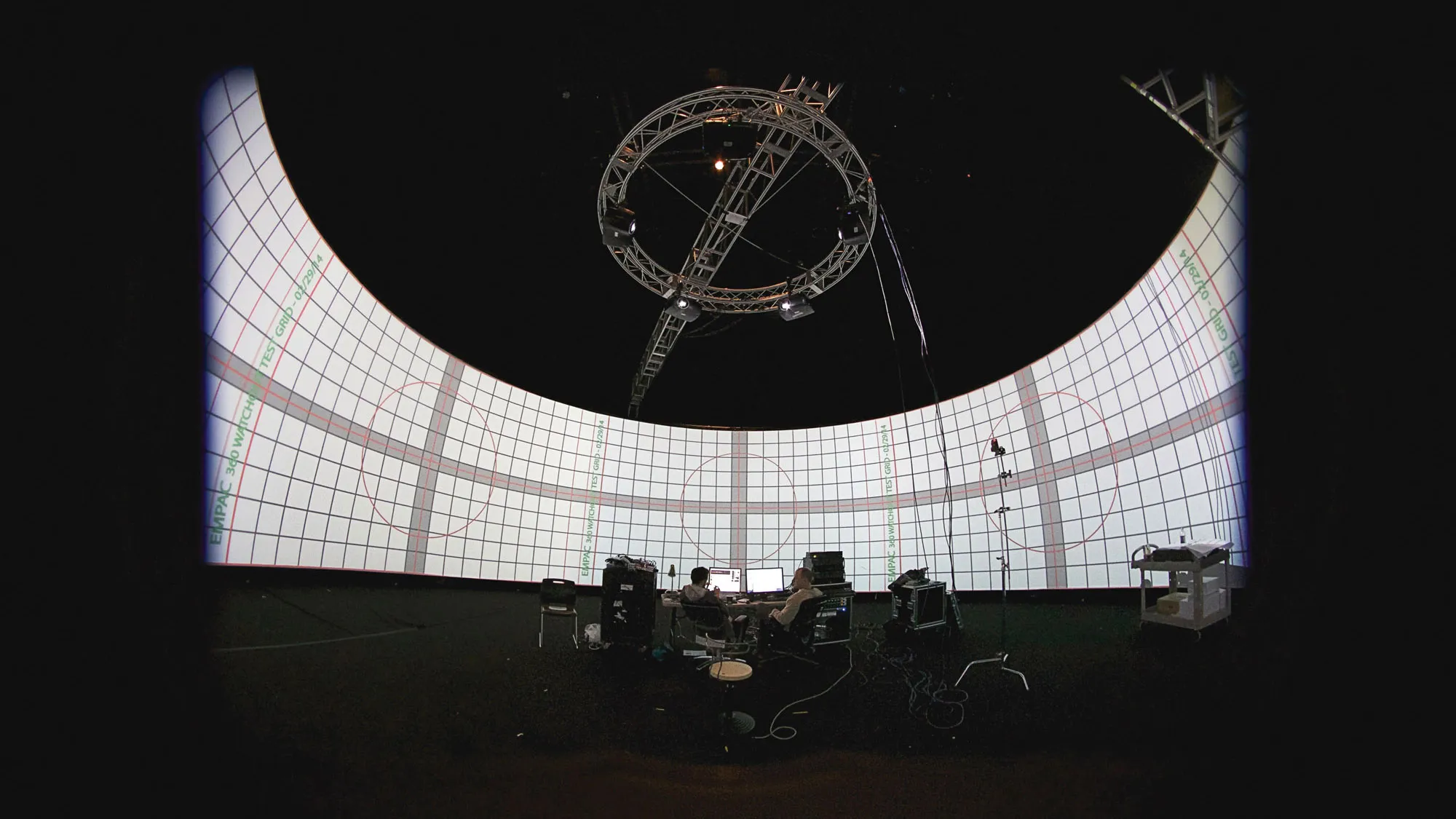
Two people sitting amongst computers and various electronics in front of a panoramic screen displaying a grid.

EMPAC from the Inside

Behind the Scenes of Production and Research

Quite simply, there is no other venue with EMPAC’s technical infrastructure and programming potential anywhere else in the world.

Beyond the hundreds of public events that take place each year, the studios and venues are used almost continually for extended artistic and research residencies, giving birth to new works and technologies “behind closed doors.”

In this presentation, EMPAC’s Senior research engineer Eric Ameres will pull back the curtain on technological work performed in collaboration with artists, scientists, and the EMPAC production teams. Through a series of vignettes, anecdotes, interviews, and some “show and tell,” he’ll explore the ever-expanding repertoire of technology and give insight into where experimental media and the performing arts can meet in production and research, providing a rare glimpse behind the scenes from what the audience typically gets to experience.

Pianoply

Vicky Chow, Stephen Drury, Marilyn Nonken, & Mabel Kwan

Four accomplished pianists, four acoustically distinct venues, five grand pianos. This evening of piano performances brought together some of the leading soloists working today in new music to explore their instrument’s full color spectrum in EMPAC’s complete range of acoustic environments. Performing on grand pianos of varying sizes and manufactures, Pianoply examined virtuosity through the lens of situation and setting.

Pianoply featured soloists Vicky Chow, Stephen Drury, Mabel Kwan, and Marilyn Nonken, performing on a selection of pianos: a 9’ Hamburg Steinway, 9’ New York Steinway, 7’ Fazioli, 6’ 7” Bösendorfer, and 7’ 6” Yamaha pianos.

The audience was guided through all of EMPAC’s venues—the reverberant warmth of the Concert Hall, the intimacy of the Theater, the detailed crispness of Studio 1 and the enveloping diffusion of Studio 2—to explore the sonic properties of contemporary repertoire performed through particular instruments placed in particular spaces.

PROGRAM

PROGRAM

Vicky Chow - Studio 2

Michael Gordon - Sonatra (2004)

Stephen Drury - Studio 1

John Cage - Etudes Australes, Book I (1974-75)

Marilyn Nonken - Theater

Joshua Fineberg - Tremors (1996)

Tristan Murail - La mandragore (1993)

Claude Vivier - Shiraz (1977)

Mabel Kwan - Concert Hall

Evan Johnson - three reversed movements, to bring destroyed objects back to life (2014)

Eliza Brown - Between Clouds (2012)

Rebecca Saunders - Shadow (2013)

Gerardo Gandini - Eusebius, Four Nocturnes for One Piano (1984)

Image
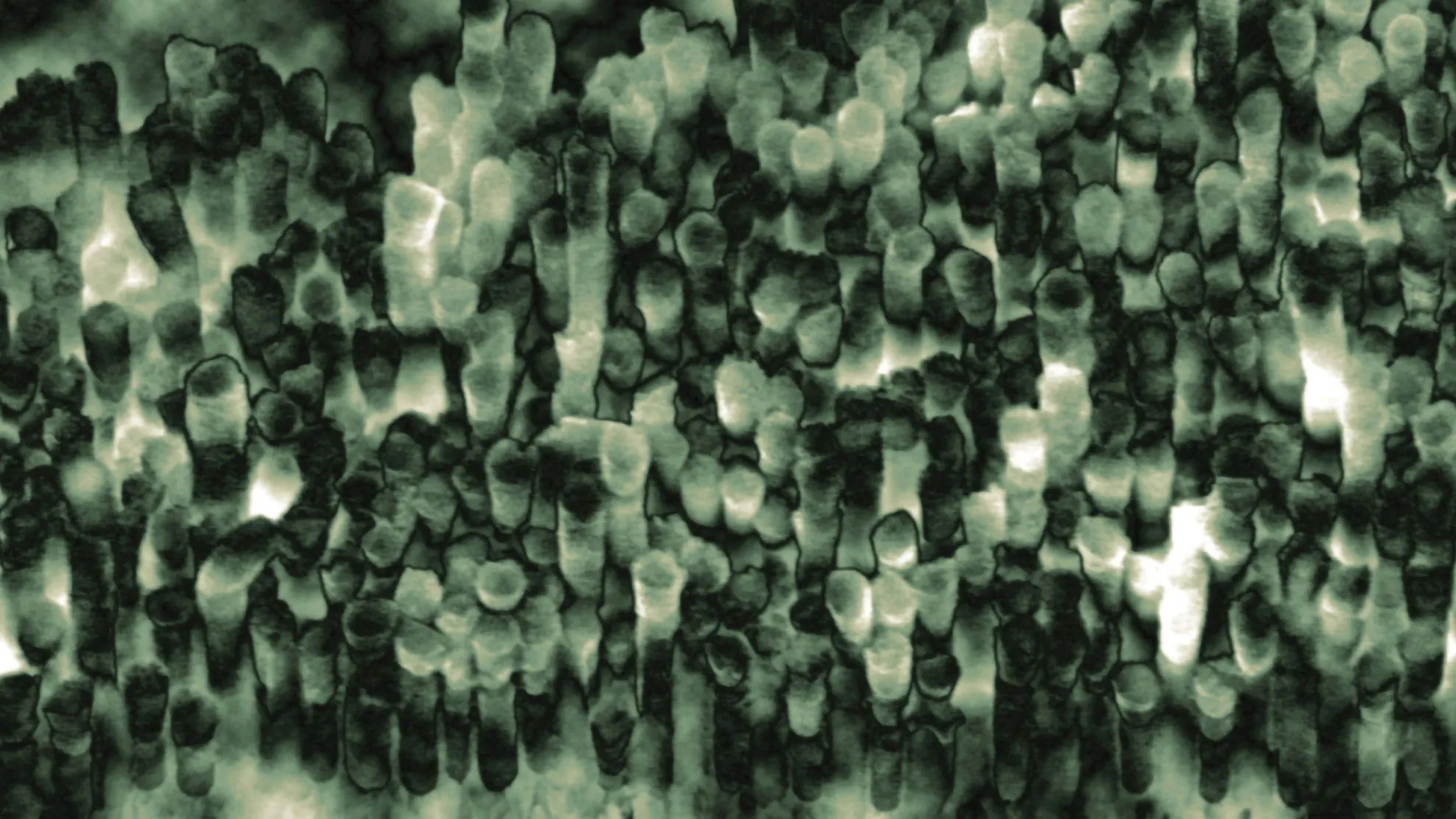
An up close image of green bacteria.

Curt Breneman

Changing the World by Mining the Materials Genome

Dr. Curt Breneman, dean of science at Rensselaer, discussed the work of the Materials Genome Initiative, a project that brings together materials science and data science to facilitate the development of advanced materials. The Materials Genome Project Initiative replaces trial-and-error experimentation with databases, algorithms, simulations, and other computational tools to expedite the processes of research, design, and implementation of new materials. The ability to rapidly develop materials with desirable properties to meet problems holds enormous potential to impact the built environment and enable new technologies. 

Dr. Curt M Breneman is professor of chemistry & chemical biology and dean of science at Rensselaer. His materials informatics work led to his appointment as an advisor to the White House Office of Science and Technology Policy/ National Institute of Standards in Technology Materials Genome Initiative program. 

This series provided an opportunity for Rensselaer professors and researchers to share in-depth perspectives on their fields of inquiry. Inviting an exchange of ideas on campus and providing a window into a singular vision, these events are geared toward experts and non-experts alike.

Sonatra

Michael Gordon & Vicky Chow

Composer Michael Gordon and pianist Vicky Chow were in residence to record, edit, mix and master the work Sonatra. A technical tour-de-force, Sonatra was recorded twice in the Concert Hall—once in standard tuning and once in Just intonation.

Sonatra was released in 2018 by Cantaloupe Records.