2015 Spring
2015 Spring season reel. Courtesy the artists/EMPAC.
2015 Spring season reel. Courtesy the artists/EMPAC.
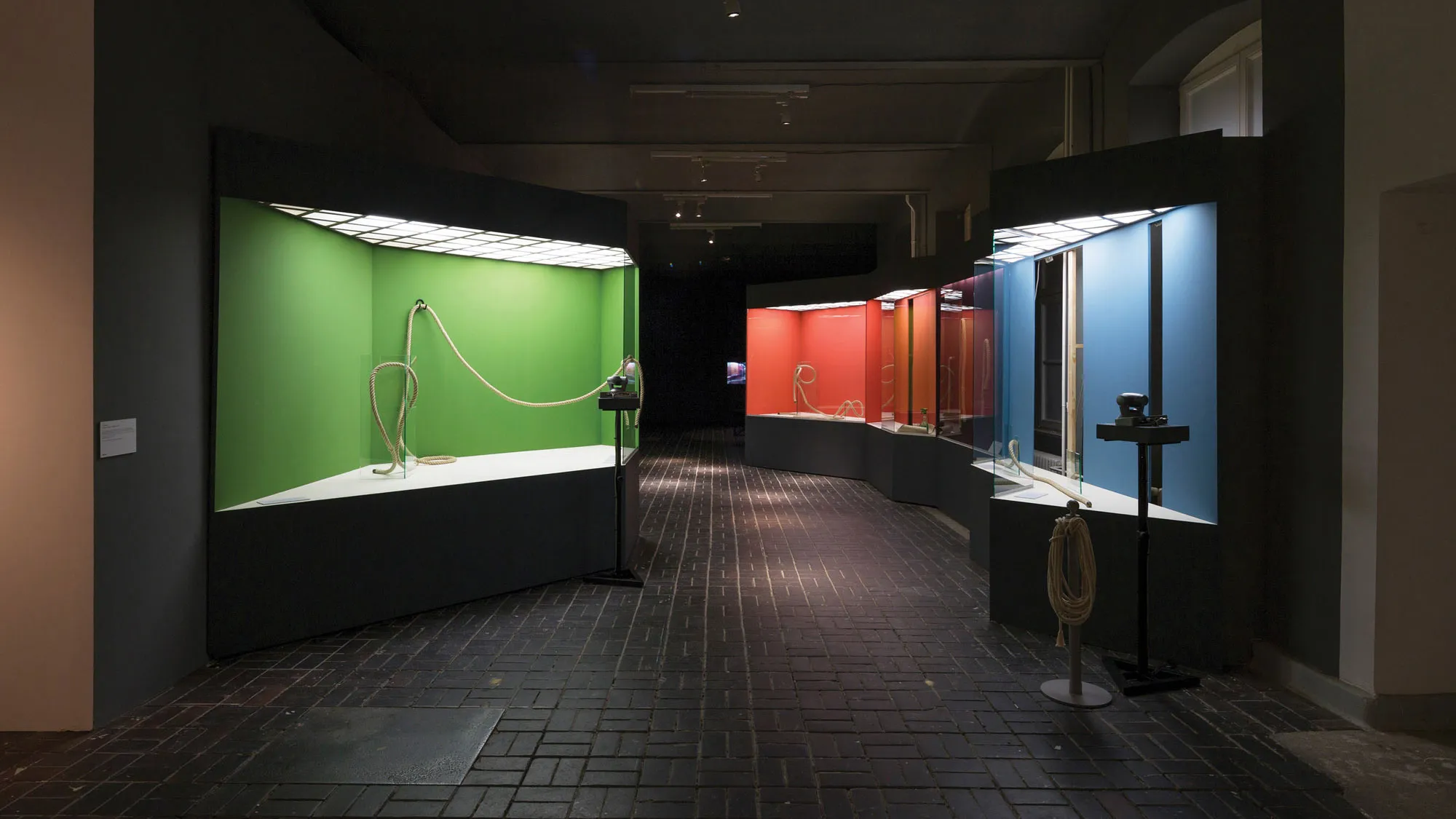
Judy Radul will be in residence at EMPAC to develop her technical approach to computer-controlled video installation. Her artist’s research draws on the technical, theoretical, and applied study of camera motion and present-time image production (live video feed). The artist will present her in-progress research, asking, “What is the meaning of camera motion, and what are the potentials of new technologies to help us reflect and intervene in these meanings? This inquiry into camera motion as the subtle carrier of the image is in the context of a daily life saturated with cameras and screens, each of us conscripted by our devices to document and disseminate but rarely to deliberate on their effects.”
Judy Radul was born in Lillooet, British Columbia, Canada. Her interdisciplinary practice has recently focused on video installation but also includes sculpture, photography, performance, and mixed media installations. Her latest works involve an original computer-controlled system for live and pre-recorded video. Her work, Look.Look Away. Look Back, was shown in the Berlin Biennale 8 (2014). Her large-scale media installation World Rehearsal Court (2009) has been shown at the Morris and Helen Belkin Gallery, U.B.C. Vancouver; the Generali Foundation, Vienna; Media City, Seoul, South Korea and Henie Onstad Art Center in Oslo, Norway. Related to this project, with Marit Paasche she co-edited a book of collected essays and images, A Thousand Eyes: Media Technology, Law and Aesthetics (Sternberg Press, Berlin, 2011). She has a BA in fine and performing arts from Simon Fraser University and an MFA in visual and media arts from Bard College, New York. She is represented by Catriona Jeffries Gallery and teaches at Simon Fraser University. In 2012-13 Radul was a guest of the DAAD Artist-in-Berlin Program.
Main Image: Judy Radul The Contour of Attention (2014). Photo: Courtesy the artist.
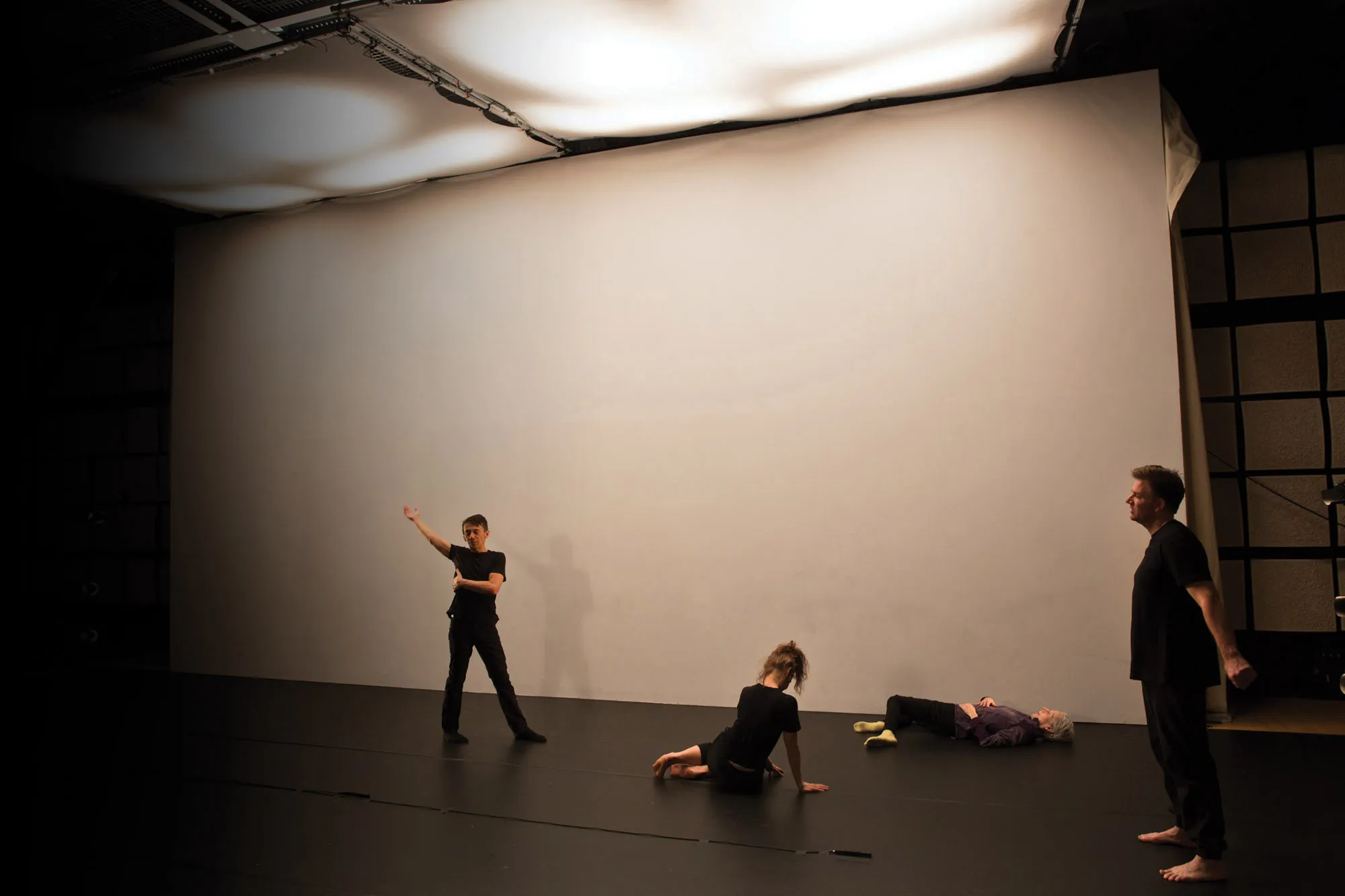
Commissioned, developed and produced as part of the DANCE MOViES Commission, a program that supports the creation of new dance works for the screen, with projects developed and produced through the EMPAC artist-in-residence program, contemporary artist Seline Baumgartner collaborates with professional dancers over the age of 50, exploring how contemporary dance indulges in the eternal cult of youth. Is there a physical memory? How does the movement or style of a dancer change with aging? The work examines how a traditional vocabulary of the dance form usually links criteria such as elegance, grace, and dignity with flexibility and vigor. The research involved looking at age and the inability to move with agility not as a disadvantage, but as a conceptual framework for choreography.
Composer Chris Cerrone was in residence with video director Mark DeChiazza and percussionist Ian David Rosenbaum to shoot a video for Memory Palace, a 23-minute composition for percussion and electronics. The piece’s title refers to an ancient technique of memorization that helped orators remember very long speeches by placing mental signposts in an imaginary location and “walking” through it.
The majority of the instruments in Memory Palace are fashioned by the percussionist. These included a cheap guitar, fourteen slats of wood (to be played like a marimba), ten metal pipes, and wine bottles filled with varying amounts of water. The percussion- ist also triggers a series of electronic drones using an foot pedal, creating a resonant background aura that enhances the live music throughout.
Judy Radul was in residence to develop her technical approach to computer-controlled video installation. Her artist’s research draws on the technical, theoretical, and applied study of camera motion and present-time image production (live video feed).
The artist presented her in-progress research, asking, “What is the meaning of camera motion, and what are the potentials of new technologies to help us reflect and intervene in these meanings? This inquiry into camera motion as the subtle carrier of the image is in the context of a daily life saturated with cameras and screens, each of us conscripted by our devices to document and disseminate but rarely to deliberate on their effects.”
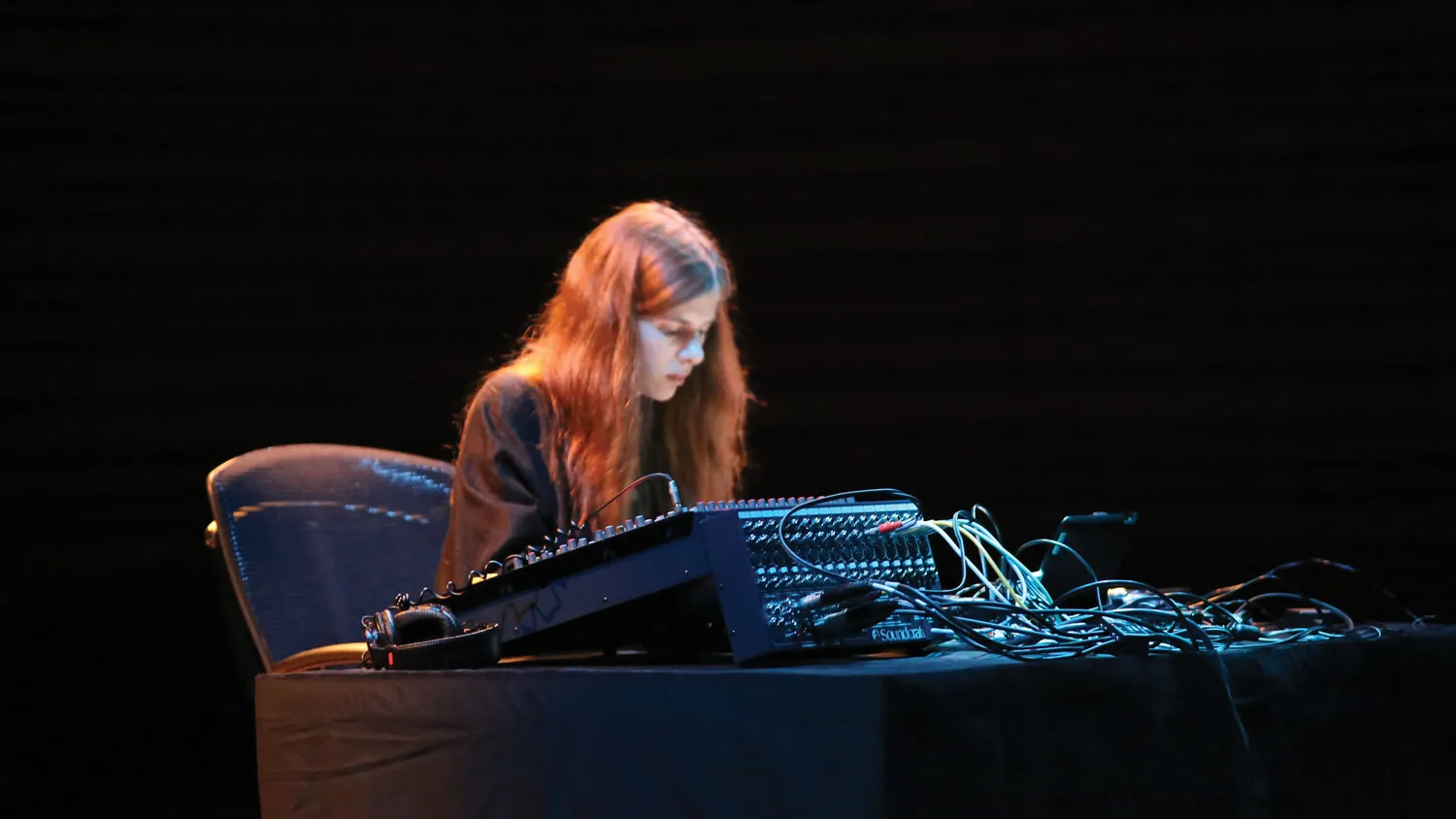
Laurel Halo was in residence to record material for her album, Dust, released in 2017 on Hyperdub Records. Laurel Halo is a producer and live electronic musician from Ann Arbor, Michigan. Influenced by her Midwestern roots, Halo’s music speaks to new club ecologies explored through abstract rhythms, chaotic ambience, and moody jazz elements. “Techno is a meditative force that can process darkness and remove problems… in their place, the ideal of a non-threatening, transcended, sexually charged headspace emerges,” she told The Wire. Physical process and temporal drift are recurring motifs in Halo’s discography.
Dust was released by Hyperdub Records in 2017
Main Image: Laurel Halo in residence in 2015 working on Dust.
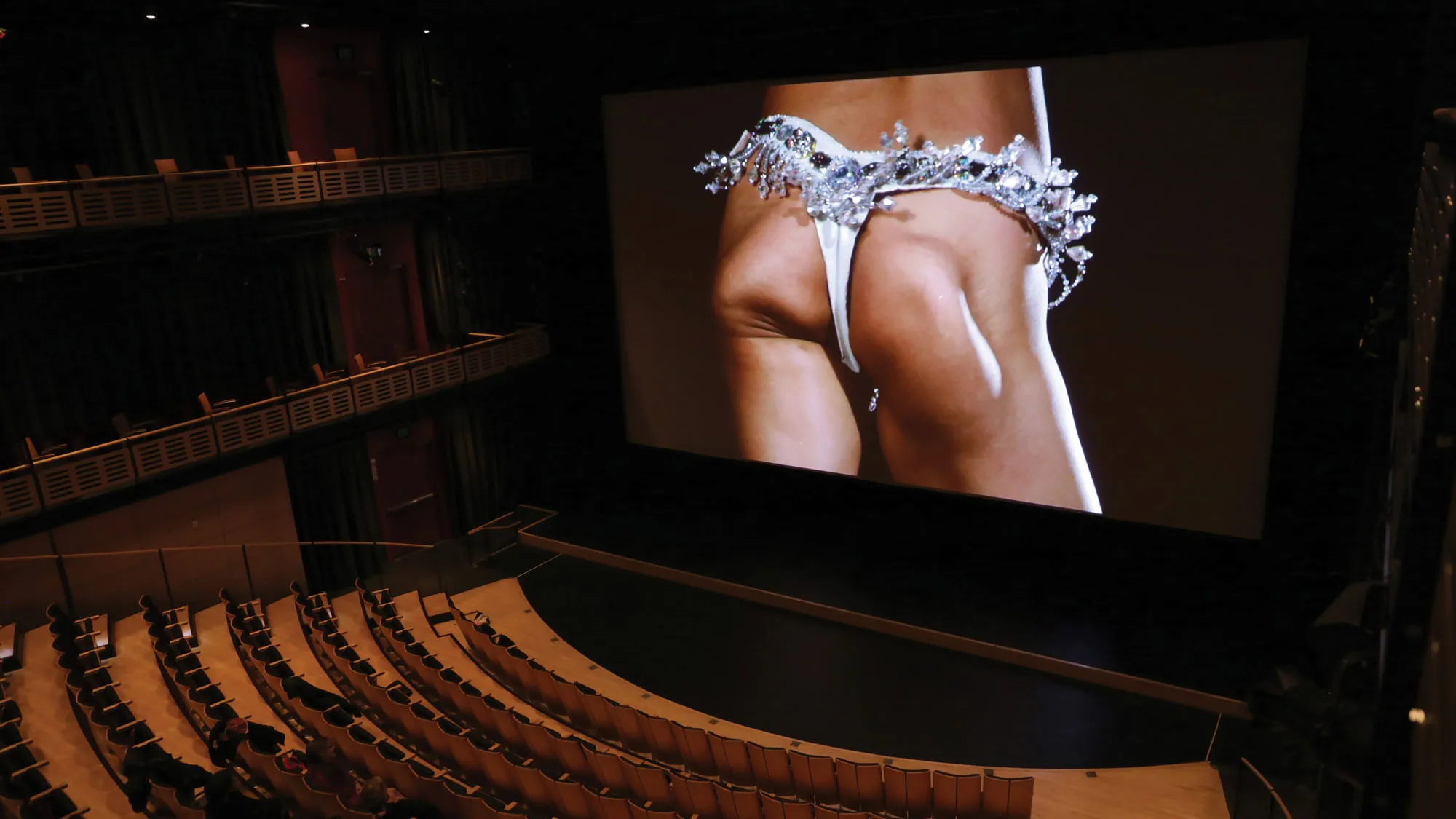
A presentation of five dance films, commissioned or developed at EMPAC. Three of the works were supported by the DANCE MOViES Commission—experimental dance works for the screen, which vary widely in content and form, yet are united by the fact that they are crafted by a choreographer or movement-based artist. Commissions were awarded through a competitive open-proposal process conducted annually and supported bythe Jaffe Fund for Experimental Media and Performing Arts.
Seline Baumgartner: Nothing Else (DANCE MOViES 2014/15) This installation for Studio 2 featured dancers over the age of 50 and approached age and the inability to move with agility not as a disadvantage, but as a conceptual framework for choreography.
Orit Ben-Shitrit: Ward of the Feral Horses (DANCE MOViES 2014/15) Rooted in our current technological anxiety and cognitive capitalism—
employing semiotics to produce personal social capital—Ward details the schizophrenic collapse of a mind trapped in the apparatus.
chameckilerner: ESKASIZER & Samba#2 This installation for Studio 1 featured four women of various age, heritage, and shape. Using high-speed video equipment, the film zooms in to the point of abstraction, resulting in a dance of the flesh.
Dana Gingras: Chainreaction A collision of dance, animation, and sound that juxtaposes the movements of live performers with the motion of animated projections in a continuous, interactive evolution of action and reaction.
Marianne Kim: Lost & Found (DANCE MOViES 2014/15) Lost & Found encounters a man in the midst of an internal crisis. During his wandering fugue state, he ruminates about fugue music and the vision quest a young J.S. Bach took on foot from his home in Arnstadt to Lübeck to hear the music of Dietrich Buxtehude.
Main Image: chameckilerner's Dance MOViES Commission ESKAZISER projected in the theater in 2015. Photo: Mick Bello/EMPAC.
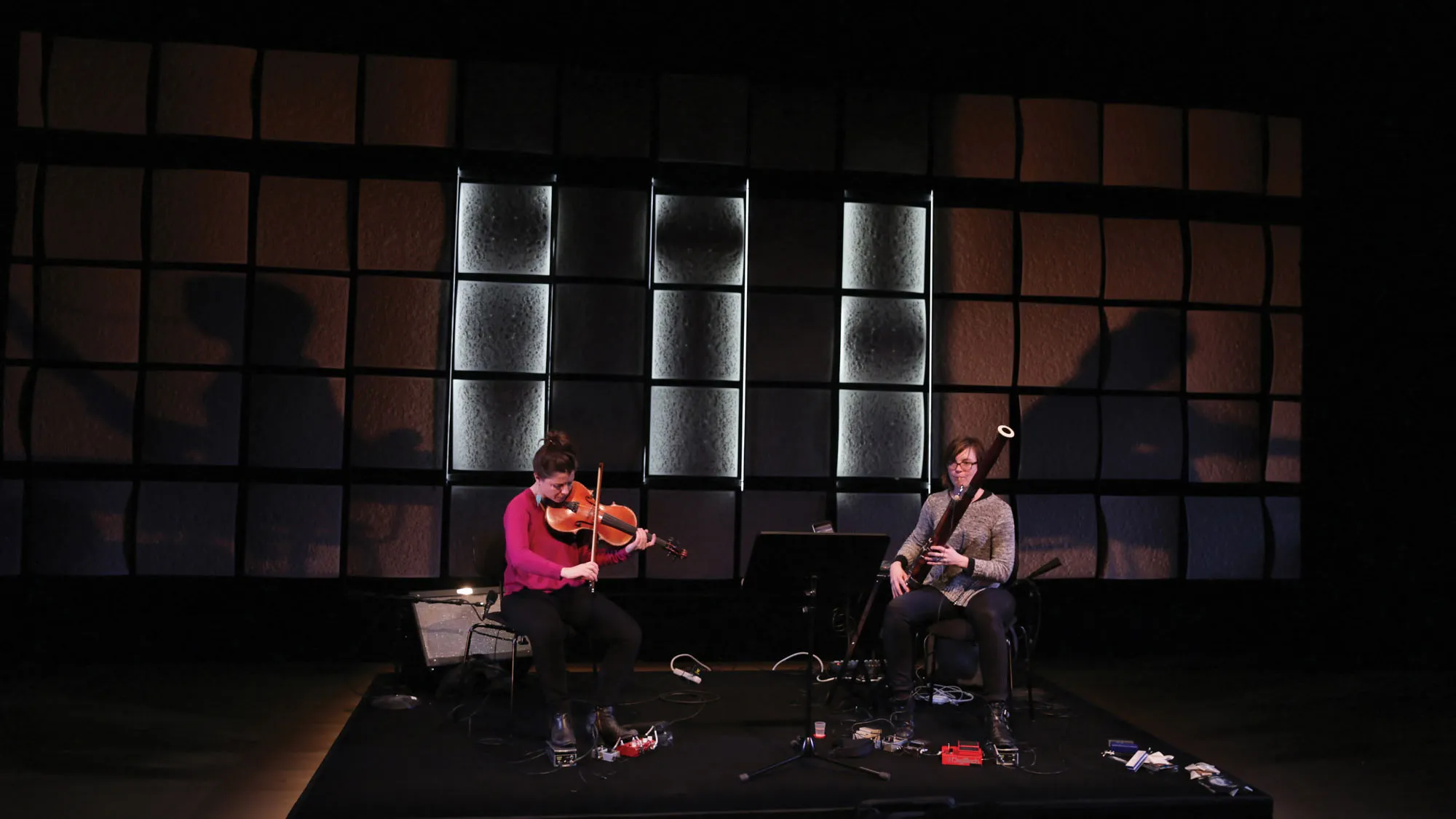
The viola and bassoon are not typically brandished in the pursuit of free improvisation and noise, but the duo Architeuthis Walks on Land brings fierceness and energy to these typically “orchestral” instruments. By way of extended techniques, bass amplification, and rich textures, Amy Cimini and Katherine Young create a space where composition, indeterminacy, and immediacy intersect. Contrasting—yet complementing—the duo with a fluid elegance and grace, violinist Miranda Cuckson presented a set of complex and microtonal works for solo violin. Cuckson, a well-known performer in the new music scene, has built her reputation on technical refinement and beautiful tone. She presented music by Xenakis, Ferneyhough, and Haas.
Amy Cimini and Katherine Young have been performing together as Architeuthis Walks on Land since 2003. The duo developed their approach to improvisation in the rich experimental music communities of Chicago and New York City, and have collaborated with artists such as Anthony Braxton and the Tri-Centric Orchestra, Peter Evans, Fred Lonberg-Holm, Jessica Pavone, and Hans Joachim Irmler from Faust. Violinist and violist Miranda Cuckson is acclaimed for her performances of a wide range of repertoire, from early eras to the most current creations. She studied at the Juilliard School, where she received her BM, MM, and DMA degrees and won the Presser and Richard F. French awards. She is in demand as a soloist and chamber musician, appearing in major concert halls, as well as at universities, galleries, and informal spaces, and is on the violin faculty at Mannes College the New School for Music.
Miranda Cuckson, violin
Iannis Xenakis - Mikka S (1976)
Georg Friedrich Haas - de terrae fine (2001)
Brian Ferneyhough - Intermedio alla Ciaccona (1986)
~interval~
Architeuthis Walks on Land
Amy Cimini, Viola + Katherine Young, Bassoon +
from The Surveyors (2014)
The Speculators 84°03′N 174°51′W
The Assayers 82°06′S 54°58′E
The Surveyors
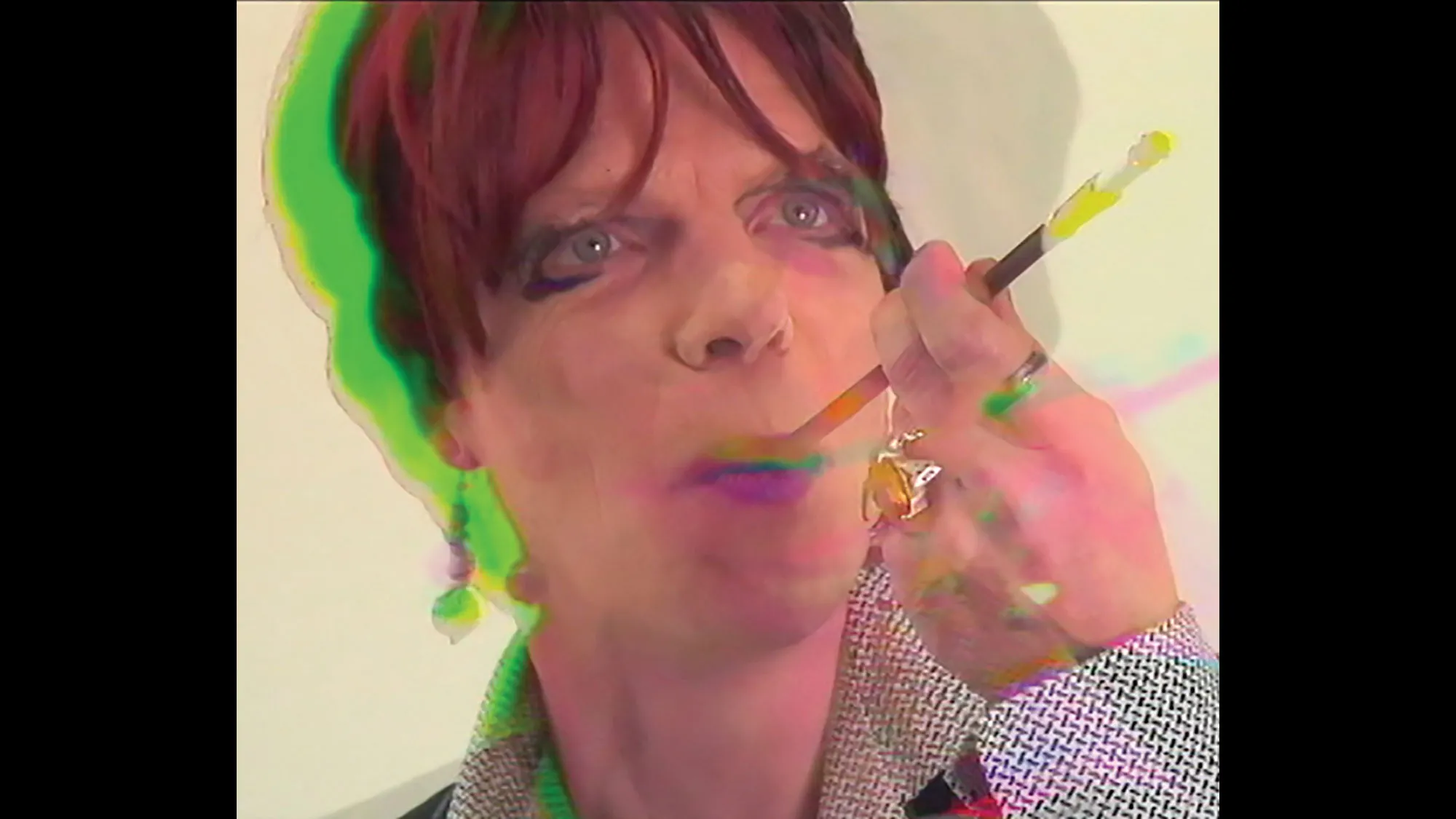
An evening of films and discussion with New York media-dance pioneer Charles Atlas. Atlas was in residence at EMPAC to produce a newly commissioned theatrical production (Tesseract) that premiered in EMPAC’s Theater in fall 2017. Intertwining dance, live and pre-recorded 3D video, the performance was choreographed in collaboration with Rashaun Mitchell and Silas Riener.
Atlas has created numerous works for stage, screen, museum, and television, consistently pioneering the synthesis of technology and performance. A key figure in the development of “media-dance,” in which performance is created directly for the camera, Atlas was videographer-in-residence with Merce Cunningham Dance Company for a decade, and continues to collaborate extensively with choreographers, dancers, and performers, including Michael Clark, Yvonne Rainer, Diamanda Galas, and Mika Tajima/New Humans, among many others.
Photo: A still from the library of Charles Atlas. Video still courtesy the artist.
In this talk, architectural theorist and Ohio State University professor Jeffrey Kipnis will discuss the production of knowledge in the realms of science and the arts, asserting that artists, composers, magicians, healers, writers, politicians, generals, and everyday artisans have accumulated and mobilized far more actual scientific facts through culture than modern science has discovered or come close to explaining.