Image
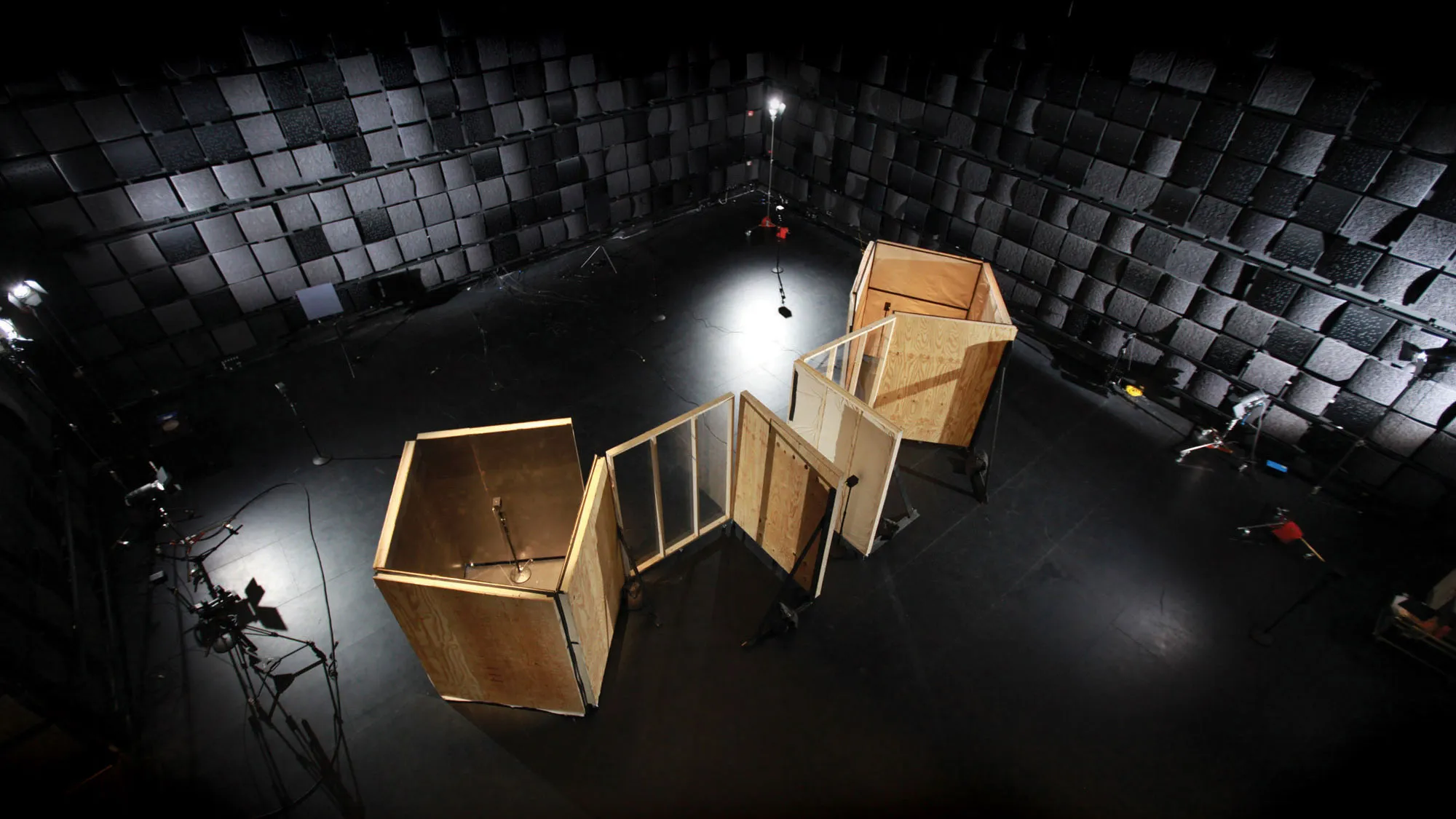
An aerial view of two square wooden structures in an empty black box studio.

Jacqueline Kiyomi Gordon

The Only Thing that Makes Life Possible is Not Knowing What Comes Next

In this work-in-progress installation, sound artist Jacqueline Kiyomi Gordon investigated how one’s perception of sound can be changed as he or she moves through space. Using an interconnected series of listening rooms, each built with a variety of materials (stone, metal, wood, cloth, etc.), Gordon created a perpetually shifting audio experience from diffused sound projected from a ring of loudspeakers. As listeners moved through the space, they were made aware of the parameters of the room and how they can actually control what they are hearing by altering their movement. 

Gordon is a visual and sound artist who integrates audio technologies into sculptural forms to question relationships of affect to an environment. She has had solo shows at Yerba Buena Center for the Arts (2014), Pro Arts Gallery (2013, Oakland), Eli Ridgway Gallery (2012, San Francisco), and Queens Nails (2009, San Francisco). She is also a member of the music and performance collective, 0th. 

Laurel Halo

Electronic musician Laurel Halo performed new works that fused techno and dance-driven sounds with a heavy dose of synths and samples. Halo’s diverse output incorporates danceable rhythms, meditative aural washes, and pensive vocals into a singular, pulsing whole. Built around a slightly off-kilter sense of time and forward-looking production techniques, her music coheres around themes of physical process and virtual violence. 

Laurel Halo is a producer and live electronic musician from Ann Arbor, Michigan. Influenced by her Midwestern roots, Halo’s music speaks to new club ecologies explored through abstract rhythms, chaotic ambience, and moody jazz elements. She has released two full-length albums on the London-based electronic label Hyperdub Records.

Luca Turin

Why Does Consciousness Dissolve in Chloroform? The Story of an Enduring Mystery

What is time? Does our understanding of time depend on the human mind in some fundamental way? Biophysicist Luca Turin investigates one of the stranger mysteries of human consciousness in this presentation, using images and 3D animations to share the many unusual discoveries from his research with general anesthesia and its influence an internal sense of duration. Unlike sleep, time essentially stops for the anesthetized subject, who frequently wakes with a feeling of “the next thing I knew...” In Why Does Consciousness Dissolve in Chloroform, Turin will combine his characteristic wit and scientific rigor to unwind this bizarre phenomenon, finding at its heart a richer understanding of the human mind and the strange conditions we’re given to understand through it.

Biophysicist Luca Turin was born in 1953 in Beirut, Lebanon. He received his French baccalauréat in 1970, and his PhD in physiology and biophysics in 1978 from University College London. Turin worked at The French National Center for Scientific Research from 1982 to 1992, and was a lecturer in biophysics at University College London from 1992 to 2000. He was the CTO of a startup company creating new fragrance and flavor molecules until 2009. He's the author of Perfumes: The Guide, and the subject of Chandler Burr's 2003 book The Emperor of Scent. He worked at MIT from 2009 to 2011 and at the Alexander Fleming Institute in Athens, Greece from 2011 to 2013. Turin is currently a visiting professor at the Institute for Theoretical Physics in Ulm, Germany, and writes a column for the Zurich-based monthly NZZ Folio. He is also the perfume critic of Style Arabia.

Material Performance was a series of talks focused on materiality and time—how material and passing time can be seen as reciprocal conditions for each other’s qualities. The series brought together material scientists, biochemists, philosophers, curators, and media theorists to unravel the relationship of time and materiality within each discipline.

Image
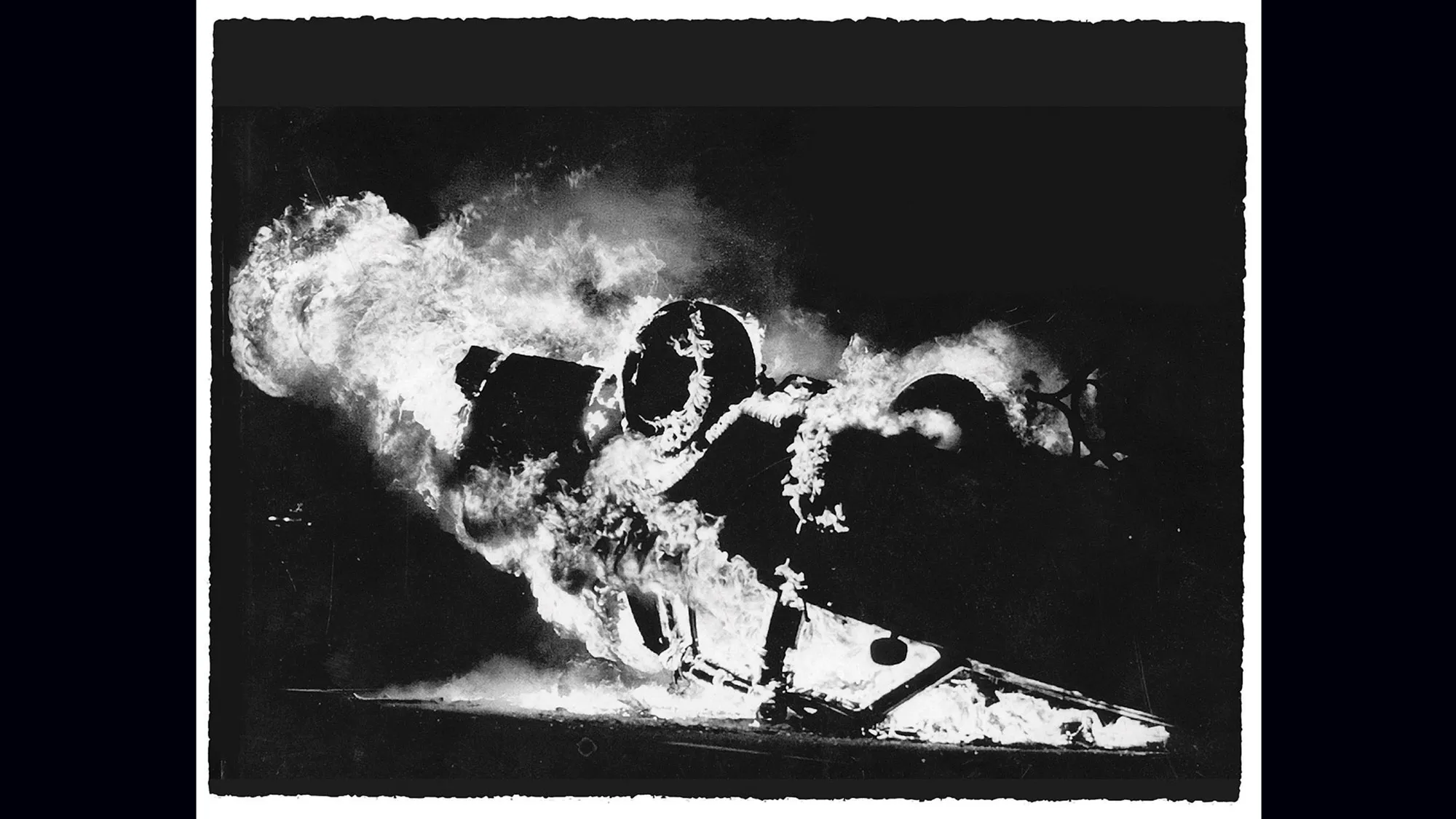
A car engulfed in flames, flipped on its back.

Thomas Zummer

On the Notion of ‘Capture’: arché, techné, epistemé

What happens when one writes about or photographs another? In this talk, artist and scholar Thomas Zummer addressed the idea of “capturing” subjects in media—photography, cinema, radio, digital video, transmission—and how the captured subject is drawn into the fabricated media space while its own world is forcibly occluded. Zummer traces this phenomenon through the depiction of places, people, and events in all such media—how the media start to “speak for” the captured, take the place of the captured, and make the otherness of the captured disappear. 

Thomas Zummer is a scholar, writer, artist, designer, and curator. He is the founder and director of Z-Grafik, a design bureau based in Brussels and New York City. His drawings and sculptural works are exhibited worldwide.

Material Performance was a series of talks focused on materiality and time—how material and passing time can be seen as reciprocal conditions for each other’s qualities. The series brought together material scientists, biochemists, philosophers, curators, and media theorists to unravel the relationship of time and materiality within each discipline.

Scaffold Room

Ralph Lemon

Ralph Lemon calls this work a “lecture-performance-musical.” In Scaffold Room, two women (both performing live and on video) enact iconic characters drawn from history, popular culture, and science fiction with source materials ranging from Moms Mabley to Amy Winehouse and Kathy Acker to Samuel R. Delany. The space for Scaffold Room is a confined, constructed two-story environment: in essence, its own theater. Over three weeks, Lemon and his team of designers and performers used EMPAC’s infrastructure to prepare Scaffold Room for its world premiere. The designers assembled the modular and adaptive scaffold construction (designed by Lemon and R. Eric Stone); tested control and movement of video projection, along with lighting and audio elements; and conducted final rehearsals with the performers. The work also featured an electronic/turntable-based sound score created by composer Marina Rosenfeld.

Image
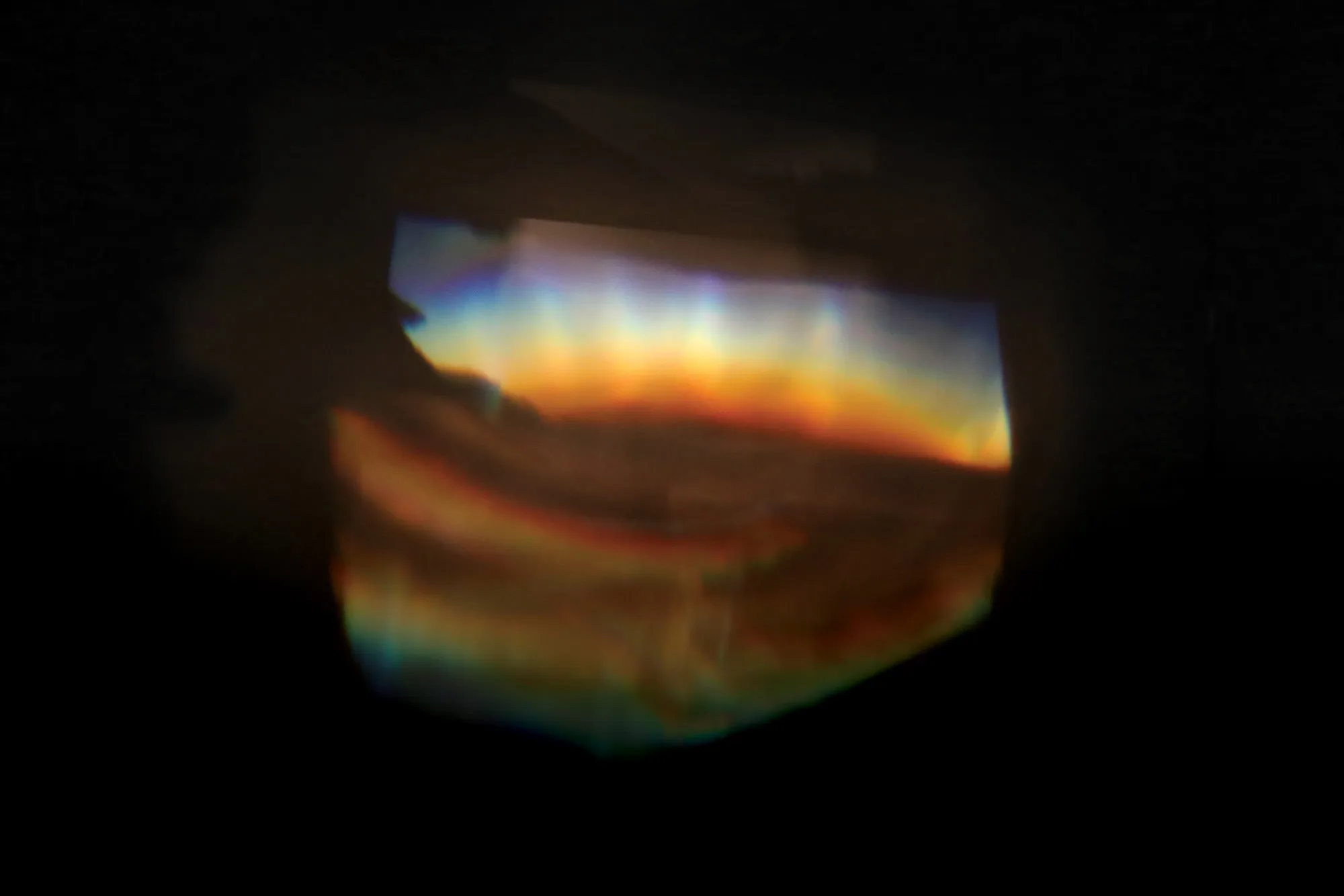
a rainbow of prismatic light

The Vision Machine

Melvin Moti

The Vision Machine is a kinetic light sculpture that produces a 20-minute film based on the behavior of light in prisms. Drawing on optics and material science, this optical box harnesses the same physical principles that give rise to everyday atmospheric effects such as rainbows and sundogs by shining light through a series of rotating prisms and focusing it back onto a wall with a lens. The Vision Machine is conceptually based on Riccardo Manzotti’s idea of the “Spread Mind,” which proposes that consciousness is spread between physical phenomena and the individual. The viewer doesn’t see the world; he is part of a world process. In the installation, diffracted light serves as a metaphor for our consciousness as an interrelated process of worldly phenomena, partly external and partly internal, but never static. Melvin Moti worked collaboratively with a team of Rensselaer undergraduate physics and engineering students to create The Vision Machine.

ON VIEW:

Dec 4, 12–9PM Dec 5, 12–9PM Dec 6, 12–10PM

VIDEO

Main Image: Prismatic light created by Melvin Moti's The Vision Machine. Film still: EMPAC/Rensselaer.

Media
Image
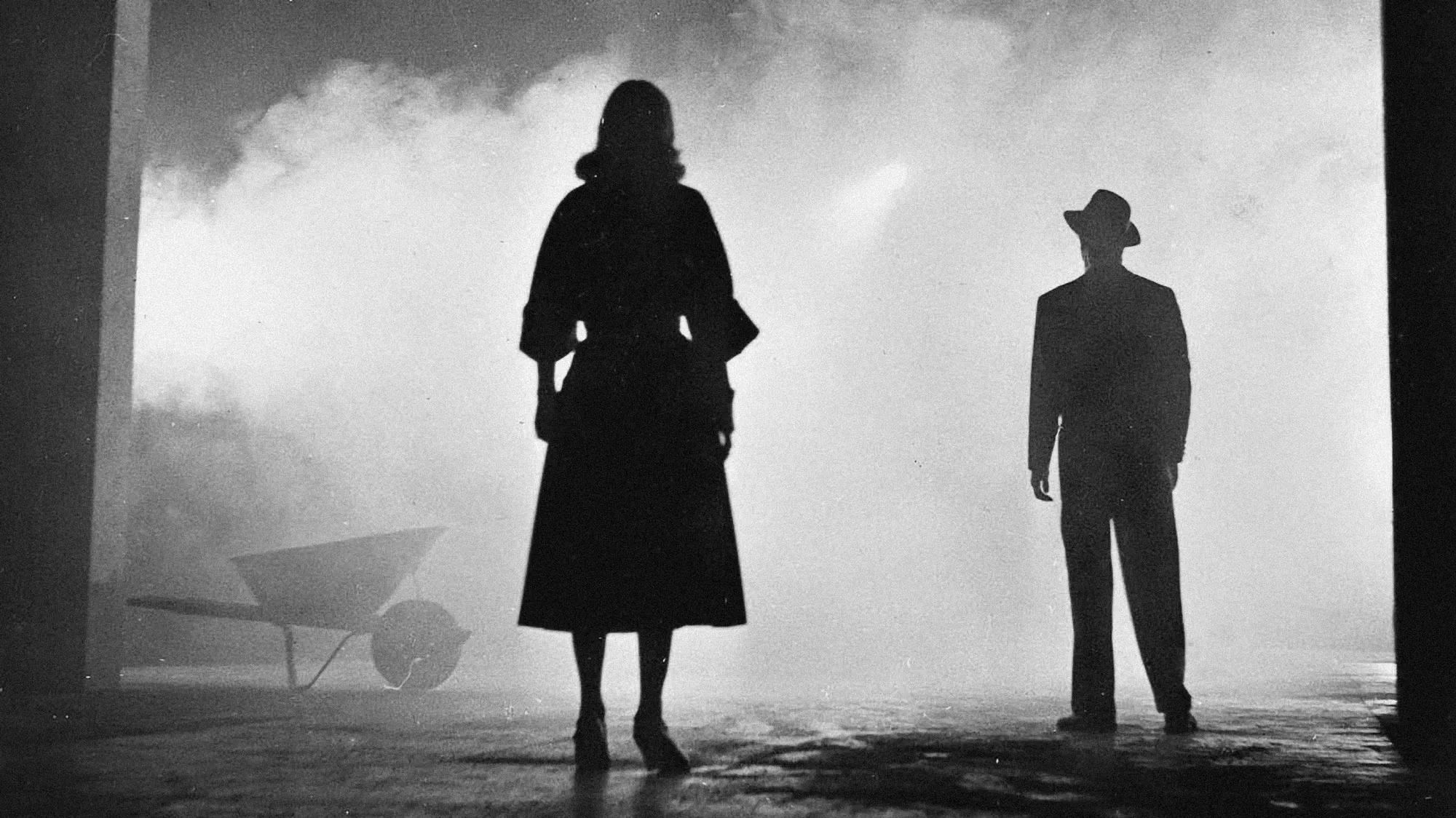
1940's scene of a man and woman with backs to the viewer silhouetted in fog.

The Big Combo

Directed by Joseph H. Lewis

Shrouded in darkness, Joseph H. Lewis’ The Big Combo is a classic film noir credited with ushering in a new era of cinematic violence in which the villain is often more interesting than the hero. The film’s visual composition—considered one of the best works by cinematographer John Alton—is stylistically exemplary of classic noir detective stories, animating its deceptively simple B-movie plot and making way for the real star of the movie—camera work and expressionistic lighting effects that externalize the shifting dynamics of its moral universe.

Main Image: The Big Combo (1955). Warner Brothers.

Image
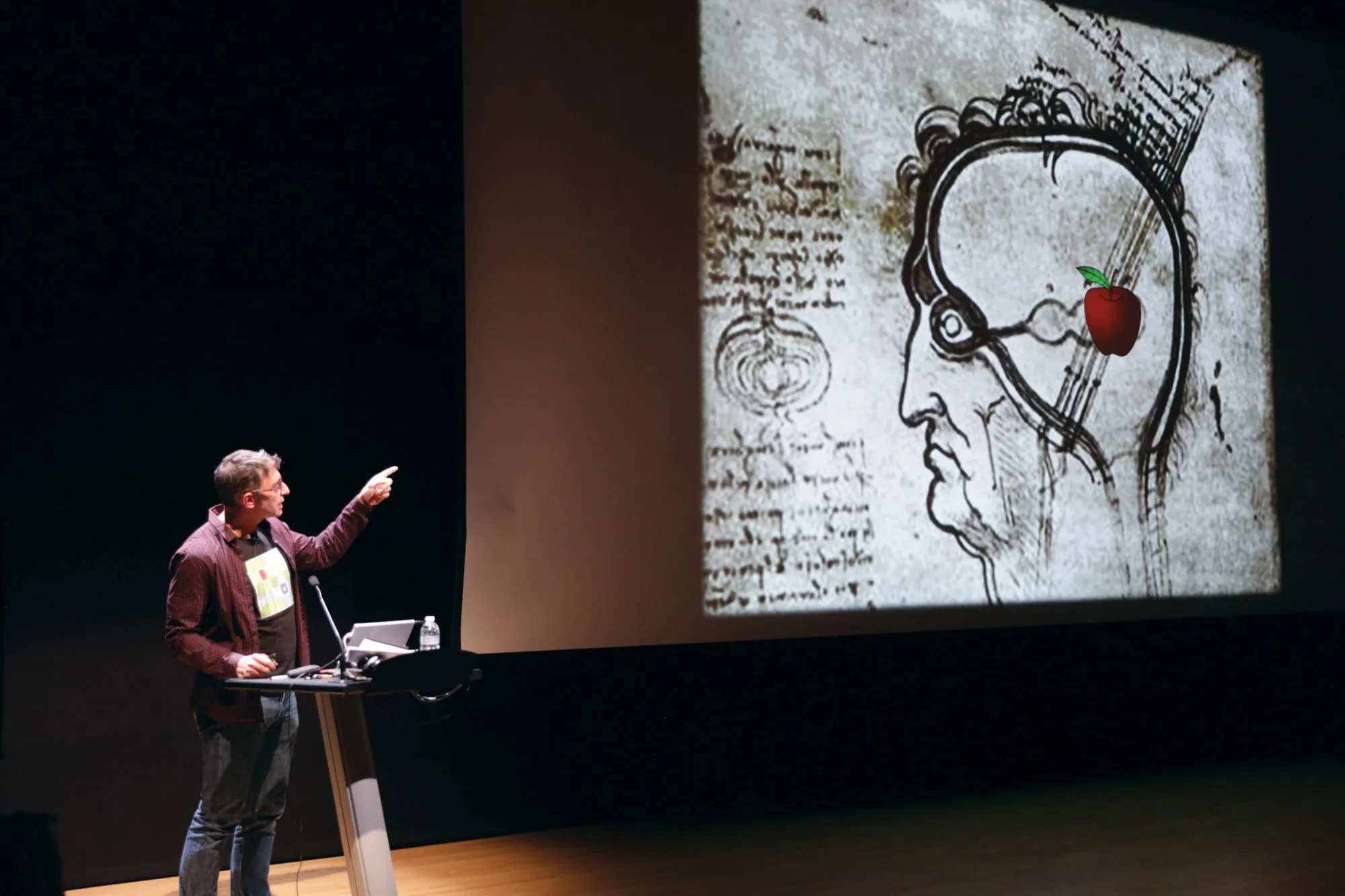
A man on stage pointing at a large screen to his left that is projecting a profile of a man, drawn by Leonardo da Vinci with an emoji apple

Riccardo Manzotti

The Spread Mind

According to popular wisdom, consciousness takes place inside the mind, something with which Galileo, neuroscience, and the movie The Matrix would all agree. How are neurons able to create this internal mental world? Scientists have gone so far as to conclude that most of what we see around us exists only as an acquired image in the mind of the spectator, separated from what is perceived.

In this talk, Riccardo Manzotti will make the case for “externalism,” or consciousness that spreads beyond the brain, out into the world. Our minds exist both in front of our eyes and behind them. The individual doesn’t see a world; he is part of a world process. To support this claim, Manzotti will demonstrate a causal account of the object, examining several “internalist” arguments (e.g., illusions, phosphenes, hallucinations, Charles Bonnet syndrome, phantom limb pain, and dreams), showing how each is actually compatible with an “externalist” view of the mind.

Manzotti will contrast this externalist view with known empirical evidence and the most widespread models of the mind, both in philosophy and in neuroscience, to show that our minds cannot be said to have any one true owner.

Presented in conjunction with Melvin Moti's installation The Vision Machine

Riccardo Manzotti is a philosopher, psychologist, and artificial intelligence scholar. He earned his PhD in robotics and is currently a Fulbright visiting scholar at MIT’s Department of Linguistics and Philosophy. His work has made significant contributions to the problem of consciousness, the possibility of outlining a physical model of phenomenal experience, and the relationship between mind and world. Much of Manzotti’s research has focused on the concept of the “Spread Mind,” which challenges the traditional separation between subject and object. This view suggests that the conscious mind is larger than any single body.

Manzotti has published more than 100 scientific papers, and has written two books that explore the place of consciousness in the physical world: Conscienza e Realtà (2001) and L’esperienza (2008). He also co-edited two books for Imprint Academice: Artificial Consciousness (2008) and Situated Aesthetics (2011).

Born in Parma, Italy, Manzotti attended the University of Genoa, where he received degrees in computer science and philosophy. He conducted postdoctoral research on artificial vision and artificial intelligence at the LIRA-Lab in Genoa, Italy, and has held positions at Northwestern University, Trinity College, and KAIST in Dajeon, South Korea.


Main Image: Riccardo Manzotti on the Theater stage. Photo: EMPAC/Rensselaer

Image
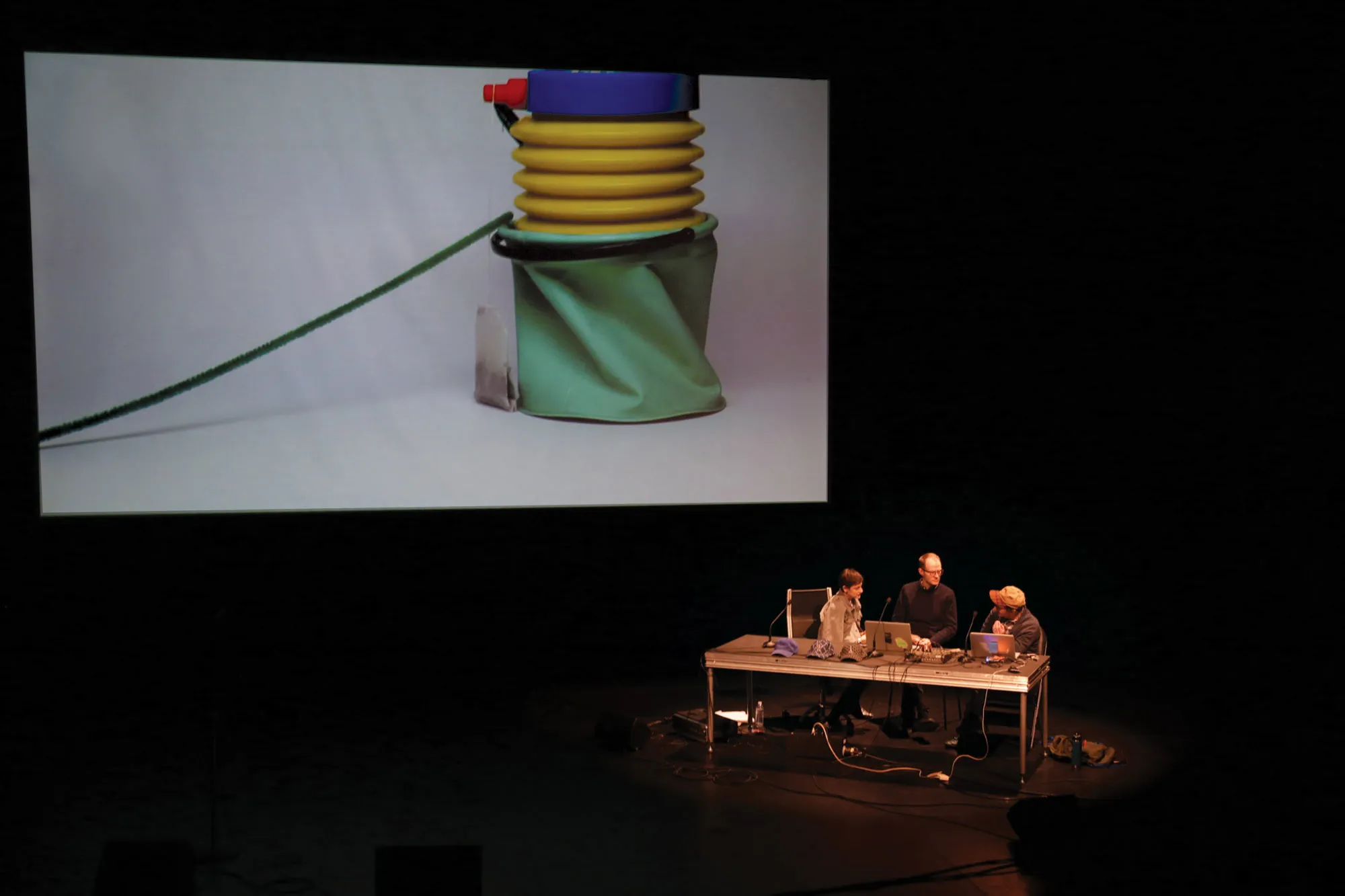
Three people sitting on stage behind a cluttered desk in front of a large screen projecting and image of a green yellow blue sculpture

Bloopers #1

Michael Bell-Smith, Sara Magenheimer, + Ben Vida

Bloopers #1 is the newest iteration of the performance-driven collaboration by artists Michael Bell-Smith, Sara Magenheimer, and Ben Vida. Using the language of “breakdowns,” or comedic outtakes, the artists blend props, video, and electronic music to play with the social power of different kinds of media.

Presenting a joyously subversive take on popular culture and the social connections produced through sound and music, Bloopers #1 takes the question “Why do we hate some objects and love others?” as its starting point, and uses set pieces, dance-pop, cinematic cliché, and live performance to playfully tease the boundaries of language, crowds, and the nature of things that draw them.

Michael Bell-Smith in an artist and musician based in Brooklyn. His work has been exhibited and screened in museums and galleries internationally, including MoMA PS1, NY; Museum of The Moving Image, NY; SFMOMA, San Francisco; the 2008 Liverpool Biennial, UK; the 5th Seoul International Media Biennale; Museo Nacional Centro de Arte Reina Sofía, ES; The New Museum, NY; Hirshhorn Museum, DC; Musée d'Art Moderne de la Ville de Paris; MoMA, NY; and Tate Liverpool, UK. His work has been featured in Art ForumArt in America, and the New York Times. As a member of the punk band Professor Murder, he has performed music across the US and Europe.

Sara Magenheimer lives and works in Brooklyn. Language, music/sound, and objects comprise a large part of her video-based practice. From 2004-2010 Magenheimer formed two bands, Flying, and WOOM, touring extensively and releasing five records. She received her BA from Tufts University, her BFA from the School of the Museum of Fine Arts, Boston, and her MFA from Bard College. Magenheimer has screened video work and performed at CANADA Gallery, the Berkeley Art Museum, MoMA PS1, the Brooklyn Academy of Music, and ISSUE Project Room, among others. 

Ben Vida is a Brooklyn-based artist and composer. He has been an active member of the international experimental music community for the past 17 years with a long list of collaborations, bands, and releases to his credit. In the mid 1990s he co-founded the group Town and Country and has worked as a solo artist under his own name and as Bird Show, with releases on such labels as PAN, Alku, Thrill Jockey, Drag City, Amish, Bottrop-Boy, Hapna, and Kranky. He has presented his work in the United States, Canada, the United Kingdom, Europe, Australia, South Korea, and Japan. Recent activities include performances at The Kitchen, NYC with David Behrman, and the debut of the Tyondai Braxton/Ben Vida Duo at the Sacrum Profamun festival in Krakow, as well as solo performances at Electrónica en Abril festival in Madrid and Akousma Festival in Montreal. His exhibition, Slipping Control, was presented at Audio Visual Arts in Manhattan, NY in spring 2013. He was a 2013 artist-in-residence at ISSUE Project Room in Brooklyn and at the Clocktower in Manhattan.
Image
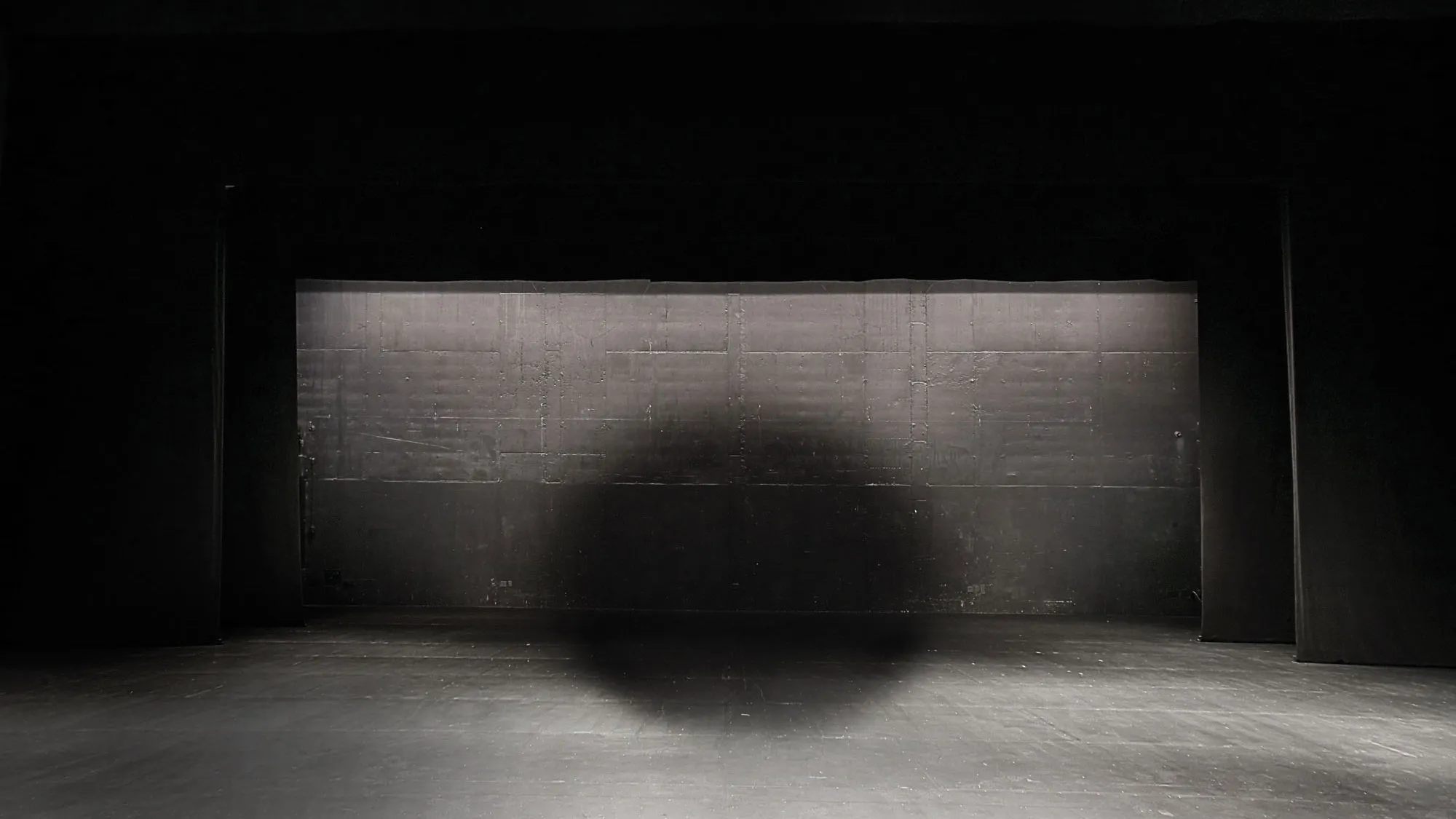
A black circle of filtered light projected between the wall and floor of a black box studio.

A Possibility of an Abstraction

Germaine Kruip

A Possibility of an Abstraction is an EMPAC-commissioned production that transforms the theatrical space into a field of cinematic experience. It is a play of perception, where shadow, reflection, architecture, and stage become the characters in a filmic experience created in the moment itself. Recalling pre-cinematic traditions of shadow play, and what Ken Jacobs termed paracinema (denoting experimental film practice from the 1960s in which films lacked material or mechanical elements), Kruip creates an atmospheric film-like effect without actually using film, accomplished by manipulating light across the proscenium stage that serves as a stand-in for the screen.

Shifting between the cinematic, the theatrical, and the sculptural, A Possibility of an Abstraction creates a meditative space at the edges of our perception with optical illusions and the passage of time. A Possibility of an Abstraction marks the artist’s renewed engagement with theatrical technology and dramaturgy. Following winning the Prix de Rome in 2000, Kruip turned away from scenography to concentrate on visual arts, producing works that brought the theatrical elements of light, temporality, and the stage into a new architectural scale at galleries and museums. Often manipulating daylight with moving geometric sculptures and simple framing devices, her artworks transform the architecture they inhabit, turning each location into a sensual but abstract stage.

Main Image: A Possibility of an Abstraction in the theater in 2014.

Media