Image
Katherine Hayles

N. Katherine Hayles

Performing Technogenesis: The Affective Power of Digital Media

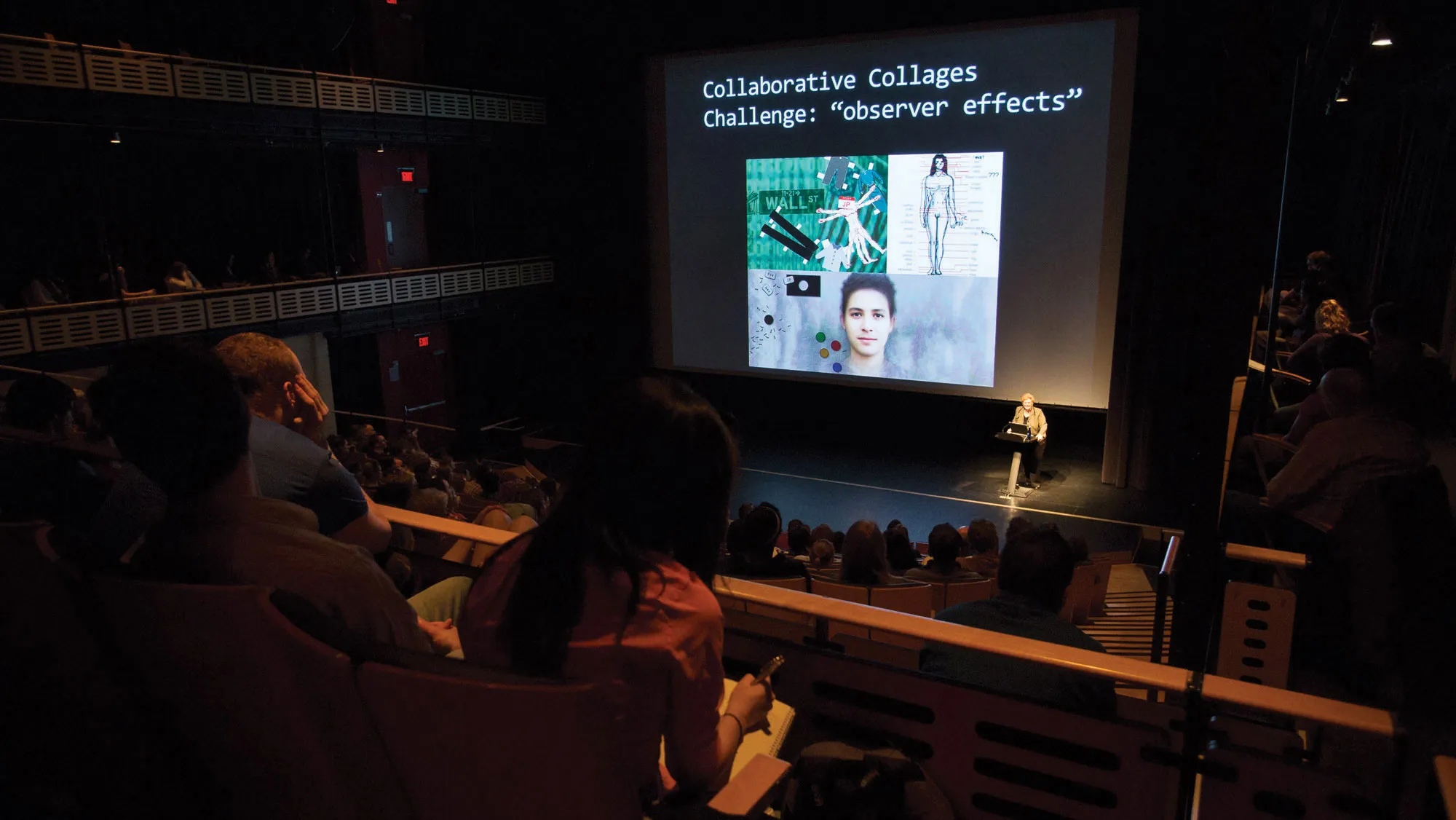
In this talk, N. Katherine Hayles explored how digital media is changing us, and on what levels and in what ways. She examined the co-evolution of technical objects and contemporary humans, arguing that our intense engagements with digital media affect us not only through conscious channels but also through unconscious and nonconscious modes, as well, illustrated with examples drawn from gaming and electronic literature. 

Hayles, professor of literature and director of graduate studies at Duke University, writes and teaches on the relationships of literature, science, and technology in the 20th and 21st centuries. Her most recent book is How We Think: Digital Media and Contemporary Technogenesis. Hayles has received numerous awards and fellowships, including a Guggenheim, two National Endowment for the Humanities fellowships, and a Rockefeller Residential Fellowship at Bellagio.

Observer Effects offered a dialogue between the fields of art and science. The title was derived from the principle in physics that the act of observation transforms the observed, an idea that has been influential in philosophy, aesthetics, psychology, and politics.

Main Image: N. Katherine Hayles during her talk in the theater, 2013.
Robert Henke

Fragile Territories

We are sorry to announce that this installation has been canceled. We regret any inconvenience and look forward to seeing you at other events, installations, and exhibitions. Using a state-of-the-art laser system to draw with four high-speed dots of light, Fragile Territories creates morphing patterns of volatile luminosity. The process responsible for creating these shapes operates on the idea of uncertainty and change: a computer program evaluates statistical data, grabs momentary states, and feeds them back into its own system; what is displayed and made audible cannot be entirely predicted and will never repeat itself. The sound generation and path of light are both divined from the same program, and are two representations of the same process. The work is constructed around repetitive elements on varying time scales as well as on slow transitions between parameters and states using weighted random functions, thus adding to the notion of instability and potential failure.

Image
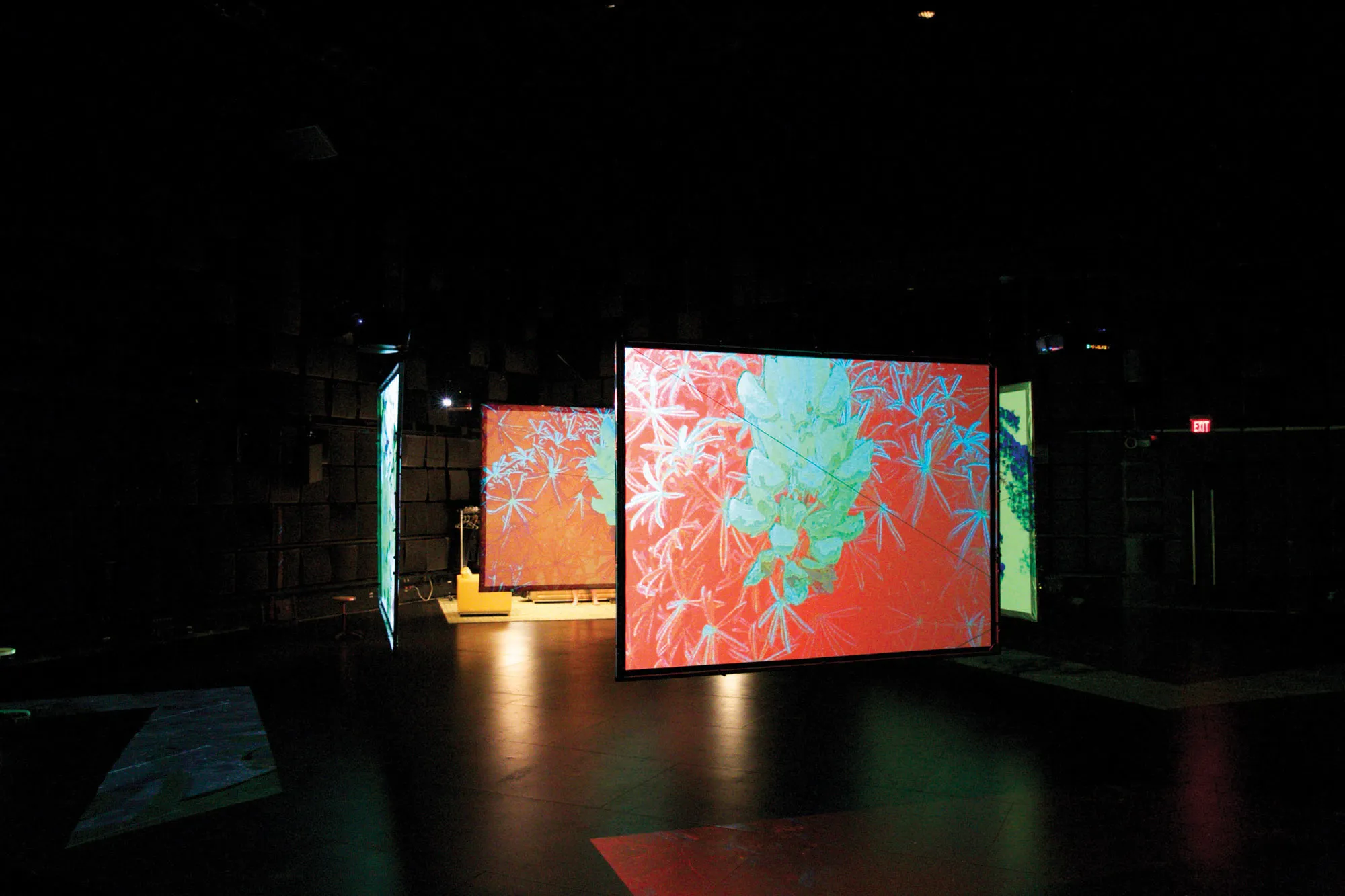
Multipel screens hung in a black box theater depicting red and teal asian inspired flowers. The screens are hung in such a way to create a compartmentalized space.

The Angola Project

Jeremy Xido

An expedition through the history of colonial Portugal, the travelogues of Burton Holmes, the films of Bruce Lee and Jim Kelly, the Detroit race riots/rebellion, Berlin documentary film crews in Africa, and the blood-thirsty mechanisms of international film finance.

The Angola Project is three-part solo performance, with the third part co-commissioned and produced during residencies at EMPAC.

The performance is a fusion of film and narrative, tales and fragments, joining together and crumbling away. Having its roots in the tradition of travel lectures that emerged in the 19th century, CABULA6 invites the audience on a journey into Jeremy Xido’s real-life attempts to finance a film and confront the truths of mortality in the 21st century.

PART I – “LISBON” AT 4PM — Follows Xido's captivation by the city of Lisbon’s sunset-timed gas lamps and growing idea for a feature film. He finds himself collecting historical tidbits and horticultural facts, twisting random encounters into fanciful story lines as he conducts a slew of interviews with the people he meets there. The stories begin to derail and travel from Europe to Africa, then on to a mulberry tree in Detroit.

PART II – “ANGOLA” AT 5:30PM — Delves deeper into Xido's quest to build a script for his feature film as he travels to Angola along the Benguela railway, currently being rebuilt by Chinese construction companies. Xido, the sole onstage performer in the entire series, must carefully navigate the minefield of international film financing, constantly reconfiguring his script and feature film pitch accordingly.

PART III – “XIN” AT 8PM —The improbable yet inevitable third part of The Angola Project, where personal effort to make sense of the world is reaching its limit—a moment of death that brings us to the heart of the matter; a place where imagery crumbles and flies out of control; where a narrative plot of past/future becomes an excuse for the difficult practice of being here and now.

Media
Image
A white man with dark hair sitting cross legged next to a slide projector and lap top.

To Sublimate

Julien Maire

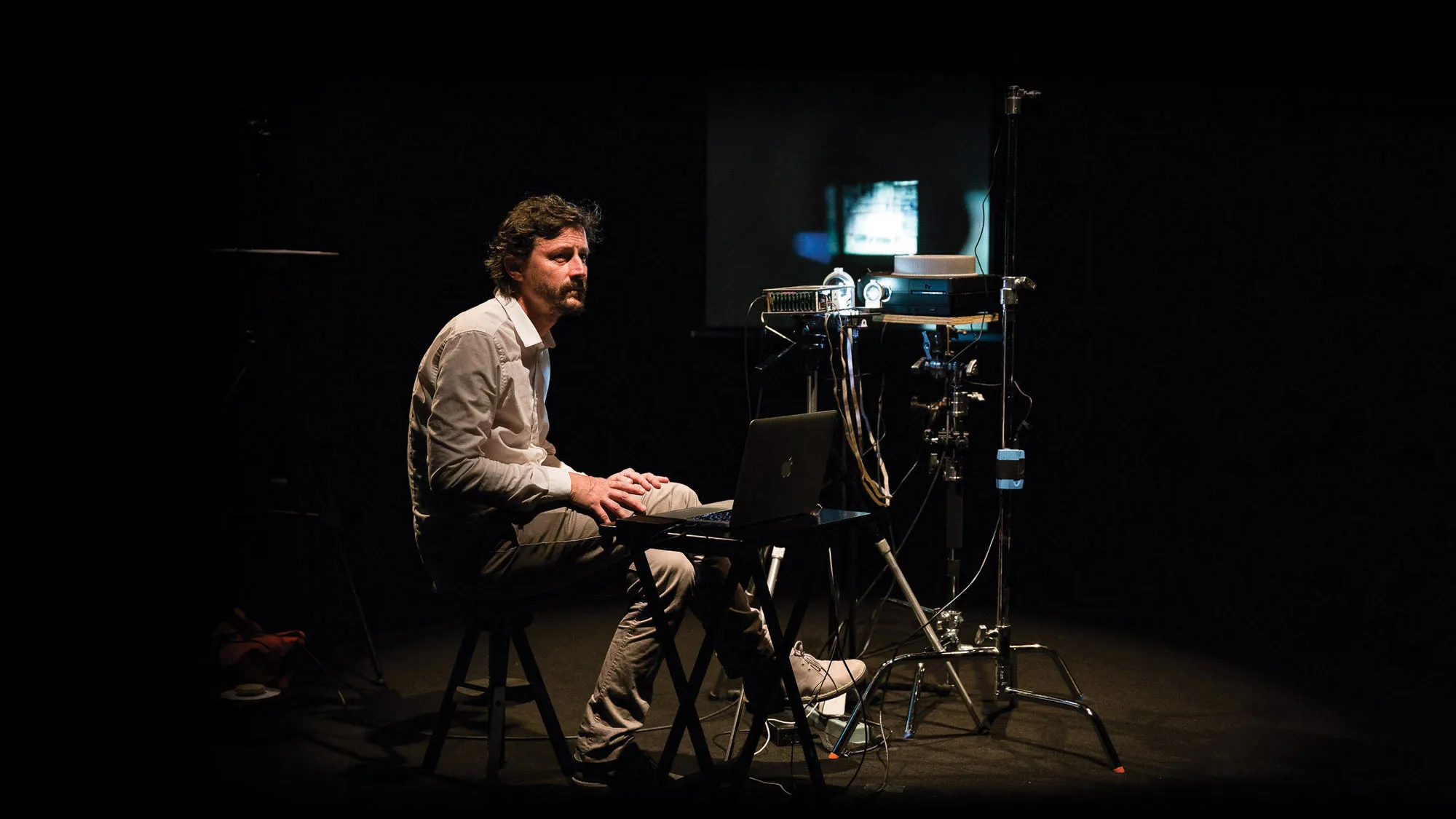
To Sublimate, a lecture-presentation by French artist Julien Maire, stages experiments in search of a “blurry matter”—closely related to speed and optics, philosophy, and mathematics. In his performances and installations, Maire moves between the habits of visual perception and new ways of looking through the camera lens, viewing the confusion between reality and illusion. Through experiments enacted in front of an audience—mechanical, electronic, graphical, sculptural, chemical—Maire presents “an emptiness that is not transparent.”

Image
A white man with dark hair sitting cross legged next to a slide projector and lap top.

Open Core

Julien Maire

In his performances and installations, Julien Maire moves between the habits of visual perception and new ways of looking, and the confusion between reality and illusion. Through experiments enacted in front of an audience—mechanical, electronic, graphical, sculptural, chemical—Maire presents “an emptiness that is not transparent.”

In Open Core, Maire revisited public demonstrations of anatomic dissection from the 16th century with a presentation in which he deconstructed cameras; the machines’ organs are then transplanted to gradually build new instrument prototypes.

To Sublimate was a lecture-presentation where Maire staged experiments in search of a “blurry matter”—closely related to speed and optics, philosophy, and mathematics.

A visual and performing artist, Maire’s work deconstructs and re-invents the technology of audiovisual media. He renews obsolete cinematic techniques and develops alternative interfaces to produce moving images. His research confronts immobility and movement, reality and fiction, and interrogates the notion of time and memory in the film image. Maire’s performance Digit and the installation Exploding Camera both received an honorary mention at Ars Electronica 2007. His work has been exhibited at venues such as the French Pavilion, 25th Alexandria Biennale, Egypt; Behind the Image, Artefact Festival, Belgium; 5th Seoul International Media Art Biennale, Seoul, Korea; and Elandscapes, Eart Festival, MoMA Zendai, Shanghai, China.

Trieste

Marie Brassard

Trieste is a contemporary fable inspired by the Italian city of the same name located on the Adriatic Sea. The performance unfolds in five segments, each relating to one feature of Trieste: The Abyss, The Caves, The Sea, The Castles, and The Bora. As in the board game Snakes and Ladders, where destiny is randomly decided, protagonists climb or fall from one level to another through breaches in the storyline.

Marie Brassard and Infrarouge, her Montréal-based theater company, completed the work in residence and then premiered it at EMPAC. The company developed reactive video, light, and sound environments that would respond to performers in a mix of accidental and planned ways. After years of collaboration with director Robert Lepage, actress, director, and author Marie Brassard formed her own company, Infrarouge, to create multidisciplinary works throughout Europe, the Americas, and in Australia.

Robin Fox

We are sorry to announce that this performance has been canceled. We regret any inconvenience and look forward to seeing you at other upcoming events. An extension of his previous work with Cathode-Ray Oscilloscopes, Robin Fox’s laser show presents, in three-dimensional visual space, the geometry of sound. Enveloping the audience with synchronised sound and light, his performance resembles a synesthetic experience where what you hear is also what you see. The same electricity generated to produce sound is sent simultaneously to high-speed motors that deflect the laser light, converting sonic vibration into light movement.

Image
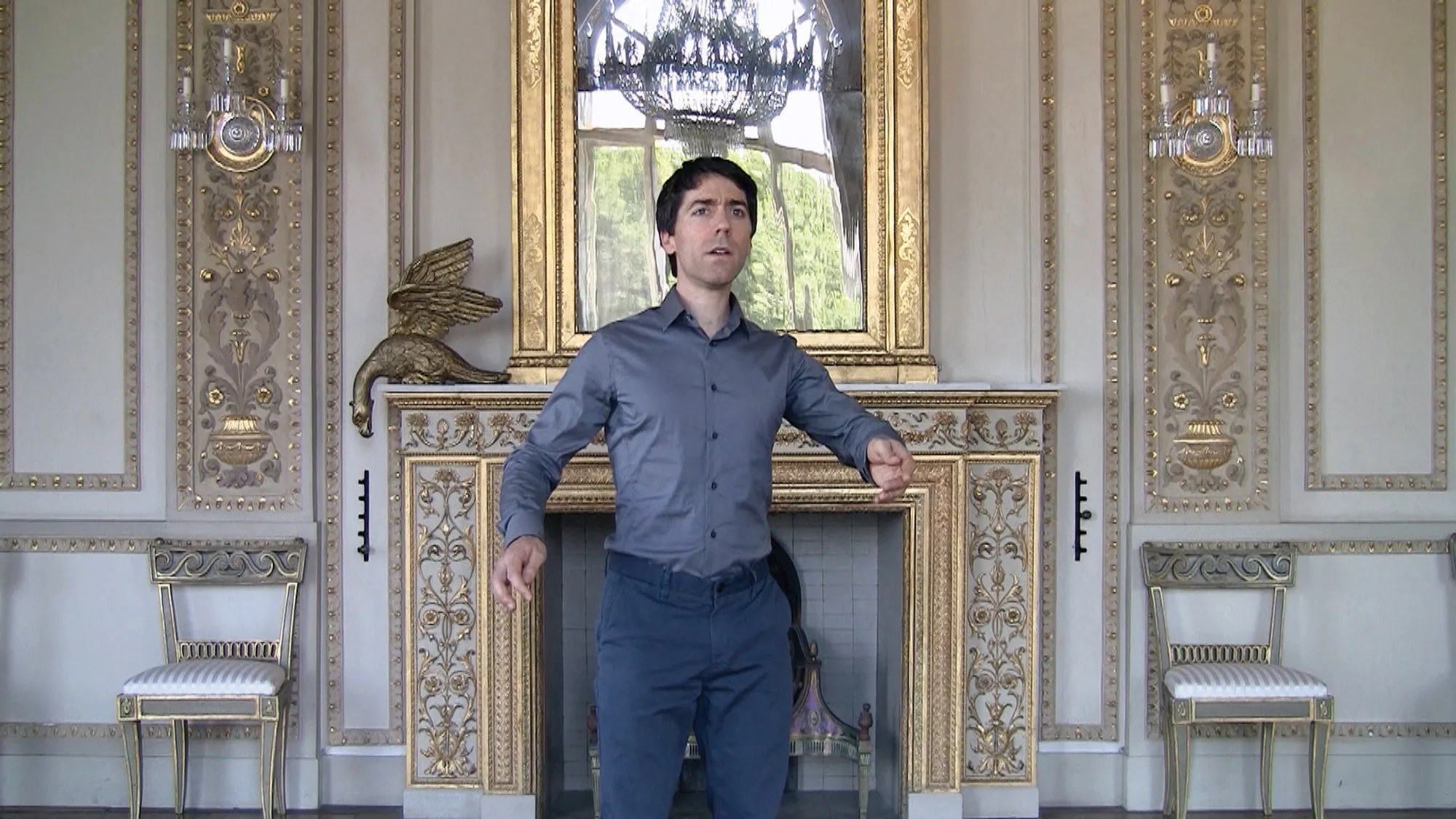
A white man with dark hair wearing a blue button up and pants standing with arms gently gesturing outward in a baroque styled room.

In the First Place...

Colin Gee

Part of the DANCE MOViES Commission, this installation officially premieres on April 6, and will be followed by an open reception and panel discussion with all commissioned artists. -- Lecoq trained actor, principal clown for Cirque du Soleil, and contemporary artist Colin Gee presents In the First Place…, a multi-layered dance film installation. The project, filmed in Rome, reframes Hypnerotomachia Poliphili (The Strife of Love in a Dream), an Italian pastoral romance published in 1499. In the First Place… applies a relationship between memory and location by referencing a mnemonic technique called “Memory Palace” that uses architectural spaces to organize and remember information.

Main Image: Video still from In the First Place (2014). Courtesy the artist.

Sarah Michelson

Devotion Study #2

We are sorry to announce that this installation has been canceled. We regret any inconvenience and look forward to seeing you at the rest of the DANCE MOViES screenings. Part of the DANCE MOViES Commission, this installation officially premieres on April 6, and will be followed by an open reception and panel discussion with all commissioned artists. -- In 2012, Sarah Michelson created an 80-minute dance called Devotion Study #1 – the American Dancer, at the Whitney Museum of American Art as part of the Whitney Biennial. In Devotion Study #2, Michelson works with animator Jack Tilley. Together they challenge the vitality of one medium (dance) through translation into another (animation). This animated film is presented as an architectural installation that asks whether the original dance continues to exist.

Image
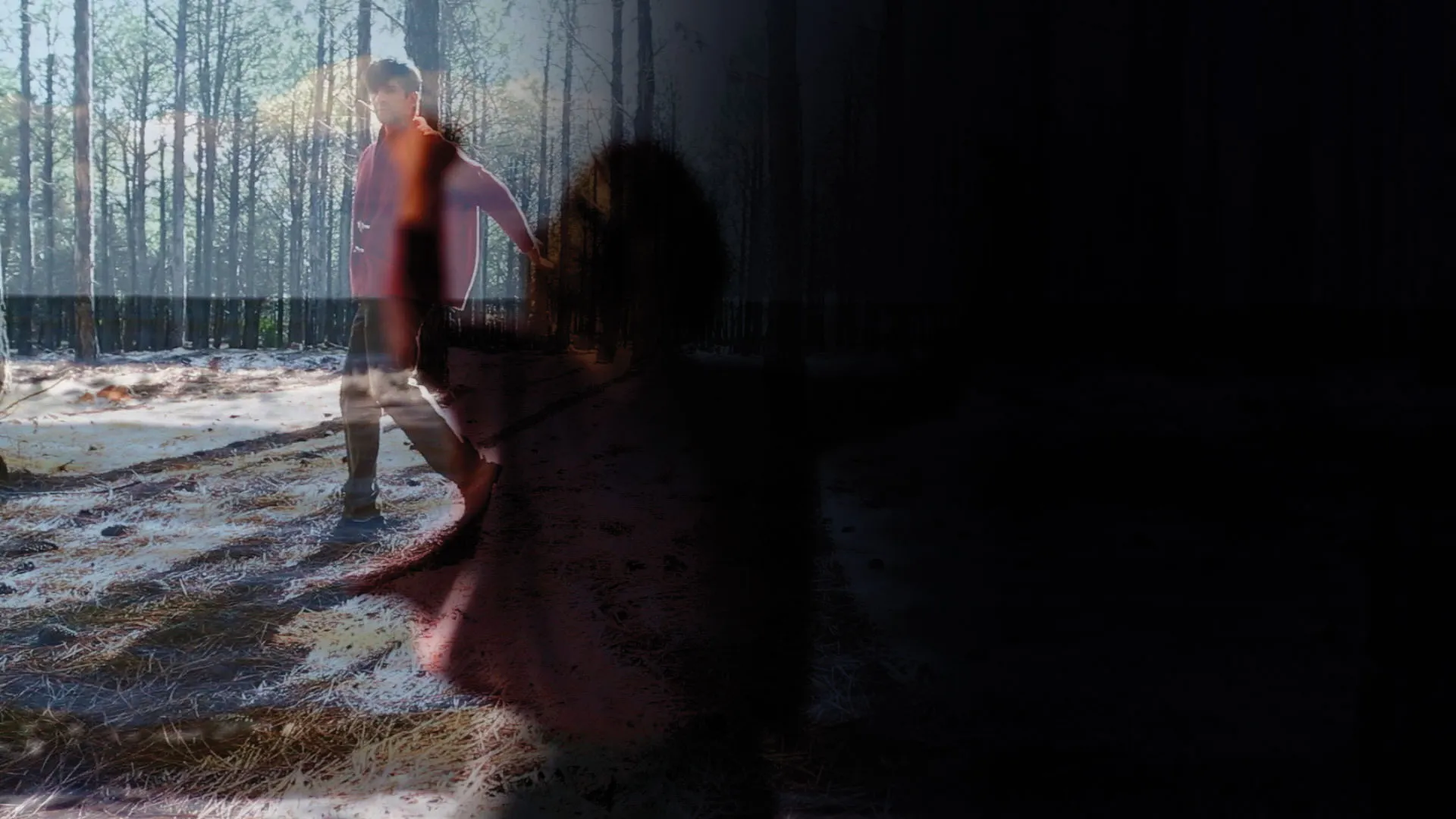
A double exposed image of a shadow of a woman reaching and a man wearing a red jacket walking through a sun dappled forest.

TAO

Cayetana Vidal

Part of the DANCE MOViES Commission, this screening marks the official premiere of the 2011 commissions and will be followed by an open reception and panel discussion with all commissioned artists.

TAO (11 min, Argentina, 2013) is the third collaborative dance film between Argentinian filmmaker Cayetana Vidal and choreographer and dancer Sofia Mazza, who explore the superimposition of movement and image. Male and female, winter and summer, day and night, and nature and city are overlayed, creating a new single image in which opposites coexist. The technique of video overlay proposes an imaginary world of new shapes, proportions, and perspectives. The film was shot in the city of Buenos Aires and on the Argentine Atlantic Coast. Footage was also shot in Germany, Spain, and Tigre, a river delta near Buenos Aires. As it was winter in Europe and summer in South America, and since dancer Diego Poblete was traveling around Europe, a “live experiment” was conducted and images were collected during the same time period in both hemispheres.

SCHEDULE

  • Introduction with founding curator Hélene Lesterlin
  • Screening of TAO
  • Commissioned artists' presentations + discussion with curators
  • Reception on stage serving lite fare

Main Image: Video still from TAO (2014). Courtesy the artist.