Image
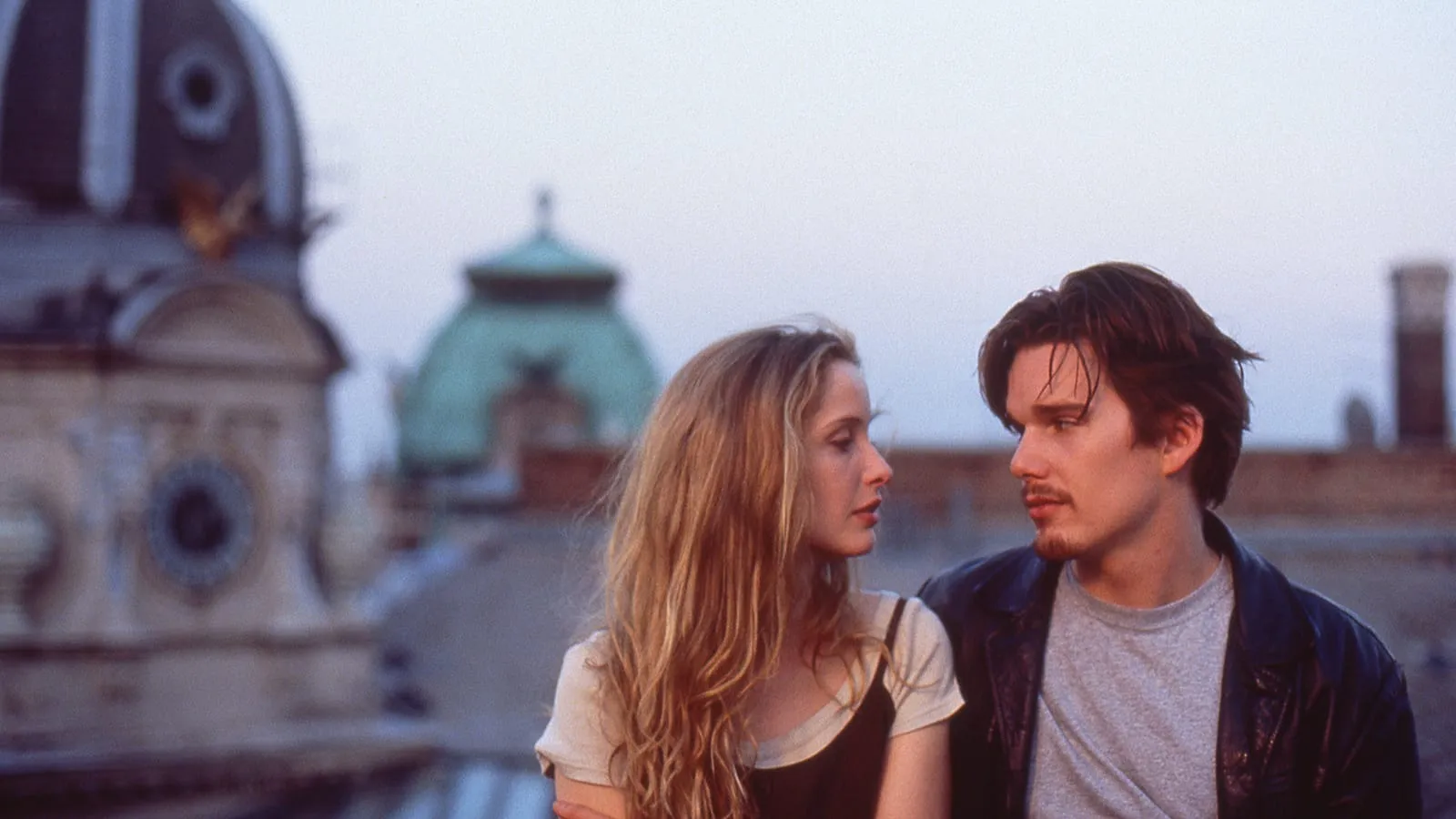
A woman with blonde hair and a man with brown hair looking longingly into each other eyes while sitting on a roof top overlooking a European cityscape.

Before Sunrise

Directed by Richard Linklater

Before Sunrise is a near real-time conversation between Jesse and Celine, who meet on a train and then disembark in Vienna to spend the evening on a peripatetic exploration of the city and each other’s perspectives on time, death, and reincarnation. The film is structured by an unlikely duality, starring Ethan Hawke as an American cynic, and Julie Delpy as a French romantic. Using the daily cycle of the sun as a metaphor, Before Sunrise initiated a story that would be completed in director Richard Linklater’s Before Sunset (2004). Together, the two films form a temporal loop that is separated by nearly a decade.

Main Image: Film still: Before Sunrise (1995). 
Image
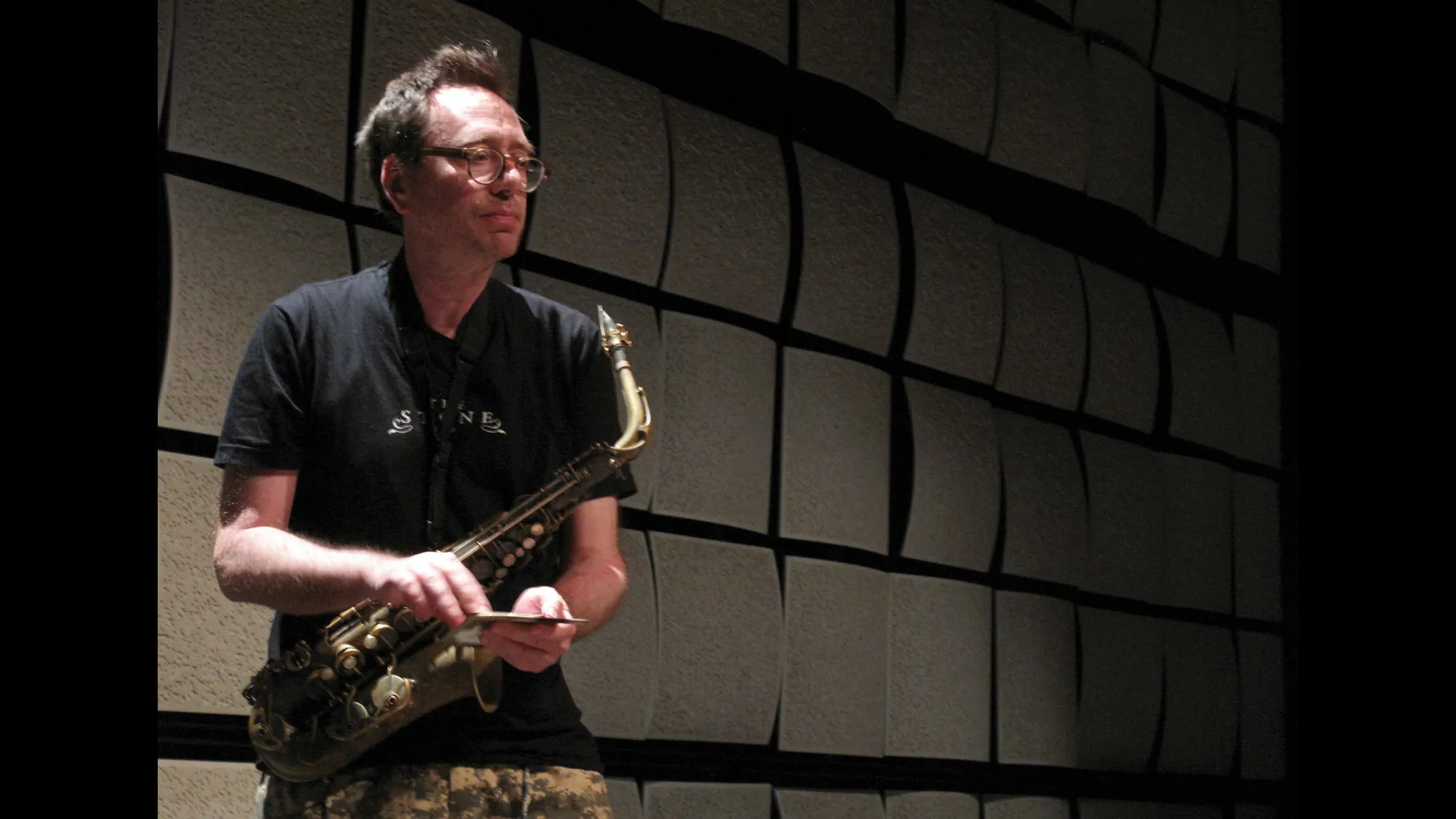
John Zorn

John Zorn

The legendary avant-garde composer/performer gives a rare solo saxophone performance. An experimental jazz icon for almost 40 years, his playing pushes extended techniques to their limits in a whirlwind of virtuosity.

An experimental jazz icon for almost 40 years, Zorn’s playing pushes extended techniques to their limits in a whirlwind of virtuosity. Drawing upon his experience in classical, jazz, rock, hardcore punk, klezmer, film, cartoon, popular, world, and improvised music, he has created an influential body of work that defies academic categories. He is a central figure in the downtown scene, incorporating a wide variety of creative musicians into various compositional formats. His work is remarkably diverse and eclectic, drawing inspiration from art, literature, film, theater, philosophy, alchemy, and mysticism, as well as music. Zorn founded the Tzadik label in 1995, runs the East Village performance space The Stone, and has edited and published five volumes of musician’s writings under the title Arcana. He was awarded a MacArthur Fellowship in 2006.

Main Image: John Zorn in studio 2 in 2012. Photo: EMPAC/Rensselaer.

Image
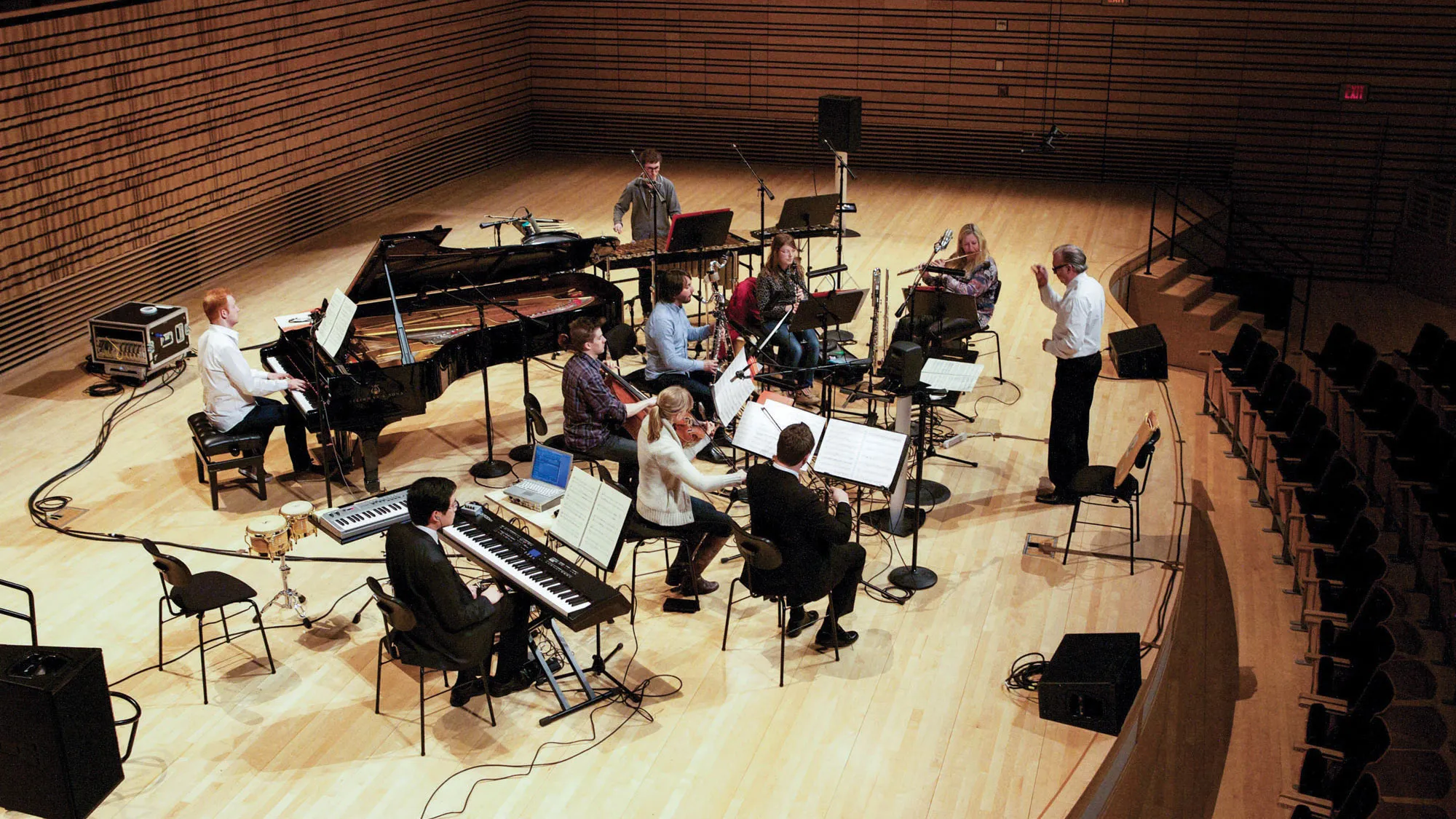
An aerial view of a small orchestra dressed casually in rehearsal on the concert hall stage

Music of Fausto Romitelli

Talea Ensemble

Composer Fausto Romitelli took the power of psychedelic rock and the sonic analysis techniques of the French Spectral school and twisted them together to create a deformed, artificial sound world. New York-based Talea Ensemble will make world premiere recordings of five of Romitelli’s works during their EMPAC residency and perform a concert consisting of:

  • Domeniche alla periferia dell’impero (2000) for violin, cello, flute, clarinet
  • La sabbia del tempo (1991) for violin, viola, cello, flute, clarinet, bassoon, keyboard
  • Amok Koma (2001) for violin, viola, cello, flute, clarinet, bass clarinet, piano, percussion, keyboard, live electronics
  • Nell’alto dei giorni immobili (1990) for violin, viola, cello, flute, clarinet, piano
  • Blood on the floor, Painting 1986 (2000) for 2 violins, viola, cello, flute, clarinet, electric guitar, keyboard
  • Trash TV Trance (2002) for electric guitar

Main Image: Talea Ensemble on the concert hall stage in 2012. Photo: EMPAC/Rensselaer.

Media
Image
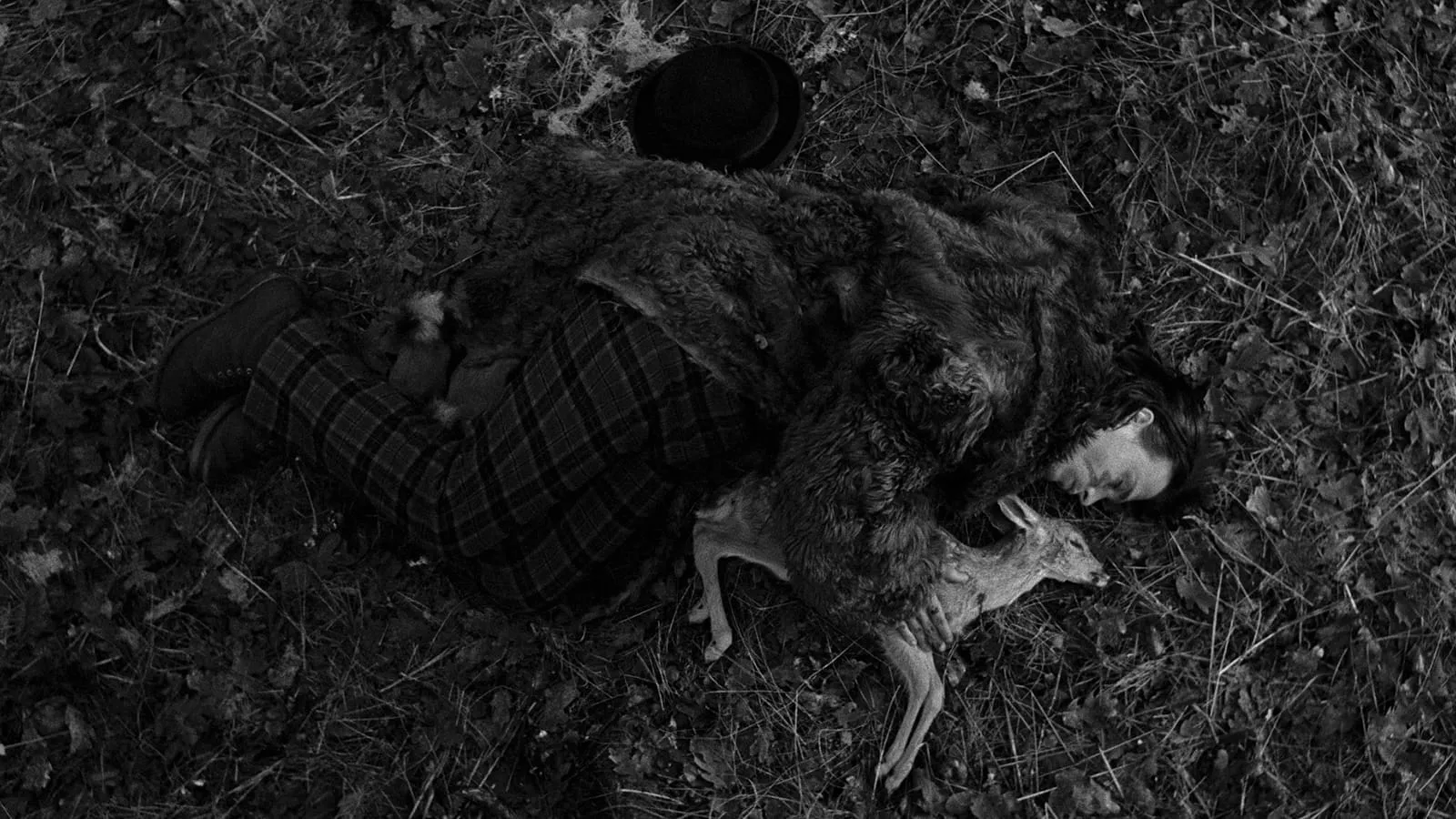
A man wearing a fur coat and tartan pants laying on the ground next to a deceased fawn in a cuddling position.

Dead Man

Directed by Jim Jarmusch

For his 1995 take on classic Hollywood Westerns, Jim Jarmusch brought together the diverse talents of Johnny Depp and Gary Farmer in starring roles, as well as Crispin Glover, Iggy Pop, Robert Mitchum (in his final film role), Billy Bob Thornton, Gabriel Byrne, John Hurt, and Alfred Molina. The film tells the story of William Blake, an accountant from Cleveland who sets out to the town of Machine for work, a misadventure that soon turns him into an outlaw. Set to an eerie, improvised soundtrack by Neil Young, Dead Man constitutes a physical and mythical journey that ends as it begins. The film has attracted favorable critical reviews, with author and critic Greil Marcus calling it “the best movie of the end of the 20th century” and The New York Times’ A.O. Scott describing it as “one of the very best movies of the 1990s.”

Main Image: Film still from Dead Man (1995).

Image
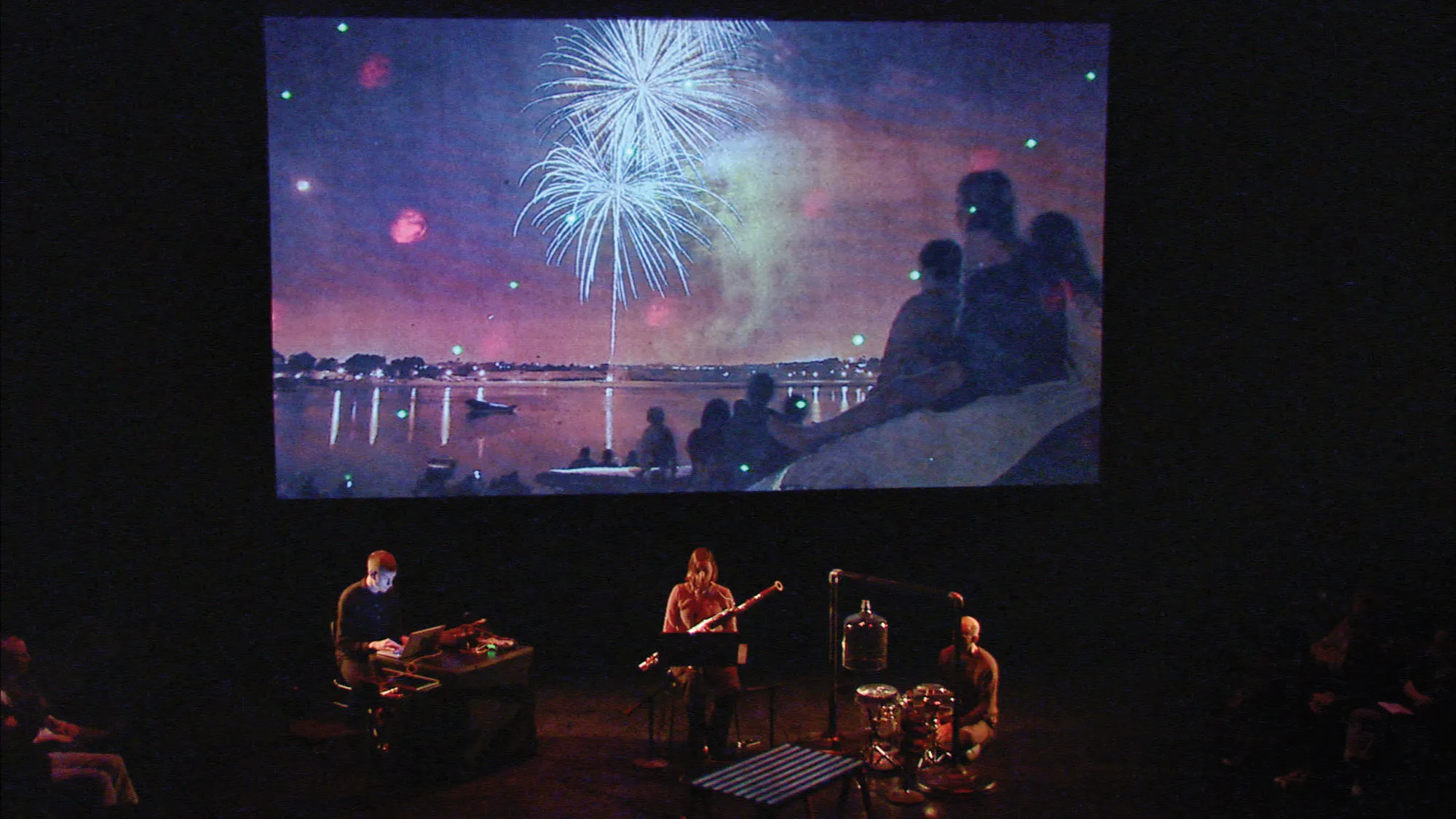
A group of three musicians playing on a dark stage lit by a projection of fireworks on a screen behind them.

Actual Reality

Lucky Dragons

Using an archive of Internet searches for the phrase “actual reality” as raw data for this process, acoustic sounds of musicians (and the audience) are analyzed and resynthesized in real-time and then presented back for reply, creating a call and response. Along with the “real” performance, collected source material—video and audio from previous performances, rehearsals, and incidental audio—is processed and layered on top, creating an endless loop of what is and what has been.

Main Image: Actual Reality, 2012.

Media
Image
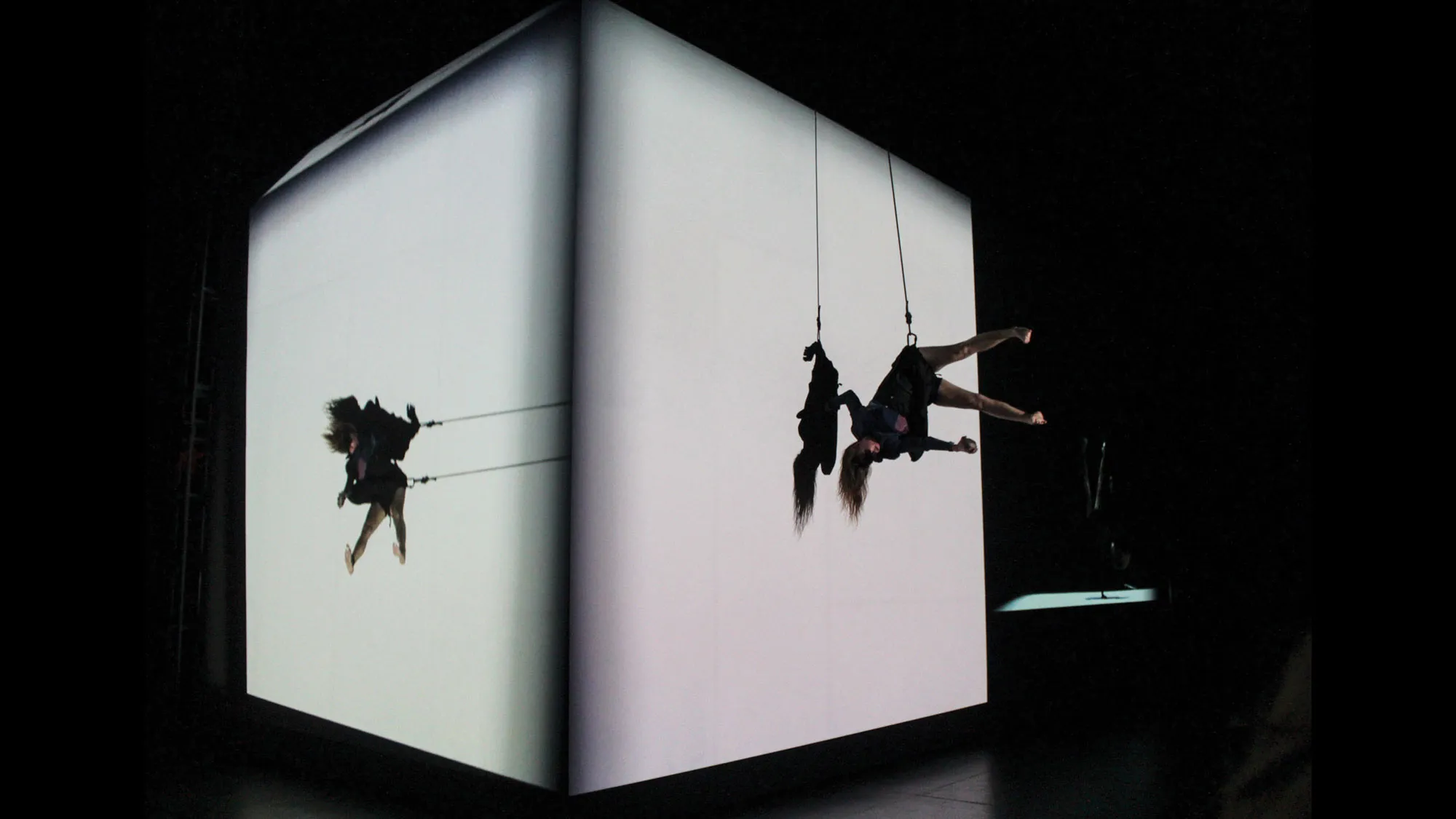
A woman suspended by a cable harness seemingly defying gravity while dancing on a white cube.

Tethered: Vertical Performance

Rodrigo Pardo + Bárbara Foulkes

Two divergent artist-in-residence work in progress performances navigate vertical space through the tale of a man who slowly realizes he is living upside down, and a dance study of falling and floating that plays with perspective, time, and reality.

Rodrigo Pardo’s FLAT combines storytelling, video projections, and aerial performance. It eventually will be presented outdoors, four stories up, on the side of an apartment building. For now, this dance-theater work is seen 40 feet up inside the theater flytower to simulate the same performer conditions and reclining audience view. A man wakes up in his apartment feeling strange, not knowing he is upside down. The audience hears his inner monologue via headphones as he discovers his new reality and enters into his dreams; he must either learn how to live anew or try to change the world back to a familiar state. Inspired by the magical realism of Jorge Luis Borges, FLAT immerses both the performer and the audience in an intimate situation, shifting our perspective on what constitutes our reality.

Bárbara Foulkes’ FLOTA is a study in falling and floating—a dance performance that takes place in the center of a room on freestanding walls built to form a corner, which is transformed on multiple surfaces by live video projections of the dancer suspended. The audience chooses where to look just as they choose where to roam within the space. Foulkes is interested in creating a moment of suspension and spatial transformation, evoking reflections in an endless mirror, and refractions of time. FLOTA existed as a solo performance and is being developed into a more malleable experience for both performer and audience, interacting more openly with the architecture in which it occurs.

Main Image: FLOTA in Studio 1, 2012. 

Media
Image
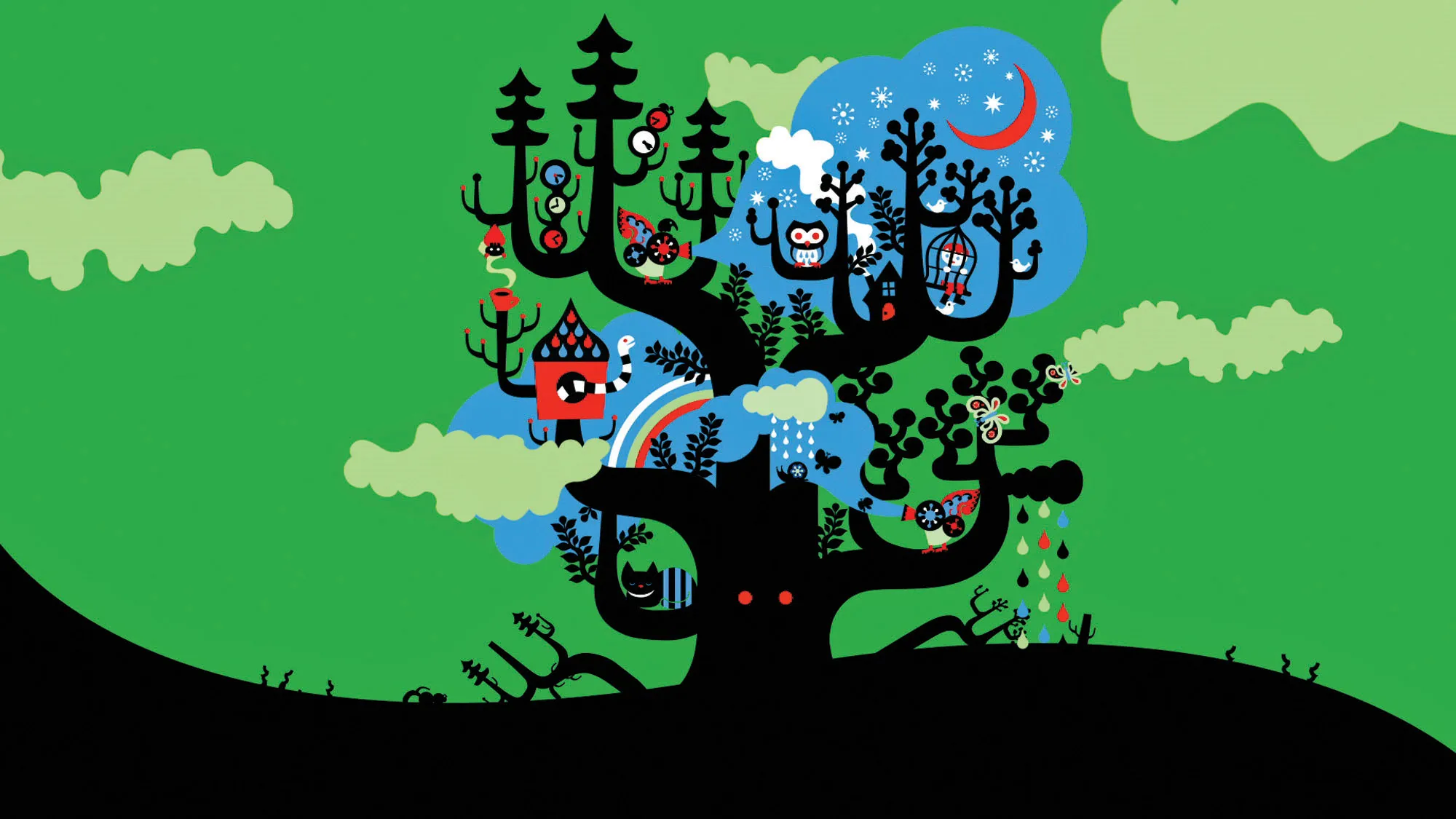
A black illustrated whimsical tree with multiple branches, each holding different creatures, like birds, owls, butterflies, and worms set in front of a green sky.

poemetrics

onedotzero_adventures in motion

Curated by onedotzero and produced in partnership with EMPAC, poemetrics is a series of shorts that looks at expressive moving image work, from treated live action to animation via motion graphics that are based on or inspired by poetry or poetic texts. These form a visual investigation of the words in poetic motion, enriching the meanings and enhancing the understanding. The program’s variety of works are entertaining, surprising, and beautiful, showing the combined power of moving image with poetry to thoughtful effect.

Main Image: onedotzero poemetrics, 2011. Photo: Video still courtesy onedotzero.

Image
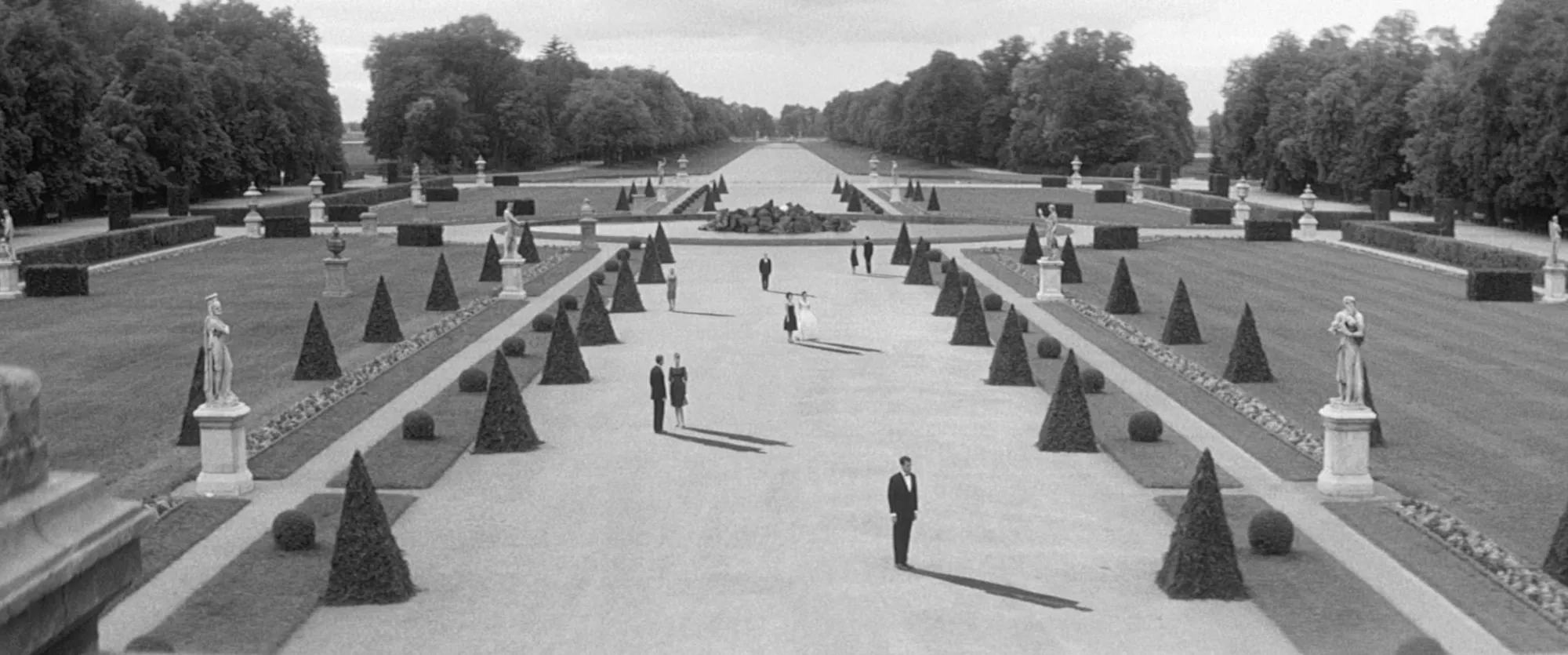
A structured English garden with a large boulevard lined by triangular shrubs, spherical bushes, and statues. Nine people pressed in formal attire mill about.

Last Year at Marienbad

Directed by Alain Resnais

Alain Resnais’ epochal and enigmatic 1961 film, Last Year at Marienbad, is a dream-like study of non-linear time and memory. In the film, a man pursues a woman through the endless corridors of a luxury hotel while another man, who may or may not be her husband, looks on. Through ambiguous flashbacks and disorienting shifts of time and location, the film explores the relationships among the characters. Conversations and events are repeated in several places in this finely woven dance of memory.

Resnais is a contemporary of Chris Marker’s, whose film, La Jetée, inspired The Eternal Return series. The two directors, both part of the Left Bank Group, collaborated to make Le statues meurent aussi (Statues also Die, 1953) and Loin du Vietnam (Far from Vietnam, 1967).

Main Image: Last Year at Marienbad (1961).

Image
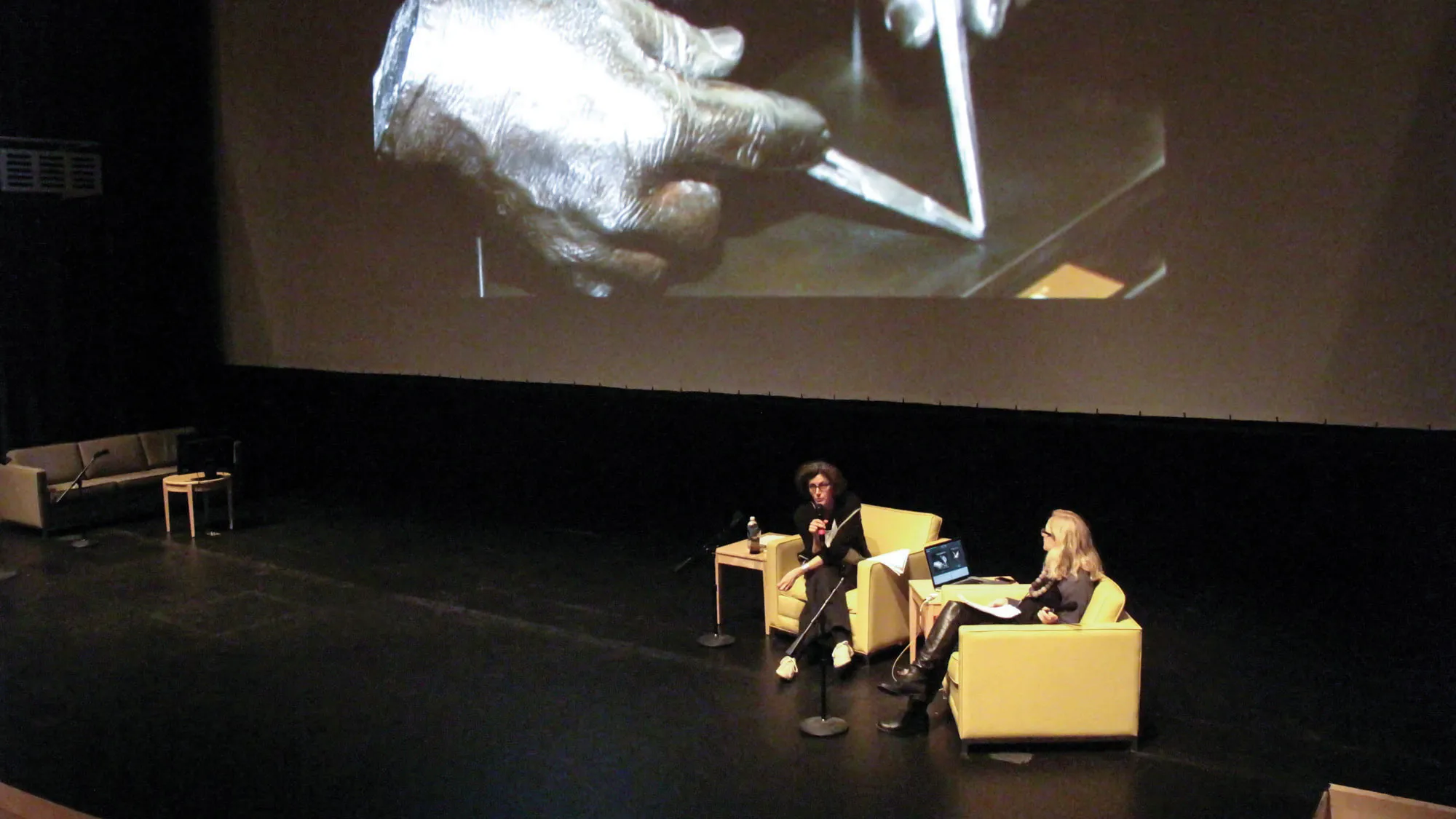
Lisa Cartwright and Christin Lammer seated on stage in conversation.

Lisa Cartwright + Christina Lammer

Empathography: The Art of Clinical Intimacy

What do we sense during surgery? Touch, sounds, and smells in the surgical theater, as well as engagement with others and the intersubjective experience of the senses during medical procedures are the focus of this intimate conversation. This discussion on the senses in austere surgical settings will be accompanied by a screening of video and sounds works.

Image
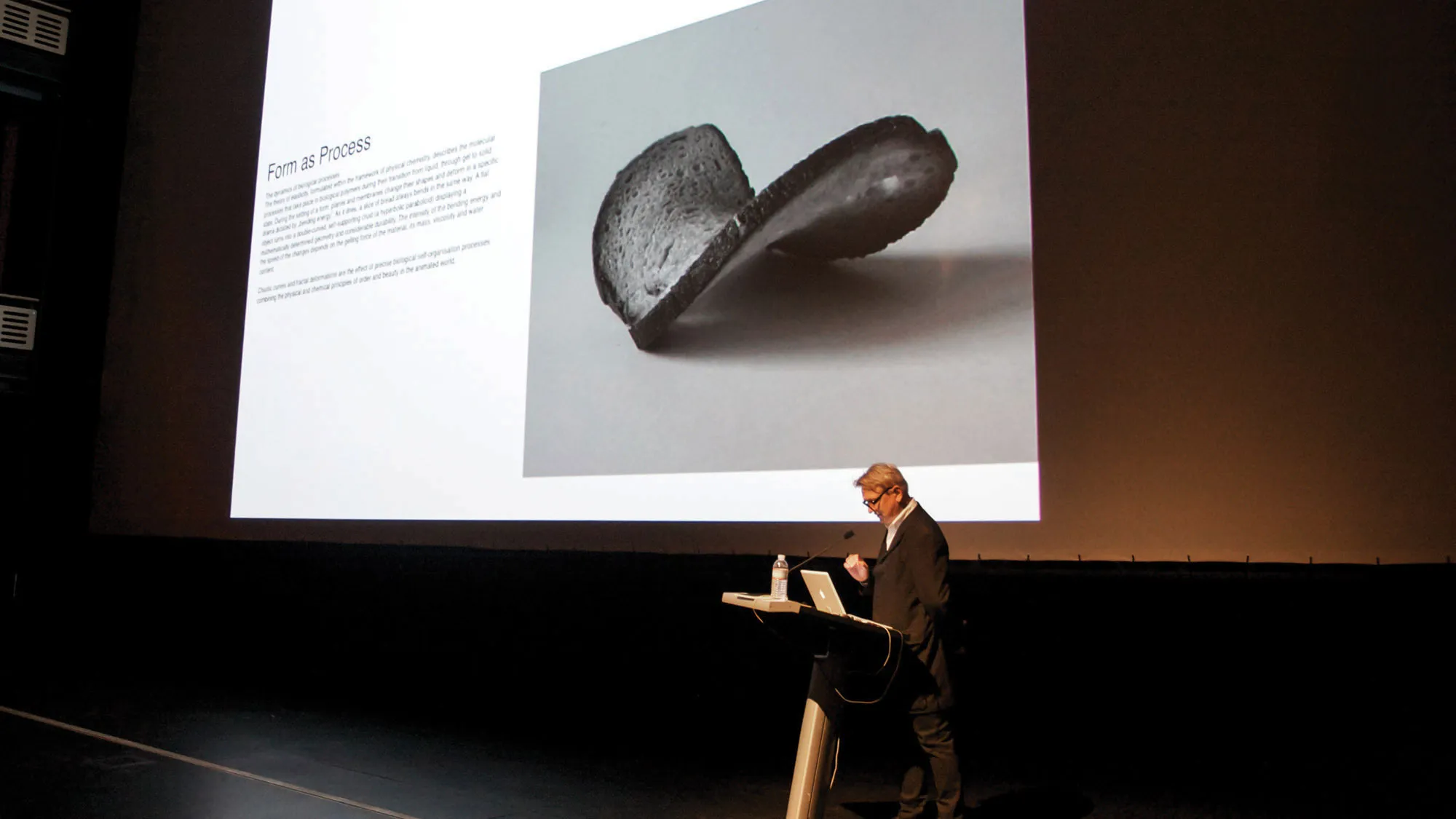
Zbigniew Oksiuta in disucssion

Form, Processes, Consequences

Zbigniew Oksiuta

In his research, Rensselaer Architecture Professor Zbigniew Oksiuta develops living biological habitats by combining art, architecture, engineering, and the biological sciences. His work looks to reduce the notion of space to its absolute minimum: the physical and chemical parameters that enable physiological existence. In this two-part talk, Oksiuta discussed his research into the possibility for biological processes to occur on an architectural scale, asking whether life processes—which normally take place on the nanoscale of proteins, acids, and saccharides—can happen on a macroscale. 

Oksiuta is an artist, architect, and scientist whose work has been shown at venues worldwide, including the Venice Biennale, ARS Electronica, Foundation for Arts and Creative Technology (FACT) in Liverpool, and Dublin’s Science Gallery. 

This event was curated by Paula Gaetano.

Detail View: Rensselaer professors and researchers shared in-depth perspectives on their fields of inquiry, inviting an exchange of ideas between experts and non-experts alike.


Main Image: Zbigniew Oksiuta in 2012.