Image
Nichole Beutler

Nicole Beutler

Nicole Beutler works with the tension between intense emotionality and cool calculation while also reflecting on the history of theater. How do we look at emotions—what moves us and what doesn't? How does the past resonate in our contemporary reality? These are issues that are at stake in Nicole Beutler's work. Always searching for new forms, she currently is drawn to working with existing texts or dances.

1: Songs

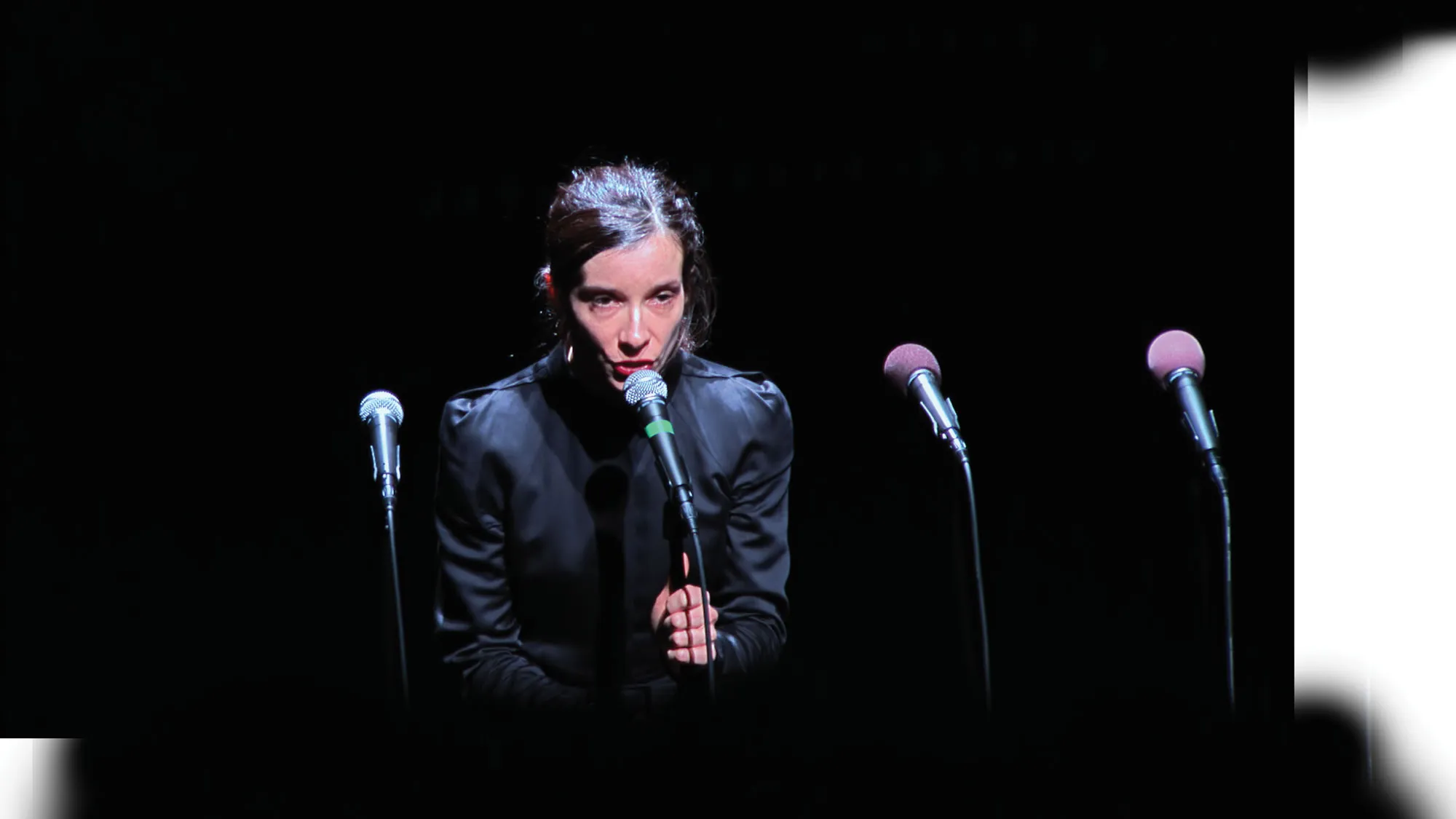
By Nicole Beutler / nb in collaboration with Sanja Mitrovic and Gary Shepherd 1: Songs is a dramatic solo performance in the style of a rock song-cycle that crosses rough terrain. Performer Sanja Mitrovic channels the final words of tragic female protagonists from the history of theater, including Antigone, Medea, and Gretchen, allowing their timeless cries of suffering to enter her body and distinctly contemporary voice. As she shouts, speaks, and sings, she violently shifts between characters, at times fragile, raw, calculating, or emotional. Created by director and choreographer Nicole Beutler, with electronic music by DJ/composer Gary Shepherd, 1: Songs asks us to reconsider the words of these classic literary heroines (and anti-heroines) in the here and now. Who is speaking? What do these words mean today? Where does the character end and the performer begin?

2: Dialogue with Lucinda

By Nicole Beutler / nb based on Radial Courses (1976) + Interior Drama (1977) by Lucinda Childs Fascinated by the radical and deceptively simple minimalism of American choreographer Lucinda Childs' early work, Nicole Beutler has remade two of her silent dance pieces, Radial Courses (1976) and Interior Drama (1977), setting the latter to specially composed music. The underlying choreographic scores used by the dancers while performing are fiendishly complex. Radial Courses is based on three movement sequences in a constantly shifting, circulatory composition. In Interior Drama, five dancers conform to an apparently perfect system, moving in repetitive and hallucinatory patterns. Childs describes her own work as an "intense experience of intense looking and listening." Beutler's reinterpretations focus on the individual dancer's roles and actions within the group patterns, revealing parallel realities and the ritualistic qualities of both dances.

Nicole Beutler is a choreographer, curator and performer based in Amsterdam. Her work is situated on the threshold of dance, performance, and visual arts. She seeks to precisely articulate sense and experience through performances, installations, and books. Her performances are composed musically, and suffused with subtle humor. They are characterized by minimal stage sets and a focus on the performer as a human being.

In 2005 Beutler co-founded LISA, the Amsterdam-based theater makers' collective. From 2008 to 2010, she was dance and performance curator at Frascati Theatre in Amsterdam. She collaborated for years with choreographer and performer Paz Rojo and has worked with David Weber-Krebs, Hooman Sharifi and the live art group Private Thoughts in Public Places. She is an artistic adviser for choreographers, and a guest teacher at the School for New Dance Development and the Mime School at the Amsterdam School of the Arts (AHK).

The Confidence Man

Graham Parker

New York City-based artist Graham Parker created new film and audio work in residence at EMPAC to be shown alongside a series of alterations made to the building’s environment—ranging from the theatrical to the virtually invisible. Parker has long been interested in “spectrality”—the concealing of one set of operations behind the appearance of another. His 2009 book Fair Use (Notes from Spam) explored spam emails as the latest manifestation of a longstanding mode of deception reaching back to 19th-century railroad cons and medieval beggar gangs. The Confidence Man featured work growing out of that research—including hacked ATMs, rogue WIFI networks, monologues drawn from spam emails, and a tribute to the 1973 film The Sting. For the first three weeks of the exhibition, the artist worked on site and was available for conversation with the public while he made ongoing alterations to the installation.

Image
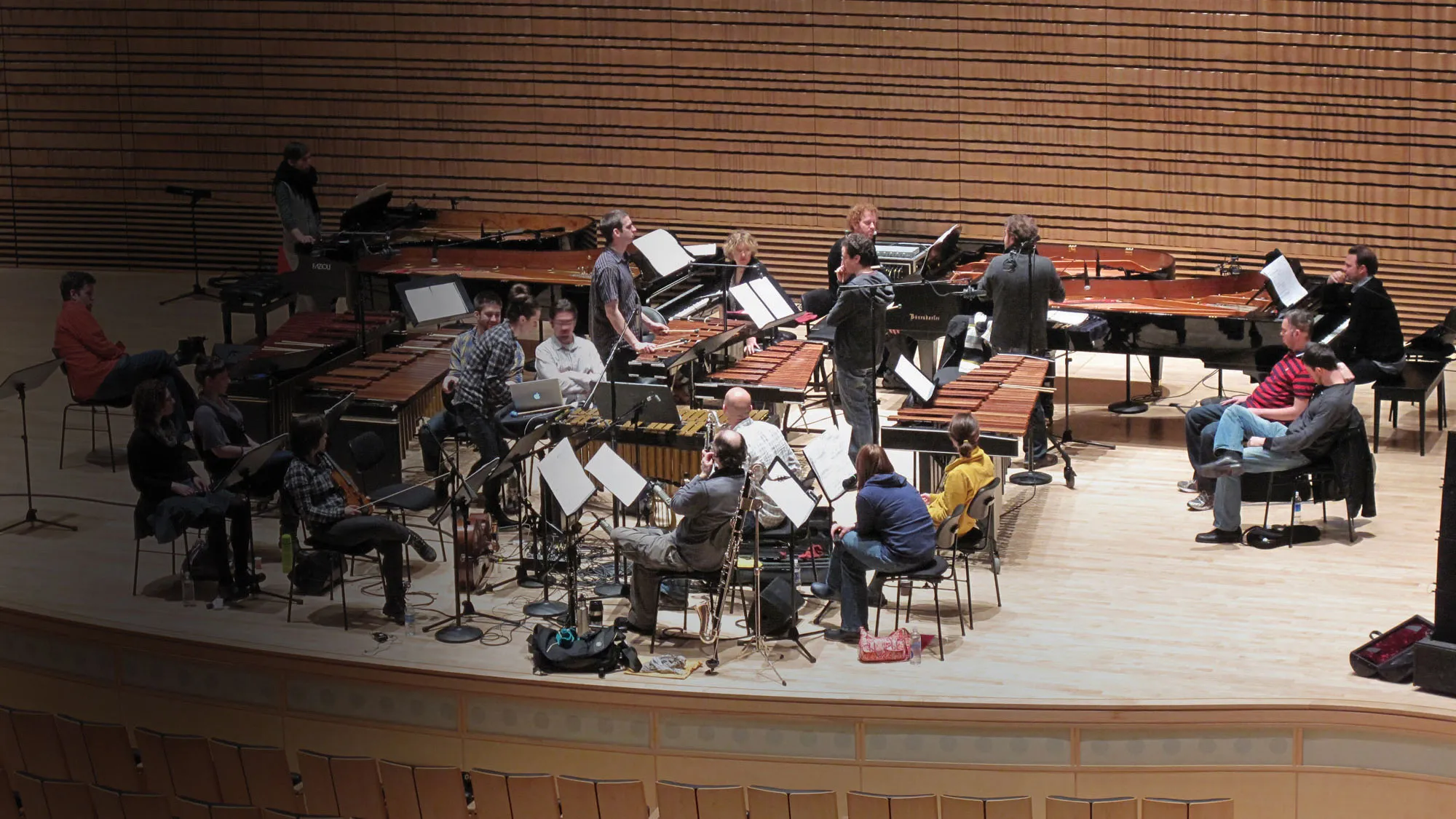
An ensemble practicing on the concert hall stage.

Steve Reich

Music for 18 Musicians + Double Sextet

The minimalist music style has had a profound influence on all Western music. Not only has classical music been challenged and changed, but electronica, jazz, hip-hop, and pop have fallen under its influence, as well. Starting in the 1960s as an alternative to the "joyless" classical music coming out of academia, its pulsing rhythms, shifting patterns, focused harmonies, and mesmerizing repetitions, which move continuously through metamorphoses, spoke to listeners in a new way. Music for 18 Musicians, by Steve Reich and musicians, premiered in 1974 at The Town Hall in New York City. In 2009, Reich won a Pulitzer Prize for his piece Double Sextet, where two identical groups of six musicians each play interlocking patterns of music—and the interwoven rhythms and phrases draw listeners into a maelstrom of pulsing music. Signal, under Brad Lubman, performs these minimalist masterpieces with absolute virtuosity.

Steve Reich: Music for 18 Musicians + Double Sextet

Ensemble Signal

Signal is a large ensemble performing under the musical direction of Brad Lubman, which is devoted to presenting a broad range of new music with energy, passion, and virtuosity. Music for 18 Musicians is an iconic work of musical minimalism and one of the most widely appreciated compositions of American experimental music. However, there have been very few recordings of the piece and the interpretation is often disputed (the original score, for example, was a series of cued components, not a linearly notated work, and as such the piece has a more dynamic identity than is generally thought). Working in collaboration with EMPAC’s audio team, Signal used this performance and residency to produce a new recording of Music for 18 Musicians, the sixth since the first was released in 1976. Signal also performed and recorded Double Sextet; in 2009, composer Steve Reich won a Pulitzer Prize for the piece where two identical groups of six musicians each play interlocking patterns of music—and the interwoven rhythms and phrases draw listeners into a maelstrom of pulsing music.

Image
A cartoon image of a grimacing creature with pointed teeth, oversized glassy eyes, and a small mustache wearing a fedora.

extended play + nightfall

onedotzero

As we gear up for next season’s onedotzero_adventures in motion festival, two nights of double feature screenings will be presented from the international touring festival which premiered in London in 2010. Curated and compiled by onedotzero, all programs explore new forms and hybrids of moving image across motion graphics, short film, animation, music videos, and more.

extended play 10

Championing filmmakers who push the boundaries of traditional storytelling with adventurous narrative structures and distinct visual styles, this eclectic and engrossing range of shorts demonstrates how a powerful visual narrative can be used to create dramatic effect, and even social change.

nightfall

Some of the more extreme and often bewitching examples of entries into this year’s festival program—from gaming-edged horror and sci-fi weirdness to trippy psychedelia—what more could you want from an alternative film night?

Image
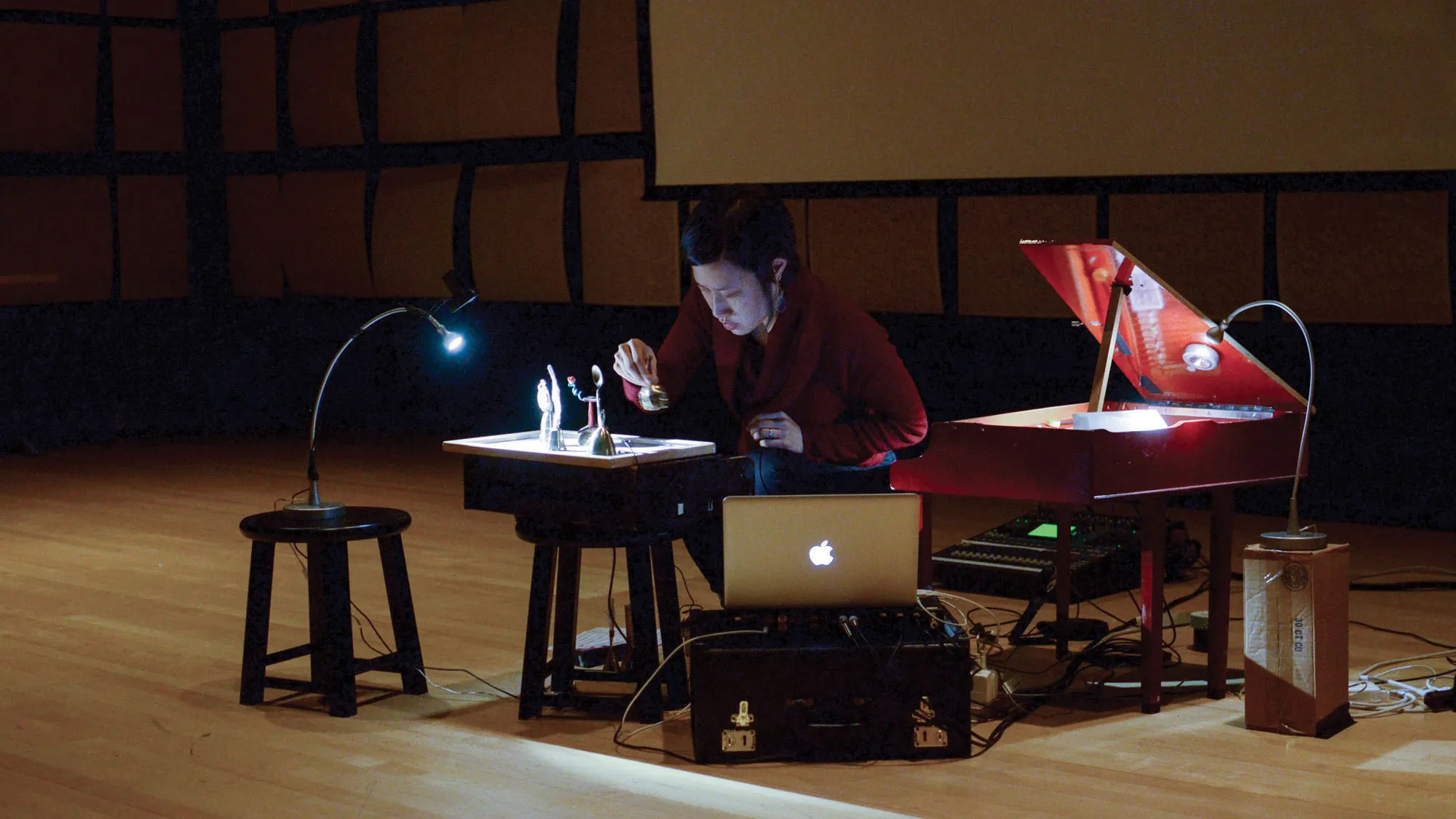
A woman hunched at a small desk setting up figurines under a light. She is surrounded by a small red piano and sound recording equipment.

Down The Rabbit-Hole

Phyllis Chen + Rob Dietz

Down The Rabbit Hole was a workshop performance of a new piece created in residence by Phyllis Chen (toy pianist/composer) and Rob Dietz (video artist/electronic musician). A multimedia work for toy pianos, music boxes, live electronics, live and edited video, and amplified objects, Down the Rabbit Hole was inspired by Lewis Carroll’s Alice stories; rather than a re-telling of a beloved tale, it drew upon objects and themes from the novels: the ticking of a pocket watch, the shuffling of a deck of cards, and the clattering of a tea set were reinvented in visual and sonic terms. With the use of microphones, a magnifying glass, and live video feeds, commonplace objects were brought to life, and a miniature stage was set in motion inside a toy piano. 

Chen creates original multimedia compositions using toy pianos, music boxes, electronics, and video, presented in concert alongside works by prominent 20th century composers such as John Cage and Julia Wolfe. Dietz is a multimedia artist, VJ, and electroacoustic musician with an interest in generative audiovisual systems.

Down the Rabbit Hole

Phyllis Chen + Rob Dietz

Down The Rabbit Hole was a workshop performance of a new piece created in residence by Phyllis Chen (toy pianist/composer) and Rob Dietz (video artist/electronic musician). A multimedia work for toy pianos, music boxes, live electronics, live and edited video, and amplified objects, Down the Rabbit Hole was inspired by Lewis Carroll’s Alice stories; rather than a re-telling of a beloved tale, it drew upon objects and themes from the novels: the ticking of a pocket watch, the shuffling of a deck of cards, and the clattering of a tea set were reinvented in visual and sonic terms. With the use of microphones, a magnifying glass, and live video feeds, commonplace objects were brought to life, and a miniature stage was set in motion inside a toy piano.

Chen creates original multimedia compositions using toy pianos, music boxes, electronics, and video, presented in concert alongside works by prominent 20th century composers such as John Cage and Julia Wolfe. Dietz is a multimedia artist, VJ, and electroacoustic musician with an interest in generative audiovisual systems.

Image
Jean-Pierre Luminet

Jean-Pierre Luminet

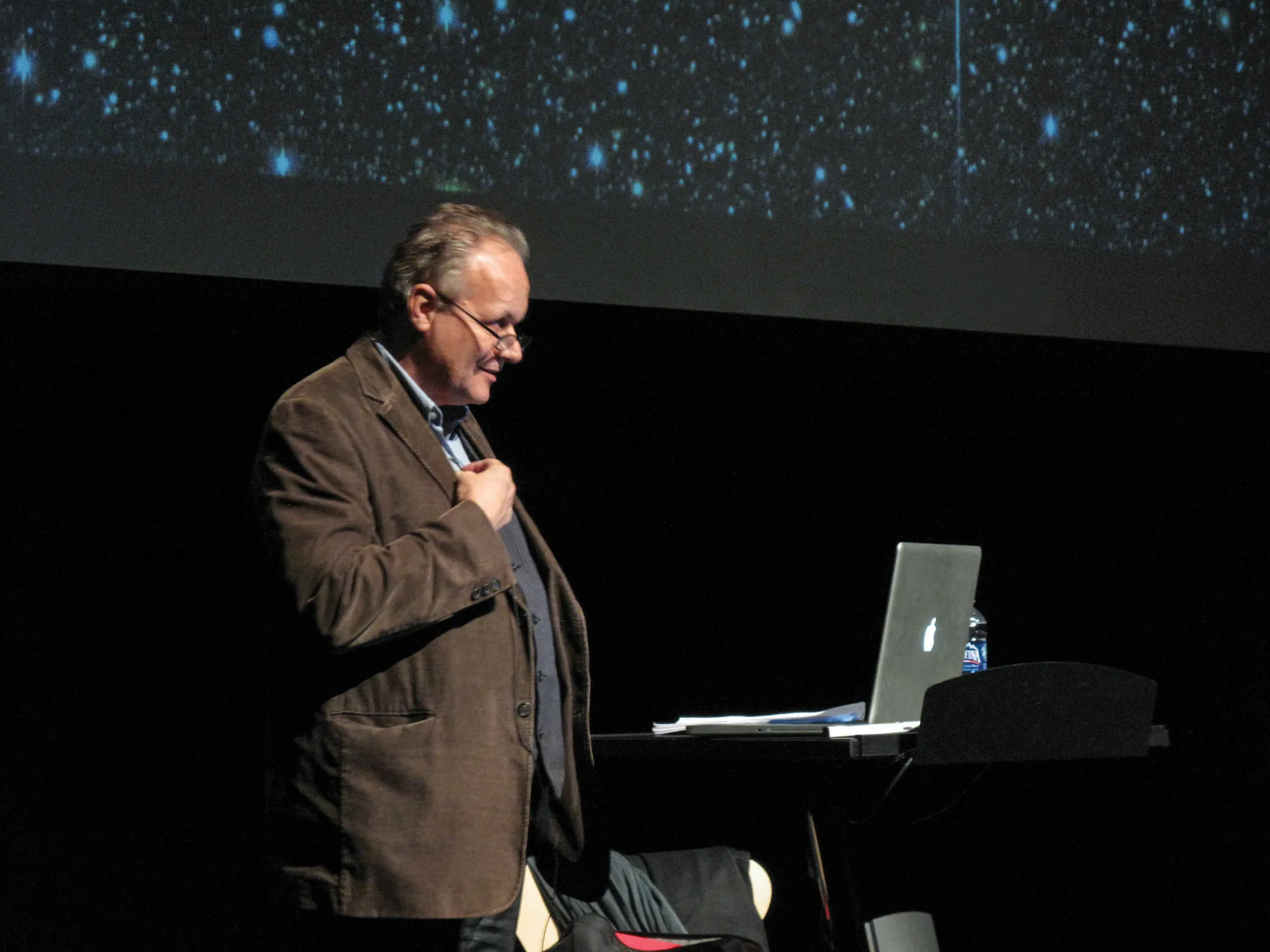
Jean-Pierre Luminet, an expert on black holes, cosmology, and cosmic topology, will discuss the relationship between principles of aesthetics and the study of the cosmos through the work of artists, philosophers, and scientists, from Plato to Kepler, and Dürer to Escher.

A collaborator of Gérard Grisey's Le Noir de l'Étoile, Luminet will discuss his role in the spatial percussion piece about the death of a pulsar, which will be performed by Les Percussions de Strasbourg in EMPAC's Concert Hall on Saturday, February 26, 2011.

Observer Effects invites thinkers to present their highly integrative work in dialogue with the fields of art and science. This lecture series takes its title from a popularized principle in physics that holds that the act of observation transforms the observed. Outside the natural sciences, the idea that the observer and the observed are linked in a web of reciprocal modification has been deeply influential in philosophy, aesthetics, psychology, and politics.

Image
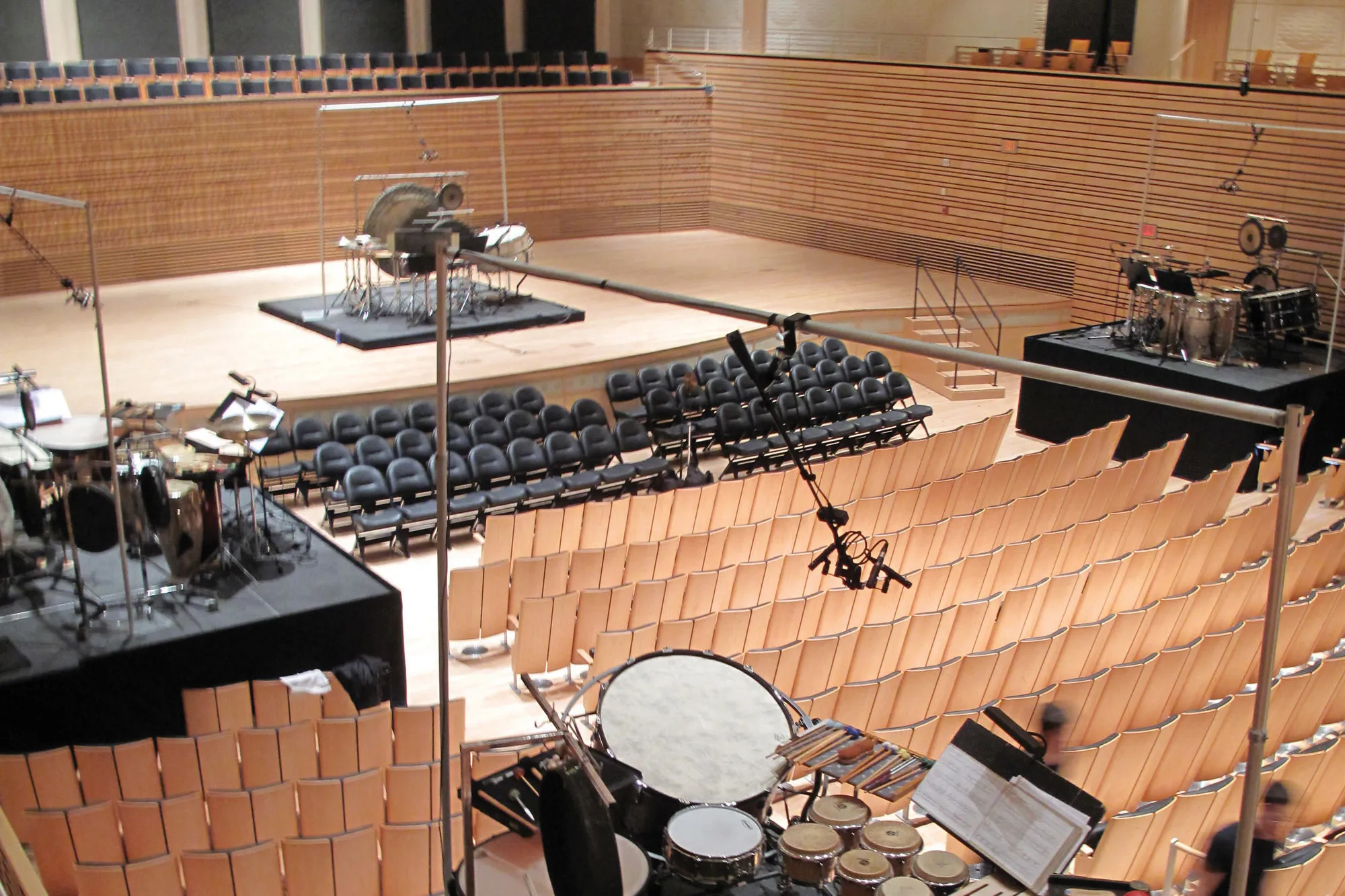
multiple drum sets circularly arranged in the empty concert hall.

Le Noir de l’Étoile

Gérard Grisey

Radio signals emitted by two pulsars from a distant place in the universe become part of a work played on six percussion stations that surround the audience. This piece was commissioned from Gérard Grisey by the French ensemble Les Percussions de Strasbourg, which will perform at EMPAC. Grisey has been called one of the founders of so-called spectral music (a label he later disowned). In this piece, the evolution of timbres played by instruments, and of sound colors as they expand, explore the great complexities of what our ears can hear, and take the audience on a journey inside the sound of music. Not only is the space "out there" brought into the Concert Hall, the hall itself is made part of the experience by placing the performers, instruments, and loudspeakers around the audience.

Jean-Pierre Luminet: The Harmony of the Spheres, from Antiquity to Contemporary Music

Jean-Pierre Luminet is a French astrophysicist. He is the research director for the Centre National de la Recherche Scientifique (CNRS), and is a member of the Laboratoire Univers et Théories (LUTH) of the observatory of Paris-Meudon. He was awarded the 2006 Great Prize of the French Academy of Sciences for science communication, and the 1999 International Georges Lemaitre Prize for his original contributions to cosmology and astrophysics. He has published in journals such as Nature, Astrophysical Journal, and Astronomy and Astrophysics, among others. He has also published three acclaimed novels and several poetry books.

Main Image: Setup in the Concert Hall for Le Noir de l’Étoile in 2011. Photo: Brian Chitester

Image
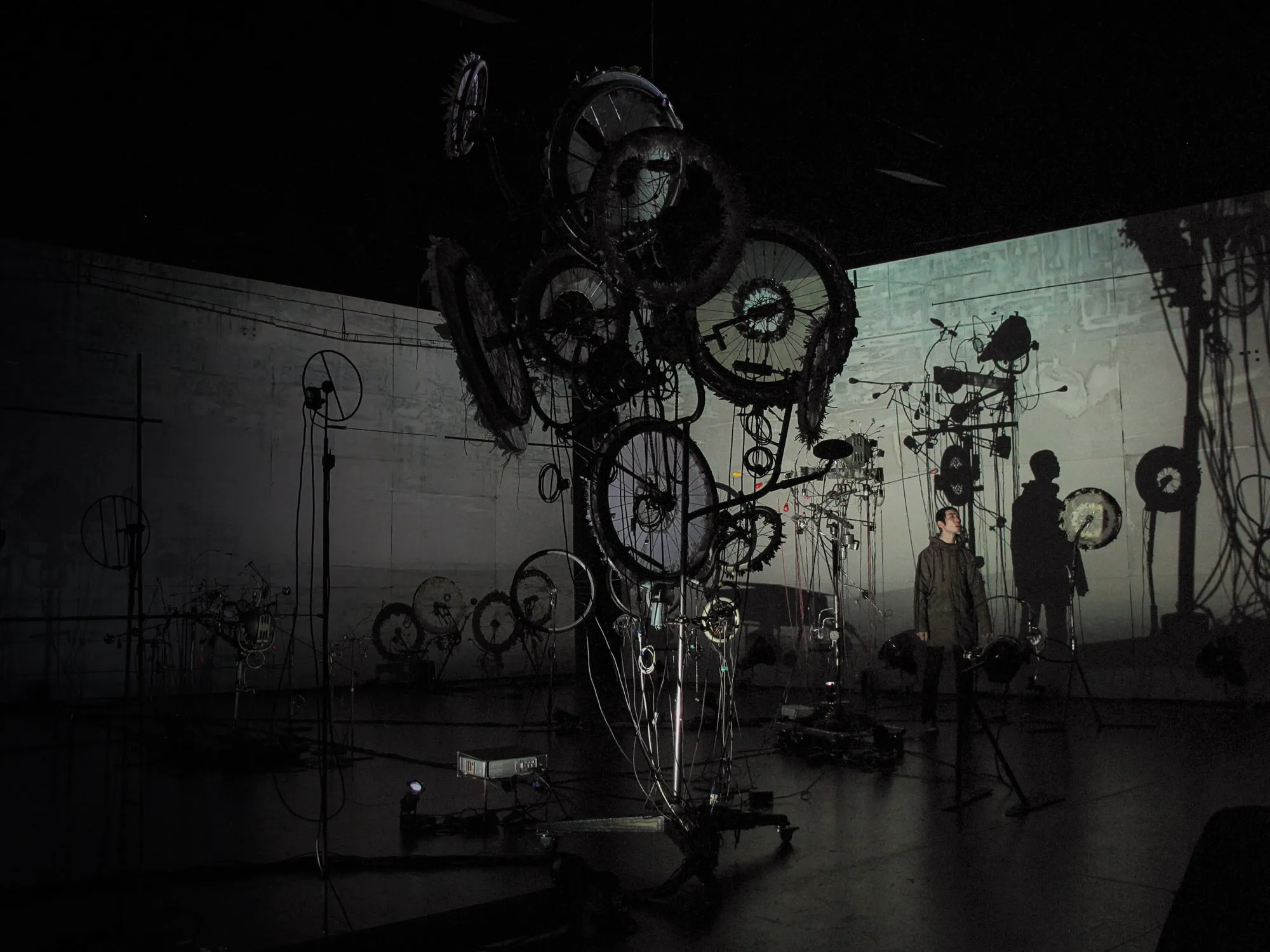
A man casting a shadow standing amongst an abstract sculpture of various wheels in a moody gray room.

And All the Questionmarks Started to Sing

Verdensteatret

A delicate, room-sized machine of intricate kinetic sculptures is assembled from flotsam, bicycle wheels, and old glass objects held in tiny robot arms. Actors who double as instrumentalists set in motion a chain reaction of dreamlike shifts between macro and micro perspectives. And All the Questionmarks Started to Sing crosses between concert, sculptural installation, and performance. In a landscape under constant transformation, light, shadow, sound, puppetry, and object theater merge to form a mesmerizing constellation of associations. Bringing artists of different backgrounds together, the work shows Verdensteatret's fascination with all kinds of animation—the strange and miraculous activity of breathing life into dead objects, stiff figures, and frozen images.