Robert Henke

Fragile Territories

We are sorry to announce that this installation has been canceled. We regret any inconvenience and look forward to seeing you at other events, installations, and exhibitions. Using a state-of-the-art laser system to draw with four high-speed dots of light, Fragile Territories creates morphing patterns of volatile luminosity. The process responsible for creating these shapes operates on the idea of uncertainty and change: a computer program evaluates statistical data, grabs momentary states, and feeds them back into its own system; what is displayed and made audible cannot be entirely predicted and will never repeat itself. The sound generation and path of light are both divined from the same program, and are two representations of the same process. The work is constructed around repetitive elements on varying time scales as well as on slow transitions between parameters and states using weighted random functions, thus adding to the notion of instability and potential failure.

Image
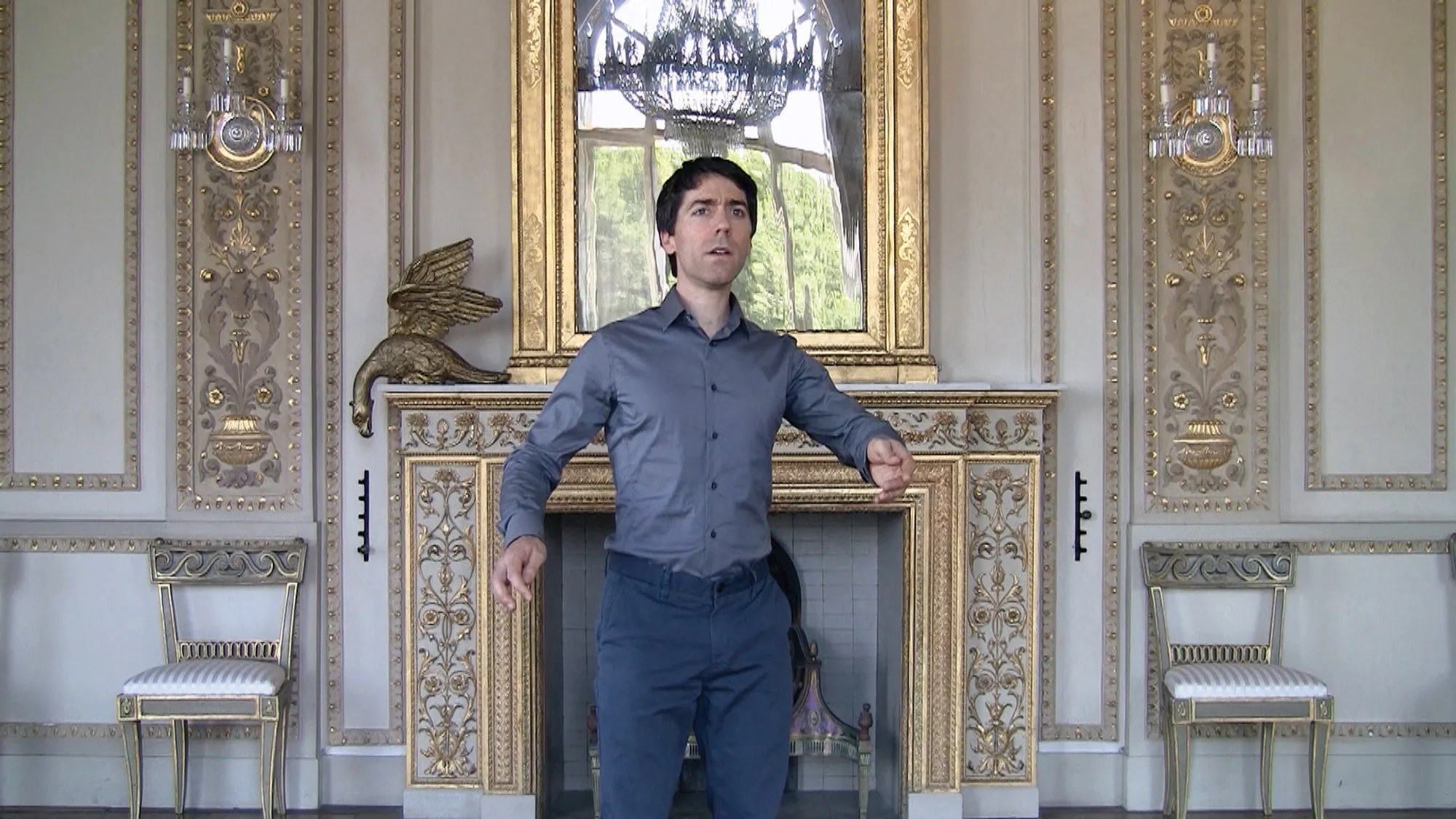
A white man with dark hair wearing a blue button up and pants standing with arms gently gesturing outward in a baroque styled room.

In the First Place...

Colin Gee

Part of the DANCE MOViES Commission, this installation officially premieres on April 6, and will be followed by an open reception and panel discussion with all commissioned artists. -- Lecoq trained actor, principal clown for Cirque du Soleil, and contemporary artist Colin Gee presents In the First Place…, a multi-layered dance film installation. The project, filmed in Rome, reframes Hypnerotomachia Poliphili (The Strife of Love in a Dream), an Italian pastoral romance published in 1499. In the First Place… applies a relationship between memory and location by referencing a mnemonic technique called “Memory Palace” that uses architectural spaces to organize and remember information.

Main Image: Video still from In the First Place (2014). Courtesy the artist.

Sarah Michelson

Devotion Study #2

We are sorry to announce that this installation has been canceled. We regret any inconvenience and look forward to seeing you at the rest of the DANCE MOViES screenings. Part of the DANCE MOViES Commission, this installation officially premieres on April 6, and will be followed by an open reception and panel discussion with all commissioned artists. -- In 2012, Sarah Michelson created an 80-minute dance called Devotion Study #1 – the American Dancer, at the Whitney Museum of American Art as part of the Whitney Biennial. In Devotion Study #2, Michelson works with animator Jack Tilley. Together they challenge the vitality of one medium (dance) through translation into another (animation). This animated film is presented as an architectural installation that asks whether the original dance continues to exist.

The Machine Starts

with Mary Ellen Strom + Joanna Haigood

The Machine Starts is based on E.M. Forster's 1909 sci-fi novella The Machine Stops, an eerily prescient tale that predicts the internet, television, global environmental ruin, social isolation and the impact of technology on the human experience.

Under the leadership of Rensselaer artists Shawn Lawson and Michael Oatman, professors in HASS and the SoA respectively, this student run performance features A Capella singing group, The Rusty Pipes, The Parkour Club, and Center Stage, a spoken word group, as well as interactive media, new music and architectures designed to transform EMPAC.

Rensselaer Arts 40th Anniversary

iEAR Faculty + Staff

Saturday, October 6th, 2012

9–8PM
Electronic Arts Installation On View Studio Two & Studio Beta

4–5PM
HASS Dean’s Reception
Evelyn’s Café

5–7:30PM
HASS Faculty Concert – Featuring: Dean Mary Simoni, Professors Curtis Bahn, Michael Century, Pauline Oliveros & Neil Rolnick and the Rensselaer Ensemble Congeros, Theatre

Image
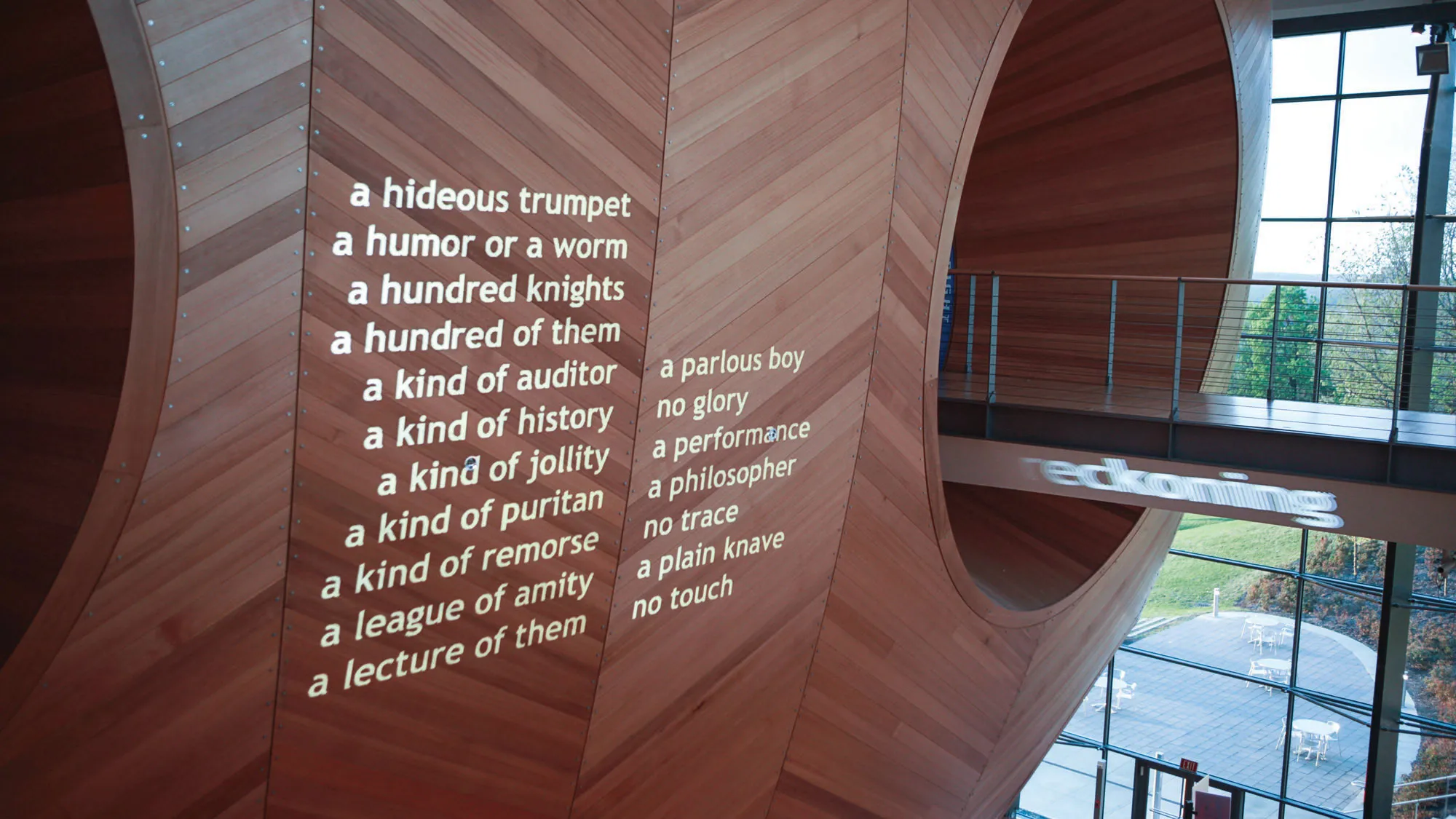
White text projected on to the wood hull of the concert hall that read "a hideous trumpet, a humor or a worm, a hundred of them, a kind of auditor, a kind of history, a kind of jollity, a kind of Puritan, a kind of remorse, a league of amity, a lecture of them, a parlous boy, no glory, a performance, a philosopher, no trace, a plain knave, no touch"

A Shakespeare Accelerator: Experiments in Kinetic Language

Ben Rubin

As Ben Rubin works out concepts and algorithms for Shakespeare Machine, a permanent installation that will open at the Public Theater in New York in fall 2012, he will transform our public interior into a laboratory of words and motion, projecting glowing white text from Shakespeare’s complete dramatic works onto walls, walkways, and other surfaces. Shakespeare’s plays are structured around the powerful forces of love, death, family, trust, jealousy, fate, and desire. But in the universe of Shakespearian physics, the subatomic forces that hold words together encompass puns, rhymes, alliteration, rhythms, and unexpected constructions. “These subtle forces of language are essential to the transcendent power of Shakespeare’s work,” says Rubin. I want to create a kind of supercollider for Shakespeare’s texts, where the particles to be accelerated and smashed together are scenes, lines, and phrases. Which words, when hurled toward each other, will cause a reaction? Which collisions will most likely provide traces of the incandescent energy, wit, and emotion that existed at the moment of these plays’ creation?”

March 5-9 — Shakespeare Readings

Beginning Monday, March 5th and continuing through March 9th, we will celebrate the opening of A Shakespeare Accelerator with a week-long continuous reading (by groups of students from Rensselaer and the surrounding community) of Shakespeare’s 67 plays, used in the installation. FREE coffee, tea and hot chocolate will be served. The readings will take place from 2–5 PM in the Context Space and are FREE.

April 9 — Typography Class Exhibition Opening

Beginning Monday, April 9, EMAC Typography class projects, inspired by this work, will be on view in the Context Space. FREE.

May 2 — Typography Class Exhibition Closing Reception

Please join us for the closing of the typography exhibition from 2-5 PM. In addition to celebrating the projects curated into the Context Space for the three week exhibition, be ready to try your hand at magnetic advice; test a piece of interactive typography software; take part in a musical and emotional survey; and watch in awe as the Reverse Graffiti Calligraphy project is performed outside in the East campus entrance driveway. FREE.

Main Image: A Shakespeare Accelerator, 2012.
Image
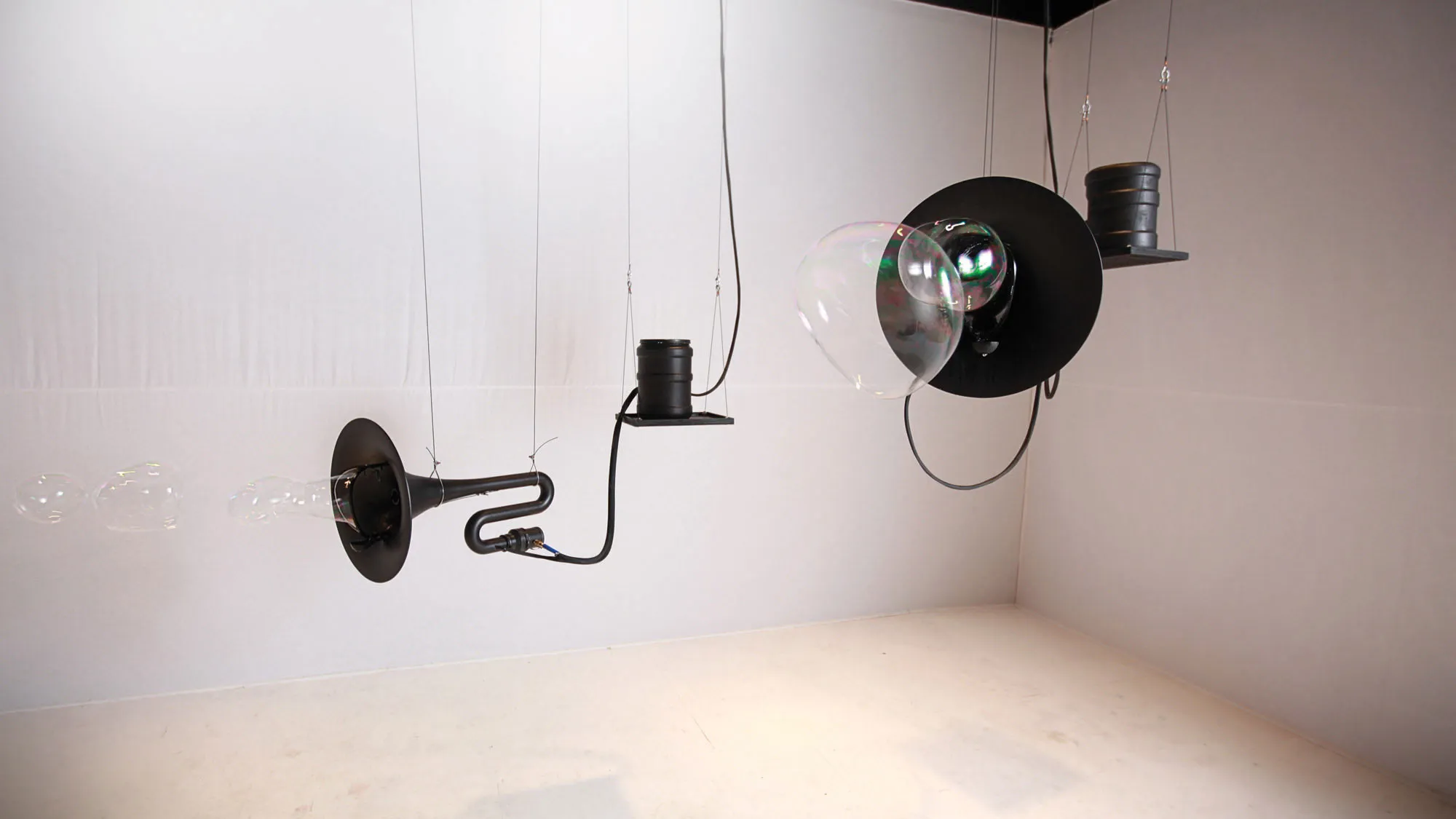
An installation of black horns suspended from wires blowing bubbles in a white room.

Thom Kubli

Black Hole Horizon

A sound installation by German artist Thom Kubli, Black Hole Horizon was designed and constructed at Rensselaer in collaboration with the School of Architecture and consultants Zackery Belanger (acoustic design) and David Jaschik (mechatronics). Using the university’s laser-cutting and 3D-milling equipment for the material creation, the production team designed a complex system of air compressors, fluid pumps, and Arduino-controlled mechanisms to create horns that produce tone-generated bubbles. Each bubble is deformed by the energy of the sound produced through the horn, and then bursts onto the room’s white floor. The shapes of the horns, some stretching eight feet long, were based on a model of a black hole geometrodynamic physics. In the installation, spectators could explore the space by walking through the room and witnessing the transformation of sound into ephemeral sculptures.

Main Image: Installation view: Black Hole Horizon (2012). Photo: Kris Qua/EMPAC.

Media
Image
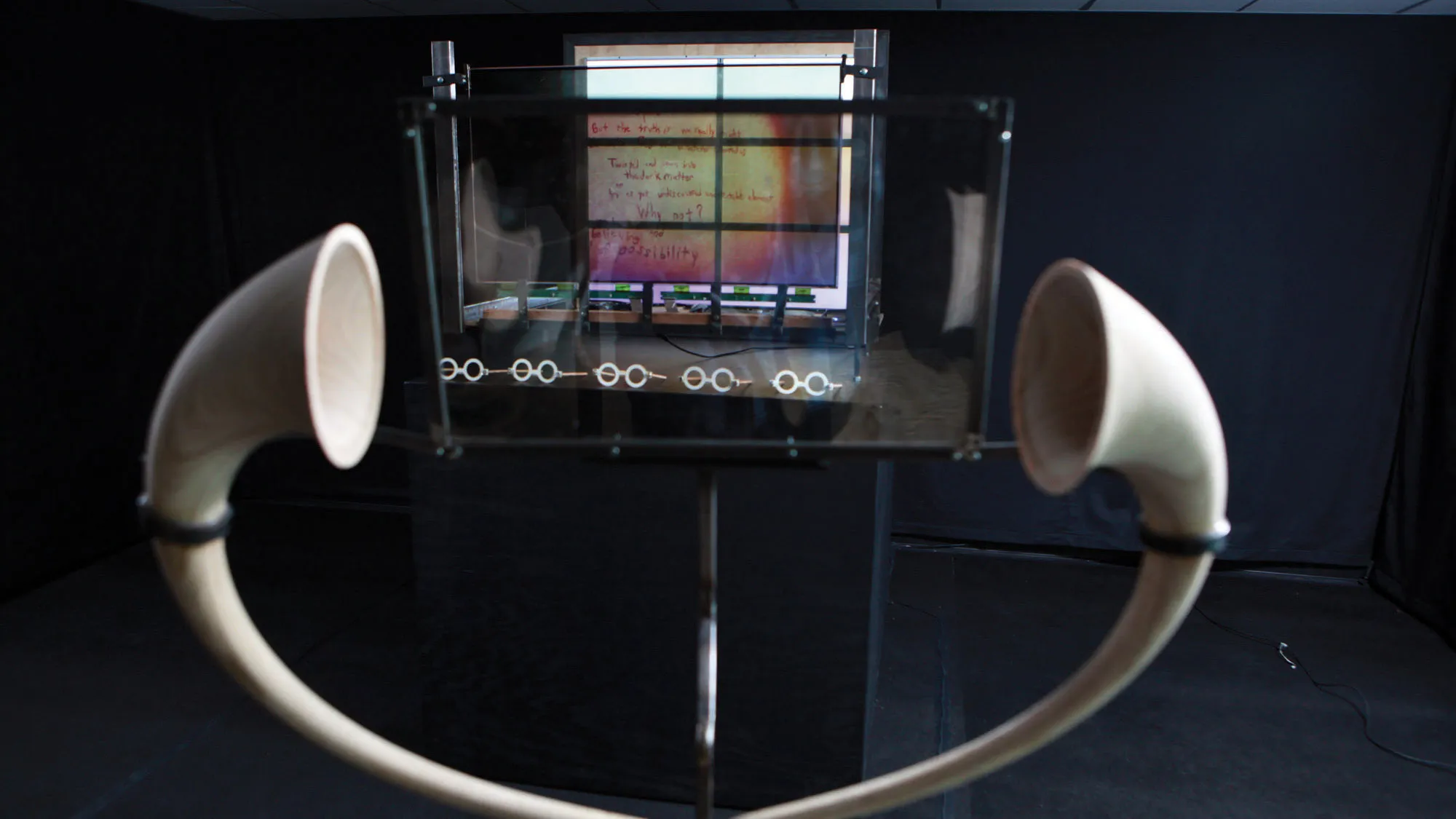
Two white listening horns in front of and framing a piece of polarized glass.

To Many Men Strange Fates Are Given

Brent Green

Brent Green’s new installation, To Many Men Strange Fates Are Given, presents a 12-minute animated film that tells the story of the woman who sewed the spacesuit for Laika, the dog launched into space in 1957 by the Soviets to test whether a living creature could survive space flight. The installation consists of a welded metal frame that holds wooden phonograph horns, multiple planes of polarized glass, and brightly glowing LCD screens. The animation is characterized by familiar elements from this self-taught artist, filmmaker, and performer—hand-drawn, “rickety” animation; wry, off-kilter storytelling; original music played by his band; and rustic sculptural elements—but also shows an evolution in subject matter and technique. Green’s poetic narration ultimately becomes a lament for the disenfranchisement of working people then and now: a theme that connects to his past protagonists—commonplace people who face toil and hardship, and sometimes, redemption and wonder.

Brent Green lives and works in the Appalachian hills of Pennsylvania. His films, live performances, and object-based art have been shown around the world. Most recently, he has had solo exhibitions of his films, along with sculptural and kinetic pieces, at the ASU Art Museum, the Berkeley Art Museum, and SITE Santa Fe. Green often performs his films with live musicians, improvised soundtracks, and live narration in venues ranging from rooftops to art institutions such as the Getty Center, the Walker Art Center, the Experimental Media and Performing Arts Center (EMPAC), the Hammer Museum, the Wexner Center for the Arts, The Kitchen, and MoMA. His films are often screened at film festivals, as well, including Sundance, Film Festival Rotterdam, and Rooftop Films, among many others. Green is currently embarking on his second feature, Anatomical Maps With Battle Plans, a film that will mold his family history through his unique visionary folk-punk style of storytelling and image.

Main Image: Installation view from To Many Men Strange Fates are Given (2012). Photo: Kris Qua/EMPAC.

Media
Image
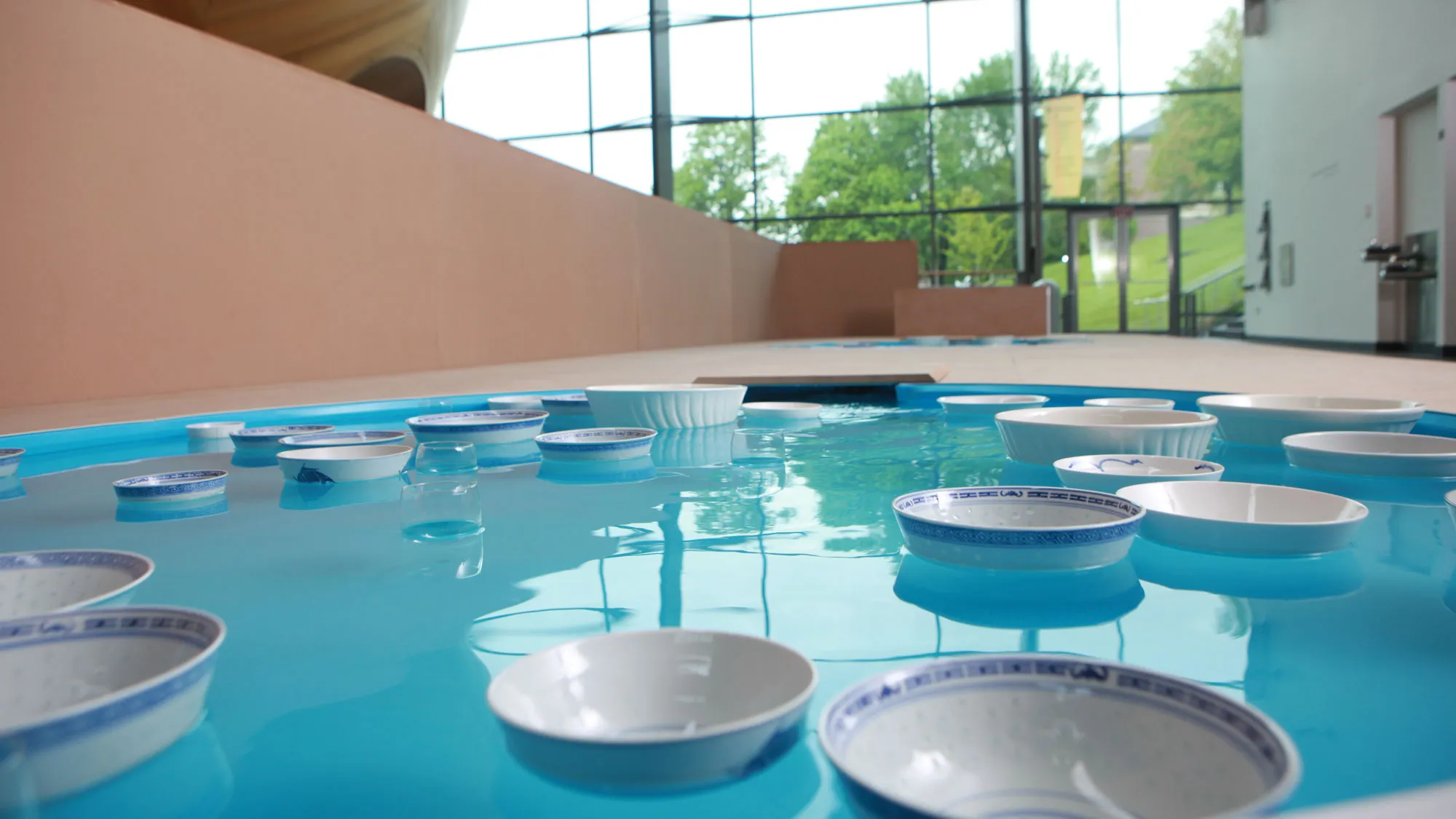
Numerous blue and white porcelain bowls floating in a blue pool on the mezzanine the interior of EMPAC.

untitled + index

Céleste Boursier-Mougenot

French artist Céleste Boursier-Mougenot developed two sound installations while in residence—untitled (Series #3) and index (v.4)—which were then presented as a single exhibition over three floors in EMPAC’s public spaces. Together, the pieces reflect on music composition’s relation to nature and technology as well as our perception of complexity, control, and authorship in time-based art. untitled (Series #3) was comprised of three wading pools filled with bowls and wine glasses; by calibrating the temperature of the water to increase the resonance of the floating objects, and by controlling the direction of the water flow with a small pump, ongoing, resonant collisions are created. The result is a chaotic, atmospheric music with a variety of small sounds surrounding the listener. For index (v.4) software designed by the artist was installed on computers throughout EMPAC, capturing typed letters, words, and punctuation into dynamics, pitch, and chords played by two mechanically actuated grand pianos. The real-time data stream became the chaotic generator of an ongoing score, in constant performance. Like untitled, this work conflated empirical, technological gestures with chaotic “natural” elements. 

A native of France, Boursier-Mougenot’s works have been exhibited worldwide.

Main Image: Installation view untitled (Series #3) on the mezzanine in 2011. Photo: Kris Qua/EMPAC.

Media
Image
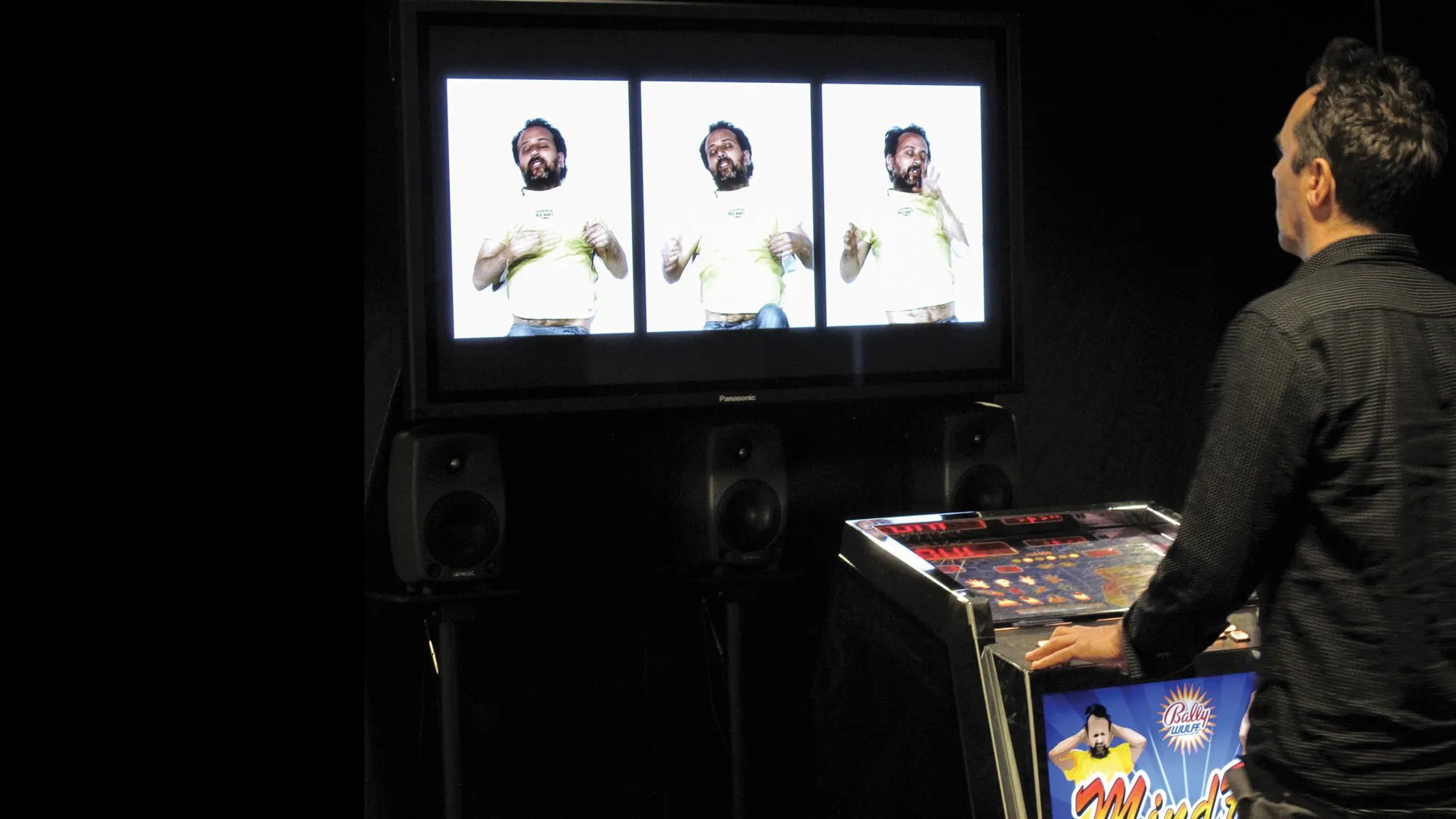
A man playing a pinball machine in front of three projected images of another man in various states of motion.

Christian Graupner

MindBox

Using a modified one-armed bandit slot machine, MindBox is a viewer-driven dance video: insert a coin, work the machine’s lever and buttons, and directly remix the moves of the beatboxing man on three screens. Media artist Christian Graupner and choreographer Roberto Zappalà teamed up to make a vocabulary of sounds and movements that take beatboxing—a vocal percussion style that comes out of hip-hop—into the realm of interactive media. The soundtrack takes advantage of both the randomized real-time processes of slot machines and Zappalà’s rhythmic, beat-based performance. As lights flash, the viewer plays this media sculpture like an instrument, creating an idiosyncratic movement portrait.

Graupner is a Berlin-based artist, film composer, and the creator and developer of real-time media playback systems. Zappalà founded the Compagnia Zappalà Danza to widen and deepen his own research in choreography while extending the possibilities for the training of young contemporary dancers. The technology was developed by Nils Peters (Humatic) and Norbert Schnell (IRCAM).

Main Image: Installation view: Mindbox, 2011. Photo: EMPAC/Rensselaer.