Image
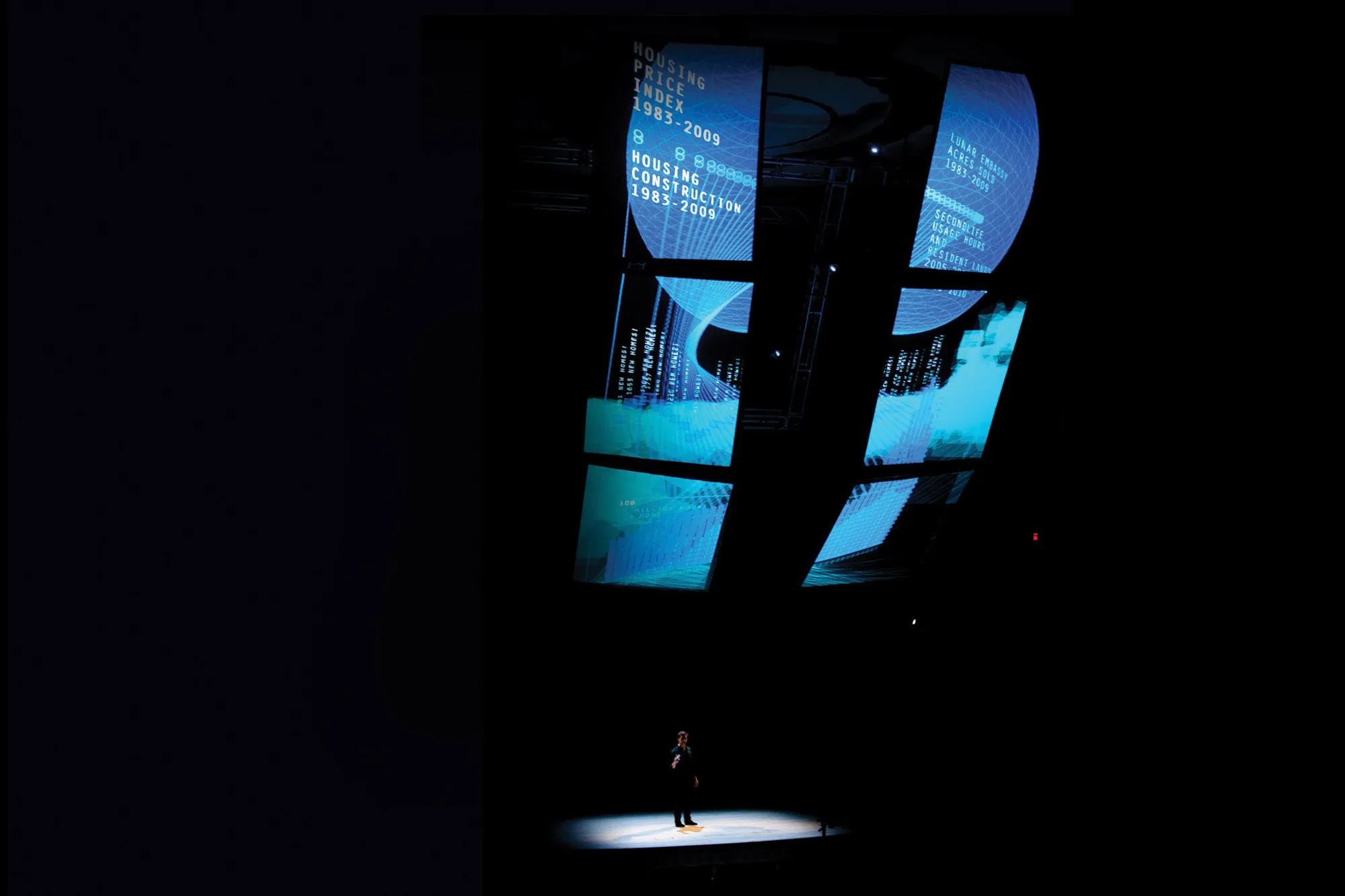
Paul Abacus stands in a stage spot in the concert hall with six screens hung vertically above him.

Early Morning Opera: ABACUS

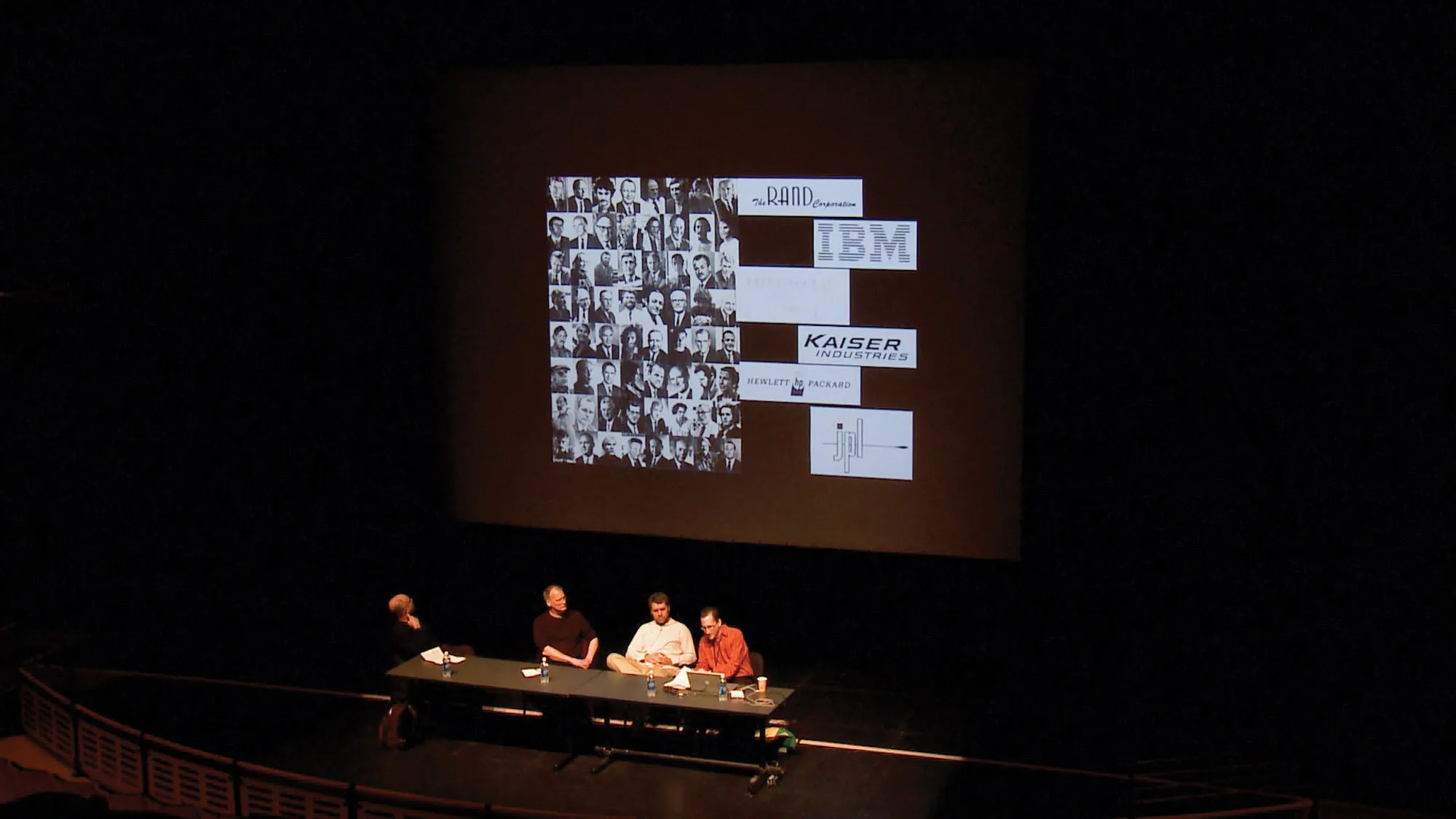
ABACUS, a large-scale multimedia presentation by Early Morning Opera under the direction of Lars Jan, features Paul Abacus and his re-imagining of Buckminster Fuller's Geoscope as a data cathedral for the masses.

This Geoscope expands on Fuller's dream of a data visualization device that would comprehensively model the Earth's 'vital statistics,' historic patterns, and future projections. Aided by this device and a chorus of Steadicam operators, ABACUS argues the obsolescence of national borders and proposes their dissolution while simultaneously acting as a study in two dominant forms of persuasive discourse today: the TED-style (slide-based) presentation and megachurch media design.

ABACUS serves as an interrogation of the art of persuasion as a catalyst for cultural evolution, examining the moment that data — distilled, visualized, spun — yields a visceral, rather than merely conceptual, impact. Fueled by our content-saturated, data-driven, personality-obsessed moment, ABACUS explores the fundamental intention of 'beautiful evidence' and the reliability of the presentation format that drives our culture.

Main Image: Paul Abacus in the concert hall during Filament in 2010. 
Media
Image
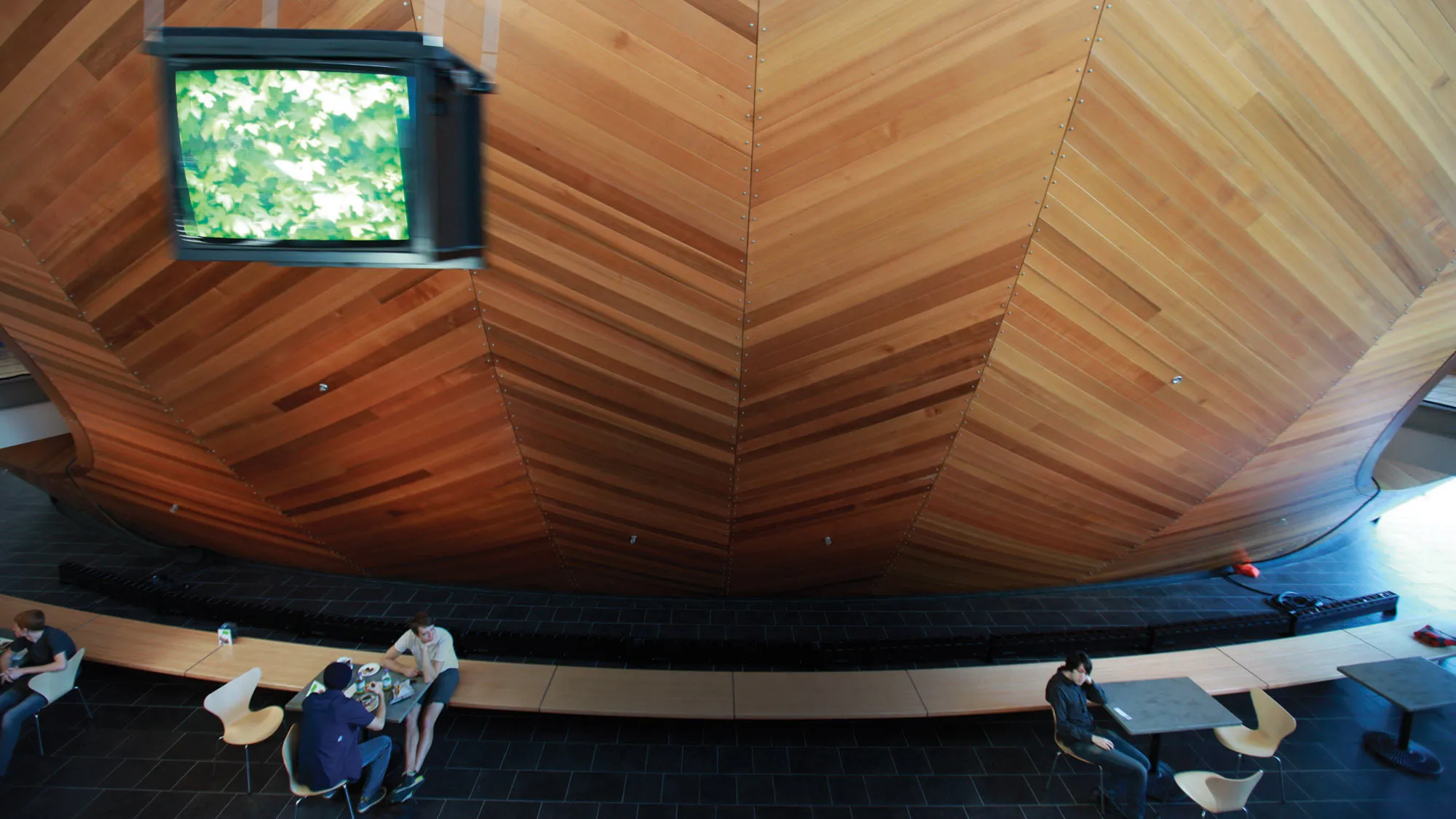
And older TV playing an image of greenery suspended from wires against the wooden hull of the Concert Hall.

Relative Realities

Volkmar Klein

A pendulum swings through space. A video screen, constituting its pendulum bob, carves its path through the air. From its ever-changing position, the bob creates a view upon another scenery, a landscape only revealed through motion. A computer traces the pendulum’s position and embeds it into a mathematical model of the exhibition space where it collides and interacts with imaginary objects, invisible, but audible.

Image
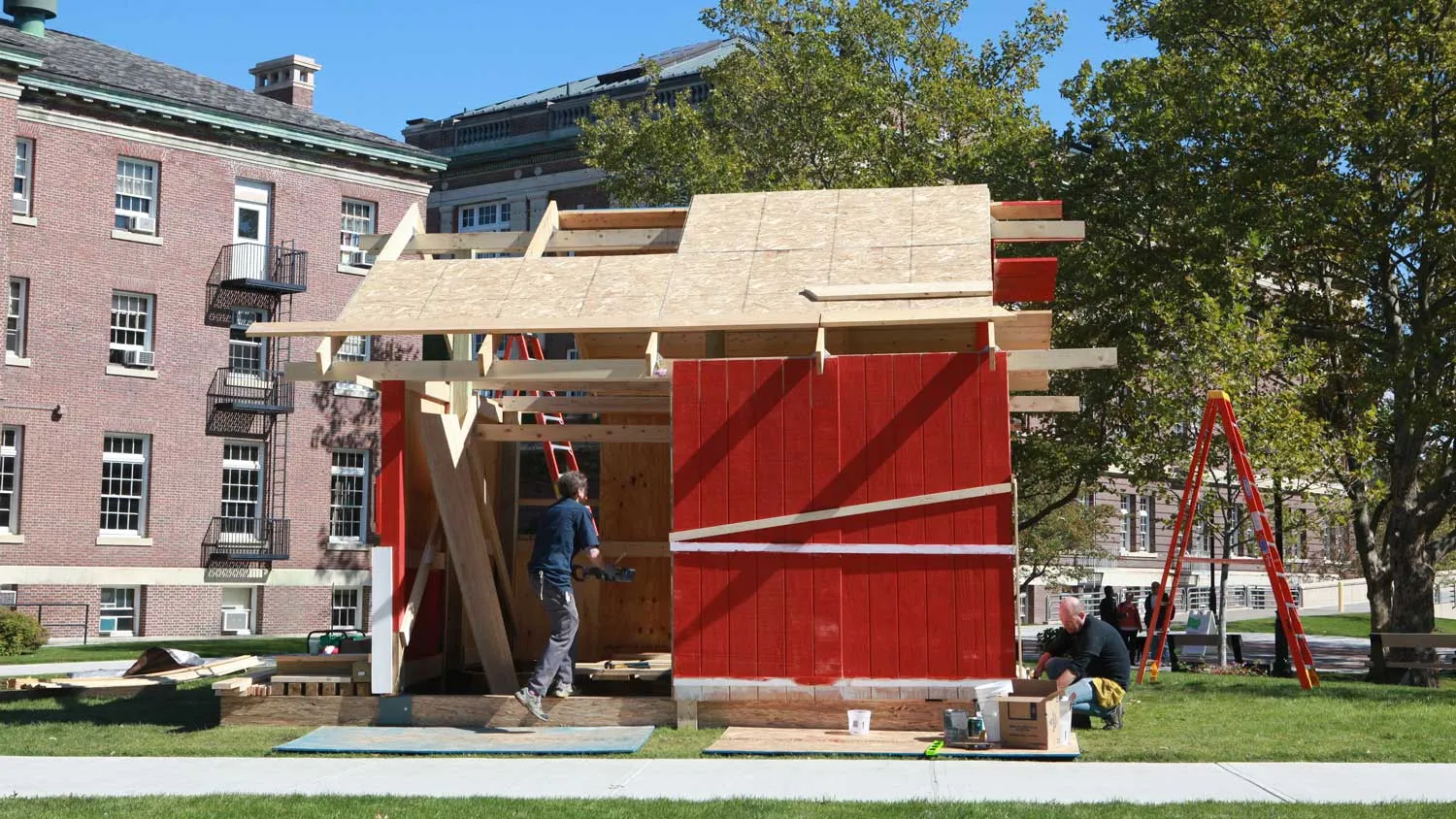
A red barn like structure in mid construction on the bustling RPI campus.

All Raise This Barn (East)

MTAA

Using 21st century techniques, MTAA (artists Michael Sarff and Tim Whidden) conduct an old-fashioned barn raising on the Rensselaer campus. All Raise This Barn (East) is a group-designed and assembled public structure created in response to a public vote by the Rensselaer campus and local community. Using a commercially available barn-making kit as the starting point, online voting determines architectural, aesthetic, and labor choices, as well as whether the assembly is collaborative or competitive.

Part construction project, part participatory performance, All Raise This Barn (East) explores the positive and also persuasive power of the community vote and its prevalence in contemporary society, from the Internet to reality television competitions. MTAA invites the public to participate in the group assembly/performance of the final work, which will be raised in one day starting in the early morning hours on October 1st and will culminate in a ribbon cutting ceremony at 5:30 PM. Vote for the artbarn!

Main Image: All Raise this Barn (East) as part of Filament in October, 2010. 

Image
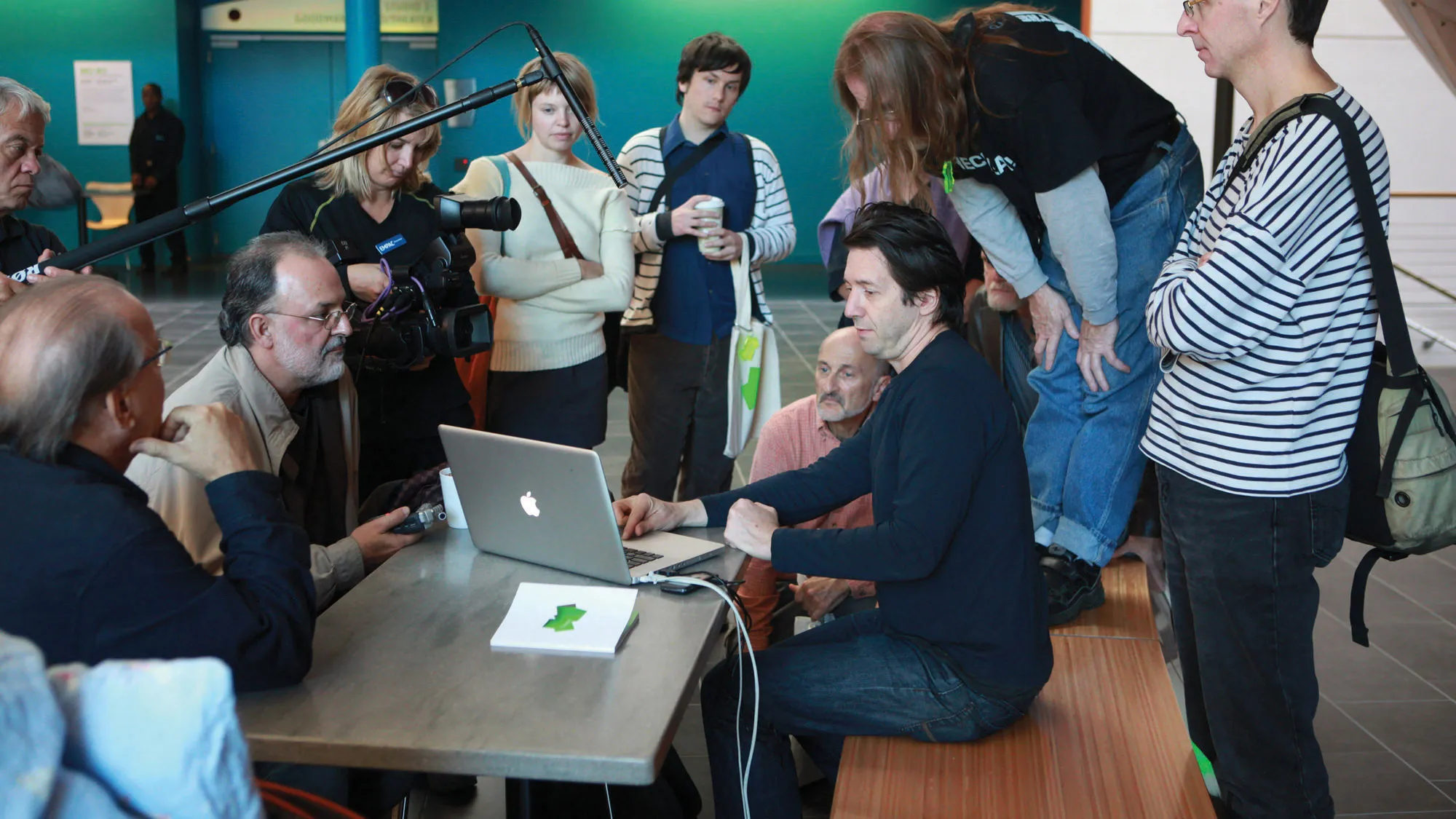
A group of about ten people gathered around a MacBook on a gray table. A white man wearing a black hoodie operates the computer as a small crew of a camera, recorder, and boom mic record.

Room Pieces Troy 2010

Michael J. Schumacher

Room Pieces Troy 2010 continues Michael Schumacher's site specific, multi-channel, extended duration sound installations. The installation is characterized by a wide variety of acoustic phenomena, including field recordings, recordings of musical instruments, sound "objects," spoken words, and computer generated tones, and employs various strategies for the articulation of these sounds, with particular use made of numerical sequences.

Each manifestation of Room Pieces takes on a unique identity based on the space in which it is installed. EMPAC's immense size, acoustics, incredible variety of background sounds, and the 100-plus speaker sound system provide a rich and challenging environment. The result is an ever-changing soundscape that is both pleasurable and unpredictable.

Image
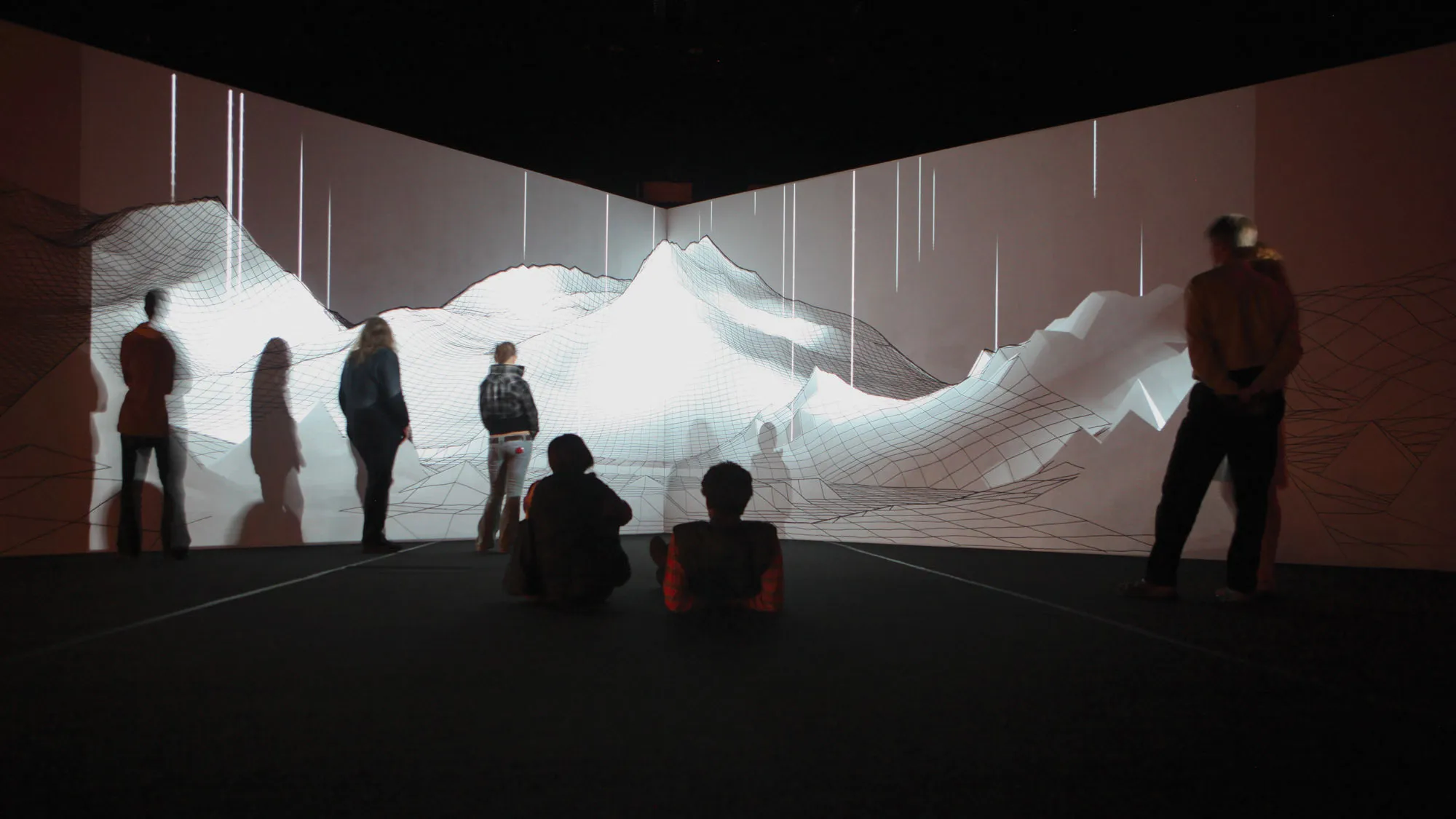
Computer generated image of white mountains with a topographical graph projected on a panoramic screen. A small crowd mills through the space.

EYJAFJALLAJÖKULL

AntiVJ + Sleeparchive

In the three weeks leading up to the onedotzero festival, AntiVJ worked in residence at EMPAC to create this performance and installation. En route to EMPAC, Joanie Lemercier (co-founder of AntiVJ) discovered that a volcano in Iceland that caused the cancellation of all flights. The volcano—Eyjafjallajökull—became the subject of AntiVJ’s new work, a painted wall mural augmented with projections to create the sensation of three-dimensional forms. Lemercier had been fascinated by geometry and minimalism for years; with this work he incorporated more organic shapes and visual elements that would connect geometric patterns with mountainous terrain, ocean waves, wind, snow, and rain. By projecting a “virtual layer” of light, color, and animation over the static painted scenery, he created an imagined landscape of futuristic mountains, where the audience’s perception of space is progressively challenged. 

The AntiVJ visual label is a project initiated by a group of European visual artists whose work is focused on the use of projected light and its influence on our perception, presenting performances and installations that create wonderment and challenge the senses.

It's Already the End of the World, 2010

Brian Alfred

A video installation by Brian Alfred whose work is inspired by his interest in globalization, civil unrest, political and social opposition, and influential figures and locations. The animation features multiple soundtracks by musicians Flying Lotus, Ghislain Poirier, Roberto Carlos Lange, and many others.

Image
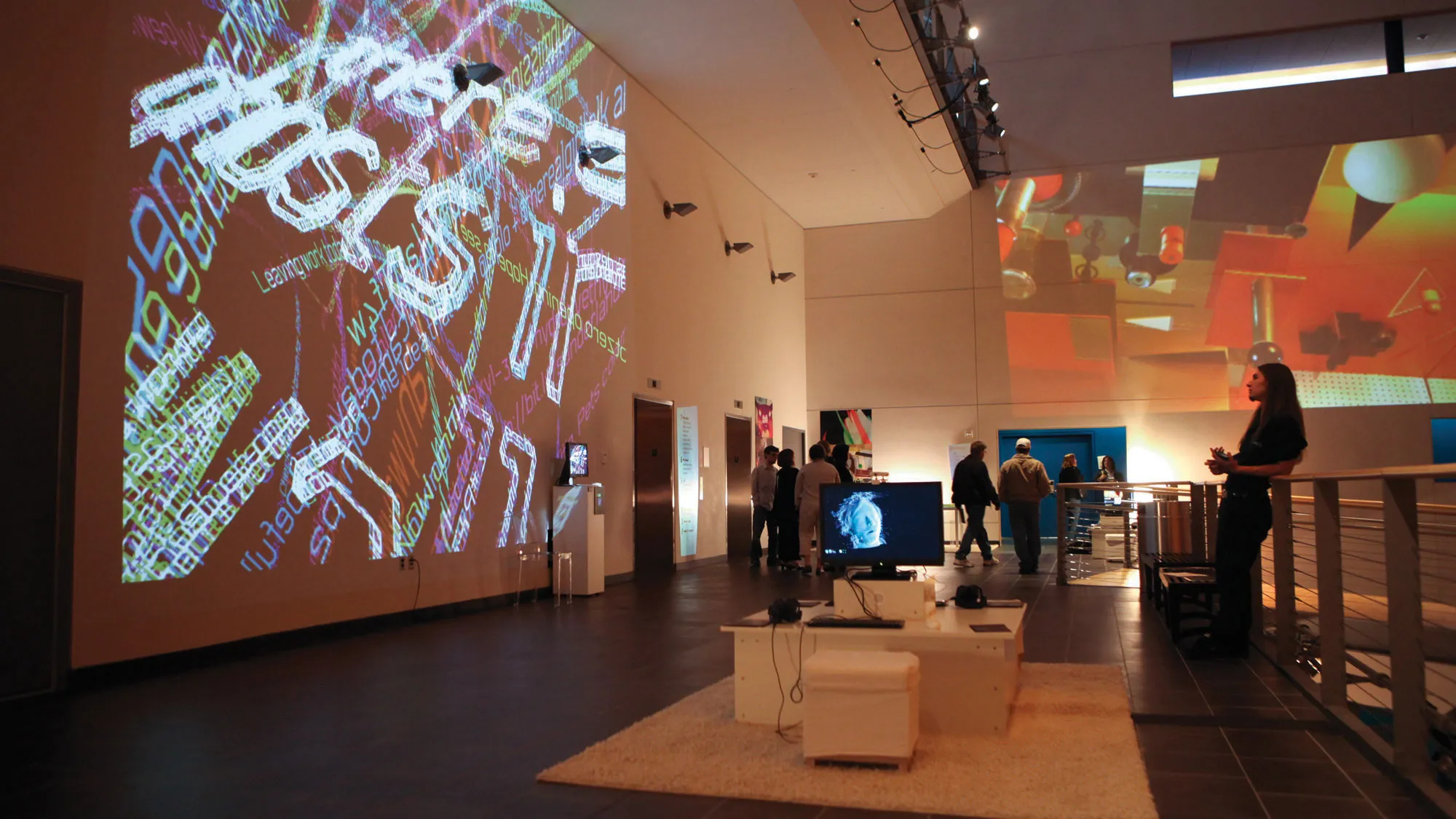
A large projection of multicolored illegible words overlapped with each other in a reception. A person leans against a railing admiring the work.

onedotzero identity

Wieden + Kennedy London

The heart of onedotzero’s festival ethos of ‘convergence and collaboration’ inspired designers Wieden + Kennedy to take advantage of onedotzero’s vast fan base and harnessing and bringing together constant, global live conversations from a diverse range of social networking to create the identity. Aggregated words and opinions are channeled via specially created software devised by computation designer Karsten Schmidt. Colorful strands behave organically, gravitating towards invisible paths that will ultimately make the onedotzero logo. a living, breathing identity driven by onedotzero’s audience and online community as well as in person at EMPAC. Projected on the lobby ceiling, you interact with the visuals via cellphone, text and online message.

Image
Chris Salter

Just Noticeable Difference (JND)

Chris Salter

In collaboration with Marije Baalman, Harry Smoak, Vincent de Belleval, Justine Chibuk, Thomas Spier, Duncan Swain and Brett Bergmann In Just Noticeable Difference (JND), Chris Salter ratchets down the level of sensory information to the threshold of the perceptible. On entering the installation the visitor is immersed in an environment of near-total darkness, insulated against external sound and vibration. Sparked by an array of sophisticated built-in sensors and devices that emit micro-levels of tactile, auditory, and visual feedback, the slightest motions cause this environment to respond, though so subtly as to test the limits of both perception and interpretation. The result is a revelatory aesthetic experience in which noise shifts towards order, sensation becomes sense, and the apparent randomness of threshold sensory impressions gives way to a new understanding of meaning in the relationship among body, self, and external world. On Thursday, March 4 at 7 PM in the Theater, Chris Salter and Rensselaer faculty Michael Century, Mark Changizi, and Ted Krueger with other experts will all take part in a panel discussion on topics including thresholds of perception, multi-modal perception, and the use of research in art practice.

Image
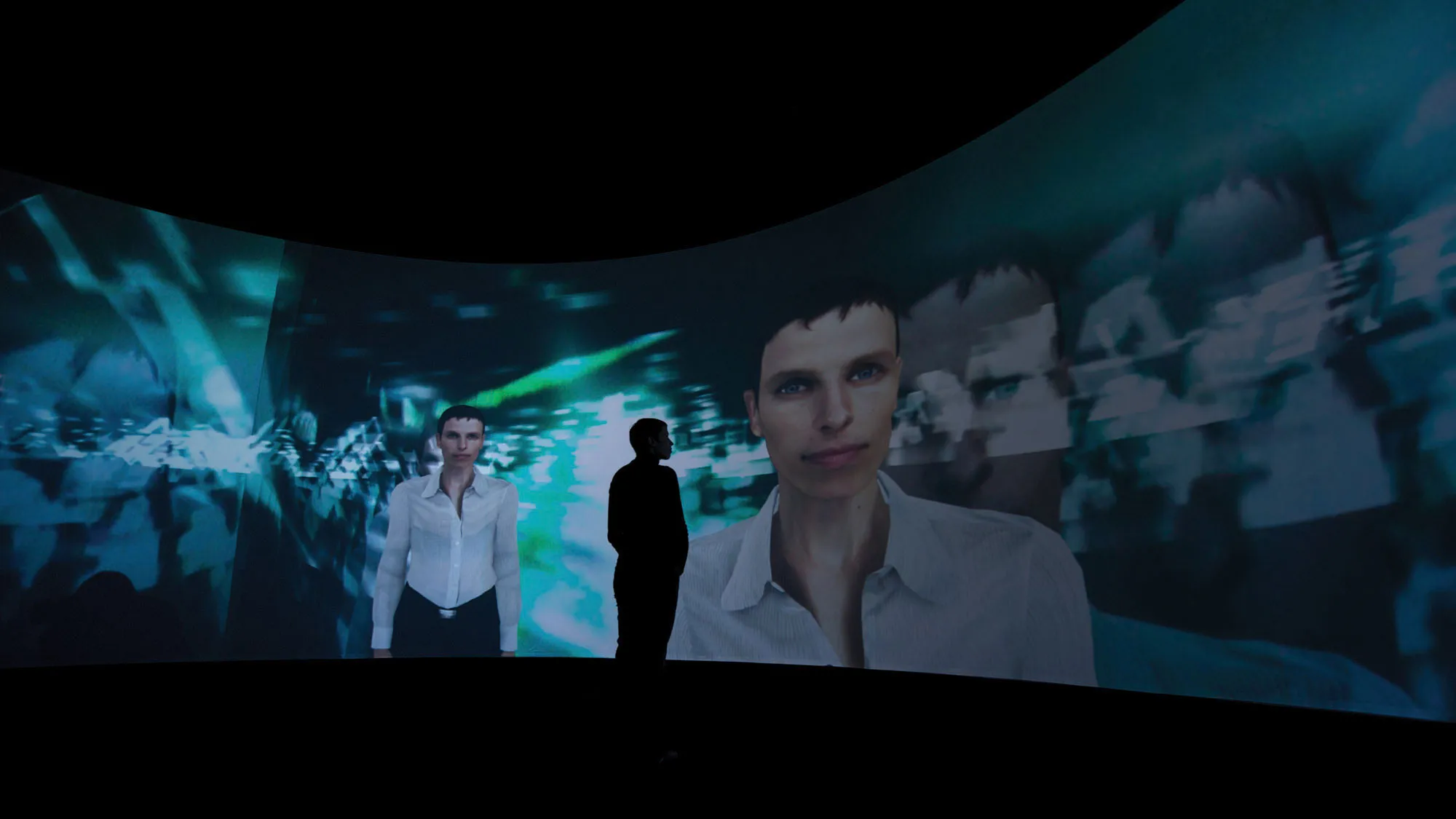
A computer generated image of a woman with a pixie cute and wearing a white button down shirt projected on a panoramic screen as a silhouetted person looks on.

They Watch

Workspace Unlimited

They Watch is an immersive art installation with virtual characters literally watching visitors. Several duplicates of the virtual characters – one man, one woman, and both portraits of the artists – surround and interact with visitors, who are tracked as they move about the physical space, and even projected into the virtual space. Years of research and development with game-technology have resulted in a 360° audio-visual environment, exploiting a 15-meter-wide panoramic screen and a 32-channel sound system. The subtle collaboration of the real and virtual agents and environments conflate to engender a hybrid space where the observer becomes the observed. Figuratively wearing a virtual camera causes the on-screen characters to approach and to retreat, analogously altering the soundtrack; characters that, as visitors will come to discover, are aware of their presence. They watch. Visitors’ movements activate visual cues and affect the characters’ spontaneous, unscripted behaviors, so that the installation’s visual and sonic compositions are uniquely influenced by the visit. The piece becomes a composition in movement whereby non-linear blends of real and virtual force visitors to consider perspective, agency, and the distinction between authentic and imagined as They Watch. Open Monday – Saturday from 12 PM to 6 PM (longer if public events are happening in the building) On Tuesday, November 17 @ 7:00 PM, EMPAC will host Full Immersion: an exceptional panel of international artists, engineers, and producers representing the evolving field of works created for the 360° panoramic screen

Image
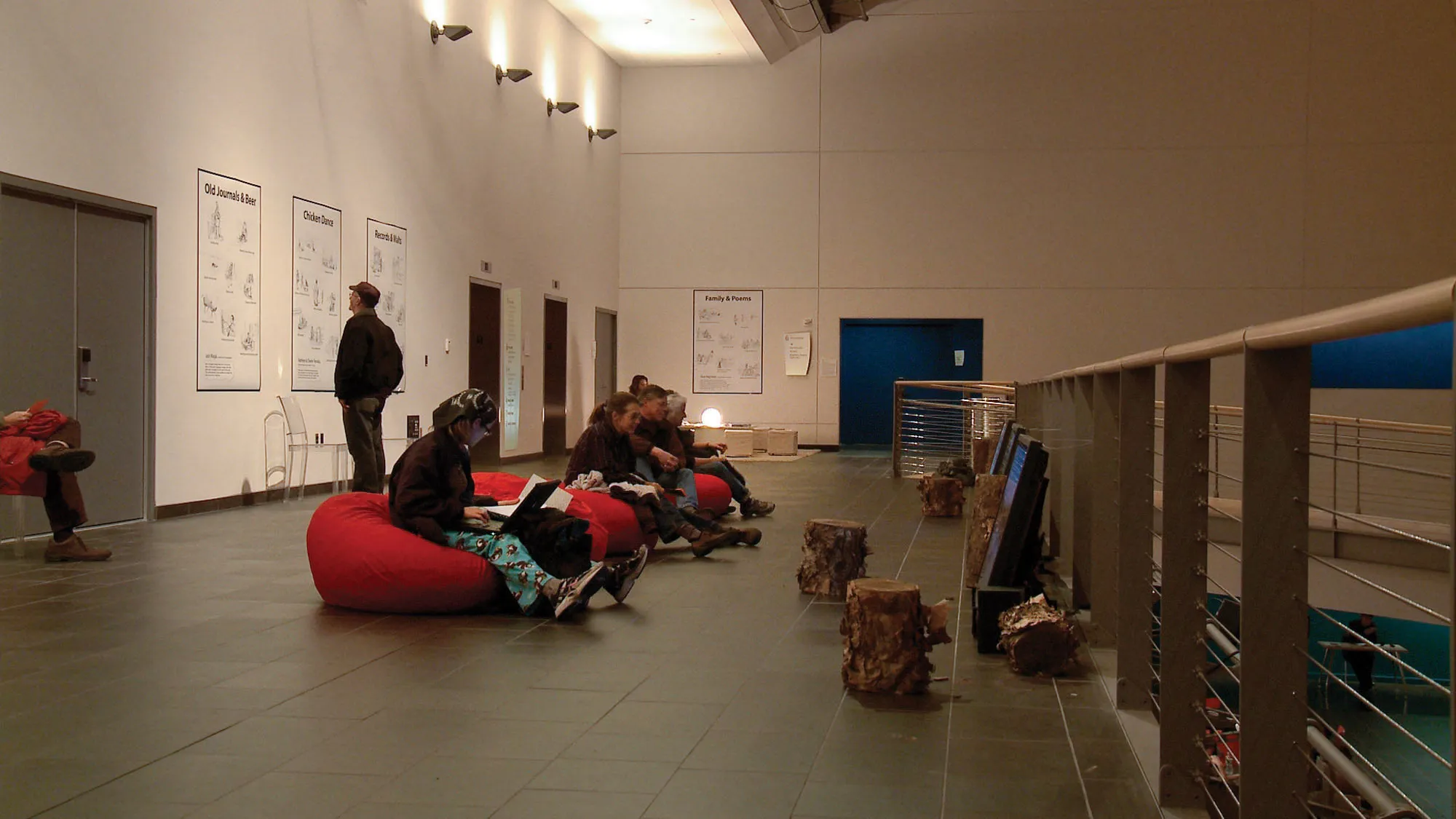
A group of about five people seated in red bean bag chairs on the floor of a hallway as other people mill about looking at posters hung on the walls.

Take a Day for Yourself!

Mads Lynnerup

Mads Lynnerup has long been interested in the everyday. Now the Brooklyn-based Danish artist, whose last installation was devoted to routines, explores what happens when people depart from those routines, or even disrupt them. In Take a Day for Yourself, Lynnerup enlists random members of the Troy and RPI communities to do just that: take the day for themselves. Whatever happens next is up to them. The rich and inventive uses Lynnerup’s subjects make of the ensuing 12 hours of stolen time are shown on short videos and oversized posters that together make up a whimsical visual guide to taking a day off in Troy—or anywhere else—and to gently subverting some of the fundamental expectations of our society.