Image
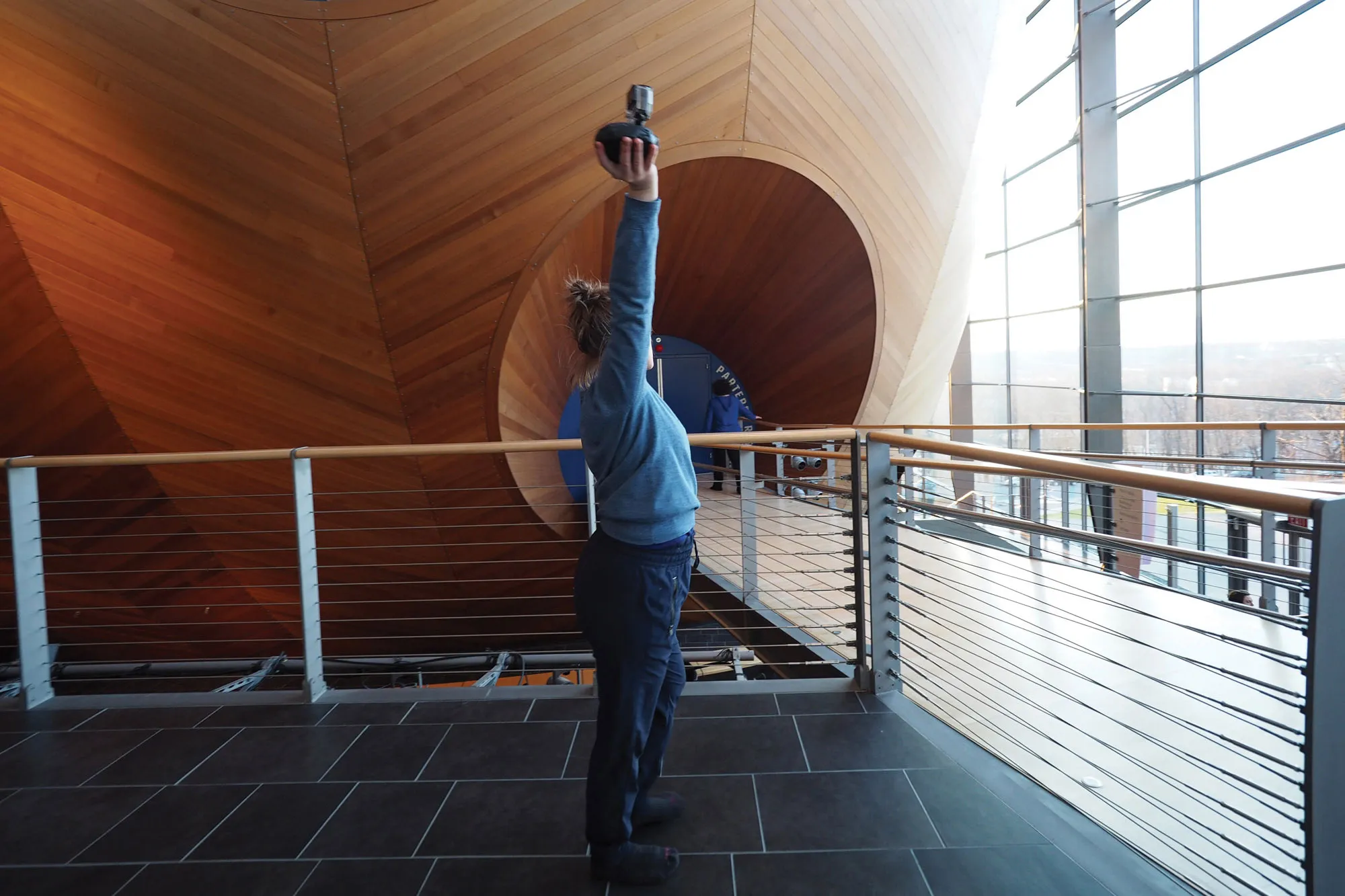
A woman in a grey sweatshirt and black joggers holding a camera above her head in front of the concert hall.

From Feldenkrais to GoPro

Mary Armentrout

Choreographer Mary Armentrout was in residence to develop a new performance with media artist Ian Winters, composer Evelyn Ficarra, and performer Chris Evans. Together, the collaborators led a workshop in which participants explored the intersections of bodily experience and technology. The workshop began with an awareness-through-movement sequence based on the Feldenkrais Method of Somatic Education. It consisted of a series of gentle movement exercises that bring individual attention to the bodily experience, thus cultivating embodied awareness. The artists then led participants in compositional exercises using technology such as GoPro cameras to explore electronic mediation from a consciously embodied state. 

Mary Armentrout is a San Francisco-based choreographer and performance artist, and director of Mary Armentrout Dance Theater. She is the winner of an Isadora Duncan Dance Award, one of the most prestigious honors for Bay-area choreographers. She has long collaborated on her site-specific and staged works with Ian Winters and Evelyn Ficarra. Winters develops visual and acoustic media environments for stage. Together, Armentrout and Winters run their studio The Milkbar in Richmond, CA. Ficarra is lecturer in the music department at the University of Sussex, where she is also the Assistant Director of the Centre for Research in Opera and Music Theater. Armentrout brings her years-long collaborations with Winters and Ficarra to new work with music and dance artist Chris Evans, who participates in the House Full of Black Women Project, Bandelion Dance Theater, and Black and White Projects art collective in Oakland, CA.
Some Kind of Joy: The Inside Story of Grimshaw in Twelve Buildings

Directed by Sam Hobkinson, Intro by project architect William Horgan

In 2001, Sir Nicholas Grimshaw and his practice won the architectural competition for the design of EMPAC. Throughout the building’s construction, the collaboration between Grimshaw Architects, now just Grimshaw, and Rensselaer was very close in all details of this extraordinary project.

Some Kind of Joy: The Inside Story of Grimshaw in Twelve Buildings, directed by Sam Hobkinson, revisits key projects from the history of this renowned architectural practice. From Sir Nicholas Grimshaw’s first scheme in 1967, through to the likes of Bath Spa, Southern Cross Station, the Eden Project, and Fulton Center, we hear first-hand from the people who bring these buildings to life, and show the inspiration, design, and occasional trials and tribulations of delivering out-of-the-ordinary buildings. EMPAC is featured in this documentary film as one of the 12 buildings. Please also reference the publicationThe Architecture of EMPAC: The Tangible and the Tantalizing by Mark Mistur with Johannes Goebel, distributed by ORO Editions, available online and at the box office of EMPAC.

William Horgan, partner at Grimshaw, introduced this screening and answered questions afterwards. He was the lead project architect of EMPAC, together with Andrew Whalley, Vincent Chang and Mark Husser, all partners in the New York office of Grimshaw.

Image
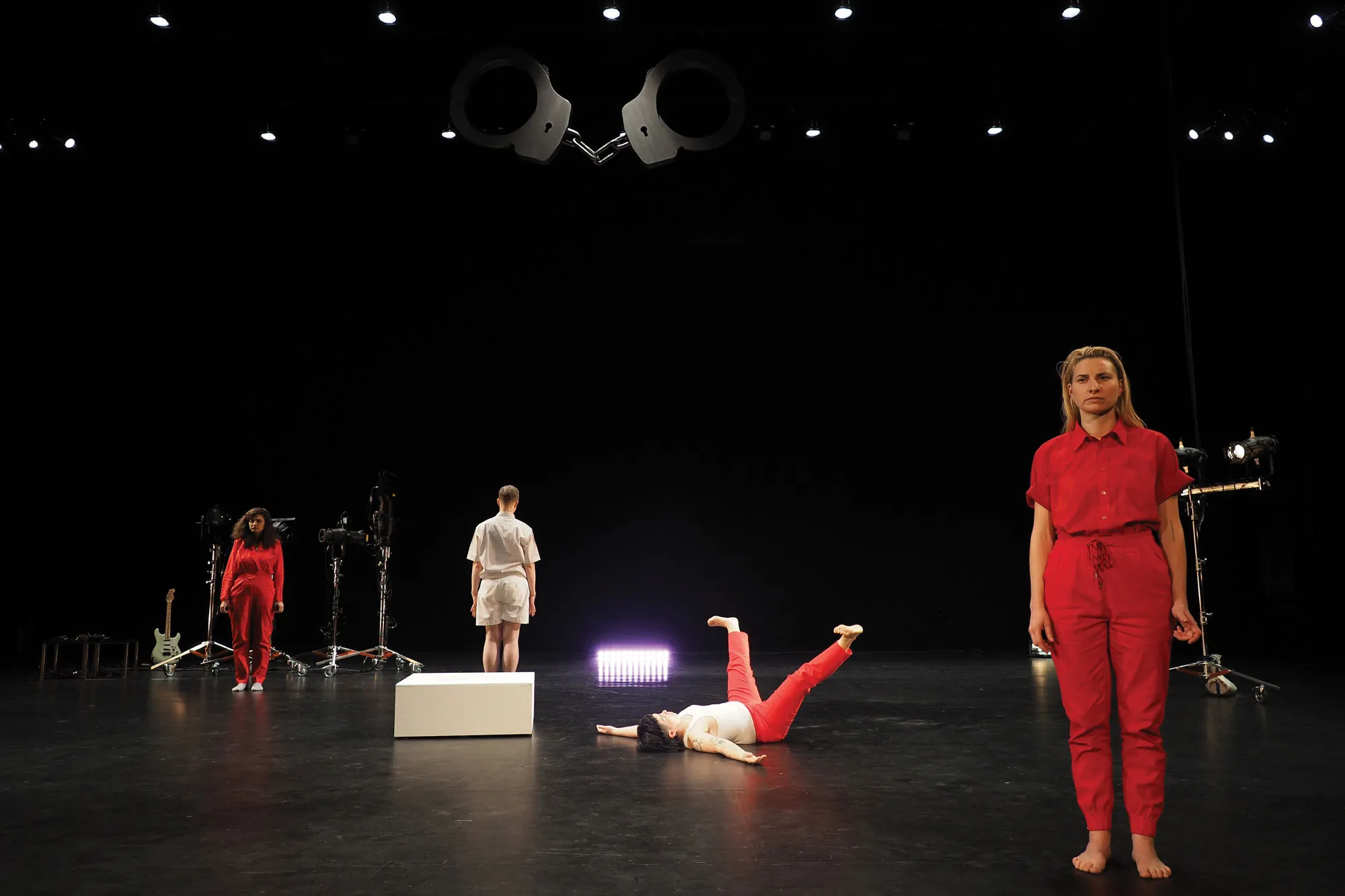
A woman wearing a red jumpsuit standing in front of three dancers wearing red and white in various poses in a black box studio.

Everybody Talks About the Weather, We Don’t

Pauline Boudry / Renate Lorenz

Berlin-based artists Pauline Boudry and Renate Lorenz were in residence at EMPAC to produce a moving-image work with a structure that combined three choreographic approaches: an instructional score by Pauline Oliveros, a 1968 text by revolutionary Ulrike Meinhof that calls for a transition from protest to resistance, and remote-control “carts” developed by Bell Labs with choreographer Deborah Hay for the 9 Evenings: Theater and Engineering performances in New York in 1966.

Everybody talks about the weather, we don’t (a working title borrowed from a Meinhof essay) was performed by five “carts” (produced at EMPAC), theatrical light, haze, a mobile camera operated by Bernadette Paassen, and artists MPA, Ginger Brooks Takahashi, Werner Hirsch, and Marwa Arsanios. 

By taking cues from historically subversive actions and artworks, the artists’ films and installations disrupt historical narratives in order to renew the power of radical artworks. By subverting the original context, Boudry/Lorenz reactivate these works through the interaction of the technical (the theatrical and filmic apparatus of media production) and the performative (the current generation of artists, choreographers, and musicians) to underscore how the refusal of a fixed or normative identity is still an urgent political act. 

Boudry / Lorenz have been working together since 2007. Their staged films and film installations often start with a song, a picture, a film, or a script from the past. They produce performances for the camera, staging the actions of individuals and groups living—indeed thriving—in defiance of normality, law, and economics. Their films upset normative historical narratives, as figures from across time are staged, projected, and layered. These performers are themselves choreographers, artists, and musicians, with whom Boudry and Lorenz engage in a long-term conversation about performance, the meaning of visibility since early modernity, the pathologization of bodies, and also about glamour and resistance.

Program

  • Silent(2016)
  • Pauline Boudry / Renate Lorenz
  • To Valerie Solanas and Marilyn Monroe in Recognition of their Desperation (2013)
  • Pauline Boudry / Renate Lorenz
  • I want (2015)
  • Pauline Boudry / Renate Lorenz
Image
a silhouetted man sitting on a bench viewing two large video screens with projections of a brick wall concrete arches.

Modern Living

Gerard & Kelly

Modern Living is a multi-chapter project by choreographers Gerard & Kelly made in collaboration with L.A. Dance Project to explore themes of queer intimacy and domestic space within legacies of modernist architecture. The project began as two site-specific dance performances, which the duo then took to EMPAC to translate into a gallery installation integrating architectural forms and video projection. This work-in-progress presentation took audiences behind the scenes of Modern Living.

In 2016, Gerard & Kelly choreographed nine dancers in performances at the landmark Schindler House in West Hollywood, CA, the site of an early experiment in communal living, and Philip Johnson’s Glass House in New Canaan, CT, where the architect and his partner David Whitney lived for over 40 years. The performances investigated the livability of queer space—
its pleasures, tensions, and impossibilities—and were filmed for the next iteration of the project. Gerard & Kelly were in residence with their technical and artistic collaborators to build the installation to scale, experimenting with architecture, projection mapping, and sound. 

Brennan Gerard and Ryan Kelly have collaborated since 2003 to create installations and performances interrogating the formation of the couple and exploring the critical potential of intimacy. Driven by an inquiry of their own partnership, the duo uses choreography, language, video, and sculpture to address questions of sexuality, memory, and the formation of queer consciousness.

Main Image: Photo: Courtesy the artist.

Image
A man and a woman holding a large white piece of paper with a black diamond amongst other papers of various sizes strewn about the floor of a black box studio

One can make out the surface only by placing any dark-colored object on the ground

Hannah Rickards

One can make out the surface only by placing any dark-colored object on the ground is a performance that used navigational techniques to choreograph the interaction of a moving camera with two performers. 

The title refers to how one can travel in polar whiteout conditions by placing an object on the ground and continuing to place the object in front of you as you move forward. By this successive act, a pattern is formed, which can be viewed as a visual score for performance. Inspired by the graphic scores of Morton Feldman that explore musical composition as spatial terrain, London-based artist Hannah Rickards approached the media infrastructure of EMPAC’s Studio 1 in a similar fashion. A cable-suspended camera was maneuvered throughout the space in relation to the performers, capturing wide aerial shots as well as close-up detail of their gestures.

This performance was developed specifically for the production environment of Studio 1 and was the only time this work was performed live. Following the artist’s residency, One can make out the surface… toured solely as a video installation. 

Main Image: Production still, One can make out the surface only by placing any dark-colored object on the ground (2016). Image courtesy the artist and EMPAC.

Image
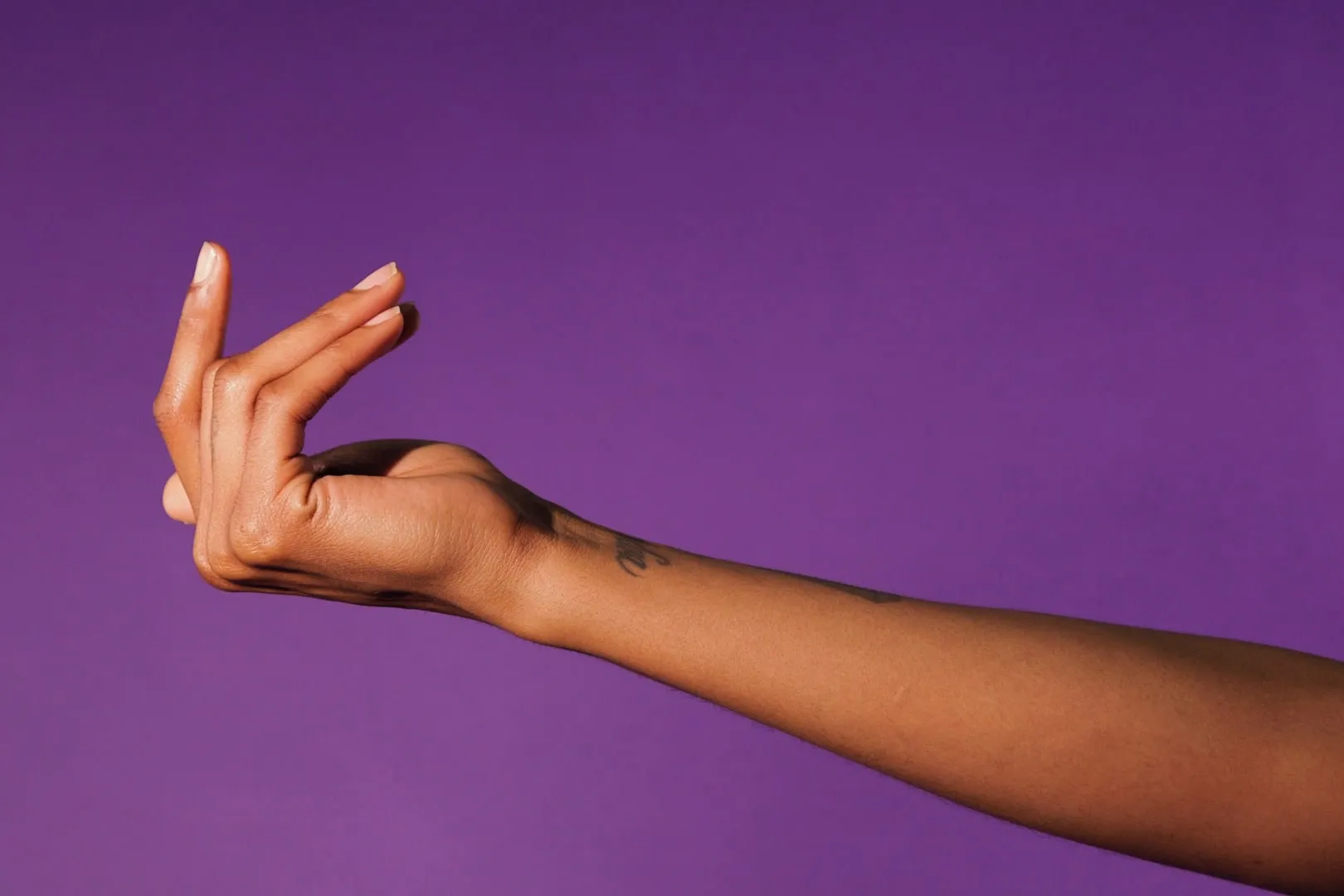
An arm with an illegible tattoo on the wrist reaches across a purple background.

The Unreliable Narrator

Martine Syms

Los Angeles-based artist Martine Syms is in residence at EMPAC to shoot An Evening with Queen White, part of a new feature-length film project to be shot using a 360-degree camera rig. For this event, Syms will introduce a program of videos by herself and others, alongside a discussion of moving images that have been influential to her work.

An artist, performer, and designer, Syms also founded the imprint Dominica Publishing, which publishes artist books exploring blackness as a topic, reference, marker, and audience in visual culture. Her book Implication and Distinctions: Format, Content and Context in Contemporary Race Film considers performances of blackness in mainstream cinema from 1990 to the present. Other work includes The Mundane Afrofuturist Manifesto, which calls for the culture of the African diaspora to focus its energy on Earth rather than toward transcendence in the cosmos.

PROGRAM
  • My Vine Comp (2016) Martine Syms
  • Century (2012) Kevin Jerome Everson
  • footage from a studio test of NO NO NO (2013) Sondra Perry
  • Untitled (Saturday, October 16, 1993) (2015) Rami George
  • Monkey (2016) Marco Braunschweiler
  • Nine Hour Delay: Printemps-Été-Automne-Hiver 2058 Irena Haiduk
  • The Fall of Communism (2014) Hannah Black
  • The Borrowers (Ndinda) (2015) Nicole Miller
  • The Bucket (2015) Asha Schechter
  • Doomed Poet 1-4 (2016) Theo Darst
  • Contemporary Artist (1999) Ximena Cuevas
  • Double (2001) Kerry Tribe

Watering the Flowers is a new year-long screening program. Each evening focuses on a recent film or video by an EMPAC-affiliated artist, and will be succeeded by a program of other shorts or features that were influential in the making of their work, whether fiction or documentary, experimental or commercial. 

Main Image: Martine Syms Notes on Gesture. Courtesy the artist.

Image
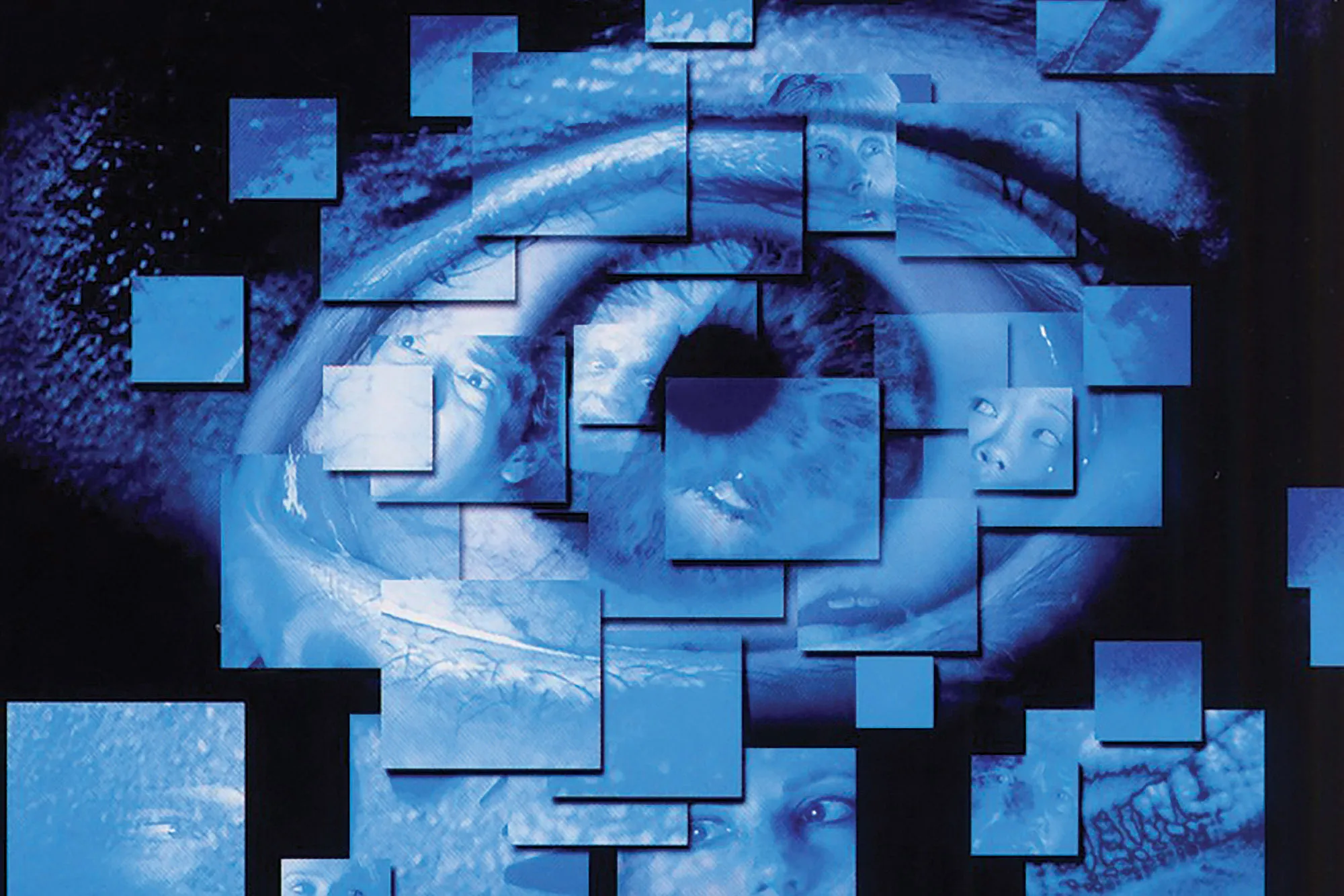
Up close image of a human eye with overplayed cubes of various sizes in blue.

Hypercube

Charles Atlas

Artist Charles Atlas introduced a program of films that were influential in the development of his 3D video and dance performance work, Tesseract, which premiered at EMPAC in January 2017 in collaboration with choreographers Rashaun Mitchell and Silas Riener. 

Cube2: Hypercube, is a 2002 science fiction feature by Andrzej Sekuła that was filmed almost exclusively within the constrained space of a metal-
framed “cube” of diffused light. Reliant on active camera work that renders identical rooms with variable timescales, gravity shifts, folding spaces, and deadly CG effects, the film portrays a group of increasingly disoriented protagonists as they attempt to puzzle their way out of a quantum maze.  

PROGRAM
  • Jill and Freddy Dancing (1963) Andy Warhol
  • The Midnight Party (1938) Joseph Cornell and Lawrence Jordan
  • Cube2: Hypercube (2002) Andrzej Sekuła

Watering the Flowers was a year-long screening program. Each evening focused on a recent film or video by an EMPAC-affiliated artist, and was succeeded by a program of other shorts or features that were influential in the making of their work, whether fiction or documentary, experimental or commercial. 

Main Image: Movie poster of Hypercube. Courtesy the artist.

Image
abstract orange, teal, purple, and brown splotches.

Return of the Electric Love (Take II)

Ephraim Asili

Hudson-based artist Ephraim Asili will screen and discuss his recent film Return of the Electric Love (Take II) and other films that are influential to his work. Return of the Electric Love (Take II) is an optically printed 35mm film made from found footage of Kung Fu movies. The sequel to a film Asili had recently completed, which was immediately lost in transit from the film lab, Return of the Electric Love (Take II) reuses this same archive of footage as its source material. His technique of re-photographing short gestural sequences from the original films adds washes of color to the action.

A riot of fast-paced images and their fractured, synchronized soundtracks, the film moves from repetitive Kung Fu gestures—flying kicks and spins—to abstract blocks of color, each frame saturated red, pink, green, and blue in quick succession. In the making of this film, the projector light picked out the time-worn scratches, dust, and water damage etched upon the surface of the celluloid. Asili then photographed these marks using the optical printer and exposed new frames. At times these imperfections dance across the screen, as much a part of the image as the bodies of the martial artists. 

Ephraim Asili is an African-American artist, filmmaker, DJ, radio host, and traveler. Inspired by his day-to-day wanderings, Asili creates art that situates itself as a series of meditations on everyday experience and media culture. Through audio-visual examinations of societal iconography, identity, geography, and architecture, Asili strives to present a personal vision. The results are perhaps best described as an amalgam of pop, Afri­can-American, and “moving image” culture, filtered through an acute sense of rhythmic improvisation and compositional awareness. Asili teaches at the Film and Electronic Arts Department at Bard College and hosts a radio show on WGXC 90.7 FM Hudson, New York. 

PROGRAM

  • Return of the Electric Love (Take II) (2016) Ephraim Asili
  • Bridges Go Round (1958) Shirley Clarke
  • Very Nice, Very Nice (1961) Arthur Lipsett
  • New York Eye & Ear Control (1964) Michael Snow
  • Made For Television (1981) William Farley
  • Kindah (2016) Ephraim Asili
  • Halimuhfack (2016) Chris Harris
  • Blacktop: The Story of the Washing of a School Play Yard (1952) Charles & Ray Eames
  • Lodz Symphony (1993) Peter Hutton

Watering the Flowers is a new year-long screening program. Each evening focuses on a recent film or video by an EMPAC-affiliated artist, and will be succeeded by a program of other shorts or features that were influential in the making of their work, whether fiction or documentary, experimental or commercial. 

Main Image: Return of the Electric (Take II), Ephraim Asili.

Image
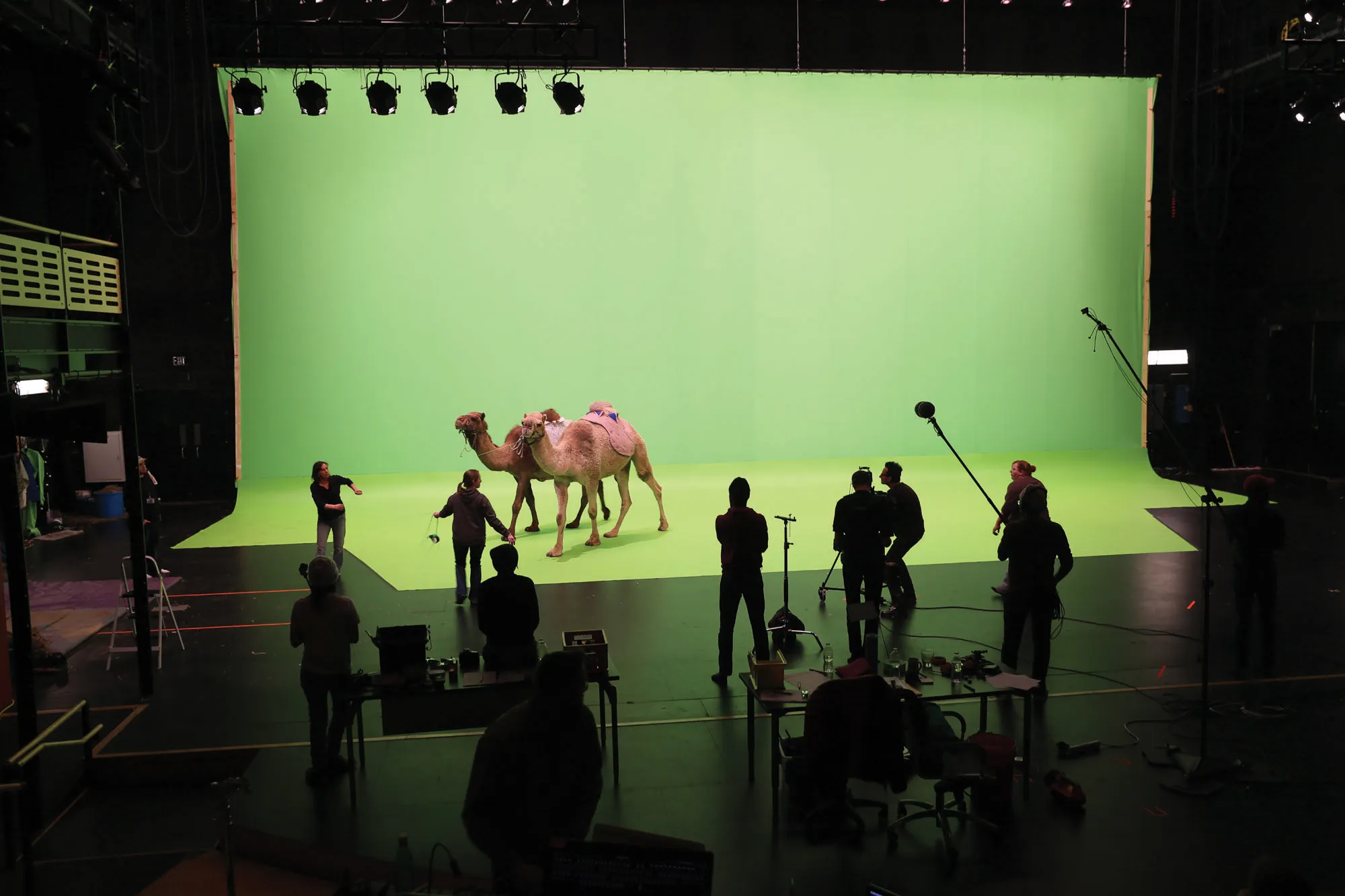
Two camels walking across a green screen in a black box studio.

Atlas Revisited

Karthik Pandian and Andros Zins-Browne

In 2012, visual artist Karthik Pandian and choreographer Andros Zins-Browne visited the Atlas Film Studios in the desert of Ouarzazate, Morocco. There, in front of film sets from previous Hollywood productions, they hired a group of studio camels and tried to persuade them to dance. The result of this endeavor can be seen in their 2014 video Atlas/Inserts, a choreography that casts the camel both as a political animal and a technology of movement.

Now with Atlas Revisited, their latest collaboration, the artists look back at the project and beyond. In a performance using text, movement, and moving image, they question their own motivations and the consequences of their pursuit of an “image of freedom.”

Drawing on new video material, shot at EMPAC in front of a green screen with American camel-actors, they pose the question of whether Atlas/Inserts was actually a ruse. Was the coercion depicted actually the performance of high-priced American talent keyed into background footage from Morocco? Were the artists documenting a shoot or acting in one?

In Atlas Revisited, Pandian and Zins-Browne stage the making, unmaking, and remaking of a dance about freedom and the treachery often required to realize images of it.

Main Image: Production still from Atlas Revisited (2016). Courtesy the artists. Photo: Mick Bello/EMPAC.

Media

Atlas Revisited

Karthik Pandian & Andros Zins-Browne

Choreographer Andros Zins-Browne and visual artist Karthik Pandian were in residence to film two camels against EMPAC's green screen for their new performance Atlas Revisited.