Image
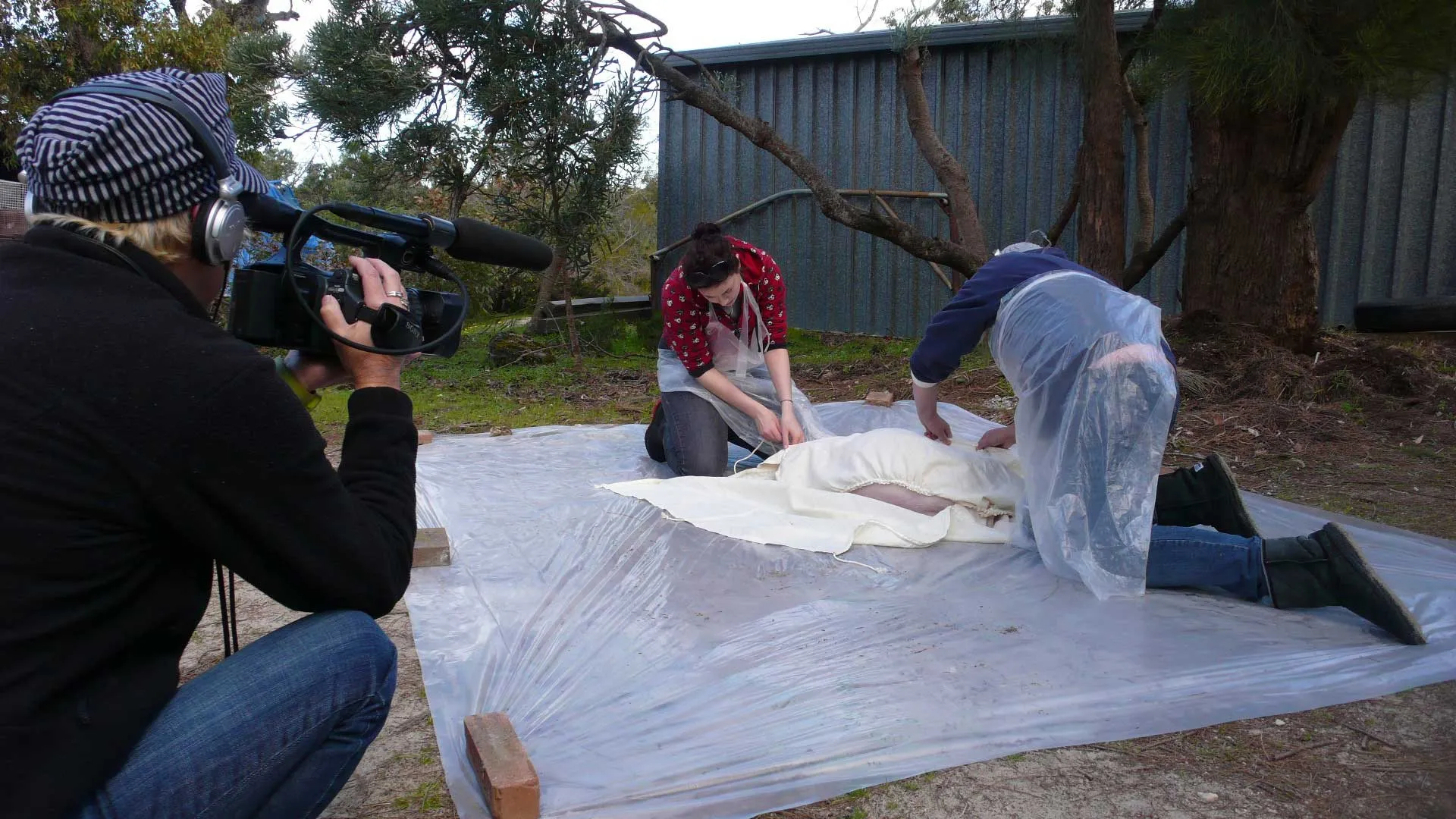
Kathy High filming a deceased pig being prepared for burial on a sheet of plastic. A man and woman, both wearing plastic aprons gently unwrap the pig from a white cloth under a tree behind a blue garage.

Death Down Under

Kathy High / iEAR Presents!

Shot in Western Australia, Death Down Under is a documentary video about death and decay, and follows the collaboration of a young fashion designer/artist, Pia Interlandi, and a mad forensic scientist, Professor Ian Dadour. An experimental research project was created between them, allowing Pia to test out her fashion-for-the-dead and Ian, an entomologist who studies human homicide, to research clothing decay on dead victims.

Pia and Ian amassed a team to wash, dress and bury 21 dead pigs on a kangaroo reserve. Then they dug up the remains to examine the decay of the ritual burial garments. Death Down Under follows the entire process from gathering the slaughtered pigs to the results in the laboratory. This video looks at our care for the dead — be they human or non-human animals. It also brings to light ideas of green burials and the ecology of death and life. How can we think through death and decay to sustain the earth's balanced environment?

Kathy High is an interdisciplinary artist and educator working with time-based arts and biology. In the early 1980s she studied film and video at University of Buffalo with media pioneers Hollis Frampton, Steina Vasulka, and Tony Conrad. She produces videos, performances, and installations about gender and technology, empathy, and animal sentience. She is a scholar of the history of video technologies, systems, and video art. She has received awards from Guggenheim Memorial Foundation, Rockefeller Foundation, and National Endowment for the Arts. Her art works have been shown at Guggenheim Museum, Museum of Modern Art, Lincoln Center, Exit Art (New York), Science Gallery (Dublin), NGBK (Berlin), MASS MoCA (North Adams), and Videotage Art Space (Hong Kong). Her co-edited book, The Emergence of Video Processing Tools: Television Becoming Unglued (with Sherry Miller Hocking, and Mona Jimenez), on the history of video imaging tools, was published by Intellect Books (UK) in 2014. High is Professor in the Department of Arts at Rensselaer.

Cynthia White has an MFA in Film and Television from the Academy of Art University in San Francisco. Over the past ten years she has worked on several award winning projects, both documentary and narrative. After two years of working in Santiago Chile for Productora Nueva Imagen, El Show de los Libros, she completed a short film, Sobarzo Pega Fuertewhich won best documentary at the Valdivia International Film Festival and was later broadcasted on TVN, Chile. In 2000, Cynthia joined Emmy award winner Bill Moyers’ production team in New York City and worked as an assistant producer and editor on his feature length documentary called America’s First River: Stories from the Hudson. ¶ She has produced and directed various short films and documentaries in the San Francisco area. Gordo, a film she produced, screened at US film festivals and won three separate audience awards. Bird Dog, a short film she wrote and directed, is currently in distribution through OUAT Media in Toronto, Canada and aired on Movieola The Short Film Channel. ¶ Cynthia now lives in Western Australia as a freelance filmmaker following Ship Spotters and documenting the world of BioArts for researchers at SymbioticA, University of Western Australia.

Jason Livingston is a film and video maker primarily based in NY, and currently teaches cinema at the University of Iowa. His work has received awards and been programmed at numerous festivals and venues, including Rotterdam, Cinematexas, Media City, Margaret Mead and more. Under Foot & Overstory, winner of a Jury Prize from the New York Underground Film Festival, can be rented from the Canadian Filmmakers Distribution Centre.  Some of his recent video work can be seen as part of ETC: Experimental Television Center 1969-2009, a 5-DVD collection distributed by Electronic Arts Intermix.  His work-in-progress, INTERSTATE, has received support from the New York State Council of the Arts.

Pia Interlandi is a fashion designer whose work often incorporates death as a scientific and psychological concept. She has a particular interest in textile manipulation and garment transformation, informed by her fascination with human biology and time spent in Japan under the instruction of Yoshiki Hishinuma. While studying a Bachelor of Design in Fashion, she began dissecting garments ‘autopsy-style’ and experimenting with dissolvable fabrics as a method of exploring life’s transient qualities. This became the basis of her current PhD study at Melbourne’s RMIT University, entitled [A]Dressing Death: Garments for the Grave. Part of this study has involved an in depth residency at Perth’s SymbioticA, where she researched the effects of clothing and textiles on decomposition with forensics specialist Professor Ian Dadour. Involving rigorous immersion in the rituals associated with preparing the body for interment, garments from this investigation are currently on exhibit at the London Science Museum. This doctoral study has evolved into the design of funerary garments and even the dressing of the deceased, which is now where much of Pia’s practice is now located.

Main Image: Kathy High in residence in Australia shooting Death Down Under. Photo courtesy the artist.
Media

The Swimmer

Laurie Anderson

EMPAC’s distinguished artist-in-residence Laurie Anderson returned to EMPAC to revise her multi-channel video installation, The Gray Rabbit, renamed as The Swimmer. In this new iteration, the piece was being prepared for The Language of the Future, an exhibition featuring works made by the artist between 1971 and 2013 to be presented at the Samstag Museum of Art at the University of South Australia as part of the Adelaide Festival. The exhibition was Anderson’s first solo exhibition in Australia. Like its earlier incarnation, in The Swimmer Anderson re-examines her memories of a summer spent in the hospital when she was 12, realizing that what she recounts from that time is what is palatable for her to remember. The installation projects a six-minute loop of dreamlike and heavily processed images that evoke scenes from the story—children swimming, nurses’ faces, and nostalgic farming country vistas—onto an alley made of shredded books on the floor to achieve the effect of “a story you could walk through.”

Laurie Anderson, EMPAC’s inaugural distinguished artist-in-residence, presented a series of events focusing on topics unique to her practice as an artist.

CLUSTER

Kurt Hentschläger

Austrian artist Kurt Hentschläger was in residence developing his audiovisual work CLUSTER, an evolutionary step in his artistic practice. A work in progress that began in 2004 combining seven complete, independent works, a full-length stereoscopic version of CLUSTER premiered in 2012. Focused on group behavior and the various stages of swarm motion, the 3D characters engage in a weightless slow-motion choreography, with human figures appearing as clouds of blurred matter intermingling with light.

Chicago-based Austrian artist Kurt Hentschläger creates audiovisual performances and installations. Between 1992 and 2003 he worked collaboratively as one half of Granular Synthesis, whose performances and installations confronted viewers on both a physical and emotional level, overwhelming them with sensory stimulation.

Zero

Deville Cohen

Deville Cohen spent two weeks at EMPAC shooting for his video work Zero, inspired in part by the television sci-fi drama The X-Files. Cohen takes closed narrative forms, like the television show structure of a crime scene—investigation and resolution—only to twist them apart. In doing so, the recognizable structure breaks down, becomes abstracted, and is exhausted, revealing the fragile qualities of the materials, devices, and logics he uses. Influenced by theater, sculpture, cinematography, and collage, Cohen creates abstract psychic dramas that are clearly handmade, but nonetheless visually and structurally complex. His performance-based photographs and video installations are made up of black-and white Xerox images as integral elements in their mise-en-scène. Sets, characters, and props are entangled in psychic dramas saturated with humor, desire, and anxiety.

Cohen was born in Israel, and lives and works in New York City. His work has been shown at SFMOMA and MoMA PS1.

Image
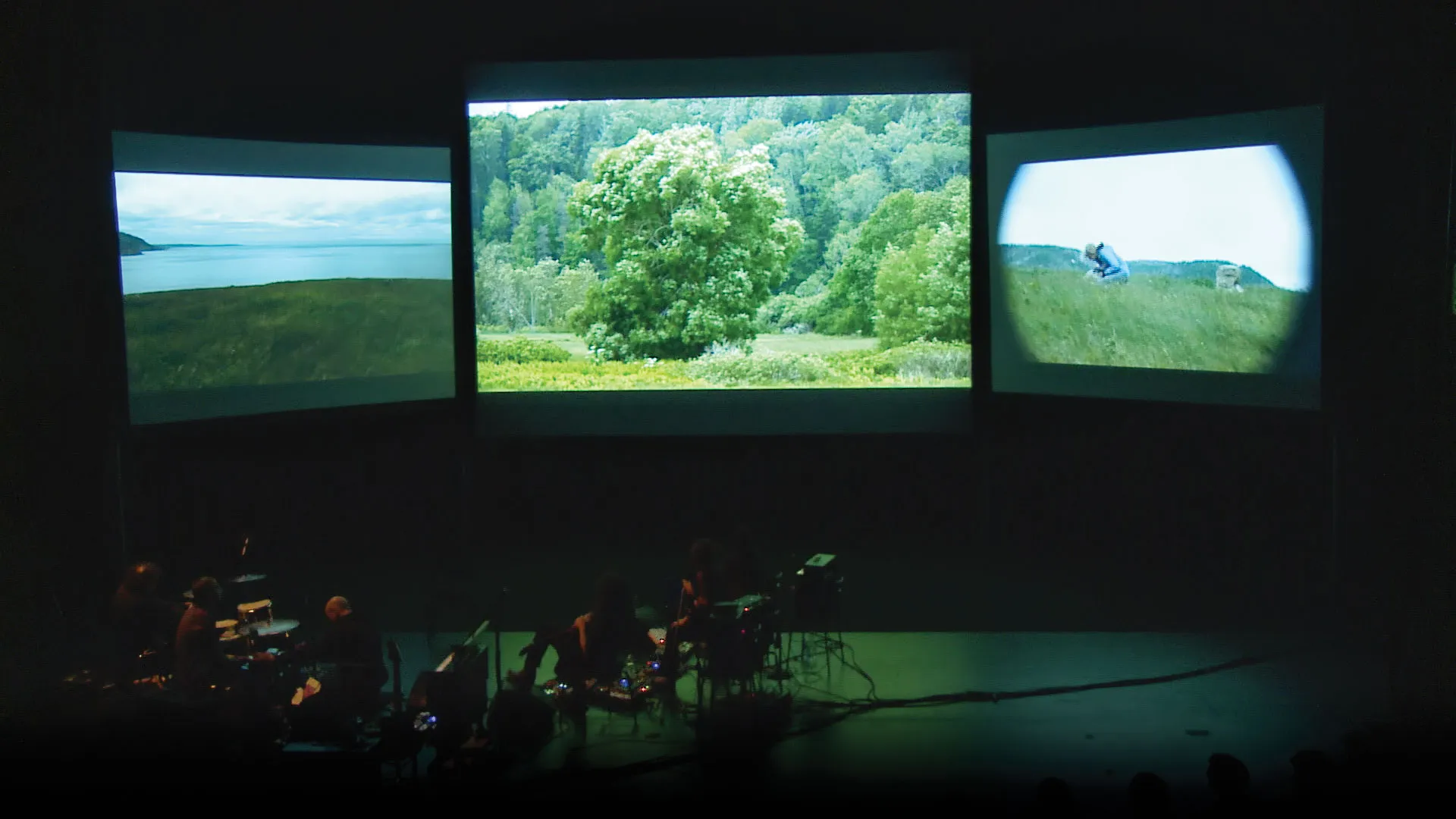
Three screens showing greenery and rolling hills behind a small pit orchestra on a dark stage.

We Have An Anchor

Jem Cohen

Jem Cohen’s newest film project is a documentary-based, interdisciplinary hybrid built from footage he gathered in Nova Scotia over the past decade, coupled with live music and texts ranging from poems and folklore to mundane local newspaper fragments to scientific research.

As an artist who has explored and deplored the disappearance of regional character brought on by corporate-driven homogeneity, the discovery of Cape Breton was a revelation for Jem, who describes it as a place as beautiful as any he has ever seen throughout his travels, but one that remains elusive and deeply “itself.”

This commissioned project, premiering here at EMPAC and featuring such stellar musicians as Guy Picciotto (Fugazi), Efrim Menuck (Founder, Godspeed You! Black Emperor), T. Griffin, Jim White (Dirty Three), Jessica Moss (Silver Mt. Zion), and Sophie Trudeau (Godspeed You! Black Emperor, SMZ), will be a visual and sonic exploration that primarily exists as a visceral evocation of place, and for someone known primarily as an urban filmmaker, a rare foray into intensive engagement with the natural landscape.

April 23 — Screening of Gravity Hill Newsreels: Occupy Wall Street (Series One and Two)

Please join resident, Jem Cohen, for a screening and discussion about his recent documentary work around Occupy Wall Street @ 2pm in the Theater. FREE.

Main Image: We Have An Anchor, 2012. Photo: EMPAC/Rensselaer.

Media
Image
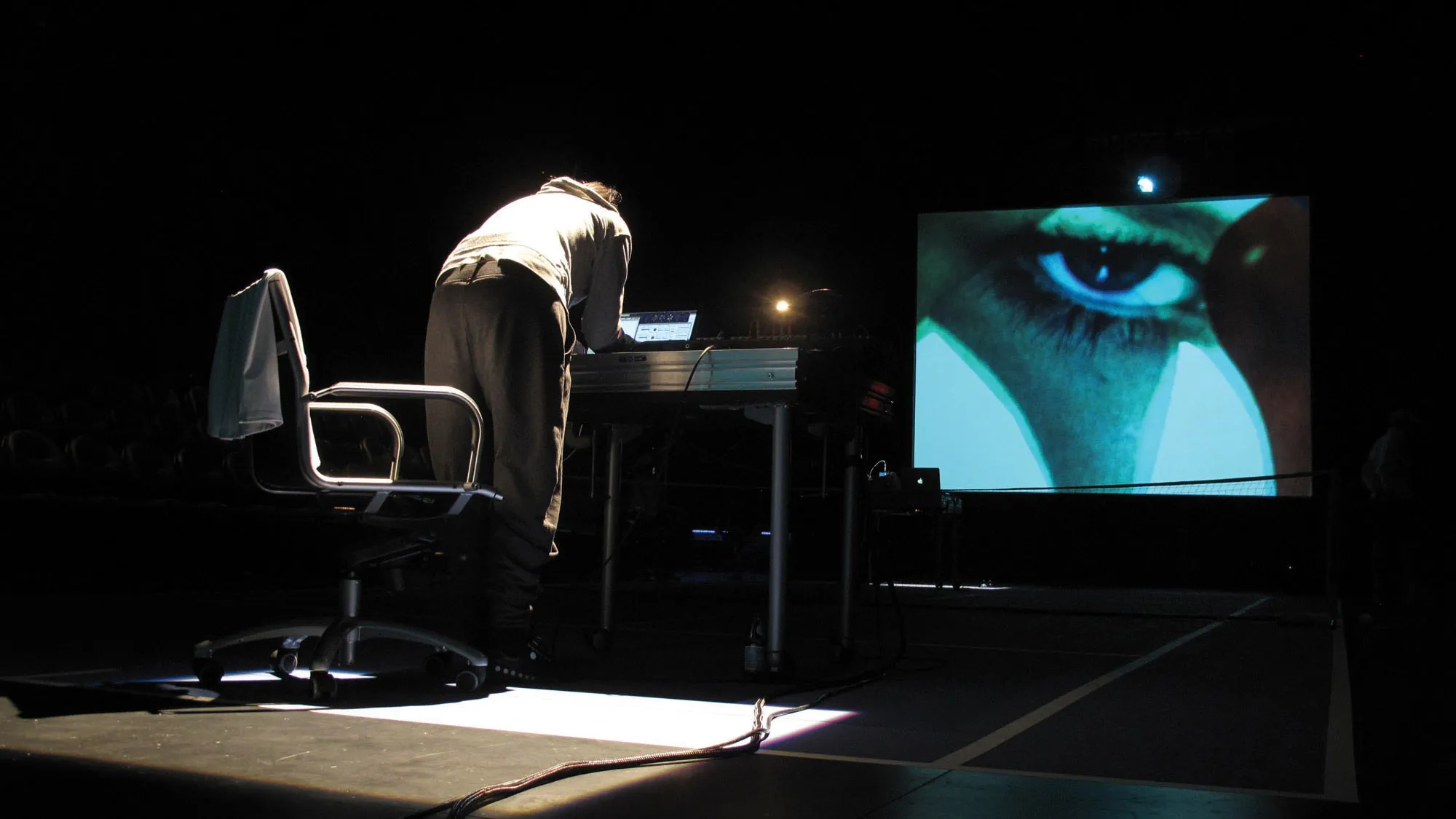
A person wearing gray sweatpants and sweatshirt standing hunched over a desk with backside to the viewer working on a computer controlling the projected image of a human eye.

Infinite Jest

SUE-C + AGF

Infinite Jest was both an installation and a live handmade film inspired by the complex and remarkable novel of the same name by the late author David Foster Wallace. The evening began with the audience experiencing the performance space as an installation composed of a text-based soundtrack and various miniature sets intended for the audience to walk through and examine. The film was then brought to life through the lens of live cameras that follow the manipulation of photographs, drawings, scale models, and various three dimensional objects by visual artist and performer SUE-C, along with the live lush electronic soundtrack and vocals by AGF and narration from Francis Deehan. Set in a slightly futuristic world, the film is an attempt to create and re-create what character James Orin Incandenza, optics expert and filmmaker, considered his life’s major work. After many unseen failures, his “film” Entertainment is eventually released, which proves to be fatally seductive. With this as a jumping off point, long time audiovisual collaborators SUE-C and AGF explore the expression of seduction in sound and image.

The day prior to the performance, SUE-C also gave a reading of excerpts from Infinite Jest and a discussion of her work. SUE-C has created handmade videos for both the stage and screen, challenging the norms of photography, video, and technology by blending them into an organic and improvisational live performance. AGF (Antye Greie) is a singer and digital songwriter, producer, performer, e-poet, calligrapher, and digital media artist known for her artistic exploration of digital technology through the deconstruction of language and communication. 

Quote Unquote was an interdisciplinary series presenting work by artists that use an existing text as a departure point for time-based works including installation, film, and performance.

Main Image: Infinite Jest in studio 1, 2012. Photo: EMPAC/Rensselaer.

Media
Image
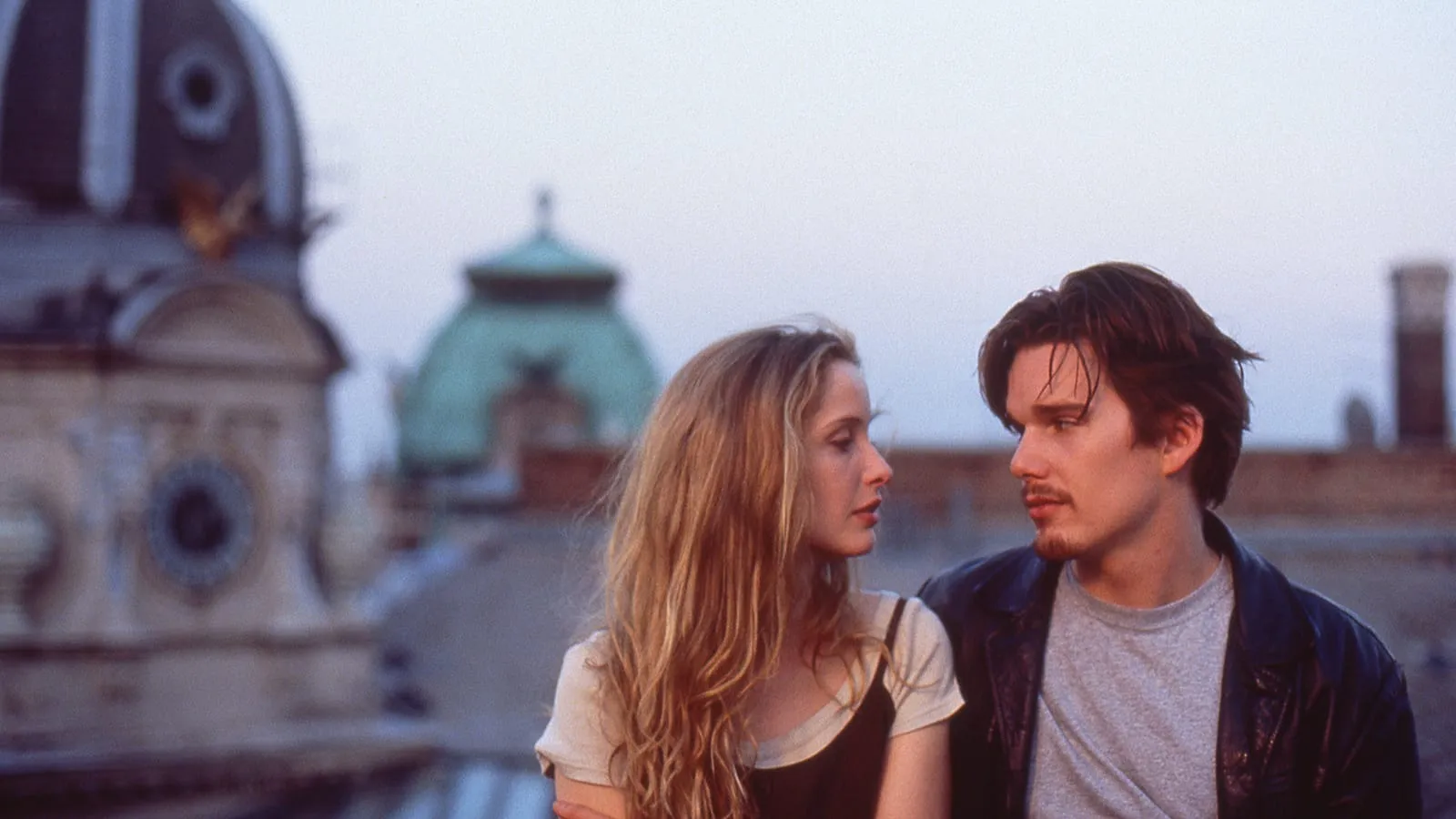
A woman with blonde hair and a man with brown hair looking longingly into each other eyes while sitting on a roof top overlooking a European cityscape.

Before Sunrise

Directed by Richard Linklater

Before Sunrise is a near real-time conversation between Jesse and Celine, who meet on a train and then disembark in Vienna to spend the evening on a peripatetic exploration of the city and each other’s perspectives on time, death, and reincarnation. The film is structured by an unlikely duality, starring Ethan Hawke as an American cynic, and Julie Delpy as a French romantic. Using the daily cycle of the sun as a metaphor, Before Sunrise initiated a story that would be completed in director Richard Linklater’s Before Sunset (2004). Together, the two films form a temporal loop that is separated by nearly a decade.

Main Image: Film still: Before Sunrise (1995). 

Image
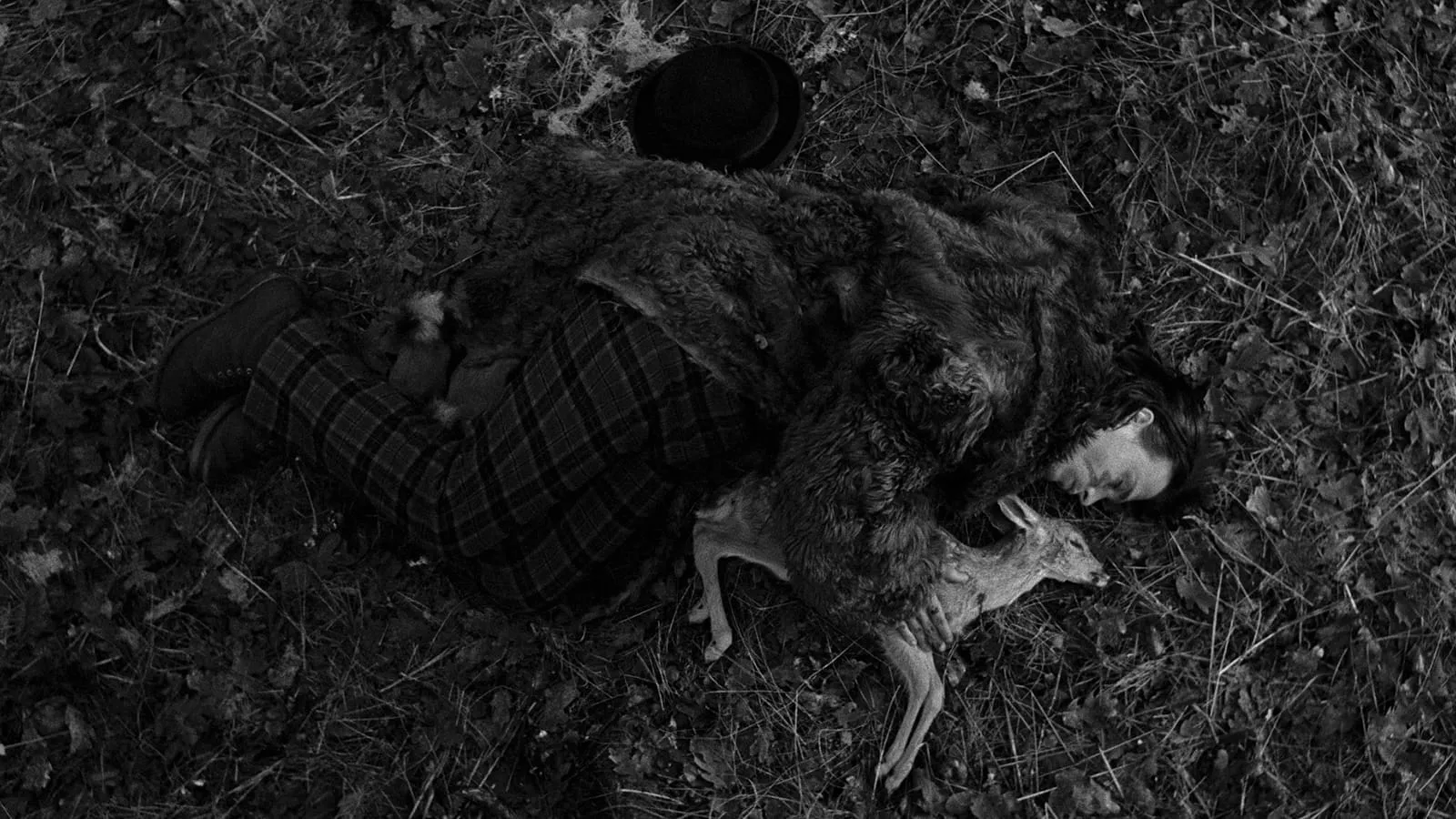
A man wearing a fur coat and tartan pants laying on the ground next to a deceased fawn in a cuddling position.

Dead Man

Directed by Jim Jarmusch

For his 1995 take on classic Hollywood Westerns, Jim Jarmusch brought together the diverse talents of Johnny Depp and Gary Farmer in starring roles, as well as Crispin Glover, Iggy Pop, Robert Mitchum (in his final film role), Billy Bob Thornton, Gabriel Byrne, John Hurt, and Alfred Molina. The film tells the story of William Blake, an accountant from Cleveland who sets out to the town of Machine for work, a misadventure that soon turns him into an outlaw. Set to an eerie, improvised soundtrack by Neil Young, Dead Man constitutes a physical and mythical journey that ends as it begins. The film has attracted favorable critical reviews, with author and critic Greil Marcus calling it “the best movie of the end of the 20th century” and The New York Times’ A.O. Scott describing it as “one of the very best movies of the 1990s.”

Main Image: Film still from Dead Man (1995).

Image
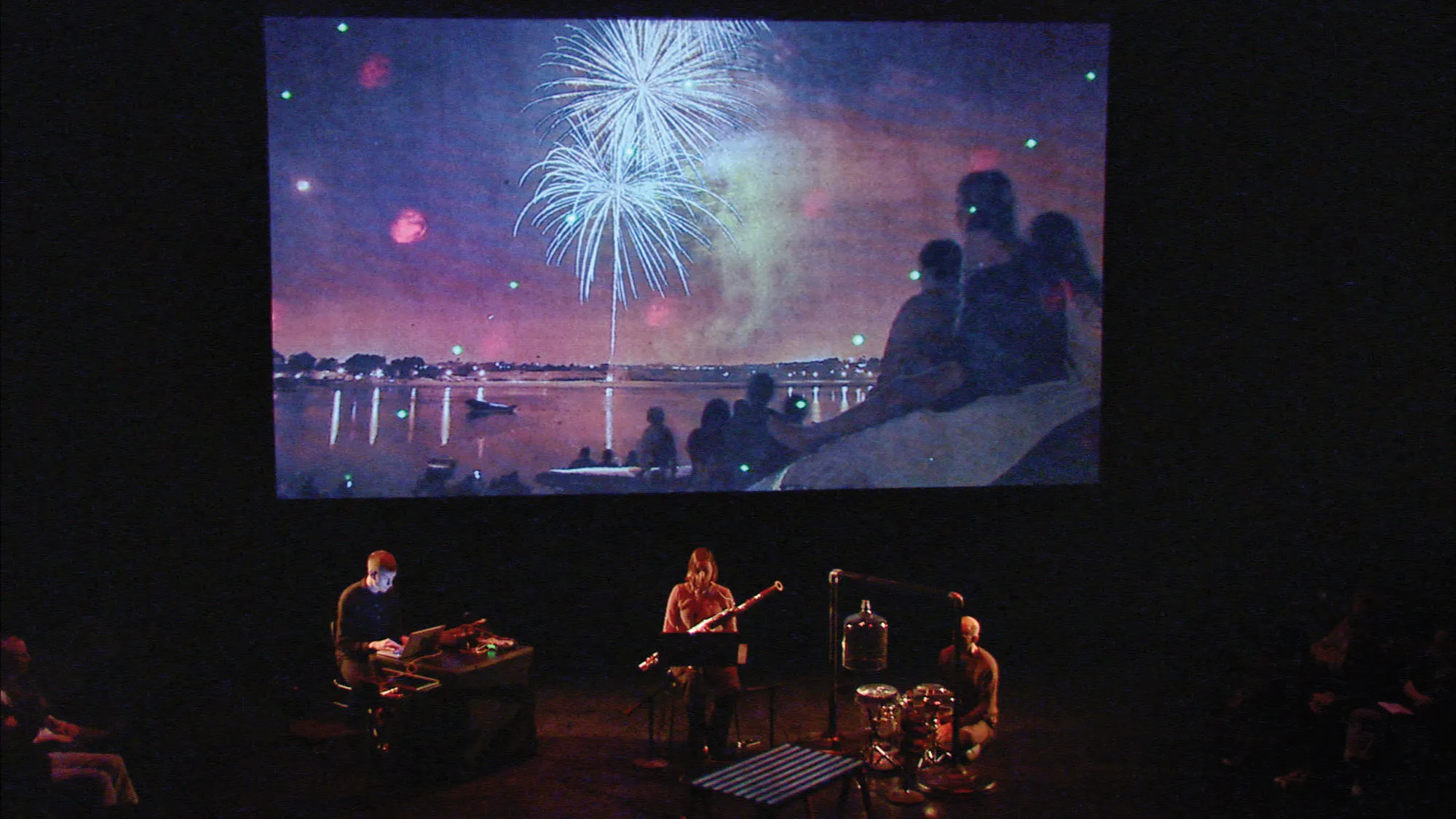
A group of three musicians playing on a dark stage lit by a projection of fireworks on a screen behind them.

Actual Reality

Lucky Dragons

Using an archive of Internet searches for the phrase “actual reality” as raw data for this process, acoustic sounds of musicians (and the audience) are analyzed and resynthesized in real-time and then presented back for reply, creating a call and response. Along with the “real” performance, collected source material—video and audio from previous performances, rehearsals, and incidental audio—is processed and layered on top, creating an endless loop of what is and what has been.

Main Image: Actual Reality, 2012.

Media
Image
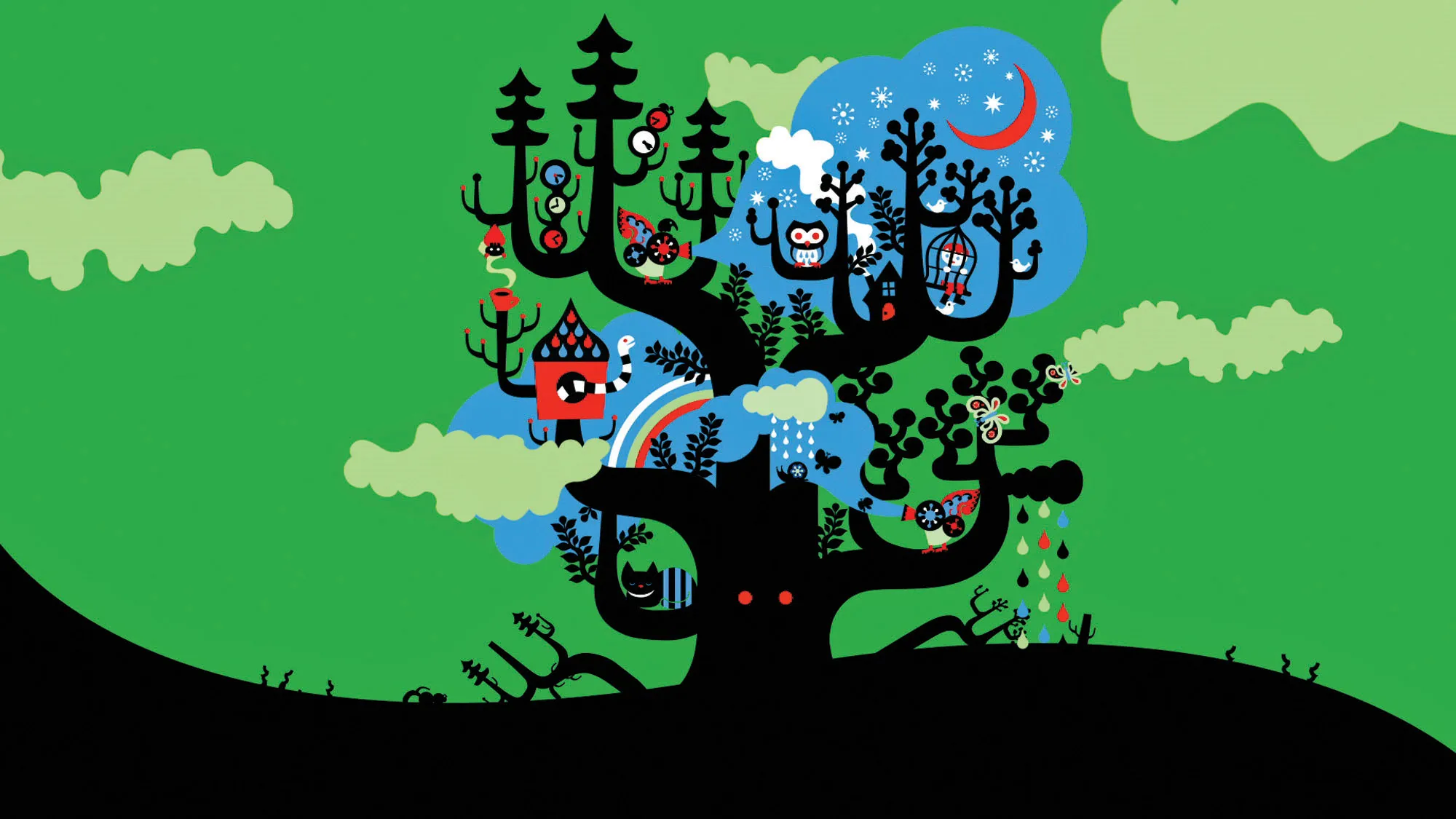
A black illustrated whimsical tree with multiple branches, each holding different creatures, like birds, owls, butterflies, and worms set in front of a green sky.

poemetrics

onedotzero_adventures in motion

Curated by onedotzero and produced in partnership with EMPAC, poemetrics is a series of shorts that looks at expressive moving image work, from treated live action to animation via motion graphics that are based on or inspired by poetry or poetic texts. These form a visual investigation of the words in poetic motion, enriching the meanings and enhancing the understanding. The program’s variety of works are entertaining, surprising, and beautiful, showing the combined power of moving image with poetry to thoughtful effect.

Main Image: onedotzero poemetrics, 2011. Photo: Video still courtesy onedotzero.