Image
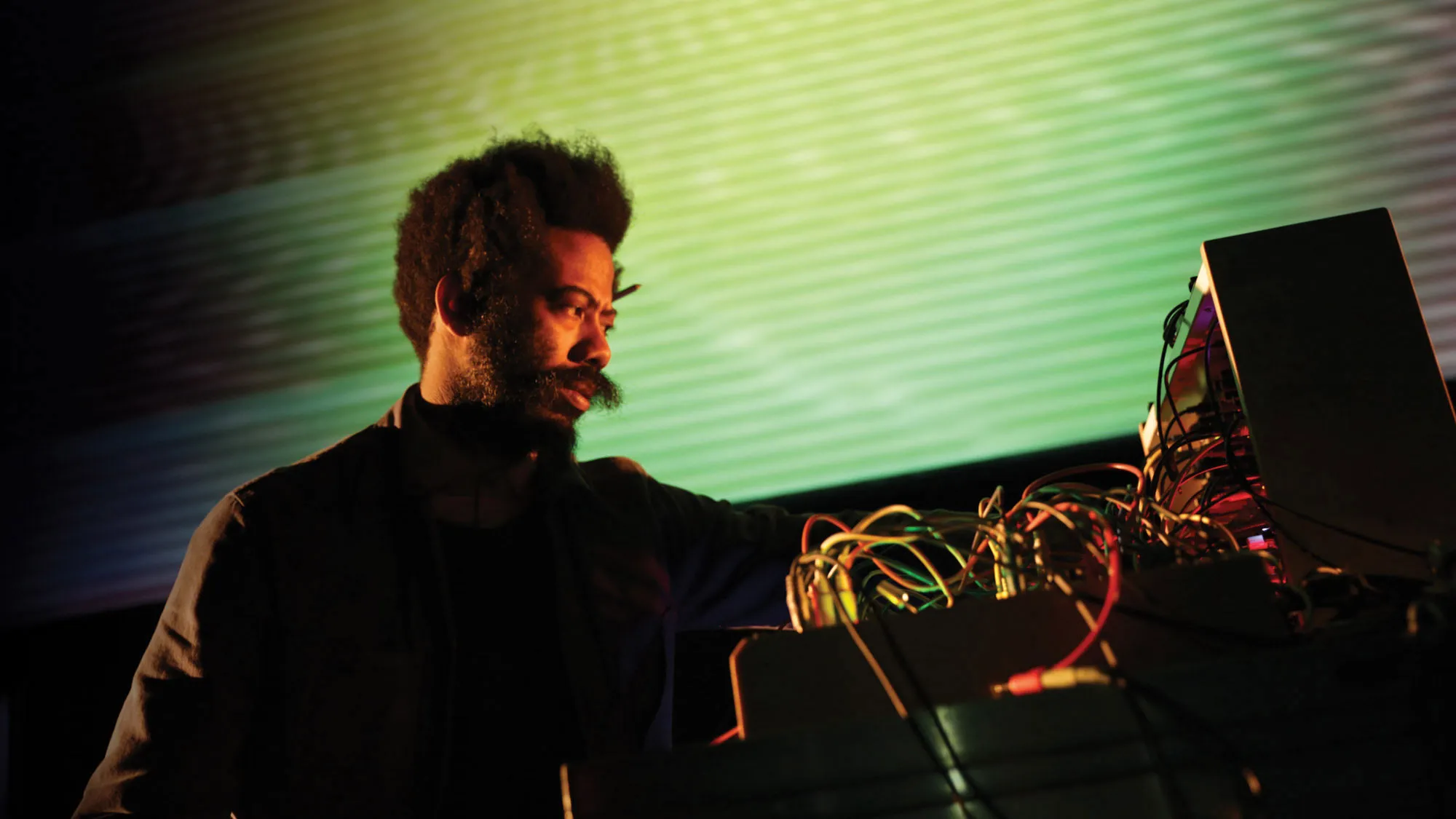
A Black man with a prominent mustache in front of a green and yellow projection examining various colored wires.

Peradam

Robert Aiki Aubrey Lowe + Sabrina Ratté

Peradam was a new audio and visual performance that intertwined voice with synthetic sound and image. Created in residence over three weeks, the artists worked in collaboration; using real-time synthesis, Ratté modified live video while Lowe used his voice as the source of his sonic manipulations. Inspired by René Daumal’s novel Mount Analogue, the first work of literature to use the word peradam to describe “an object that is revealed only to those who seek it,” Lowe’s composition for the modular synthesizer focused on the texture of a consistent equilibrium between the peak and valley of a sound wave to create a heightened experience akin to ecstatic music. 

Robert Lowe is a Brooklyn-based artist, composer, and multi-instrumentalist working with long-form improvisation utilizing voice and modular synthesis. The creation of ecstatic forms has been the focus of collaborations with Doug Aitken, Tarek Atoui, Lee Ranaldo, Ben Russell, Ben Rivers, Lucky Dragons, and many others.

Sabrina Ratté is a Montréal-based visual artist whose videos create virtual environments where architecture and landscapes fall into abstraction. Her work is also inspired by the relationship between electronic music and the video image, and she often collaborates with musicians.

Main Image: Robert A.A. Lowe in 2014 in Studio 1. Photo: Mick Bello/EMPAC. 
Media
Image
A black screen with a slight beam of light in the center.

Frieze Film

Petra Cortright, Peter Gidal, Patricia Lennox-Boyd, Oraib Toukan, and Erika Vogt

Curated and produced in collaboration with Frieze Foundation curator Nicola Lees, Frieze Film was a series of commissioned short-form moving image works by Petra Cortright, Peter Gidal, Patricia L Boyd, Oraib Toukan, and Erika Vogt produced for television.

Petra Cortright, Patricia Lennox-Boyd, and Erika Vogt’s Frieze Films were all produced during artist residencies at EMPAC in fall 2013.

The three-minute films were broadcast on Channel 4 (UK) as part of the series Random Acts; presented at Frieze Art Fair in London; and screened at EMPAC, preceding feature films as part of the series A Door Ajar.

Main Image: Peter Gidal CODA I and CODA II (2013).

Image
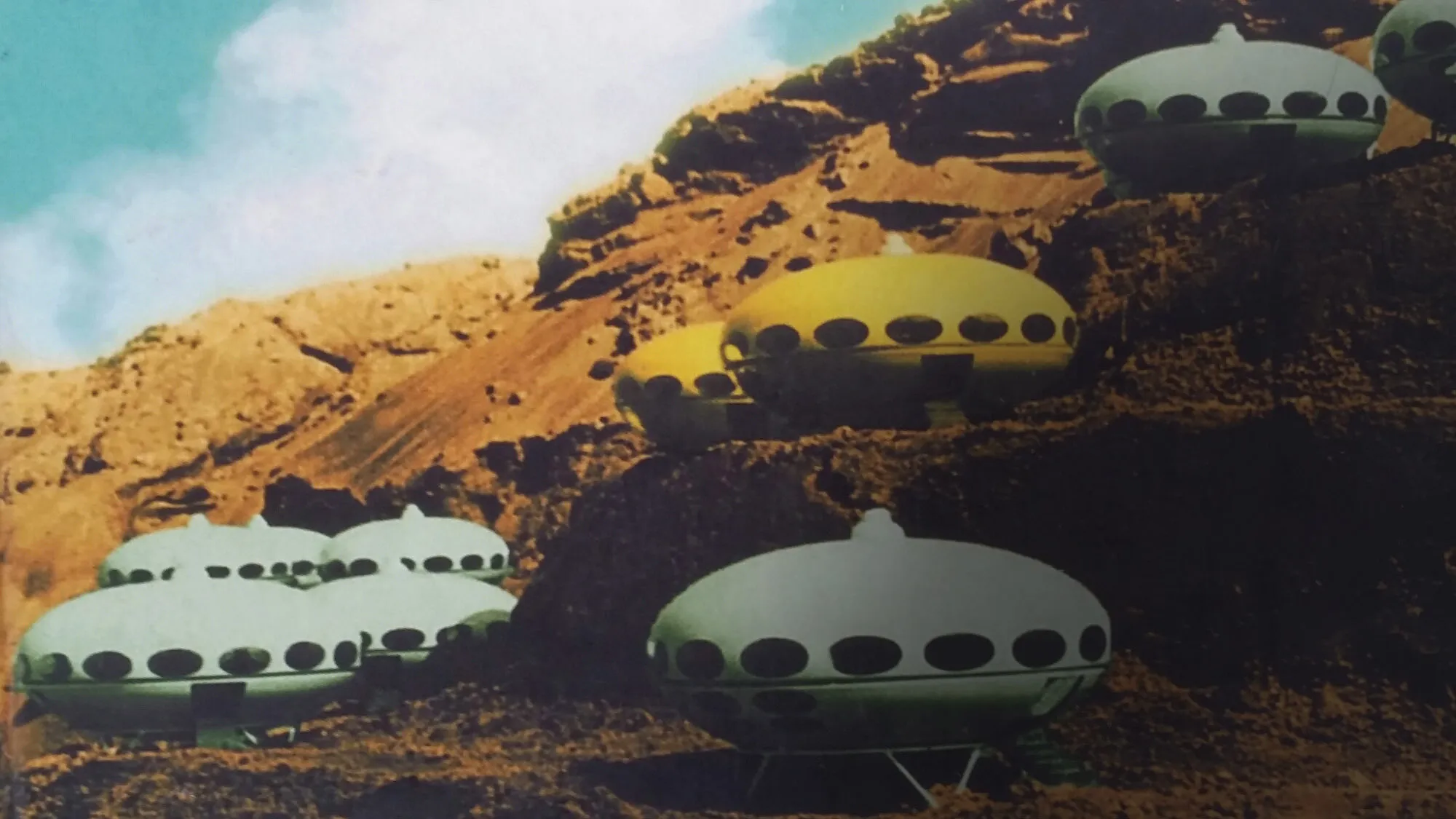
10 flying saucers landed in a mars-like desert scape.

Filmmaker Focus

Filmmaker Focus is devoted to the presentation of a series of works by a single filmmaker, whose considerable body of work experiments with the documentary form to investigate the implications of technological development and innovation.

Spring 2014 focuses on an overview of the documentary films of Mika Taanila, who has created acclaimed works of film, video, photography, installation and sound over the past 20 years. Reflecting on utopian technological innovators across the fields of engineering, architecture and music, Taanila’s films explore unsung genius and delve into the gap between technological progress and society’s looming destruction, to uncover the successes and failures of a century of progress.

Image
10 flying saucers landed in a mars-like desert scape.

Futuro: A New Stance for Tomorrow

Directed by Mika Taanila

Finnish filmmaker Mika Taanila’s Futuro: A New Stance for Tomorrow, uses amateur film and archival footage to investigate the futuristic imaginings of the Futuro House, designed and developed in 1968 by architect Matti Suuronen as a mass produced, mobile plastic housing unit that could be used singularly as a holiday home or multiplied to create a larger, integrated structure of pods. This functionalist and socialist utopian idea, however, was shattered by the 1972 oil crisis, as the use of plastic as building material became unviable. This film expresses and encapsulates the optimism of the post-war era in a joyful but melancholic study on the perceived failure of the 1960s vision of the future.

Futuro: A New Stance for Tomorrow is the part of Filmmaker Focus: Mika Taanila, a retrospective view of the documentary films of Mika Taanila, who has created acclaimed works of film, video, photography, installation, and sound over the past 20 years. Reflecting on utopian technological innovators across the fields of engineering, architecture, and music, Taanila’s films explore unsung genius and delve into the gap between technological progress and society’s looming destruction to uncover the successes and failures of a century of progress.

Filmmaker Focus is devoted to the presentation of a series of works by a single filmmaker whose considerable body of work experiments with the documentary form to investigate the implications of technological development and innovation.

Patricia Lennox-Boyd’s short film Carl dis/assembling w/ self will be screened prior to Futuro: A New Stance for Tomorrow as part of the Frieze Film series.

Image
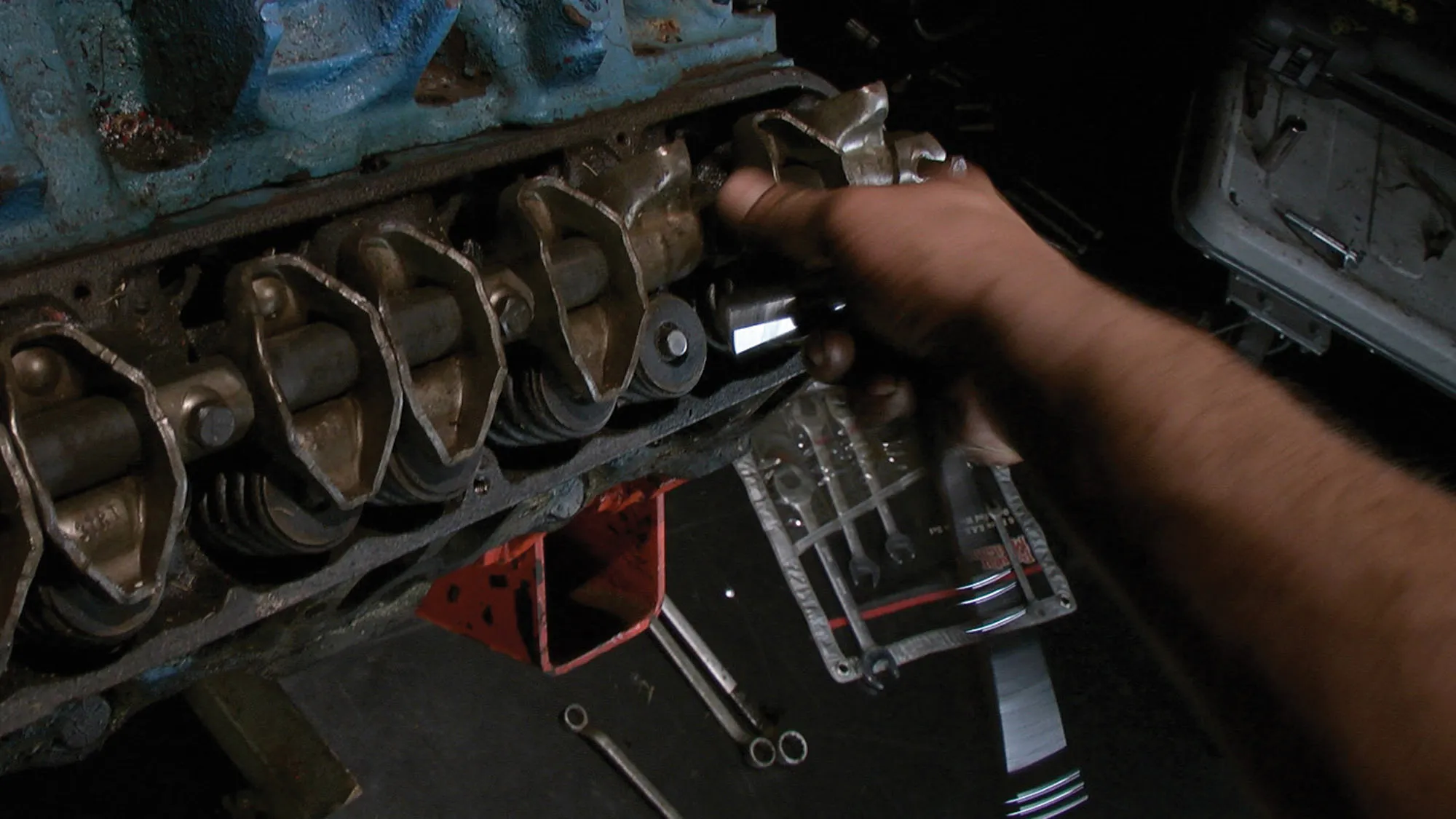
A hand in blurred motion inspecting or repairing the rocker assembly in the cylinder head of an engine.

Carl dis/assembling w/ self

Patricia Lennox-Boyd

Patricia Lennox-Boyd’s film Carl dis/assembling w/ self was produced during her residency at EMPAC in fall 2013 and is composed of an EMPAC staff member self recording the assembly and breakdown of a Dodge truck engine. The structure of the video—with credits placed at its midpoint—displays a circular, over-literalized logic that is often deployed in Lennox-Boyd’s sculptural work. Carl dis/assembling w/ self experiments with a performed language of handheld camerawork to play with and against the idea that gesture can be read as a transparent revelation of authorship.

Curated and produced in collaboration with Frieze Foundation curator Nicola Lees, Frieze Film is a series of new short-form moving image works by Petra Cortright, Peter Gidal, Patricia Lennox-Boyd, Oraib Toukan, and Erika Vogt produced for television. Petra Cortright, Patricia Lennox-Boyd, and Erika Vogt’s Frieze Films were all produced during artist residencies at EMPAC in fall 2013. The works are broadcast on Channel 4 (UK) as part of Random Acts. The Frieze Film shorts will be screened individually prior to EMPAC screenings throughout Spring 2014.

Carl dis/assembling w/ self will be screened Tuesday, January 21, 2014 preceding Futuro: A New Stance for Tomorrow

Patricia Lennox-Boyd lives and works in London. She recently finished the LUX Associate Artists program. Her work has been included in the 13th Biennale de Lyon (2013) and she has had solo exhibitions at Ohio, Glasgow (2013) and The Vanity, Los Angeles (2012). Lennox-Boyd also has a publication and exhibitions project called Benedictions which has recently produced works for the Modern Institute, Glasgow, and Cubitt, London (both 2013).

Main Image: Video still from Boyd's Carl dis/assembling w/ self (2014). 

Image
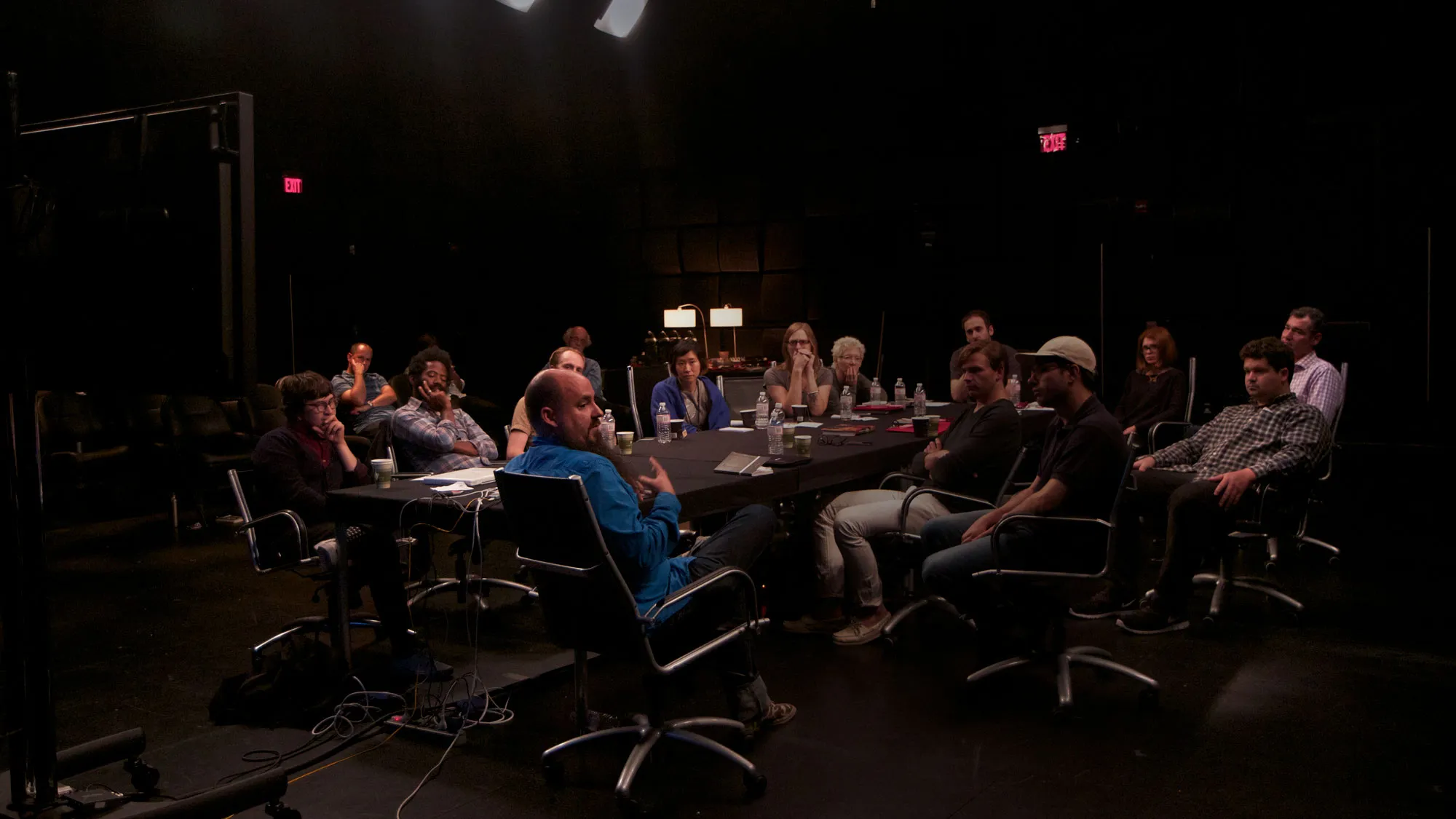
A large group of people gathered in discussion around a conference table in a darkened room.

Before the Music Starts

Susanna Bolle + Benjamin Nelson • Keith Fullerton Whitman • Miki Kaneda • Lawrence Kumpf • Mark Lewis • Robert AA Lowe • Justin Luke • Pauline Oliveros • Jessica Rylan • Frank Smigiel • Robert Snowden

Almost a decade after EMPAC presented Wow and Flutter—featuring music, performances, and artists of the 1960s multidisciplinary San Francisco Tape Music Center—this two-day colloquium gathered varied perspectives on the current trend of cross-disciplinary artistic practice from those who produce and present visual arts performance and music. The colloquium explored the disconnect between visual and performance artists working with sound, and composers/musicians working with electronics. Despite collaboration, there remains a slippage of presentation and theorization between the disciplines. Currently, it seems that the modular synthesizer could be a bridge between the two. Through the process of obsessive planning, the tactility of performance, and the creation of dense soundfields, the analog mod synth is experiencing a resurgence among visual artists and musicians. Questions explored included: How do such old technological concepts have relevance in a digital world? Is knob twisting influencing a new generation of visual artists with its ease of entry, and entrancing composers and musicians with its physical controls? Will that one module that makes everything truly awesome ever be found? Does the experience of a satisfying click create a different sonic outcome than the reassuring LCD flash onscreen? Or is it really all the same to a lay audience? Is anyone even paying attention? 

The Jaffe Colloquia is a series of exchanges that brings together small groups of artists, curators, and theorists to informally discuss ideas centered around the conditions of, and perspectives on, time-based arts. These events take the form of closed group discussion; however, sessions will be recorded and subsequently made available online.

Main Image: Before the Music Starts gets going in Studio 1 in 2013

Image
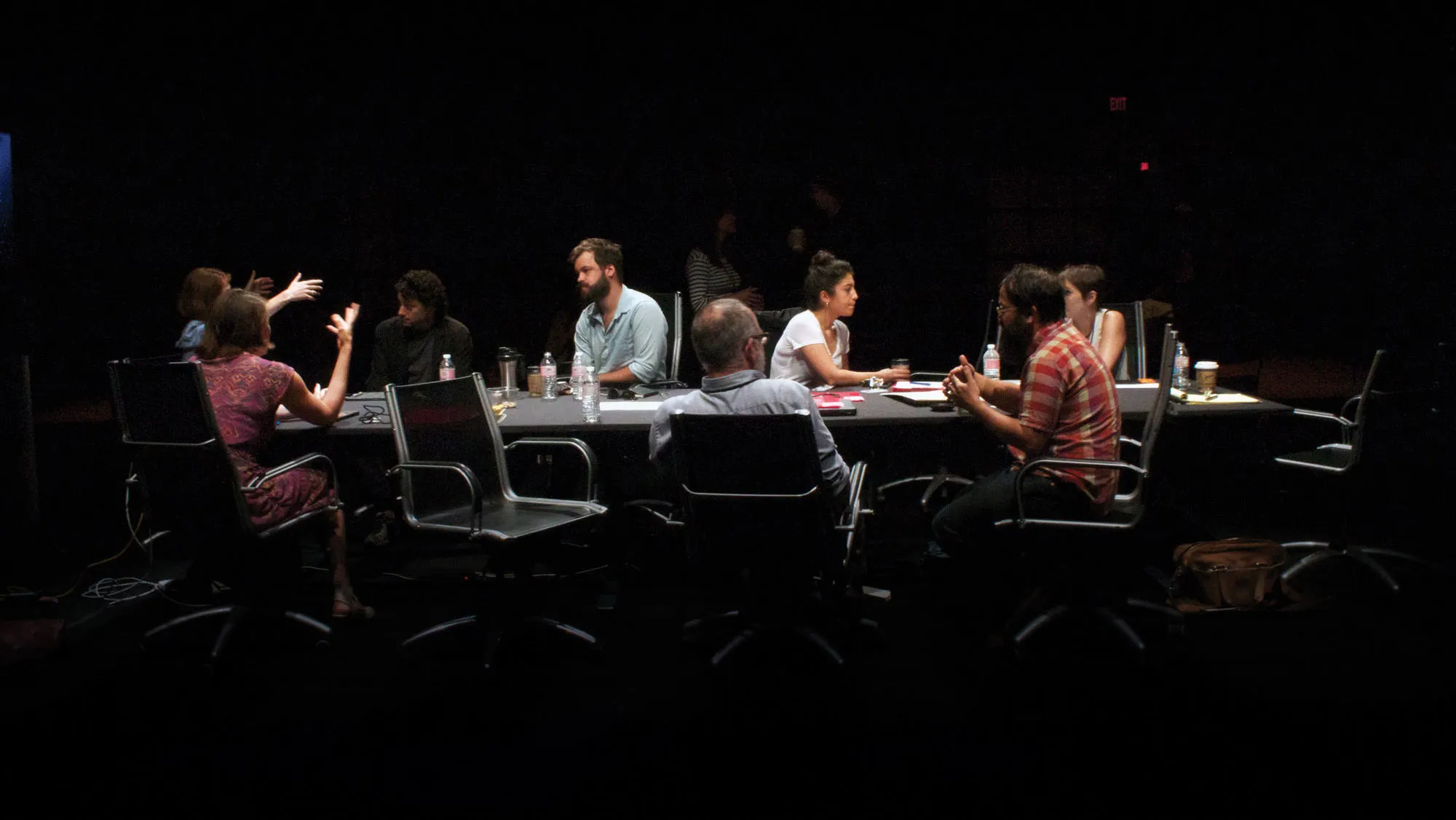
A group of eight in active discussion sitting around a conference table in a darkened room.

We Will Show You Film in a Handful of Dust

On Cinema & Circulation

Thom Andersen • Caetlin Benson-Allott • Richard Birkett • Evan Calder Williams • Ed Keller • Maryam Monalisa Gharavi • Carla Leitao • Pablo de Ocampo • Lucy Raven • Jason Simon • Alberto Toscano • Oraib Toukan

To what degree does industrial cinema, through the degradation of its surface that obscurely reveals the history and trajectory of each print, generate its own critical cinema? How have critical practices developed—not through opposition to industrial cinema—but from the cues given? How has industrial cinema, both in its period of strength and in its mutations into the ancillary and streaming economy, borrowed back what it tossed away, reincorporating the operations of critical cinema into its own history?

This discussion begins on the literal surface of films, with the scratches, dust, patches, and stains that come to mark a reel over the course of its circulation, as it is projected again and again over weeks, months, and years. These marks accumulate as it moves from first-run theaters in the city center out to the third-, fourth-, fifth-runs of periphery, until, exhausted of value by dint of no longer being adequately novel or having become too scratched to satisfy a paying audience, it comes to a stop: occasionally in an archive, but above all, in a basement or a dumpster. In this process of material and economic degradation, we get a glimpse of a different map of the city—not the one filmed, but the one where the film was projected; not in what the images contain, but in what obscures them.
—Evan Calder Williams (Keynote)

The Jaffe Colloquia is a series of exchanges that brings together small groups of artists, curators, and theorists to informally discuss ideas centered around the conditions of, and perspectives on, time-based arts. These events take the form of closed group discussion; however, sessions will be recorded and subsequently made available online.

Image
A rainbow bullseye with a cartoon cat and nude woman super imposed over top.

House (Hausu)

Directed by Nobuhiko Ôbayashi

A Halloween screening of the psychedelic Japanese cult horror classic, House (Hausu), introduced by writer and theorist Evan Calder Williams. Nobuhiko Ôbayashi’s House (Hausu) is a nightmarish film about a schoolgirl named Gorgeous and six of her classmates who vacation at her aunt’s home in the country. Each of the characters is marked by a special trait—Melody plays music, Mac likes to eat, Kung-fu is a martial arts expert, Sweet is very tidy, Fanta daydreams, and Prof is a skillful logician. One by one, the girls encounter possessed objects that become the instruments of their demise. An outlandish and visually stunning spectacle that parodies horror film clichés, Ôbayashi collaborated with his daughter to create the deranged script, employing many of the techniques he learned through his background in experimental cinema and as an advertisement producer for television.

Main Image: Film still: House (Hausu) (1977), Janus Films.


Image
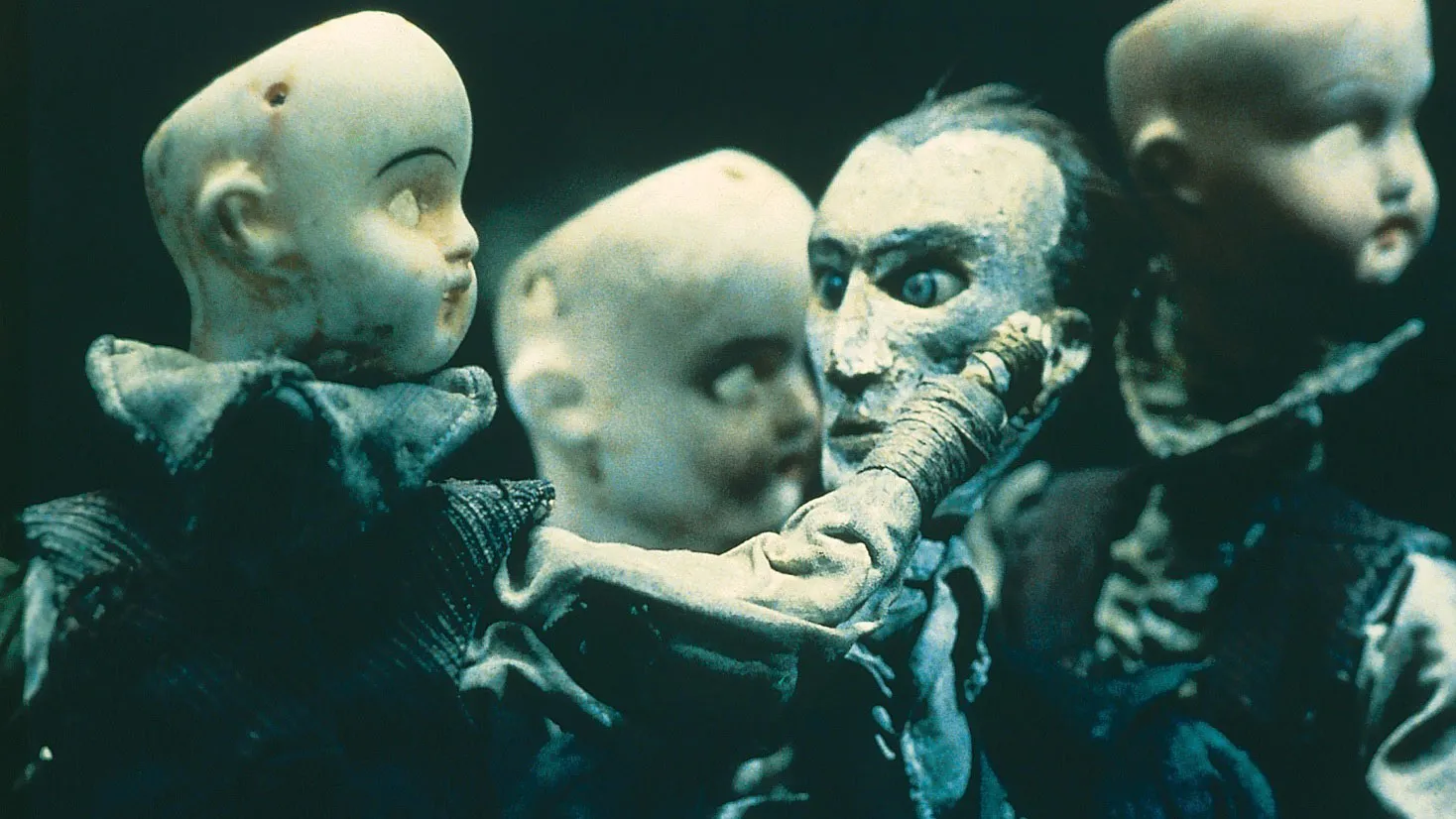
Green tinted distressed porcelain doll heads missing their hair and eyes.

Quay Brothers

Selections from Phantom Museums

Featuring selections from the Quay Brothers’ compendium of short films, Phantom Museums spans their 30-year career. Renowned for their unparalleled contributions to the field of puppet film, identical twins Stephen and Timothy Quay combine visual, literary, musical, and philosophical influences with a singular sensibility. Inspired by the films of Jan Svankmajer and Jiri Barta, the Quay Brothers bring together the quaintness and delicacy of early animation with painstakingly hand assembled sets in their films. Program:

  • Street of Crocodiles - 1986, 20:32 min.
  • The Cabinet of Jan Svankmajer - 1984, 14:12 min.
  • Rehearsals for Extinct Anatomies - 1987, 14:29 min.
  • The Comb (From the Museum of Sleep) - 1990, 18:04 min.
  • Still Nacht IV - 1994, 3:56 min.
  • In Absentia - 2000, 19:17 min.

Shadow Play is a series of films that tread nimbly between reality and illusion, acknowledging the artificial nature of cinema. Referencing the tradition of shadow puppetry, the origins of cinema in phantasmagoria, and Plato’s Allegory of the Cave, each film draws on the metaphors of light as reality and shadow as artifice. In Plato’s The Republic, the allegory of the cave illustrates the difference between truth and illusion. Many writers have noted that Allegory of the Cave (written c. 360 BCE), bears great resemblance to the contemporary movie theater.

Main Image: Still from The Street of Crocodiles (1986), 

Tell Me Everything

Josh Thorson

Tell Me Everything is a narrative collage about the human psyche and its social effects. It features Robert Osborne as Dr. Robert Holden, Kyle deCamp as  Dr. Elizabeth Brecht, Therese Plaehn as The Patient, Stephanie Roth Haberle as The Analyst, Pat Palermo as Young Man, nicHi douglas as Young Woman, and Joe Westmoreland reading Walt Whitman's "Song of the Open Road." Music by Nick Hallett. 

Joshua Thorson is a video-maker who works with narrative conceptually, exploring and exploiting the narrative exchange through the themes of science, religion, transcendence, authenticity, idealism, and trauma. Using tonal shifts and stringent economy, this work both caters to and usurps expectations, opening up “story” to ontology. Thorson’s work has been presented at museums, galleries, and theaters internationally.