Image
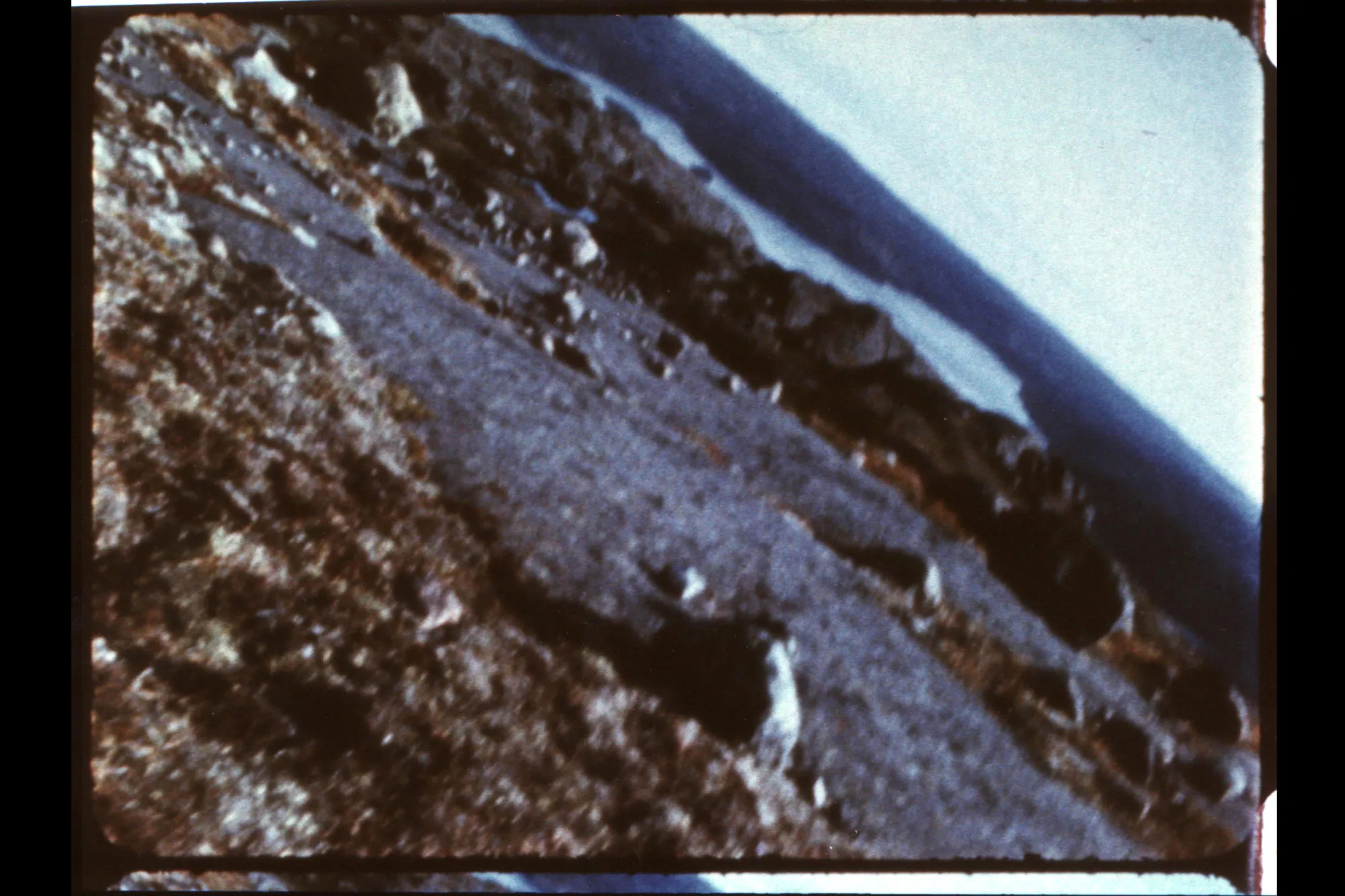
Vintage film image of a sideways rocky beach.

On Screen/Sound: No. 15

Michael Snow / Miguel Angel Rios

The final On Screen/Sound program of the spring season presents two films with sonic and visual elements constructed through complex tracking shots.

In Miguel Angel Rios’ Untitled (The Ghost of Modernity) (2012) a CG-rendered cube floats across a desert landscape, while a spare Cageian composition punctuates this modernist exploration of silence and space. Shot with an automated camera that could be controlled to move in 360 degrees, Michael Snow’s La Région Centrale documents the landscape of northern Quebec and was scored using the sine waves and electronic pulses of the technical camera apparatus itself.
PROGRAM
  • Untitled (The Ghost of Modernity) (2012) Miguel Angel Rios
  • La Région Centrale (1971) Michael Snow
  • Approximate runtime: 190 minutes 

Main Image: Film still from La Région Centrale, Michael Snow (1971). Courtesy of Canadian Filmmakers Distribution Centre.

Media
Image
boychild lunging to the ground painting the floor with their hands in red light

You Sad Legend

Moved by the Motion: Wu Tsang and boychild, featuring Patrick Belaga

Moved by the Motion is a performance collaboration between artists Wu Tsang and boychild, featuring experimental cellist Patrick Belaga. As part of an ongoing series of such performances, Moved by the Motion explores different modes of storytelling through an improvisational structure of voice, movement, and music. The series began as a poetic interpretation of the science fiction world in Tsang’s forthcoming feature film, A day in the life of bliss, and has since evolved into its own form.

In the performance, Tsang, the film’s director, plays the voice, an evocative and commanding vocal performer, who uses language to manipulate the scene like a puppeteer pulling strings. boychild, the film’s principle actor, plays the mover, a visceral dancer who is bound to the voice but is constantly breaking down language with her ineffable physicality. All the while, Belaga plays the improvisational score live. "Play" is a central part of this performance—both play as an activity, and play as it defines a space for flexibility and leeway.

Main Image:You Sad Legend (2016). Image: Mick Bello/EMPAC.

Image
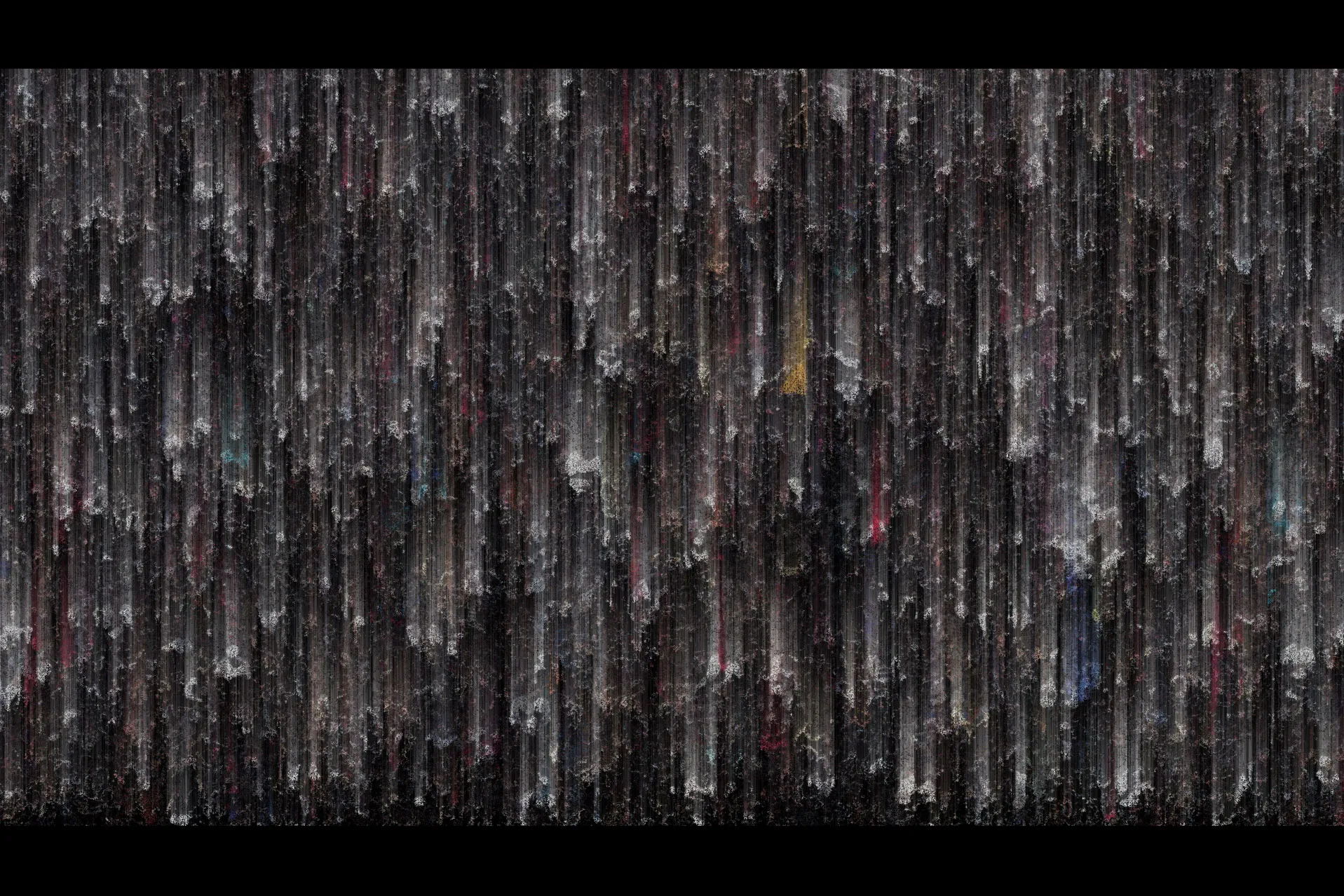
abstract silver and primary colored falling rain.

On Screen/Sound: No. 14

Oskar Fischinger / Mary Ellen Bute / Ryoichi Kurokawa

On Screen Sound: No.14
 brings together a series of films from the 1930s and ’40s by early animation pioneers Mary Ellen Bute (1906-1983) and Oskar Fischinger (1900-1967) with a digital moving-image work made over 70 years later by Novi_sad and Ryoichi Kurokawa. 

Both Mary Ellen Bute and Oskar Fischinger explored the correspondence of moving images and sounds in their work. Many of Fischinger’s films combine image and music into tightly choreographed works of motion. He continually advanced the technical and aesthetic boundaries of abstract film. Notable techniques include early silent film experiments of thinly sliced wax forms to “ornament sound” films created by photographing objects onto the optical soundtrack of the filmstrip to create “direct” sound from the material.

Between the 1930s and ’50s, Bute’s films were grounded within the tradition of “visual music” through a series of abstract film techniques that she called “Seeing Sound.” An early proponent of electronic art, Bute undertook collaborative research with Leon Theremin, and by 1954 she used a cathode ray oscilloscope to create several abstract films. 

Equally committed to the innovative intersection of the visual and sonic, Novi_sad and Ryoichi Kurokawa project animation into the 21st century with their 2012 collaboration, Sirens, which uses data processing to create pulsing, impossibly detailed images and sounds.

PROGRAM:
  • Ornament Sound Experiments (1932) Oskar Fischinger
  • Study No. 7 (1931) Oskar Fischinger / Music: Brahms’ Hungarian Dance No. 5
  • Polka Graph (1947) Mary Ellen Bute / Music: Shostakovich’s Polka from The Age of Gold
  • Tarantella (1940) Mary Ellen Bute / Music: Edwin Gerschefski
  • Sirens (2012) Ryoichi Kurokawa / Music: Novi_sad
  • Approximate runtime: 69 minutes

This year-long film series takes a close look at—and listen to—the way filmmakers have employed the sonic dimension of their form to complement, challenge, and reconsider our experience of the moving image.

Presenting cinematic performance, artists’ moving image, and Hollywood feature films, each On Screen/Sound program delves into the relationship between movie sound and image tracks, highlighting some radical examples of the aesthetic power and technical potential of sound in cinema. From musical theater to the music video, experimental shorts to industrially produced features, the series explores the affective and technical relationship between sound and image through the art of Foley, experimental music, found footage, soundtrack imaging, synched, multi-channel, and non-diegetic sound.


Main Image: Film still from Kurokawas Sirens. Courtesy the artist.

Media
Image
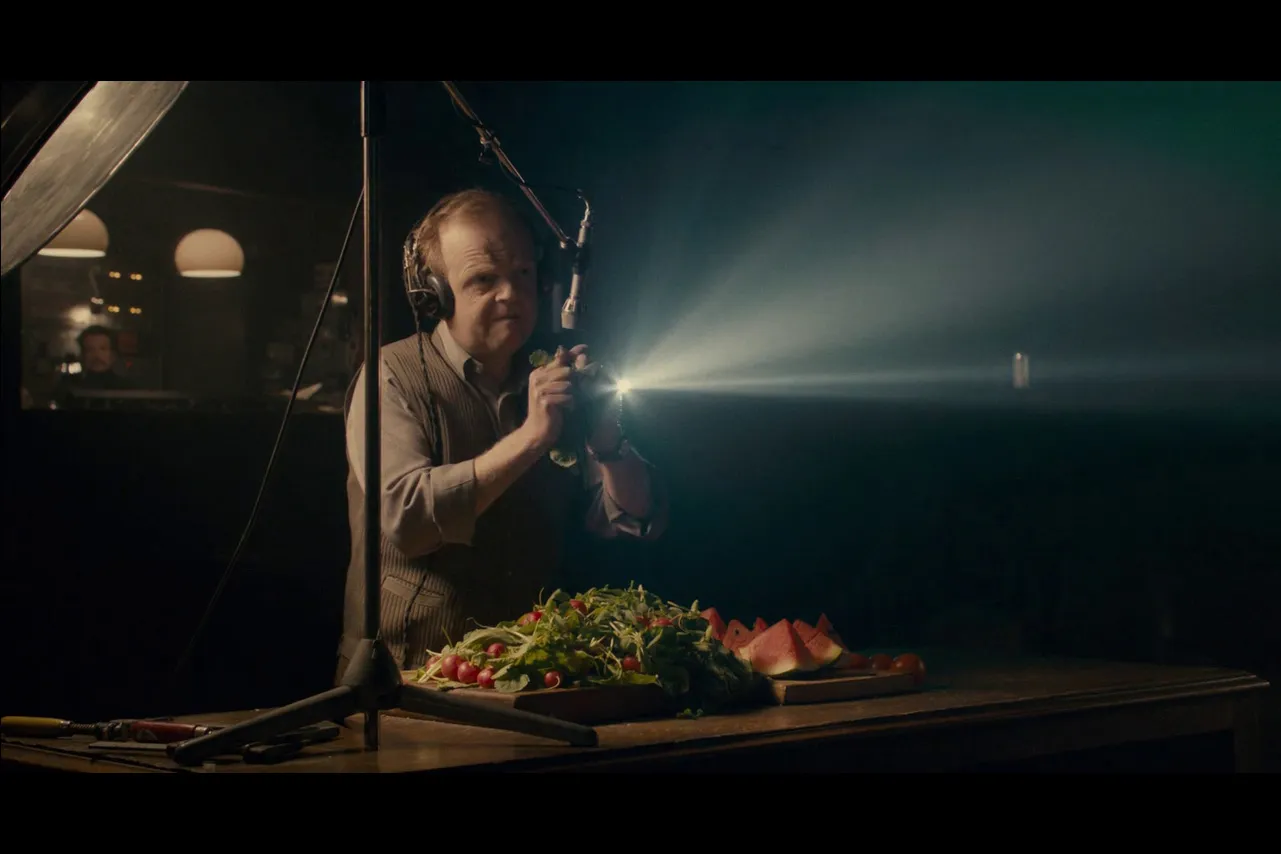
A foley artist ringing a piece of lettuce into a microphone over a pile of salad and a cut up watermelon.

Berberian Sound Studio

Peter Strickland

Looking at the importance of incidental music and Foley sound effects in the horror movie genre.

Berberian Sound Studio takes the horror of labor as its narrative center, albeit through the lens a Foley artist who takes a job in an Eastern European studio to do the post-production sound design for a slasher movie.

This darkly imagined and expressionistically shot feature takes up the mantle of cult films that use the labor of a sound recordist—notably Brian de Palma’s Blow Out (shown at On Screen/Sound: No. 7) and Francis Ford Coppola’s The Conversation—as a plot device to entwine Foley sounds with the sounds of real murder.

PROGRAM
  • Berberian Sound Studio (2012) Peter Strickland / Music: Will Slater
  • Approximate runtime: 110 minutes

Main Image: Berberian Sound Studio, Peter Strickland (2012) Video still: Courtesy Swank Motion Pictures

Media
Image
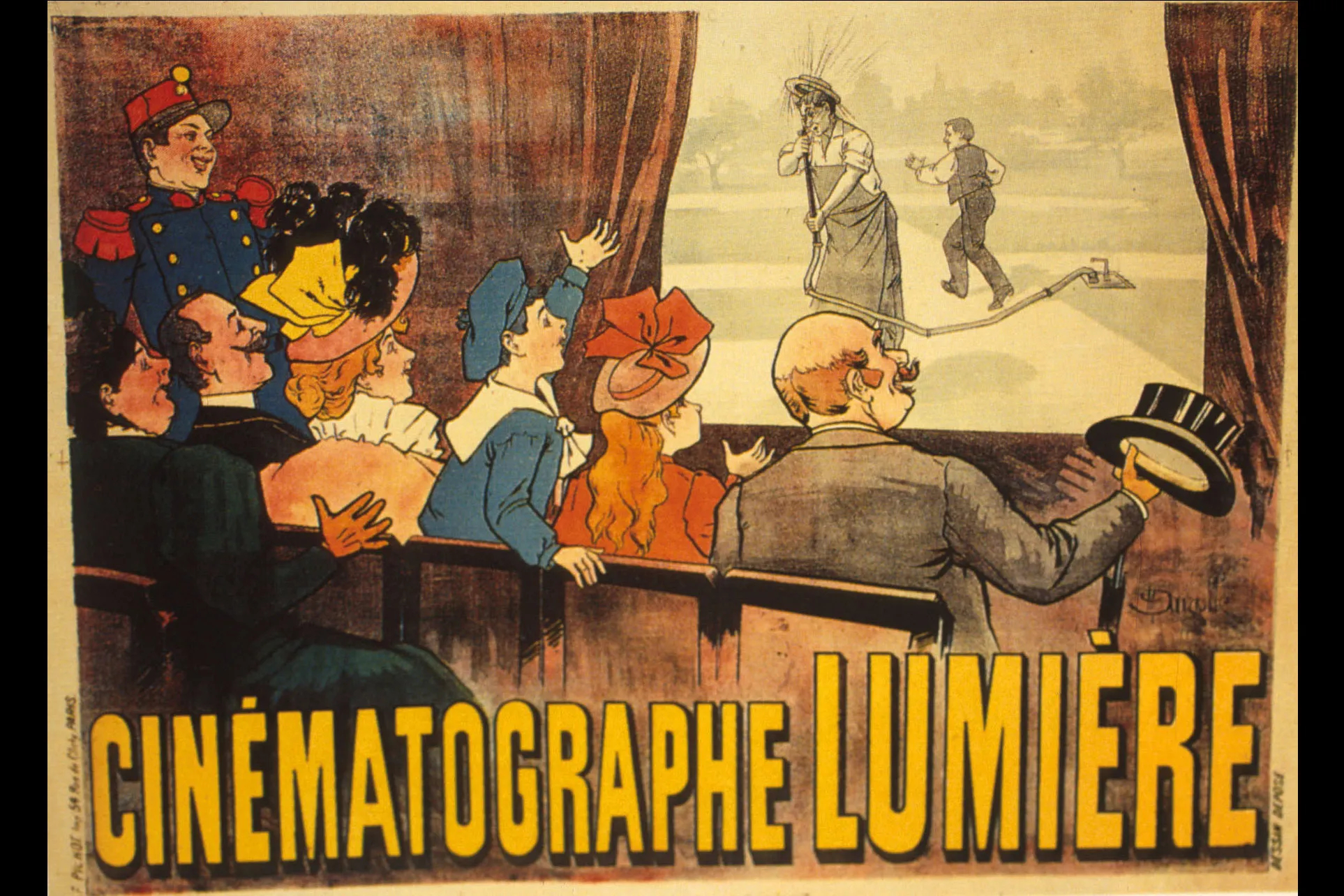
1800's hand drawn film poster showing a crowd dressed in period clothing cheering at a movie screen.

Watering the Flowers

Watering the Flowers is a new year-long screening program. Each evening focuses on a recent film or video by an EMPAC-affiliated artist, and will be succeeded by a program of other shorts or features that were influential in the making of their work, whether fiction or documentary, experimental or commercial.

Watering the Flowers, or L’Arroseur, is the title of a lost film from 1896 by cinema pioneer Georges Méliès, based on Louis Lumière’s film L’Arroseur Arrosé, which was released the previous year. L’Arroseur Arrosé is often credited as the first fiction film, and its 45 seconds comprise a single gag played on a gardener watering his plants. Highly influential to the development of both narrative cinema and on-screen comedy, it was endlessly copied, parodied, duplicated, and is appropriated even to this day. Its promotional poster was also a first: an audience watching the film—an image of cinema itself.

The title has also been referred to in distinct ways: The Waterer Watered or The Sprinkler Sprinkled or The Tables Turned on the Gardener. This act of differing translation points to the subjective relationship each of us has to language, either textual, visual, or sonic. All artists are inspired by and learn from others, and this program seeks to “water the flowers,” so to speak, opening a space for collective watching through the artist’s eyes. At a time when so many of our moving images are viewed from a computer or handheld device, and our selections are channeled algorithmically according to our narrow interests, this program provides the opportunity to see films that are “lost.” Not films lost in the sense of Méliès’ work, but films that are potentially masked by the flood of daily data. Watering the Flowers pursues inspiration through the juxtaposition of the unusual, the banned, the overlooked, the old, the new, the personal, the counter-historical, the experimental, and the popular.

Main Image: FILM POSTER FOR ARROSEUR-ET-ARROSÉ BY LOUIS LUMIERE, 1895

Image
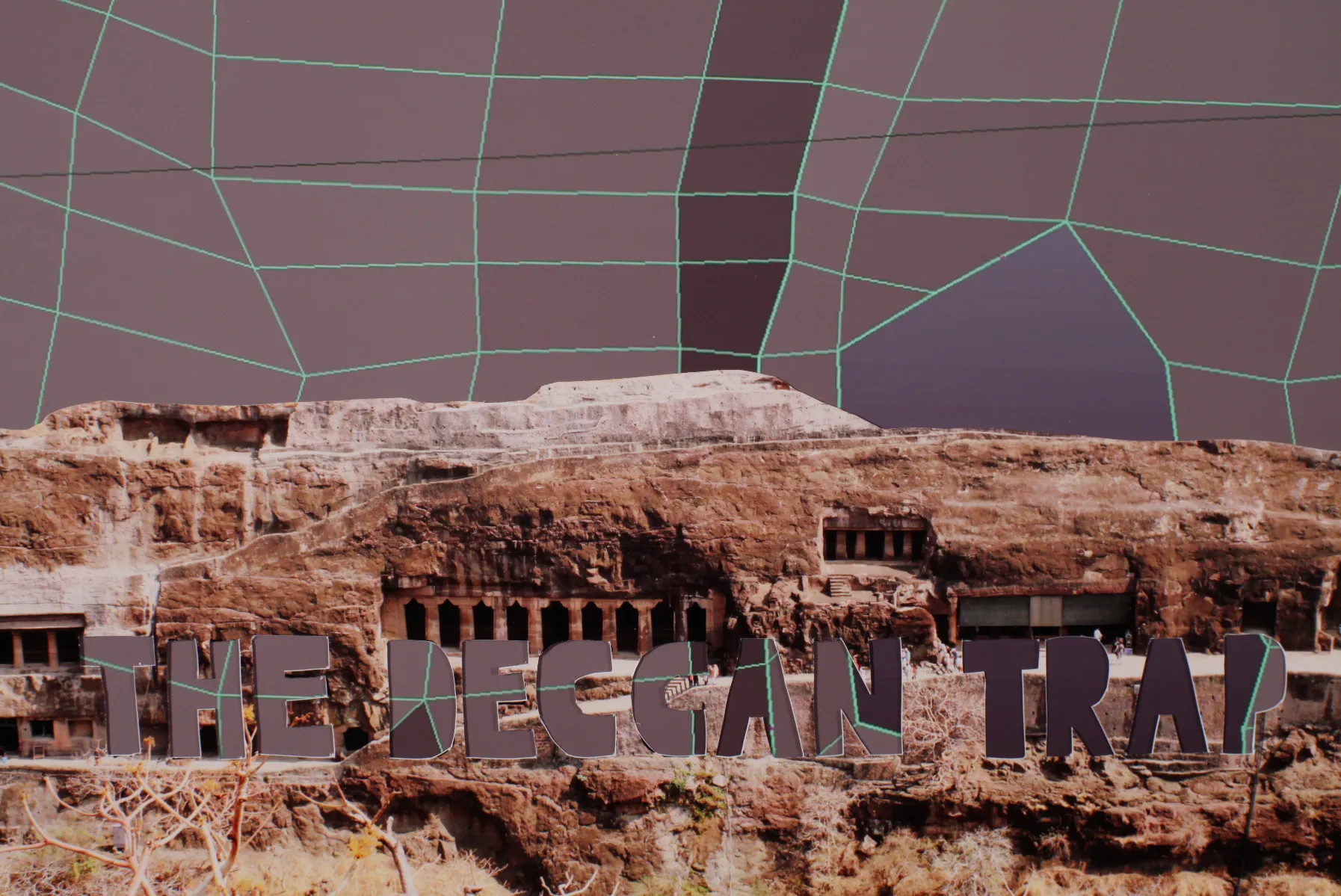
The Deccan Trap in blocky font in a desert scene

On Screen/Sound: No. 12

Charles Atlas / Ephraim Asili / Christian Marclay / Lucy Raven / Godfrey Reggio

On Screen/Sound: No. 12 gets speechless with a selection of 
films that work in sound and image but without the use of words. From a dance-film to a live video score, the evening culminates in a cult classic featuring meditative imagery and washes of sound.
 
A montage of things making sound (but without the sound), Fade to Slide by Christian Marclay is an audio-visual work designed to be performed like a score. This version features NYC-based ensemble Bang on a Can All-Stars, who make the sound to fill in the space.
 
Filmed on site in EMPAC's Studio 1, What does unstable time even mean?, by American artist Charles Atlas, finds two dancers in an otherworldly scene of smoke and light, encircled by an unknown observer.

Filmed on location in Salvador, Brazil and Harlem, New York, Ephraim Asili’s Many Thousands Gone draws parallels between a summer afternoon on the streets of the two cities. A silent version of the film was given to jazz multi-instrumentalist Joe McPhee and “sight read” in real time to create the score.

Composed from a series of photographic collages, The Deccan Trap follows Lucy Raven’s multi-year research into how stereoscopic 3D images are made. The short video charts the artist's journey from the myriad Hollywood post-production studios based across the world—in India, China, Canada, and the UK—to India’s ancient bas-reliefs, while Paul Corley’s score traces the same terrain, both dramatizing and exposing the circulatory routes of 3D filmmaking.

Called “an impressive visual and listening experience” by critic Roger Ebert, Godfrey Reggio’s 1983 film Koyaanisqatsi is one of the classics of epic image-oriented documentaries. Translated from Hopi as “Life out of balance,” Koyaanisqatsi contrasts the brutality of the man-made world with the expansiveness of nature, stimulating the audience to question their own position in the world. Interwoven with a swirling score by Phillip Glass, Koyaanisqatsi is as much an experience as it is a film.

PROGRAM
  • Koyaanisqatsi: Life Out of Balance (1982) Godfrey Reggio / Music: Philip Glass
  • 


What does unstable time even mean?


 (2015) Charles Atlas / Music: Eric Holm
  • 


Many Thousands Gone


 (2015) Ephraim Asili / Music: Joe McPhee
  • 


The Deccan Trap (2015) Lucy Raven / Music: Paul Corley
  • 


Fade to Slide


 (2015) Christian Marclay / Music: Bang on a Can All-Stars
  • Approximate runtime: 107 minutes

This year-long film series takes a close look at—and listen to—the way filmmakers have employed the sonic dimension of their form to complement, challenge, and reconsider our experience of the moving image.

Presenting cinematic performance, artists’ moving image, and Hollywood feature films, each On Screen/Sound program delves into the relationship between movie sound and image tracks, highlighting some radical examples of the aesthetic power and technical potential of sound in cinema. From musical theater to the music video, experimental shorts to industrially produced features, the series explores the affective and technical relationship between sound and image through the art of Foley, experimental music, found footage, soundtrack imaging, synched, multi-channel, and non-diegetic sound.

Main Image: Video still of Lucy Raven's The Deccan Trap (2015). Courtesy the artist.


Media
Image
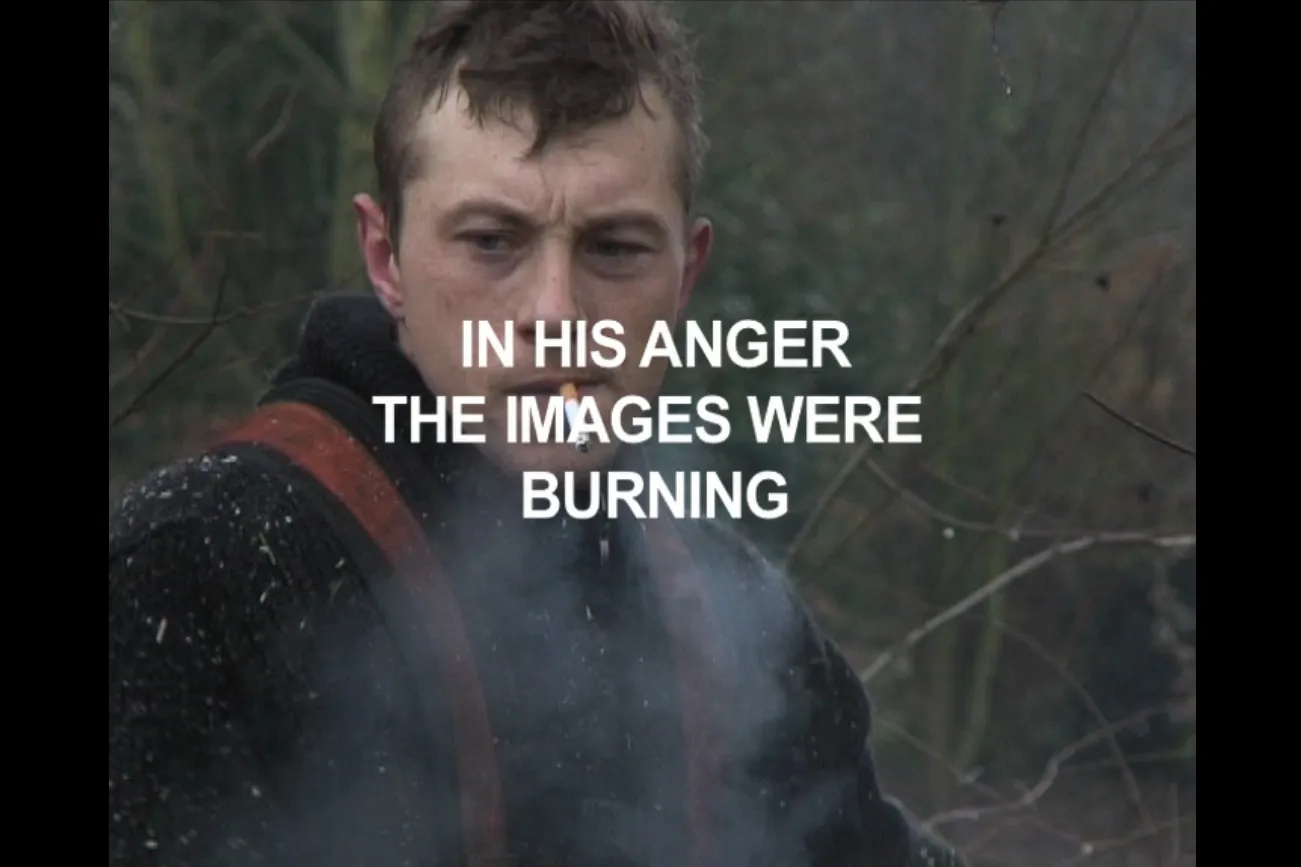
A man in the woods with a cigarette hanging from his mouth with white text over his face reading "in her mind the images were burning".

On Screen/Sound: No. 11

Tony Cokes / Alexander Kluge / Sara Magenheimer / Laure Prouvost

The 11th episode of the On Screen/Sound series presents a selection of films and videos that play with the relationship between textual and spoken language. Laure Prouvost, Sara Magenheimer, Tony Cokes, and Alexander Kluge all make videos that combine spoken and written language, focusing on the slippage of meaning and description as material and subject matter.

Prouvost’s It Heat Hit is a speedy cascade of images and words, featuring a seemingly autobiographical voice-over by the artist that is characteristic of the misuse and appropriation of English as her second language.

Magenheimer’s Slow Zoom Long Pause meanwhile analyzes language as a patriarchal structure and explores how gender roles are embedded and articulated, encouraging the audience to listen rather than simply observe.

Tony Cokes’ 3# Manifesto A Track #1 eschews both voice and realistic images. The animation uses a series of text and graphic transitions, edited to an upbeat electronic song by Seth Price. Through quotations, philosophical statements, and Morrisey lyrics, Cokes mocks the pop industry’s reliance on marketing to expose the underlying ideologies of representation in the media.

Inspired by early silent cinema, Alexander Kluge is well known for his regular use of the intertitle, and his 1971 sci-fi feature Der Grosse Verhau (The Big Mess) is a case in point. Engaging and humorous, but often deliberately fractured and poetic, Kluge’s film bombards us with loose, collagist associations of words and images in the story of two astronauts trying to make a living in a solar system controlled by corporate interest in 2035.

PROGRAM:
  • It Heat Hit (2010) Laure Prouvost
  • 3# Manifesto A Track #1 (2001) Tony Cokes
  • Slow Zoom Long Pause (2015) Sara Magenheimer
  • Der Grosse Verhau (The Big Mess) (1971) Alexander Kluge
  • Approximate runtime: 110 minutes

This year-long film series takes a close look at—and listen to—the way filmmakers have employed the sonic dimension of their form to complement, challenge, and reconsider our experience of the moving image.

Presenting cinematic performance, artists’ moving image, and Hollywood feature films, each On Screen/Sound program delves into the relationship between movie sound and image tracks, highlighting some radical examples of the aesthetic power and technical potential of sound in cinema. From musical theater to the music video, experimental shorts to industrially produced features, the series explores the affective and technical relationship between sound and image through the art of Foley, experimental music, found footage, soundtrack imaging, synched, multi-channel, and non-diegetic sound.

Main Image: It Heat Hit, Laure Prouvost (2010) Film still. Courtesy of the artist and LUX Artists’ Moving Image

Image
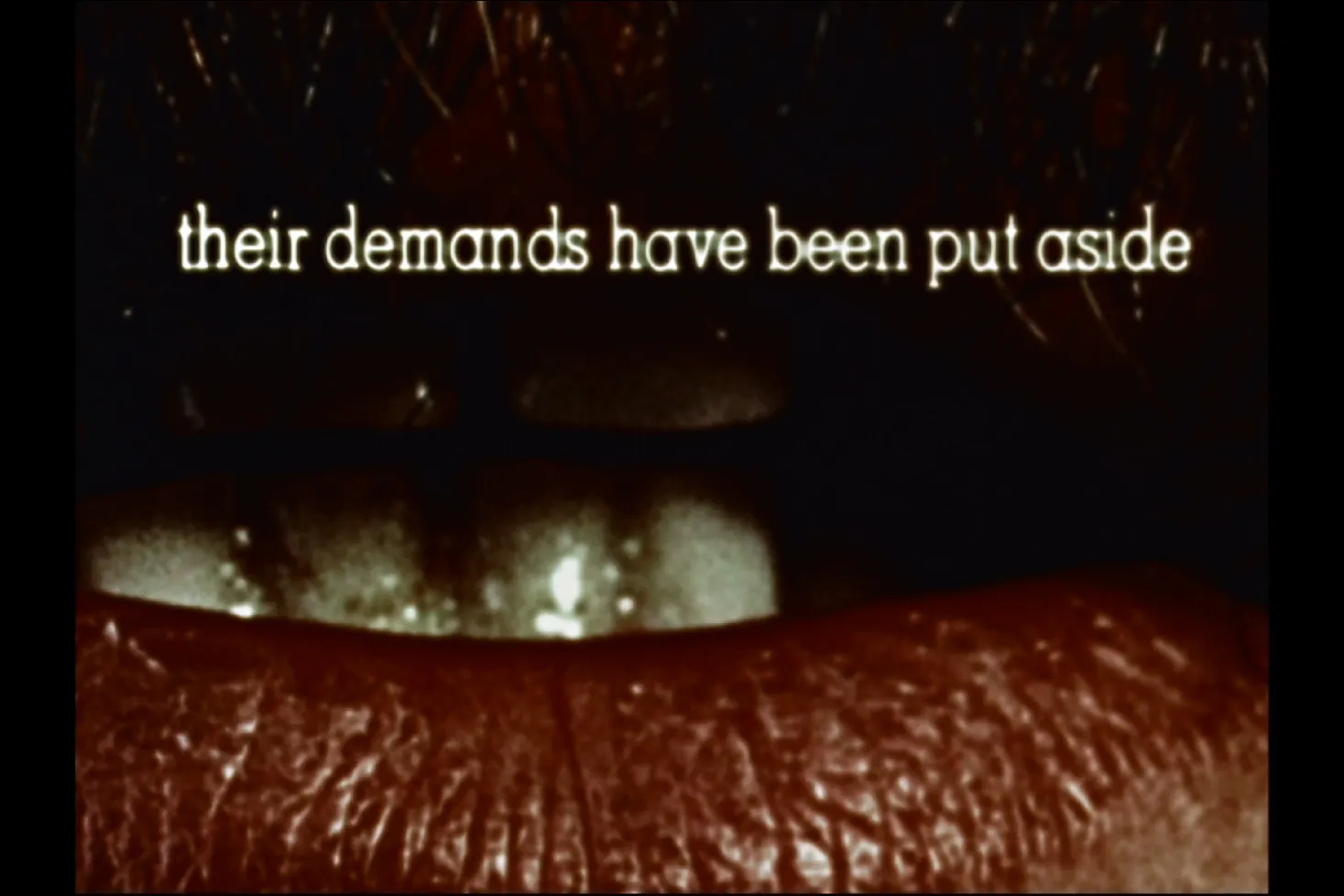
a tight shot of a mouth with text above it reading "their demands have been put aside"

On Screen/Sound: No. 10

Clio Barnard and Joyce Wieland

This two-part screening presents two seminal films made 30 years apart that explore the act of vocalization—both embodied in an on-screen speaker and as sound and images disembodied from the actor.

Canadian artist-filmmaker Joyce Wieland’s Pierre Vallières frames the mouth of Québécois separatist (and leader of the Front de libération du Québec) Pierre Vallières while he presents three corresponding speeches on Mont-Laurier, Quebec History and Race, and Women’s Liberation respectively. Referred to by Wieland as a “mouthscape,” it’s an intense, structuralist film that uses an extreme close-up of Vallières’ mustachioed lips, teeth, and tongue to connect voice and language with colonialism and national struggle.

In contrast, Clio Barnard’s 2010 documentary The Arbor was filmed with actors who precisely lip-synched the words of British playwright Angela Dunbar’s family and friends to tell the story of her short life and her daughter’s corresponding spiral into addiction. Barnard is an artist-filmmaker who has specialized for many years in “verbatim theater” in which audio-recorded documentary testimony is lip-synched by performers. Creating an uneasy and at times dislocating effect, the technique enhances the slippery relationship between image and sound. This, in turn, unsettles the documentary reading of Dunbar’s story and gestures towards the blurring of fiction and reality inherent in dramatization.

PROGRAM

  • Pierre Vallières (1972)
  • Joyce Wieland
  • 


The Arbor


 (2010)
  • Clio Barnard
  • Approximate runtime: 125 minutes

This year-long film series takes a close look at—and listen to—the way filmmakers have employed the sonic dimension of their form to complement, challenge, and reconsider our experience of the moving image.

Presenting cinematic performance, artists’ moving image, and Hollywood feature films, each On Screen/Sound program delves into the relationship between movie sound and image tracks, highlighting some radical examples of the aesthetic power and technical potential of sound in cinema. From musical theater to the music video, experimental shorts to industrially produced features, the series explores the affective and technical relationship between sound and image through the art of Foley, experimental music, found footage, soundtrack imaging, synched, multi-channel, and non-diegetic sound.

Main Image: Pierre Vallières, Joyce Wieland (1972) Film Still. Courtesy of Canadian Filmmakers Distribution Center

Media
Image
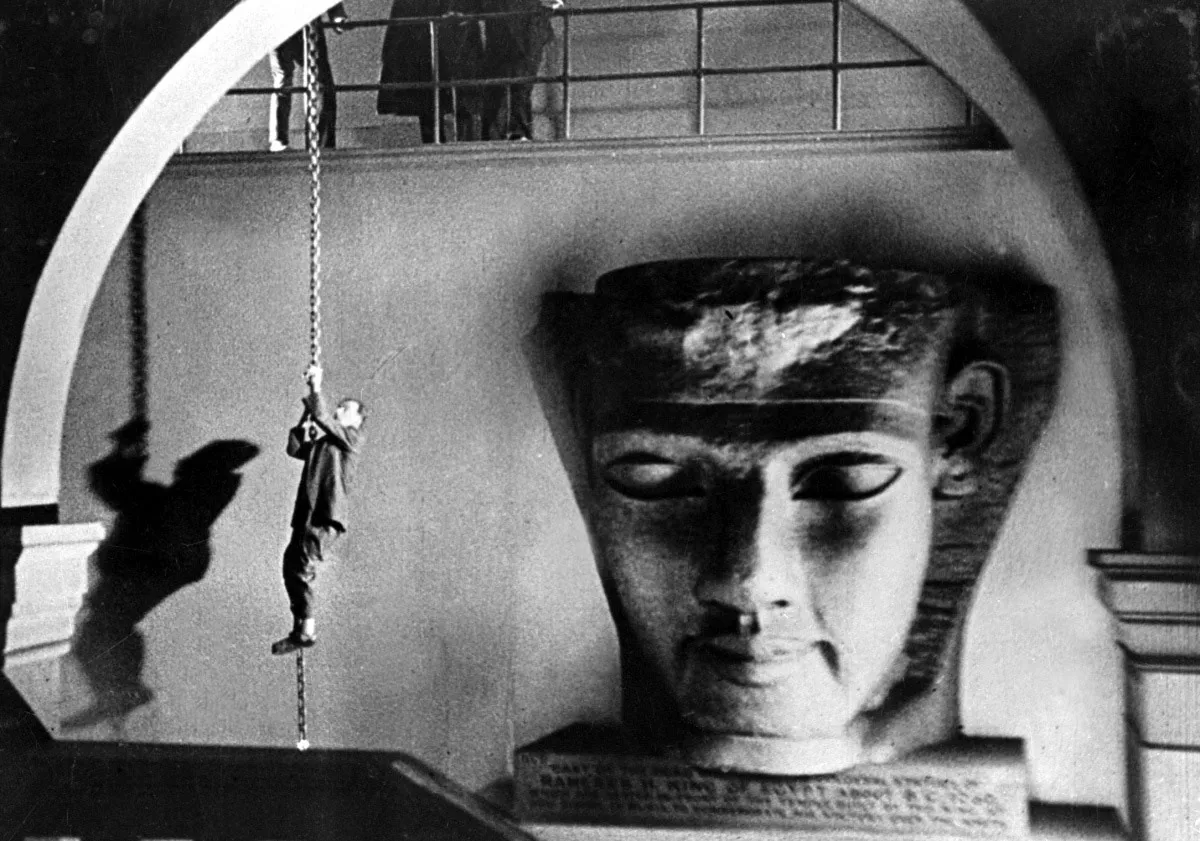
A man on a rope descends next to a massive granite carving of a head.

On Screen/Sound: No. 9

Morgan Fisher and Alfred Hitchcock

Returning for Spring 2016, the On Screen/Sound film series resumes with a pair of films that consider the way that dialogue is dubbed into a film’s soundtrack. 
Presented as a filmed lecture about sound and image, 


Picture and Sound Rushes


 by Morgan Fisher disassembles the fixed relationship between spoken word and image to expose new relationships that intrigue, discomfort, and amuse.

 One of the earliest British “talkie” films, Alfred Hitchcock’s Blackmail


 was originally planned as a silent film. After the production studio jumped at the opportunity to include new sound technologies, the thick-accented lead actress needed her lines “dubbed” in real-time by an offstage speaker. Creating a woozy audio effect that complements the film’s German-expressionist visual influence, Blackmail relentlessly confronts complex issues around assault, murder, and obsession.

PROGRAM
  • Picture and Sound Rushes


 (1973) Morgan Fisher
  • 


Blackmail


 (1929) Alfred Hitchcock
  • Approximate runtime: 120 mins

This year-long film series takes a close look at—and listen to—the way filmmakers have employed the sonic dimension of their form to complement, challenge, and reconsider our experience of the moving image.

Presenting cinematic performance, artists’ moving image, and Hollywood feature films, each On Screen/Sound program delves into the relationship between movie sound and image tracks, highlighting some radical examples of the aesthetic power and technical potential of sound in cinema. From musical theater to the music video, experimental shorts to industrially produced features, the series explores the affective and technical relationship between sound and image through the art of Foley, experimental music, found footage, soundtrack imaging, synched, multi-channel, and non-diegetic sound.

Main Image: Film still from Blackmail (1929). Courtesy Rialto Pictures, New York.

Image
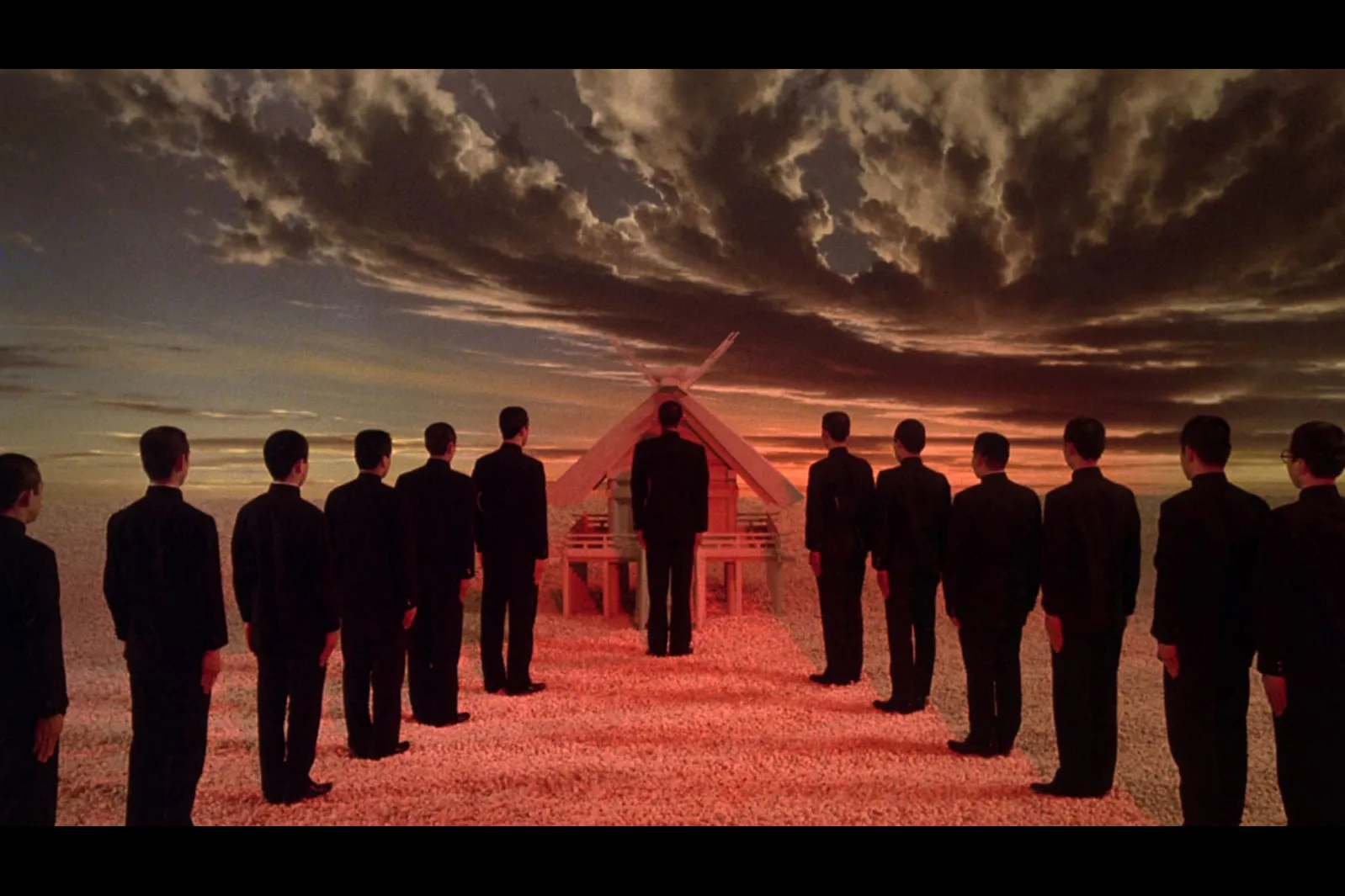
Thirteen men dressed in black in a surreal landscape standing with backs to the camera in a 'V' formation with one man at the point, facing an alter.

On Screen/Sound: No. 5

Jimmy Joe Roche and Dan Deacon / Paul Schrader

The fifth screening in On Screen/Sound grapples with ideas of the real, acted, and reenacted as intertwined in both image and music.

A melting pot of experimental performance and sound, quiet beauty, pop fantasy and social commentary, Hilvarenbeek concocts a surreal post-consumer utopia in the Dutch countryside. Directed and scored by longtime collaborators Jimmy Joe Roche and musician Dan Deacon, the faux documentary follows a heavy-metal cow herder, a gang of thrift-store naturalists who hunt with automatic weapons, and other imagined historical personalities.

Paul Schrader’s 1985 film Mishima was called by Roger Ebert the “most unconventional biopic I've ever seen, and one of the best.” Framing the life and ritual suicide of Japanese writer Yukio Mishima with interwoven dramatizations of his novels, the film establishes a visual and sonic palate for each element. The film score by Philip Glass—one of his earliest—musically parallels the narrative elements and is regarded as one of his finest.

PROGRAM:

Main Image: Mishima: A Life in Four Chapters (1985) Paul Schrader / Music: Philip Glass. Courtesy Swank Motion Pictures.