Study no. 50

Ryan Ross Smith

Study no. 50 is an evening-length composition for six percussionists, and is an exploration of the compositional and representational possibilities enabled by animated music notation. In particular, Study no. 50 demonstrates the creation of rhythmic complexity in a generative and persistent context, and the reimagining of the musical score as not simply prescriptive, but sculptural.

Image
Oneohtrix DJiing to a packed crowd in a haze black box studio.

Garden of Delete

Oneohtrix Point Never

When Oneohtrix Point Never (aka electronic musician Daniel Lopatin) was last at EMPAC, he and visual artist Nate Boyce developed and debuted a multimedia stage show for the world tour supporting his 2013 album R Plus Seven, released by Warp Records. Upon returning in 2015, he was in residence to develop and premiere the live stage show for his upcoming Garden of Delete world tour.

Daniel Lopatin is known for creating intricate electronic music that is characterized by its emphasis on melody and hypnotic pacing, conceptually stylized structures, and extreme use of audio-processing techniques. Early incarnations of Oneohtrix Point Never date back to the mid 2000s and drew heavily on the stylistic forms of cutout-bin ambient and new age records, combined with the structure and abrasiveness of noise music.

Newer work has focused on sample-based constructions, while  R Plus Seven drew on procedural poetry and ersatz instrumentation to produce a cryptic meditation on the materiality of sound itself. In addition to his own studio work in 2014/2015, Lopatin toured with Nine Inch Nails, produced Antony's album, and exhibited an installation in collaboration with Boyce at MoMA PS1.

Main Image: Oneohtrix Point Never in Studio 1—Goodman in 2015. Photo: EMPAC/Rensselaer.

Media
Image
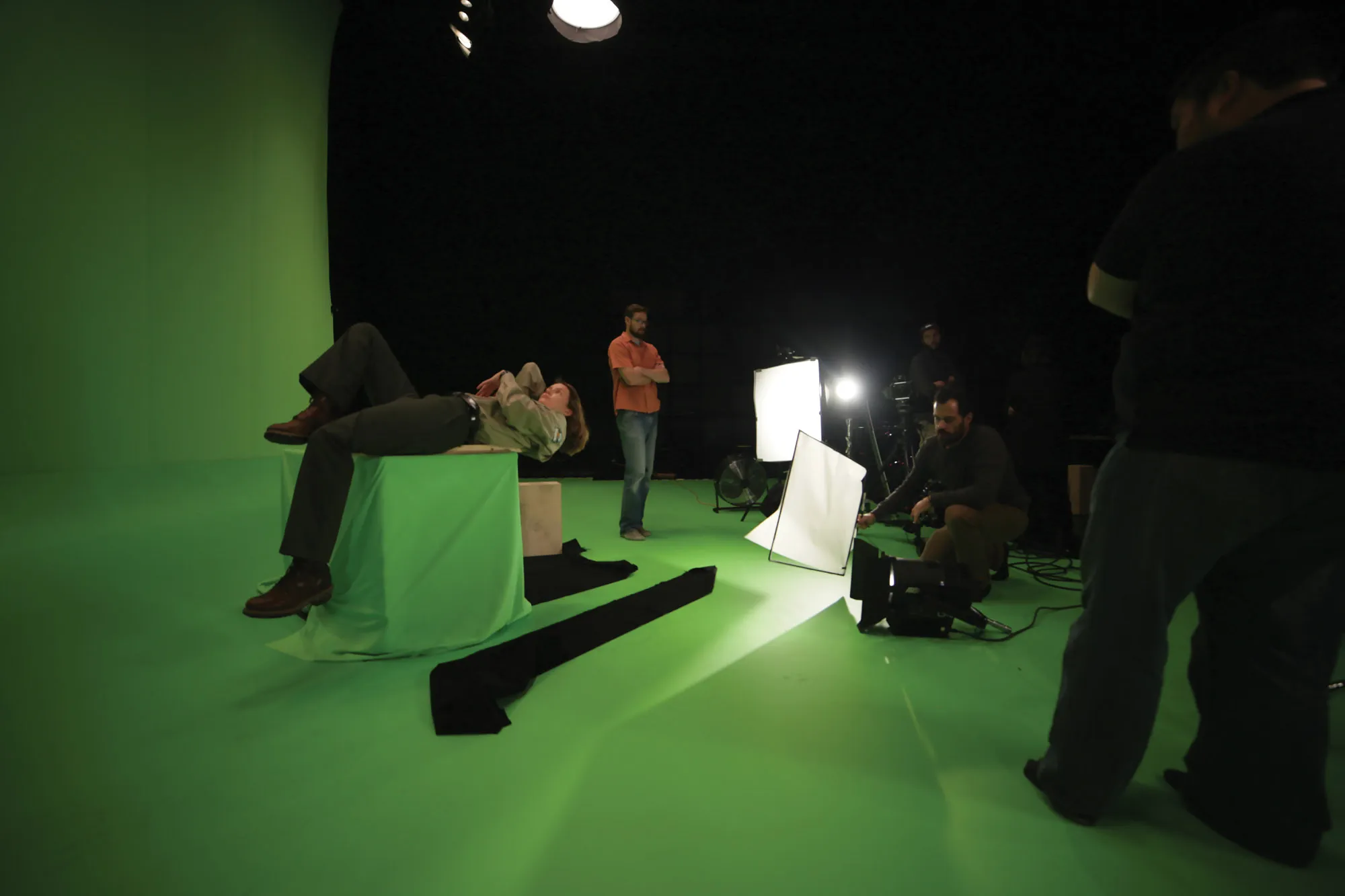
Five people doing various production tasks work around a woman laying on a green cube in green room.

Mt. Rush

Elizabeth Orr

Brooklyn-based artist Elizabeth Orr presents a multimedia performance and her work-in-progress film Mt. Rush, a moving-image work that interprets the language and visuality of online political marketing and the alarmist fundraising strategies of contemporary American politics.

Mt. Rush tracks the day-to-day activities of a Mount Rushmore park ranger attempting to navigate an onslaught of interactive fundraising emails in the lead up to the presidential election. Presenting a fantastical, near-future narrative that combines animation and live-action, the performance utilizes video technologies to animate a fictional email interface reminiscent of the holographic voice- and gesture-controlled screens imagined by contemporary science fiction. Serving as both narrator and foil to the ranger, the emails perform the politics of emergency so pervasive in today's systems of governance.

Main Image: Production still from Mr. Rush (2015). Photo: Mick Bello / EMPAC.

Image
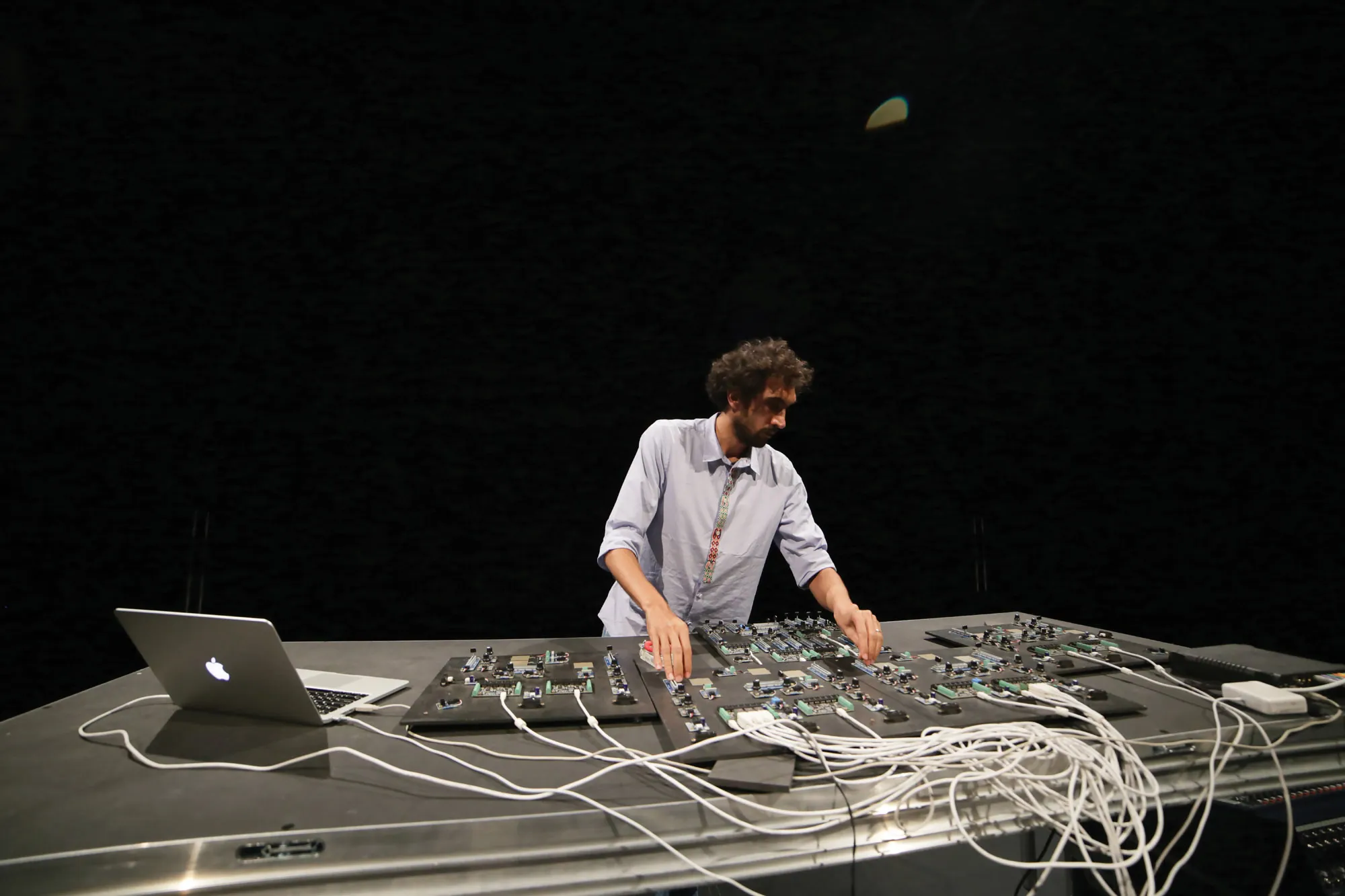
Tarek Atoui standing in front of a sound board.

WITHIN 2

Tarek Atoui

For WITHIN 2, Tarek Atoui will present his approach to performing sound in relation to anticipation, tactile sound, visual noise, gestures, and the multimodal nature of hearing. The workshop is a platform for performance, research, improvisation, and spatial composition that explores not only auditory perception among our diversity of listening abilities, but the social relations of public space, techniques of visual communication, and architectural tactility.

Atoui presented the project's first incarnation, WITHIN, as a series of performances and workshops during the Sharjah Biennial in 2011 and has continued to research principals of sonic architecture (in particular, the system of DeafSpace, developed by Hansel Bauman at Gallaudet, Washington) in the development of instrument-building techniques. During his time at EMPAC, Atoui will work with Distinguished Research Professor of Music Pauline Oliveros to engage students in designing and building new instruments and interfaces for performance.

WITHIN 2 is presented in collaboration with Berkeley Art Museum and Pacific Film Archive, Berkeley.

Main Image: Tarek Atoui in residence at EMPAC in 2015. Photo: Mick Bello/EMPAC.

Image
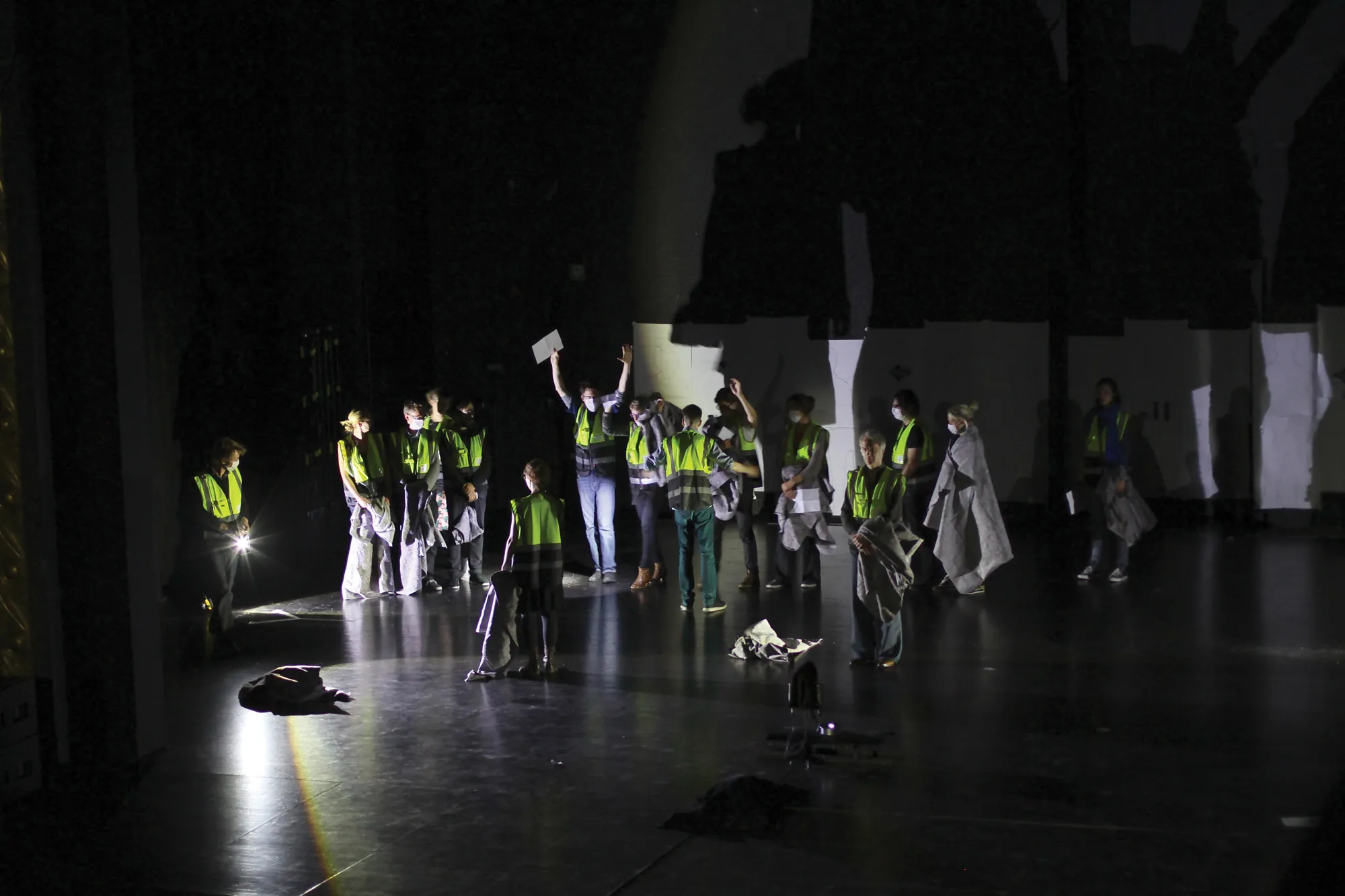
A small crowd of people wearing neon yellow construction vests gathered on a dark stage it only by a flashlight.

The Extra People

Ant Hampton

The Extra People is an immersive theater performance where 15 audience members sit and watch another 15 onstage. After half an hour, they find themselves replacing those onstage, only to discover that another 15 have appeared in the seats they've left behind. And so it continues, through the hours… The theater building—dormant, empty, and unlit save for your flashlight—seems unable to be deactivated. And within this strange process, wearing headphones and a "hi-viz" vest, you're cast along with everyone else as some kind of extra. But an extra for what?

Starting with Rotozaza's Etiquette (2007), Ant Hampton has created nine "autoteatro" works, including his recent Bessie-award-winning collaboration with Tim Etchells for library reading rooms (The Quiet Volume). The "protocol" behind autoteatro—automated processes (often audio) where instructions are given to audience members who find themselves experiencing the work from the inside—is now taken back to the theater building to operate on a larger scale.

The Extra People was commissioned by EMPAC and will premiere in the space where it was developed via the artist-in-residence program.

Ant Hampton (British, b.1975 Fribourg, Switzerland) made his first show as Rotozaza in 1998, a project which ended up spanning performance, theater, installation, intervention and writing-based works, and often focusing on the use of instructions given to unrehearsed “guest” performers, both on stage and in public settings. Solo projects include ongoing experimentation around “live portraiture”: structured encounters with people from non-theatrical milieu.


Main Image: The Extra People (2015). Photo: EMPAC/Rensselaer
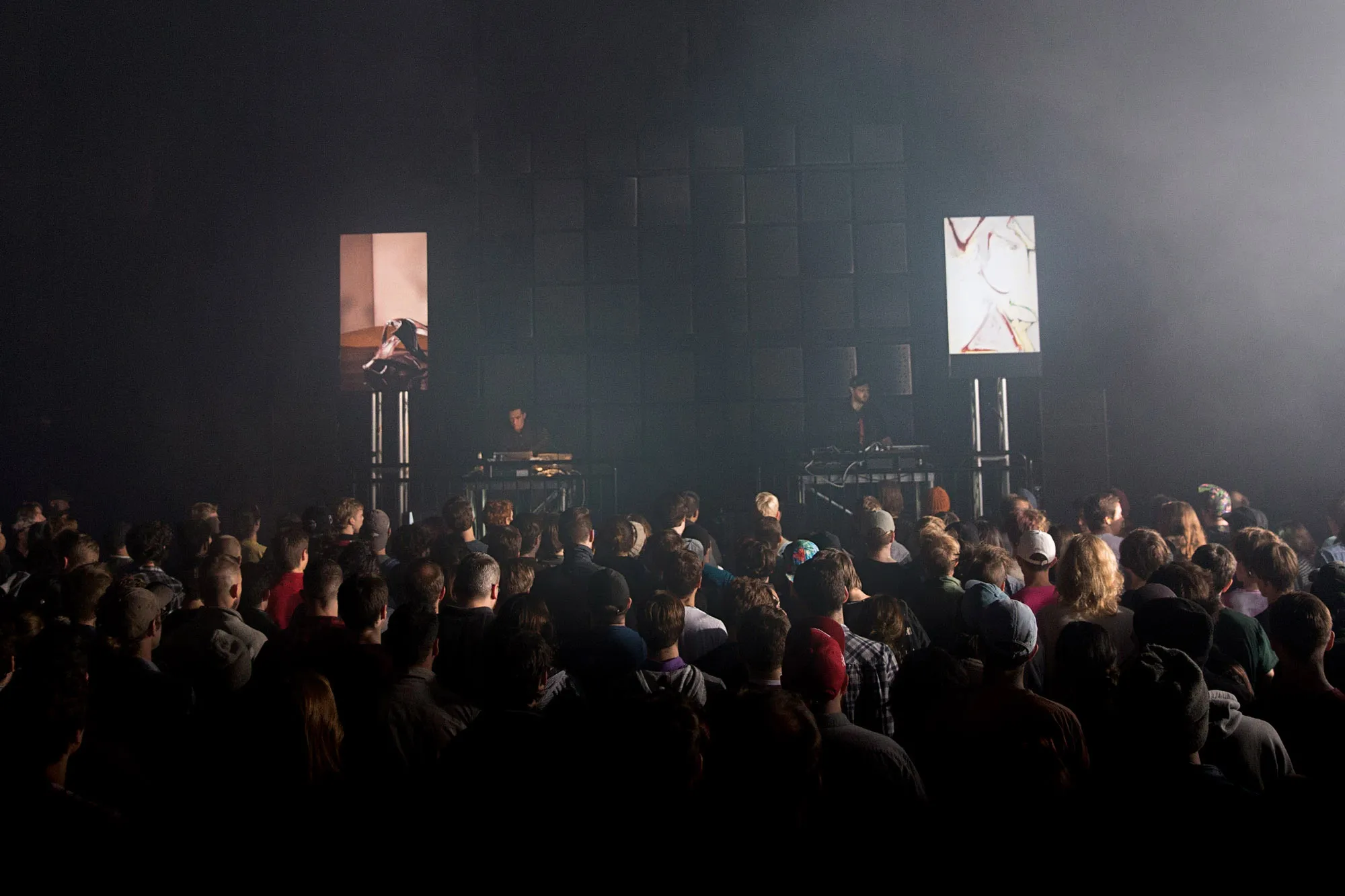
vhvl + Daedelus + Ikonika

From three stylistically distinct corners of the global beat scene, a trifecta of dance-music heavyweights descended on Troy for a late-night concoction of hip-hop, house, and techno.

Harlem-based sample queen vhvl builds dark, knotty collages from source material that can be both elemental and intimate at turns. Hers is a brand of hip-hop steeped as much in the rivers and forest of the Hudson Valley as in the concrete hustle of the city. Her 2013 debut myrrh drew comparisons to early Flying Lotus, and in 2014 she released a split cassette with Ras G on Stones Throw Records.

LA beat-scene veteran Daedelus is one of the most inventive and prolific figures to have emerged from the legendary weekly showcase Low End Theory at LA club the Airliner. Taking a decidedly baroque approach to his craft, the tech-savvy maestro conducts bottomless banks of sound from his preferred device—the gestural Monome. He’s released 15 records with taste-making labels such as Brainfeeder and Ninja Tune, as well as collaborations with Prefuse 73, Busdriver, and the Gaslamp Killer.

London-based producer and DJ Ikonika has fast become a star of Hyperdub Records, one of the most esteemed purveyors of UK bass music. Her 2014 EP Position built on a career that has synthesized house, dubstep, grime, garage, electro and R&B. When she isn’t touring globally, she runs the label Hum + Buzz.

Image
Ellie Ga sitting in front of two screens displaying vintage pictures of people at the beach.

Eureka, a lighthouse play

Ellie Ga

Eureka, a lighthouse play, is a narrative performance that centers on the Great Lighthouse of Alexandria. Since its destruction in a series of earthquakes during the Middle Ages, many people have tried to reconstruct the lighthouse, Eureka recounts Ellie Ga’s journey, beginning in 2012 when she joined a marine archaeology program at Alexandria University in pursuit of the lighthouse alongside a quixotic cast of characters. The narrative describes the journey of an artist lost in the process of research, drawing upon an archive of photographs, video footage, documents, artifacts, and interviews. Like the growing cast of unlikely characters, it becomes harder and harder to piece together the lighthouse’s history from the thousands of stones that are barely
visible on the seabed. 

Ellie Ga’s multimedia essays are part field dispatch, part artist’s notebook, part home-movie, part poem. Her projects often develop in collaboration with scientific and historical institutions such as the Explorers Club (New York), Tara Arctic Expeditions (France/Arctic Ocean) and The Center of Maritime Archaeology, Alexandria (Egypt). 

Main Image: Ellie Ga on stage in studio 2 for A Lighthouse Play in 2015. Photo: EMPAC/Rensselaer.

Media
Image
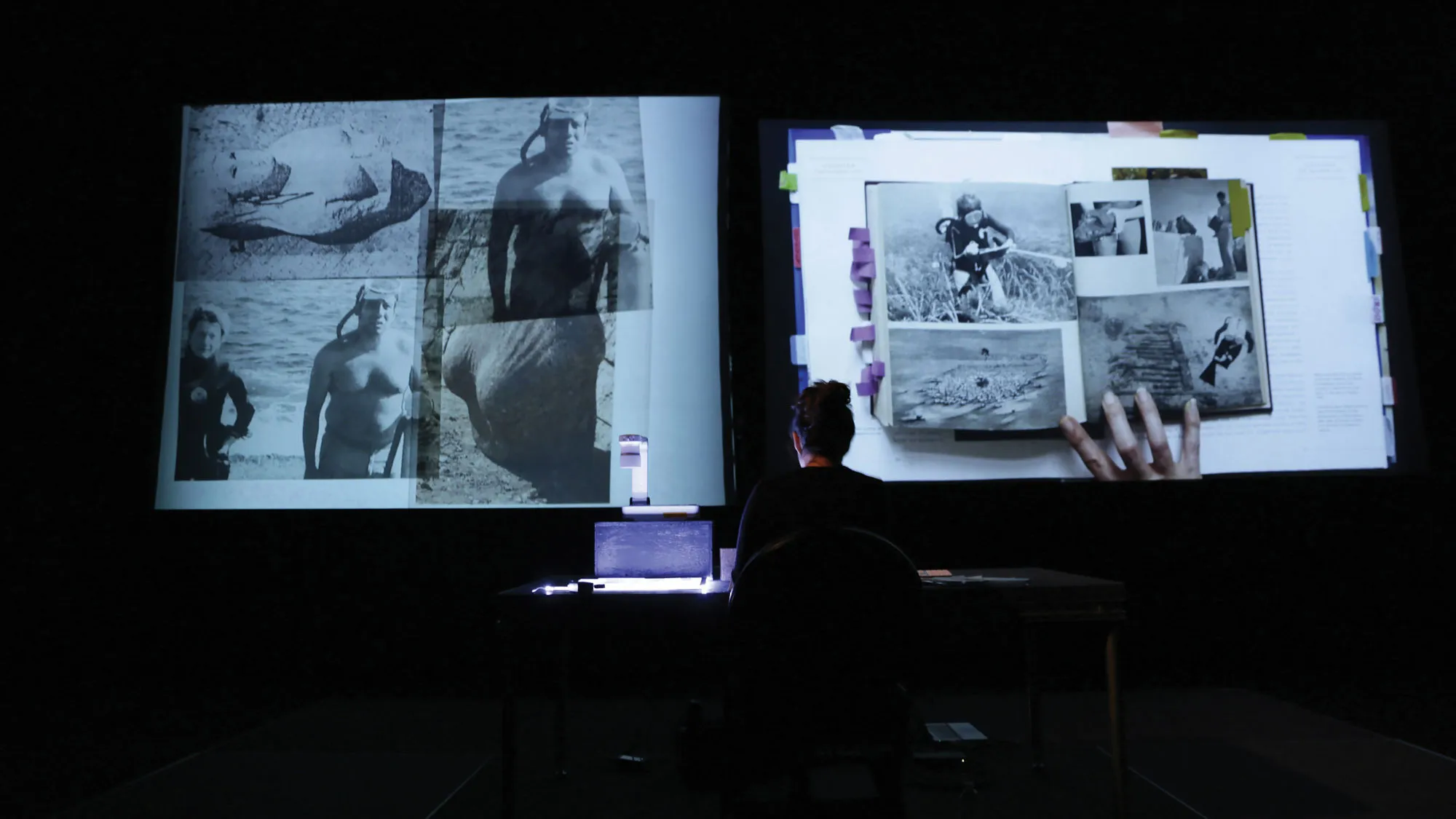
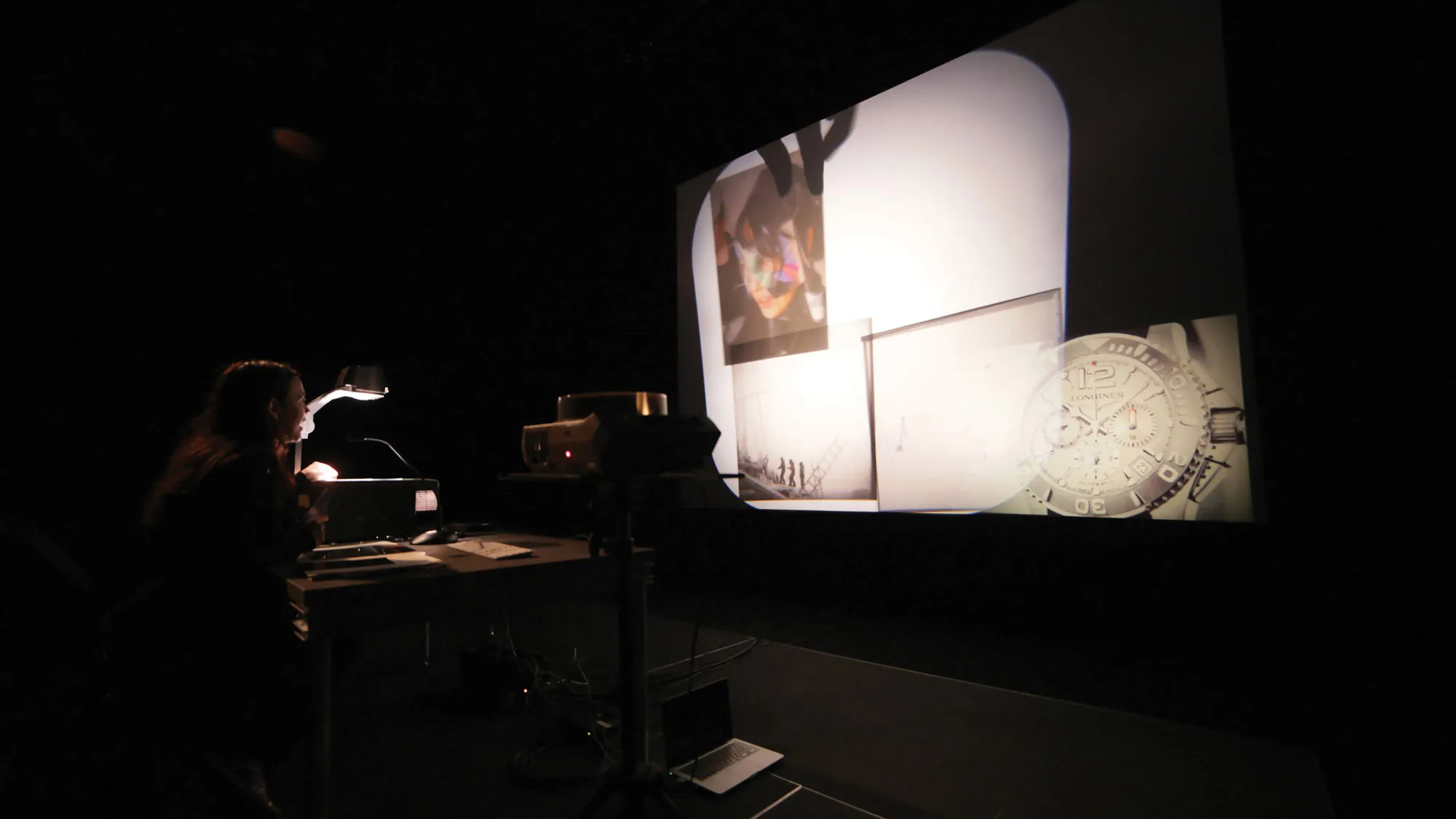
a woman in the theater controlling a manual projector.

The Fortunetellers

Ellie Ga

The Fortunetellers is a narrative performance inspired by American artist Ellie Ga’s six-month residency on the Tara, a research boat frozen in the Arctic ice, drifting near the North Pole to gather scientific data. The work mixes live storytelling, recorded sound, still images, and film to bring new insight and intimacy to Ga’s Polar adventure. Combining her memories with a curious mix of photographs, videos, annotated sketches, maps, and travel logs she archived along the way, Ga conjures up the rituals of daily life in the Arctic night.

The Fortunetellers tells an eclectic mix of stories, from the history of the yoyo to the evolution of oceanic currents and their impact on planktonic life, all framed against a study of ancient and modern forms of fortune telling, which Ga uses as a metaphor for the past and future of the Arctic landscape. 

Main Image: Ellie Ga's The Fortunetellers in Studio 2 in 2015. Photo: EMPAC/Rensselaer.