Image
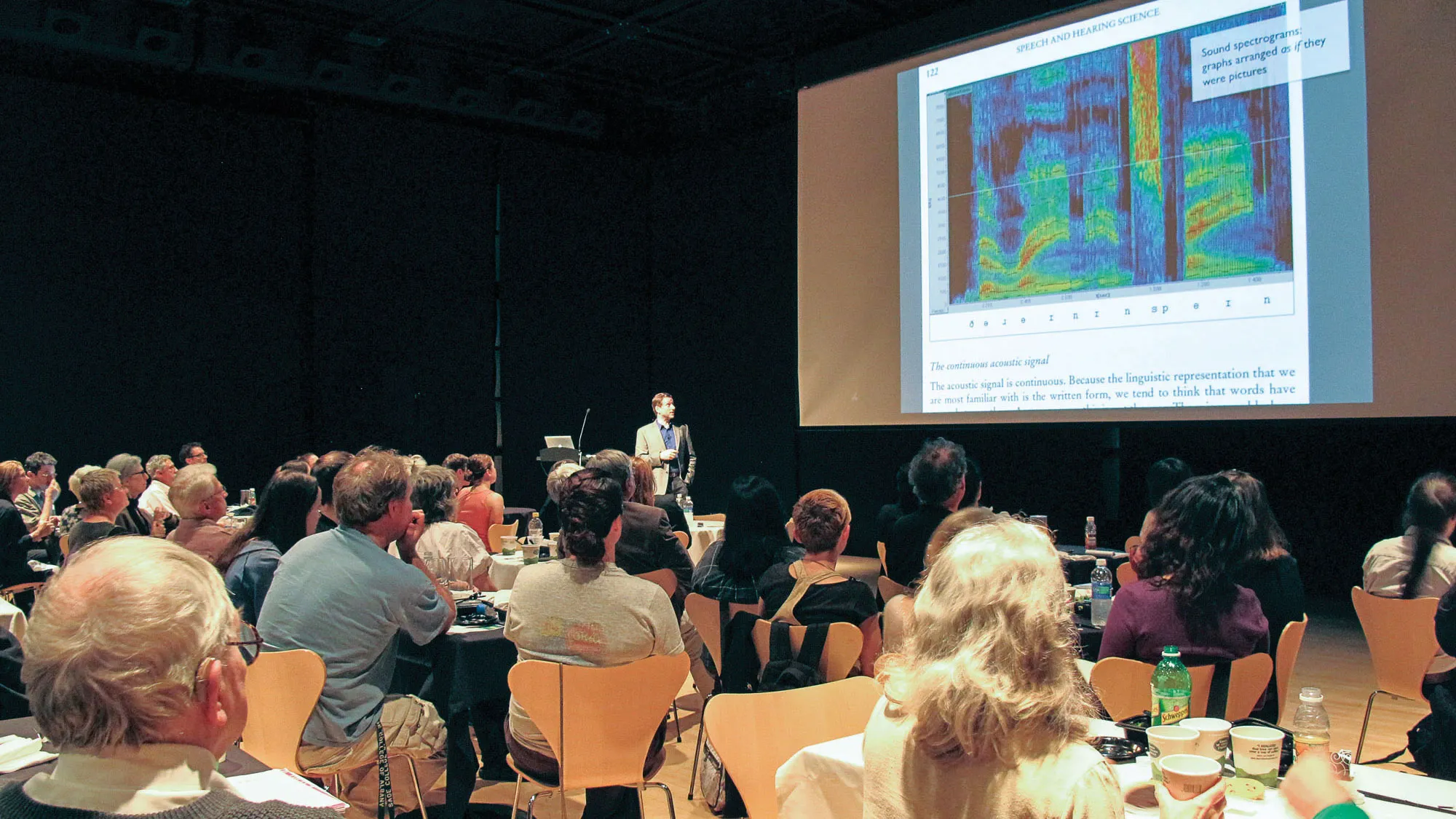
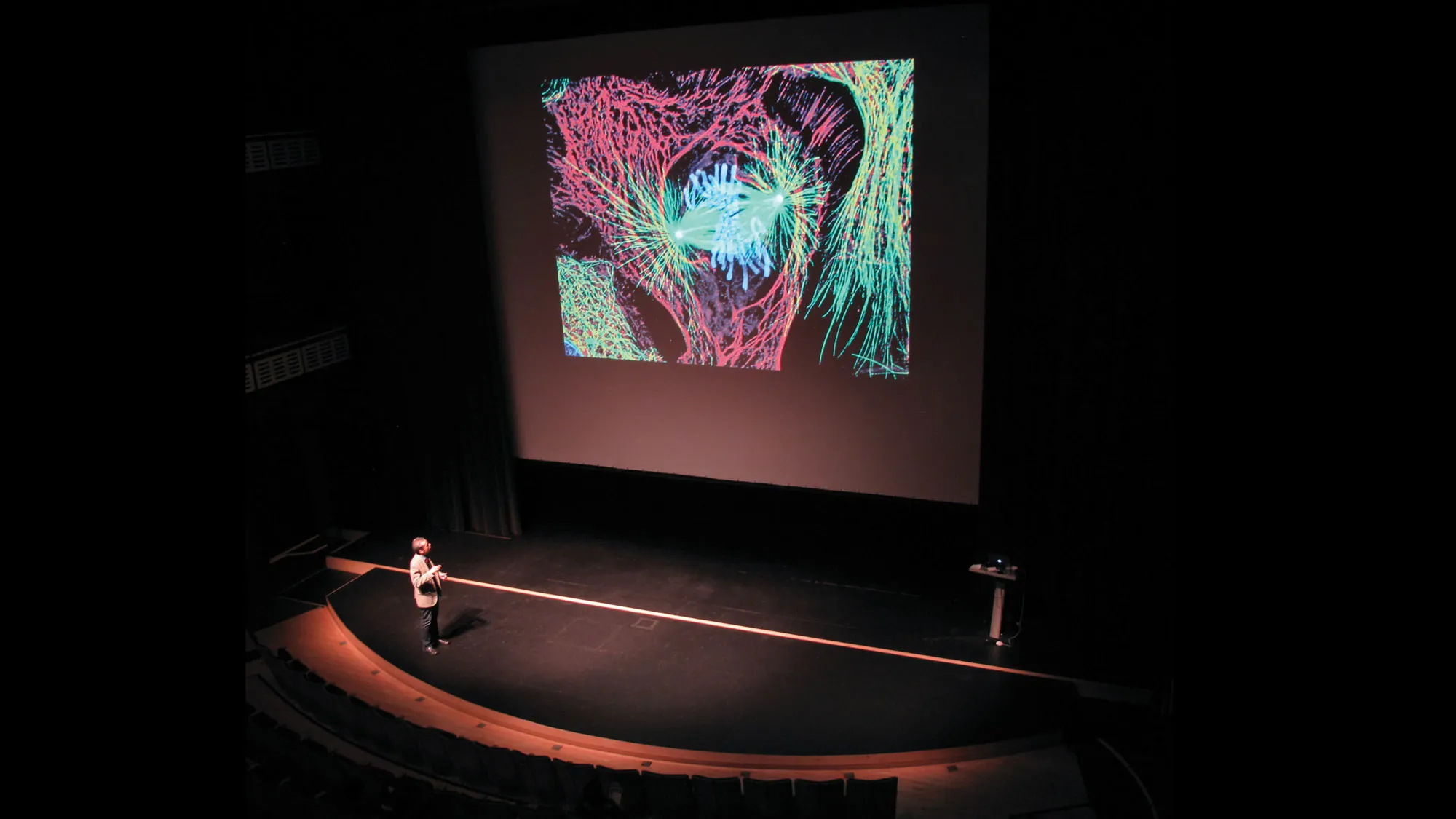
Robert Lue giving a lecture.

Robert Lue

Using Art to Express and Advance the Scientific Process

Robert Lue, biologist and director of life sciences education at Harvard, will discuss the vital and transformative role that visualizations play in both science research and education. Lue is the founder of BioVisions, a collaborative initiative led by Harvard scientists to improve the beauty and precision of science visualization. Biovisions is responsible for animations such as The Inner Life of the Cell (2006) and Powering the Cell: Mitochondria (2010).

Robert A. Lue is a professor in the Department of Molecular and Cellular Biology and the director of life sciences education at Harvard University. Lue received his PhD in biology from Harvard and has taught undergraduate courses there since 1988. He has a longstanding commitment to interdisciplinary teaching and research, and chaired the faculty committee that developed the first integrated science foundation in the country to serve multiple science majors, as well as the needs of pre-medical students. He has also developed award-winning multimedia on several topics including Understanding HIV and AIDS (1999), Biochemistry: Interactive Learning (2000), The Inner Life of the Cell (2006), and Powering the Cell: Mitochondria (2010). His media publications have been praised for their scientific accuracy, educational utility, and vibrant 3-D reconstructions of the world within the cell. He has co-authored undergraduate biology textbooks, and has chaired educator conferences on college biology for the National Science Foundation, and on supporting diversity in science for the Howard Hughes Medical Institute and the National Institutes of Health. Lue also has a long history in pre-college education, and consequently founded and directs a Harvard life sciences outreach program that now serves over 50 high schools across Massachusetts, New Hampshire, and Rhode Island. As the faculty director of the Harvard-Allston Education Portal, he also oversees the integration of undergraduate education with community outreach on Harvard’s new Allston campus.

Main Image: Robert Lue in the theater during his talk in 2011. Photo: EMPAC/Rensselaer.
Image
Michael Century

Extraordinary Freedom Machines

Vignettes in the History of a Multimedia Century

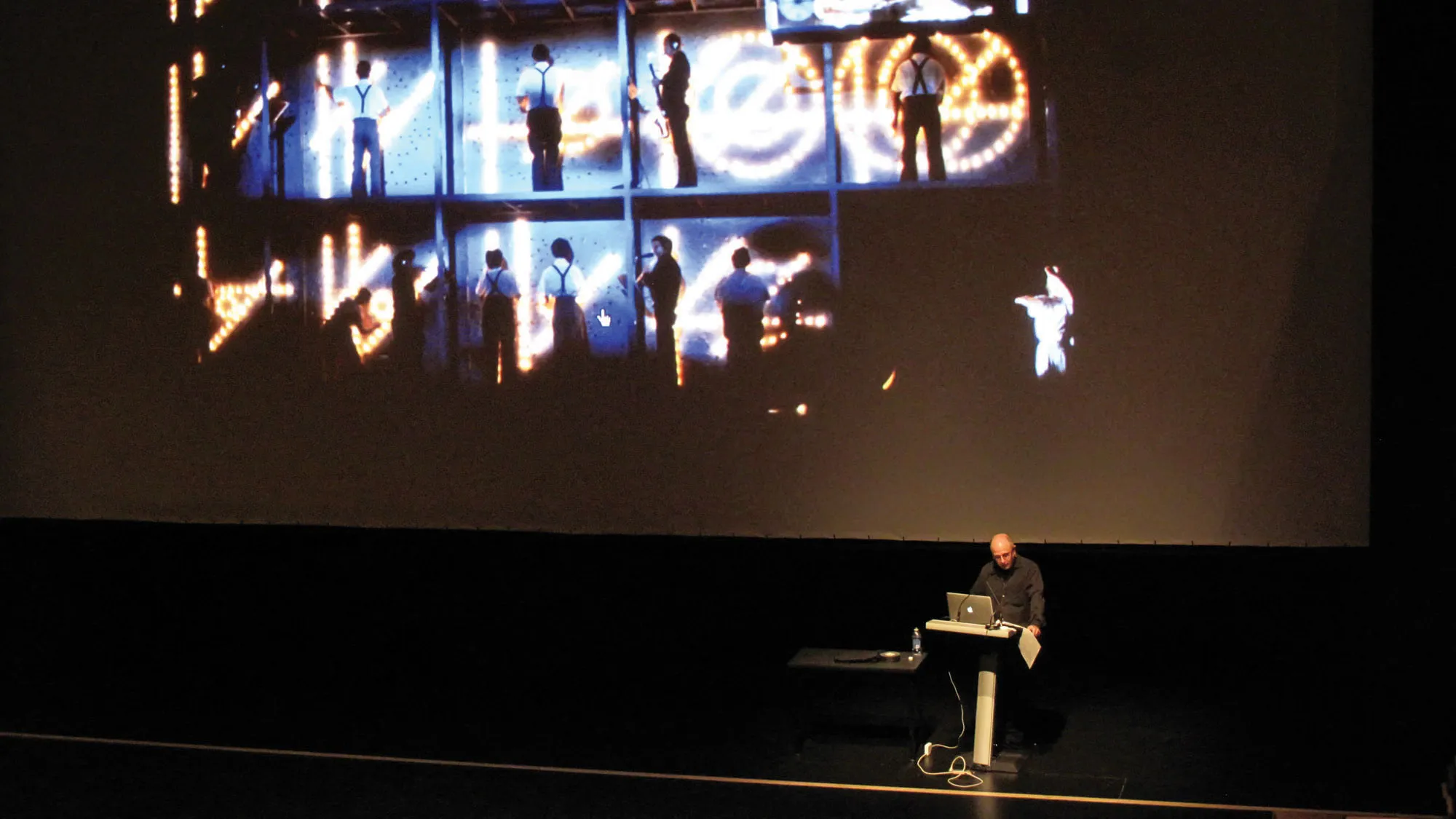
In this three-part lecture series, Michael Century presents a fresh reading of today’s experimental media art scene by surveying key works, personalities, and movements of the past century and laying out a framework for forecasting its future. Organized around an intertwined pair of narratives, the lectures are richly illustrated with stills and video, sound recordings, and live musical demonstrations. The underlying narratives are driven by contrasting conceptions of the role of the artist and of time. The first sees the artist as anticipating the powers and dangers of techno-scientific progress through idiosyncratic experiments, with time as linear and progressive. The second sees the artist as re-constituting past historical ruptures and forgotten pathways to envision alternative ways of being contemporary with a more cyclical sense of progress.

September 27— Après le Deluge, 1913-1947

Surveys key moments and tensions within the historical avant-garde, with examples from dance, abstract film and animation, experimental music, and critical theory.

October 11— The Panacea That Failed, 1948-1974

Balances the celebratory heyday of art and technology against a rising tide of disillusionment and media-archeological irony.

November 29— Virtuality to Virtuosity, 1974-2011

Moves beyond what some have termed the crisis of new media art today—its relegation to “cool obscurity” by the institutional art world, and its simultaneous co-option by the information industries—by sketching out an anti-anti-utopian view of the potential of experimental artworks as “extraordinary freedom machines.” By framing the future of art and technology in terms of creative freedom, this concluding lecture weaves together and synthesizes strands from the first two. The argument unfolds in two parts, examining in turn the micro-temporality of specific media art works, and the macro-temporality of aesthetic systems designed to enable future creativity. In the first part, “virtuality” is explained as an intensification of time; selected works by David Rokeby, Bill Viola, and Steve Reich illustrate the potential in art to vitalize and open new horizons of experience. The second part embraces political philosopher Hannah Arendt’s notion of freedom as “virtuosity”, entailing the creation of a sustainable public space for creative dialogue and collaboration. Examples are drawn from the histories of video art in the 1970s (Dan Sandin’s Image Processor), the history of computer music in the 1980s (the invention of the MAX programming language), and recent new media art (Loops by the Open Ended Group).

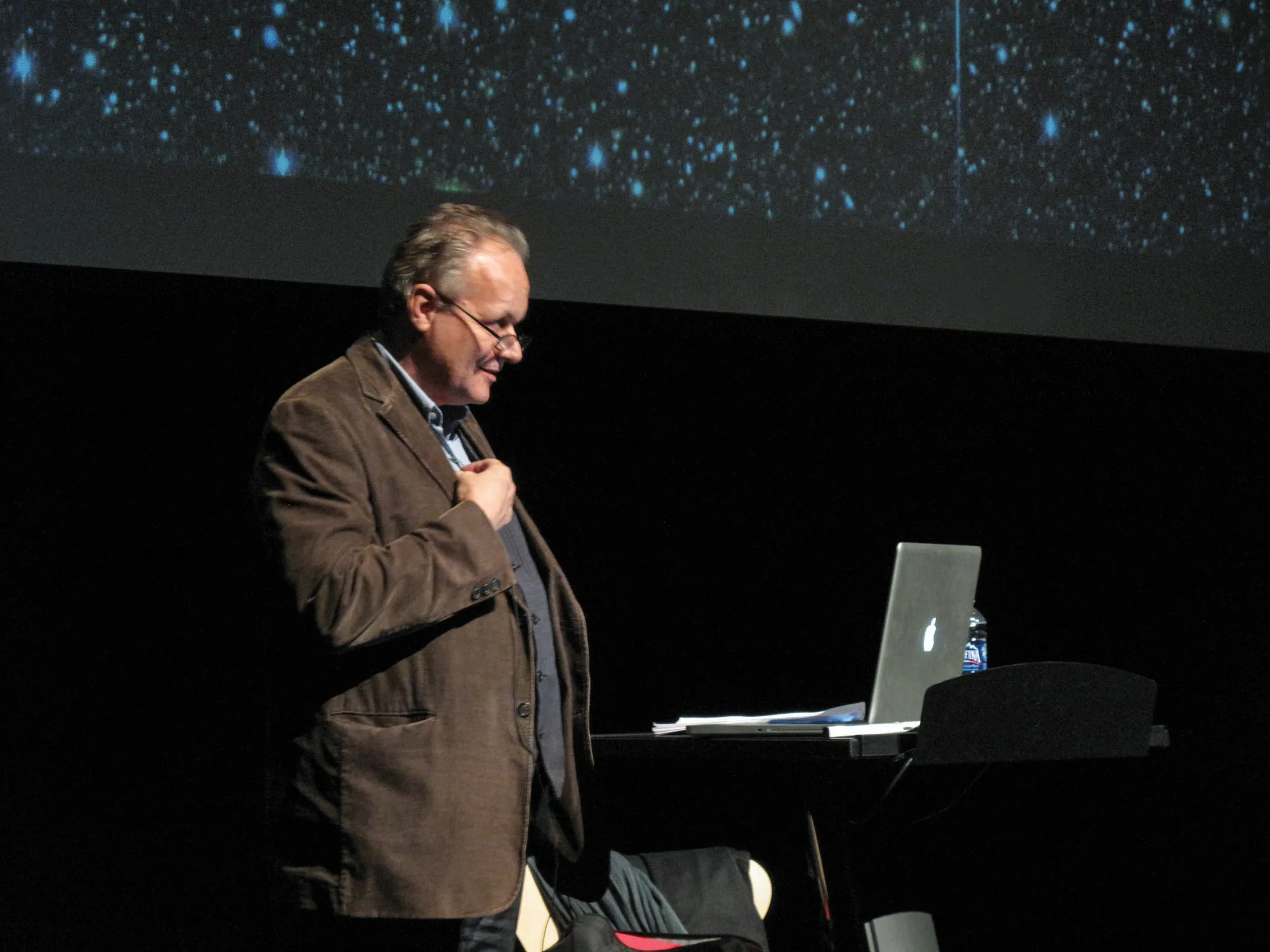
Main Image: Michael Century in the theater during his talk, 2011. 

Media
Image
James Elkins giving a lecture

James Elkins

Visual Practices Across the University

In this interdisciplinary talk, art historian James Elkins discussed the wide range of practices related to image interpretation that take place across a university: lawyers, doctors, scientists, engineers, humanists, and social scientists all produce images and present arguments about them in different ways. This talk assessed the state of scholarship on links between art and science, arguing that it is possible to consider images in various fields without using tropes from the humanities or social sciences as explan-
atory tools—in other words, by letting the different disciplines speak in their own languages. 

Elkins is the E.C. Chadbourne Professor in the Department of Art History, Theory, and Criticism at the School of the Art Institute of Chicago; in addition to Visual Practices Across the University, his books include On Pictures and the Words that Fail Them.

Observer Effects offered a dialogue between the fields of art and science. The title was derived from the principle in physics that the act of observation transforms the observed, an idea that has been influential in philosophy, aesthetics, psychology, and politics.

Main Image: James Elkins in studio 1. 

Image
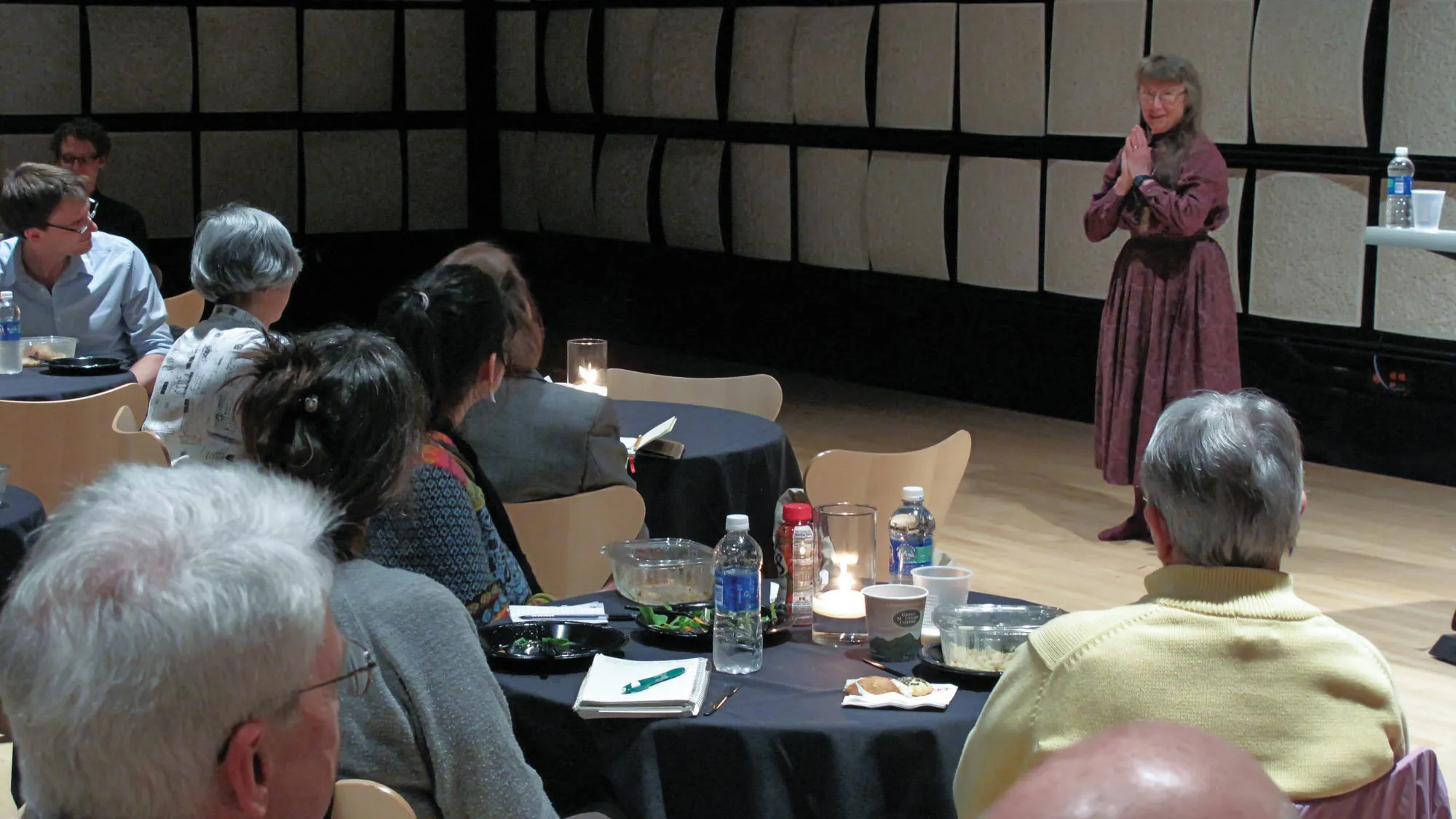
Maxine Sheets-Johnstone addressing people seated on round tables.

Maxine Sheets-Johnstone

Movement and Mirror Neurons: A Challenging and Choice Conversation

Dancer, choreographer, and philosopher Maxine Sheets-Johnstone will lead a discussion over dinner on the primacy of movement in perception and our fundamental understanding of aliveness. A topic rarely acknowledged in the history of western philosophy and science, Sheets-Johnstone will examine how our understanding of space and time is fundamentally conditioned by our experience of movement. Observer Effects invites thinkers to present their highly integrative work in dialogue with the fields of art and science. This lecture series takes its title from a popularized principle in physics that holds that the act of observation transforms the observed. Outside the natural sciences, the idea that the observer and the observed are linked in a web of reciprocal modification has been deeply influential in philosophy, aesthetics, psychology, and politics.

Image
Jean-Pierre Luminet

Jean-Pierre Luminet

Jean-Pierre Luminet, an expert on black holes, cosmology, and cosmic topology, will discuss the relationship between principles of aesthetics and the study of the cosmos through the work of artists, philosophers, and scientists, from Plato to Kepler, and Dürer to Escher.

A collaborator of Gérard Grisey's Le Noir de l'Étoile, Luminet will discuss his role in the spatial percussion piece about the death of a pulsar, which will be performed by Les Percussions de Strasbourg in EMPAC's Concert Hall on Saturday, February 26, 2011.

Observer Effects invites thinkers to present their highly integrative work in dialogue with the fields of art and science. This lecture series takes its title from a popularized principle in physics that holds that the act of observation transforms the observed. Outside the natural sciences, the idea that the observer and the observed are linked in a web of reciprocal modification has been deeply influential in philosophy, aesthetics, psychology, and politics.

Image
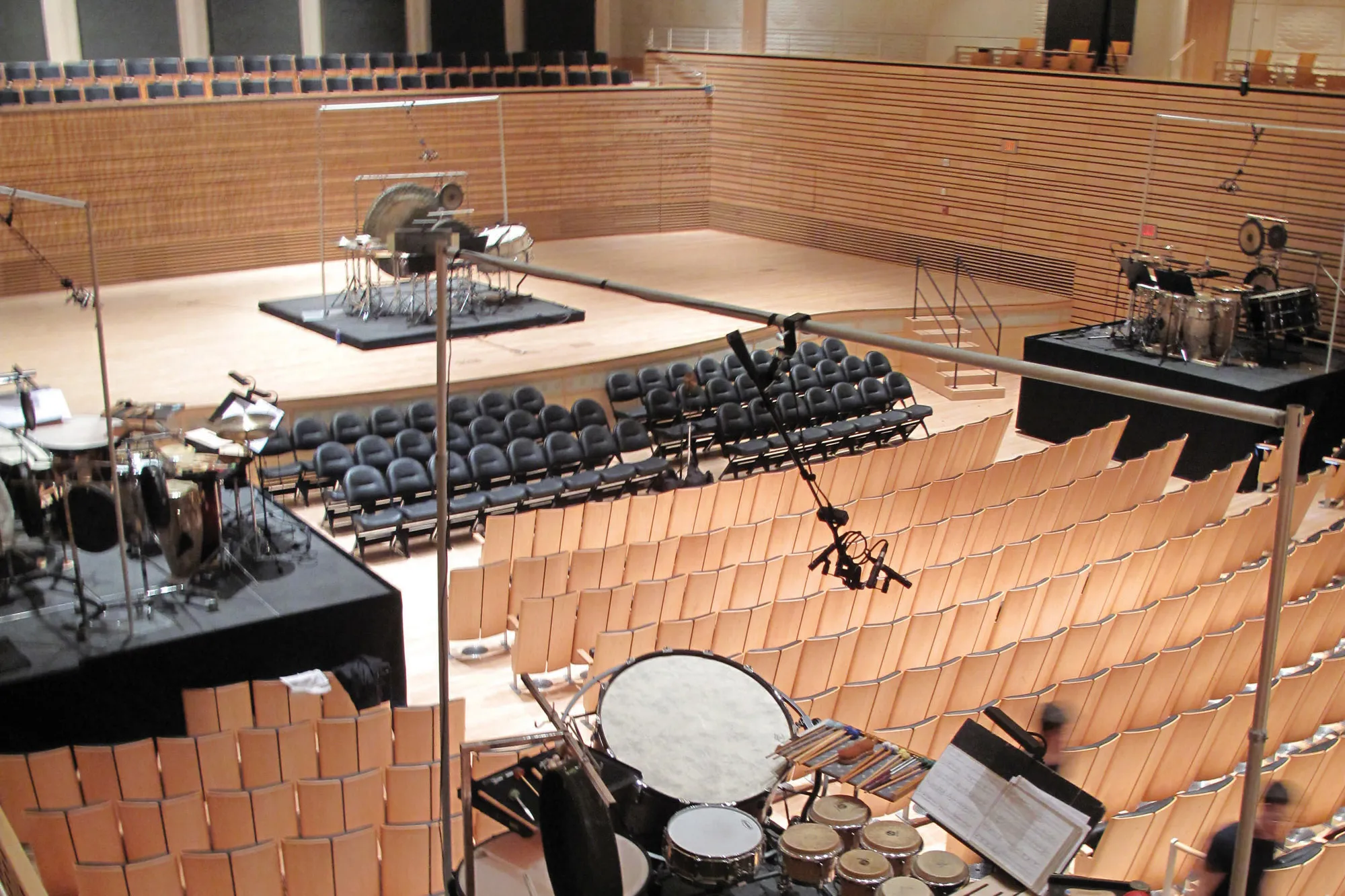
multiple drum sets circularly arranged in the empty concert hall.

Le Noir de l’Étoile

Gérard Grisey

Radio signals emitted by two pulsars from a distant place in the universe become part of a work played on six percussion stations that surround the audience. This piece was commissioned from Gérard Grisey by the French ensemble Les Percussions de Strasbourg, which will perform at EMPAC. Grisey has been called one of the founders of so-called spectral music (a label he later disowned). In this piece, the evolution of timbres played by instruments, and of sound colors as they expand, explore the great complexities of what our ears can hear, and take the audience on a journey inside the sound of music. Not only is the space "out there" brought into the Concert Hall, the hall itself is made part of the experience by placing the performers, instruments, and loudspeakers around the audience.

Jean-Pierre Luminet: The Harmony of the Spheres, from Antiquity to Contemporary Music

Jean-Pierre Luminet is a French astrophysicist. He is the research director for the Centre National de la Recherche Scientifique (CNRS), and is a member of the Laboratoire Univers et Théories (LUTH) of the observatory of Paris-Meudon. He was awarded the 2006 Great Prize of the French Academy of Sciences for science communication, and the 1999 International Georges Lemaitre Prize for his original contributions to cosmology and astrophysics. He has published in journals such as Nature, Astrophysical Journal, and Astronomy and Astrophysics, among others. He has also published three acclaimed novels and several poetry books.

Main Image: Setup in the Concert Hall for Le Noir de l’Étoile in 2011. Photo: Brian Chitester

Image
Martin Kemp

Martin Kemp

Splashing Around in Art and Science from the Renaissance to Now

Certain kinds of art and science originate in the intuiting of deep structures that lie behind appearance—what Martin Kemp, emeritus research professor in the history of art, Oxford University, has called "structural intuitions." Some of the structures are static, relying upon fundamental forms of geometry; some disclose the process itself, like splashing; and others are the result of complex processes, like folding. In this dinner discussion, Martin Kemp will speak on themes that run across art, architecture, design, and various sciences from the Renaissance to today. Observer Effects invites thinkers to present their highly integrative work in dialogue with the fields of art and science. This lecture series takes its title from a popularized principle in physics that holds that the act of observation transforms the observed. Outside the natural sciences, the idea that the observer and the observed are linked in a web of reciprocal modification has been deeply influential in philosophy, aesthetics, psychology, and politics.

Media
Image
David Rothenberg playing saxophone to a small audience seated in a cafe inside of EMPAC.

Music—Language—Sound and Nature

Mark Changizi, Johannes Goebel, & David Rothenberg

An evening of thoughtful exchange on how music, speech, language, birds, and whale songs interrelate, including three short lectures followed by a lively dialogue between participating speakers and audience. This discussion brings together the diverse fields of music, acoustics, evolutionary neurobiology, and naturalist philosophy. For an hour leading up to the talk, David Rothenberg will perform in Evelyn's Café.

Image
Abstract beams of red and white light in almost bamboo like tubes.

Live. Max. Max For Live. What is it Good for?

Robert Henke

In 2001, the revolutionary Ableton Live software gave birth to a new way of creating and performing electronic music. Ableton Live’s production of endless repetitions of hypnotic beats became a huge success, especially among dance music producers. However, the academic music world has remained highly skeptical, as Abelton Live is not believed to be ideal for a seated audience listening to carefully crafted details. The modular and infinitely personal structure of a framework like Max/MSP has been a long-term standard tool in academic computer music, but Live and Max seem to cater to a very different audience. What happens when those two worlds become more integrated?

Image
Abstract beams of red and white light in almost bamboo like tubes.

Live Performance in the Age of Supercomputers

Robert Henke

How can we convincingly perform computer based auditive or audiovisual art in today’s world? The possibilities for sound generation and manipulation are almost limitless; however, the interfaces, as well as our experience and practice with them, are not nearly as advanced. Robert Henke discusses theoretical ideas of performing live and contrasts them with a critical review of his own concerts.