Image
Transparent and frosted pyramids lit internally by yellow light. Scaffolding holding various cubes are placed throughout the pyramids.

Inhabiting Other Worlds: Microgravity, Perception, Physiology, and Design

A special panel organized by the Rensselaer School of Architecture, with Rachel Armstrong, M.D (Bartlett School of Architecture), Heidi DeBlock, MD (Albany Medical Center), Ted Krueger (School of Architecture, Rensselaer), and Deepak Vashishth, PhD (BioMedical Engineering, Rensselaer). The panelists will discuss the architectural and medical challenges of a lunar medical center like the ones envisioned in the exhibition.

Image
Chris Salter

Just Noticeable Difference (JND)

Chris Salter

In collaboration with Marije Baalman, Harry Smoak, Vincent de Belleval, Justine Chibuk, Thomas Spier, Duncan Swain and Brett Bergmann In Just Noticeable Difference (JND), Chris Salter ratchets down the level of sensory information to the threshold of the perceptible. On entering the installation the visitor is immersed in an environment of near-total darkness, insulated against external sound and vibration. Sparked by an array of sophisticated built-in sensors and devices that emit micro-levels of tactile, auditory, and visual feedback, the slightest motions cause this environment to respond, though so subtly as to test the limits of both perception and interpretation. The result is a revelatory aesthetic experience in which noise shifts towards order, sensation becomes sense, and the apparent randomness of threshold sensory impressions gives way to a new understanding of meaning in the relationship among body, self, and external world. On Thursday, March 4 at 7 PM in the Theater, Chris Salter and Rensselaer faculty Michael Century, Mark Changizi, and Ted Krueger with other experts will all take part in a panel discussion on topics including thresholds of perception, multi-modal perception, and the use of research in art practice.

Image
About ten dancers stretching on the floor of a studio as three men look on.

Panel discussion on R-Research

Dr. Philip Barnard, Scott deLahunta, Wayne McGregor

A discussion on projects and directions of R-Research – the research branch of Wayne McGregor | Random Dance – which initiates and implements new research collaborations across disciplines including dance, neuroscience, cognitive science, biology, philosophy and technology.

Image
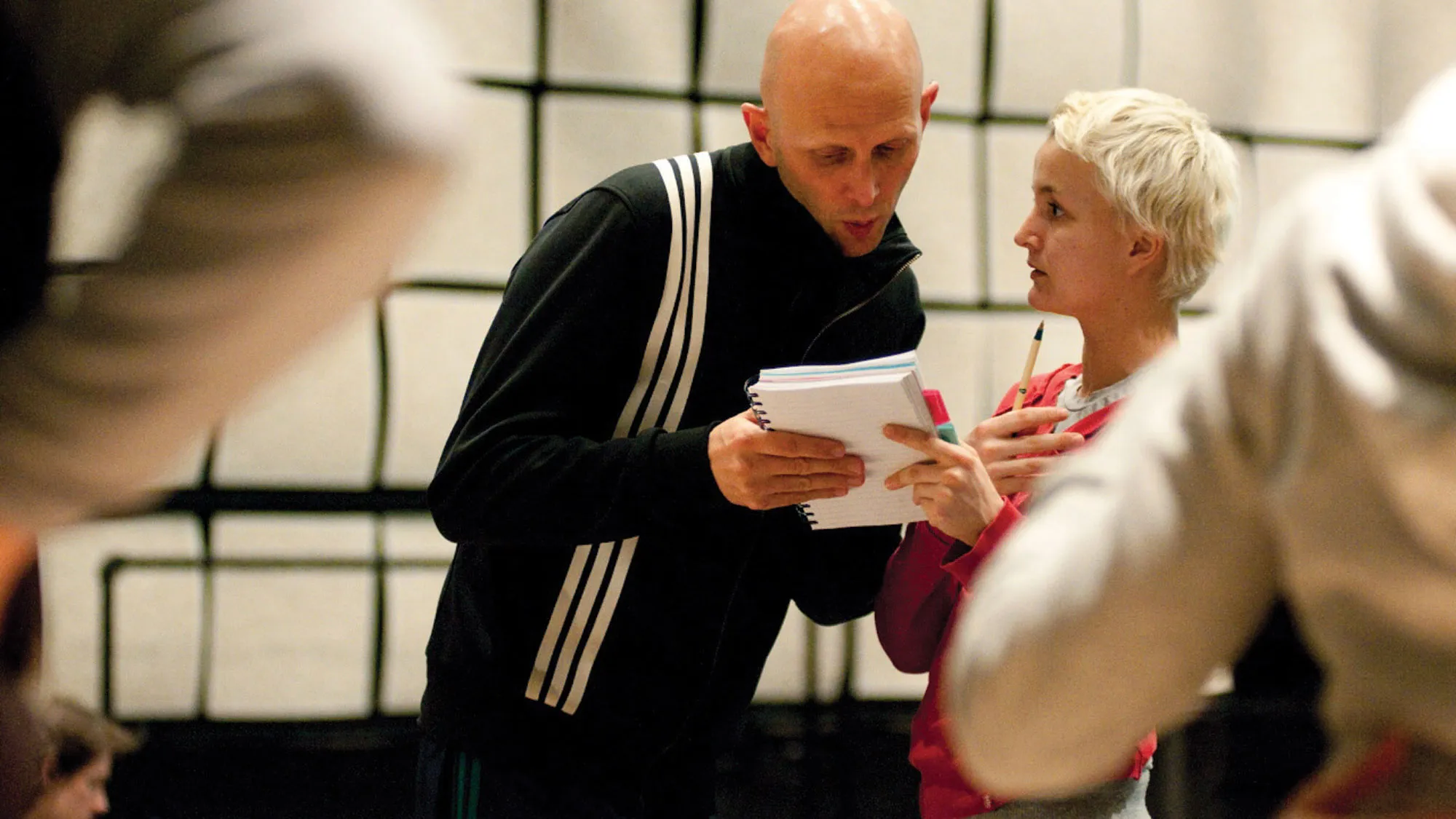
A bald man wearing a black tack suit leaning over and examine a spiral notebook be presented to him but a woman with short blonde hair and a red top.

Real-time reactive systems

rAndom International

rAndom International will give a talk on their award-winning design and art work. Best known for large-scale public installations combining technology, media, design and art, they play with real-time reactive systems that offer viewers an intuitive body-based experience. rAndom International is in residence at EMPAC, working with Wayne McGregor | Random Dance to create the scenography for the company’s new work, the sequel to ENTITY. Working at the fringes of innovation in science, art and design, rAndom International have developed a series of projects and installations that aim to re-interpret the ‘cold’ nature of digital-based work by providing the viewer with the opportunity for a more hands-on experience with technology. Their work emphasizes the ephemeral quality of information, harbors an intense curiosity toward experimental processes, and includes a body of diverse installations, commissioned works, and performance projects. More recently, rAndom International has investigated the potential of endowing usually inanimate objects and environments with behavioral qualities. As part of their evolving relationship with Wayne McGregor | Random Dance, they are designing the scenography for the company’s current work in progress to be premiered in 2010.

Image
Philip Barnard

Cognition, Emotion and Action

Dr. Philip Barnard

Dr. Philip Barnard, program leader at the Medical Research Council’s Cognition and Brain Sciences Unit in Cambridge and a collaborator and research advisor to Wayne McGregor | Random Dance, will present a talk on his research work.

Image
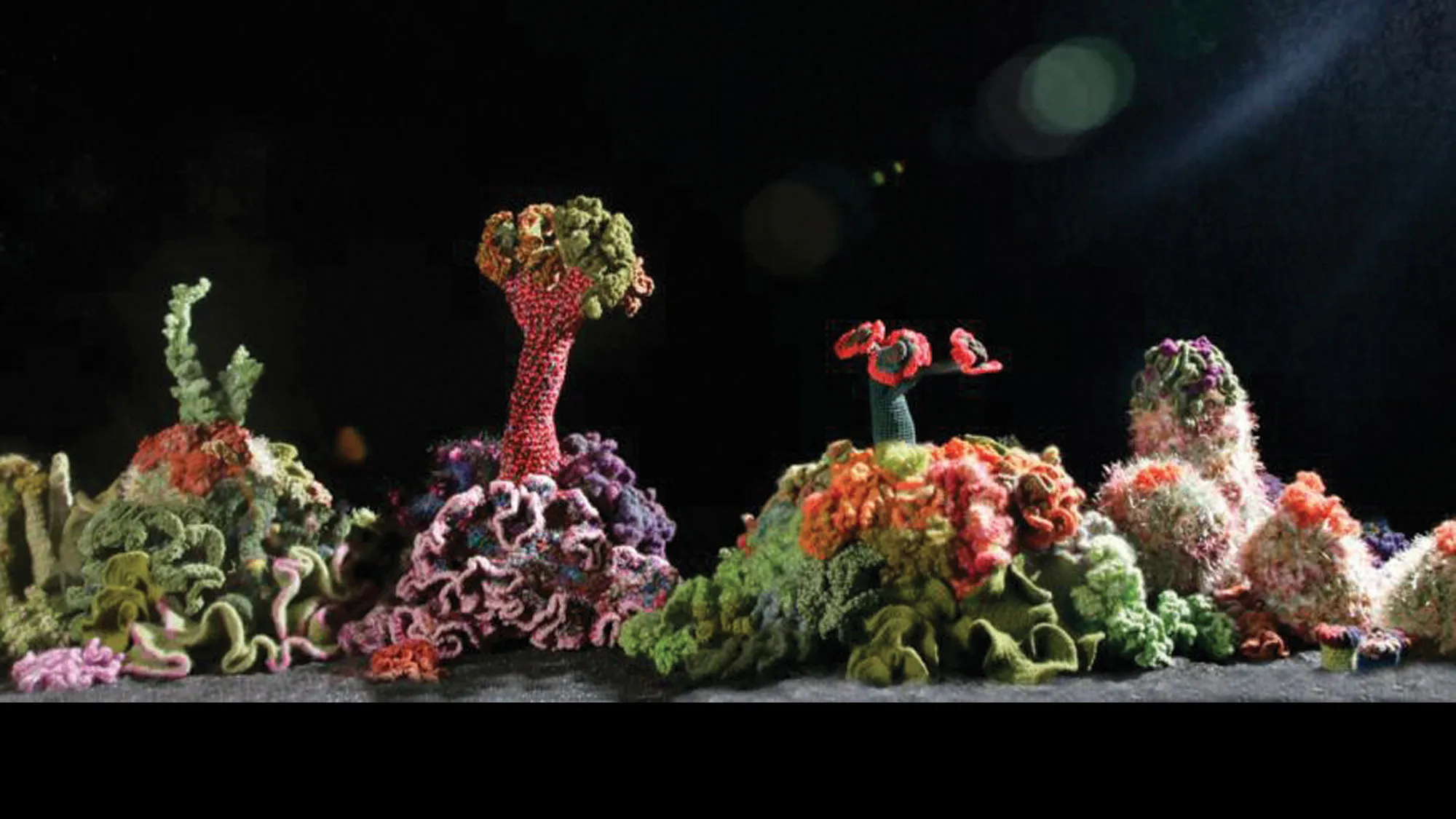
Crochet colorful coral on a black table and background.

Mathematics as Poetic Enchantment

Margaret Wertheim

To most people mathematics is an arid discipline, disembodied, abstract and remote from the human sphere. To mathematicians, their subject sings; it is the language in which they articulate an exquisite formal poetics. In this dinner and discussion, Margaret Wertheim, a science writer and exhibition curator, will present her work with the Institute For Figuring, a Los Angeles based organization devoted to the poetic and aesthetic dimensions of science and mathematics.

VIDEO
Image
Paul Ramirez Jonas in lecture.

Paul Ramirez Jonas

Visual artist Paul Ramirez Jonas will present a lecture on time, expiration and memory through his work. The themes of time, expiration and memory are central to visual artist Paul Ramirez Jonas’ work. In his projects, what looks like invention is but a re-enactment and what seems to be an exploration is but walking in someone else’s footsteps. However, not unlike a musician reading from a score or an actor performing from a play, the pre- existence of a text does not preclude passion, enthusiasm, humor and new meanings. In a Glass Hour is a series devoted to exploring the topic of time from the diverse perspectives of media theorists, scientists, artists, historians, journalists and others. Taking a broadly interdisciplinary approach to this singular subject, the series will point to the elasticity of this pervasive subject.

Image
Two people with backs to the viewer interacting with a wall projection controlled by a bald man sitting at a computer in the foreground.

From technological research to sensual engineering

A review on the use of interactive media in performance

Frieder Weiss, creator of the interactive media environment in Chunky Move’s Glow, will talk about his participation in and observations of the ‘dance tech’ genre over the last 15 years. Weiss calls himself an ‘engineer in the arts’. In an entertaining yet critical review, he will describe developments and achievements in the genre of interactive performance, illustrated with numerous videos of works from the recent years. As he will show, not only has the technology changed in this time period, but also the very paradigms of using interactivity have shifted tremendously. Weiss will describe a recipe for successful interactive experiences, including brief overviews and demonstrations of software and hardware systems. Artistic implications will be addressed. Weiss will also be giving an introductory workshop exploring artistic uses of video motion sensing technologies on Saturday December 5th. The workshop is FREE but limited to 15 participants and requires a reservation

Image
Alfred Crosby

Alfred Crosby

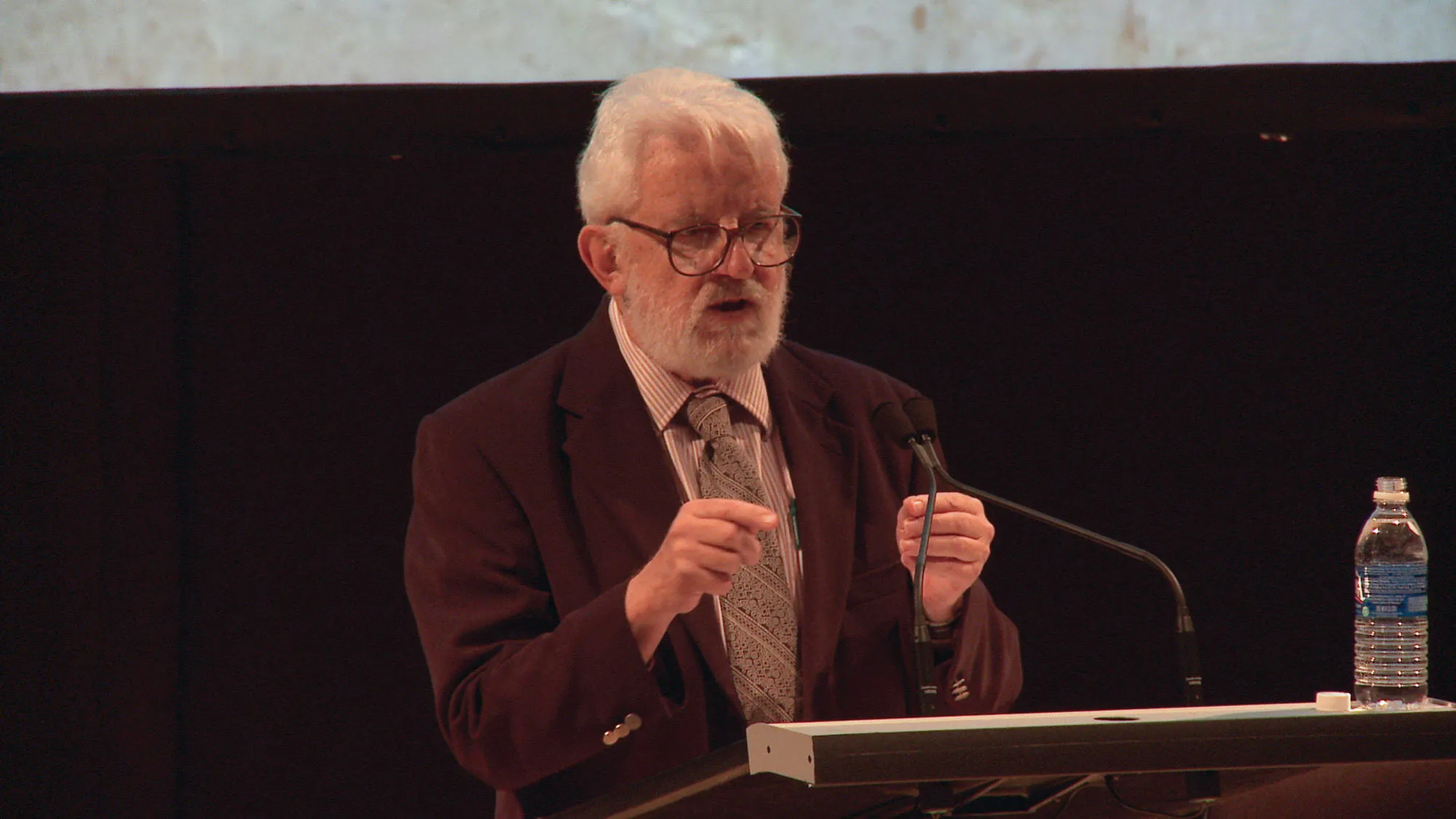
Alfred Crosby, author of The Measure of Reality: Quantification and Western Society, 1250–1600, will speak about time from the historical perspective detailed of Western Europe's adoption of quantitative approaches to time, space, finance, art, and music. In a Glass Hour is a series devoted to exploring the topic of time from the diverse perspectives of media theorists, scientists, artists, historians, journalists and others. Taking a broadly interdisciplinary approach to this singular subject, the series will point to the elasticity of this pervasive topic.

Image
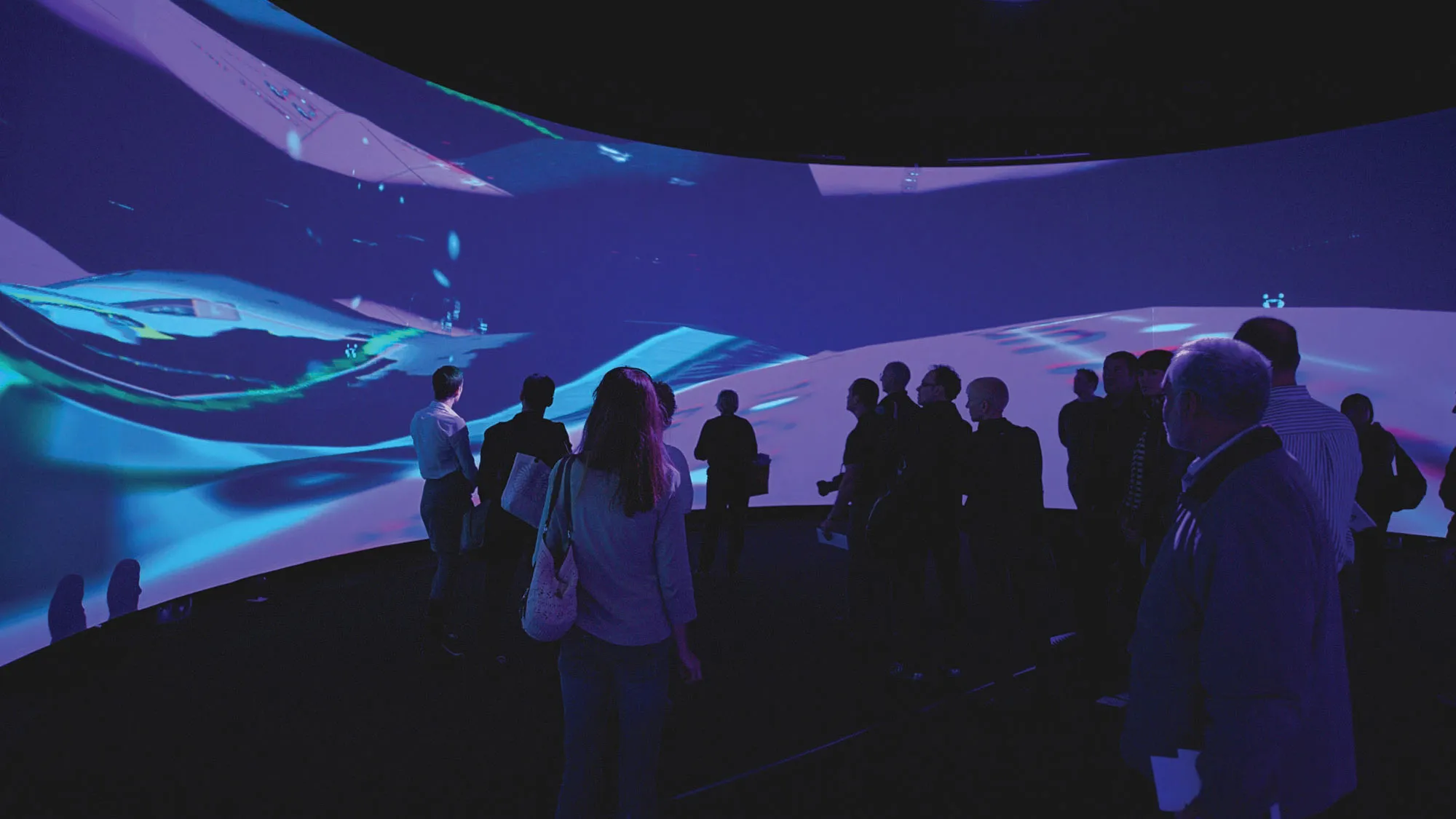
A small audience silhouetted against a panoramic screen showing abstract purple and teal waves.

Full Immersion

Art and the 360-degree screen

An exceptional panel of international artists, engineers, and producers representing the evolving field of works created for the 360° panoramic screen. The panelists in Full Immersion – Stewart Smith, Bernd Linterman, Eric Ameres, and Thomas Soetens and Kora Van Den Bulcke of Workspace Unlimited – come from the visual arts, film, and data presentation. Some specialize in grand gestures, some write code. What they have in common is expertise in realizing works that surround the viewer, with effects that may be subtle, spectacular, or unsettling. In addition to talking about their field, they’ll also be showing up-to-the-minute examples of what’s been accomplished in it. The result will boggle not just the mind, but the eye and ear. The panel will be followed by a reception in the café. Attendees will also have a chance to see Workspace Unlimited’s installation They Watch on the panoramic screen in Studio 1.