Image
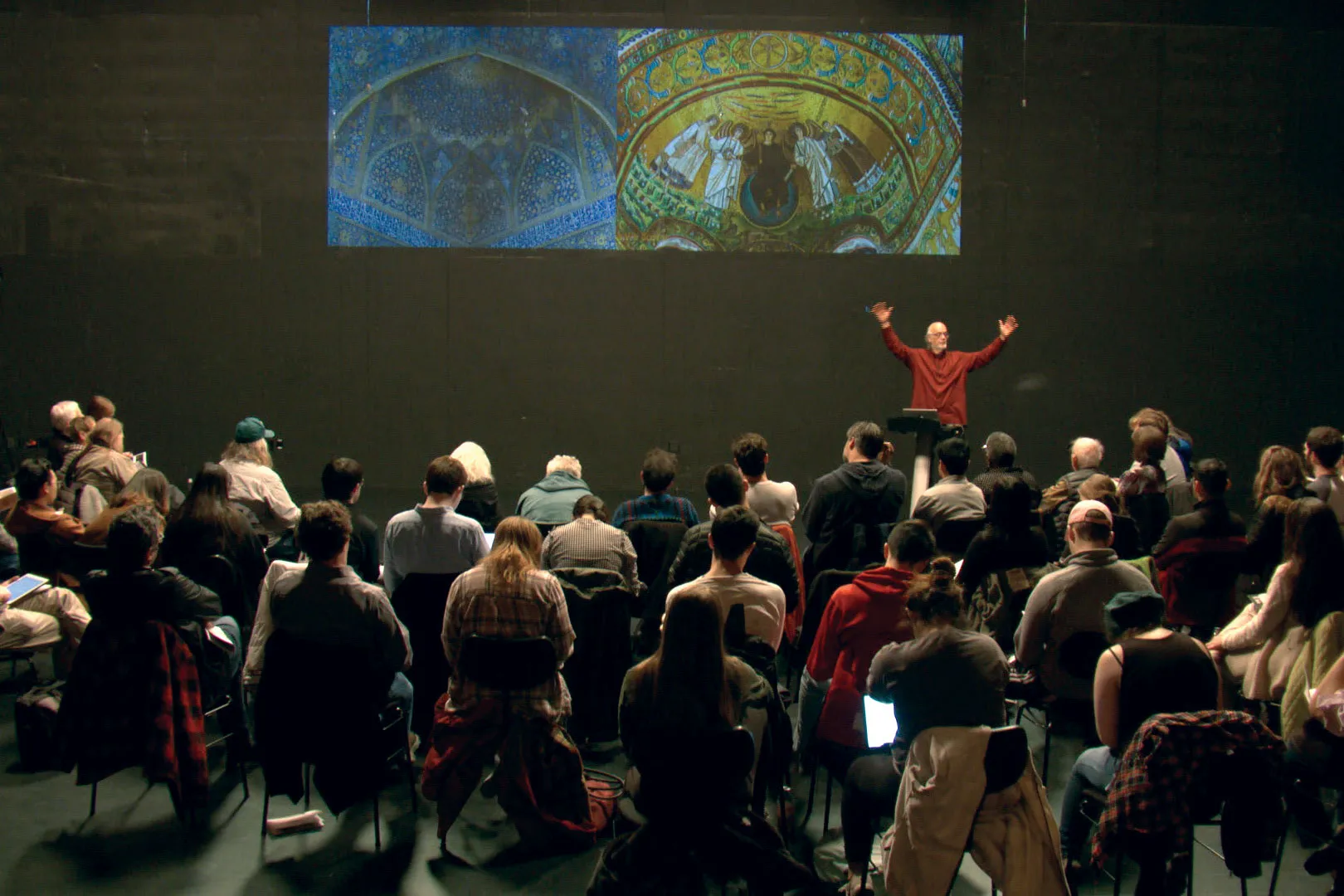
Johannes Goebel giving a talk to a small crowd in a black box studio.

ART!??!!!

A Discussion with Director Johannes Goebel

Why is there art at all? Why should anyone care? Isn’t everything art and everyone an artist? What is the place of art in this society and at Rensselaer? What is EMPAC’s place in all this? Is art meant to speak to my heart or is it all just elitist stuff? Isn’t art about self-expression with all value in the eye of the beholder? But then what is the return on investment? 

This event was an open conversation on the subject of art, jump-started by EMPAC Director Johannes Goebel. 

The founding Director of EMPAC, Johannes Goebel has published and lectured internationally on the arts, science, engineering, technology, and aesthetics. He has participated in the integration of digital technology with contemporary artistic theory and practice over the past few decades.

Main Image: Johannes Goebel, presenting ART!??!!! on the theater stage, 2018. 

Image
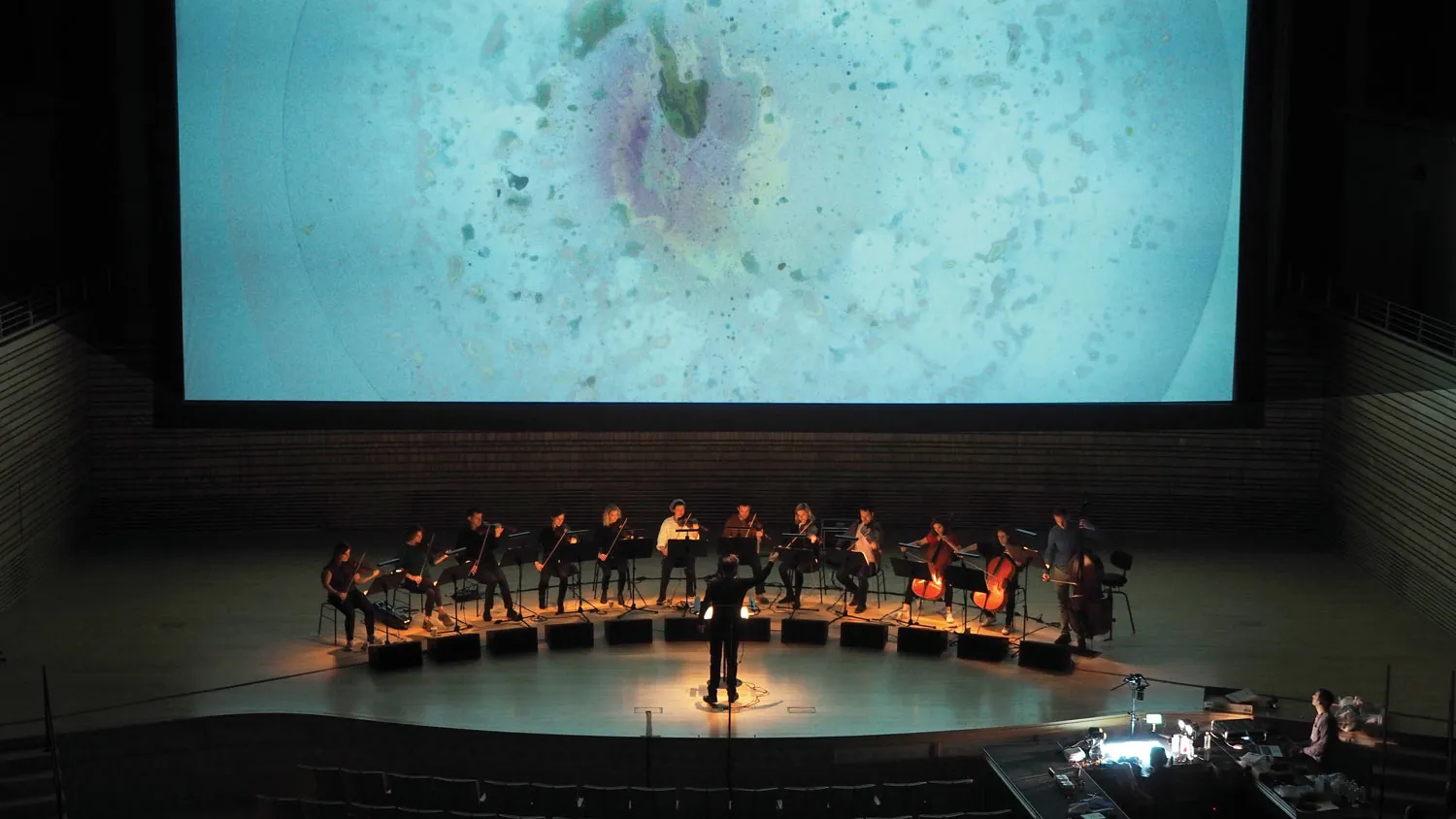
Ensemble Signal seated in a semi circle on stage recording in the concert hall.

darker

David Lang, Ensemble Signal, & Suzanne Bocanegra

Pulitzer Prize-winning composer and Bang on a Can co-founder David Lang brought his pensive evening-length piece, darker, to EMPAC, for a recording residency and performance featuring Ensemble Signal with live projections by Suzanne Bocanegra.

Scored for 12 strings, darker is a slow exploration of sound. At times, it gives the ensemble the feel of a giant pipe organ or, with the aid of visual artist Suzanne Bocanegra’s live projections, the feel of splattering rain on an immoveable wall. As much a hypnotic sonic and visual object as it is a piece of music, darker weaves its intricate solo lines into a delicate and subtly emotional fabric.

darker was recorded in the Concert Hall by Ensemble Signal for future release on Cantaloupe Records.

David Lang is one of the most highly esteemed and performed American composers writing today. His works have been performed around the world in most of the great concert halls. Lang is co-founder and co-artistic director of New York’s legendary music collective Bang on a Can. 

Ensemble Signal, described by the New York Times as “one of the most vital groups of its kind,” is a NY-based ensemble dedicated to offering the broadest possible audience access to a diverse range of contemporary works through performance, commissioning, recording, and education. 

Suzanne Bocanegra is an artist living and working in New York City. Her recent work involves large-scale performance and installation, frequently translating two dimensional information, images and ideas from the past into three dimensional scenarios for staging, movement, ballet, and music.

Main Image: David Lang's darker in the Concert Hall, 2018. Photo: EMPAC.

Image
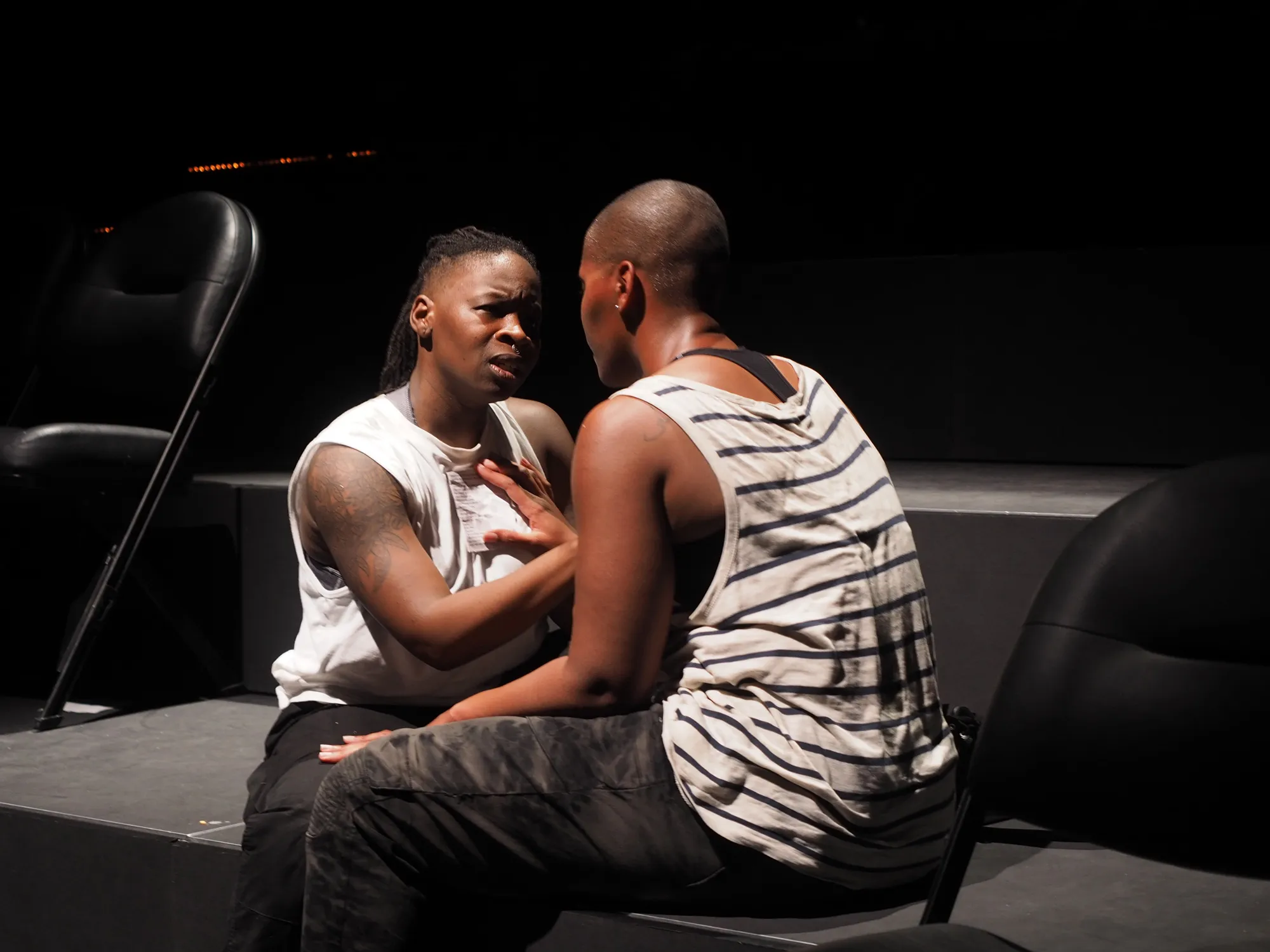
Two Black woman sitting facing each other on the steps of a black box theater.

A Meditation on Tongues

Ni'Ja Whitson

A Meditation on Tongues is artist Ni’Ja Whitson’s live-dance adaptation of filmmaker and activist Marlon T. Riggs’ 1989 film Tongues Untied, a groundbreaking portrait of Black, gay identity.

Staged throughout the EMPAC building, the performance began with a solo by vogue dancer Leggoh LaBeija, who led the audience through a corridor constructed in Studio 2 to back hallways, passing a small shrine erected in memory of Marlon T. Riggs, who died on this day 24 years prior. The procession ended in Studio 1 where the audience took their seats and Whitson and collaborator Kirsten Flores-Davis performed an extended stage duet. Whitson’s performance used choreography, film, and sound to underscore the historical importance of Riggs’ film during the early years of the AIDS pandemic and beyond. Whitson reconsidered Riggs’ focus on Black, gay, male identity to focus on what masculinities look like in the contemporary moment, especially in relation to the invisibility of lesbian and gender non-conforming bodies within the cultural dialogue on race.

The evening concluded with a reception hosted by the RPI LGBTQ Task force, who had screened Rigg’s film the week prior to Whitson’s performance. 

Ni’Ja Whitson is an interdisciplinary artist, performer, and writer based in Riverside, California. They are an Assistant Professor of Dance at the University of California Riverside and have had commissions and residencies at Gedgebrook in Seattle, ICA Philadelphia, American Realness at Abrons Art Center, Danspace at St. Mark’s Church, Dance in Process at Gibney Dance, and LMCC Process Space in New York. Whitson is a Bessie award-winning performer and recipient of funding through the Mertz Gilmore Foundation and Jerome Foundation Individual Artist Grant.

Main Image: Ni'ja Whitson: A Meditation on Tounges. Photo: Mick Bello / EMPAC

Media

Leggoh LaBeija voguing above an audience in Evelyn's Café during the performance.

Photo: EMPAC

Ni'Ja Whitson: A Meditation on Tongues. April, 2018.

Image
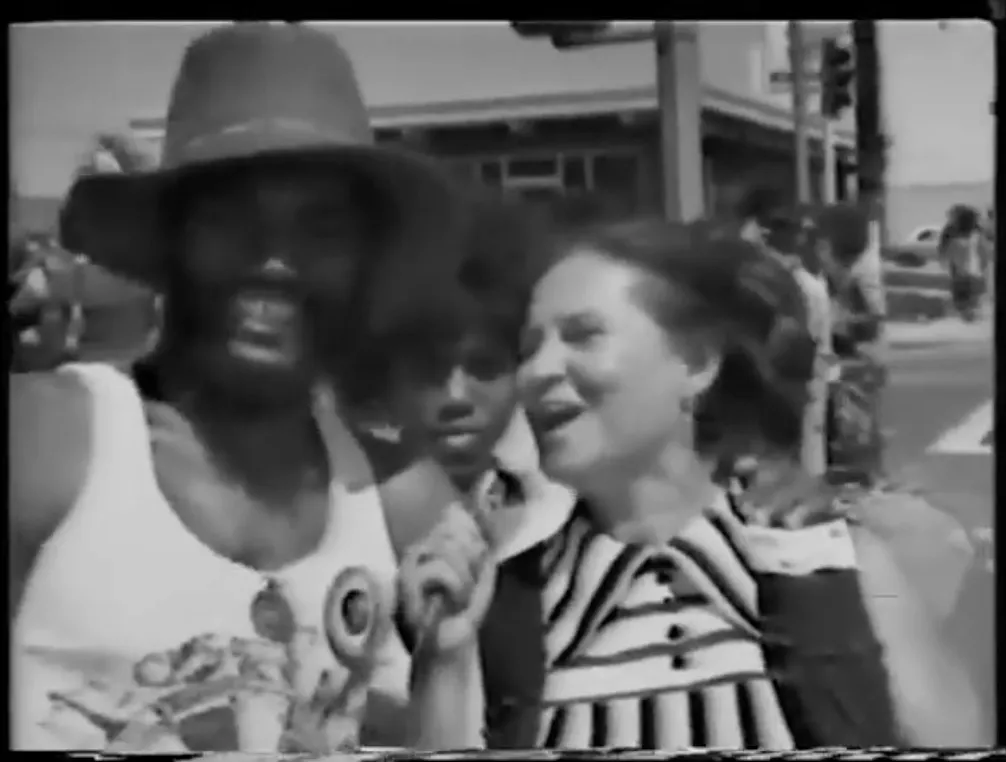
a black man and white woman in the streets at a festival in 70s era clothing.

Other Uses 05

Ulysses Jenkins

The fifth screening in the Other Uses film series featured the work of Ulysses Jenkins, whose videos examine television’s power to shape current events and historical episodes.

Jenkins is an artist who has given particular consideration to the portrayal of Black men in America. This installment featured documentary and performance videos Jenkins made from the 1970s to the present, beginning with the artist’s filming of the Watts Festival. Alternating between clarity and obscurity, the forms and content of television were redeployed to challenge the perceived neutrality of the televisual record. 

Ulysses Jenkins is a video/performance artist whose work has been shown in a number or national and international venues, including the Maryland Institute College of Art, the Hammer Museum, and the Getty Museum. He was the recipient of the California Arts Council’s Multicultural Entry Grant as artistic director of Othervisions Studio, an interdisciplinary media arts production group. He is a three-time recipient of the National Endowment for the Arts’ individual artist fellowship and was awarded the Black Filmmakers Hall of Fame first place award in the experimental video category in 1990 and 1992. He is currently Professor of Art at University of California, Irvine. 

The moving-image works presented in the film series Other Uses utilize a variety of in-camera and post-production techniques to re-frame objects, places, histories, and people that might otherwise remain off-screen. The series title is borrowed from the English translation of Otros usos, a 16mm film shot in a former US Naval Station in Ceiba, Puerto Rico by artist Beatriz Santiago Muñoz. Filmed through mirrored sculptures, or “malascopios” as the artist describes them, Otros usos projects shifting, unstable viewpoints as multiple prismatic images are arrayed in a single frame. This misuse or destabilization of perspective, geometry, and structure within the film frame is a common characteristic of the artworks in this series. Although vivid in surface and rigorous in technique, the films and videos deliberately resist the spectacle of the singularly imaged “event” in order to transform everyday surfaces into the cinematic.

PROGRAM

  • Secrecy: Help Me to Understand (1994) Video, color, sound. 5:20 minutes. Courtesy of the artist.
  • Part II of Remnants of the Watts Festival (1972-73, compiled 1980) Video, b&w, sound. 25:50 minutes. Courtesy of the artist and EAI, New York.
  • Mass of Images (1979) Video, b&w, sound. 4:16 minutes. Courtesy of the artist.
  • Inconsequential Doggereal (1981) Video, color, sound. 15:19 minutes. Courtesy of the artist.
  • Vulnerable (2000) Video, color, sound. 5:04 minutes. Courtesy of the artist.
  • Planet X (2006) Video, color, sound. 6:27 minutes. Courtesy of the artist.
  • Approximate runtime: 83 minutes

Ulysses Jenkins, Remnants of the Watts Festival, 1972-73 Film still: Courtesy the artist and EAI, New York.

Media

A conversation between artist Ulysses Jenkins, whose videos examine television’s power to shape current events and historical episodes, and curator Lucas Matheson. This talk was part of EMPAC’s 2018 moving image series Other Uses.

Image
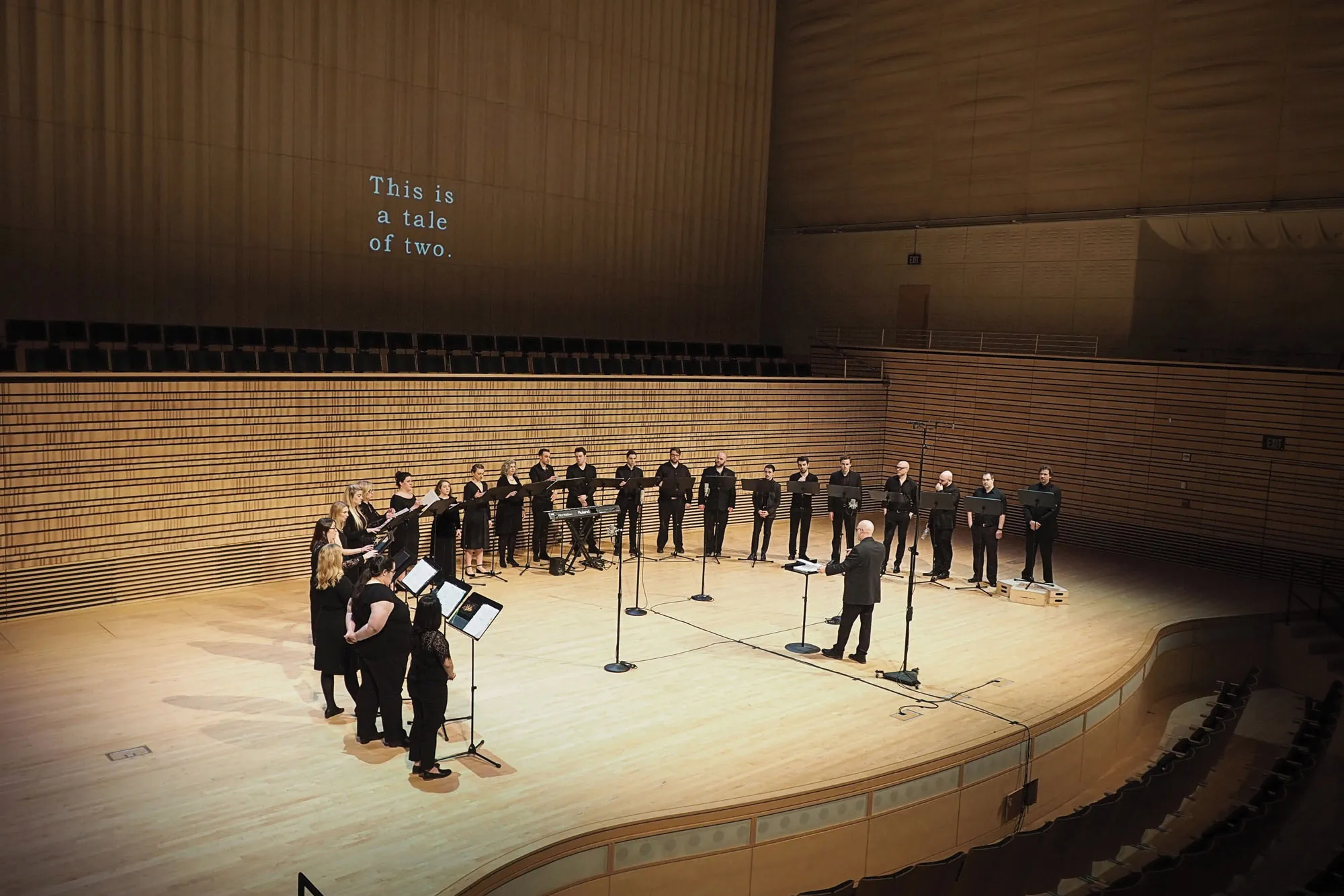
A choir dressed in black standing in a semi circle in front of a projection that reads "This is a Tale of Two" on the concert hall stage.

Anonymous Man

Michael Gordon, The Crossing

Composer and Bang on a Can founder Michael Gordon presented his choral work, Anonymous Man, performed by the 24-voice ensemble The Crossing. The hour-long piece expands on Gordon’s architectural approach to composition, layering minimalistic swirls of vocal sounds on top of one another to create a hypnotic group incantation.

Taking inspiration from his neighborhood in Lower Manhattan, Gordon says, “When I moved into my loft on Desbrosses, the streets were empty, since few people lived there. But both then and now, there were the homeless. Over time the neighborhood changed from an industrial warehouse district to a residential area. Anonymous Man is a memoir about my block. The piece is built around my memories of moving in, meeting my future wife for the first time there, and conversations I have had with two homeless men who made their home on the loading dock across the street.”

Michael Gordon and The Crossing were in residence to record Anonymous Man for future release on Cantaloupe Records. 

Conducted by Donald Nally, The Crossing was formed in 2005 and has dedicated itself to expanding the contemporary choral music experience through commissions, collaborations, community, and performances that are characterized by a distinctive unity of sound and spirit. The Crossing has been hailed as “superb” by The New York Times, “ardently angelic” by The Los Angeles Times, and “something of a miracle” by The Philadelphia Inquirer. Formed by a group of friends in 2005, the ensemble has since grown exponentially and has made a name for itself in recent years as a champion of new music.

Main Image: The Crossing in the concert hall in 2018. Photo: EMPAC

Media

Anonymous Man: Michael Gordon, The Crossing. March, 2018.

Image
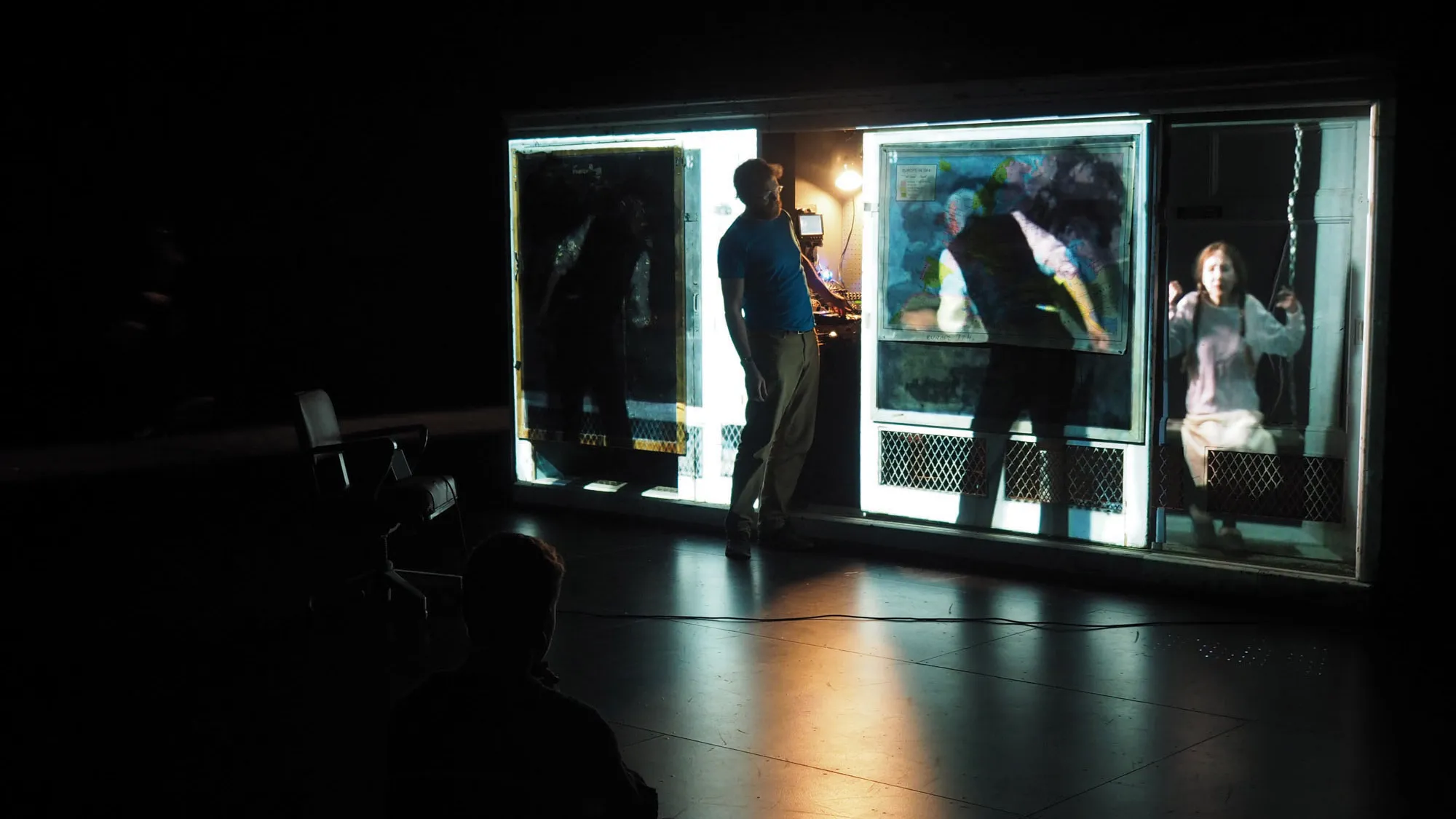
A contemporary man with a beard looking at a projection of a victorian era man and young girl projected over panes of glass.

This Was the End

Mallory Catlett / Restless NYC

This Was The End was a multimedia performance inspired by canonical Russian playwright Anton Chekhov’s Uncle Vanya. In the play, Vanya asks, “What if I live to be 60?” This Was The End answered that question through a story told by four actors in their 60s. Director Mallory Catlett was in residence at EMPAC with sound designer G. Lucas Crane and video designer Keith Skretch to develop their theatrical production into a multimedia installation about memory and time.

Like the performance, the new installation featured the architectural façade of the original PS 122, an iconic NYC arts building, to physically frame and contextualize Catlett’s adaptation. Catlett, her collaborators, and This Was the End actors were in residence at EMPAC to shoot new footage for their installation. They used this footage to activate the historic façade with interactive video and sound from their theatrical production, drawing viewers into the installation to investigate what came before, what is now, and what might be. On the installation’s opening night, Crane performed live sound inside the space. 

Mallory Catlett is a New York-based creator and director of performance across disciplines. She is the Artistic Director of Restless NYC whose production of This Was The End won an Obie Award. Other works include City Council Meeting, a regional theater experiment in participatory democracy and multimedia music theater piece Red Fly/Blue Bottle that performed at EMPAC in 2010. She has shown her work in New York City at Here, Performance Space 122, Abrons Arts Center, and the Brooklyn Academy of Music.

G. Lucas Crane is a sound artist and performer from Brooklyn, NY. Major projects include the psych-rock band Woods, the cassette-collage project Nonhorse, and the experimental theater of Performance Thanatology.

Keith Skretch is a New York-based video designer whose work has been shown at the Brooklyn Academic of Music, REDCAT, The Old Globe, MCA Chicago, and Performance Space 122.
Main Image: This Was the End in Studio 1 during 2018. Photo: EMPAC

Image
A contemporary man with a beard looking at a projection of a victorian era man and young girl projected over panes of glass.

This Was The End

Mallory Catlett / Restless NYC

This Was The End is a multimedia performance inspired by canonical Russian playwright Anton Chekhov’s Uncle Vanya. In the play, Vanya asks, “What if I live to be 60?” This Was The End answered that question through a story told by four actors in their 60s. Director Mallory Catlett was in residence at EMPAC with sound designer G. Lucas Crane and video designer Keith Skretch to develop their theatrical production into a multimedia installation about memory and time.

Like the performance, the new installationfeatured the architectural façade of the original PS 122, an iconic NYC arts building, to physically frame and contextualize Catlett’s adaptation. Catlett, her collaborators, and This Was the End actors were in residence at EMPAC to shoot new footage for their installation. They used this footage to activate the historic façade with interactive video and sound from their theatrical production, drawing viewers into the installation to investigate what came before, what is now, and what might be. On the installation’s opening night, Crane performed live sound inside the space. 

Catlett is a New York-based creator and director of performance across disciplines. She is the artistic director of Restless NYC whose production of This Was The End won an Obie Award. Other works include City Council Meeting, a regional theater experiment in participatory democracy, and multimedia music theater piece Red Fly/Blue Bottle that was performed at EMPAC in 2010. She has shown her work in New York City at Here, Performance Space 122, Abrons Arts Center, and the Brooklyn Academy of Music.

G. Lucas Crane is a sound artist and performer from Brooklyn, NY. Major projects include the psych-rock band Woods, the cassette-collage project Nonhorse, and the experimental theater of Performance Thanatology.

Keith Skretch is a New York-based video designer whose work has been shown at the Brooklyn Academic of Music, REDCAT, The Old Globe, MCA Chicago, and Performance Space 122.
Main Image:

Welcome Reception

Spatial Audio Summer Seminar

Welcome reception for all participants and friends.

Image
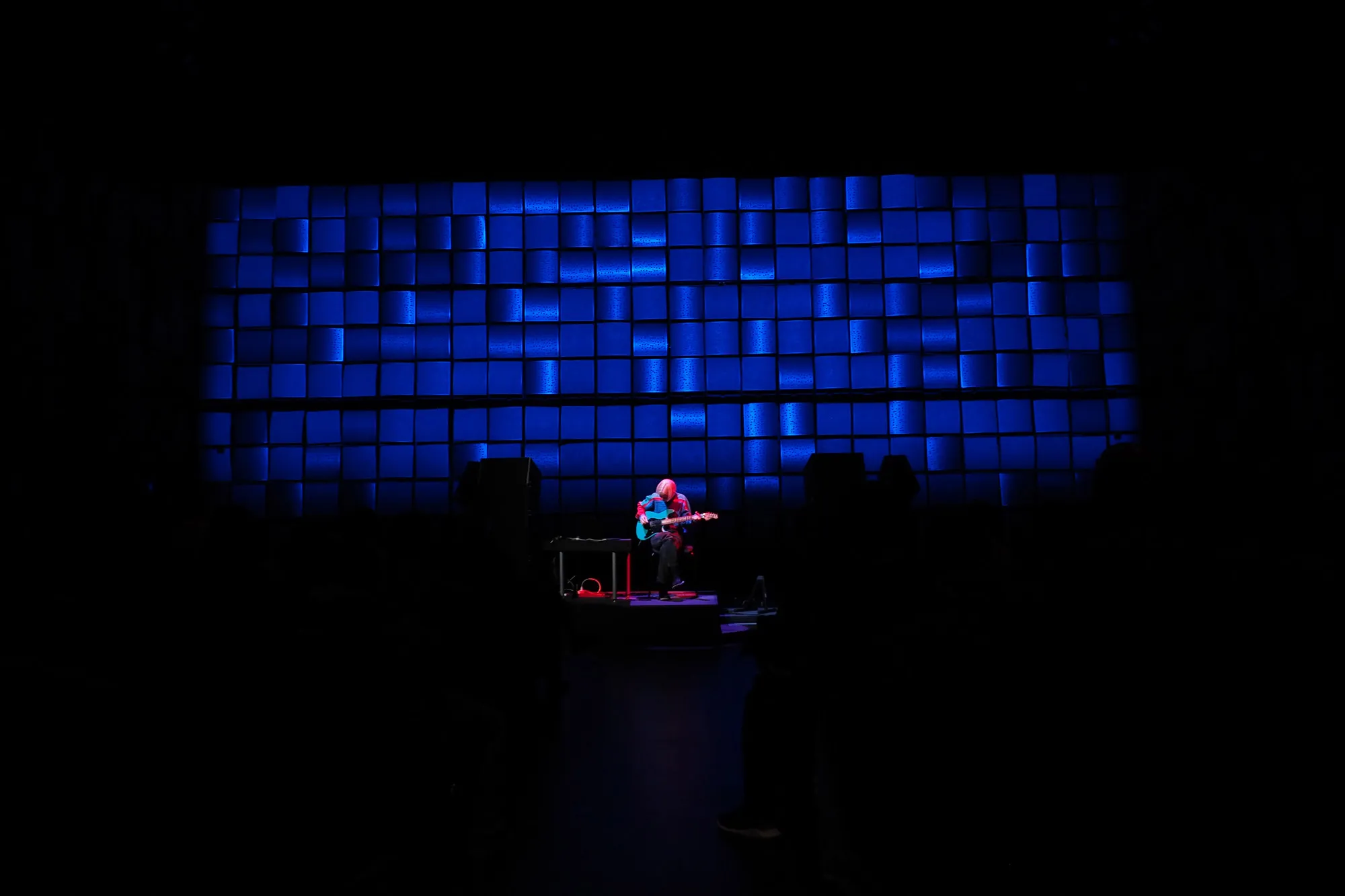
Ellen Arkbro playing an electric guitar on stage while washed in pink light in front of a grid of blue squares.

For Guitar and Electronics

Ellen Arkbro

Stockholm-based composer Ellen Arkbro performed a new solo work For Guitar and Electronics. She was in residence at EMPAC to develop material for an EMPAC commission for Wave Field Synthesis to be premiered in Fall 2018.

Ellen Arkbro is a musical alchemist whose work oscillates between the pop music of the ’90s and the American minimalism of the ’60s, while exploring microtonal realms that blur the standard tunings and harmonies of Western music. Her practice takes the form of compositions for early-music ensembles as well as long-duration performances of synthesized dream music, including one piece composed to last 26 days. Her sound work is heavily informed by her studies in just intonation tuning with La Monte Young and Marian Zazeela in New York and with Marc Sabat in Berlin. She describes her 2017 album for organ and brass as “a very slow and reduced blues music” written for the 17th-century Sherer-Orgel organ in Tangermünde, Germany, paired with microtonal arrangements for horn, tuba, and trombone.

Ellen Arkbro. Photo: Courtesy the Artist