Image
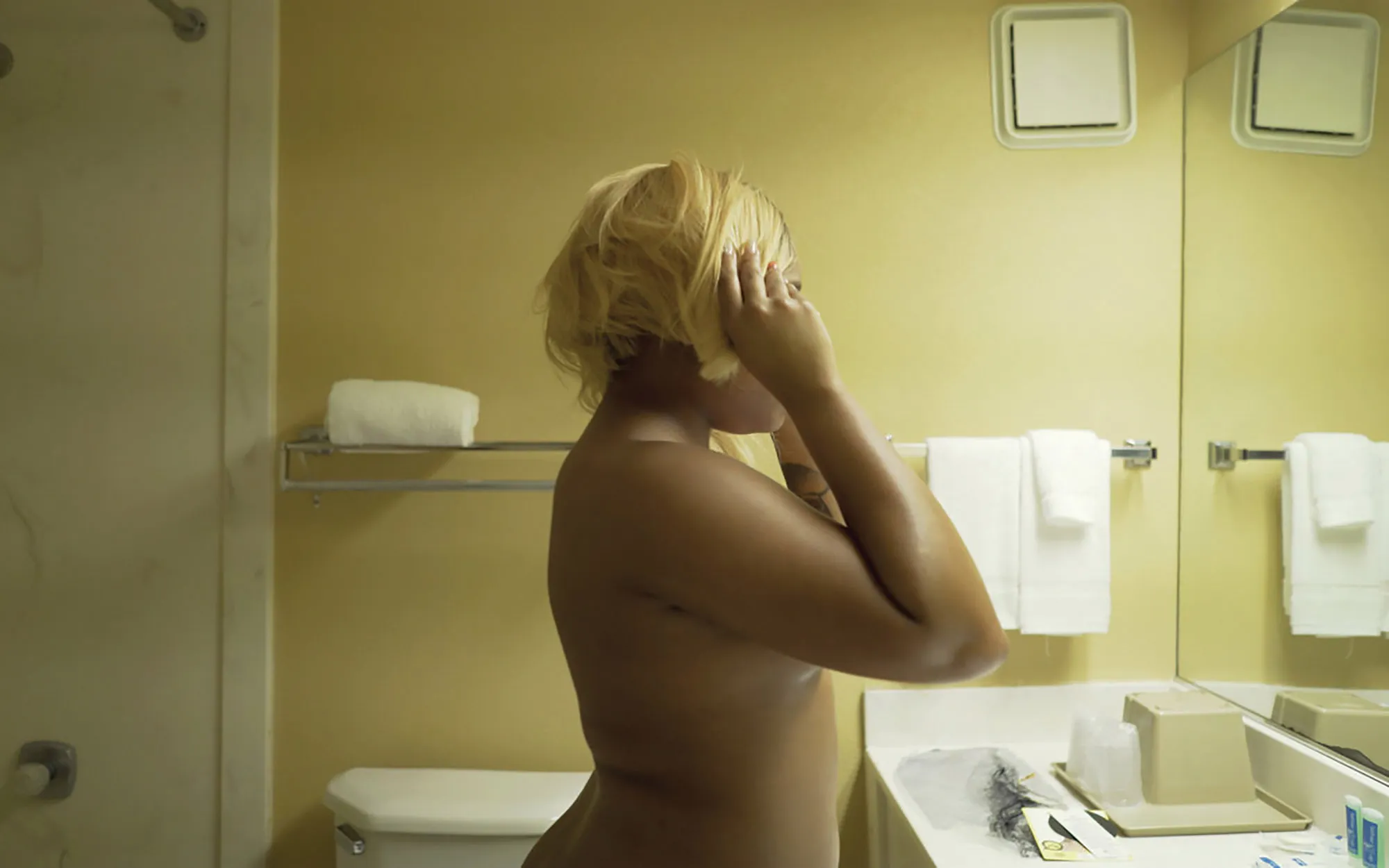
A nude Black woman adjusts a blonde bob wig in the mirror of a bathroom with yellow walls.

Other Uses

2017–18

The moving-image works presented in the film series Other Uses utilize a variety of in-camera and post-production techniques to re-frame objects, places, histories, and people that might otherwise remain off-screen.

The series title is borrowed from the English translation of Otros usos, a 16mm film shot in a former US Naval Station in Ceiba, Puerto Rico by artist Beatriz Santiago Muñoz. Filmed through mirrored sculptures, or “malascopios” as the artist describes them, Otros usos projects shifting, unstable viewpoints as multiple prismatic images are arrayed in a single frame. Together, these refracted shards of ghostly architecture, land, sea, and the fishermen who work on it, produce a composite time-scale that gestures not only to the region’s colonial past, but also to the continued militarized present.

This misuse or destabilization of perspective, geometry, and structure within the film frame is a common characteristic of the artworks in this series. Although vivid in surface and rigorous in technique, the films and videos deliberately resist the spectacle of the singularly imaged “event” in order to transform everyday surfaces into the cinematic.

Fall 2017 featuring films by: Doa Aly, Marwa Arsanios, Yto Barrada, Mohammad Fauzi, Morgan Fisher, Joan Jonas, Deimantas Narkevičius, Beatriz Santiago Muñoz, Shelly Silver, Hito Steyerl, Martine Syms, Ana Vaz, Joyce Wieland.

Spring 2018 featuring films by: Ulysses Jenkins, Jorge Jácome, Naeem Mohaiemen, and Beatriz Santiago Muñoz.


Main Image: Martine Syms Incense Sweaters and Ice (2017). Video still courtesy the artist.
Media
Image
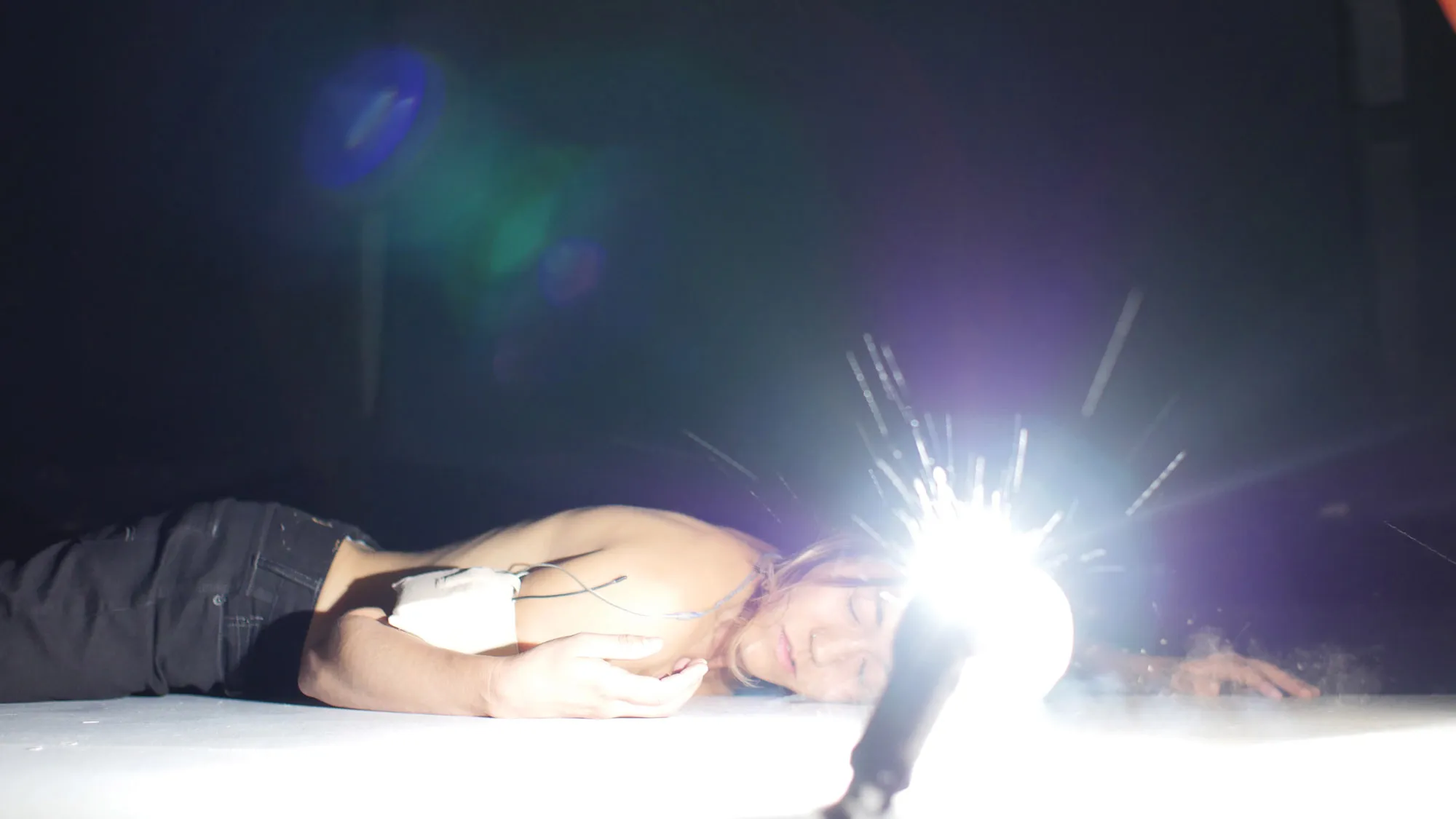
a man laying on stage behind a ball of sparking light

AFTER

Andrew Schneider

Performance maker Andrew Schneider is back at EMPAC for the world premiere of AFTER, an emotional story about time, bodies, death, and physics.

The sequel to his Obie Award-winning performance YOUARENOWHERE, which challenged audiences with a storyline drawn from quantum physics, AFTER goes a step further, probing the audience to consider where they are and how they got there. Working over the past year in residence at EMPAC, Schneider developed the show’s content in tandem with experiments in new theatrical technology. In an effort to create intimacy and take the audience to the edge of the human condition, AFTER incorporates projection mapping, lighting effects, and sound spatialization technology.

This will be the first time that EMPAC’s Wave Field Synthesis speaker array has been applied in the theatrical context, allowing sound designer Bobby McElver to precisely place and move sounds through the performance space. Please join us for a Q&A discussion with the curator and artists immediately following performance. This performance uses haze, strobe lighting, and loud sounds.

Andrew Schneider is an Obie Award-wining performer, writer, and interactive-electronics artist who creates and performs in original performance works and videos and builds interactive electronic artworks and installations. Schneider was a Wooster Group company member (video/performer) from 2007–14 and has shown his work at 3LD in New York, the Melbourne Arts Festival, LIFT Festival, and in theaters across France, including Maillon, Théâtre de Strausbourg, and Théâtre de Gennevilliers.

Media
Image
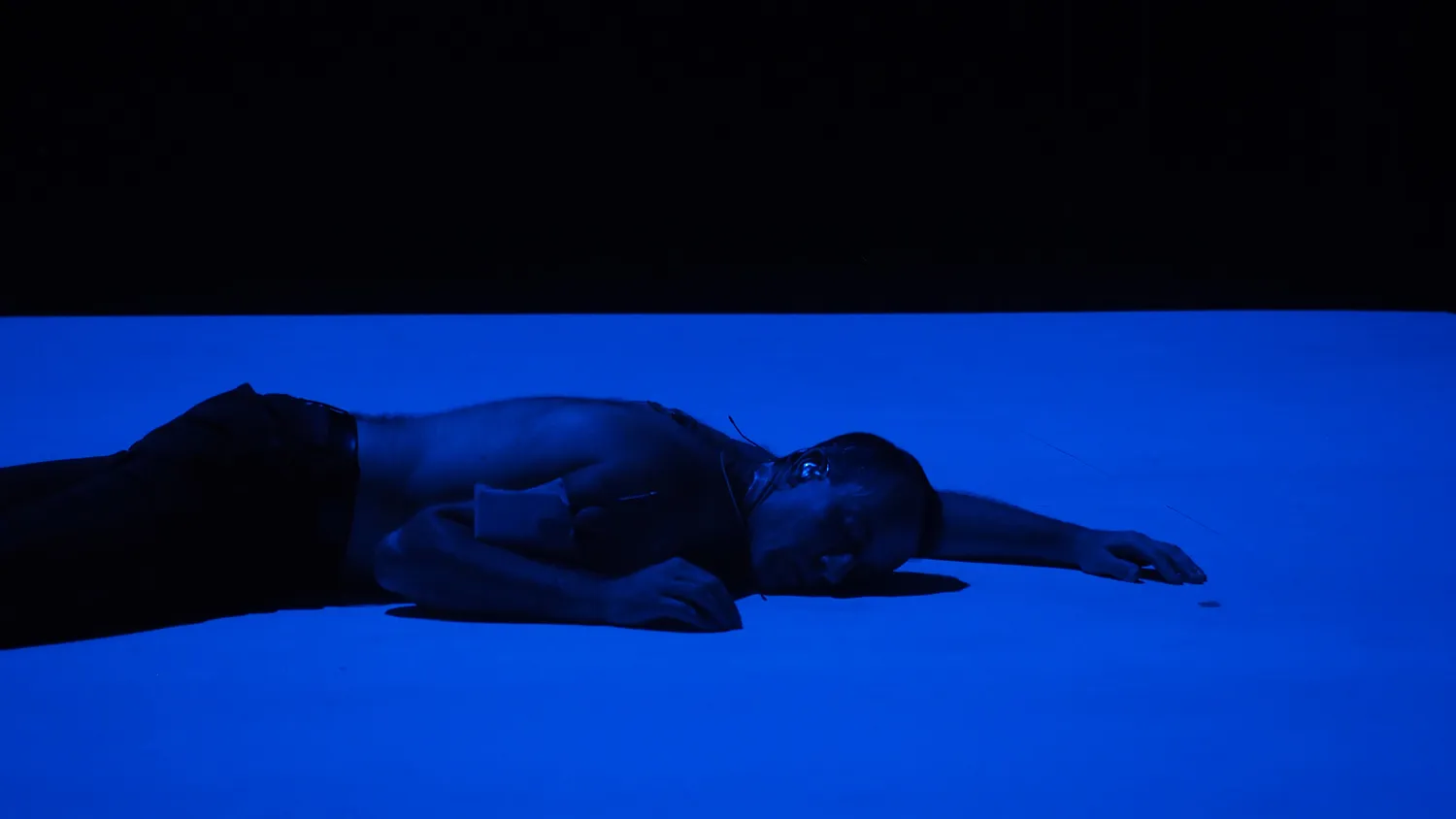
A male performer laying on stage washed in blue light.

AFTER

Andrew Schneider

Andrew Schneider and his team returned to EMPAC for the world premiere of AFTER, an emotional story about time, bodies, death, and physics. 

Following up on Schneider’s Obie Award-winning performance YOUARENOWHERE, which challenged audiences with a storyline drawn from quantum physics, AFTER goes a step further, probing the audience to consider where they are and how they got there. Working in residence at EMPAC, Schneider developed the show’s content with his collaborators Alicia ayo Ohs, Alessandra Calabi, and Bobby McElver. They developed Schneider’s original script in tandem with experiments in new theatrical technology. In an effort to create intimacy and take the audience to the edge of the human condition, AFTER incorporates projection mapping, lighting effects, and sound spatialization technology. 

This was the first time that EMPAC’s Wave Field Synthesis speaker array had been applied in the theatrical context, allowing sound designer Bobby McElver to precisely place and move sounds through the performance space. 

Andrew Schneider is a Brooklyn-based artist who creates and performs in original performance works and videos and builds interactive electronic artworks and installations. Schneider was a Wooster Group company member (video/ performer) from 2007-2014 and has shown his work at 3LD in New York, the Melbourne Arts Festival, LIFT Festival, and in theaters across France, including Maillon, Théâtre de Strausbourg, and Théâtre de Gennevilliers. 

Main Image: Andrew Schneider in residence rehearsing AFTER in 2017. Courtesy the artist. Photo: EMPAC.

Image
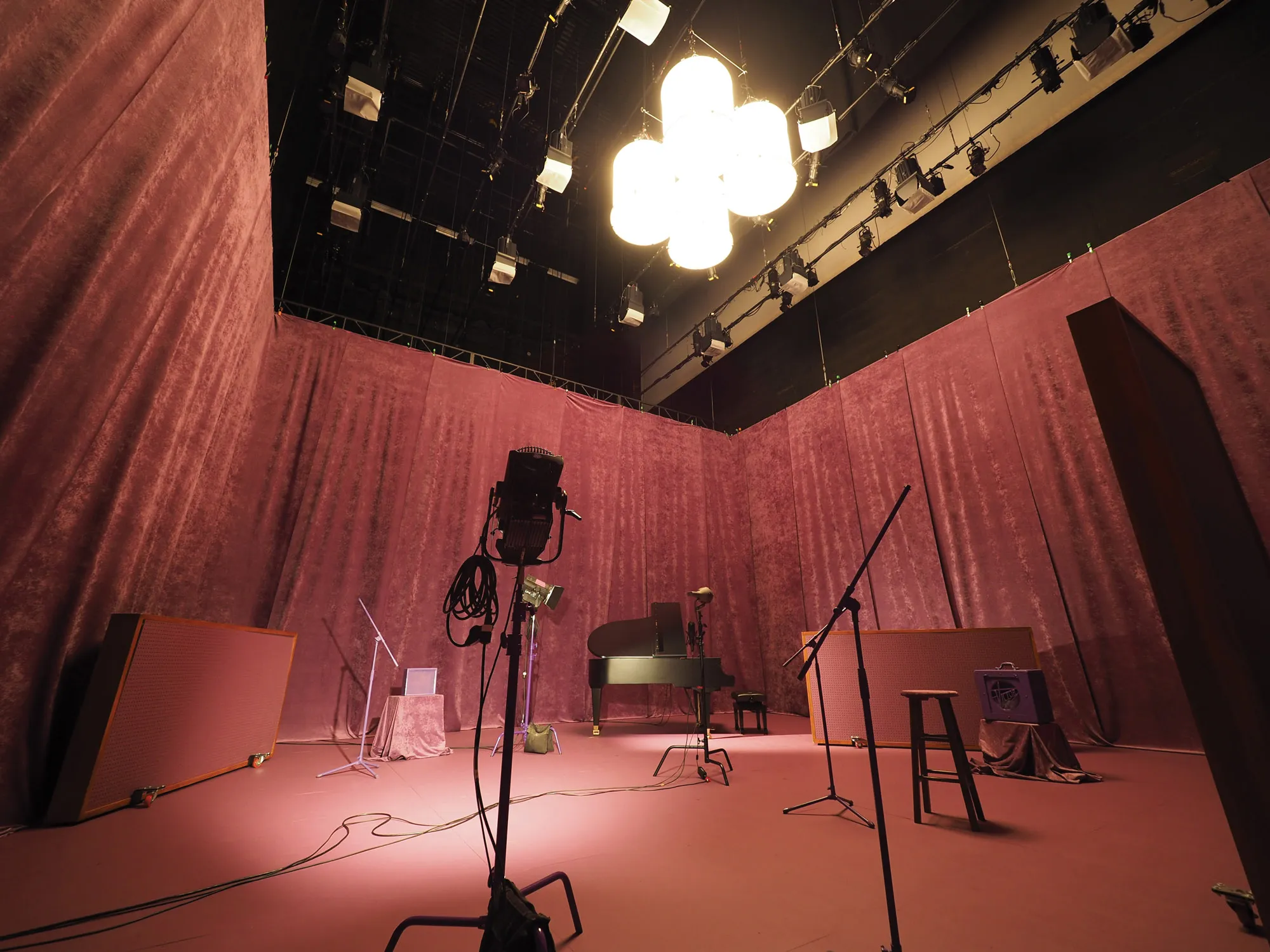
Studio set up with a piano, microphones, amp, and various lighting in a room with pink velvet walls with matching pink floors

An Evening with Queen White

Martine Syms

Martine Syms’ installation An Evening with Queen White invites visitors to meet the virtual character Queen White. An Evening with Queen White was produced at EMPAC with a 360° camera rig—originally manufactured to capture footage for virtual reality environments—placed at the center of a monochromatic purple set. Guitar amps, microphones, a piano, and acoustic panels that refer to the Motown recording studios of the 1960s decorate the set. Filmed in a single long-take, the performer Fay Victor (as Queen White) moved freely around the set and was continually captured by the camera.

Eschewing conventional VR, Syms explores how the audience can experience this kind of image environment without the use of a headset. The installation plays with the possibility that parts of the performance still remain out of frame or off-screen. Several screens are placed in different locations around the studio and each only shows a small part of the 360° video, exposing the limits of each screen’s size and shape. A mobile screen will allow the audience to explore the missing parts of the image for themselves.

An Evening with Queen White is exemplary of Syms’ use of the monologue as a medium for exploring how voice, gesture, and persona are learned and performed. The script complicates the artist’s own biography and points toward how strategies of performing oneself as a Black woman in America are transmitted and crystallized across generations through both familial teaching and societal conditioning. EMPAC screened Syms’ new feature film, Incense, Sweaters, and Ice, on the last day of the installation (Sept. 6) as part of the film series Other Uses.


Main Image: Production still from An Evening with Queen White (2017). Photo: Mick Bello/EMPAC.

Image
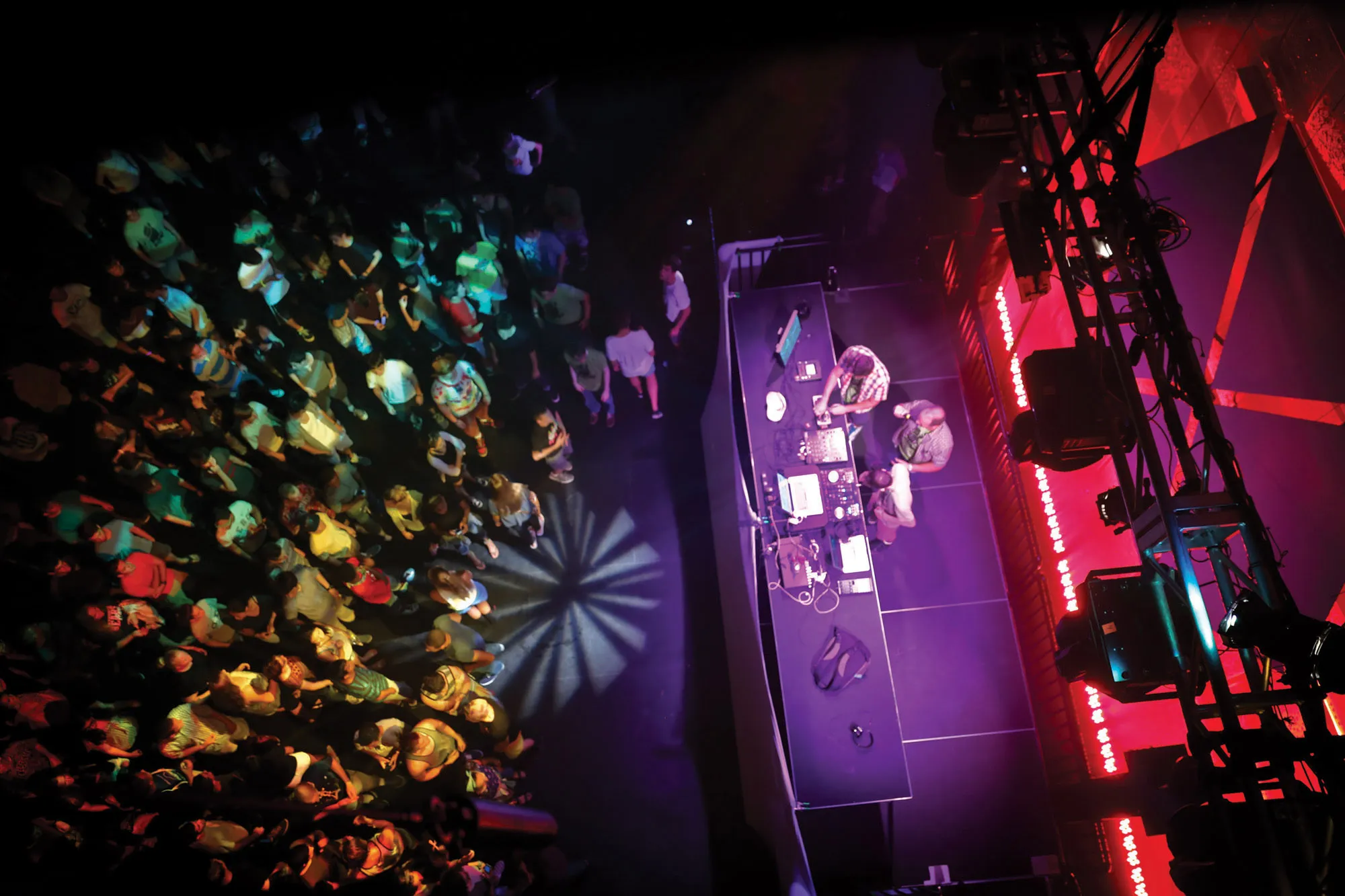
An aerial shot of three men DJing on stage performing for a crowd in a wash of rainbow party lights.

MashUP!

Fall 2017

Incoming Rensselaer freshman are invited to an electronic dance music mini-festival run by students for students.

As a part of Navigating Rensselaer and Beyond (NRB), MashUP! is the culmination of a two-day workshop where students learn to work with professional-caliber digital audio, video, and lighting technologies. EMPAC’s production team mentors participants to guide them through the process of producing a big-stage EDM event. On the final night, participants stage a full-scale dance party to help welcome the incoming class.

Main Image: MashUP!

Image
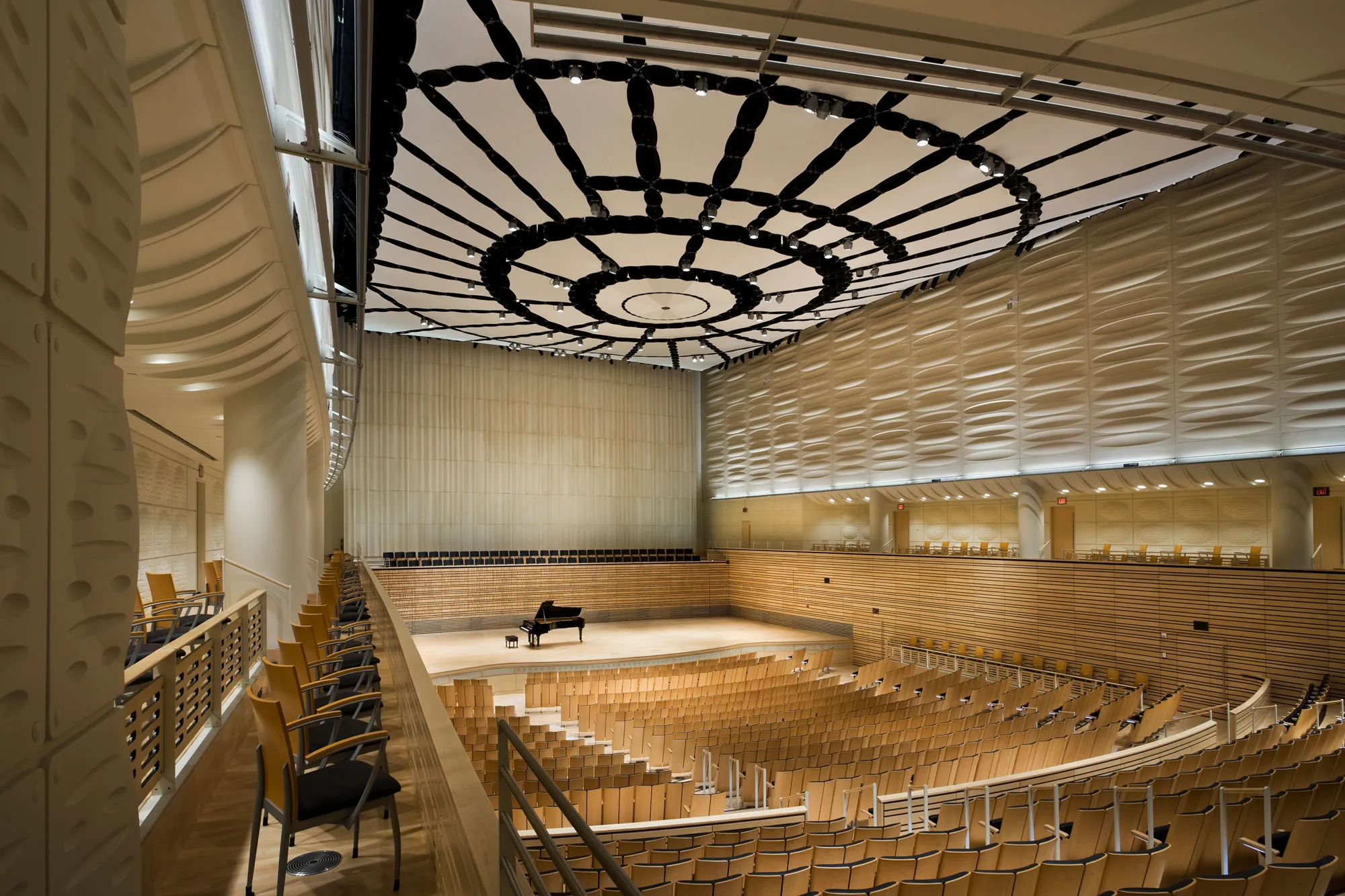
A single grand piano sitting on the empty concert hall stage.
Main Image: © Peter Aaron/ESTO.

EMPAC Tours

Fall 2017
TOUR

This fall, we’ll be offering a series of EMPAC building tours led by different members of the EMPAC team to highlight the diverse and specialized functions of the space.

Each tour will run on the first Saturday of the month. Admission is free and open to the public. Registration is required. Visitors should meet at the EMPAC box office on the 7th floor at 2PM.

UPDATE: September 6, 2017

Due to overwhelming popularity, we are requiring registration for the remaining tours this fall. Space is limited, so register early to not miss out.

Director’s Tour with Johannes Goebel

Before Johannes Goebel became the director of EMPAC, he worked extensively with the architects and engineers to design and build virtually every feature of the space. On this tour, Goebel will take visitors through the EMPAC building with an eye and ear to the specific “human-scale” functions he strove to achieve in taking the project from a lofty vision to one of the world’s most advanced media centers.

Audio Technology Tour with Lead Engineer Todd Vos

From the specialized sound-diffusive panels in Studio 1, to the frequency-calibrated Nomex ceiling fabric in the Concert Hall, and into the miles of fiber optic cable that connect each of EMPAC’s performance spaces to its recording studios, lead audio engineer Todd Vos will take audiophiles on a deep-dive into EMPAC’s acoustic design and capabilities.

Stage Technologies Tour with Geoff Abbas

Each of EMPAC’s performance spaces were designed as a blank canvas, endlessly customizable according to the needs of EMPAC’s diverse productions. Join director of stage technologies, Geoff Abbas, for a behind-the-scenes tour of all the nuts and bolts that make the space work, including the robotic rigging system and 80-foot Theater fly tower.

Curatorial Tour with Victoria Brooks

As curator of time-based visual arts, Victoria Brooks approaches the EMPAC infrastructure with an eye toward its capabilities in the production and presentation of film, video, and other moving-image works. With past projects utilizing green-screen staging, 360-degree VR technology, and robotically rigged "flying" cameras, as well as integrated "film performances," Brooks will discuss her programmatic perspective on the EMPAC spaces.

Curatorial Tour with Ashley Ferro-Murray

As curator of theater and dance, Ashley Ferro-Murray approaches the many EMPAC spaces with sensitivity to the ways in which they facilitate the staging and movement of human bodies, both in the context of performance and participation. This tour will take guests through each of the building's venues to illustrate how new performance works are commissioned and developed to live in a physical space.

Curatorial Tour with Argeo Ascani

As curator of music, Argeo Ascani approaches EMPAC for its unique capacity as both a concert venue and recording facility. Taking guests through both the performance and audio production spaces, he will offer insight into his diverse music programming, which places contemporary classical, electronic, rock, jazz, and sound art side-by-side.

Main Image: EMPAC's Concert Hall. Photo: Peter Aaron/ESTO

Image
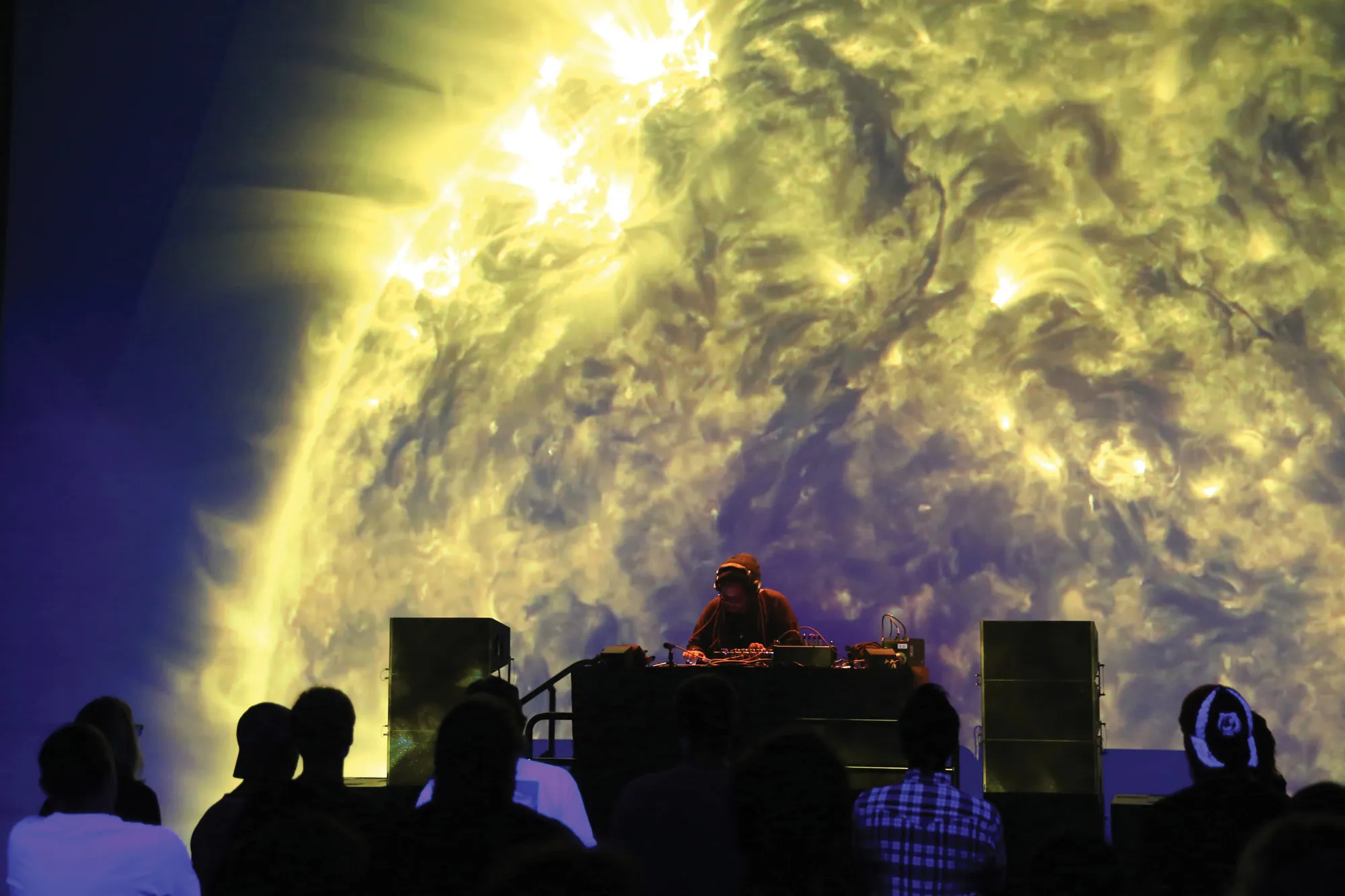
Heiroglyphic Being the artist Doing on stage to a small crowd as an image of the suns solar flares is projected behind him.

Hieroglyphic Being

MUSIC/SOUND

A night of outer-orbit house music with Chicago experimentalist Hieroglyphic Being.

You find a vinyl record out in the desert, faded and with no markings. Upon returning home, you place it on the turntable and are enveloped by distorted, raw, rhythmic pulsations. The sound gives you a glimpse into another world, another way of existing. It works its way inside of you, and you begin to subtly move. This is the sound of Hieroglyphic Being. Also known as Jamal Moss, the Chicago-based producer and record-label boss (Mathematics) has spent decades prolifically releasing music into the outer orbits of house culture. Occasionally donning aliases such as Sun God, IAMTHATIAM, and Africans with Mainframes, Moss refers to his sound as “cosmic bebop,” “rhythmic cubism,” and “synth expressionism,” embracing the mystical power of dance music to move bodies and expand minds. In 2015, Moss joined forces with Sun Ra Arkestra bandleader Marshall Allen and the J.I.T.U Ahn-Sahm-Buhl for We Are Not the First, an avant-jazz ode to musical ancestry and sonic transcendence.

VIDEO

If It Bleeds

Isabelle Pauwels

Canadian artist Isabelle Pauwels was in residence with eight actors to film If It Bleeds, an experimental art video inspired by recent events in the world of Mixed Martial Arts.

Historically, MMA was promoted as something very distinct from both boxing (a sport so corrupt that the best hardly ever fight the best) and especially, from pro wrestling (which is totally scripted, and driven by mic skills, costumes and bad acting). But, in seeking to expand into the mainstream, MMA promoters increasingly court the artifice of wrestling, promoting the showman over the sportsman. As the characters battle through promotional tours, post fight pressers and disciplinary hearings, they are continually upstaged by each other, seduced by their public image, and driven by the fiction that everything happens “for a reason.” If It Bleeds uses the pageantry of sports-entertainment to explore the grotesque and sublime spectacle that is everyday survival.

Markus Noisternig

IRCAM researcher Markus Noisternig was in residence in the Concert Hall working on a combination of EMPAC’s Wave Field Synthesis System and a 64-channel Ambisonic Dome, while interfacing with Rensselaer’s Blue Gene Summer Computer to calculate time reversal for 3D audio positioning.