Image
Phil Tippit and Lucy Raven

Phil Tippett and Lucy Raven

Starship Troopers

Following the launch of her new book, Low Relief, artist Lucy Raven and special-effects legend Phil Tippett will present an excerpt of their in-progress moving-image work, Coming Attraction. Tippett will discuss his collaboration with Raven, and offer an in-depth look at the making of the 1997 sci-fi cult classic Starship Troopers, including an edit of footage made by Tippett during the Troopers location scout in the badlands of Wyoming.

In 1996, while preparing for the filming, director Paul Verhoeven visited Wyoming with his production crew and creature visual effects supervisor Tippett. Tippett’s footage of the scout reveals rare insight into the ways in which he provided a visualization strategy for his studio back in California, and his approach to how they would populate the barren landscape with alien bugs, transforming it into a battlefield. Under a staircase in his Berkeley visual-effects studio Tippett recently unearthed over 12 hours of VHS tapes, including the location scout and behind-the-scenes recordings made on-set during the shoot, an edit of which will be screened at this presentation.

The evening will end with a screening of Starship Troopers, directed by Paul Verhoeven and starring Casper Van Dien, Denise Richards, and Dina Meyer. Starship Troopers imagines warfare in the 23rd century. In a society where citizenship is earned through military service, the story follows young soldier Johnny Rico and his exploits in Mobile Infantry, a futuristic military unit. Earthlings have become space-exploring colonizers in search of new planets, and have encountered a species known as Arachnids. Once war is declared, the alien bugs retaliate violently against the intrusion of humans into their habitat.

PROGRAM
  • Coming Attraction (work-in-progress) Lucy Raven and Phil Tippett
  • Lucy Raven and Phil Tippett
  • Starship Troopers Location Scout (1996)
  • Phil Tippett
  • Starship Troopers (1997) Directed by Paul Verhoeven
  • Directed by Paul Verhoeven
  • Approximate run-time: 180mins

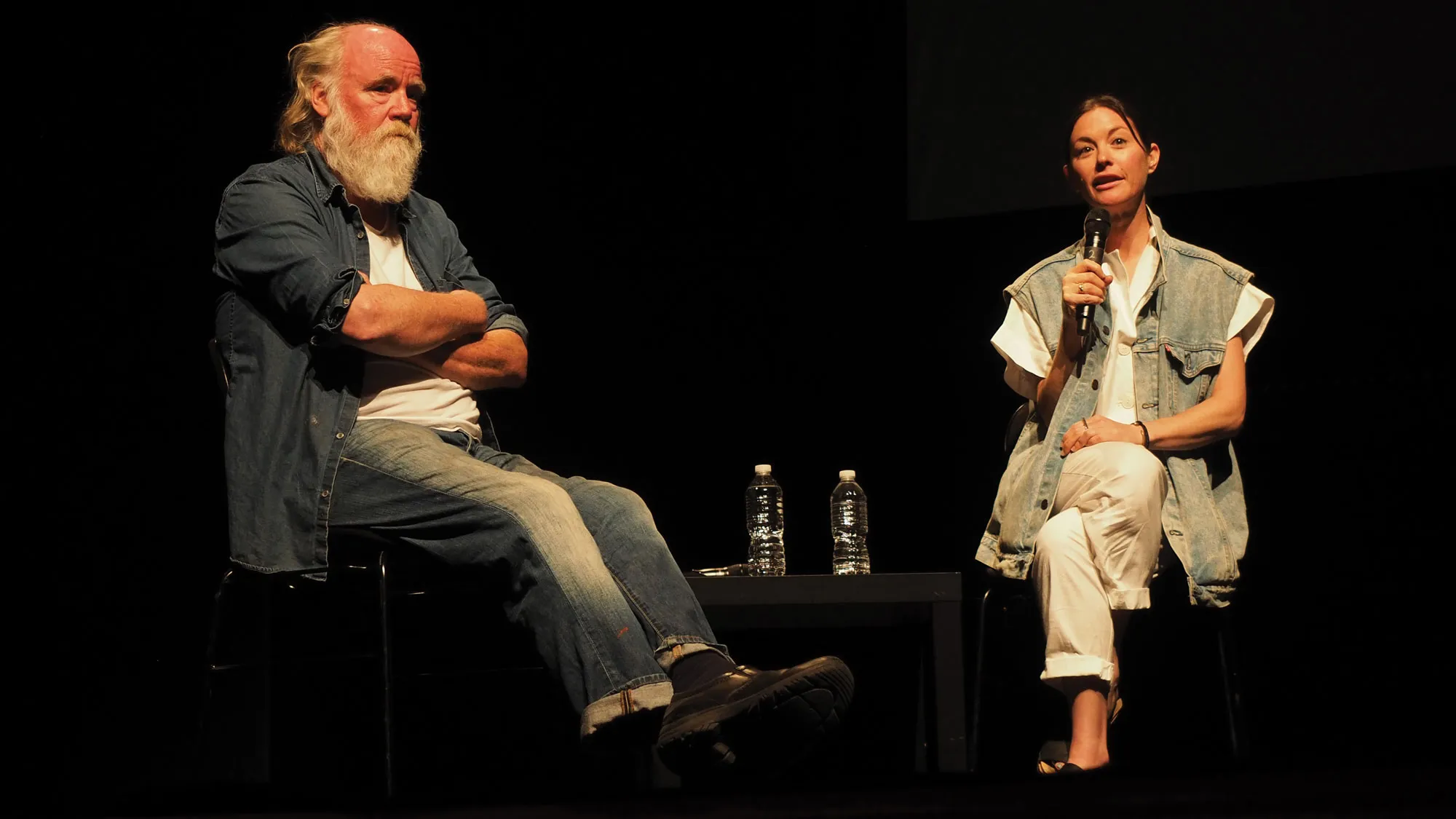
Main Image: Phil Tippett and Lucy Raven during their talk in 2017. Photo: Mick Bello/EMPAC.
Media
Image
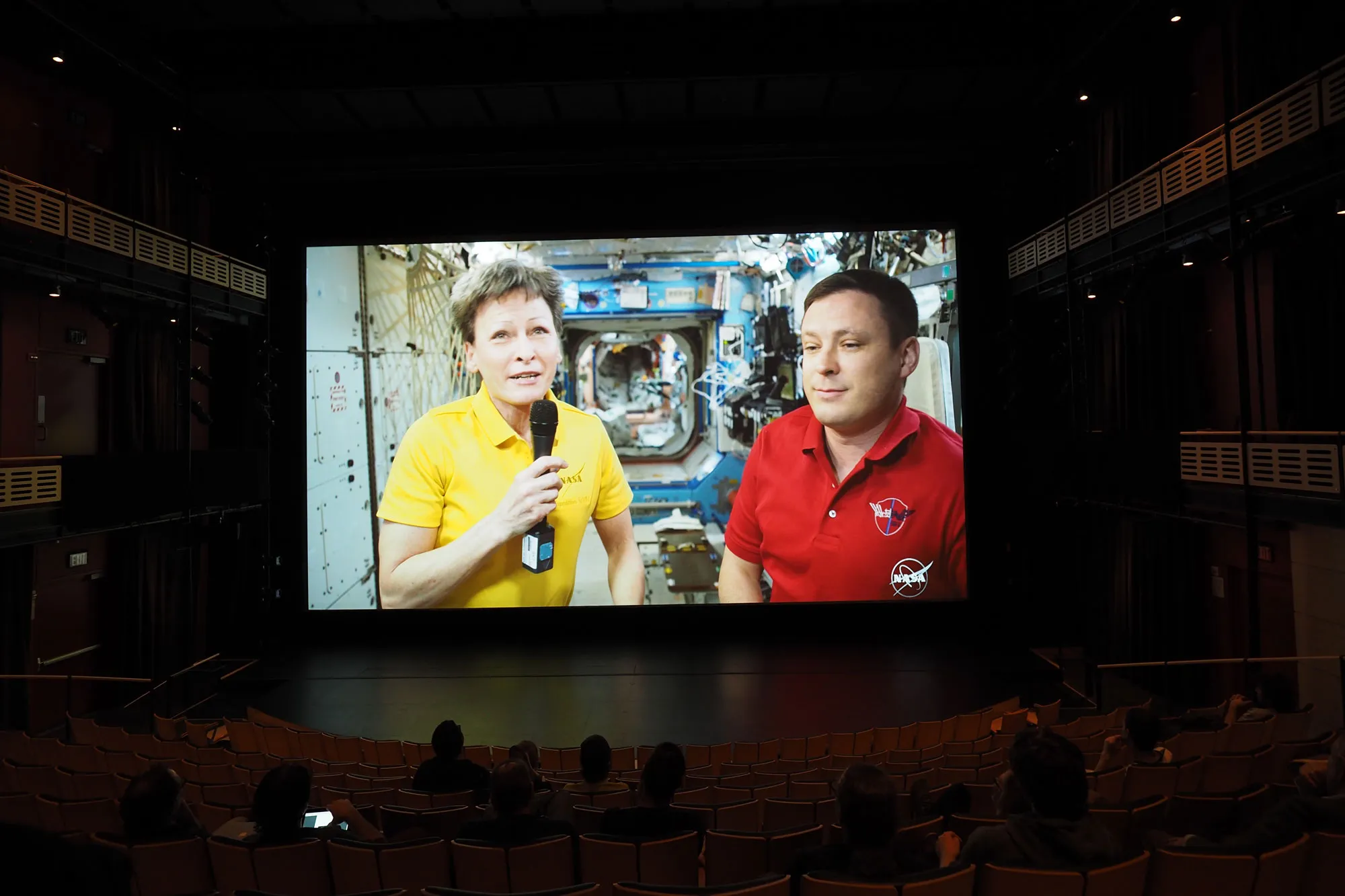
A female astronaut in a yellow polo holding a microphone and a male astronaut in a red polo talking via livestream to a silhouetted crowd.

NASA @ EMPAC

The First Live 4K Video Stream from the International Space Station

You are invited to witness NASA’s first 4K video stream from the International Space Station live in EMPAC’s Theater. The EMPAC Theater and Concert Hall recently got upgraded with two of the highest-quality video projectors currently available, the Christie Mirage 304K. Capable of projecting 3D and 4K (four times the resolution of HD) with a 30,000-lumen output, these projectors are some of the few capable of properly presenting the NASA stream.

During the live broadcast, NASA astronaut and Expedition 51 commander Peggy Whitson will speak with a panel of experts on the subject of “how advanced imaging and cloud technologies are taking scientific research and filmmaking to the next level.” Panelists include NASA astronaut Tracy Caldwell Tyson, NASA Imagery Expert program manager Rodney Grubbs, virtual and augmented reality expert Bernadette McDaid, AWS Elemental engineer Khawaja Shams, and Dave McQueeney of the IBM Watson Group.

Main Image: NASA astronauts livestreamed into the theater in 2017. Photo: Mick Bello/EMPAC.  
From Feldenkrais to GoPro

Mary Armentrout

Choreographer Mary Armentrout was in residence to develop a new performance with media artist Ian Winters, composer Evelyn Ficarra, and performer Chris Evans. Together, the collaborators led a workshop in which participants explored the intersections of bodily experience and technology. The workshop began with an awareness-through-movement sequence based on the Feldenkrais Method of Somatic Education. It consisted of a series of gentle movement exercises that bring individual attention to the bodily experience, thus cultivating embodied awareness. The artists then led participants in compositional exercises using technology such as GoPro cameras to explore electronic mediation from a consciously embodied state.

Mary Armentrout is a San Francisco-based choreographer and performance artist, and director of Mary Armentrout Dance Theater. She is the winner of an Isadora Duncan Dance Award, one of the most prestigious honors for Bay-area choreographers. She has long collaborated on her site-specific and staged works with Ian Winters and Evelyn Ficarra. Winters develops visual and acoustic media environments for stage. Together, Armentrout and Winters run their studio The Milkbar in Richmond, CA. Ficarra is lecturer in the music department at the University of Sussex, where she is also the Assistant Director of the Centre for Research in Opera and Music Theater. Armentrout brings her years-long collaborations with Winters and Ficarra to new work with music and dance artist Chris Evans, who participates in the House Full of Black Women Project, Bandelion Dance Theater, and Black and White Projects art collective in Oakland, CA.

Image
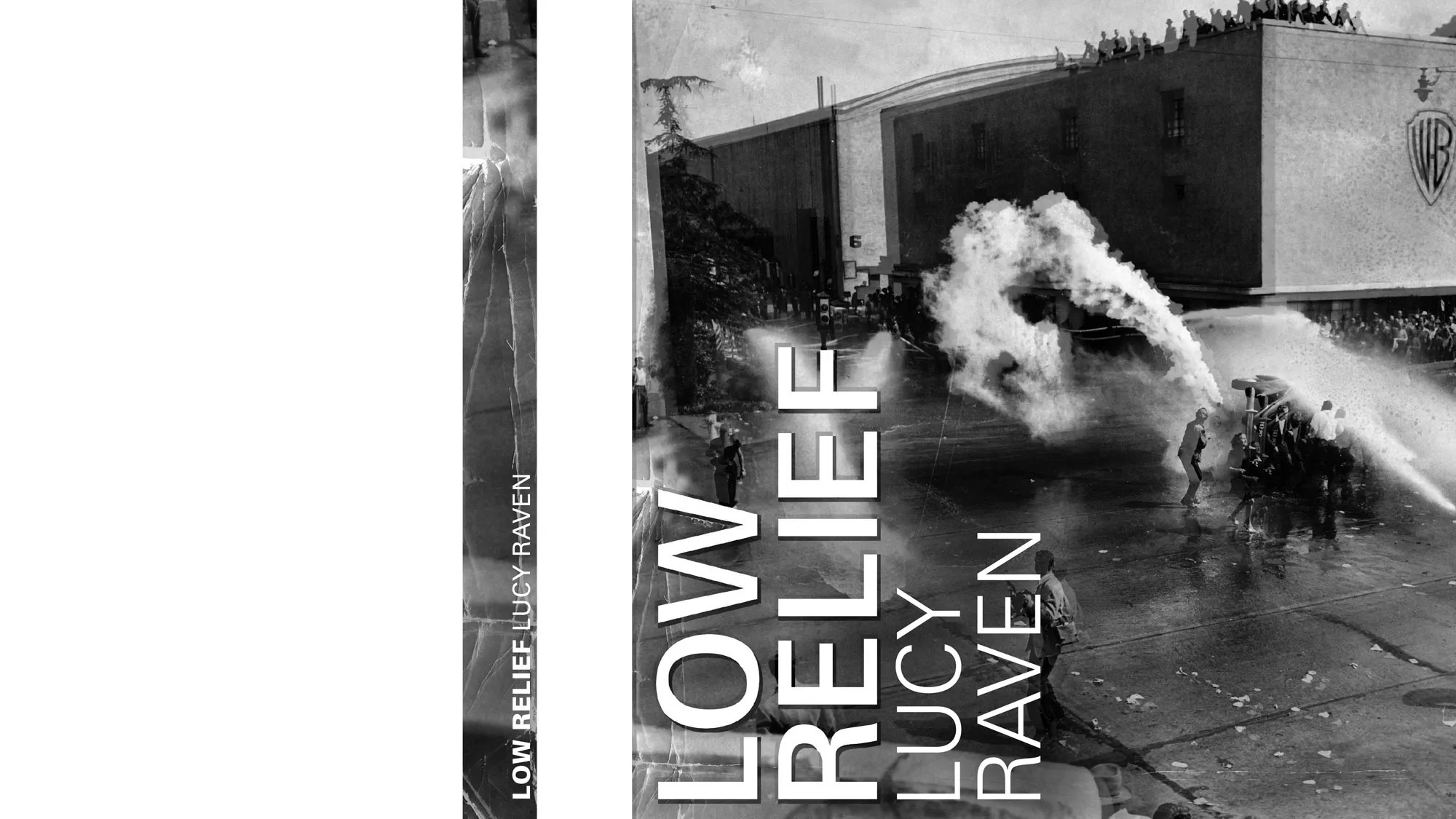
LOW RELIEF, Lucy Raven

Lucy Raven: Low Relief

Book Launch

Low Relief combines artist Lucy Raven’s multi-year research into industrial image making, conducted in part through a series of EMPAC residencies, and the artworks that resulted—RP31 (2012), Curtains (2014), and the EMPAC-commissioned cinema event Tales of Love and Fear (2015)—into a monographic book designed by EMPAC graphic artist Eileen Baumgartner.

Low Relief is introduced by EMPAC’s Director Johannes Goebel and includes essays by Victoria Brooks, Richard Birkett, Pablo de Ocampo, Joshua Clover, and Corrina Pepion, as well as the transcripts of Raven’s three illustrated lectures: Low Relief, On Location, and Motion Capture, presented between 2012-2016 at The Hammer (Los Angeles), Portikus (Frankfurt), The Kitchen (New York), South London Gallery (London), and EMPAC. Following the book launch join us for a screening of Starship Troopers with special effects master Phil Tippett.

Image
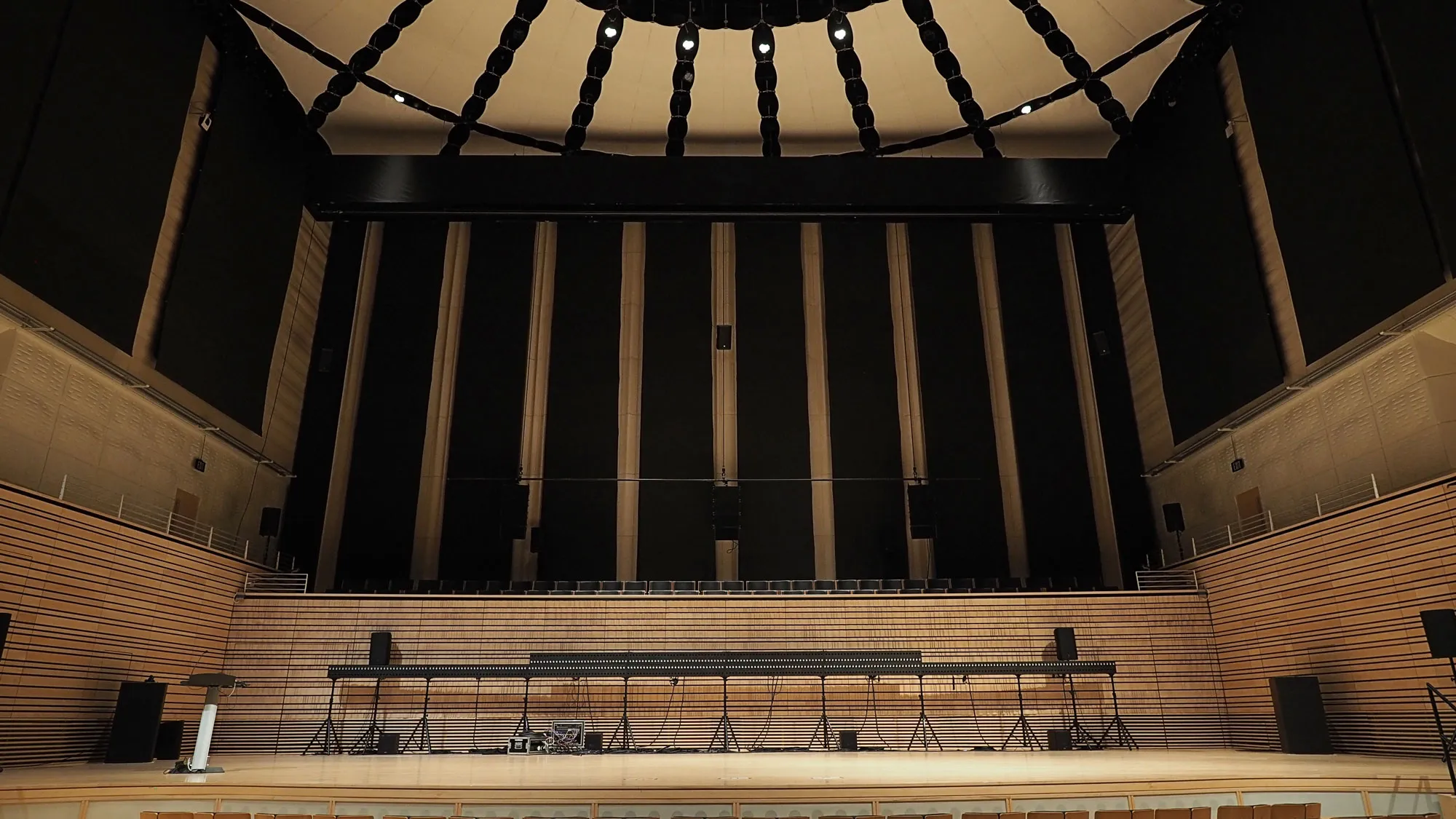
A long rectangular object on multiple supports alone on the concert hall stage.

Hans Tutschku

Spatial Audio Performance

During the second night of public concerts highlighting EMPAC’s Spatial Audio Summer Workshop, Hans Tutschku will present four multi-channel electronic compositions arranged for a large array of loudspeakers. Tutschku is a master in the creation and performance of music that includes sonic movement, space, and scale as important features of the listening experience. For this performance, Tutschku will adapt his work for a 248-channel Wave Field Synthesis array and 60-channel Ambisonic dome surrounding the audience in EMPAC’s Concert Hall.

PROGRAM:
  • Rituale (2004)
  • agitated slowness (2010)
  • –intermission–
  • remembering Japan - part 1 (2016)
  • Issho-ni (2014)
Media
Image
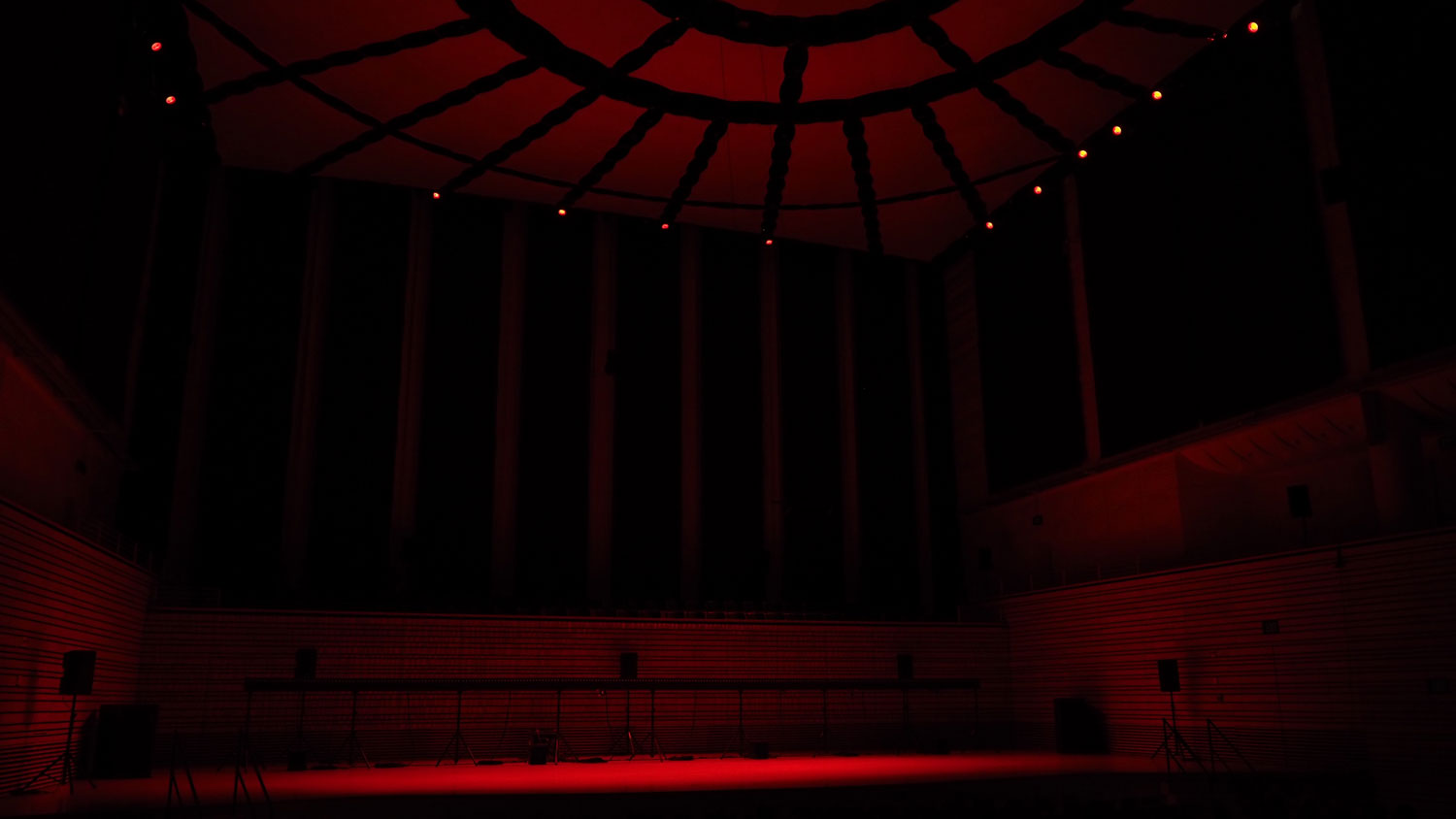
The empty concert hall bathed in deep red light.
Image
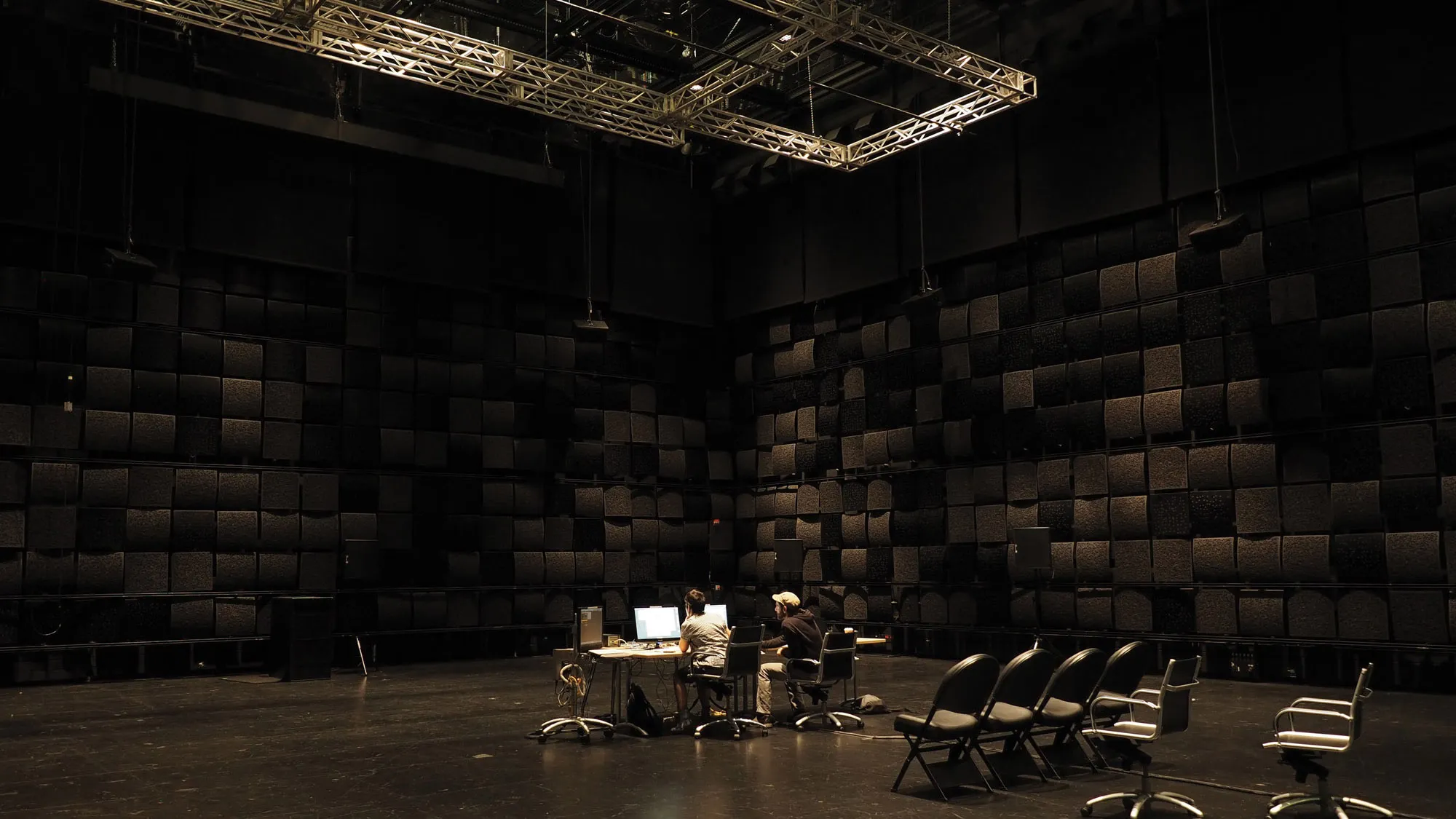
A black box studio with black acoustic tiles on the wall. Two people sit in the middle of a room at a desk with two computers below a large rectangular grid suspended from he ceiling.

Markus Noisternig

Spatial Audio Performance

As part of EMPAC’s Spatial Audio Summer Workshop, audio researcher Markus Noisternig will present an evening of multi-channel audio works. Using a 248-channel Wave Field Synthesis (WFS) array and a 60-channel Ambisonic dome, Noisternig will showcase the capabilities of this immersive system in a pristine acoustic space. WFS and Ambisonics represent the cutting edge of 3D, “holophonic” sound systems, which allow the composer to place and move sounds around the audience with an incredible degree of precision. While part of the workshop, this performance is open to the general public.

Media
Image
Six dancers laying on a light gray floor.

FIELD

Andrew Schneider

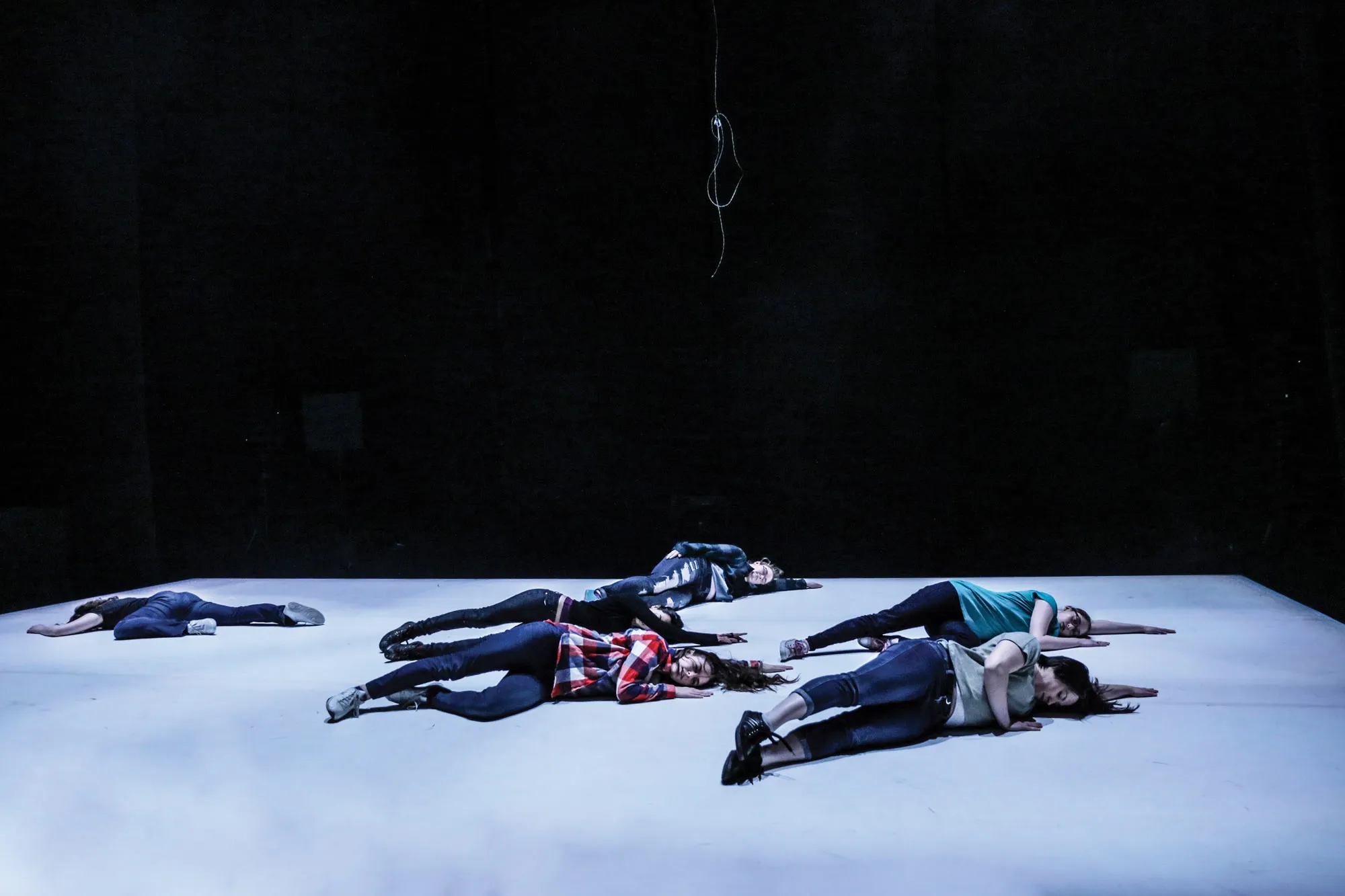
Performer, writer, and interactive-electronics artist Andrew Schneider completed a series of three development residencies at EMPAC with this work-in-progress showing of his new per- formance, FIELD (later titled AFTER). Picking up where his Obie Award-winning project YOUARENOWHERE left off, Schneider’s fol- low-up explores the physics and temporality of parallel universes and perception. Schneider and his collaborators Alicia ayo Ohs, Alessandra Calabi and Bobby McElver (joined by Kedian Keohan and Peter Musante for the work-in- progress showing) used lighting, projection mapping, and 3D sound spatialization to create an immersive environment inside of a non-lin- ear narrative that prioritizes audience experience and leads viewers to consider where they are and how they got there. Choreographer Vanessa Walters worked with the Rensselaer Dance Club to develop original choreography for the showing that would inspire scenes in the final production of AFTER.

Andrew Schneider is a Brooklyn-based artist who creates and performs in original perfor- mance works and videos and builds interactive electronic artworks and installations. Schneider was a Wooster Group company member (video/ performer) from 2007-2014 and has shown his work at 3LD in New York, the Melbourne Arts Festival, LIFT Festival, GREC Festival and in theaters across France, including Maillon, Théâtre de Strausbourg, and Théâtre de Genne- villiers among others.

Everybody talks about the weather, we don't

Boudry / Lorenz

Berlin-based artists Pauline Boudry and Renate Lorenz were in residence at EMPAC to produce a moving-image work with a structure that combined three choreographic approaches: an instructional score by Pauline Oliveros, a 1968 text by revolutionary Ulrike Meinhof that calls for a transition from protest to resistance, and remote-control “carts” developed by Bell Labs with choreographer Deborah Hay for the 9 Evenings: Theater and Engineering performances in New York in 1966.

Everybody talks about the weather, we don’t (a working title borrowed from a Meinhof essay) was performed by five “carts” (produced at EMPAC), theatrical light, haze, a mobile camera operated by Bernadette Paassen, and artists MPA, Ginger Brooks Takahashi, Werner Hirsch, and Marwa Arsanios.

By taking cues from historically subversive actions and artworks, the artists’ films and installations disrupt historical narratives in order to renew the power of radical artworks. By subverting the original context, Boudry/Lorenz reactivate these works through the interaction of the technical (the theatrical and filmic apparatus of media production) and the performative (the current generation of artists, choreographers, and musicians) to underscore how the refusal of a fixed or normative identity is still an urgent political act.

Boudry / Lorenz have been working together since 2007. Their staged films and film installa- tions often start with a song, a picture, a film, or a script from the past. They produce perfor- mances for the camera, staging the actions of individuals and groups living—indeed thriving— in defiance of normality, law, and economics. Their films upset normative historical narratives, as figures from across time are staged, projected, and layered. These performers are themselves choreographers, artists, and musicians, with whom Boudry and Lorenz engage in a long-term conversation about performance, the meaning of visibility since early modernity, the patholo- gization of bodies, and also about glamour and resistance.

Period of Animate Existence

Pig Iron Theater Company

Philadelphia-based Pig Iron Theater Company was in residence to develop LED light board technology for Period of Animate Existence, which premiered at the Annenberg Center for the Performing Arts in September 2017 for the Fringe Festival presented by FringeArts. Co-creators of Period of Animate Existence, director Dan Rothenberg and composer Troy Herion, developed the light board technology with video designer David Tennent and associate Kate Freer. The light board was made to mimic the light board of a halal food cart. The cart takes on a life of its own during one movement of the Period of Animate Existence opera.

The mission of Pig Iron Theater Company is to expand what is possible in performance by creating rigorous and unusual ensemble-devised works that ask hard questions of and around art and the world.

Image
A black box studio with black acoustic tiles on the wall. Two people sit in the middle of a room at a desk with two computers below a large rectangular grid suspended from he ceiling.

Spatial Audio Summer Workshop

A five-day workshop using Wave Field Synthesis and High-Order Ambisonics

A five-day intensive workshop on the technical, theoretical, and practical issues surrounding spatial audio platforms, particularly focused on Wave Field Synthesis and High-Order Ambisonics. Hosted by EMPAC at Rensselaer along with IRCAM (the Paris-based Institut de Recherche et Coordination Acoustique/Musique), and HUSEAC (Harvard University Studio for Electroacoustic Composition), this workshop will give participants the opportunity to experience large-scale, complex audio setups in pristine acoustic environments.


Markus Noisternig (IRCAM) and professor Hans Tutschku (Harvard) will join EMPAC’s audio staff in dissecting the technical and artistic concerns in the creation and presentation of high-count multi-channel audio projection. Each day will consist of seminar-style workshops and lectures, along with time for hands-on experience with the over 700 channels of audio, including EMPAC’s new Wave Field Synthesis array.

WAVE FIELD SYNTHESIS

EMPAC’s Wave Field Synthesis array was constructed in 2016 and consists of 558 independently controllable speakers spread across 18 portable and reconfigurable modules.

VENUES

The workshop will take place throughout EMPAC, granting participants access to the sophisticated audio systems in place. In addition to smaller studio spaces, five venues will be outfitted with high-channel-count audio arrays, including:

  • 1,200-seat Concert Hall
    with 248-channel Wave Field Synthesis Array and 60-channel Ambisonic array.
  • Large absorptive studio
    (66’x51’x33’; 315m2, 12m high) with 124-channel Wave Field Synthesis Array and 20-channel Ambisonic array.
  • Large diffusive studio
    (44’x55’x18’; 230m2, 9m high) with 20-channel Ambisonic array.
  • Theater stage
    (40’x80’x60’; 300m2, 20m high) with 186-channel Wave Field Synthesis Array and 20-channel Ambisonic array.

PREREQUISITES

Participants should be composers, audio engineers, or programmers with interest in multi-channel composition. Experience with MAX is recommended.

PERFORMANCES

There will be two open-to-the-public performances during the week on Mon + Thurs evenings. More information will be available later this spring on the specifics.

WHAT TO BRING

  • Attendees to the workshop should bring a computer and applications they are comfortable using for creating
  • Dongles to connect laptop to Ethernet cable
  • Audio content—uncompressed audio files or other playback/sound generation systems

Where + When

Held across EMPAC’s venues, the workshop will run from 10AM–6PM each day with lectures in the mornings and scheduled time later in the evenings in each venue. Performances will be held Wednesday and Thursday evenings. Coffee, lunch, and parking included for full workshop attendees only.

Lodging

Lodging accommodations are available on campus for those traveling to attend. Checkin/out will be open on the 9th and 15th for those who want to arrive the day before / leave morning after workshops.

Cost and Registration

  • $150 Includes: lectures ONLY.
  • $590 Includes: lectures, hands-on access to various audio systems, performances, and coffee, lunch, snacks each day.
  • $800 Includes: workshop registration as well as single room lodging for six nights on the Rensselaer campus.
  • June 5, 2017—Full registration cost due
  • Attendance limited to 25 participants

ABOUT EMPAC