Image
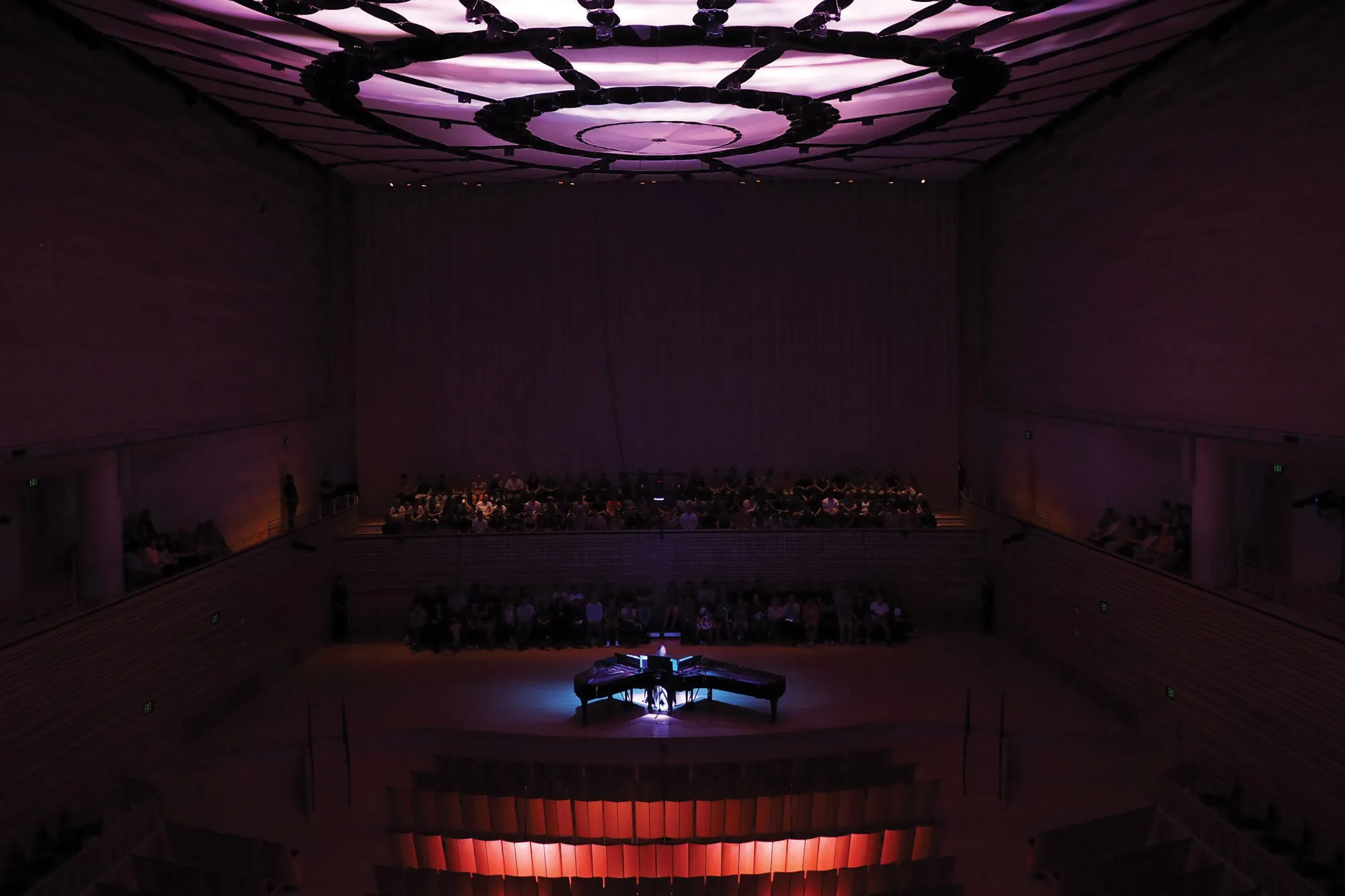
A person playing two pianos on the concert hall stage washed in purple and red light with a crowd behind them.

Mabel Kwan

Trois Hommages by Georg Friedrich Haas

Performing on two pianos simultaneously, Mabel Kwan took on Trois Hommages, the virtuosic opus of contemporary composer Georg Friedrich Haas. Haas dedicated the work to three of the 20th century’s most influential composers—György Ligeti, Josef Matthias Hauer, and Steve Reich—and each of the piece’s three movements are played in their respective homage. While one of the pianos is tuned in a conventional manner, the second is detuned by a quarter-tone, creating 176 different pitches for the performer. Unfolding over an hour, this rarely performed composition requires incredible mental focus and physical stamina on the part of the player.

This performance was part of a residence in which Kwan recorded Trois Hommages for future release.

Program

  • hommage à györgy ligeti (1984) 
  • hommage à josef matthias hauer (1982) 
  • hommage à steve reich (1982) 

Main Image: Mabel Kwan in the concert hall as lit for Trois Hommages in 2016. Photo: EMPAC.

Media
Image
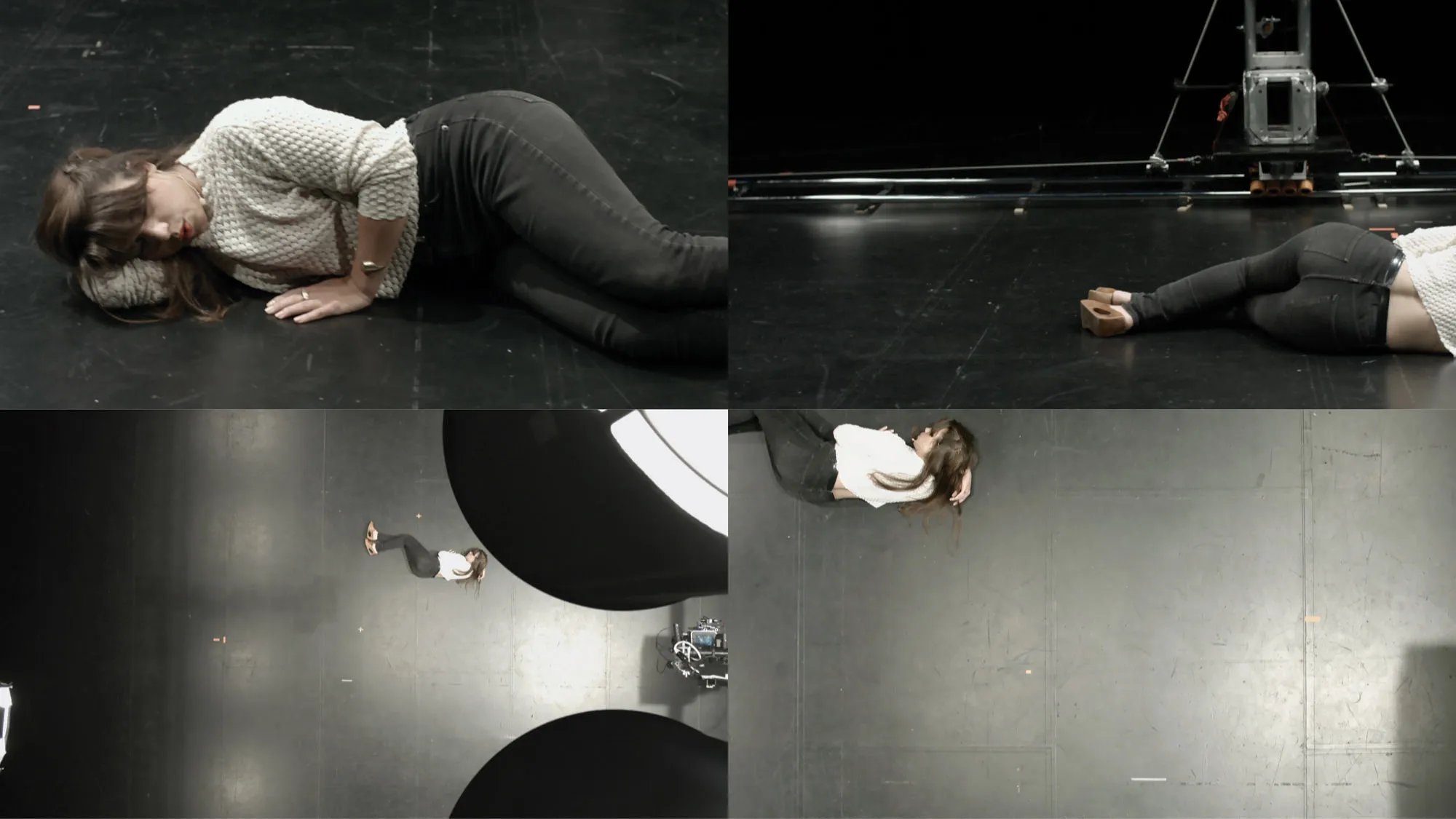
Four frames capturing Patricia Boyd laying down on a black floor from the front, back, and aerial views

Operator

Patricia L Boyd and Anne Boyer

San Francisco-based artist Patricia L Boyd presented her new video work, commissioned by EMPAC. The project is grounded in Boyd’s research into what she calls “the protocol of production-as-exhaustion,” which acknowledges the debt (of time, vitality, and labor) that must be paid to capitalism by every living body, as well as the internal economics of self-preservation that a body must undertake to honor this debt. In light of such demands, Boyd’s work depicts an “unproductive” body within a structure of “wasted” time. 

The shoot, which took place over five days in spring 2016, used a system of four moving cameras in the EMPAC Theater—two bird’s-eye views moving up and down on vertical axes, and two horizontal tracking shots—to surround and relentlessly document the space in which performer Nour Mobarak took up an extended and repetitive series of gestures. Within this matrix of cameras—running in constant motion according to pre-programmed commands—the system inevitably documented itself, each camera puncturing the frame of the others and capturing the static lighting rigs and technical equipment used on-set. Mobarak’s body, like all the objects represented, was passed by again and again and thereby could never become a fixed subject of the film since the system was not programmed to privilege her presence any more than the adjacent objects.

As a counterpoint to the screening, Boyd commissioned a new piece of writing from poet Anne Boyer, which was read in person at the event. The text formed part of Boyer’s ongoing On Care series, a “meditation on the politics of care in the age of precarity,” previous installments of which influenced Boyd in the making of her work. 

Main Image: Operator (2016). Photo: Courtesy the artist and EMPAC.

Image
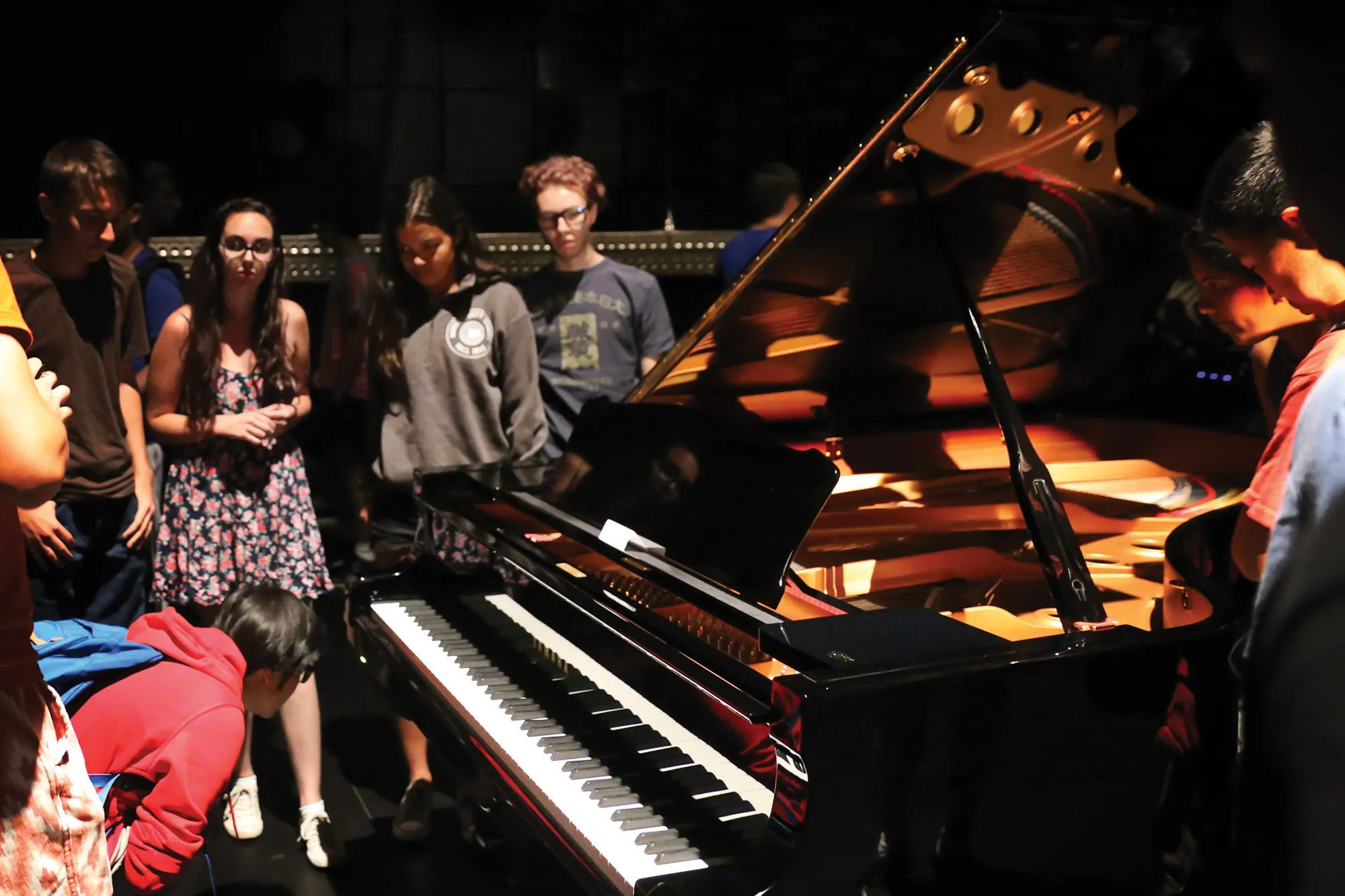
A group of students standing around a grand piano examining the keys.

108 Troubles

Rob Hamilton

In Spring 2016, EMPAC completed construction on a 496-channel wave field audio system, one of the most extensive in the world. Consisting of very small speaker heads oriented very close together, the system produces a 3D audio environment by localizing the source of individual sounds with an extreme level of precision. 

For the wave field array’s inaugural performance, Rensselaer Professor Rob Hamilton created a running installation and performance (on Sept. 2) to explore and demonstrate advanced concepts of spatialized sound. Using a Disklavier piano, Hamilton transformed digitally recorded notes and distributed them across each of the independently controlled speakers in the system. Audiences were encouraged to physically explore the resulting environment much like a giant sonic hologram. The live performance was realized by pianist Chryssie Nanou. 

Dr. Rob Hamilton, a composer, performer, researcher and software designer, explores the cognitive implications of the spaces between interactive game environments, network topographies, and procedurally-generated sound and music. Dr. Hamilton joined the Department of Arts at Rensselaer as an Assistant Professor of Music and Media in 2015.

Main Image: Students in Studio 1 for a demo of 108 Troubles in 2016. Photo: EMPAC.

Cartography

Mariel Roberts

Cellist Mariel Roberts was in residency to record, mix, and edit her second solo album, Cartography. Released in 2017 by New Focus Recordings, the album contained works by George Lewis, Eric Wubbels, Davi∂ Brynjar Franzson, and Cenk Ergün in collaboration with Roberts herself.

Roberts has appeared as a soloist and chamber musician across four continents, most notably as a member of the Mivos String Quartet, as well as Wet Ink Ensemble and Ensemble Signal. She has been featured as a chamber musician on recordings for Innova, New World Records, New Amsterdam, New Focus, and Urtext Records.

Image
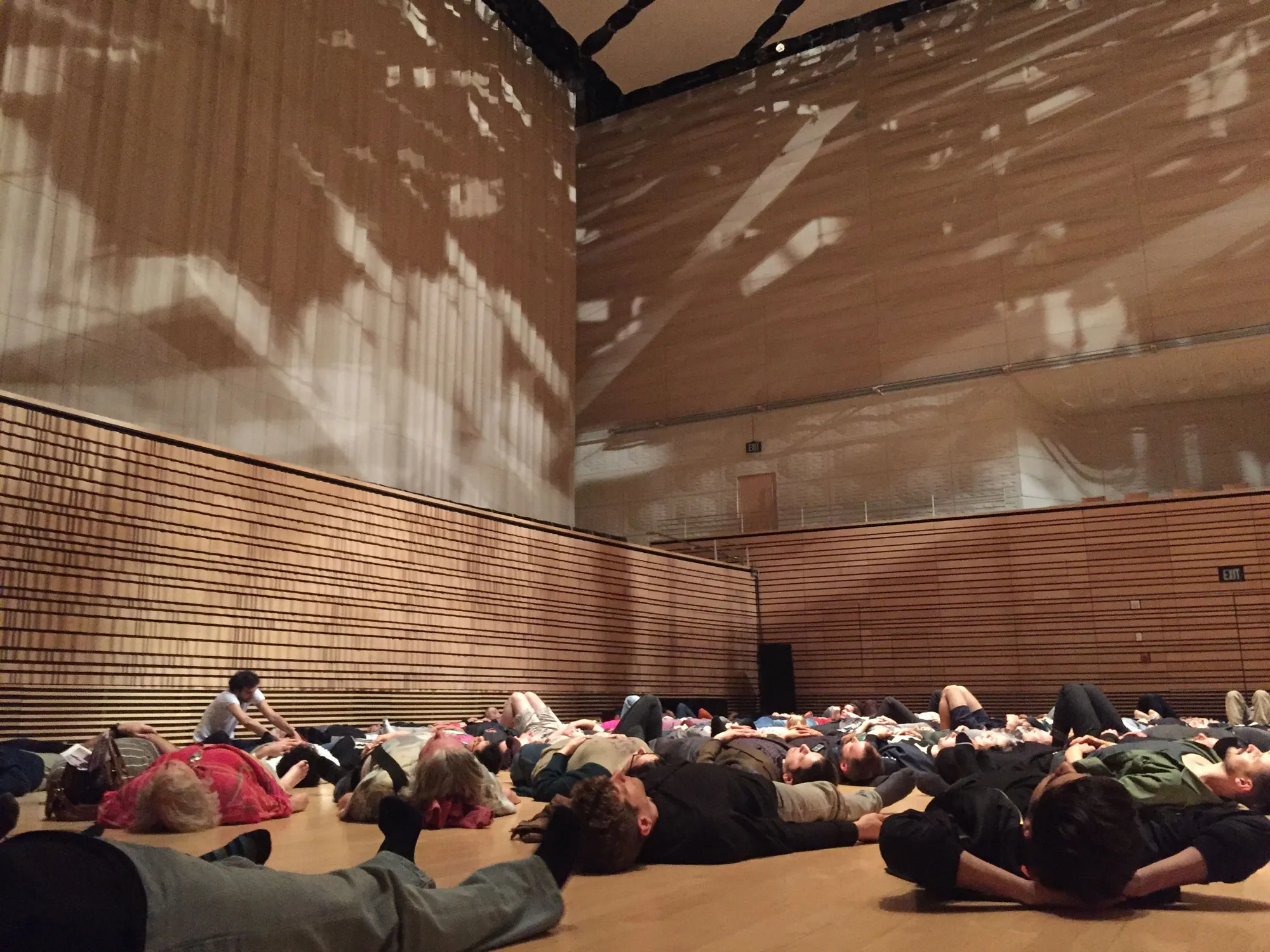
 A crowd of people laying on their backs across the Concert Hall stage.

WITHIN

Tarek Atoui

The final EMPAC presentation of sound artist Tarek Atoui’s multi-year research and performance project to develop tools and techniques for performing sound to a hearing-impaired audience.

Atoui has been working in collaboration with Distinguished Research Professor of Music Pauline Oliveros and her students from the New Instrumentation for Performance seminar to think through propositions for new instruments and performance techniques. Several instruments that Atoui has been developing concurrently will be played throughout the public spaces of EMPAC and broadcast into the Concert Hall. The audience will be encouraged to explore the acoustic relationships between individual instruments and the architecture that they inhabit.

During this time, Atoui has also worked in partnership with UC Berkeley Art Museum and Pacific Film Archive, Center for New Media at University of California, Berkeley, and Meyer Sound to develop the Zero Point Nine an instrument that was premiered in a series of performances presented by BAMPFA in November 2015. The Zero Point Nine will be traveling to EMPAC for this presentation to be played alongside a new prototype interactive square wave synthesizer The Sit-thesizer by Julia Alsarraf, and the SubBassProtoTon developed by Johannes Goebel. The instruments from these two research and development phases in Troy and Berkeley respectively, will be presented together during Norway’s 2016 Bergen Assembly, organized by Atoui as artistic director.

Atoui presented the project’s first incarnation, WITHIN, as a series of performances and workshops during the Sharjah Biennial in 2013 and has continued to research principals of sonic architecture (in particular, the system of DeafSpace, developed by Hansel Bauman at Gallaudet, Washington) in the development of instrument-building techniques.

WITH:

  • Julia Alsarraf
  • Jad Atoui
  • Johannes Goebel
  • Jeff Lubow
  • Matt O'Hare
  • Pauline Oliveros
  • Evan-Daniel Rose-González

SubBassProtoTon

This musical instrument was invented by director Johannes Goebel and has been installed for this performance. When inside, you can experience frequencies that dip below the human audible limit.

Sit-Thesizer

Rensselaer Arts grad Julia Alsarraf, has developed the Sit-thesizer as part of this performance.

Main Image: Participants of Pauline Oliveros' Deep Listening workshop lie across the Concert Hall stage during WITHIN in 2016. Photo: Argeo Ascani, 2016.
Image
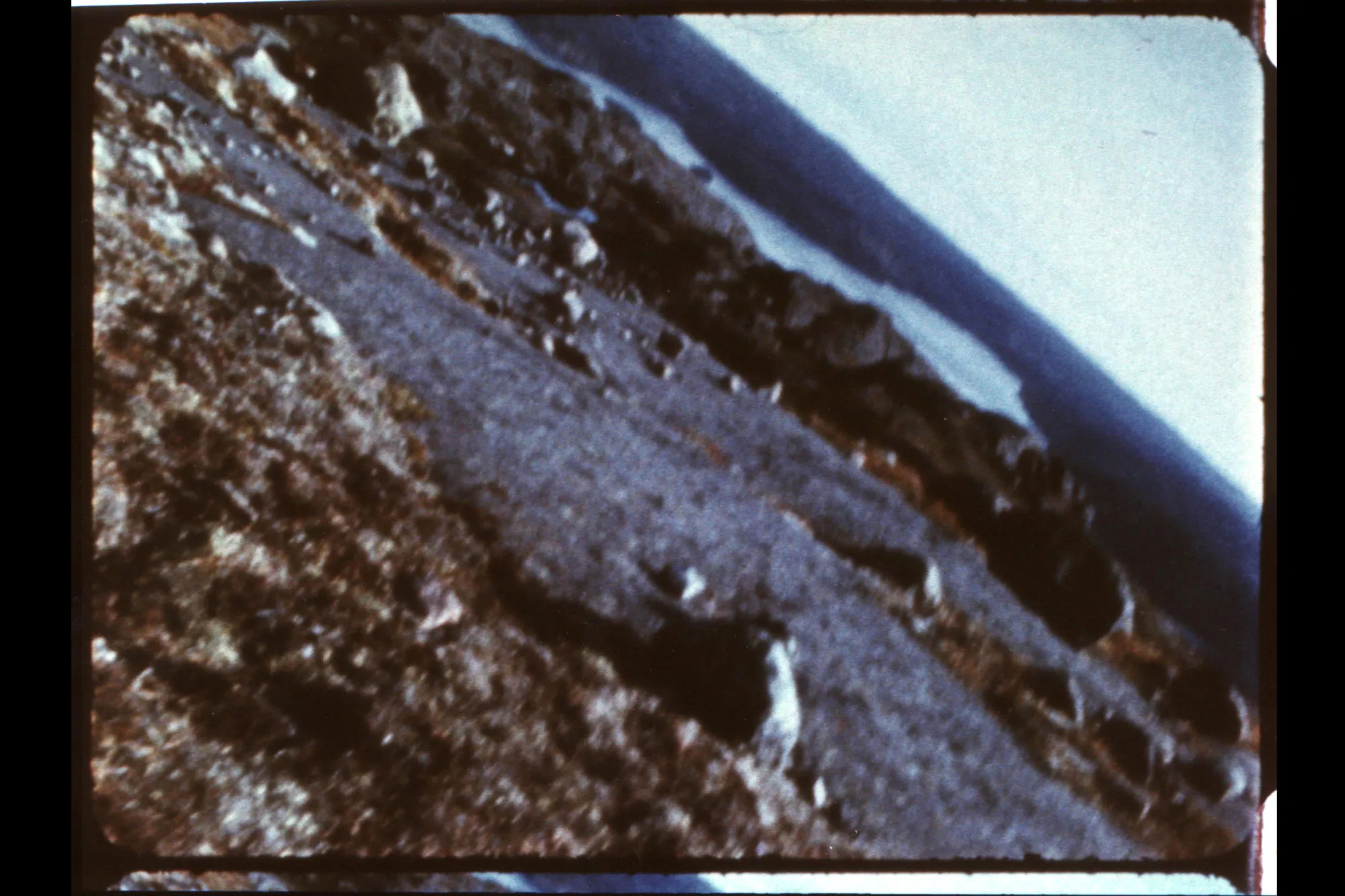
Vintage film image of a sideways rocky beach.

On Screen/Sound: No. 15

Michael Snow / Miguel Angel Rios

The final On Screen/Sound program of the spring season presents two films with sonic and visual elements constructed through complex tracking shots.

In Miguel Angel Rios’ Untitled (The Ghost of Modernity) (2012) a CG-rendered cube floats across a desert landscape, while a spare Cageian composition punctuates this modernist exploration of silence and space. Shot with an automated camera that could be controlled to move in 360 degrees, Michael Snow’s La Région Centrale documents the landscape of northern Quebec and was scored using the sine waves and electronic pulses of the technical camera apparatus itself.
PROGRAM
  • Untitled (The Ghost of Modernity) (2012) Miguel Angel Rios
  • La Région Centrale (1971) Michael Snow
  • Approximate runtime: 190 minutes 

Main Image: Film still from La Région Centrale, Michael Snow (1971). Courtesy of Canadian Filmmakers Distribution Centre.

Media
Image
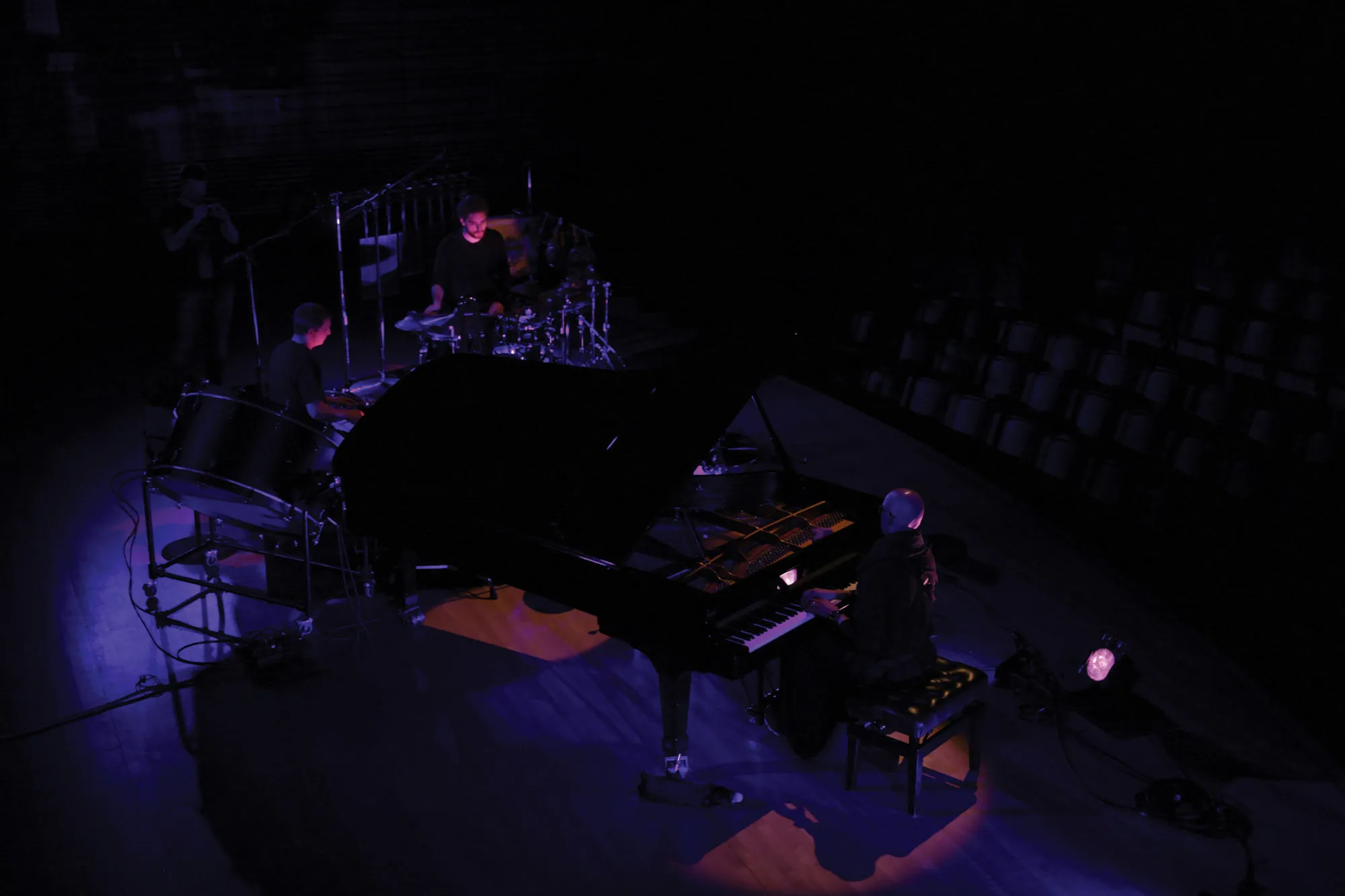
A small ensemble of three men, one playing piano and two on percussion, playing on the concert hall stage washed in blue/purple light.

Nik Bärtsch's MOBILE

Zen-like concentration. Meticulous execution. Tight grooves that inexplicably lie way back in the pocket while simultaneously pushing incessantly forward. Nik Bärtsch’s Swiss jazz quartet MOBILE uses these basic musical concepts within a ritualistic framework to produce a sound that is sometimes funky, sometimes ambient, and always obsessively charged.

Recording for ECM since 2006, bandleader and pianist Bärtsch has quickly become a respected figure for his mixture of funk, new classical music, as well as elements of Japanese ritual music. Along with drummer Kaspar Rast, reed player Sha, and percussionist Nicolas Stocker, MOBILE belongs to the new generation of modern musicians who naturally combine a competence for classical interpretation, improvisational dexterity, and the ability to groove.

Main Image: MOBILE on stage in the EMPAC Concert Hall in 2016. Photo: Mick Bello/EMPAC.

Media

WITHIN

Tarek Atoui

The final EMPAC presentation of sound artist Tarek Atoui’s multi-year research and performance project to develop tools and techniques for performing sound to a hearing-impaired audience.

Atoui worked in collaboration with Distinguished Research Professor of Music Pauline Oliveros and her students from the New Instrumentation for Performance seminar to think through propositions for new instruments and performance techniques. Several instruments that Atoui had been developing concurrently were played throughout the public spaces of EMPAC and broadcast into the Concert Hall. The audience was encouraged to explore the acoustic relationships between individual instruments and the architecture that they inhabit.

During this time, Atoui had also been worked in partnership with UC Berkeley Art Museum and Pacific Film Archive, Center for New Media at University of California, Berkeley, and Meyer Sound to develop the Zero Point Nine, an instrument that was premiered in a series of performances presented by BAMPFA in November 2015. The Zero Point Nine traveled to EMPAC for this presentation and was played alongside a new prototype interactive square wave synthesizer The Sit-thesizer by Julia Alsarraf, and the SubBassProtoTon developed by Johannes Goebel. The instruments from these two research and development phases in Troy and Berkeley respectively, were then presented together during Norway’s 2016 Bergen Assembly, organized by Atoui as artistic director.

Atoui presented the project’s first incarnation, WITHIN, as a series of performances and workshops during the Sharjah Biennial in 2013 and has continued to research principals of sonic architecture (in particular, the system of DeafSpace, developed by Hansel Bauman at Gallaudet, Washington) in the development of instrument-building techniques.

Image
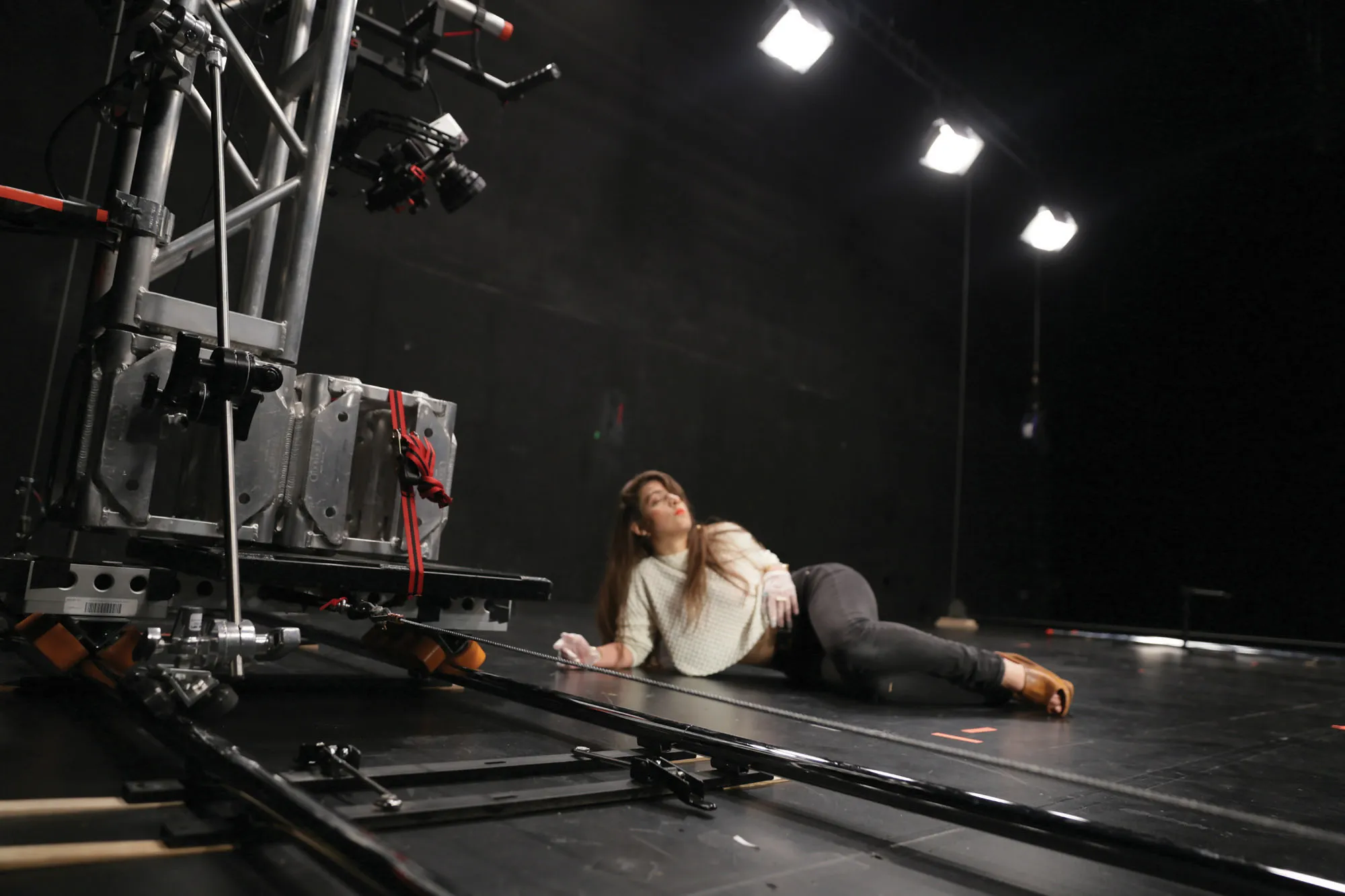
a woman with brown hair wearing a cream sweater and black pants laying on her side on a black stage.

Patricia L Boyd

Artist-in-residence Patricia L Boyd invited audiences behind-the-scenes to experience the mechanical configuration of her video in mid-production. This work-in-progress event was presented as a “live filming” with performer Nour Mobarak, a Los Angeles-based poet and voice-over artist.

For the shoot, a networked group of cameras were rigged in EMPAC’s Theater to run continuously, recording horizontal and vertical tracking shots in constant motion. This apparatus, which Boyd described as an “overactive metabolism,” is programmed to run automatically, and a human subject, often seen in bed, is captured (in both senses) and made visible through the infrastructure of these multiple perspectives. The footage produced became a new moving-image work, called Negative Reps, which premiered in early fall 2016. The project came out of Boyd’s research into exhaustion and its management as internal to and constitutive of biopower. 

Relocated from the UK to the Bay Area, Patricia L Boyd has presented solo exhibitions at Jan Kaps, Cologne; Kiria Koula, San Francisco; TG, Nottingham; YEARS, Copenhagen (with Rachal Bradley); Modern Art Oxford; and OHI0, Glasgow. Boyd has exhibited internationally in group shows including Steirischer Herbst, Graz; Gasworks, London; and the 12th Lyon Biennale.

Main Image: Patricia L. Boyd. Photo: EMPAC

Passage

Longleash

The Longleash trio (piano, violin, cello) was in residence in the Concert Hall making audio recordings of new compositions by Reiko Füting, Yukiko Watanabe, Christopher Trapani, and Clara Iannotta. The album, Passage, was released by New Focus Recordings in 2017.

Named for the Cold War-era CIA program that aimed to undermine Soviet culture by secretly disseminating art from the American avant- garde, Longleash relish the paradox of experimental sound. Formed in 2013 by violinist Pala Garcia, cellist John Popham, and pianist Renate Rohlfing, the group is focused on the com- missioning and performance of music by emerging composers. Pursuing the freedom of exploration within a pre-determined set of limitations, they mine the depths of the traditional piano trio in search of sounds and ideas yet undiscovered.