Image
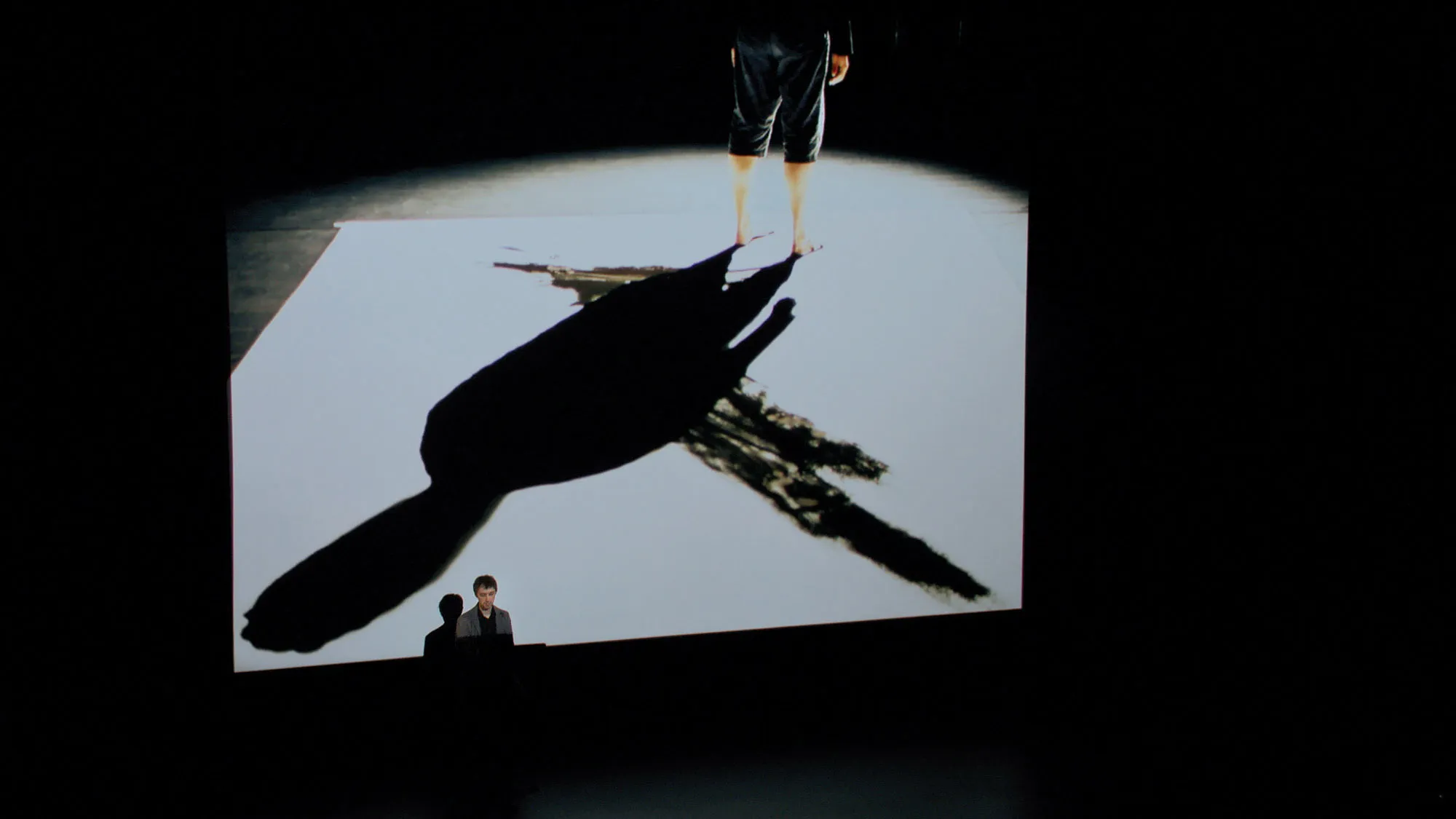
A large screen displaying the shadow of a man wearing shorts and standing in the upper right corner.

Small Narration

Wojtek Ziemilski

In 2006, Wojtek Ziemilski learned that his grandfather, a notable citizen of the city of Wroclaw in Poland, was for many years a collaborator with the communist secret police. To better understand the full story, Ziemilski created this lecture-performance using various forms of public address and artistic expression including personal confession, academic lecture, video art, and contemporary choreography. Theater intermingles with reality, private narration with historical commentary—all to cope with the painful problem of memory and the manipulations it undergoes. 

Ziemilski is a theater director and visual artist who graduated from the theater directing course at the Gulbenkian Foundation in Lisbon, Portugal. He teaches contemporary approaches to theater making with a particular focus on devising techniques and the use of new dance (or so-called “non-danse”) in theater. He is the author of the art blog new-art.blogspot.com.

Main Image: Small Narration 2013.

Media

La Jeune-Fille et la Mort (Death and the Young-Girl)

Bureau de l’APA

The bell rings. The teacher instructs the audience to take out their textbooks. The class begins. The textbook is based on Raw Materials for a Theory of the Young-Girl (by the Tiqqun collective) and the “Young-Girlization” of the world is the class topic. Sound poetry, lessons from a one-of-a-kind ballet instructor, songs, sculptures, and music by a string quartet combine to form this multifaceted and symbolic portrait of the Young-Girl, created by Quebec-based Bureau de l’APA and collaborators from diverse artistic domains.

Based in Quebec City, Laurence Brunelle-Côté is a writer, performer, and designer who works with artists from a variety of disciplines (dance, performance, poetry, music, and multidisciplinary arts). Simon Drouin is a performer, designer, musician, and member of the Orchestre d’Hommes-Orchestres, a multidisciplinary arts collective that makes “music that can be seen.” In 2001, the pair founded the Bureau de l’APA, an undisciplined performing art company whose aim is to bring together artists from all fields to work on atypical creative projects.

Image
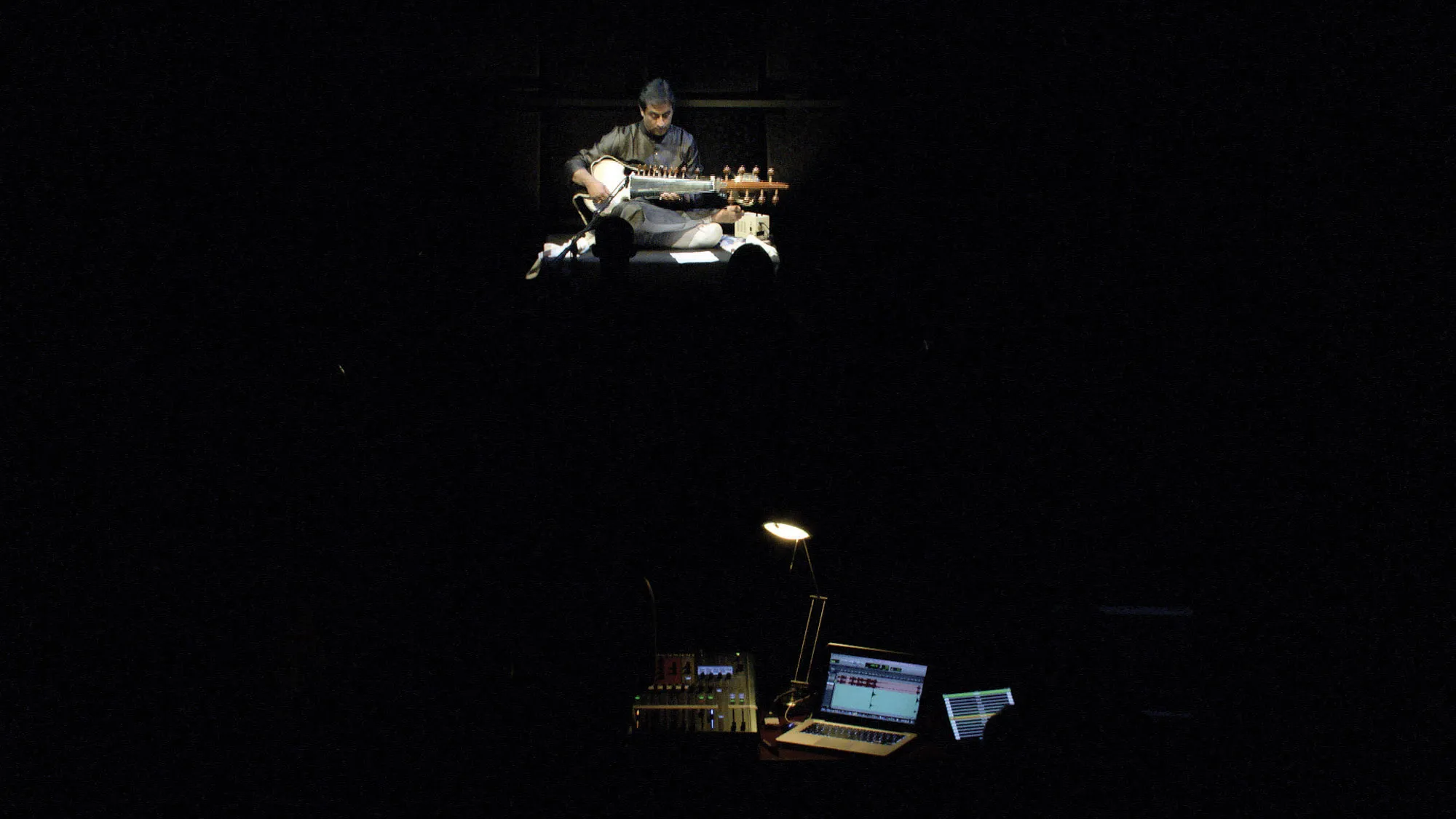
A man seated playing the sitar in a dark room, lit only by the sound panel in front of the stage.

Time Will Tell

Manuella Blackburn

Intricate and meticulous sounds are hallmarks of the work of acousmatic composer Manuella Blackburn. Using a ring of loudspeakers situated around an audience in the dark, Blackburn created a sound-only environment where hearing took precedence over everything else. (“Acousmatic” is a term to define sounds, which can be heard, but have no visible point of origin). The sound samples she uses in her works are sometimes recognizable clicks, often frantically moving, and always crisply detailed. Blackburn received a bachelor’s degree in music, a master’s in electroacoustic composition, and a PhD from the University of Manchester. She is a lecturer in music technology at Liverpool Hope University. 

PROGRAM

Vista Points (2009) Karita oto (2009) Time will tell (2013) - World Premiere New Shruti (2013) - with Dr. Rajeeb Chakraborty, Sarod Switched On (2011) Origami (The Crane) (2008) Javaari (2013)

Media

Nocturnes

William Basinski

Best known for his ambient, slowly evolving sound compositions such as The Disintegration Loops (2002), tape-loop tinkerer William Basinski presents his most recent piece, Nocturnes. Originally recorded in 1979, the piano metallic tape loop used in Nocturnes was stored for more than 30 years, gradually being degraded and transmuted by time. Basinski has further altered the identity of the sound by removing the attacks of the piano and overlaying them, creating an underwater-like atmosphere that is strangely recognizable as the ghost of the piano.

William Basinski is a classically trained musician and composer who has been working in experimental media for over 25 years. His haunting and melancholy soundscapes explore the temporal nature of life, resounding with the reverberations of memory and the mystery of time. His epic four-disc masterwork, The Disintegration Loops, received international critical acclaim and was chosen as one of the top 50 albums of 2004 by Pitchfork MediaArtforum magazine selected The River, Basinski’s transcendental two-disc shortwave music experiment on Raster-Noton.de, Germany, as one of the top 10 albums of 2003. His concerts, installations, and films made in collaboration with artist-filmmaker James Elaine have been presented internationally, most recently at the Venice Biennale; Happy New Ears Festival, Belgium; Focus: ONE Festival, Poland; Festival Filosofia, Carpi, Italy; and Cité de la Musique, Paris, among others. Basinski's latest albums, 92982 and Vivian & Ondine, were released in 2009 on 2062/USA and distributed internationally. The Wire magazine selected 92982 as one of the top 50 releases of 2009.

Image
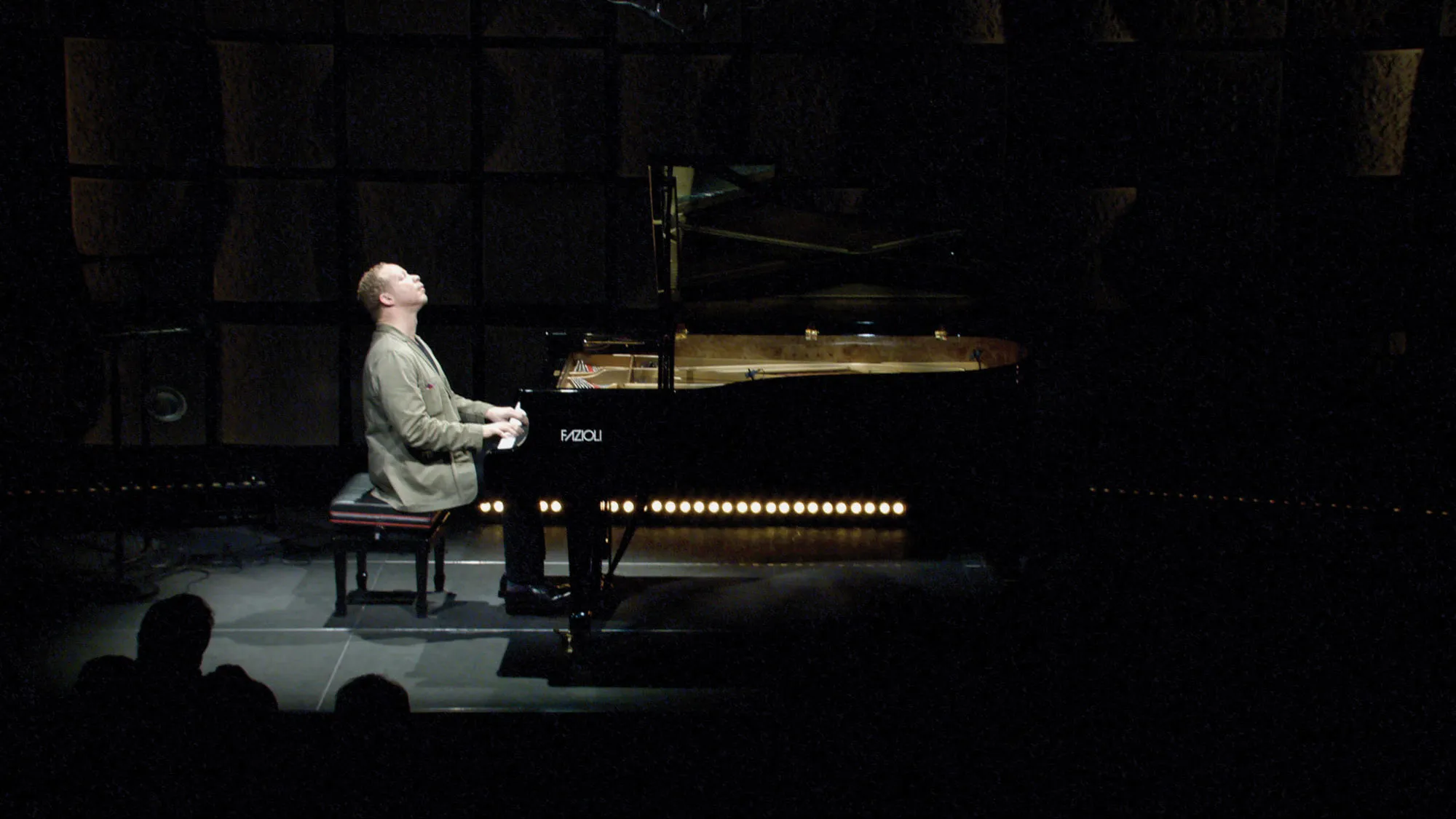
A man lifting his head towards the ceiling with eyes closed in a moment of reverence as he plays a grand piano on a dark stage in a spotlight.

Craig Taborn + Vicky Chow

Two masterful pianists from different musical worlds: Vicky Chow is a champion of new music, who performs as a soloist and with ensembles like the Bang on a Can All-Stars, and Craig Taborn is an unparalleled jazz keyboardist who tours as a soloist, band leader, and sideman with musicians like Dave Holland and Tim Berne. Chow and Taborn’s contrasting solo sets represented the wide spectrum of virtuoso pianism today. 

Chow has performed extensively as a classical and contemporary soloist, chamber musician, and ensemble member; While at the University of Michigan, Taborn became a member of saxophonist James Carter’s band. He has subsequently worked with many musicians, including Dave Douglas, Hugh Ragin, Eivind Opsvik, Marty Ehrlich, Drew Gress, Chris Potter, David Torn, Michael Formanek, and Tomasz Stanko, as well as with members of the Bad Plus. 

Program

Avenging Angel Solos and Improvisations Craig Taborn, piano Interval Surface Image for piano and 40-channel 1-bit electronics - Tristan Perich Vicky Chow, piano

Main Image: Taborn in studio 2 during his performance in 2013. Photo: EMPAC/Rensselaer.

Image
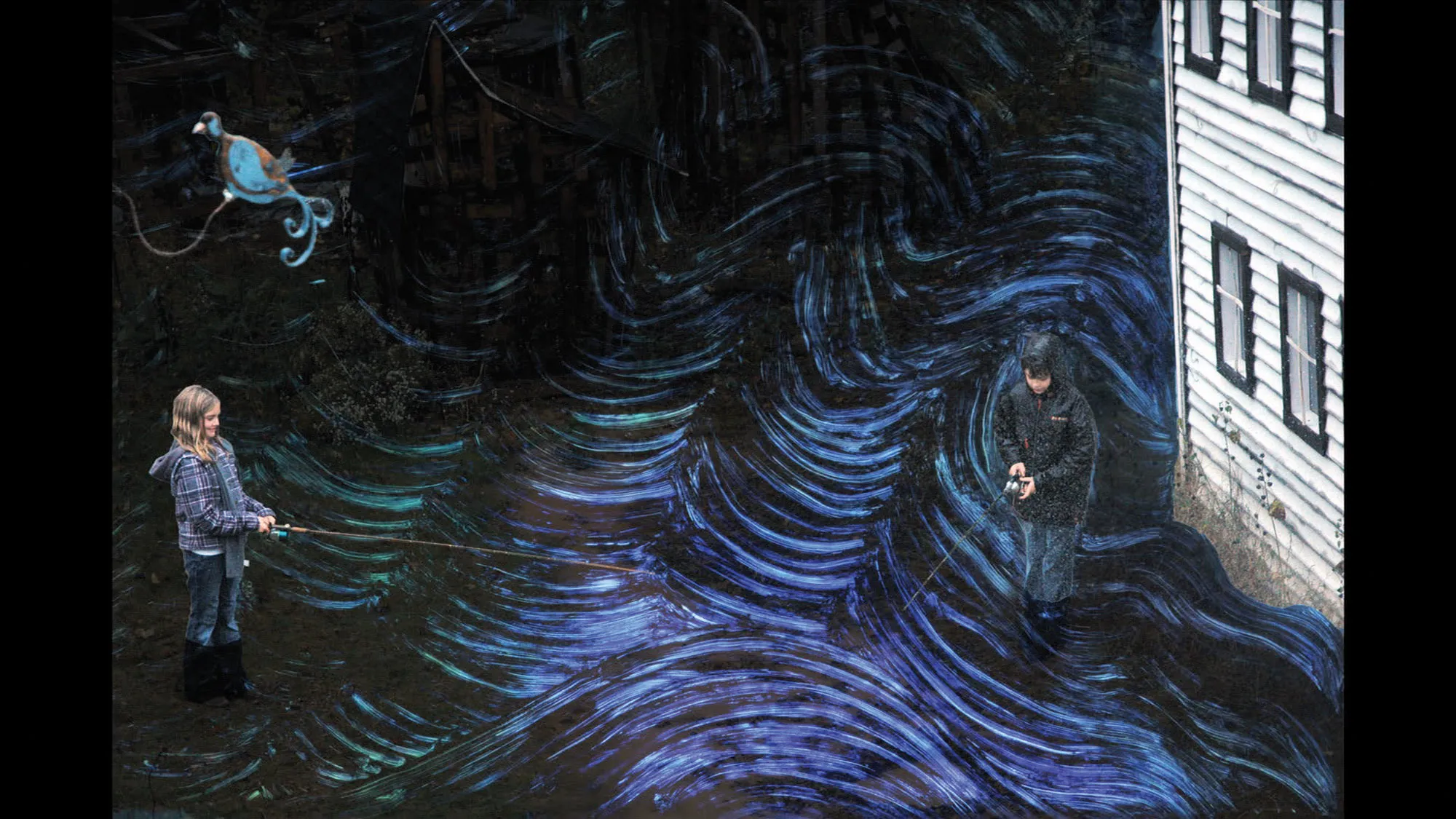
Two children standing by a White House fishing in waves of blue and green brush strokes

Gravity Was Everywhere Back Then

Brent Green

Celebrate the DVD/Blu-ray release of Brent Green’s Gravity Was Everywhere Back Then. Produced in conjunction with, as well as shot and mastered at EMPAC, the film of the live version will be screened, followed by a discussion with Green. Purchase of a ticket includes a copy of the release.

Through live action and hand-drawn stop-motion animation, Gravity Was Everywhere Back Then tells the true story of a man who fought against reason and nature to save the woman he loved from illness. Heartbreaking, darkly humorous, and philosophically challenging, Brent Green touches on everything from the vastness of space and the existence of God to the futility of our actions and the power of human will. Green narrates the film and provides a soundtrack along with his band.


Main Image: Gravity Was Everywhere Back Then. Courtesy Brent Green

Image
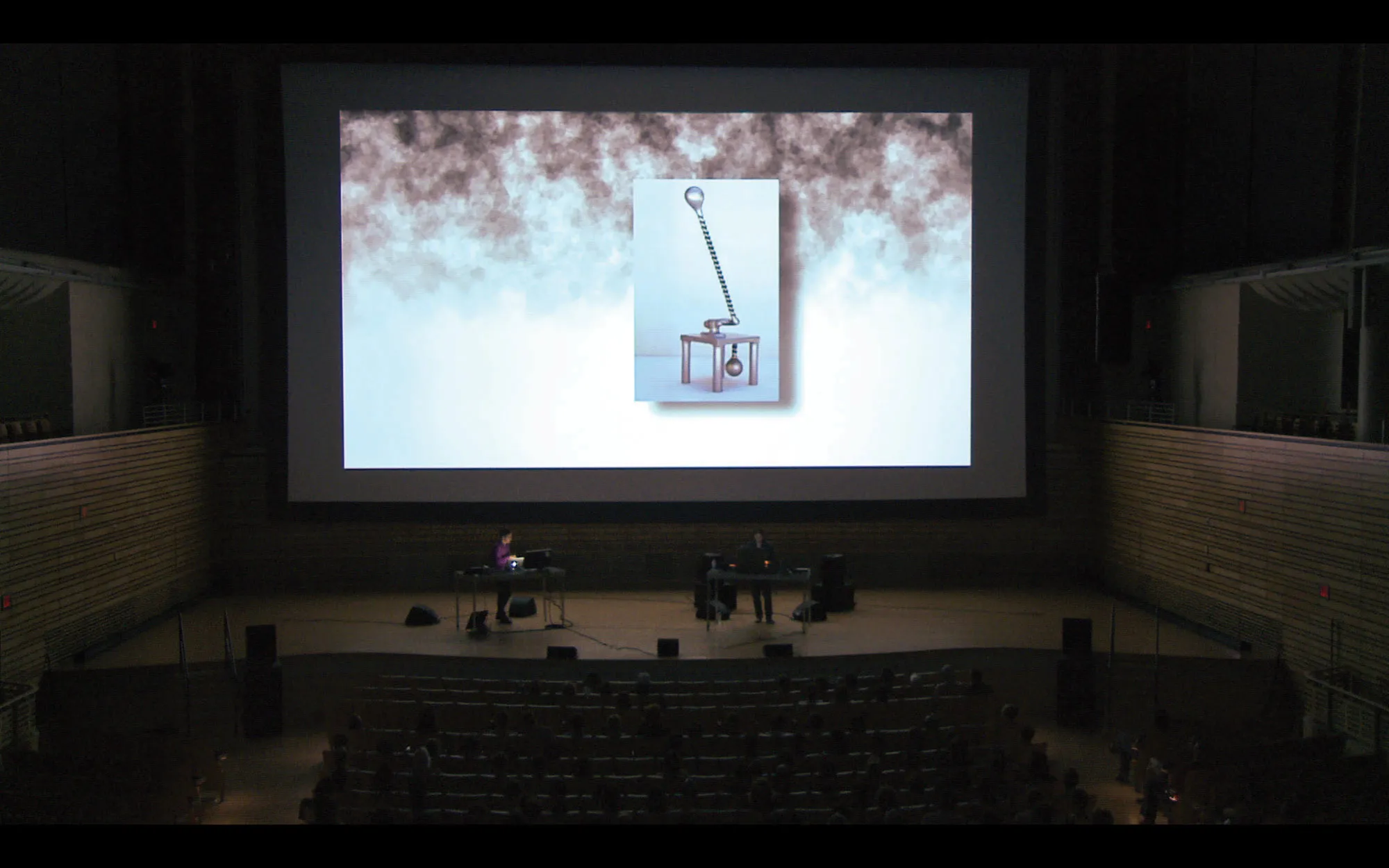
Two people behind desks and in discussion on stage infant of a large screen projecting the image of an abstract sculpture, resembling a low table with a long handle.

R Plus Seven

Oneohtrix Point Never

Oneohtrix Point Never—aka Daniel Lopatin—is a Brooklyn-based composer who creates electronic music that is often described as “cinematic” and “orchestral.” While broad in range, Lopatin does not ignore the small stuff; his sound engineering crafts and controls every detail and effect. Pulling from a wide range of influences—synth sounds, television commercials, classical minimalism, and high-end audio production—Lopatin condenses the disparate sounds to form music that slopes forward with self-contained narratives. Oneohtrix Point Never performs new music with visuals by Nate Boyce from his upcoming album R Plus Seven.

Daniel Lopatin has always deftly balanced the experimental with the accessible: He has released several albums under his Oneohtrix Point Never moniker on various independent labels – including the 2013 3-CD/5 LP Rifts, a compilation of his early work – as well as amassing a large catalogue of mini-album tape releases. His most recent disc, 2011’s Replica, was built around samples of television commercials; Sasha Frere Jones of the New Yorker called it “music that gently triggers a series of images and feelings, none of which you can name and all of which seem entirely common.” He has built live soundscapes at the Museum of Modern Art; collaborated with Montreal-based ambient electronic music composer Tim Hecker on the largely improvised 2012 Instrumental Tourist; and recast the title track from his 2010 disc Returnal as an elegant and emotive piece for piano, featuring the otherworldly voice of Antony Hegarty. Advertising powerhouse Saatchi & Saatchi tapped Lopatin for an installation event at the 2012 Cannes film fest and Sofia Coppola’s longtime cohort Brian Reitzell invited him to create original music for Coppola’s The Bling Ring. Said the Saatchi execs, “There’s this grandeur to his music, but it’s always counterbalanced by moments of irony and lightness.”

Praised by critics around the world, audiences over the past several years have gravitated to OPN’s profound arrangements, which touch upon both mainstream and discarded electronic music histories; merging the structural freedom of noise with the abstract emotionality of work considered by many to be “background music.” In addition to his work as OPN, Lopatin is known for his production and arrangement work, having collaborated with Antony Hegarty, Doug Aitken, Fennesz, Tim Hecker, and Hans-Peter Lindstrøm, among others.

Main Image: OPN in the concert hall in 2013.
Media
Image
David Link

David Link

Software Archaeology. On the Resurrection of Programs for the Mark 1, 1948–58

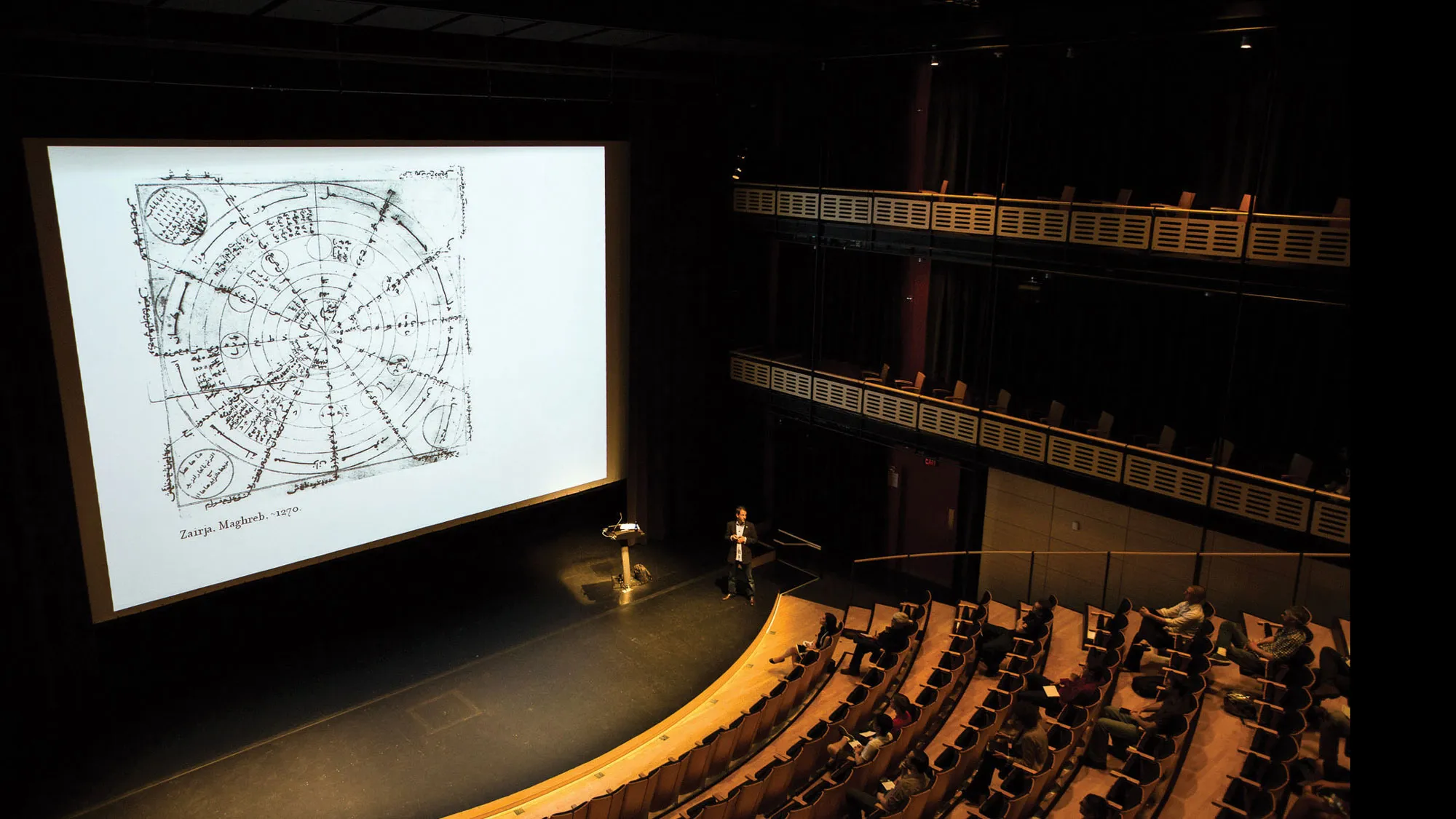
The Ferranti Mark 1 (1948–1958), the world’s first commercially available electronic computer, was used to create some of the earliest computer music and video games. This talk, by artist and media archaeologist David Link, detailed the problems and solutions of resurrecting software for the Ferranti Mark 1. 

Link’s research in the field of software archaeology, which belongs to the broader field of archaeology of algorithmic artifacts, proceeds in a theoretical and practical way at the same time. As humans increasingly problem solve through machines and software, history must also account for algorithmic artifacts. Link’s art installations and performances have been shown all over the world, and he won the 2012 Tony Sale Award for computer conservation. His current research focuses on the development of an archaeology of algorithmic artifacts. Recent exhibitions include at Arnolfini, Bristol; MU, Eindhoven; and dOCUMENTA (13), Kassel.

Observer Effects offered a dialogue between the fields of art and science. The title was derived from the principle in physics that the act of observation transforms the observed, an idea that has been influential in philosophy, aesthetics, psychology, and politics.

Main Image: David Link in the theater in 2013 during his talk.

Media
Image
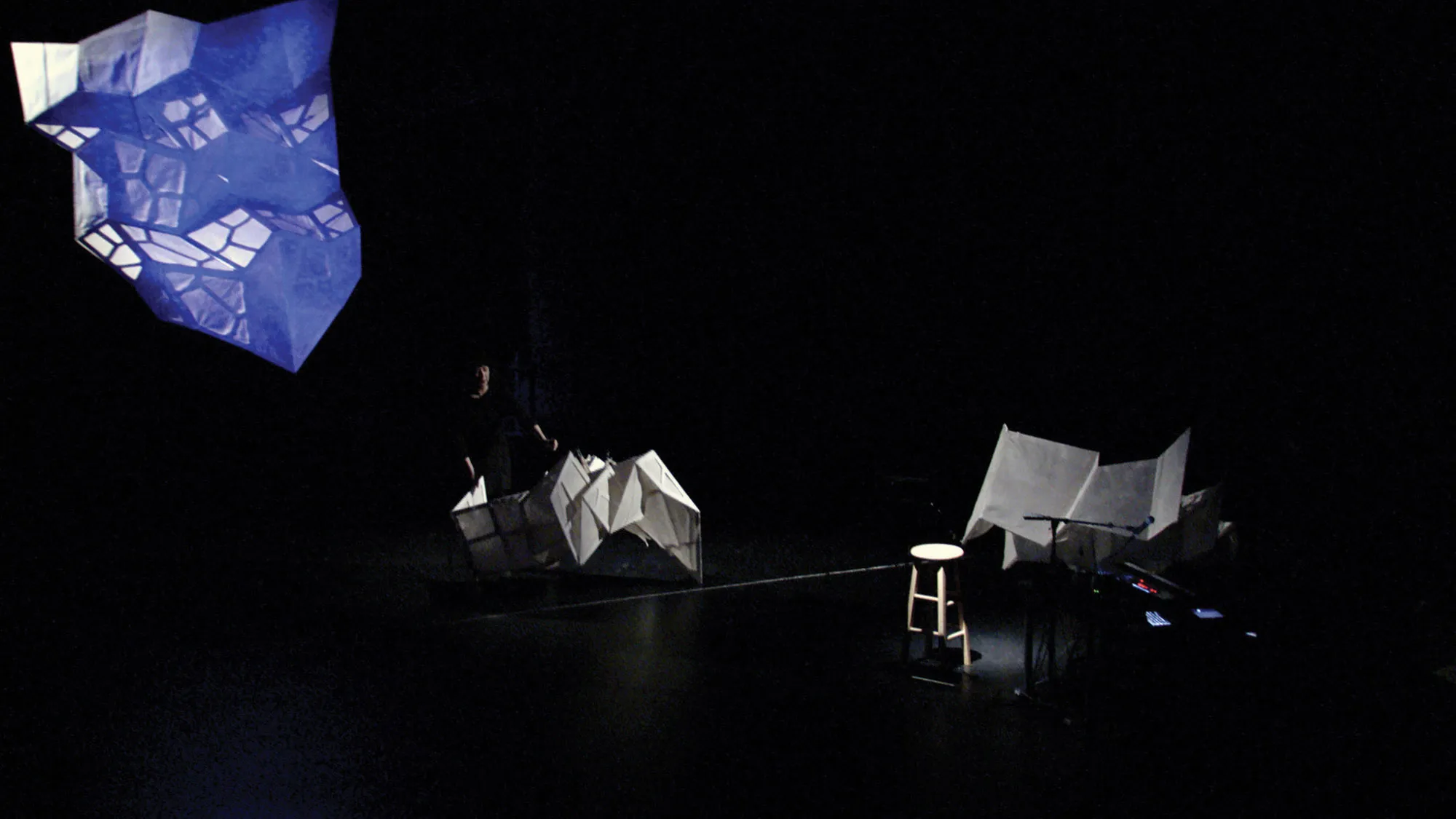
A woman on a dark stage amongst three large, white geometric sculptures.

Trieste

Marie Brassard

Trieste is a contemporary fable inspired by the Italian city of the same name located on the Adriatic Sea. The performance unfolds in five segments, each relating to one feature of Trieste: The Abyss, The Caves, The Sea, The Castles, and The Bora. As in the board game Snakes and Ladders, where destiny is randomly decided, protagonists climb or fall from one level to another through breaches in the storyline. 

Marie Brassard and Infrarouge, her Montréal-based theater company, completed the work in residence and then premiered it at EMPAC. The company developed reactive video, light, and sound environments that would respond to performers in a mix of accidental and planned ways. After years of collaboration with director Robert Lepage, actress, director, and author Marie Brassard formed her own company, Infrarouge, to create multidisciplinary works throughout Europe, the Americas, and in Australia.

Media
Image
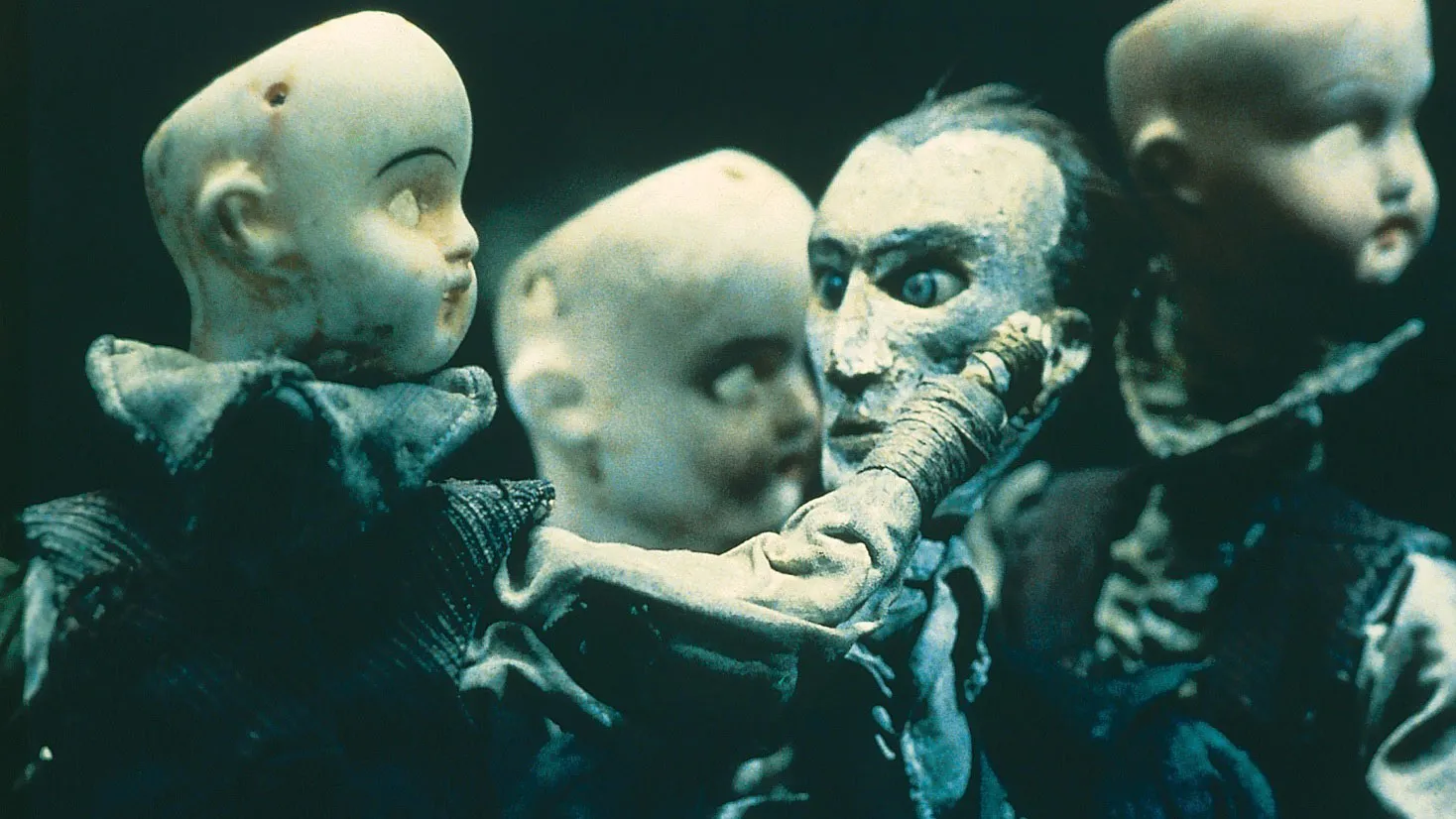
Green tinted distressed porcelain doll heads missing their hair and eyes.

Quay Brothers

Selections from Phantom Museums

Featuring selections from the Quay Brothers’ compendium of short films, Phantom Museums spans their 30-year career. Renowned for their unparalleled contributions to the field of puppet film, identical twins Stephen and Timothy Quay combine visual, literary, musical, and philosophical influences with a singular sensibility. Inspired by the films of Jan Svankmajer and Jiri Barta, the Quay Brothers bring together the quaintness and delicacy of early animation with painstakingly hand assembled sets in their films. Program:

  • Street of Crocodiles - 1986, 20:32 min.
  • The Cabinet of Jan Svankmajer - 1984, 14:12 min.
  • Rehearsals for Extinct Anatomies - 1987, 14:29 min.
  • The Comb (From the Museum of Sleep) - 1990, 18:04 min.
  • Still Nacht IV - 1994, 3:56 min.
  • In Absentia - 2000, 19:17 min.

Shadow Play is a series of films that tread nimbly between reality and illusion, acknowledging the artificial nature of cinema. Referencing the tradition of shadow puppetry, the origins of cinema in phantasmagoria, and Plato’s Allegory of the Cave, each film draws on the metaphors of light as reality and shadow as artifice. In Plato’s The Republic, the allegory of the cave illustrates the difference between truth and illusion. Many writers have noted that Allegory of the Cave (written c. 360 BCE), bears great resemblance to the contemporary movie theater.

Main Image: Still from The Street of Crocodiles (1986),