Image
laurie anderson

Designing + Customizing Instruments for Performance and Recording

Laurie Anderson

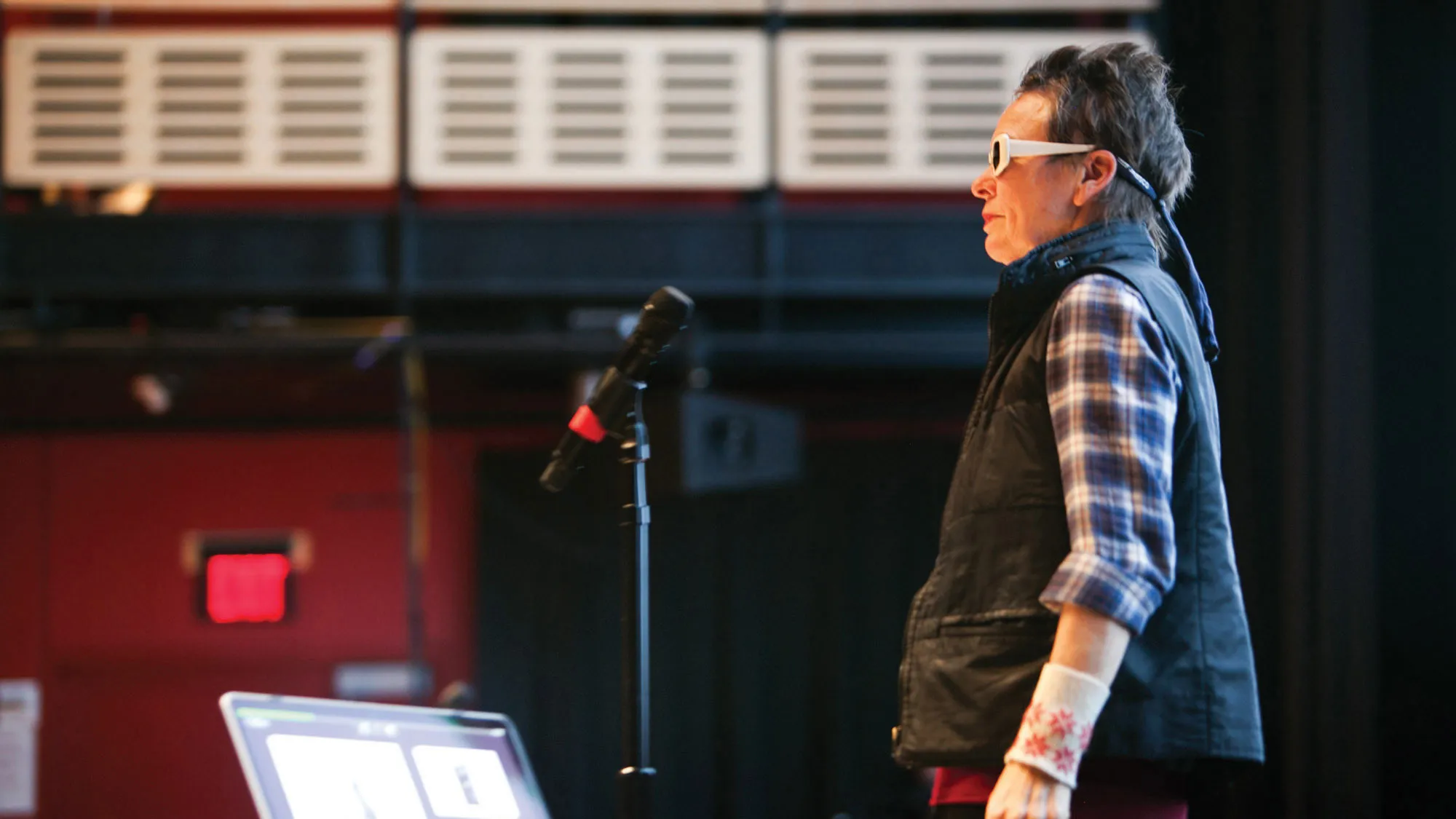
Laurie Anderson discussed the ever-evolving development of new instruments and interfaces for her productions and performances, and her “new rig,” which finally allows her to travel with her custom configuration of instruments in a suitcase. She was joined by her software and hardware collaborators: Konrad Kaczmarek, Liubo Borissov, and Shane Koss. She also discussed her new work with the Kronos Quartet, Landfall, one of the projects she was working on in residence at EMPAC.

Throughout her genre-crossing career, Anderson has invented several technological devices for use in her recordings and performance art shows, including voice filters, a tape-bow violin, and a talking stick. In 2002, she was appointed NASA’s first artist-in-residence, and she was also part of the team that created the opening ceremony for the 2004 Olympic Games in Athens. She has published six books, produced numerous videos, films, radio pieces, and original scores for dance and film. In 2007, she received the prestigious Dorothy and Lillian Gish Prize for her outstanding contribution to the arts. 

Laurie Anderson, EMPAC’s inaugural distinguished artist-in-residence, presented a series of events focusing on topics unique to her practice as an artist. 

Main Image: Distinguished artist-in-residence Laurie Anderson during her talk in 2013. Photo: Kris Qua/EMPAC.
Image
Simon Critchley

Simon Critchley

Philosophy and the Art of Dying

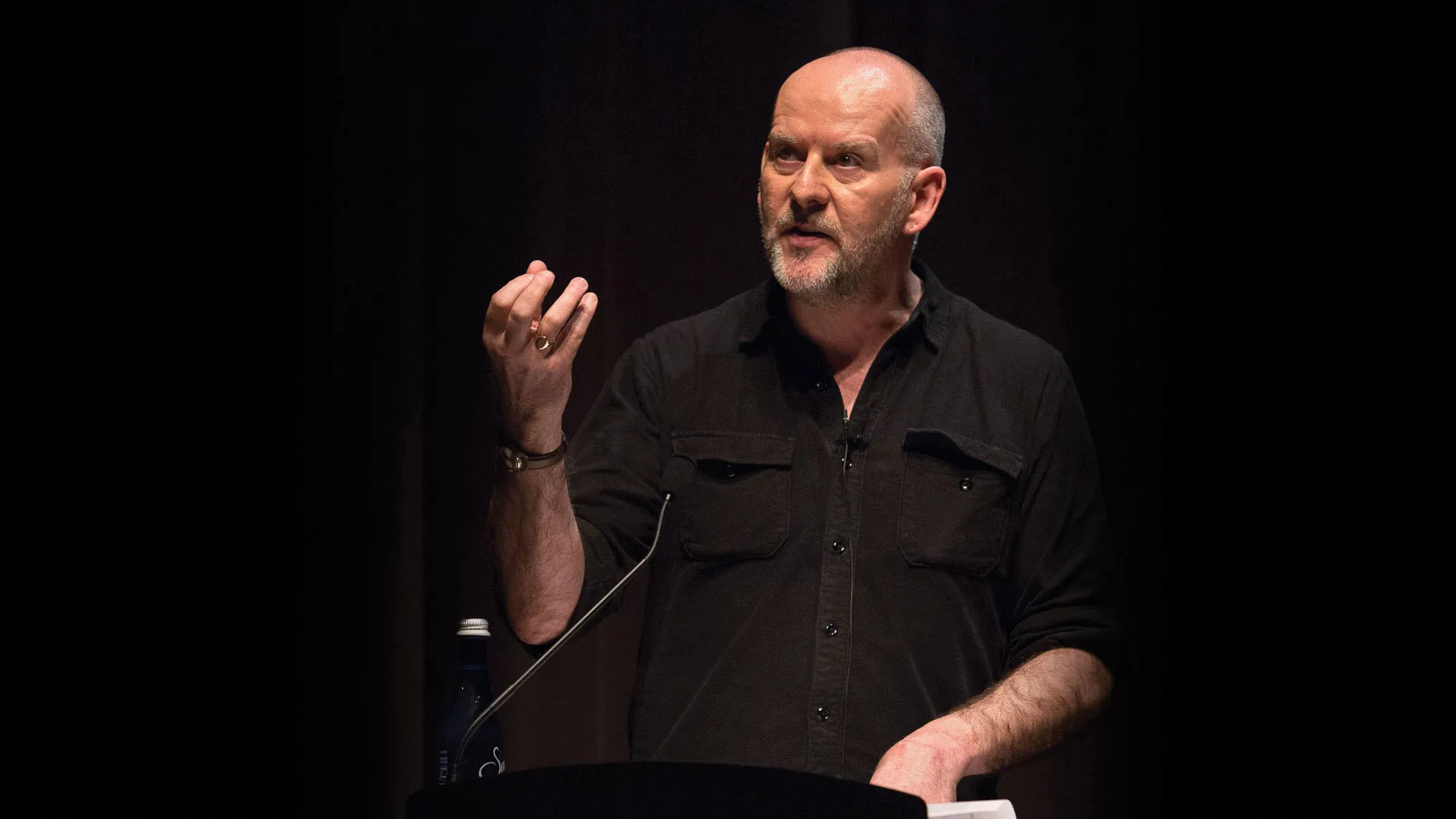
Simon Critchley, author of The Book of Dead Philosophers, recounted anecdotes of philosophers’ deaths since antiquity that range from the noble to the ridiculous. Through the lens of their last moments, Critchley reflected on the relationship between a philosopher’s work and his death, in the process questioning the adage “to philosophize is to die well” and meditating on the role that philosophy plays in living a good life in a society like ours—one that spends so much time and space denying the reality of death. 

Critchley is the Hans Jonas Professor of Philosophy at the New School for Social Research, where he has taught since 2004. He is the author of more than a dozen books; The Book of Dead Philosophers (Vintage, 2009) was on the New York Times extended bestseller list and has been translated into 15 languages. Critchley is a series moderator of and regular contributor to “The Stone,” an online philosophy column for the New York Times. He also writes for The Guardian. 

Observer Effects offered a dialogue between the fields of art and science. The title was derived from the principle in physics that the act of observation transforms the observed, an idea that has been influential in philosophy, aesthetics, psychology, and politics.

Main Image: Simon Critchley in the theater in 2013. Photo: Mick Bello/EMPAC.

Media
Image
Ben Frost

Ben Frost

Ben Frost’s music is not just heard; it’s felt. Influenced by classical minimalism, punk rock, and metal, he creates intense, monolithic sounds that command attention. Keenly aware of listeners’ thresholds, Frost exploits every extreme of pitch and volume as he pushes the sound of electric guitars, drums, and laptops out from a wall of speakers and amps. As the music unfolds, overlapping layers and elongated structural forms emerge from within the encompassing sonic space.

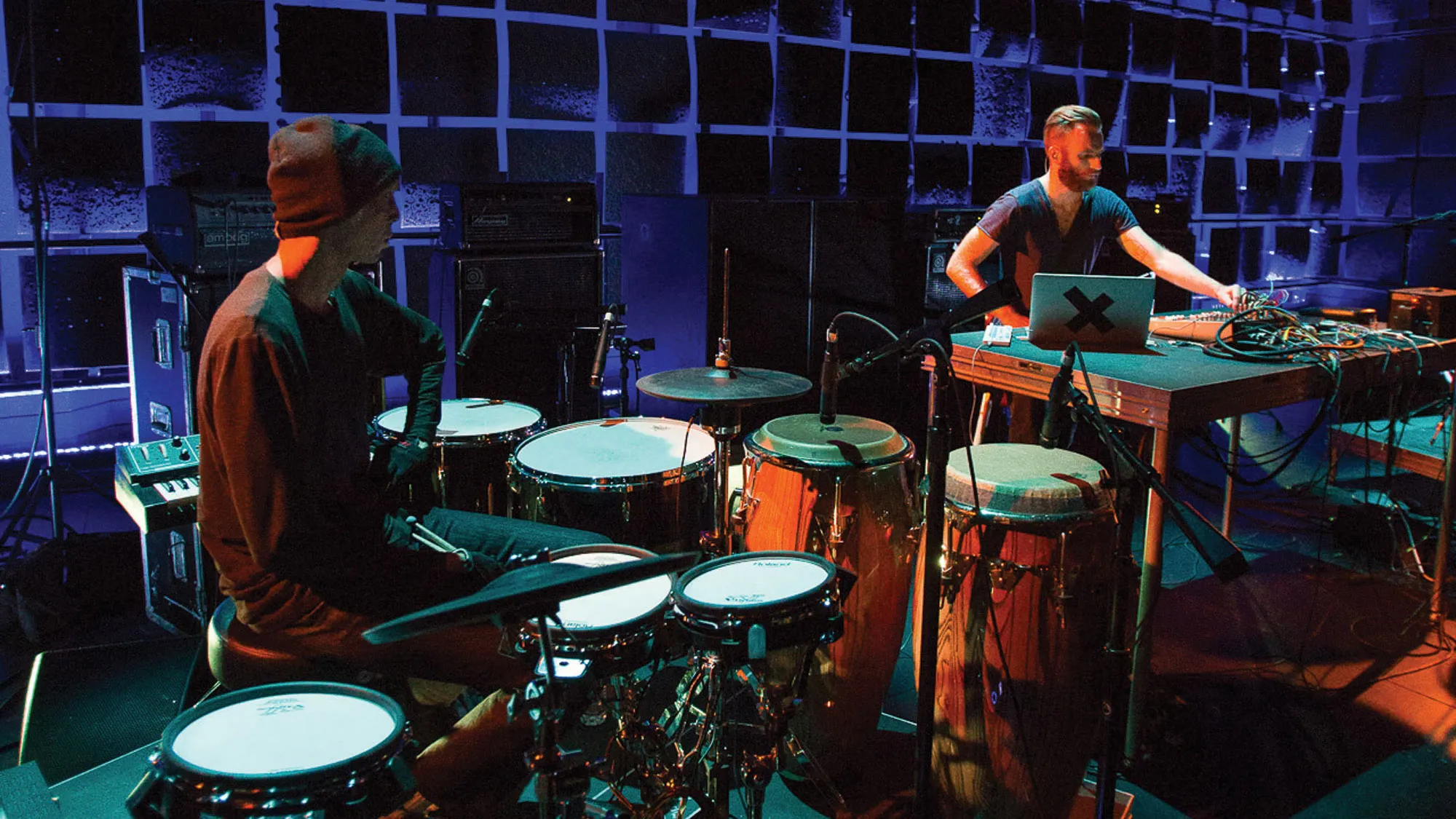
Frost and his group were in residence to record and perform his composition A U R O R A. While using EMPAC’s Studio 1 for tracking, he routed sound back through the Concert Hall, transforming it into a real-time reverb chamber. Frost has given building-shaking performances at international festivals such as Montréal’s MUTEK, combining amplified electronics with the furious thrashing of live guitars. His music’s intense physicality has also driven contemporary dance productions by Chunky Move, the Icelandic Dance Company, and the choreographers Erna Ómarsdottír and Wayne McGregor.

Main Image: Ben Frost in residence in Studio 1, 2013. Photo: Mick Bello/EMPAC.

Ben Frost

Ben Frost’s music is not just heard; it’s felt. Influenced by classical minimalism, punk rock, and metal, he creates intense, monolithic sounds that command attention. Keenly aware of listeners’ thresholds, Frost exploits every extreme of pitch and volume as he pushes the sound of electric guitars, drums, and laptops out from a wall of speakers and amps. As the music unfolds, overlapping layers and elongated structural forms emerge from within the encompassing sonic space. Frost and his group were in residence to record and perform his composition A U R O R A. While using EMPAC’s Studio 1 for tracking, he routed sound back through the Concert Hall, transforming it into a real-time reverb chamber. Frost has given building-shaking performances at international festivals such as Montréal’s MUTEK, combining amplified electronics with the furious thrashing of live guitars. His music’s intense physicality has also driven contemporary dance productions by Chunky Move, the Icelandic Dance Company, and the choreographers Erna Ómarsdottír and Wayne McGregor.

Image
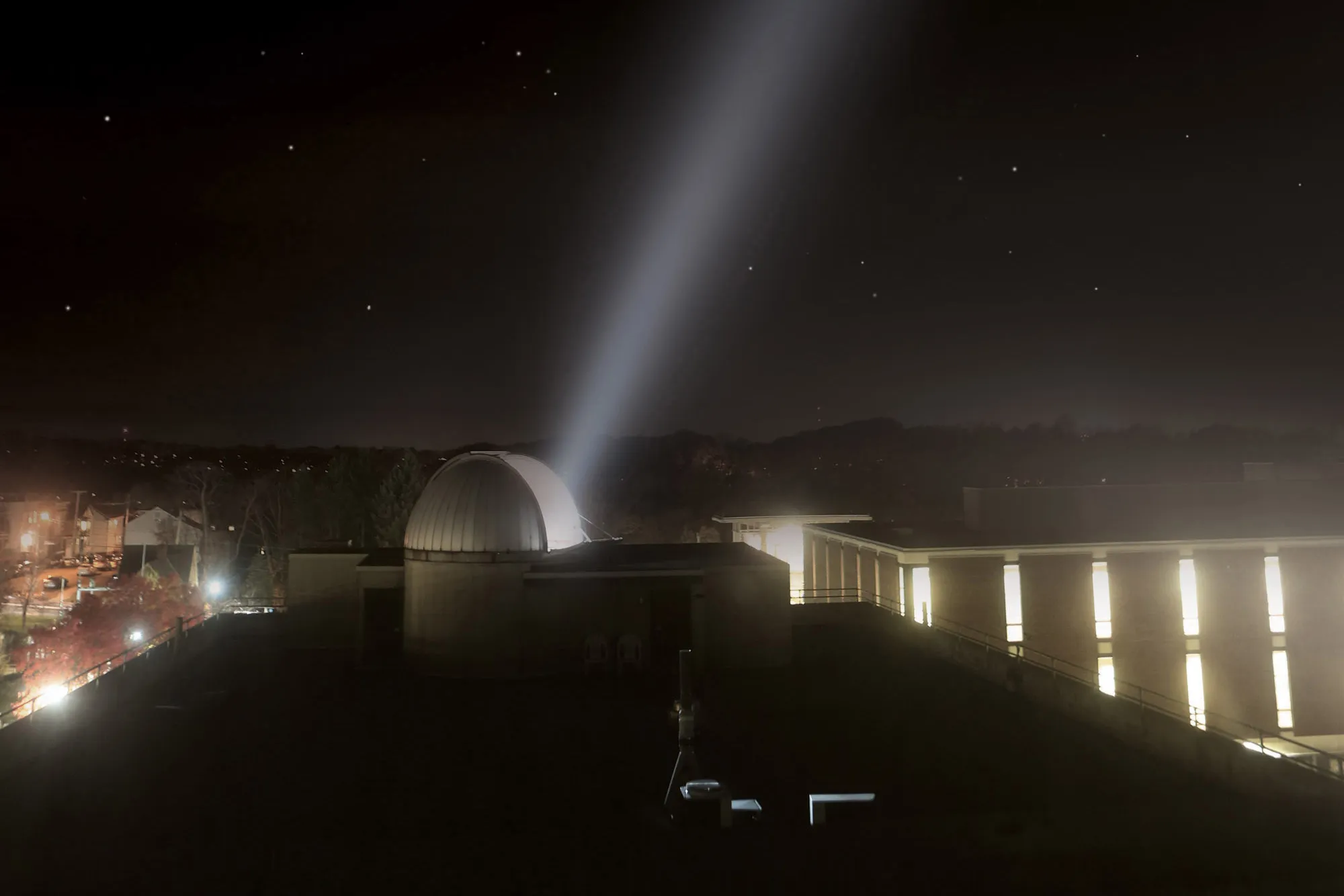
a beam of light coming out of an observatory overlooking the RPI campus at night.

Detail View

Campus Perspectives

Detail View provides an opportunity for Rensselaer professors and researchers to share in-depth perspectives on their fields of inquiry. Inviting an exchange of ideas on campus and providing a window into a singular vision, these events are geared toward experts and non-experts alike.

Main Image: The Hirsch Observatory projects a beam of light into space as part of The Color Out of Space, Rosa Barba’s collaboration with Rensselaer astrophysics professor Heidi Newberg. Photo: Kris Qua / EMPAC.

Robert J. Linhardt

New Frontiers in Glycoscience and Glycoengineering

Heparin is a prominent and widely used clinical anticoagulant prepared from animal tissue; a contamination crisis in 2008 led to an examination of the opportunities to use biotechnology to engineer improved heparin products. It also highlighted challenges in maintaining food and drug safety in a global marketplace. Linhardt discussed projects to better understand heparin biosynthesis using molecular biology to engineer organisms and nanotechnology to prepare devices on which biosynthesis can take place. 

Linhardt is the Ann and John H. Broadbent, Jr. ’59 Senior Constellation Professor of Biocatalysis and Metabolic Engineering at Rensselaer,
holding appointments in the chemistry and chemical biology, biology, chemical and biological engineering, and biomedical engineering departments. His honors include the American Chemical Society Horace S. Isbell Award. He is a fellow of the AAAS and one of the Scientific American Top 10, has published over 600 peer-
reviewed manuscripts, and holds over 50 patents.

Detail View: Rensselaer professors and researchers shared in-depth perspectives on their fields of inquiry, inviting an exchange of ideas between experts and non-experts alike.

Image
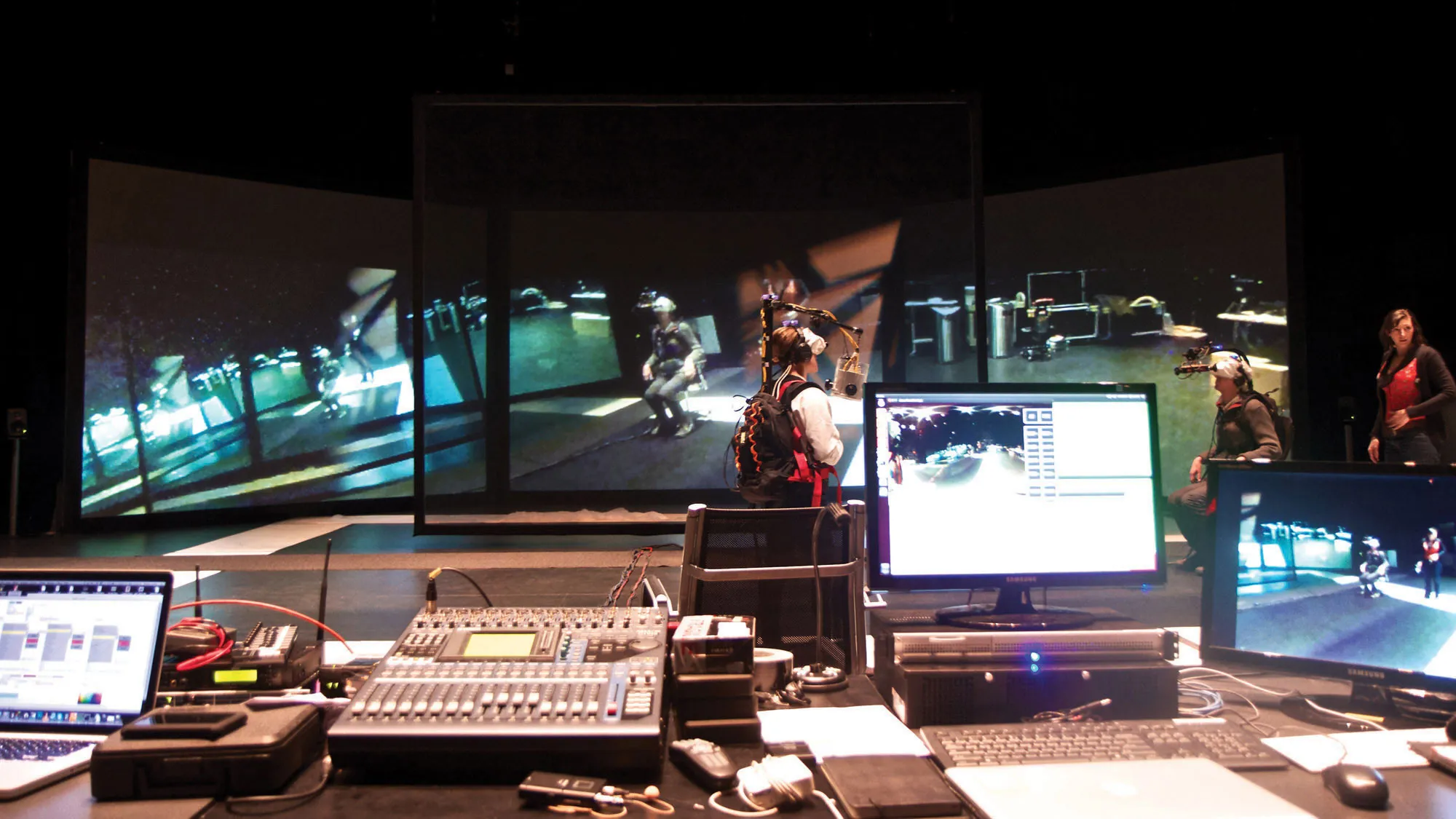
A woman wearing a full VR headset and backpack walking in front of a serious of screens projecting other people wearing similar VR rigging.

HeadSwap

CREW / Eric Joris

The goal for HeadSwap was to allow participants to choose an individual point of view within footage shot in Japan and New York City, while “swapping their heads”: simultaneously seeing what another person chooses to see. During a three-week research residency, Joris and a multi-disciplinary team of designers, programmers, and dramaturges worked to composite different video and graphic sources and find a way to view the end result in an “omnidirectional” way. They tested spherical layers upon which different media could be textured, and developed hardware to render and composite live images from a 360-degree camera without visible loss in quality or delay. This research enabled CREW to explore the conflict between live and prerecorded images and to see where both can enhance each other. At the end of the residency the work-in-progress was presented to the public followed by a discussion with the artists. 

CREW, a Belgium-based multidisciplinary team of artists and researchers founded by Eric Joris integrate technology into theatrical events to create new forms of experience. They create immersive environments for audiences, using video goggles and interactive technology, that put each spectator at the heart of the experience and that challenge notions of presence, spectatorship, and narration.

Main Image: Headswap residency in 2013.

Media
Image
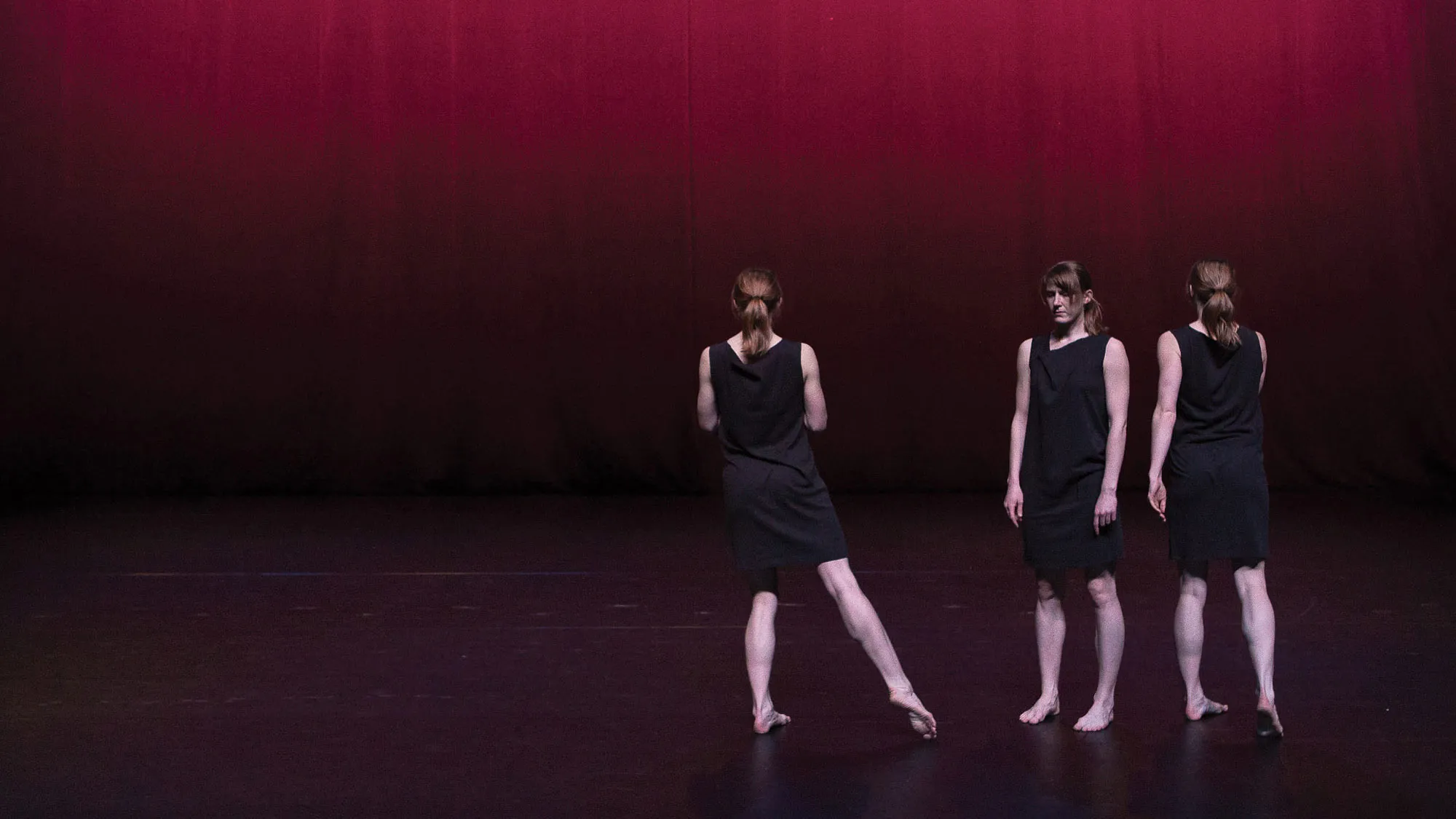
Three female dancers wearing black one shoulder dresses in a tight formation on a stage lit softly in burgundy light.

EXIT

Kris Verdonck + Alix Eynaudi

What value does our society attach to relaxation, rest, silence, sleep, and laziness? Are we caught up more than ever in the relentlessness of production and consumption? These were the central themes behind this performance created by Belgian artist Kris Verdonck and choreographer Alix Eynaudi that played with basic theatrical elements such as light, sound, movement, language, and scenography to steer the audience’s perception. According to Verdonck, “…sleep is anarchistic, not in the destructive sense, but rather dangerously constructive. Without sleep, our ideas and our knowledge become superficial mass products and therefore easy to set aside…by doing nothing at all, man becomes more productive and his knowledge more in-depth, thereby making him less vulnerable in a world that is flooded with information and choices.” 

Kris Verdonck’s visual arts, architecture, and theater training is reflected in the work he produces: his creations are situated between visual arts and theater, installation and performance, and dance and architecture. Alix Eynaudi trained as a ballet dancer in the Opéra de Paris; in 1996, she joined Anne-Teresa De Keersmaeker’s company Rosas. She works in Brussels creating her own pieces, and in collaboration with Anne Juren, Marianne Baillot, and Agata Maszkiewicz. 

Main Image: Kris Verdonk & Alix Eynaudi, EXIT (2013). 

Media

New Film (A Personal Essay)

Laurie Anderson

Begun as a 40-minute personal essay for French-German Arte TV, this untitled film by EMPAC distinguished artist-in-residence Laurie Anderson captures a series of interconnected confessional stories set against a soundtrack of original music. Partially filmed at EMPAC, the film has been expanded to feature length, driven by Anderson’s spirit of transformation, embracing uncertainty in her process while allowing the work to take on new properties as it was being made. In crossing the nebulous border between television and feature film, Anderson’s film reveals new insights into each, while also opening a cinematic window into her own life.

Laurie Anderson, EMPAC’s inaugural distinguished artist-in-residence, presented a series of events focusing on topics unique to her practice as an artist.